Class 9

HBSE 9th Class English Solutions Moments Chapter 7 The Last Leaf

Haryana State Board HBSE 9th Class English Solutions Moments Chapter 7 The Last Leaf Textbook Exercise Questions and Answers.

Haryana Board 9th Class English Solutions Moments Chapter 7 The Last Leaf

HBSE 9th Class English The Last Leaf Textbook Questions and Answers

Think about it

Question 1.
What is Johnsy’s illness? What can cure her, the medicine or the willingness to live?
(जॉन्सी की बीमारी क्या है? उसका इलाज क्या चीज कर सकती है, दवाइयाँ या जीने के लिए इच्छा?)
Answer:
Johnsy falls ill with pneumonia. She keeps lying in her bed many days. During this she has a fancy that she will die when the last leaf on the ivy creeper falls. The treatment given by the doctor proves useless because she is expecting death anytime. Not medicine but the willingness to live can cure her.

(जॉन्सी को निमोनिया हो जाता है। वह कई दिनों तक अपने बिस्तर पर पड़ी रहती है। इस दौरान उसे एक वहम हो जाता है कि जब बेल से आखिरी पत्ता गिर जाएगा तो वह मर जाएगी। डॉक्टर के द्वारा दिया गया इलाज बेकार सिद्ध होता है क्योंकि वह किसी भी समय अपनी मौत की प्रतीक्षा कर रही है। दवाइयों की बजाय जीवन जीने की इच्छा उसका इलाज कर सकती है।)

Question 2.
Do you think the feeling of depression Johnsy has is common among the teenagers?
(क्या आप ऐसा सोचते हो कि जो भय की भावना जॉन्सी के मन में है वह किशोरावस्था में एक सामान्य बात होती है ?)
Answer:
The mind is highly sensitive and imaginative in the teenage. If any fancy takes place in their mind it becomes very difficult to get them out of that. So the feeling of depression in Johnsy has a common among the teenagers.

(किशोरावस्था में मन बहुत ही भावुक और कल्पनाशील होता है। यदि उनके मन में किसी प्रकार का कोई वहम आ जाता है तो उन्हें उससे बाहर निकालना बड़ा कठिन हो जाता है। इसलिए जिस प्रकार के भय की भावना जॉन्सी के मन में है वह किशोरावस्था में एक सामान्य बात है।)

HBSE 9th Class English Solutions Moments Chapter 7 The Last Leaf

Question 3.
Behrman has a dream. What is it? Does it come true?
(बैहरमैन का एक सपना है। वह सपना क्या है? क्या वह सच साबित होता है?)
Answer:
Behrman is a sixty-year old painter. He lives on the ground floor of the building in which Sue and Johnsy live. He has a dream. His dream is to paint a masterpiece. This dream comes true when he paints a leaf on the wall. Johnsy thinks it the last leaf on the ivy creeper. This leaf saves Johnsy life.)

(बैहरमैन एक 60 वर्षीय वृद्ध चित्रकार है। वह उस इमारत के सबसे निचले तल पर रहता है जिसमें स्यू और जॉन्सी रहती हैं। उसका एक सपना है। उसका सपना है कि वह एक सर्वश्रेष्ठ कृति की चित्रकारी करे। उसका यह सपना सच हो जाता है जब वह दीवार पर एक पत्ता छापता है। जॉन्सी इसे बेल पर लगा आखिरी पत्ता समझती है। यह पत्ता जॉन्सी का जीवन बचाता है।)

Question 4.
What is Behrman’s masterpiece? What makes Sue say so?
(बैहरमैन की सर्वश्रेष्ठ कलाकृति क्या है? स्यू ऐसा क्यों कहती है?)
Answer:
Behrman is a sixty-year old painter. He paints a leaf on the wall. It looks like the last leaf on the ivy creeper. Johnsy thinks it the real leaf. It does not fall in ice-cold wind. This inspires a willingness for life in Johnsy’s mind. Johnsy gets better soon. So Sue calls this painting Behrman’s masterpiece.

(बैहरमैन एक 60 वर्षीय वृद्ध चित्रकार है। वह दीवार पर एक पत्ते की चित्रकारी करता है। यह पत्ता दीवार पर छपे आखिरी पत्ते के समान दिखाई देता है। जॉन्सी इसे असली पत्ता समझती है। यह बर्फानी हवा में नीचे नहीं गिरता है। यह जॉन्सी के मन में जीवन के प्रति इच्छा की भावना जागृत करता है। जॉन्सी शीघ्र ही स्वस्थ हो जाती है। इसलिए स्यू इस चित्रकारी को बैहरमैन की सर्वश्रेष्ठ कलाकृति मानती है।)

Talk about It

Question 1.
Have you ever felt depressed and rejected? How did you overcome such feeling? Share your experience with your classmates.
Answer:
One day my mother was very sick. My father was not at home. I was alone with my mother at home. It was midnight. I could not find any means of transport to carry her to hospital at that time. There was no telephone facility in my home. So I could do nothing but pray to God. I sat before the idol of Lord Sri Krishna with folded hands. I prayed to Lord Krishna to make my mother well.

As if Lord Krishna had listened to my prayer. I found that my mother was sleeping. It was a big relief for me. I too lay beside my mother in her bed and slept. In the morning it was my mother who woke me up at 7 a.m. to get ready for the school. It was a miracle for me that my mother had got well fully. I can never forget this experience.

HBSE 9th Class English Solutions Moments Chapter 7 The Last Leaf

HBSE 9th Class English The Last Leaf Important Questions and Answers

Very Short Answer Type Questions

Question 1.
What was the Profession of Sue and Johnsy?
Answer:
Sue and Johnsy were close friends and they both were painters.

Question 2.
What happened to Johnsy?
Answer:
Johnsy fell very seriously ill in November.

Question 3.
What fear did Johnsy have in her mind?
Answer:
She feared that she would die on the day when the last leaf of the creeper fell.

Question 4.
Why was the doctor confused about Johnsy’s illness?
Answer:
The doctor was confused because no medicine was proving effective on Johnsy.

Question 5.
What was happening to the leaves on the creeper outside Johnsy’s window?
Answer:
The leaves were falling because of extreme cold and strong wind.

HBSE 9th Class English Solutions Moments Chapter 7 The Last Leaf

Question 6.
Who was Behrman?
Answer:
Behrman was an old painter.

Question 7.
What did Behrman do?
Answer:
He painted a picture of creeper with a leaf on the wall.

Question 8.
What happened to Behrman?
Answer:
Behrman died of pneumonia.

Question 9.
What was Behrman’s dream?
Answer:
Behrman’s dream was to paint a masterpiece.

Question 10.
What was Behrman’s masterpiece?
Answer:
The painting of a creeper with a leaf on it was Behrman’s masterpiece.

Question 11.
Was Johnsy’s life saved?
Answer:
Yes, Johnsy’s life was saved.

HBSE 9th Class English Solutions Moments Chapter 7 The Last Leaf

Question 12.
Who saved Johnsy’s life?
Answer:
The old painter Behrman save Johnsy’s life.

Short Answer Type Questions

Question 1.
Why did Johnsy keep looking out of the window?
(जॉन्सी खिड़की से बाहर क्यों देखती रहती थी?)
Answer:
There was a creeper on the wall facing Johnsy’s window. She had a fancy that she would die when the last leaf of the creeper fell. The leaves were falling because it was autumn season. So Johnsy kept looking out of the window.’

(जॉन्सी की खिड़की के सामने वाली दीवार पर एक बेल थी। उसको एक वहम था कि जब बेल का आखिरी पत्ता गिरेगा तो वह भी मर जाएगी। पत्ते गिर रहे थे क्योंकि पतझड़ का मौसम था। इसलिए जॉन्सी खिड़की से बाहर देखती रहती थी।)

Question 2.
How did Sue try to keep Johnsy cheerful?
(स्यू ने जॉन्सी को खुश रखने के लिए किस प्रकार से प्रयास किया?)
Answer:
The doctor had said that Johnsy’s chances of recovery were only one out of ten. Sue became sad and cried bitterly. But she wanted to cheer up Johnsy. So she entered her room, whistling a cheerful tune.

(डॉक्टर ने कहा था कि जॉन्सी के ठीक होने की संभावना केवल दस में से एक थी। स्यू उदास हो गई और फूट-फूट कर रोने लगी। मगर वह जॉन्सी को हिम्मत बंधाना चाहती थी। इसलिए वह उसके कमरे में, एक आनंदपूर्ण धुन गुनगुनाते हुए आई।)

HBSE 9th Class English Solutions Moments Chapter 7 The Last Leaf

Question 3.
How did Behrman react to Johnsy’s fancy?
(बैहरमैन ने जॉन्सी के वहम पर प्रतिक्रिया कैसे व्यक्त की?)
Answer:
Johnsy had a fancy that she would die when the last leaf fell. Behrman did not like this fancy of Johnsy. He called her fancy mere nonsense. He said that she should not have such absurd ideas

(जॉन्सी को वहम था कि जब आखिरी पत्ता गिरेगा तो वह मर जाएगी। बैहरमैन को जॉन्सी का यह वहम पसंद नहीं था। उसने उसके वहम को केवल बकवास कहा। उसने कहा कि उसे ऐसे बेकार के विचारों को अपने पास नहीं रखना चाहिए।)

Question 4.
What did Johnsy believe about the falling leaves? Did Sue believe the same?
(जॉन्सी गिरते हुए पत्तों के बारे में क्या सोचती थी? क्या स्यू भी यही सोचती थी?)
Answer:
Johnsy got a fancy that she would die with the fall of the last leaf. But, Sue considered it a foolish idea. She said that there could be no relationship between the last leaf and somebody’s life…

(जॉन्सी को वहम था कि वह आखिरी पत्ते के गिरने के साथ ही मर जाएगी। लेकिन, स्यू इसे एक मूर्खतापूर्ण विचार मानती थी। वह कहती थी कि आखिरी पत्ता एवं किसी की जिंदगी में कोई संबंध नहीं हो सकता।)

Question 5.
How does old Behrman catch pneumonia in ‘The Last Leaf’ by o. Henry?
(o. Henry द्वारा रचित ‘The Last Leaf’ में बूढ़े बैहरमैन को निमोनिया ने कैसे पकड़ लिया?)
Answer:
Behrman knew about Johnsy’s fancy about the falling leaves. He went out in the cold and snow and painted a leaf on the wall. He caught pneumonia and died.

(बूढ़े बैहरमैन को जॉन्सी के गिरते पत्तों के वहम के बारे में पता लगा। वह ठंड और बर्फ में बाहर गया और उसने दीवार पर पत्ता चित्रित कर दिया। उसे निमोनिया हो गया और वह मर गया।)

Question 6.
How did Johnsy realise her mistake?
(जॉन्सी को अपनी गलती का अहसास कैसे हुआ?)
Answer:
Johnsy was suffering from pneumonia. There was a creeper on the wall facing her window. Johnsy had a fancy that she would die when the last leaf fell. One night, there was only one leaf left. She thought that she would also die with the falling of the leaf. But that night, Behrman painted a leaf in its place. So it did not fall. It made her realise that it was a sin to wish to die.

(जॉन्सी निमोनिया से पीड़ित थी। उसकी खिड़की के सामने वाली दीवार पर एक बेल थी। जॉन्सी को वहम था कि जब आखिरी पत्ता गिरेगा तो वह मर जाएगी। एक रात केवल एक पत्ता बचा था। उसने सोचा कि इसके गिरने के साथ वह मर जाएगी। मगर उस रात, बैहरमैन ने उसके स्थान पर पत्ता बना दिया। इसलिए वह नहीं गिरा। इसने उसे यह अहसास करवा दिया कि मरने की कामना करना पाप है।)

HBSE 9th Class English Solutions Moments Chapter 7 The Last Leaf

Question 7.
What kind of a friend was Sue to Johnsy?
(स्यू जॉन्सी की किस प्रकार की मित्र थी?)
Answer:
Sue and Johnsy were close friends. Both were painters. Apart from that their tastes and views were similar. They lived in the same small flat. When Johnsy suffered from pneumonia, Sue looked after her with love and care. It was largely because of her care that Johnsy’s life was saved.

(स्यू और जॉन्सी घनिष्ठ सहेलियाँ थीं। दोनों ही चित्रकार थीं। इसके अलावा उनकी रुचियाँ और विचार एक जैसे थे। वे एक ही छोटे से फ्लैट में रहती थीं। जब जॉन्सी को निमोनिया हो गया था, तो स्यू ने उसकी देखभाल प्यार एवं सावधानी से की। यह काफी हद तक उसकी देखभाल से ही हुआ कि जॉन्सी की जान बच पाई।)

Question 8.
Describe in your own words the colony where the artists lived.
(जिस बस्ती में चित्रकार रहते थे, उसका वर्णन अपने शब्दों में करो।)
Answer:
The artists’ colony grew in the old village named Greenwich. It was to the west of Washington Square. Its streets were winding. These streets had strange angles and curves.

(कलाकारों की बस्ती ग्रीनविच नामक एक पुराने गाँव में विकसित हुई। यह वाशिंगटन स्क्वायर के पश्चिम में था। इसकी गलियां टेढ़ी-मेढ़ी थीं। इन गलियों के अजीब कोण और मोड़ थे।)

Essay Type Questions

Question 1.
Describe briefly how Behrman saved Johnsy’s life.
(संक्षेप में बताओ कि बैहरमैन ने जॉन्सी का जीवन कैसे बचाया?)
Or
How is ‘The Last Leaf’ by O. Henry a story of hope, friendship and sacrifice?
(o. Henry द्वारा रचित ‘The Last Leaf’ आशा, मित्रतापूर्वक और बलिदान की कहानी कैसे है?)
Or
Who was Behrman? What was his masterpiece and why did he paint it?
(बैहरमैन कौन था? उसकी सर्वश्रेष्ठ कलाकृति क्या थी और उसने इसे क्यों चित्रित किया?)
Answer:
Sue and Johnsy were two young girl-artists. They lived together in the artists’ colony. Once Johnsy caught pneumonia. She developed a fancy that she would die when the last leaf on the ivy creeper féll. The doctor said that she should take interest in life and wish to live. Only then she could be saved. Behrman was an old painter.

He lived on the ground floor beneath them. He was a failure in art. For forty years he had been trying to paint a masterpiece, but he had not yet started it. He came to know of Johnsy’s fancy. The night the last leaf fell, he painted a leaf on the wall. He worked all the night in rain and snow and painted the leaf. The next morning, Johnsy saw the leaf on the wall. Her will to live returned. Her life was saved. But Behrman caught pneumonia and died. Thus he sacrificed his life and saved Johnsy’s life. The last leaf painted on the wall was his masterpiece.

(स्यू और जॉन्सी दो युवा चित्रकार लड़कियाँ थीं। वे चित्रकारों की बस्ती में इकट्ठी रहती थीं। एक बार जॉन्सी को निमोनिया हो गया। उसे वहम हो गया कि जब बेल का आखिरी पत्ता गिरेगा तो वह मर जाएगी। डॉक्टर ने कहा कि उसे जीवन में रुचि लेनी चाहिए और जीने की इच्छा करनी चाहिए। केवल तभी वह बच सकती है। बैहरमैन एक बूढ़ा चित्रकार था। वह उनके नीचे सबसे पहली मंजिल पर रहता था। वह कला में असफल था।

चालीस सालों से वह एक श्रेष्ठ कलाकृति चित्रित करने का प्रयत्न कर रहा था, पर उसने इसे अभी शुरू नहीं किया था। उसे जॉन्सी के वहम के बारे में पता चला। जिस रात आखिरी पत्ता गिरा, उसने दीवार पर एक पत्ता चित्रित कर दिया। उसने पूरी रात बारिश और बर्फ में काम किया और पत्ता बना दिया। अगली प्रातः जॉन्सी ने दीवार पर पत्ता देखा। उसकी जीने की इच्छा जाग उठी। उसका जीवन बच गया। लेकिन बैहरमैन को निमोनिया हो गया और वह मर गया। इस प्रकार उसने अपने जीवन का बलिदान कर दिया और जॉन्सी का जीवन बचा लिया। दीवार पर चित्रित किया हुआ आखिरी पत्ता उसकी सर्वश्रेष्ठ कलाकृति थी।)

HBSE 9th Class English Solutions Moments Chapter 7 The Last Leaf

Question 2.
In “The Last Leaf” why did Sue cry bitterly when the doctor had gone? Later she walked into Johnsy’s room whistling a cheerful tune. Why?
(“The Last Lear” में स्यू डॉक्टर के जाने के बाद जोर-जोर से क्यों रोई ? बाद में वह जॉन्सी के कमरे में एक आनंदपूर्ण धुन गुनगुनाती हुई आई। क्यों?)
Or
What was Johnsy’s real ailment? What were the chances of her recovery?
(जॉन्सी की वास्तविक बीमारी क्या थी? उसके ठीक होने के अवसर कैसे थे?)
Answer:
Sue and Johnsy were two young girls. They were painters. They lived like sisters. They had a joint studio in an artists’ colony. One day, Johnsy had an attack of pneumonia. Her condition worsened. She lost the will to live. One day, the doctor told Sue that Johnsy’s disease was psychological also. She did not want to live.

In such a condition, no medicine could work. If she did not get back the will to live, her chances of recovery were only one out of ten. When Sue heard this she felt very sad. She cried bitterly as soon as the doctor had gone. But the next moment she entered Johnsy’s room, whistling. Sue did so because she wanted to cheer up Johnsy.

(स्यू और जॉन्सी दो युवा लड़कियाँ थीं। वे चित्रकार थीं। वे बहिनों की तरह रहती थीं। कलाकारों की बस्ती में उनका सांझा स्टूडियो था। एक दिन, जॉन्सी को निमोनिया हो गया। उसकी हालत बिगड़ गई। उसकी जीने की इच्छा खत्म हो गई। एक दिन, डॉक्टर ने स्यू को बताया कि जॉन्सी की बीमारी मनोवैज्ञानिक भी है। वह जीना नहीं चाहती थी। ऐसी अवस्था में, कोई भी दवाई असर नहीं कर सकती थी।

अगर उसकी जीने की इच्छा नहीं लौटी तो उसके ठीक होने के अवसर केवल दस में से एक थे। जब स्यू ने यह सुना तो वह बहुत उदास हुई। डॉक्टर के जाने के बाद वह बहुत रोई। मगर अगले ही क्षण वह जॉन्सी के कमरे में सीटी बजाती हुई आई। उसने ऐसा इसलिए किया क्योंकि वह जॉन्सी को हौंसला देना चाहती थी।)

HBSE 9th Class English Solutions Moments Chapter 7 The Last Leaf

Question 3.
What did Johnsy believe about the falling leaves? Did Sue believe the same thing?
(जॉन्सी का गिरते पत्तों के बारे में क्या विश्वास था? क्या स्यू भी यही मानती थी?)
Answer:
Sue and Johnsy were two young artist girls. They had a joint studio. They loved each other like sisters. One day, Johnsy caught pneumonia. There was an ivy creeper on the back wall of the next house. Johnsy could see it through her window. The leaves of this creeper were falling fast in the cold winds.

Johnsy developed a fancy that she would also die when the last leaf of the creeper fell. She lost the will to live. Sue came to know of Johnsy’s fancy. She tried her best to cheer up Johnsy. She told her that there was no link between the falling of leaves and her death. She nursed Johnsy with love and care. She told Behrman about Johnsy’s fancy. Behrman was a painter. He painted a leaf on the wall when the last leaf fell. This saved Johnsy’s life. Thus Sue played an important role in saving Johnsy’s life.

(स्यू और जॉन्सी दो युवा चित्रकार लड़कियाँ थीं। उनका सांझा स्टूडियो था। वे एक-दूसरे को बहिनों की तरह प्यार करती थीं। एक दिन, जॉन्सी को निमोनिया हो गया। अगले घर की पिछली दीवार पर एक बेल थी। जॉन्सी इसे अपने घर की खिड़की से देख सकती थी। इस बेल के पत्ते ठंडी हवा में बहुत तेजी से गिर रहे थे।

जॉन्सी को वहम हो गया कि जब बेल का आखिरी पत्ता गिरेगा तो वह मर जाएगी। उसकी जीने की इच्छा खत्म हो गई। स्यू को जॉन्सी के वहम के बारे में पता चला। उसने जॉन्सी का हौंसला बढ़ाने का पूरा प्रयत्न किया। उसने उसे कहा कि पत्तों के गिरने में और उसकी मृत्यु में कोई संबंध नहीं है। उसने जॉन्सी की प्यार और देखभाल से सेवा की। उसने बैहरमैन को जॉन्सी के वहम के बारे में बताया। बैहरमैन एक चित्रकार था। जब आखिरी पत्ता गिरा तो उसने दीवार पर पत्ता चित्रित कर दिया। इससे जॉन्सी की जिंदगी बच गई। इस प्रकार स्यू ने जॉन्सी की जान बचाने में महत्त्वपूर्ण भूमिका अदा की।)

HBSE 9th Class English Solutions Moments Chapter 7 The Last Leaf

Question 4.
Write a brief character sketch of old Behrman.
(बूढ़े बैहरमैन का संक्षिप्त चरित्र-चित्रण कीजिए।)
Or
Write a few sentences on the looks and personality of old Behrman.
(बूढ़े बैहरमैन के रूप और व्यक्तित्व के बारे में कुछ वाक्य लिखिए।)
Answer:
Old Behrman was a painter. He was past sixty. But he was a failure in art. He earned very little through his paintings. He always said that he was going to paint a masterpiece. But for the last forty years, he had not even begun it. Behrman was a drunkard. His beard was long and curling. It gave him the look of an imp. He was a tough fellow. He hated weakness in man. He lived on the ground floor beneath Sue and Johnsy. He considered himself their guardian. He was very kind and helpful at heart.

When he came to know of Johnsy’s fancy, he decided to help her. He went out in rain and snow and painted a leaf on the wall. It saved Johnsy’s life. But he caught pneumonia and died. Thus Behrman plays a very important role in the story. He sacrificed his life and saved Johnsy’s life.

(बूढ़ा बैहरमैन एक चित्रकार था। वह साठ साल से ऊपर का था। मगर वह कला में असफल था। वह अपने चित्रों से बहुत कम कमाता था। वह हमेशा कहता था कि वह एक श्रेष्ठ कलाकृति चित्रित करने जा रहा है। लेकिन पिछले चालीस वर्षों से उसने इसे शुरू भी नहीं किया। बैहरमैन एक शराबी था। उसकी दाढ़ी लंबी और धुंघराली थी। इससे वह पिशाच की तरह लगता था। वह एक मजबूत व्यक्ति था। वह मनुष्यों की कमजोरी से नफरत करता था। वह स्यू और जॉन्सी के नीचे पहली मंजिल पर रहता था।

वह अपने आपको उनका संरक्षक मानता था। वह दिल से बड़ा दयालु और सहायक था। जब उसे जॉन्सी के वहम का पता चला तो उसने उसकी सहायता करने का फैसला किया। वह बरसात और बर्फ में बाहर गया और उसने दीवार पर एक पत्ता चित्रित किया। इसने जॉन्सी के जीवन को बचा दिया। मगर उसे निमोनिया हो गया और वह मर गया। इस प्रकार बैहरमैन इस कहानी में बड़ी महत्त्वपूर्ण भूमिका अदा करता है। उसने अपनी जीवन का बलिदान करके जॉन्सी का जीवन बचा लिया।)

Question 5.
Justify the title of the story “The Last Leaf’.
(‘The Last Leaf’ कहानी के शीर्षक का औचित्य बताइए।)
Or
Show why the story is entitled “The Last Leaf”?
(यह बताइए कि कहानी का शीर्षक ‘The Last Leaf’ क्यों रखा गया?)
Answer:
This is a psychological story. The whole story is based on the last leaf. Johnsy was a young artist girl. She and her friend Sue lived together. One day Johnsy caught pneumonia. There was an ivy creeper on the back wall of the next house. From her window Johnsy watched that.creeper. Its leaves were falling fast in the cold winds.

Johnsy got a fancy that she would also die when the last leaf of the creeper fell. She lost the will to live. Her condition became worse. Behrman, an old painter came to know of this fancy of Johnsy. The next night, the last leaf fell. But the same night Behrman painted a leaf on the wall. It looked a real leaf. When Johnsy saw that leaf, her will to live returned. That painted leaf saved Johnsy’s life. Thus the leaf plays an important role in the story. So the title of the story ‘The Last Leaf’ is justified.

(यह एक मनोवैज्ञानिक कहानी है। सारी कहानी आखिरी पत्ते पर आधारित है। जॉन्सी एक युवा चित्रकार लड़की थी। वह और उसकी सहेली स्यू इकट्ठी रहती थीं। एक दिन जॉन्सी को निमोनिया हो गया। अगले घर की पिछली दीवार पर एक बेल थी। अपनी खिड़की में से जॉन्सी बेल को देखती थी। ठंडी हवा में इसके पत्ते तेजी से गिर रहे थे।

जॉन्सी को वहम हो गया कि जब उस बेल का आखिरी पत्ता गिरेगा तो वह भी मर जाएगी। उसकी जीने की इच्छा खत्म हो गई। उसकी हालत बिगड़ गई। एक बूढ़े चित्रकार, बैहरमैन को जॉन्सी के इस वहम का पता चला। अगली रात आखिरी पत्ता गिर गया। लेकिन उसी रात बैहरमैन ने दीवार पर एक पत्ता चित्रित कर दिया। यह असली पत्ते की तरह लगता था। जब जॉन्सी ने उस पत्ते को देखा, तो उसकी जीने की इच्छा लौट आई। उस चित्रित पत्ते ने जॉन्सी का जीवन बचा लिया। इस तरह से पत्ता इस कहानी में महत्त्वपूर्ण भूमिका अदा करता है। इसलिए कहानी का शीर्षक ‘The Last Leaf’ उचित है।)

HBSE 9th Class English Solutions Moments Chapter 7 The Last Leaf

Question 6.
Draw a brief character-sketch of Sue.
(स्यू का संक्षिप्त चरित्र-चित्रण करो।)
Answer:
Sue is an important character in the story ‘The Last Leaf’. She is an artist girl. She and Johnsy have a joint studio in the artists’ colony. Sue is kind and noble at heart. She has the qualities of a true friend. Johnsy gets an attack of pneumonia. Sue nurses her with love and care. She works day and night to earn enough money.

With this money she buys medicines and good diet for her friend. She feels shocked when the doctor says that Johnsy doesn’t have many chances of recovery. Johnsy has a fancy that she will die when the last leaf of the creeper falls. Sue tries her best to cheer her up. She says that her fancy is foolish and baseless. She tells of Johnsy’s fancy of old Behrman. He paints the last leaf on the wall and saves Johnsy. Thus, Sue is a kind and ‘ noble girl. She is a true friend.

(‘The Last Leaf’ कहानी में स्यू एक महत्त्वपूर्ण पात्र है। वह एक चित्रकार लड़की है। कलाकारों की बस्ती में उसका और जॉन्सी का साझा स्टूडियो था। स्यू दिल की दयालु और नेक है। उसमें सच्ची सहेली के गुण थे। जॉन्सी को निमोनिया हो जाता है। स्यू उसकी प्यार और सावधानी से सेवा करती है। वह पर्याप्त पैसा कमाने के लिए दिन-रात मेहनत करती है। इस पैसे से वह अपनी सहेली के लिए दवाई और अच्छा भोजन खरीदती है।

जब डॉक्टर कहता है कि जॉन्सी के बचने के अधिक अवसर नहीं हैं तो उसे सदमा लगता है। जॉन्सी को एक वहम है कि बेल का आखिरी पत्ता गिरने पर वह मर जाएगी। स्यू उसका मन बहलाने का पूरा प्रयत्न करती है। वह उससे कहती है कि उसका वहम मूर्खतापूर्ण और आधारहीन है। वह जॉन्सी के वहम के बारे में बैहरमैन को बताती है। वह दीवार के ऊपर आखिरी पत्ता चित्रित कर देता है और जॉन्सी की जान बचा लेता है। इस प्रकार, स्यू एक दयालु और नेक लड़की है। वह एक सच्ची मित्र है।)

HBSE 9th Class English Solutions Moments Chapter 7 The Last Leaf

Multiple Choice Questions

Question 1.
Who fell seriously ill?
(A) Sue
(B) Johnsy
(C) both (A) and (B)
(D) none of the above
Answer:
(B) Johnsy

Question 2.
Johnsy was suffering from ____
(A) pneumonia
(B) malaria
(C) headache
(D) stomach pain
Answer:
(A) pneumonia

Question 3.
According to the doctor, about what had Johnsy made up her mind?
(A) she will recover soon
(B) she will recover late
(C) she is not going to get well
(D) all of the above
Answer:
(C) she is not going to get well

HBSE 9th Class English Solutions Moments Chapter 7 The Last Leaf

Question 4.
What was Johnsy looking at out of the window?
(A) an ivy creeper
(B) a mango tree
(C) a rose plant
(D) a banana tree
Answer:
(A) an ivy creeper

Question 5.
What was Johnsy country?
(A) leaves on the ivy creeper
(B) bunches of fruit on the ivy creeper
(C) both (A) and (B)
(D) none of the above
Answer:
(A) leaves on the ivy creeper

Question 6.
What will happen when the last leaf will fall?
(A) she will die
(B) Johnsy will die
(C) Behrman will die
(D) all of the above
Answer:
(B) Johnsy will die

Question 7.
What was Sue doing in Johnsy’s room?
(A) reading a book
(B) stitching a shirt
(C) singing a song
(D) making a painting
Answer:
(D) making a painting

HBSE 9th Class English Solutions Moments Chapter 7 The Last Leaf

Question 8.
Why was she making a painting?
(A) to present it to Johnsy
(B) to present it to Behrman
(C) to earn some money
(D) to put it in her room
Answer:
(C) to earn some money

Question 9.
Who was Behrman?
(A) a painter
(B) a musician
(C) a doctor
(D) a teacher
Answer:
(A) a painter

Question 10.
Who painted the leaf on the wall?
(A) Sue
(B) Johnsy
(C) Behrman
(D) all of the above
Answer:
(C) Behrman

Question 11.
What will happen when the last leaf will fall?
(A) Johnsy will recover
(B) Johnsy will die
(C) nothing extraordinary won’t happen
(D) not clear in the topic
Answer:
(B) Johnsy will die.

Question 12.
Who has looked after Johnsy so well?
(A) Sue
(B) Behrman
(C) Johnsy’s mother
(D) Johnsy’s father
Answer:
(A) Sue

HBSE 9th Class English Solutions Moments Chapter 7 The Last Leaf

Question 13.
What can make a man recover soon?
(A) will to die
(B) will to live
(C) eating healthy food
(D) all of the above
Answer:
(B) will to live

Question 14.
What did Behrman die of?
(A) fever
(B) heart attack
(C) cholera
(D) pneumonia
Answer:
(D) pneumonia

Question 15.
Of the following who met to death?
(A) Sue
(B) Johnsy
(C) Behrman
(D) none of the above
Answer:
(C) Behrman

Question 16.
What was Behrman’s masterpiece?
(A) painting a picture of Sue
(B) painting a picture of Johnsy
(C) painting a picture of leaf
(D) all of the above
Answer:
(C) painting a picture of leaf

HBSE 9th Class English Solutions Moments Chapter 7 The Last Leaf

The Last Leaf Summary

The Last Leaf Introduction in English

The Last Leaf’ is a famous story of O. Henry. It is a sentimental story. Sue and Johnsy were two young artistic friends. They lived together. Once Johnsy fell ill. There was an ivy creeper outside the window. Its leaves were falling. Johnsy had a fancy that she would die when the last leaf on the ivy fell. Sue was worried. An old painter named Behrman lived downstairs. He considered the girls like his daughters.

Sue told of Johnsy’s fancy to Behrman. He promised to help her. That night it was snowing. The last leaf also fell. But Behrman worked all night and painted a leaf on the wall. Next morning Johnsy was surprised to see that there was still a leaf on the ivy. Her will to live returned. Soon she recovered. But old Behrman caught pneumonia and died. Thus he sacrificed his own life in order to save Johnsy.

HBSE 9th Class English Solutions Moments Chapter 7 The Last Leaf

The Last Leaf Summary in English

The Last Leaf’ is a touching story. It describes the sacrifice made by an old painter named Behrman. He sacrificed his life to save a young girl-artist’s life.

Greenwich village was situated in the west of Washington Square. This village became a colony of artists. Here two young girls, Sue and Johnsy also lived. They had set up a joint studio on the top floor of a three storeyed old building. These girls came from different places. But once they had met and become friends. Now they lived like sisters.

In the month of November, pneumonia attacked the artist’s colony. A number of people died. Johnsy also fell ill with pneumonia. Sue tried her best to nurse Johnsy. But her condition worsened. She became very weak. The doctor told Sue that Johnsy’s chances of recovery were very few. She had lost the will to live. He advised Sue to make Johnsy take interest in life. Only then she could be saved.

There was an ivy creeper on the back wall of the next house. In the cold stormy wind, its leaves were falling. Johnsy developed a fancy that she would also die when the last leaf of this creeper fell down. Sue came to know of this fancy of Johnsy. She told Johnsy that there was no link between the last leaf and her life.

But Johnsy did not listen to her. She said that there were twelve leaves left on the creeper. These were falling fast and she would die when the last one fell. She said that she expected that all leaves would fall in the night. Then she fell asleep.

After Johnsy had fallen asleep, Sue went downstairs to meet Behrman, an old painter. He was past sixty but was a failure in art. He was always talking about the masterpiece which he was going to paint. But he had never started it. He was a drunkard. He earned a little through his paintings. Sue told Behrman about Johnsy’s fancy. Behrman decided to help her.

HBSE 9th Class English Solutions Moments Chapter 7 The Last Leaf

That night it was raining and snowing heavily. Old Behrman took a ladder and a few colours and went out. He found that all the leaves of the creeper had fallen. But he painted a leaf on the wall.

Next morning, when Johnsy got up, she looked out of the window. She was surprised to find that the last leaf was still there. She knew that fierce winds had blown during the night. Still the leaf was there. She realised that it was a sin to wish to die. Her will to live returned. She started recovering. The next day, the doctor said that she was out of danger.

That afternoon, they came to know that old Behrman had died. Sue told Johnsy that he had painted the leaf on wall when the last leaf fell. He had gone out in snow and rain in order to paint the leaf. He had caught pneumonia and died. This leaf was, in fact, his masterpiece.

The Last Leaf Introduction in Hindi

‘The Last Leaf’ O. Henry की एक प्रसिद्ध कहानी है। यह एक भावनात्मक कहानी है। स्यू और जॉन्सी दो युवा चित्रकार सहेलियाँ थीं। वे इकट्ठी रहती थीं। एक बार जॉन्सी बीमार पड़ गई। खिड़की के बाहर एक बेल थी। इसके पत्ते गिर रहे थे। जॉन्सी को एक वहम था कि जब बेल का आखिरी पत्ता गिर जाएगा तो वह भी मर जाएगी। स्यू चिंतित थी। बैहरमैन नामक एक बूढ़ा चित्रकार नीचे की मंजिल में रहता था। वह इन लड़कियों को अपनी बेटियों की तरह मानता था।

स्यू ने बैहरमैन को जॉन्सी के वहम के बारे में बताया। उसने उसकी सहायता करने का वायदा किया। उस रात बर्फ पड़ रही थी। आखिरी पत्ता भी गिर गया। लेकिन बैहरमैन ने पूरी रात काम किया और दीवार पर एक पत्ता चित्रित कर दिया। अगली प्रातः जॉन्सी यह देखकर हैरान हो गई कि बेल पर अभी भी एक पत्ता था। उसकी जीने की इच्छा लौट आई। जल्दी ही वह ठीक हो गई। मगर बूढ़े बैहरमैन को निमोनिया हो गया और मर गया। इस प्रकार उसने जॉन्सी का जीवन बचाने के लिए अपना जीवन कुर्बान कर दिया।

HBSE 9th Class English Solutions Moments Chapter 7 The Last Leaf

The Last Leaf Summary in Hindi

“The Last Leaf’ एक हृदयस्पर्शी कहानी है। यह बैहरमैन नामक एक बूढ़े चित्रकार द्वारा किए गए बलिदान का वर्णन करती है। उसने एक युवा चित्रकार लड़की की जान बचाने के लिए अपनी जान कुर्बान कर दी।

ग्रीनविच गाँव वाशिंगटन स्क्वायर के पश्चिम में स्थित था। यह गाँव चित्रकारों की एक बस्ती बन गया। यहाँ दो युवा लड़कियाँ । स्यू और जॉन्सी भी रहती थीं। उन्होंने एक तीन मंजिला पुरानी इमारत के सबसे ऊपर की मंजिल पर एक सांझा स्टूडियो खोल लिया। ये लड़कियाँ अलग-अलग स्थानों से आई थीं। एक बार वे मिली थीं और मित्र बन गई थीं। अब वे बहिनों की तरह रहती थीं।

नवंबर के महीने में, कलाकारों की बस्ती में निमोनिया ने प्रहार किया। बहुत से लोग मर गए। जॉन्सी भी निमोनिया में बीमार हो गई। स्यू ने जॉन्सी की सेवा करने की पूरी कोशिश की। लेकिन उसकी दशा बिगड़ती गई। वह बहुत कमज़ोर हो गई। डॉक्टर ने स्यू को बताया कि जॉन्सी के बचने की संभावना बहुत कम है। उसने जीने की इच्छा बिल्कुल छोड़ दी थी। उसने स्यू को सलाह दी कि वह जॉन्सी को जीवन में रुचि लेने के लिए प्रेरित करे। केवल तभी वह बच सकती है।

अगले घर की पीछे की दीवार पर एक बेल थी। ठंडी तूफानी हवा में इसके पत्ते गिर रहे थे। जॉन्सी को वहम हो गया कि जब बेल का आखिरी पत्ता गिर जाएगा तो वह भी मर जाएगी। स्यू को जॉन्सी के इस वहम का पता चल गया। उसने जॉन्सी को कहा कि आखिरी पत्ता और उसके जीवन के बीच में कोई संबंध नहीं है। लेकिन जॉन्सी ने उसकी कोई बात नहीं सुनी। उसने कहा कि बेल पर बारह पत्ते बचे हैं। ये बहुत तेजी से गिर रहे हैं और जब आखिरी पत्ता गिर जाएगा तो वह भी मर जाएगी। उसने कहा कि उसे आशा थी कि उस रात सब पत्ते गिर जाएँगे। तब वह सो गई।

जॉन्सी के सोने के बाद स्यू, बैहरमैन नामक एक बूढ़े चित्रकार से मिलने नीचे गई। वह साठ साल से ऊपर था, लेकिन कला में असफल था। वह सदा श्रेष्ठ कलाकृति की बात किया करता था, जो वह बनाने जा रहा था। मगर उसने कभी इसे शुरू नहीं किया था। वह एक शराबी था। वह अपने चित्रों से बहुत कम कमाता था।

स्यू ने बैहरमैन को जॉन्सी के वहम के बारे में बताया। बैहरमैन ने उसकी सहायता करने का फैसला किया। उस रात भारी वर्षा और हिमपात हो रहा था। बूढ़े बैहरमैन ने एक सीढ़ी और कुछ रंग लिए और बाहर चला गया। उसने देखा कि बेल के सभी पत्ते गिर गए थे। लेकिन उसने दीवार पर एक पत्ता चित्रित कर दिया।

अगली प्रातः, जब जॉन्सी उठी तो उसने खिड़की से बाहर देखा। वह यह देखकर हैरान हो गई कि दीवार पर अभी भी आखिरी पत्ता मौजूद था। उसे पता था कि रात को तेज हवाएँ चली थीं। फिर भी पत्ता वहाँ था। उसने महसूस किया कि मरने की इच्छा करना पाप है। उसकी जीने की इच्छा लौट आई। उसने ठीक होना आरंभ कर दिया। अगले दिन, डॉक्टर ने कहा कि वह खतरे से बाहर है।

उस दोपहर बाद, उन्हें मालूम हुआ कि बूढ़ा बैहरमैन मर गया था। स्यू ने जॉन्सी को बताया कि जब आखिरी पत्ता गिर गया तो उसने दीवार पर एक पत्ता चित्रित कर दिया था। उस पत्ते को चित्रित करने के लिए वह बरसात और बर्फ में बाहर गया था। उसे निमोनिया हो गया था और वह मर गया। यह पत्ता वास्तव में उसकी श्रेष्ठ कलाकृति थी।

HBSE 9th Class English Solutions Moments Chapter 7 The Last Leaf

The Last Leaf Word-Meanings

(Page 44) :
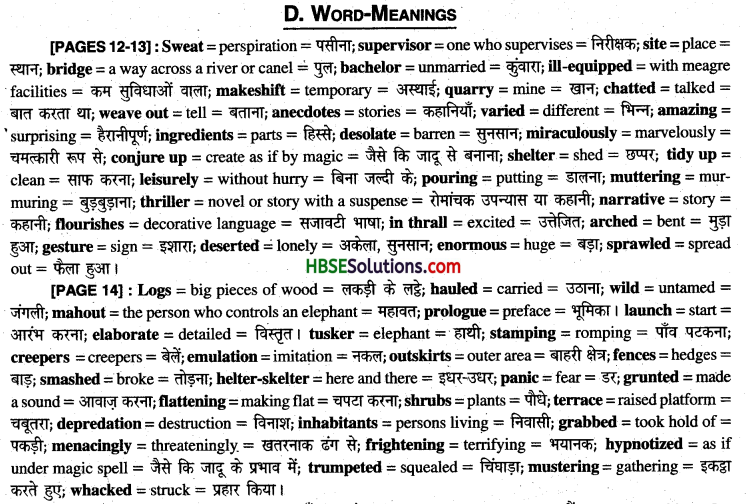
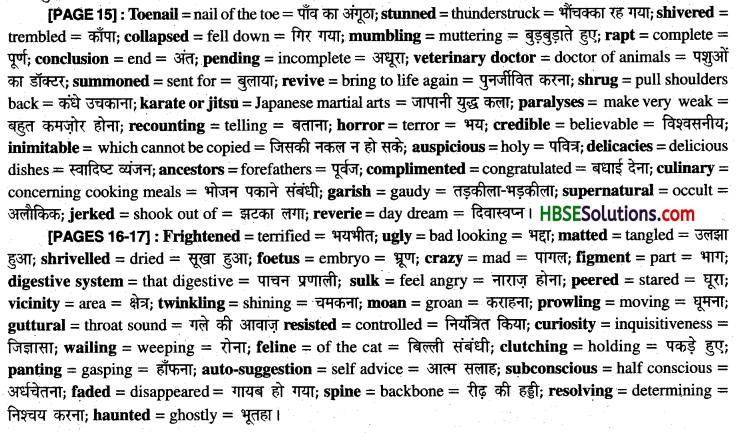
Autumn = the third season of the year= शरद ऋतु; ivy creeper = that which creeps = सिरपेंचे की लता; storey = in one floor = मंजिल; pneumonia = inflammation of one or both the lungs = एक बीमारी; gazing out = to look steadily at = टकटकी लगाकर देखना; respond = to make answer to = उत्तर देना; whisper = to speak in a very low tone = फुसफुसाहट; anxiously = troubled = चिंतित।

(Page 45) :
Finality = the state of being final = अंतिम स्थिति; nonsense = absurd = मूर्खता; confident = in a confident manner = आश्वस्त; bowl = cup = कटोरा; forever = till death = सदा के लिए; curtain = a suspended screen = पर्दा।

(Page 46) :
Begged = asked humbly = प्रार्थना की; miner = one who works in a mine = खान में काम करने वाला; model = a representation = प्रतिमा; rushed down = swiftly went down = वेगपूर्वक नीचे जाना; masterpiece= a piece of the highest workmanship = अति उत्तम रचना; remained = continued = रह जाना; tiptoed = on the tips of toes = पैर की अंगुलियों के अग्रभाग पर; peeped out = squeaked = झांकना; feeble = weak = दुर्बल; reluctantly = unwillingly = अनिच्छा से।

(Pages 47-48) :
Storm = a violent tempest = yes áry; fierce = violent = riche; energetically = with energy = कर्मठता से; clinging = sticking = चिपकना; depressed= dejected = खिन्नचित्त; gloomy = dusky = अंधकारमय; hugged = to embrace closely = आलिंगन करना; soup = a liquid food prepared from flesh, fish or vegetables = शोरबा; combed = dressed hair = कंघी की; janitor = a door keeper = द्वारपाल; shivering = trembling = काँपता हुआ; ladder = a frame with steps = सीढ़ी; lantern = lamp = लालटेन; flutter = to flap wings = फड़फड़ाना।

HBSE 9th Class English Solutions Moments Chapter 7 The Last Leaf

The Last Leaf Translation in Hindi

(Page 44)
[पतझड़ का मौसम है। तेज हवा चल रही है और जोर से वर्षा हो रही है। एक बेल पर लगे हुए सारे पत्ते टूटकर गिर गए केवल एक पत्ते को छोड़कर। आखिरी पत्ता क्यों नहीं गिरता है ?]

स्यू एवं जॉन्सी, दो युवा कलाकार एक छोटे से फ्लैट में मिलकर रहती थीं। फ्लैट एक पुराने मकान की तीसरी मंजिल पर था।

जॉन्सी नवंबर में गंभीर रूप से बीमार हो गई। उसे निमोनिया हो गया। वह बिस्तर पर बिना हिले लेटी रहती थी, और खिड़की से बाहर देखती रहती थी। उसकी सहेली स्यू को बहुत चिंता हो गई। उसने डॉक्टर को बुलाया। यद्यपि वह रोज आता था, फिर भी जॉन्सी की हालत में सुधार नहीं हुआ।

एक दिन डॉक्टर स्यू को एक तरफ ले गया और उससे पूछा, “क्या जॉन्सी को किसी बात की चिंता है ?” “नहीं”, स्यू ने उत्तर दिया। “आप ऐसा क्यों पूछते हो ?”

डॉक्टर ने कहा, “ऐसा लगता है कि जॉन्सी ने इरादा कर लिया है कि वह ठीक नहीं होगी। अगर वह जीवित नहीं रहना चाहती, तो दवाइयाँ उसकी सहायता नहीं करेंगी।”

स्यू ने पूरी कोशिश की कि जॉन्सी को अपने आसपास की वस्तुओं में रुचि लेने को राजी कर सके। उसने कपड़ों एवं फैशनों के बारे में बात की, मगर जॉन्सी ने कोई प्रतिक्रिया नहीं की। जॉन्सी ने अपने बिस्तर पर शांत लेटना जारी रखा। स्यू अपना ड्राईंग बोर्ड जॉन्सी के कमरे में ले आई और पेंट करना आरंभ कर दिया। जॉन्सी का मन उसकी बीमारी से हटाने के लिए, उसने सीटी मारना आरंभ कर दिया।

अचानक स्यू ने सुना कि जॉन्सी ने हल्के से कुछ कहा। वह जल्दी से बिस्तर के पास आई और उसने जॉन्सी को उल्टी गिनती बोलते हुए सुना। वह खिड़की से बाहर देख रही थी और कह रही थी, “बारह!” कुछ देर के बाद वह हल्के से बोली, “ग्यारह !” तब “दस”, तब “नौ”, “आठ”, “सात”। स्यू ने चिंतित होकर खिड़की के बाहर देखा। उसने देखा कि खिड़की के सामने वाली ईंटों की दीवार पर आधी चढ़ी हुई एक बेल थी। बाहर की तेज हवा में, बेल अपने पत्तों को गिरा रही थी।

HBSE 9th Class English Solutions Moments Chapter 7 The Last Leaf

(Page 45)

“यह क्या है, प्रिय ?” स्यू ने पूछा।

“छह”, जॉन्सी ने धीरे से कहा। “अब वे अधिक तेजी से गिर रहे हैं। तीन दिन पहले वहाँ लगभग सौ पत्ते थे। अब केवल पाँच रह गए हैं।”

“पतझड़ का महीना है,” स्यू ने कहा “और पत्ते तो गिरेंगे।”

“जब आखिरी पत्ता गिरेगा, तो मैं भी मर जाऊँगी,” जॉन्सी ने निश्चित तौर पर कहा। “मुझे यह बात पिछले तीन दिन से . मालूम है।”

“ओह, यह सब बकवास है,” स्यू ने उत्तर दिया। “पुरानी इवी बेल के पत्तों का तुम्हारे ठीक होने से क्या संबंध है ? डॉक्टर को पूरा विश्वास है कि तुम ठीक हो जाओगी।”

जॉन्सी ने कुछ भी नहीं कहा। स्यू गई और सूप का कटोरा ले आई।

“मुझे सूप नहीं चाहिए,” जॉन्सी ने कहा, “मुझे भूख नहीं है…..” अब केवल चार पत्ते रह गए हैं। मैं अंधेरा होने से पहले आखिरी पत्ता गिरते हुए देखना चाहती हूँ। तब मैं हमेशा के लिए सो जाऊँगी।”

स्यू जॉन्सी के बिस्तर पर बैठ गई, उसे चूमा और कहा “तुम नहीं मरोगी। मैं पर्दे नहीं खींच सकती क्योंकि मुझे रोशनी चाहिए। मैं चाहती हूँ कि मैं पेंटिंग समाप्त करके हमारे लिए कुछ पैसा लाऊँ।

(Page 46)

कृपया, मेरी प्यारी सहेली”, उसने जॉन्सी से प्रार्थना की, “वायदा करो कि जब मैं चित्र बनाऊँगी तो तुम खिड़की से बाहर नहीं देखोगी।”

“ठीक है,” जॉन्सी ने कहा। अपना चित्र जल्दी पूरा करो क्योंकि मैं आखिरी पत्ता गिरता हुआ देखना चाहती हूँ। मैं इंतजार करते-करते थक गई हूँ। मुझे मरना है, इसलिए मुझे इन बेचारे, थके हुए पत्तों की तरह शांति से जाने दो।”

“सोने का प्रयत्न करो,” स्यू ने कहा। “मुझे एक बूढ़े खनिक का चित्र बनाना है। मैं बैहरमैन को मेरा मॉडल बनाने के लिए ऊपर बुलाकर लाती हूँ।”

वह भागकर नीचे गई। बैहरमैन सबसे नीचे की मंजिल पर रहता था।

वह साठ साल का बूढ़ा चित्रकार था। उसके जीवन का सपना एक सर्वश्रेष्ठ कलाकृति बनाने का था मगर वह केवल सपना ही रह गया था। स्यू ने अपनी चिंताएँ बैहरमैन को बताई। उसने उसे बताया कि किस प्रकार जॉन्सी को विश्वास हो गया था कि आखिरी पत्ते के गिरने पर वह मर जाएगी।

HBSE 9th Class English Solutions Moments Chapter 7 The Last Leaf

“क्या वह मूर्ख है ?” बैहरमैन ने पूछा। “वह इतनी मूर्ख कैसे हो सकती है ?” “उसे बहुत तेज बुखार है,” स्यू ने शिकायत की। “वह खाने-पीने से इंकार करती है और वही चीज मुझे बहुत चिंतित करती है।” “मैं तुम्हारे साथ आऊँगा और जॉन्सी से मिलूँगा,” बैंहरमैन ने कहा।

वे दबे पांव कमरे में आए। जॉन्सी सो रही थी। स्यू ने पर्दे कर दिए और वे दोनों अगले कमरे में चले गए। उसने खिड़की से बाहर देखा। बेल पर केवल एक पत्ता था। तेज बरसात हो रही थी और बर्फ की तरह ठंडी हवा चल रही थी। ऐसा लगता था जैसे पत्ता अब किसी भी क्षण गिर जाएगा। बैहरमैन एक भी शब्द नहीं बोला। वह वापिस कमरे में चला गया।

जॉन्सी अगली प्रातः उठी। उसने कमजोर आवाज में स्यू को पर्दा हटाने के लिए कहा। स्यू घबराई हुई थी। उसने बड़ी अनिच्छा से पर्दे हटाए।

“ओहं !” स्यू ने विस्मय से कहा, जब उसने बेल को देखा।

(Page 47)

“देखो, बेल पर अभी भी एक पत्ता है। यह एकदम हरा एवं स्वस्थ लग रहा है। तूफान एवं तेज हवा के बावजूद भी यह नहीं गिरा।”

“मैंने कल रात को हवा की आवाज़ सुनी थी,” जॉन्सी ने कहा। “मैंने सोचा था कि यह गिर गया होगा। यह अवश्य आज गिर जाएगा। तब मैं मर जाऊँगी।”

“तुम नहीं मरोगी,” स्यू ने जोश के साथ कहा। “तुम्हें अपनी सहेलियों के लिए जीवित रहना है। अगर तुम मर जाओगी तो मेरा क्या होगा ?”

जॉन्सी हल्के से मुस्कराई और उसने अपनी आंखें बंद कर ली। लगभग हर घंटे के बाद वह खिड़की से झांकती और देखती कि पत्ता अभी भी वहीं पर है। यह बेल को चिपटा हुआ प्रतीत होता था।

शाम को, एक अन्य तूफान आया मगर पत्ता नहीं गिरा। जॉन्सी बड़ी देर तक लेट कर पत्ते को देखती रही। तब उसने स्यू को बुलाया।

“मैं बहुत बुरी लड़की हूँ। तुमने इतने प्यार से मेरी देखभाल की है और मैंने तुम्हारे साथ सहयोग नहीं किया है। मैं तनावपूर्ण एवं उदास थी। आखिरी पत्ते ने मुझे बता दिया है कि मैं कितनी बुरी थी। मैंने महसूस कर लिया है कि मरने की इच्छा करना पाप है।”

HBSE 9th Class English Solutions Moments Chapter 7 The Last Leaf

उसने जॉन्सी को आलिंगन किया। तब उसने उसे बहुत-सा गर्म सूप और एक दर्पण दिया। जॉन्सी ने अपने बालों में कंघी की और प्रसन्नता से मुस्कराई।

दोपहर बाद डॉक्टर आया। अपने मरीज की जाँच करने के बाद उसने स्यू से कहा, “अब जॉन्सी में जीने की इच्छा है। मुझे विश्वास है कि वह शीघ्र अच्छी हो जाएगी। अब मुझे नीचे जाकर बैहरमैन को देखना है। उसे भी निमोनिया हो गया है। मगर मुझे डर है कि उसकी (बचने की) की कोई आशा नहीं है।”

अगली प्रातः स्यू आई और जॉन्सी के बिस्तर पर बैठ गई। जॉन्सी का हाथ अपने हाथ में लेकर वह बोली, “मैंने तुम्हें कुछ बताना है। आज प्रातः श्री बैहरमैन की निमोनिया से मृत्यु हो गई। वह केवल दो दिन बीमार रहा। पहले दिन चौकीदार ने उसे उसके बिस्तर पर देखा। उसके कपड़े गीले थे और वह काँप रहा था। वह उस तूफानी रात में कहीं बाहर गया था।”

(Page 48)

तब उन्होंने सीढ़ी और उसके बिस्तर के पास अभी तक जलती हुई लालटेन देखी। वहाँ कुछ ब्रुश भी थे और सीढ़ी के पास फर्श पर हरे एवं पीले रंग थे। “प्रिय जॉन्सी”, स्यू ने कहा, “खिड़की से बाहर देखो। बेल के उस पत्ते को देखो। क्या तुम्हें हैरानी नहीं हुई कि यह हवा के चलने पर फड़फड़ाता नहीं है ? यह बैहरमैन की सर्वश्रेष्ठ कलाकृति है। उसने इसे उस रात बनाया जब आखिरी पत्ता गिरा।”

HBSE 9th Class English Solutions Moments Chapter 7 The Last Leaf Read More »

HBSE 9th Class Social Science Solutions SST Haryana Board

Haryana Board HBSE 9th Class Social Science Solutions

HBSE 9th Class Social Science Solutions in Hindi Medium

HBSE Class 9 Social Science History: India and The Contemporary World – I (इतिहास-भारत और समकालीन विश्व-I)

HBSE Class 9 Social Science Geography: Contemporary India – I (भूगोल-समकालीन भारत-I)

  • Chapter 1 भारत-आकार वे स्थिति
  • Chapter 2 भारत का भौतिक स्वरूप
  • Chapter 3 अपवाह
  • Chapter 4 जलवायु
  • Chapter 5 प्राकृतिक वनस्पति एवं वन्य जीवन
  • Chapter 6 जनसंख्या

HBSE Class 9 Social Science Civics (Political Science): Democratic Politics – I (राजनीति विज्ञान-लोकतांत्रिक राजनीति-I)

HBSE Class 9 Social Science Economics (अर्थशास्त्र)

  • Chapter 1 पालमपुर गाँव की कहानी
  • Chapter 2 संसाधन के रूप में लोग
  • Chapter 3 निर्धनता : एक चुनौती
  • Chapter 4 भारत में खाद्य सुरक्षा

HBSE 9th Class Social Science Solutions in English Medium

Haryana Board HBSE 9th Class Social Science Solutions History: India and The Contemporary World – I

  • Chapter 1 The French Revolution
  • Chapter 2 Socialism in Europe and the Russian Revolution
  • Chapter 3 Nazism and the Rise of Hitler
  • Chapter 4 Forest Society and Colonialism
  • Chapter 5 Pastoralists in the Modern World
  • Chapter 6 Peasants and Farmers
  • Chapter 7 History and Sport The Story of Cricket
  • Chapter 8 Clothing A Social History

Haryana Board HBSE 9th Class Social Science Solutions Geography: Contemporary India – I

  • Chapter 1 India-Size and Location
  • Chapter 2 Physical Features of India
  • Chapter 3 Drainage
  • Chapter 4 Climate
  • Chapter 5 Natural Vegetation and Wildlife
  • Chapter 6 Population

Haryana Board HBSE 9th Class Social Science Solutions Civics (Political Science): Democratic Politics – I

  • Chapter 1 Democracy in the Contemporary World
  • Chapter 2 What is Democracy? Why Democracy?
  • Chapter 3 Constitutional Design
  • Chapter 4 Electoral Politics
  • Chapter 5 Working of Institutions
  • Chapter 6 Democratic Rights

HBSE Class 9 Social Science Economics

  • Chapter 1 The Story of Village Palampur
  • Chapter 2 People as Resource
  • Chapter 3 Poverty as a Challenge
  • Chapter 4 Food Security in India

HBSE 9th Class Social Science Solutions SST Haryana Board Read More »

HBSE 9th Class English Solutions Moments Chapter 6 Weathering the Storm in Ersama

Haryana State Board HBSE 9th Class English Solutions Moments Chapter 6 Weathering the Storm in Ersama Textbook Exercise Questions and Answers.

Haryana Board 9th Class English Solutions Moments Chapter 6 Weathering the Storm in Ersama

HBSE 9th Class English Weathering the Storm in Ersama Textbook Questions and Answers

Think about It

Question 1.
What havoc has the super cyclone wreaked in the life of the people of Orissa?
(उड़ीसा के लोगों के जीवन में सुपर (तीव्र) चक्रवात ने क्या तबाही मचा दी है?)
Answer:
There was a heavy rain with a fierce storm. The trees were uprooted and crashed to the earth. The water entered into the houses and washed away the most of the household things. Many houses collapsed and a lot of people died.

(तीव्र तूफान के साथ भारी वर्षा हुई। वृक्ष जड़ों से उखड़ गए और जमीन पर धराशायी हो गए। पानी घरों के अंदर घुस गया और घरेलू वस्तुओं को बहा ले गया। बहुत-से मकान गिर गए और काफी संख्या में लोग मारे गए।)

Question 2.
How has Prashant, a teenager, been able to help the people of his village?
(एक तरुण युवक होते हुए प्रशांत अपने गाँव के लोगों की मदद कैसे करता है?)
Answer:
Prashant was just nineteen years old. He organises a group of youths and elders to make the merchant give them rice. They succeed in their mission. Then he makes a team of youth volunteers to clean the shelter of filth, urine, vomit and floating carcasses.

(प्रशांत की आयु मात्र उन्नीस वर्ष थी। उसने व्यापारी से चावल प्राप्त करने के लिए युवाओं और बुजुर्गों का एक संगठन बनाया। वे अपने प्रयास में सफल हो जाते हैं। तब वह युवा स्वयंसेवकों की एक टीम तैयार करता है ताकि वे उनके आश्रय स्थलों में से गंदगी, उल्टी, पेशाब तथा तैरती हुई लाशों को साफ कर सकें।)

HBSE 9th Class English Solutions Moments Chapter 6 Weathering the Storm in Ersama

Question 3.
How have the people of the community helped one another? What role do the women of Kalikuda play during these days?
(गाँव के लोग किस प्रकार से एक-दूसरे की सहायता करते हैं? इस दौरान कालीकुदा की महिलाएँ क्या भूमिका अदा करती हैं?)
Answer:
The people of the community show a great cooperation. They join hands with Prashant to drive out a cleanliness compaign. The women of Kalikuda looking after the orphaned children and the men secure food and materials for the shelter.

(गाँव के लोग बहुत अधिक सहयोग का प्रदर्शन करते हैं। वे स्वच्छता अभियान को चलाने में पूरा सहयोग देते हैं। कालीकुदा की महिलाएँ अनाथ बच्चों की देखभाल करती हैं और पुरुष उनके लिए भोजन और आश्रय का प्रबंध करने में जुटे हुए हैं।)

Question 4.
Why do Prashant and other volunteers resist the plan to set up institutions for orphans and widows? What alternatives do they consider?
(प्रशांत और अन्य स्वयंसेवक अनाथ बच्चों और विधवाओं के लिए संस्थाएँ खोलने की योजना का विरोध क्यों करते हैं? वे क्या विकल्प सुझाते हैं?)
Answer:
The government plans to set up institutions for orphans and widows. Prashant and other volunteers resist this plan. They think that in such institutions, the children will grow up without any love and the widows will suffer from Stigma and loneliness. They suggest that they should be resettled in their own community.

(सरकार अनाथ बच्चों और विधवाओं के लिए संस्थाएँ खोलने की योजना बनाती है। प्रशांत तथा अन्य स्वयंसेवक इस योजना का विरोध करते हैं। वे सोचते हैं कि इन संस्थानों में बच्चे बिना किसी स्नेह के बड़े होंगे और विधवाएँ कलंक तथा अकेलेपन से पीड़ित होंगी। वे सुझाव देते हैं कि उन्हें समुदाय में ही पुनः स्थापित किया जाए।)

Question 5.
Do you think Prashant is a good leader? Do you think young people can get together to help people during natural calamities?
(क्या आपके विचार में प्रशांत एक अच्छा नेता है? क्या आप ऐसा मानते हो कि प्राकृतिक आपदाओं के समय नौजवान लोगों की मदद करने के लिए एकत्र हो सकते हैं?)
Answer:
No doubt Prashant is a good leader. He has an optimistic view about life. He organises both young and elder people to get rice from the merchant. He makes teams to provide help to the storm victims. He inspires women to look after the orphans and start working in the food-for-work programmes.

He successfully protests against the plan of setting up institutions for the orphans and widows. I thinkłyoung people can get together to help people during natural calamities and play an important role.

(निस्संदेह प्रशांत एक अच्छा नेता है। जीवन के प्रति उसकी एक आशावादी सोच है। व्यापारी से चावल प्राप्त करने के लिए वह युवा तथा वृद्ध दोनों वर्ग के लोगों को संगठित करता है। तूफान पीड़ित लोगों की मदद करने के लिए वह टीमों का गठन करता है। वह महिलाओं को अनाथ बालकों की देखभाल करने तथा

काम के बदले अनाज’ कार्यक्रम में भाग लेने के लिए प्रेरित करता है। वह अनाथ बच्चों और विधवाओं के लिए संस्थाएँ खोलने की योजना का सफल विरोध करता है। मेरे विचार में प्राकृतिक आपदाओं के समय पीड़ित लोगों की मदद करने के लिए नवयुवक एकत्र हो सकते हैं और महत्त्वपूर्ण भूमिका निभा सकते हैं।)

HBSE 9th Class English Solutions Moments Chapter 6 Weathering the Storm in Ersama

Talk about It

Question 1.
Talk about the preparedness of the community for a natural disaster. (You can talk about evacuation plans and rehabilitation; permanent safe shelters; warning systems; relief efforts; building materials to withstand cyclone/flood/earthquake i.e. safe housing; peoples’ organisation of their own rescue, the survival instinct, etc.)
Answer:
The Himalayan Range of India is a highly sensitive earthquake prone area. It is right to say that we can’t forecast about earthquake but it is in our hands to minimise the harm caused by it. Some precautionary steps should be taken in this regard. People should make wooden houses to live in.

At the time of earthquake people should come out of the houses in some open space. The government should develop such technique that people may get warning even just a few seconds earlier. After this havoc people should show generosity to stand with the victims. Relief camps should be set up. Medical facilities should be provided at the earliest. Rehabilitation work should be started urgently. Victims should be given utmost help, care and attention to lessen their miseries.

HBSE 9th Class English Weathering The Storm in Ersama Important Questions and Answers

Very Short Answer Type Questions

Question 1.
When did the cyclone hit Orissa?
Answer:
The cyclone hit Orissa on 27 October, 1999.

Question 2.
Where was Prashant when the cyclone hit Orissa?
Answer:
At that time he was in a small coastal town of Orissa, some eighteen kilometres from his village.

Question 3.
What was the name of Prashant’s village?
Answer:
The name of his village was Kalikuda.

Question 4.
Who met Prashant on his way back to village?
Answer:
He met two friends of his uncle on his way back to village.

HBSE 9th Class English Solutions Moments Chapter 6 Weathering the Storm in Ersama

Question 5.
What had Prashant to push away on his way back to village?
Answer:
Prashant had to push away many human bodies, and carcasses of dogs, cattle and goats.

Question 6.
How did Prashant find his house when he reached his village?
Answer:
He found only the remnants of the roof of his house.

Question 7.
What did Prashant found about children in the relief camp?
Answer:
Prashant found that a large number of children had been orphaned.

Question 8.
How have the people of the community helped one another?
Answer:
The people of the community helped one another with great co-operation.

Question 9.
How did Prashant feel when he reached his village?
Answer:
His heart went cold when he reached his village.

Question 10.
How did Prashant travel back to his village from Ersama?
Answer:
Prashant travelled on foot and swimming through deep water back to his village.

HBSE 9th Class English Solutions Moments Chapter 6 Weathering the Storm in Ersama

Question 11.
How did people receive food in Prashant’s village?
Answer:
Food packets were dropped by helicopters.

Short Answer Type Questions

Question 1.
Where were Prashant and his friends during the two days of the super cyclone? What did they live on? Where did they get their ‘food’ from?
(तीव्र चक्रवात के पहले दो दिन प्रशांत एवं उसके मित्र कहाँ थे? उन्होंने किस चीज़ पर गुजारा किया? उन्हें अपना भोजन कहाँ से प्राप्त हुआ?)
Answer:
The rain water was entering the house during the super cyclone. So, Prashant and his friend’s family remained on the roof of the house for two days. Two coconut trees had fallen on the roof of the house. Prashant and his friend’s family lived on them. They got their food from these tender coconuts.

(तीव्र चक्रवात के दौरान बरसात का पानी घर में घुस रहा था। इसलिए प्रशांत एवं उसके मित्र का परिवार दो दिन तक मकान की छत पर रहे। नारियल के दो वृक्ष घर की छत पर गिर गए थे। प्रशांत एवं उसके मित्र के परिवार ने उन पर गुजारा किया। उन्हें इन नरम नारियलों से भोजन प्राप्त हुआ।)

Question 2.

(i) Why was it difficult for Prashant to travel back to his village?
(प्रशांत के लिए अपने गाँव वापिस जाना कठिन क्यों था?)
Answer:
There was water everywhere. He had to use his stick to locate the road. At some places, it was waist deep and the progress was slow. Sometimes, he lost the road and had to swim. After some distance, he found two friends of his uncle. They decided to move ahead together. They had to push away many human bodies floating on the water.

(चारों तरफ पानी था। उसे सड़क की तलाश करने के लिए अपनी छड़ी का प्रयोग करना पड़ता था। कई जगह, पानी कमर तक गहरा था और प्रगति धीमी थी। कई बार, सड़क खो जाती थी और उसे तैरना पड़ता था। कुछ दूरी के बाद, उसे अपने चाचा के दो मित्र मिल गए। उन्होंने मिलकर आगे बढ़ने का फैसला किया। उन्हें पानी पर तैरती मानवीय लाशों को धकेलना पड़ता था।)

(ii) “His heart went cold’ when he reached his village. Why?
(जब वह अपने गाँव पहुँचा तो ‘उसका दिल बैठ गया।’ क्यों?)
Answer:
At last Prashant reached his village Kalikuda. His heart sank. His house was gone. His family was nowhere. In order to look for his family, Prashant went to the Red Cross Shelter. Fortunately, his family was alive. They were very glad to see Prashant. He came to know that eighty-six lives were lost in his village and all the ninety-six houses had been washed away.

(आखिर प्रशांत अपने गाँव कालीकुदा पहुंचा। उसका दिल बैठ गया। उसका घर बह गया था। उसका परिवार कहीं नहीं था। अपने परिवार को ढूँढ़ने के लिए, प्रशांत रैडक्रॉस आश्रय में गया। सौभाग्यवश, उसका परिवार जीवित था। वे प्रशांत को देखकर प्रसन्न हुए। उसे मालूम हुआ कि उसके गाँव से 86 लोग मर गए हैं और गाँव के सारे 96 मकान बह गए हैं।)

HBSE 9th Class English Solutions Moments Chapter 6 Weathering the Storm in Ersama

Question 3.
What were the two important tasks Prashant did after deciding to be the leader of the village?
(गाँव का नेता बनने का फैसला करने के बाद प्रशांत ने कौन-से दो महत्त्वपूर्ण कार्य किए?)
Answer:
The first task was that he organised a group of youths and elders to make the merchant give them rice. They succeeded in their mission. Secondly, he made a team of youth volunteers. They cleaned the shelter of the dirt, urine, vomit and floating carcasses.

(पहला काम था कि उसने युवा लोगों एवं बुजुर्गों का एक दल संगठित किया ताकि वे व्यापारी को उन्हें चावल देने के लिए मना सकें। वे अपने मिशन में कामयाब हो गए। दूसरे, उसने युवा स्वयंसेवकों का एक दल बनाया। उन्होंने आश्रय में से गंदगी, पेशाब, उल्टी एवं तैरती हुई जानवरों की लाशों को साफ किया।)

Question 4.
How did the villagers make the helicopters drop regular quantities of flood?
(गाँव वालों ने हैलीकॉप्टरों को नियमित रूप से भोजन गिराने के लिए कैसे मजबूर किया?)
Answer:
Prashant and others devised a plan to attract the attention of the helicopters. They deputed children to lie there with empty utensils on their stomachs. This was done to communicate to the helicopters that they were hungry. The scheme worked and the helicopters started dropping food regularly.

(प्रशांत एवं अन्य लोगों ने हैलीकॉप्टरों का ध्यान आकर्षित करने की एक योजना बनाई। उन्होंने बच्चों से कहा कि खाली बर्तन अपने पेट पर रखकर लेट जाएँ। यह इसलिए किया गया ताकि हैलीकॉप्टरों तक यह बात पहुँचाई जाए कि वे भूखे हैं। योजना काम कर गई और हैलीकॉप्टरों ने नियमित रूप से भोजन गिराना आरंभ कर दिया।)

Question 5.
Where is Ersama situated and what was the name of Prashant’s village?
(एरसामा कहाँ स्थित है? और प्रशांत के गाँव का क्या नाम था?)
Answer:
Ersama is situated just eighteen kilometers away from Prashant’s village. The name of Prashant’s village was Kalikuda.

(एरसामा प्रशांत के गाँव से केवल अठारह किलोमीटर दूर था। प्रशांत के गाँव का नाम कालीकुदा था।)

HBSE 9th Class English Solutions Moments Chapter 6 Weathering the Storm in Ersama

Essay Type Questions

Question 1.
Describe the destruction caused by the super cyclone as narrated in the story ‘Weathering the Storm in Ersama’.
(Weathering the Storm in Ersama’ कहानी में वर्णित तीव्र चक्रवात के विनाश का वर्णन करो।)
Answer:
On 27th October, 1999, Prashant went to meet one of his friends who lived in Ersama. The place was eighteen kilometres from his village. In the evening, a super cyclone came. Winds beat against the houses with great fury. There was heavy and continuous rain. Houses and people were washed away in the flood. His friend’s house.was made of bricks and cement.

It was strong enough to survive the wind blowing at 350 km per hour. But one uprooted tree fell on their house and damaged some part of its roof and walls. To escape the waters rising in the house, Prashant and his friend’s family took refuge on the roof. For the next two days, Prashant sat huddled with his friend’s family on the rooftop. They froze in cold and rain.

In the early morning, Prashant saw the destruction caused by the cyclone. There was a sheet of water everywhere. Only parts of cemented houses were still visible. All other houses had been washed away. Even huge trees had fallen. Bloated dead-bodies of animals and human beings were floating everywhere.

(27 अक्तूबर, 1999 को प्रशांत अपने एक मित्र को मिलने गया जो एरसामा में रहता था। वह स्थान उसके गाँव से अठारह किलोमीटर दूर था। शाम को एक तीव्र चक्रवात आ गया। हवा बड़े जोश के साथ मकानों से टकराई। वहाँ तेज और लगातार बरसात हुई। घर और लोग बाढ़ में बह गए। उसके मित्र का घर ईंटों और सीमेंट का बना हुआ था।

यह इतना मजबूत था कि 350 मील प्रति घंटा की गति से चलने वाली हवाओं को झेल गया। मगर एक उखड़ा हुआ वृक्ष उनके घर पर गिर गया और छत के कुछ भाग एवं दीवारों को नुकसान पहुंचाया। घर में बढ़ते हुए पानी से बचने के लिए प्रशांत और उसके मित्र के परिवार ने छत पर आश्रय लिया। अगले दो दिनों तक प्रशांत अपने मित्र और उसके परिवार के साथ छत पर दुबक कर बैठा रहा।

वे ठंड एवं बरसात में जम गए। सुबह होते ही प्रशांत ने चक्रवात द्वारा किए गए विनाश को देखा। चारों तरफ पानी की चादर थी। केवल सीमेंट वाले मकानों के कुछ भाग नजर आ रहे थे। बाकी सारे घर बह गए थे। यहाँ तक कि बड़े-बड़े वृक्ष भी गिर गए थे। जानवरों और मनुष्यों की फूली हुई लाशें चारों तरफ तैर रही थीं।)

HBSE 9th Class English Solutions Moments Chapter 6 Weathering the Storm in Ersama

Question 2.
Describe how Prashant reached his village after the cyclone?
(वर्णन करो कि चक्रवात के बाद प्रशांत अपने गाँव कैसे पहुँचा ?)
Ans.
The destruction caused by the cyclone and the waves of the ocean continued for the next thirty-six hours. Two days later, the rain ceased and the rainwater slowly began to recede. Prashant was worried about his family. He took a long stick and started on the eighteen kilometre long and difficult journey to his village. There was water everywhere. He had to use his stick to locate the road.

At places it was waist deep and the progress was slow. Sometimes, he lost the road and had to swim. After some distance, he found two friends of his uncle. They decided to move ahead together. They had to push away many human bodies floating on the water. There were also carcasses of dogs, goats and cattle.

In every village they passed, they could barely see a house standing. He feared that his family could not have survived the cyclone. At last he reached his village Kalikuda. His heart sank. His house was gone. His family was nowhere. In order to look for his family, Prashant went to the Red Cross shelter. Fortunately, his family was alive. They were very glad to see Prashant. He came to know that eighty-six lives were lost in his village and all the ninety-six houses had been washed away.

(चक्रवात एवं सागर की लहरों द्वारा पैदा किया गया विनाश अगले छत्तीस घंटे तक चलता रहा। दो दिन बाद, बरसात बंद हो गई और बरसात का पानी धीरे-धीरे उतरने लगा। प्रशांत को अपने परिवार की चिंता थी। उसने एक लंबी छड़ी ली और अपने गाँव की ओर अठारह किलोमीटर लंबी एवं मुश्किल यात्रा आरंभ कर दी। चारों तरफ पानी था। उसे सड़क को ढूँढने के लिए छड़ी का प्रयोग करना पड़ता था।

कई जगह पानी कमर तक गहरा था और आगे बढ़ना बहुत धीमा था। कई बार, सड़क खो जाती थी और उसे तैरना पड़ता था। कुछ दूर जाने के बाद उसे अपने चाचा जी दो के मित्र मिल गए। उन्होंने मिलकर आगे बढ़ने का फैसला किया। उन्हें पानी पर तैरती हुई मानवीय लाशों को परे धकेलना पड़ता था। वहाँ कुत्तों, बकरियों और मवेशियों की लाशें भी थीं। वे जिस भी गाँव से गुजरे, वहाँ मुश्किल से ही कोई घर सलामत नज़र आता था।

उसे डर था कि उसका परिवार उस चक्रवात में जीवित नहीं बचा होगा। आखिर वह अपने गाँव कालीकुदा पहुंचा। उसका दिल डूब गया। उसका घर बह गया था। उसके परिवार का कहीं पता नहीं था। अपने परिवार की तलाश करने के लिए प्रशांत रेडक्रॉस आश्रय में गया। सौभाग्यवश, उसका परिवार जीवित था। वे प्रशांत को देखकर बहुत प्रसन्न हुए। उसे पता चला कि गाँव के 86 लोग मर गए थे और सारे के सारे 96 घर बह गए थे।)

HBSE 9th Class English Solutions Moments Chapter 6 Weathering the Storm in Ersama

Question 3.
Describe how Prashant helped himself and others at the time of the natural calamity?
(वर्णन करो कि प्राकृतिक विपदा के समय प्रशांत ने अपनी एवं अन्य लोगों की सहायता कैसे की?)
Answer:
The cyclone caused a lot of damage in Prashant’s village and surrounding areas. Prashant decided to help his own family and the others. He organised a group of youths. They pressurized the local merchant to give rice for the starving villagers. They burnt a fire and cooked the rice, although it was rotting. His next step was to clean the place of filth, dirt, urine and floating dead bodies. They tended the wounds and fractures of many who had been injured.

On the fifth day, a military helicopter dropped food. But it did not return. Prashant and others devised a plan to attract the attention of the helicopters. They deputed children to lie there with empty utensils on their stomachs. This was done to communicate to the helicopters that they were hungry. The scheme worked and the helicopters started dropping food regularly.

Prashant brought the orphaned children and made a shelter for them. He asked the woman to look after them. But he found that women and children were sinking deeper and deeper in their grief. A non-government organization had started a food for work programme. Prashant persuaded them to join it. He engaged other volunteers to help widows start their lives again. The orphaned children were resettled in their own community.

(चक्रवात ने प्रशांत के गाँव एवं आस-पास के गाँवों में बहुत विनाश किया। प्रशांत ने अपने परिवार एवं अन्य लोगों की सहायता करने का निर्णय लिया। उसने जवानों का एक समूह संगठित किया। उन्होंने स्थानीय व्यापारी पर दबाव डाला कि वह भूख से मरते ग्रामीणों को चावल दे। उन्होंने आग जलाई और चावल पकाया, यद्यपि यह सड़ रहा था। उसका अगला कदम था कि उस स्थान से गंदगी, कूड़ा, पेशाब और तैरती हुई लाशें हटाई जाएँ। जो बहुत से लोग घायल हो गए थे, उन्होंने उनके जख्मों और टूटे अंगों की देखभाल की।

पांचवें दिन, मिलिट्री के एक हैलीकॉप्टर ने भोजन गिराया। मगर यह लौटकर नहीं आया। प्रशांत एवं अन्य लोगों ने हैलीकॉप्टरों का ध्यान अपनी ओर आकर्षित करने के लिए एक योजना बनाई। उन्होंने बच्चों को कहा कि वे अपने पेट पर खाली बर्तन रखकर लेट जाएँ। ऐसा इसलिए किया गया कि वे हैलीकॉप्टरों को बताएँ कि वे भूखे हैं। यह योजना काम कर गई और उसके बाद हैलीकॉप्टरों ने नियमित रूप से भोजन गिराना आरंभ किया।

प्रशांत अनाथ बच्चों को लाया और उनके लिए एक आश्रय बनाया। उसने स्त्रियों को कहा कि वे उनकी देखभाल करें। मगर . उसने देखा कि स्त्रियाँ और बच्चे गम में और गहरे डूबते जा रहे थे। एक गैर-सरकारी संस्था ने काम के बदले अनाज योजना आरंभ की। प्रशांत ने उन्हें मनाया कि वे इस योजना में शामिल हों। उसने अन्य स्वयंसेवकों को इस काम पर लगाया कि वे विधवाओं को अपना जीवन फिर से आरंभ करने में सहायता करें। अनाथ बच्चों को अपने ही समुदाय में फिर से बसाया गया।)

HBSE 9th Class English Solutions Moments Chapter 6 Weathering the Storm in Ersama

Multiple Choice Questions

Question 1.
The heavy cyclone hit Orissa in ……………
(A) 1998
(B) 1999
(C) 2000
(D) 2001
Answer:
(B) 1999

Question 2.
Where was Prashant when the cyclone hit his village?
(A) at the block headquarter about 18 k.ms from his village
(B) in his village
(C) in other stage
(D) none of the above
Answer:
(A) at the block headquarter about 18 k.ms from his village

Question 3.
How did Prashant reach his village?
(A) travelling on foot
(B) swimming through water
(C) both (A) and (B)
(D) none of the above
Answer:
(C) both (A) and (B)

HBSE 9th Class English Solutions Moments Chapter 6 Weathering the Storm in Ersama

Question 4.
What did Prashant see in the flood water floating?
(A) dead bodies of men, women
(B) carcasses of dogs, goats and cattle and children
(C) household possessions
(D) all of the above
Answer:
(D) all of the above

Question 5.
How much distance was covered by Prashant through flood water?
(A) Eighteen kilometres
(B) Eighty kilometers
(C) Hundred kilometres
(D) Two hundred kilometres
Answer:
(A) Eighteen kilometres

Question 6.
The name of Prashant’s village is ………
(A) kalikuda
(B) ersama
(C) palikuda
(D) none of the above
Answer:
(A) kalikuda

Question 7.
Could Prashant meet his family when he reached his village?
(A) Yes
(B) No
(C) May be
(D) May not be
Answer:
(B) No

Question 8.
How long did it rain continuously in Ersama?
(A) for 24 hours
(B) for 36 hours
(C) for 48 hours
(D) none of the above
Answer:
(B) for 36 hours

HBSE 9th Class English Solutions Moments Chapter 6 Weathering the Storm in Ersama

Question 9.
What calamity hit Orissa?
(A) cyclone
(B) earth quake
(C) drought
(D) land sliding
Answer:
(A) cyclone

Weathering The Storm in Ersama Summary

Weathering The Storm in Ersama Introduction in English

7n October, 1999, a cyclone hit Orissa. It killed thousands of people and destroyed hundreds of houses. Prashant, a young man, had gone Ersama, a small town, to visit one of his friends. The place was just eighteen kilometres from his own village. Towards the evening, the town was hit by a devastating cyclone.

Prashant and the family of his friend were marooned on the roof of the house for two dreadful nights. On the third day, Prashant decided to go to his village. He reached there with great difficulty. He found destruction everywhere in his village. He at once gathered some young people of his village and started helping the poor and the needy. This is the story of Prashant’s courage in the face of a great calamity.

Weathering The Storm in Ersama Summary in English

On 27th October, 1999, Prashant went to meet one of his friends who lived in Ersama. The place was eighteen kilometres from his village. In the evening, a super cyclone came. Winds beat against the houses with great fury. There was heavy and continuous rain. Houses and people were washed away in the flood. His friend’s house was made of bricks ar.d cement.

It was strong enough to survive the wind blowing at 350 km per hour. But one uprooted tree fell on the their house and damaged some part of its roof and walls. To escape the waters rising in the house, Prashant and his friend’s family took refuge on the roof. For the next two days, Prashant sat huddled with his friend’s family on the rooftop.

They froze in the cold and the rain. In the early morning, Prashant saw the destruction caused by the cyclone. There was a sheet of water everywhere. Only parts of cemented houses were still visible. All other houses had been washed away. Even huge trees had fallen. Bloated dead bodies of animals and human beings were floating everywhere.

The destruction caused by the cyclone and the waves of the ocean continued for the next thirty-six hours. Two days later, the rain ceased and the rainwater slowly began to recede. Prashant was worried about his family. He took a long stick and started on the eighteen kilometres long and difficult journey to his village. There was water everywhere. He had to use his stick to locate the road.

At places it was waist deep and the progress was slow. Sometimes, he lost the road and had to swim. After some distance, he found two friends of his uncle. They decided to move ahead together. They had to push away many human bodies floating on the water. There were also carcasses of dogs, goats and cattle. In every village they passed, they could barely see.

HBSE 9th Class English Solutions Moments Chapter 6 Weathering the Storm in Ersama

A house standing. He feared that his family could not have survived the cyclone. At last he reached his village Kalikuda. His heart sank. His house was gone. His family was nowhere. In order to look for his family, Prashant went to the Red Cross shelter. Fortunately, his family was alive. They were very glad to see Prashant. He came to know that eighty six lives were lost in his village and all the ninety six houses had been washed away.

The cyclone caused a lot of damage in Prashant’s village and surrounding areas. Prashant decided to help his own family and the others. He organised a group of youths. They pressurized the local merchant to give rice for the starving villagers. They burnt a fire and cooked the rice, although it was rotting. His next step was to clean the place of filth, dirt, urine and floating dead bodies.

They tended the wounds and fractures of many who had been injured. On the fifth day, a military helicopter dropped food. But it did not return. Prashant and others devised a plan to attract the attention of the helicopters. They deputed children to lie there with empty utensils on their stomachs. This was done to communicate to the helicopters that they were hungry. The scheme worked and the helicopters started dropping food regularly.

Prashant brought the orphaned children and made a shelter for them. He asked the woman to look after them. But he found that women and children were sinking deeper and deeper in their grief. A non-government organization had started a food for work programme. Prashant persuaded them to join it. He engaged other volunteers to help widows start their lives again. The orphaned children were resettled in their own community.

Though six months have passed since the cyclone caused a heavy destruction, the widows and orphaned children of the village still seek Prashant in their hour of grief and need.

HBSE 9th Class English Solutions Moments Chapter 6 Weathering the Storm in Ersama

Weathering The Storm in Ersama Introduction in Hindi

अक्तुबर, 1999 में, उड़ीसा में एक चक्रवात आया। इसने हज़ारों लोगो को मार दिया आर सकड़ा घर नष्ट कर दिए। एक युवा व्यक्ति, प्रशांत, अपने एक मित्र से मिलने एरसामा नामक एक छोटे-से कस्बे में गया हुआ था। वह स्थान उसके अपने गाँव से केवल अठारह किलोमीटर दूर था। शाम के समय, कस्बे में विनाशकारी चक्रवात आया।

प्रशांत एवं उसके मित्र का परिवार घर की छत पर दो भयानक रातों के लिए फंसा रहा। तीसरे दिन, प्रशांत ने अपने गाँव जाने का फैसला किया। वह वहाँ बहुत कठिनाई से पहुँचा। उसने अपने गाँव में चारों ओर विनाश देखा। उसने तुरंत गाँव के कुछ युवा लोगों को इकट्ठा किया और गरीब एवं जरूरतमंद लोगों की सहायता करना आरंभ कर दिया। यह एक महान विपत्ति का सामना करने में प्रशांत के साहस की कहानी है

Weathering The Storm in Ersama Summary in Hindi

27 अक्तूबर, 1999 को प्रशांत अपने एक मित्र को मिलने गया जो एरसामा में रहता था। वह स्थान उसके गाँव से अठारह किलोमीटर दूर था। शाम को एक तीव्र चक्रवात आ गया। हवा बड़े जोश के साथ मकानों से टकराई। तेज और लगातार बरसात हुई। घर और लोग बाढ़ में बह गए। उसके मित्र का घर ईंटों और सीमेंट का बना हुआ था। यह इतना मजबूत था कि 350 मील प्रति घंटा की गति से चलने वाली हवाओं को झेल गया।

मगर एक उखड़ा हुआ वृक्ष उनके घर पर गिर गया और छत के कुछ भाग एवं दीवारों को नुकसान पहुंचाया। घर में बढ़ते हुए पानी से बचने के लिए प्रशांत और उसके मित्र के परिवार ने छत पर आश्रय लिया। वे ठंड एवं बरसात में जम गए। सुबह प्रशांत ने चक्रवात द्वारा किए गए विनाश को देखा। चारों तरफ पानी की चादर थी। केवल सीमेंट वाले मकानों के कुछ भाग नजर आ रहे थे। बाकी सारे घर बह गए थे। यहाँ तक कि बड़े-बड़े वृक्ष भी गिर गए थे। जानवरों और मनुष्यों की फूली हुई लाशें चारों तरफ तैर रही थीं।

चक्रवात एवं सागर की लहरों द्वारा पैदा किया गया विनाश अगले छत्तीस घंटे तक चलता रहा। दो दिन बाद, बरसात बंद हो गई और बरसात का पानी धीरे-धीरे उतरने लगा। प्रशांत को अपने परिवार की चिंता थी। उसने एक लंबी छड़ी ली और अपने गाँव की ओर अठारह किलोमीटर लंबी एवं मुश्किल यात्रा आरंभ कर दी। चारों तरफ पानी था। उसे सड़क को ढूँढ़ने के लिए छड़ी का प्रयोग करना पड़ता था। कई जगह पानी कमर तक गहरा था और आगे बढ़ना बहुत धीमा था। कई बार सड़क खो जाती थी

और उसे तैरना पड़ता था। कुछ दूर जाने के बाद, उसे अपने चाचा जी के दो मित्र मिल गए। उन्होंने मिलकर आगे बढ़ने का फैसला किया। उन्हें पानी पर तैरती हुई मानवीय लाशों को परे धकेलना पड़ता था। वहाँ कुत्तों, बकरियों और मवेशियों की लाशें भी थीं। वे जिस भी गाँव से गुजरे, वहाँ मुश्किल से ही कोई घर सलामत नज़र आता था। उसे डर था कि उसका परिवार उस चक्रवात में जीवित नहीं बचा होगा।

HBSE 9th Class English Solutions Moments Chapter 6 Weathering the Storm in Ersama

आखिर वह अपने गाँव कालीकुदा पहुंचा। उसका दिल डूब गया। उसका घर बह गया था। उसके परिवार का कहीं पता नहीं था। अपने परिवार की तलाश करने के लिए, प्रशांत रेडक्रॉस आश्रय में गया। सौभाग्यवश, उसका परिवार जीवित था। वे प्रशांत को देखकर बहुत प्रसन्न हुए। उसे पता चला कि गाँव के छियासी लोग मर गए थे और सारे के सारे छियानवें घर बह गए थे।

चक्रवात ने प्रशांत के गाँव एवं आस-पास के गाँवों में बहुत विनाश किया। प्रशांत ने अपने परिवार एवं अन्य लोगों की सहायता करने का निर्णय लिया। उसने जवानों का एक समूह संगठित किया। उन्होंने स्थानीय व्यापारी पर दबाव डाला कि वह भूख से मरते ग्रामीणों को चावल दे। उन्होंने आग जलाई और चावल पकाया, यद्यपि यह सड़ रहा था। उसका अगला कदम था कि उस स्थान से गंदगी, कूड़ा, पेशाब और तैरती हुई लाशें हटाई जाएँ।

जो बहुत से लोग घायल हो गए थे, उन्होंने उनके जख्मों और टूटे अंगों की देखभाल की। पाँचवें दिन, मिलिट्री के एक हैलीकॉप्टर ने भोजन गिराया। मगर यह लौटकर नहीं आया। प्रशांत एवं अन्य लोगों ने हैलीकॉप्टर का ध्यान अपनी ओर आकर्षित करने के लिए एक योजना बनाई। उन्होंने बच्चों को कहा कि वे अपने पेट पर खाली बर्तन रखकर लेट जाएँ। ऐसा इसलिए किया गया कि वे हैलीकॉप्टरों को बताएँ कि वे भूखे हैं। यह योजना काम कर गई और उसके बाद हैलीकॉप्टरों ने नियमित रूप से भोजन गिराना आरंभ किया।

प्रशांत अनाथ बच्चों को लाया और उनके लिए एक आश्रय बनाया। उसने स्त्रियों को कहा कि वे उनकी देखभाल करें। मगर उसने देखा कि स्त्रियाँ और बच्चे गम में और गहरे डूबते जा रहे थे। एक गैर-सरकारी संस्था ने काम के बदले अनाज योजना आरंभ की। प्रशांत ने उन्हें मनाया कि वे इस योजना में शामिल हों। उसने अन्य स्वयं सेवकों को इस काम पर लगाया कि वे विधवाओं को अपना जीवन फिर से आरंभ करने में सहायता करें। अनाथ बच्चों को अपने ही समुदाय में फिर से बसाया गया।

यद्यपि उस बात को छह महीने बीत गए हैं जब चक्रवात ने भारी विनाश किया था, मगर गाँव की विधवाएँ एवं बच्चे अपने दुःख एवं आवश्यकता के समय में अभी भी प्रशांत की तलाश करते हैं।

Weathering The Storm in Ersama Word-Meanings

(Page 37) :
Weathering = facing = सामना करना; cyclone = a very strong wind and storm = चक्रवात; devastated = destroyed = नष्ट किए; dreadful = horrible = भयानक; marooned = stranded = भटके; coastal = on the coast= तटवर्ती; menacing = dangerous = खतरनाक; fury = anger = गुस्सा; witnessed = seen = देखा; incessant= continuous = लगातार; ancient = old = पुराने।

(Page 38) :
Crashed = broke and fell = गिरा एवं टूटा; screams = cries = चीखें; rent = pierced = छेद किया; swirled = moved in circles = घूमना; mortar = iron and cement = लोहा एवं सीमेंट; survive = live = जीवित रहना; velocity = speed = गति; terror = fear= भय; damaging = destroying = नष्ट करना; crazed = mad = पागल; surge= wave = लहर; reduced = lessened = कम होना; refuge = shelter = आश्रय; glimpse = scene = दृश्य; wrought = brought= फूली हुई; carcasses = dead bodies of animals = जानवरों की लाशें; corpses = dead bodies = लाशें; trapped = caught = फंस गए; starving = dying of hunger = भूख से मरना; tender = soft = नरम; huddled = sat closely = साथ दुबककर बैठना; flashed = came to mind = दिमाग में आना; bereaved = suffering from loss of someone = किसी की मृत्यु या गम से पीड़ित; ceased = stopped = रुकना; recede = decrease = कम होना; pleaded = requested = प्रार्थना की; equipped = armed = सुसज्जित; sturdy = strong = मजबूत; expedition = difficult journey = कठिन यात्रा; swollen = increased = बढ़ना; locate = find out = पता लगाना।

HBSE 9th Class English Solutions Moments Chapter 6 Weathering the Storm in Ersama

(Page 39) :
Shallow = less deep = उथला; waded = went through = लाँघना; macabre = horrifying = भयानक; catastrophe = great natural tragedy = महान प्राकृतिक विपदा; eventually = finally = अंततः; remnants = remaining parts = बचे भाग; mangled = broken = टूटे; twisted = bent = मुड़े; outstretched = spread out= फैलाते हुए; brimming = full of tears = अश्रुपूर्ण; miracle = marvel = चमत्कार; extended = spread = फैली हुई; hugged = embraced = आलिंगन किया; scanned =examined = निरीक्षण किया; motley =of different kinds = अलग-अलग प्रकार के; battered = suffering = पीड़ित।

(Page 40) :
Desperate = hopeless = निराश; grip = catch, hold = पकड़ना; tumult=noise = शोर; delegation = group = समूहदल; triumphantly = victoriously = जीत से; reluctant = slow = धीमा; bellies = abdomens = पेट; volunteers = willing workers = स्वयं सेवक; filth = dirt = गंदगी; vomit = vomit = उल्टी; tend = take care of = देखभाल करना।

(Pages 41-42) :
Utensils = pots = बर्तन; communicate = get across the message = संदेश पहुँचाना; airdropping = dropping from air = हवा से गिराना; orphaned = having lost parents = अनाथ; mobilized = organised = संगठित किया; persuaded = made to agree = मनाया; initial = preliminary = प्रारंभिक; stigma = social bad mark = सामाजिक कलंक; foster = to adopt = अपनाना; healed = cured = ठीक हो गए; seek out = search = तलाश करना।

Weathering The Storm in Ersama Translation in Hindi

(Pages 37-38)
(अक्तूबर, 1999 में उड़ीसा में जो चक्रवात आया उसमें हजारों लोग मारे गए और सैकड़ों घर नष्ट हो गए। दो भयानक रातों तक, प्रशांत नामक एक युवा व्यक्ति; एक मकान की छत पर फंसा रहा। तीसरे दिन उसने अपने गाँव जाने का निर्णय किया। क्या वह अपने परिवार को ढूँढ पाया?)

27 अक्तूबर, 1999 को, अपनी माता की मृत्यु के सात साल बाद, प्रशांत अपने एक मित्र के पास एक दिन बिताने के लिए एरसामा के ब्लॉक हैडक्वार्टर गया, जो उसके गाँव से लगभग अठारह किलोमीटर दूर उड़ीसा के तट पर एक छोटा-सा कस्बा है। शाम के समय अचानक काला एवं खतरनाक तूफान आ गया। हवाएँ घरों के साथ इतनी गति एवं गुस्से से टकराई जितनी प्रशांत ने पहले कभी नहीं देखी थीं। तेज एवं लगातार बरसात ने अंधेरे को भर दिया, प्राचीन वृक्ष उखड़ गए और धरती पर गिर गए।

HBSE 9th Class English Solutions Moments Chapter 6 Weathering the Storm in Ersama

(Page 38)
हवा चीखों से भर गई जबकि लोग एवं घर जल्दी से बह गए। उग्रं पानी उसके मित्र के घर में गर्दन तक गहरा आ गया। भवन ईंटों एवं सीमेंट का था और इतना मजबूत था कि 350 किलोमीटर प्रति घंटा की रफ्तार से चलती हुई हवाओं के विनाश से बच गया। मगर परिवार का ठंडा भय तब बढ़ गया जब रात के मध्य में वृक्ष जो उखड़ गए थे और उनके घर पर गिर गए थे जिन्होंने इसकी छत एवं दीवारों को नुकसान पहुंचाया।

चक्रवात द्वारा लाया गया पागल विनाश और सागर की लहरों का उठना अगले छत्तीस घंटों तक जारी रहा, यद्यपि अगली प्रातः तक हवाओं की गति कुछ कम हो गई थी। घर में उठते हुए पानी से बचने के लिए, प्रशांत एवं उसके मित्र के परिवार ने छत पर शरण ली। प्रशांत कभी भी उस सदमे को नहीं भूलेगा जो उसे भयंकर चक्रवात के द्वारा किए गए विनाश के पहले नजारे द्वारा अगली प्रातः की धुंधली रोशनी में हुआ।

जहाँ तक उसकी नजर जाती थी, एक फैली हुई, घातक एवं भूरी पानी की चादर चारों ओर नजर आती थी। जानवरों एवं मनुष्यों की फूली हुई लाशें हर दिशा में तैर रही थीं। चारों ओर बड़े-बड़े वृक्ष भी गिर गए थे। नारियल के दो वृक्ष उनके घर की छत पर गिर गए थे। यह एक छिपा हुआ वरदान था, क्योंकि वृक्षों के नरम नारियलों ने फंसे हुए परिवार को आने वाले कई दिनों तक भूखा मरने से बचाया।

अगले दो दिनों तक प्रशांत अपने मित्र के परिवार के साथ छत के ऊपर खुले में दुबककर बैठा रहा। वे ठंडी एवं लगातार बरसात में जम गए; बरसात का पानी प्रशांत के आँसुओं को बहाकर ले गया। उसके मन में जो एकमात्र विचार आ रहा था। वह यह था कि क्या उसका परिवार इस तीव्र चक्रवात के गुस्से से बच गया था। क्या उसे एक बार फिर गम का सामना करना पड़ेगा ?

दो दिनों बाद, जो प्रशांत को दो सालों की तरह लगे, बरसात रुक गई और बरसात का पानी धीरे-धीरे उतरना आरंभ हो गया। प्रशांत का पक्का इरादा था कि अब और देर किए बिना अपने परिवार की तलाश की जाए। लेकिन हालत अभी भी खतरनाक थी और उसके मित्र के परिवार ने उससे प्रार्थना की कि वह कुछ देर और रुक जाए। मगर प्रशांत जानता था कि उसे जाना था।

HBSE 9th Class English Solutions Moments Chapter 6 Weathering the Storm in Ersama

(Pages 38-39)
उसने एक लंबी एवं मजबूत छड़ी ली और उठे हुए बाढ़ के पानी के बीच में से अपने गाँव वापिस जाने की अट्ठारह मील लंबी यात्रा आरंभ कर दी। यह ऐसी यात्रा थी जिसे वह कभी नहीं भूलेगा। उसे लगातार यह जानने के लिए अपनी छड़ी का प्रयोग करना पड़ता था, कि सड़क कहाँ है और पानी सबसे कम गहरा कहाँ था।

कई जगह यह कमर तक गहरा था एवं आगे प्रगति धीमी थी। कई जगह, उसने सड़क खो दी और उसे तैरना पड़ा। कुछ फासले के बाद, उसे अपने चाचा के दो मित्रों को देखकर राहत मिली जो अपने गाँव को लौट रहे थे। उन्होंने मिलकर आगे जाने का फैसला किया।

जब वे पानी को लाँघते हुए आगे बढ़े, तो जो दृश्य उन्होंने देखे, वे अधिक से अधिक भयानक होते गए। उन्हें बहत सी मानवीय लाशों को धकेलकर आगे बढ़ना पड़ा-पुरुष, स्त्रियाँ एवं बच्चे और कुत्तों, बकरियों एवं मवेशियों की लाशें जो कि लहरों के कारण उनसे टकराती थी जब वे आगे बढ़ते थे। जिस भी गाँव से वे गुजरे, वे मुश्किल से ही किसी घर को सही सलामत खड़ा पाते। प्रशांत अब जोर से एवं देर तक रोया। उसे पक्का विश्वास था कि उसका परिवार इस विनाश में जीवित नहीं रहा होगा।

आखिर, प्रशांत अपने गाँव, कालीकुदा पहुँचा। उसका दिल ठंडा हो गया। जहाँ कभी उसका घर खड़ा होता था, वहाँ केवल छत का बचा हुआ भाग था। उसके घर का कुछ सामान, जो टूट-फूट और मुड़ गया था, वृक्षों की टहनियों में फंस गया था जो काले पानी के ऊपर कुछ-कुछ नजर आ रहे थे। युवा प्रशांत ने अपने परिवार की तलाश करने के लिए रैडक्रॉस आश्रय में जाने का फैसला किया।

भीड़ में उसने जिसको देखा वह उसकी नानी थी। वह भूख से कमजोर हुई थी, और आँखों में आँसू लेकर, वह बाँहें फैला कर उसकी तरफ दौड़ी। यह एक चमत्कार था। उन्होंने तो बहुत पहले ही उसे मरा हुआ मान लिया था।

शीघ्र ही खबर फैल गई और उसका सारा बड़ा परिवार उसके आसपास इकट्ठा हो गया और उसके साथ से खूब आलिंगन करके मिला। प्रशांत ने चिंता से वह विविध, पीड़ित समूह देखा। उसका भाई और बहन, उसके चाचे एवं चाचियाँ, वे सब वहाँ प्रतीत होते थे।

(Pages 40-41)
अगली प्रातः तक, जब उसने आश्रयस्थल की निराशाजनक अवस्था को समझा, तो उसने स्वयं पर काबू पाने का फैसला किया। उसने देखा कि आश्रयस्थल में 2500 की भीड़ पर मौत जैसा गम छाया जा रहा है। गाँव में 86 लोगों की जान चली गई थी। सभी 96 घर पानी में बह गए थे। यह आश्रयस्थल में उनका चौथा दिन था। अब तक वे कच्चे नारियलों पर गुजारा कर रहे थे, मगर वे इतने कम थे कि इतनी बड़ी भीड़ का और अधिक पेट नहीं भर सकते थे।

HBSE 9th Class English Solutions Moments Chapter 6 Weathering the Storm in Ersama

उन्नीस साल के प्रशांत ने फैसला किया कि अगर कोई अन्य व्यक्ति ऐसा नहीं करता, तो वह अपने गाँव का नेता बनेगा। उसने गाँव के युवाओं एवं प्रौढ़ लोगों का एक समूह बनाया कि वे व्यापारी पर दबाव डालें कि वह एक बार फिर उन्हें चावल दे। इस बार दल सफल हो गया और जीतकर लौटा और कम होते हुए पानी को लाँघ कर सारे गाँव के लिए भोजन लाया। किसी ने इस बात की परवाह नहीं की कि चावल पहले से ही सड़ रहे थे। गिरे हुए वृक्षों से टहनियाँ लाई गई और एक अनिच्छापूर्ण एवं धीमी आग जली, जिस पर चावल पकाए गए।

चार दिन में पहली बार चक्रवात आश्रयस्थल पर जीवित लोगों ने भरपेट भोजन किया। उसका अगला काम था युवा स्वयं सेवकों के एक दल का गठन करना ताकि आश्रयस्थल पर से गंदगी, पेशाब, उल्टियाँ और बहती हुई लाशों को साफ किया जा सके और जो लोग घायल हो गए थे उनके घावों का उपचार करना।

पाँचवें दिन, सेना का एक हैलीकॉप्टर आश्रयस्थल के ऊपर से उड़ा और भोजन के कुछ पार्सल गिराए। फिर वह नहीं लौटा। युवा टास्क फोर्स ने आश्रयस्थल से खाली बर्तन लिए।

तब उन्होंने बच्चों से कहा कि वे आश्रय के आस-पास पानी के द्वारा छोड़ी गई रेत पर लेट जाएँ और खाली बर्तनों को अपने-अपने पेट पर रख लें ताकि गुजरने वाले हैलीकॉप्टरों को बता सकें कि वे भूखे हैं। संदेश उन तक पहुंचा और उसके बाद हैलीकॉप्टर ने आश्रयस्थल पर नियमित चक्कर लगाए और भोजन एवं अन्य आवश्यक वस्तुएँ गिराई।

प्रशांत ने देखा कि बड़ी मात्रा में बच्चे अनाथ हो गए हैं। उसने उन्हें इकट्ठा किया और उनके लिए पॉलिथीन की चादरों के टेंट बनाए। स्त्रियों को इकट्ठा किया गया ताकि वे उनकी देखभाल करें जबकि पुरुष लोग आश्रयस्थल के लिए भोजन एवं पदार्थ लाते थे।

(Pages 41-42)

जैसे-जैसे सप्ताह गुजरने लगे, प्रशांत ने यह फौरन भाँप लिया कि स्त्रियाँ एवं बच्चे अपने गम में गहरे डूबते जा रहे थे। उसने स्त्रियों को इस बात के लिए राजी कर लिया कि वे एक गैर-सरकारी संस्था द्वारा चलाए गए काम के बदले भोजन कार्यक्रम में भाग लें, और बच्चों के लिए उसने खेलों का इंतजाम किया। उसे स्वयं भी क्रिकेट खेलना अच्छा लगता था, इसलिए उसने बच्चों के लिए क्रिकेट मैचों का आयोजन किया।

HBSE 9th Class English Solutions Moments Chapter 6 Weathering the Storm in Ersama

अन्य स्वयंसेवकों की सहायता से प्रशांत ने विधवाओं और बच्चों को अपने दुःखी जीवन को फिर से संवारने में सहायता की। सरकार की आरंभिक योजना विधवाओं एवं अनाथ बच्चों के लिए संस्था बनाने की थी। मगर इस योजना का सफलतापूर्वक विरोध किया गया क्योंकि ऐसा महसूस किया जाता था कि ऐसी संस्थाओं में बच्चे बिना प्यार के विकसित होंगे और विधवाएँ कलंक एवं अकेलेपन से पीड़ित होंगी।

प्रशांत का समूह मानता है कि अनाथ बच्चों को अपने ही समुदाय में पुनः बसाया जाए, संभवतया नए पालन-पोषण करने वाले परिवारों में जिनमें विधवाएँ और प्रौढ़ देखभाल के बिना के बच्चे हों।

उस भीषण चक्रवात के विनाश को छह महीने बीत गए हैं। इस बार प्रशांत की घायल आत्मा केवल इसलिए ठीक हो गई क्योंकि उसके पास अपने दर्द के बारे में चिंता करने का समय ही नहीं था। अपने गम के कठिनतम समय में उसके गाँव की विधवाएँ एवं अनाथ सबसे अधिक उसके सुंदर एवं युवा चेहरे की तलाश करते हैं।

HBSE 9th Class English Solutions Moments Chapter 6 Weathering the Storm in Ersama Read More »

HBSE 9th Class English Solutions Moments Chapter 5 The Happy Prince

Haryana State Board HBSE 9th Class English Solutions Moments Chapter 5 The Happy Prince Textbook Exercise Questions and Answers.

Haryana Board 9th Class English Solutions Moments Chapter 5 The Happy Prince

HBSE 9th Class English The Happy Prince Textbook Questions and Answers

Think about It

Question 1.
Why do the courtiers call the prince ‘The Happy Prince’? Is he really happy? What does he see all around him?
(दरबारी लोग राजकुमार को प्रसन्न राजकुमार’ क्यों कहते हैं? क्या वह सचमुच ही प्रसन्न है? वह अपने चारों ओर क्या देखता है?)
Answer:
The Prince lives in the palace, where sorrow is not allowed to enter. He does not know what tears are. He is really happy. He sees beautiful things all around him which make him happy. So the courtiers call him ‘The Happy Prince’.

(राजकुमार महल में रहता है, जहाँ पर दुःख को प्रवेश करने की अनुमति नहीं होती है। उसे नहीं पता कि आँसू क्या होते हैं। वह सचमुच ही प्रसन्न है। वह अपने चारों ओर सुंदर चीजें देखता है जो उसे प्रसन्न करती रहती हैं। इसलिए दरबारी लोग उसे ‘प्रसन्न राजकुमार’ कहते हैं।)

HBSE 9th Class English Solutions Moments Chapter 5 The Happy Prince

Question 2.
Why does the Happy Prince send a ruby for the seamstress? What does the swallow do in the seamstress house? |
(प्रसन्न राजकुमार दर्जिन के लिए एक मणिक क्यों भेजता है? अबाबील दर्जिन के घर में जाकर क्या करती है?)
Answer:
The seamstress is a very poor lady. Her son has a fever. He is asking his mother to give him oranges. She has nothing to give him but river water. The boy is crying. So the Happy Prince sends a ruby for the seamstress. The little swallow takes the ruby from the Prince’s sword and flies away with it. He reaches the poor woman’s house and goes in. He puts the ruby on the table and flies round the boy’s bed fanning him with his wings.

(दर्जिन एक बहुत ही गरीब महिला है। उसका बेटा बहुत बीमार है। वह अपनी माँ से संतरे माँग रहा है। लेकिन उसके पास उसे नदी का पानी देने के सिवाय और कुछ नहीं है। लड़का रो रहा है। इसलिए प्रसन्न राजकुमार दर्जिन के लिए एक मणिक भेजता है। छोटी अबाबील राजकुमार. की तलवार में से हीरा निकाल लेती है और उसे लेकर उड़ जाती है। वह गरीब महिला के घर पहुंचती है और अंदर घुस जाती है। वह हीरे को मेज पर रख देती है और लड़के के बिस्तर के चारों ओर उड़कर अपने पंखों से उसे हवा देती है।)

Question 3.
For whom does the prince send the sapphires and why?
(राजकुमार नीलम किसके लिए भेजता है और क्यों?)
Answer:
The Happy Prince had two beautiful sapphires as eyes. He sends one sapphire to a poor student. The student is so hungry and cold that he cannot do any work more. The prince sends the other sapphire to a little matchgirl. All her matches are spoiled because they fell into the gutter. Her father will beat her if she goes home without any money.

(प्रसन्न राजकुमार के पास आँखों के स्थान पर दो सुंदर नीलम लगे हुए थे। एक नीलम को वह एक गरीब विद्यार्थी के पास भेजता है। वह विद्यार्थी इतना भूखा और ठंडक महसूस कर रहा है कि वह कोई काम नहीं कर सकता है। राजकुमार दूसरा नीलम माचिस बेचने वाली एक लड़की के लिए भेजता है। नाले में गिर जाने के कारण उसकी सारी माचिसें खराब हो गई हैं। यदि वह बिना पैसों के घर गई तो उसका पिता उसे पीटेगा।)

HBSE 9th Class English Solutions Moments Chapter 5 The Happy Prince

Question 4.
What does the swallow see when it flies over the city?
(जब अबाबील उड़कर के शहर के ऊपर से जाती है तो वह क्या देखती है?)
Answer:
The swallow flies over the city on the request of the Happy Prince. He sees the rich making merry in their beautiful houses, while the beggars sitting at the gates. He sees white faces of starving children in the dark lanes. Under the archway of a bridge, he sees two hungry children.

(प्रसन्न राजकुमार के निवेदन पर अबाबील शहर के ऊपर से उड़ान भरती है। वह अमीरों को अपने सुंदर घरों के अंदर खुशियाँ मनाते हुए देखती है, जबकि भिखारी उनके द्वार पर बैठे हुए हैं। अंधेरी गलियों में भुखमरी के शिकार बच्चों के सफेद चेहरों को देखती है। एक पुल के नीचे वह दो भूखे बच्चों को देखती है।)

Question 5.
Why did the swallow not leave the prince and go to Egypt?
(अबाबील राजकुमार को छोड़कर मिस्र देश क्यों नहीं जाती है?)
Answer:
The Prince had given the sapphires of his eyes to poor people. Now he was blind. The swallow felt sad for him. He loved him for his kindness. So he decided to stay with him forever.

(राजकुमार ने अपनी आँखों के नीलम गरीब लोगों को दे दिए थे। अब वह अंधा था। अबाबील इस पर उदास हो गई। वह उसे उसकी दयालुता के लिए प्यार करती थी। इसलिए उसने सदा के लिए उसके पास रहने का फैसला किया।)

Question 6.
What are the precious things mentioned in the story? Why are they precious?
(कहानी में वर्णित मूल्यवान वस्तुएँ कौन-सी हैं? वे मूल्यवान क्यों हैं?)
Answer:
The leaden heart of the Happy Prince and the dead body of the little swallow are the precious things mentioned in the story. They are precious because the little bird shall sing sweet songs for ever in God’s garden of Paradise and the Happy Prince shall praise Him.

(प्रसन्न राजकुमार का सीसे से बना हुआ दिल तथा छोटी अबाबील का मृत शरीर इस कहानी में वर्णित दो महत्त्वपूर्ण वस्तुएँ हैं। वे मूल्यवान इसलिए हैं क्योंकि छोटा पक्षी तो हमेशा के लिए भगवान के उपवन में मधुर गीत गाएगा और प्रसन्न राजकुमार भगवान की प्रशंसा करेगा।)

HBSE 9th Class English Solutions Moments Chapter 5 The Happy Prince

Talk about It

Question 1.
The little swallow says, “It is curious, but I feel quite warm now, although it is so cold.” Have you ever had such a feeling? Share your experience with your friends.
Answer:
It was the day of 6th January. I was on my way to school. I was going on my bicycle. An old man was also going ahead me on his bicycle. All of a sudden a stray cow came running and hit the old man’s bicycle very hard. The old man fell on the road. The handle of his bicycle hit hard on his head and it started bleeding. I got down of my bicycle and put him in a cycle rickshaw to the civil hospital. The doctor gave him an emergency treatment. His life was saved. Someone reported the matter to my school Principal. He honoured me in the morning assembly. It was a cold day but at that moment I was feeling quite warm. It was the warmness of doing a good deed.

HBSE 9th Class English Solutions Moments Chapter 5 The Happy Prince


Very Short Answer Type Questions

Question 1.
Where did the statue of the Happy Prince stand?
Answer:
The statue of the Happy Prince stood, high above the city on a tall column.

Question 2.
How did the statue of the Happy Prince look?
Answer:
He was gilded all over with thin leaves of fine gold.

Question 3.
What did the statue have for eyes?
Answer:
The statue had two bright sapphires for eyes.

Question 4.
What was there on the statue’s sword hilt?
Answer:
A large red ruby glowed on his sword hilt.

Question 5.
Where was the little swallow going?
Answer:
The little swallow was going to Egypt.

HBSE 9th Class English Solutions Moments Chapter 5 The Happy Prince

Question 6.
Where did the little swallow decide to spend his night?
Answer:
The little swallow decided to spend his night under the statue of the Happy Prince.

Question 7.
What made the statue of the Happy Prince shed tears?
Answer:
The miserable condition of the people of his city made the statue shed tears.

Question 8.
When the Happy Prince was alive what did he not know?
Answer:
When the Happy Prince was alive he did not know what tears were.

Question 9.
What work did the old woman do for whom the Happy Prince sent the ruby from his sword hilt?
Answer:
She was a seamstress.

Question 10.
What was the old woman’s son suffering from?
Answer:
He was suffering from fever.

HBSE 9th Class English Solutions Moments Chapter 5 The Happy Prince

Question 11.
What was wrong with the playwright?
Answer:
He was faint with hunger.

Question 12.
What did the Happy Prince send for the playwright?
Answer:
He sent a sapphire to the playwright.

Question 13.
Why was the matchgirl crying?
Answer:
The matchgirl was crying because all her matches had fallen into a gutter.

Question 14.
What happened to the little swallow ultimately?
Answer:
The little swallow died at the feet of the Happy Prince.

Question 15.
Why did the little swallow refuse to go away to Egypt leaving the Happy Prince alone?
Answer:
The little swallow refused to go away to Egypt leaving the Happy Prince alone because now the statue had become blind.

HBSE 9th Class English Solutions Moments Chapter 5 The Happy Prince

Question 16.
What happened to the statue when the little swallow died?
Answer:
At that moment a curious crack sounded inside the statue, as if something had broken.

Question 17.
What are the precious things mentioned in the story?
Answer:
The precious things mentioned in the story are the dead little swallow and the broken heart of the Happy Prince.

Short Answer Type Questions

Question 1.
Describe the statue of the Happy Prince.
(प्रसन्न राजकुमार की मूर्ति का वर्णन करो।)
Answer:
The statue of the Happy Prince stood on a tall pillar. He was covered with gold. He had two bright sapphires for his eyes. He had a large ruby on the hilt of his sword.

(प्रसन्न राजकुमार की मूर्ति एक ऊँचे स्तंभ पर थी। वह सोने से ढकी हुई थी। उसकी आँखों के स्थान पर दो चमकते हुए नीलम थे। उसकी तलवार की मूठ पर एक बड़ा मणिक था।)

Question 2.
What made the statue of the Happy Prince cry?
(प्रसन्न राजकुमार की मूर्ति किस बात पर रोई?)
Answer:
The statue of the Happy Prince was on a high pillar. He could see the sorrows and misery of people. He saw a seamstress. Her son was ill. But she had nothing to give her except the river water. This made the Happy Prince cry.

(प्रसन्न राजकुमार की मूर्ति एक ऊँचे स्तंभ पर थी। वह लोगों के दुःख और कष्ट देख सकता था। उसने दर्जिन को देखा। उसका बेटा बीमार था। मगर उसके पास उसे देने के लिए नदी के पानी के सिवाय कुछ नहीं था। इस पर प्रसन्न राजकुमार रोने लगा।)

HBSE 9th Class English Solutions Moments Chapter 5 The Happy Prince

Question 3.
Why was the statue called the Happy Prince?
(मूर्ति को प्रसन्न राजकुमार क्यों कहा जाता था?)
Answer:
This was the statue of a Prince. When he was alive he lived in a palace. He did not know what tears were. There was no sorrow in his life. He was always happy. He lived and died as a Happy Prince. So his statue was called the Happy Prince.

(यह एक राजकुमार की मूर्ति थी। जब वह जीवित था तो वह एक महल में रहता था। वह नहीं जानता था कि आँसू क्या होते हैं। उसके जीवन में कोई गम नहीं था। वह सदा प्रसन्न रहता था। वह एक प्रसन्न राजकुमार की तरह जिया और मरा । इसलिए मूर्ति को प्रसन्न राजकुमार कहा जाता था।)

Question 4.
Why did the Happy Prince request the swallow to stay with him for the night?
(प्रसन्न राजकुमार ने अबाबील को रात को रहने की प्रार्थना क्यों की?)
Answer:
The Happy Prince was very kind. He saw that the poor seamstress was very sad. Her son was ill. She had nothing to give him except the river water. The Happy Prince wanted to help her. He wanted to send her a ruby. But he could not move. So he requested the swallow to stay with him for the night.

(प्रसन्न राजकुमार बहुत दयालु था। उसने देखा कि गरीब दर्जिन बहुत उदास थी। उसका बेटा बीमार था। उसके पास उसे देने के लिए नदी के पानी के सिवाय और कुछ नहीं था। प्रसन्न राजकुमार उसकी सहायता करना चाहता था। वह उसे मणिक भेजना चाहता था। मगर वह हिल नहीं सकता था। इसलिए उसने अबाबील से प्रार्थना की कि वह उसके पास रात को रुक जाए।)

HBSE 9th Class English Solutions Moments Chapter 5 The Happy Prince

Question 5.
How did the swallow give comfort to the son of the seamstress?
(अबाबील.ने दर्जिन के बेटे को आराम कैसे पहुँचाया?)
Answer:
The swallow came to the house of the seamstress. He found that her son was suffering from fever. He took pity on him. He fanned the boy with his wings. The son felt comfort. He fell asleep.

(अबाबील दर्जिन के घर आई। उसने देखा कि उसका बेटा बुखार से पीड़ित है। उसे उस पर तरस आ गया। उसने लड़के को अपने पंखों से हवा की। लड़के को आराम महसूस हुआ। वह सो गया।)

Question 6.
What was the last wish of the swallow?
(अबाबील की अंतिम इच्छा क्या थी?)
Answer:
The swallow knew that her end had come. He flew on to the shoulder of the Happy Prince and said, “I wish to kiss your hand.” The Happy Prince asked him to kiss him on the lips. He kissed on his lips and then died.

(अबाबील जानती थी कि उसका अंत आ गया है। वह उड़कर प्रसन्न राजकुमार के कंधे पर आई और उससे बोली, “मैं आपका हाथ चूमना चाहती हूँ।” प्रसन्न राजकुमार ने उसे उसके होंठों को चूमने को कहा। उसने उसे होंठों पर चूमा और फिर मर गई।)

Essay Type Questions

Question 1.
Why did the Happy Prince send a ruby to the seamstress?
(प्रसन्न राजकुमार ने दर्जिन को मणिक क्यों भेजा?)
Answer:
The Happy Prince was very kind. He saw the ugliness and misery of his city. He saw a small house. In this house there lived a poor woman. She was a seamstress. Her face was thin. She looked tired. Her hands were rough. There were needle marks on them. She was embroidering flowers on a satin gown. Her son was ill. He wanted to eat oranges. But the woman was very poor. She could not gave him anything except the river water. She could not leave the gown. The queen’s maid had to wear it at the next court ball. The Happy Prince felt pity for the poor woman and his son. He wanted to help them. So he sent a ruby to her.

(प्रसन्न राजकुमार बहुत दयालु था। उसने शहर की गंदगी और गरीबी को देखा। उसने एक छोटे घर को देखा। उस घर में एक गरीब स्त्री रहती थी। वह एक दर्जिन थी। उसका चेहरा पतला था। वह थकी हुई लगती थी। उसके हाथ खुरदरे थे। उन पर सुइयों के निशान थे। वह एक साटिन के गाउन पर फूलों की कढ़ाई कर रही थी। उसका बेटा बीमार था। वह संतरे खाना चाहता था। मगर स्त्री बहुत गरीब थी। वह उसे नदी के पानी के अलावा कुछ नहीं दे सकती थी। वह गाउन नहीं छोड़ सकती थी। उसे रानी की सखी ने दरबार के अगले नृत्य में पहनना था। प्रसन्न राजकुमार को गरीब स्त्री एवं उसके बेटे पर तरस आया। वह उनकी सहायता करना चाहता था। इसलिए उसने उसके पास मणिक भेजा।)

HBSE 9th Class English Solutions Moments Chapter 5 The Happy Prince

Question 2.
Why did the Happy Prince request the swallow to stay for another day?
(प्रसन्न राजकुमार ने अबाबील को एक दिन और रुकने की प्रार्थना क्यों की?)
Answer:
The Happy Prince was on a tall column. From there he could see the miseries of people. He wanted to help the poor. But he could not move. The Prince wanted to help a poor seamstress. He sent a ruby to her through the swallow. Then the Prince saw a playwright. He was leaning on his desk. He was very handsome. His hair was brown and crisp. He was trying to finish a play. But he was feeling very cold. He had no firewood to keep himself warm. The Prince wanted to help him. He wanted to send one of the sapphires of his eyes to the young man. So he requested the swallow to stay for another day.

(प्रसन्न राजकुमार एक ऊँचे स्तंभ पर था। वहाँ से वह लोगों के कष्टों को देख सकता था। वह गरीबों की सहायता करना चाहता था। मगर वह हिल नहीं सकता था। राजकुमार एक गरीब दर्जिन की सहायता करना चाहता था। उसने अबाबील के द्वारा उसके पास एक मणिक भेजा। तब राजकुमार ने एक नाटककार को देखा। वह अपने मेज पर झुका हुआ था। वह बहुत सुंदर था। उसके बाल भूरे एवं धुंघराले थे। वह एक नाटक पूरा करने का प्रयत्न कर रहा था। मगर उसे बहुत ठंड लग रही थी। उसके पास स्वयं को गर्म रखने के लिए जलाने वाली लकड़ी नहीं थी। राजकुमार उसकी सहायता करना चाहता था। वह उस युवा व्यक्ति के पास अपनी आँखों का एक नीलम भेजना चाहता था। इसलिए उसने अबाबील से प्रार्थना की कि वह एक दिन और रुक जाए।)

Question 3.
Describe the sufferings of the poor people in the city. How did the Happy Prince help them?
(शहर के गरीब लोगों के कष्टों का वर्णन करो। प्रसन्न राजकुमार ने किस प्रकार उनकी सहायता की?)
Answer:
The life of poor people in the city was miserable. The Happy Prince saw their sorrows and sufferings. There was a poor seamstress. She was sad and tired. Her son was ill. But she had nothing to give him except the river water. In another house, there lived a poor playwright. He had no wood to keep himself warm. There was a little matchgirl. She had no shoes or stockings. The Prince also saw the homeless and sad children.

They were hungry and were shivering with cold. The Prince felt pity for them. He sent the ruby to the poor woman. He sent one sapphire each to the young man and the matchgirl. He sent all the gold of his body to these children. Now they could buy bread and were happy. Thus the Happy Prince helped the poor and sad people of his city.

(शहर के गरीब लोग बहुत दुःखी थे। प्रसन्न राजकुमार ने उनके दुःखों और कष्टों को देखा। वहाँ एक गरीब दर्जिन थी। वह उदास और थकी हुई थी। उसका बेटा बीमार था। मगर उसके पास उसे देने के लिए नदी के पानी के अलावा कुछ नहीं था। एक अन्य घर में, एक गरीब नाटककार रहता था। उसके पास स्वयं को गर्म रखने के लिए लकड़ी नहीं थी। एक माचिस वाली लड़की थी। उसके पास जूते और जुराबें नहीं थीं।

राजकुमार ने बेघर और उदास बच्चे भी देखे। वे भूखे थे और ठंड से काँप रहे थे। राजकुमार को उन पर तरस आ गया। उसने गरीब स्त्री के पास मणिक भेजा। उसने युवा व्यक्ति और माचिस वाली लड़की के पास एक-एक नीलम भेजा। उसने अपने शरीर का सारा सोना इन बच्चों के पास भेज दिया। अब वे रोटी खरीद सकते थे और प्रसन्न थे। इस प्रकार प्रसन्न राजकुमार ने अपने शहर के गरीब और उदास लोगों की सहायता की।)

Question 4.
What happened to the statue of the Prince and the swallow in the end?
(अंत में राजकुमार की मूर्ति और अबाबील का क्या हुआ?)
Answer:
The swallow and the Happy Prince became friends. The swallow loved the Prince for his kindness. He decided not to go away. The Prince sent his ruby and the sapphires of his eyes to the poor people. He sent the gold of his body to the poor children. Now he was blind and ugly. Then winter came. The little swallow felt very cold. But he did not leave the Prince.

One day, the swallow died. The leaden heart of the Prince broke in two. The next day, the statue was pulled down. It was melted in a furnace. But leaden heart did not melt. It was thrown on a dust heap. The dead body of the swallow was also lying there. God sent his angel to bring the two most precious things from the city. The angel brought him the leaden heart of the Prince and the dead body of the swallow.

(अबाबील और प्रसन्न राजकुमार मित्र बन गए। अबाबील को राजकुमार से उसकी दयालुता के कारण प्यार हो गया। उसने वहाँ से न जाने का निर्णय लिया। राजकुमार ने अपना मणिक और आँखों के नीलम गरीब लोगों के पास भेज दिए। उसने अपने शरीर का सोना गरीब बच्चों के पास भेज दिया। अब वह अंधा और भद्दा था। तब सर्दी आ गई। छोटी अबाबील को बहुत ठंड लगी। मगर उसने राजकुमार को नहीं छोड़ा।

एक दिन अबाबील मर गया। राजकुमार का सीसे का दिल टूट गया। अगले दिन मूर्ति को पिघला दिया गया। इसे एक भट्ठी में पिघलाया गया। मगर सीसे का दिल नहीं पिघला। इसे एक ढेर पर फेंक दिया गया। अबाबील का मृत शरीर भी वहीं पड़ा था। भगवान ने अपने फरिश्ते को उस शहर से दो सबसे बहुमूल्य वस्तुएँ लाने भेजा। फरिश्ता उसके पास राजकुमार का सीसे का दिल और अबाबील का मृत शरीर ले आया।)

HBSE 9th Class English Solutions Moments Chapter 5 The Happy Prince

Question 5.
Draw a brief character sketch of the Happy Prince.
(प्रसन्न राजकुमार का संक्षिप्त चरित्र-चित्रण करो।)
Answer:
The Happy Prince was a statue. He stood on a tall pillar. He had two sapphires for his eyes. His. body was covered with leaves of gold. There was a large red ruby on his sword hilt. When he was alive he was very happy. He did not know any sorrow or misery.

People called him the Happy Prince. After his death, he was set on a high pillar. Now he could see poverty and misery all around him. His heart was filled with pity.

He tried to help the poor people. He sent the ruby to the poor seamstress. He sent the sapphires of his eyes to the playwright and the match girl. He sent the gold of his body to the poor and hungry children. He loved the swallow. When the swallow died his heart broke. Thus the Happy Prince was a kind and loving man.

(प्रसन्न राजकुमार एक मूर्ति था। वह एक ऊँचे स्तंभ पर खड़ा था। उसकी आँखों के स्थान पर दो नीलम थे। उसका शरीर सोने की परतों से ढका हुआ था। उसके तलवार की मूठ पर एक लाल मणिक था। जब वह जीवित था तो बहुत प्रसन्न था। वह किसी दुःख या कष्ट को नहीं जानता था। लोग उसे प्रसन्न राजकुमार कहते थे।

उसकी मृत्यु के बाद, उसे एक ऊँचे स्तंभ पर लगा दिया गया। अब वह अपने चारों ओर गरीबी और कष्ट देख सकता था। उसका दिल करुणा से भर गया। उसने गरीब लोगों की सहायता करने का प्रयत्न किया। उसने गरीब दर्जिन के पास मणिक भेजा।

उसने अपनी आँखों के नीलम नाटककार तथा माचिस वाली लड़की को भेज दिए। उसने अपने शरीर का सोना गरीब और भूखे बच्चों को भेज दिया। वह अबाबील से प्यार करता था। जब अबाबील मरा तो उसका दिल टूट गया। इस प्रकार प्रसन्न राजकुमार दयालु एवं प्रिय व्यक्ति था।)

HBSE 9th Class English Solutions Moments Chapter 5 The Happy Prince

Question 6.
Give a brief character-sketch of the swallow.
(अबाबील का संक्षिप्त चरित्र-चित्रण करो।)
Answer:
The little swallow plays an important role in this story. He was going to Egypt. His friends were waiting for him. But the Prince requested him to stay for one day more. He agreed. At the request of the Prince, he took the ruby to the seamstress. He took the sapphires of the Prince’s eyes to the young man and the poor girl. Now the Prince was blind. So he decided to stay with the Prince.

The swallow had a kind heart. He fanned the son of the poor woman and gave him comfort. Then winter came. The swallow lived in the snow. He had only crumbs to eat. But he did not leave the Prince. One day the swallow died. But even death could not separate him from the prince. The angel of God took the swallow and the Prince’s heart to paradise.

(छोटी अबाबील इस कहानी में महत्वपूर्ण भूमिका निभाती है। वह मिस्र में जा रही थी। उसके मित्र उसका इंतजार कर रहे थे। मगर राजकुमार ने उसे एक दिन और रुकने को कहा। वह मान गई। राजकुमार की प्रार्थना.पर, वह मणिक को दर्जिन के पास ले गई। वह राजकुमार की आँखों के नीलम, युवा व्यक्ति और गरीब लड़की के पास ले गई।

अब राजकुमार अंधा हो गया था। इसलिए उसने राजकुमार के पास सदा रहने का फैसला किया। अबाबील का दिल दयालु था। उसने गरीब स्त्री के बेटे को पंखा किया और उसे आराम पहुँचाया। तब सर्दी आ गई। अबाबील बर्फ में रही। उसके पास खाने के लिए केवल रोटी के टुकड़े थे। मगर उसने राजकुमार को नहीं छोड़ा। एक दिन अबाबील मर गई। मगर मौत भी उसे राजकुमार से अलग नहीं कर पाई। भगवान का फरिश्ता अबाबील और राजकुमार के दिल को स्वर्ग में ले गया।)

Multiple Choice Questions

Question 1.
Where did the statue of the Happy Prince stand?
(A) in the palace
(B) on a tall building
(C) on a tall column
(D) in a park
Answer:
(C) on a tall column

HBSE 9th Class English Solutions Moments Chapter 5 The Happy Prince

Question 2.
What was the body of the Happy Prince gilded with?
(A) flowers
(B) silver leaves
(C) thin leaves of brass
(D) thin leaves of gold
Answer:
(D) thin leaves of gold

Question 3.
What were his eyes made of?
(A) sapphires
(B) ruby
(C) diamond
(D) glass
Answer:
(A) sapphires

Question 4.
Where was the little swallow going?
(A) to Egypt
(B) to India
(C) to Cylone
(D) to Syria
Answer:
(A) to Egypt

Question 5.
Where did the swallow decide to spend the night?
(A) under a chimney
(B) in a house
(C) in the king’s palace
(D) between the feet of the statue
Answer:
(D) between the feet of the statue

Question 6.
What happened as the little swallow was going to sleep?
(A) a cool breeze blew
(B) the clouds thundered
(C) a large drop of water fell on him
(D) the statue began to shake
Answer:
(C) a large drop of water fell on him

HBSE 9th Class English Solutions Moments Chapter 5 The Happy Prince

Question 7.
How many drops of water fell on the little swallow from the eyes of the Happy Prince?
(A) one
(B) two
(C) three
(D) four
Answer:
(C) three

Question 8.
Why was the Happy Prince weeping?
(A) to see the condition of the little swallow town
(B) to see the sorrows and sufferings of the people of his
(C) to see his ugly body
(D) none of these
Answer:
(B) to see the sorrows and sufferings of the people of his

Question 9.
When the Happy Prince was alive; he did not know what
(A) joys
(B) amusements
(C) tears
(D) blessings
Answer:
(C) tears

Question 10.
What did his courtiers call him when he was alive?
(A) The Happy Prince
(B) Maharaja
(C) Yuvraj
(D) Lord
Answer:
(A) The Happy Prince

Question 11.
What was his heart made of?
(A) gold
(B) diamond
(C) silver
(D) lead
Answer:
(D) lead

HBSE 9th Class English Solutions Moments Chapter 5 The Happy Prince

Question 12.
What was the profession of the woman who was sitting in her cottage with prickled hands?
(A) seamstress
(B) cake-making
(C) charwoman
(D) none of these
Answer:
(A) seamstress

Question 13.
What was the seamstress’s ailing son asking for?
(A) bread
(B) medicines
(C) oranges
(D) drinking water
Answer:
(C) oranges

Question 14.
What does the Happy Prince ask the little swallow to take to the poor lady?
(A) an orange
(B) a sapphire
(C) a ruby
(D) a bag of coins
Answer:
(C) a ruby

Question 15.
Which country does the river Nile belong to?
(A) England
(B) India
(C) South Africa
(D) Egypt
Answer:
(D) Egypt

Question 16.
Where did the little swallow take the ruby to?
(A) to the palace
(B) to the seamstress house
(C) to Egypt
(D) nowhere
Answer:
(B) to the seamstress’ house

HBSE 9th Class English Solutions Moments Chapter 5 The Happy Prince

Question 17.
Where were the white marble angles scluptured?
(A) in the palace
(B) near the palace
(C) in the cathedral tower
(D) in the seamstress’s house
Answer:
(C) in the cathedral tower

Question 18.
Why was the boy tossing on the bed?
(A) because of fever
(B) because of hunger
(C) because of cold
(D) because of thirst
Answer:
(A) because of fever

Question 19.
When the little swallow returned to the Happy Prince after giving a ruby to the seamstress how was he feeling?
(A) cold
(B) painful
(C) dissatisfied and tired
(D) warm and happy
Answer:
(D) warm and happy

Question 20.
What was the trouble to the playwright?
(A) he was sick
(B) he was cold and hungry
(C) he was dull and boring
(D) he had no work to do.
Answer:
(B) he was cold and hungry

HBSE 9th Class English Solutions Moments Chapter 5 The Happy Prince

The Happy Prince Summary

The Happy Prince Introduction in English

The Happy Prince was a beautiful statue. This statue was on a tall pillar. The prince was covered with gold. There were two sapphires in place of his eyes. He had a ruby in his sword hilt. He could see all around the city. When he was alive, he lived in a palace. He was always happy. He had not seen the miseries of life. But now he could see miseries around him. He saw the hungry and the homeless. He was very sad. He was filled with pity.

One day, a swallow came there. He saw the prince in tears. The prince told him that he wanted to help the poor and sad people. He sent his ruby and the sapphires of his eyes to the poor people. Now he was blind. He sent his gold also. Now he looked ugly. The swallow began to love the prince. The winter came but the swallow did not go away. He lived with the prince.

One day, the swallow died. This broke the leaden heart of the statue. The statue was no longer beautiful. It was melted in a furnace. But the leaden heart did not melt. It was thrown in the dust heap. The dead swallow was also lying there. God sent one of his angels to bring the two most precious things. He took the dead swallow and the leaden heart to God. Both these things were really fit for paradise.

HBSE 9th Class English Solutions Moments Chapter 5 The Happy Prince

The Happy Prince Summary in English

The Happy Prince was a beautiful statue. This statue was on a tall pillar. The Happy Prince was covered with leaves of gold. There was a ruby on the hilt of his sword. His eyes were made of sapphires.

One day a swallow came to the Prince. He was going to Egypt. He flew all the day long. At night he arrived at the city. He saw the statue of the Happy Prince. He decided to spend the night there. So he alighted between the feet of the Happy Prince. He was about to go to sleep. Suddenly a few drops of water fell on him. He looked up. He found that there were tears in the eyes of the Happy Prince. The swallow asked the Happy Prince why he was weeping. The Prince told him his tale.

He told the swallow that once he lived in a palace. He was very happy. He had not seen any poverty. He did not know what sorrow. was. His courtiers called him Happy Prince. After his death, his statue was set up on a tall pillar. Now he could see the city and its misery. He could see sorrows around him. This misery made him sad.

The Prince told the swallow that there was a poor house in a little street. In this house, a poor woman lived. She was a seamstress. There were needle marks on her hands. She was embroidering flowers on a satin gown. This gown belonged to the queen’s loveliest maid. She was to wear it at the court ball. The seamstress’ son was ill. He was crying for oranges. But his mother was too poor to buy oranges for him.

The Happy Prince wanted to help the woman. But he could not move. So he requested the swallow to remove the ruby from his sword and take it to the poor woman: The swallow said that he was going to Egypt. His friends were waiting for him. The Prince asked him to stay for one night more. The swallow agreed. He removed the ruby from the sword. He took it to the woman’s house. He put the ruby on the table. He fanned the boy’s forehead with his wings. The boy fell asleep and slept peacefully.

Then the swallow came back to the Prince. It was quite cold, but the swallow felt warm. The Prince told him that it was the warmth of his good action The next night the swallow went to say goodbye to the Prince. But he requested the swallow to stay for one more night. Now he wanted to help a young man. He was very poor. He was trying to write a play for the Director of the Theatre.

It was very cold. He had no firewood to keep him warm. The Prince asked the swallow to take a eyes and take it to the young man. The swallow began to weep. But the Prince ordered him to take his sapphire to the young man. The swallow obeyed the Prince. He took the sapphire to the young.

I looked at the sapphire. He became very happy. He hoped to finish the play now W. At night, the swallow went to the Prince. Now he wanted to take leave of him. But the Prince requested him to stay for one more night. Now he wanted to help a poor match girl.

All her matches had fallen into the gutter. She father would beat her if she did not bring any money home. She had no shoes or stockings. Her it would make him completely blind. But he had to obey the Prince. He took the sapphire to the girl. She became happy. Now the Prince had become blind. So the swallow decided to stay with the prince for ever.

The Prince asked the swallow to fly over the city and tell him what he saw there. The swallow saw that the rich were making merry. But the poor were miserable. He saw hungry children. There were two boys. They were lying in each other’s arms. They were trying to keep each other warm.

The swallow told all this to the Prince. The Prince told the swallow to take off his gold leaves one by one. He should distribute these among the poor and suffering people. The swallow obeyed the Prince. The poor children got food and clothes. They became happy. But the Prince looked ugly.

Soon there was snow. The little swallow felt very cold. But he did not leave the Prince. He tried to keep himself warm. But one day his end came. He kissed the Happy Prince and fell down dead. The Prince became very sad. The leaden heart of the Prince broke in two.

The next morning the Mayor of the city passed that way. He looked at the statue of the Happy Prince. It looked ugly. The statue was no longer useful. He ordered it to be pulled down. It was melted in a furnace. But the leaden heart did not melt. So it was thrown into a dust heap. The dead swallow was also lying there.

God sent one of his angels to bring him the two most precious things from the city. The angel brought him the dead swallow and the leaden heart of the Prince. God praised the angel for his choice. He said that these two things were fit for Paradise.

HBSE 9th Class English Solutions Moments Chapter 5 The Happy Prince

The Happy Prince Introduction in Hindi

प्रसन्न राजकुमार एक सुंदर मूर्ति था। यह मूर्ति एक ऊँचे स्तंभ पर थी। राजकुमार सोने से ढका हुआ था। उसकी आँखों के स्थान पर दो नीलमं थे। उसकी तलवार की मूठ में एक मणिक था। वह शहर के चारों ओर देख सकता था। जब वह जीवित था, तो एक महल में रहता था। वह सदा प्रसन्न था। उसने जीवन के कष्टों को नहीं देखा था। मगर अब वह अपने चारों ओर दुःखों को देख सकता था। उसने भूखे और बेघर लोगों को देखा। वह बहुत उदास हुआ। वह करुणा से भर गया।

एक दिन, वहाँ एक अबाबील आई। उसने राजकुमार को रोते हुए देखा। राजकुमार ने उसे बताया कि वह गरीब और उदास लोगों की सहायता करना चाहता है। उसने अपना मणिक और आँखों के नीलम गरीब लोगों के पास भेज दिए। अब वह अंधा हो गया था। उसने अपना सोना भी भेज दिया। अब वह भद्दा लगता था। अबाबील ने राजकुमार से प्यार करना आरंभ कर दिया। सर्दी आ गई, मगर अबाबील वहाँ से नहीं गई। वह राजकुमार के पास रही। एक दिन अबाबील मर गई। इससे राजकुमार का सीसे का दिल टूट गया।

अब मूर्ति सुंदर नहीं रही थी। इसे एक भट्ठी में पिघला दिया गया। मगर सीसे का दिल नहीं पिघला। इसे कूड़े के ढेर पर फेंक दिया गया। मरी हुई अबाबील भी वहीं पड़ी थी। भगवान ने अपने एक फरिश्ते को दो सबसे महत्त्वपूर्ण वस्तुएँ लाने को कहा। वह मरी हुई अबाबील तथा राजकुमार का सीसे का दिल भगवान के पास ले आया। ये दोनों वस्तुएँ सचमुच स्वर्ग के लिए उचित थीं।

HBSE 9th Class English Solutions Moments Chapter 5 The Happy Prince

The Happy Prince Summary In Hindi

प्रसन्न राजकुमार एक सुंदर मूर्ति था। यह मूर्ति एक ऊँचे स्तंभ पर थी। प्रसन्न राजकुमार सोने की परतों से ढका हुआ था। उसकी तलवार की मूठ में एक मणिक था। उसकी आँखें नीलमों की बनी हुई थीं।

एक दिन एक अबाबील राजकुमार के पास आई। वह मिस्र को जा रही थी। वह सारा दिन उड़ती रही। रात के समय वह शहर में पहुंची। उसने प्रसन्न राजकुमार की मूर्ति देखी। उसने वहाँ रात बिताने का निर्णय लिया। इसलिए वह प्रसन्न राजकुमार के कदमों में उतर गई। वह सोने ही वाला था। अचानक उस पर पानी की कुछ बूंदें गिरी। उसने ऊपर देखा। उसने देखा कि प्रसन्न राजकुमार की आँखों में आँसू हैं। अबाबील ने. प्रसन्न राजकुमार से पूछा कि वह क्यों रो रहा है। राजकुमार ने उसे अपनी कहानी सुनाई।

उसने अबाबील को बताया कि कभी वह एक महल में रहता था। वह बहुत प्रसन्न था। उसने जरा-सी भी गरीबी नहीं देखी थी। वह नहीं जानता था कि दुःख क्या होता है। उसके दरबारी उसे प्रसन्न राजकुमार कहते थे। उसकी मृत्यु के बाद, उसकी मूर्ति को एक ऊँचे स्तंभ पर लगा दिया गया। अब वह शहर और इसके कष्टों को देख सकता था। वह अपने चारों तरफ के कष्टों को देख सकता था। इन कष्टों ने उसे उदास कर दिया।

राजकुमार ने अबाबील को बताया कि एक छोटी गली में एक गरीब घर है। उस घर में एक गरीब स्त्री रहती है। वह एक दर्जिन है। उसके हाथों पर सुइयों के निशान हैं। वह साटिन के गाउन पर फूलों की कढ़ाई कर रही है। यह गाउन रानी की सबसे सुंदर सखी का है। उसने उसे दरबार के नृत्य में पहनना है। दर्जिन का बेटा बीमार है। वह संतरों के लिए रो रहा था। मगर उसकी माँ इतनी गरीब थी कि वह उसके लिए संतरे नहीं खरीद सकती।

प्रसन्न राजकुमार उस स्त्री की सहायता करना चाहता था। मगर वह हिल नहीं सकता था। इसलिए उसने अबाबील से प्रार्थना की कि वह उसकी तलवार की मूठ में से मणिक निकाल ले और उसे गरीब स्त्री के पास ले जाए। अबाबील ने कहा कि वह मिस्र जा रही है। उसके मित्र वहाँ उसका इंतजार कर रहे हैं। राजकुमार ने उससे कहा कि वह एक रात और वहाँ रुक जाए। अबाबील मान गई। उसने तलवार में से मणिक निकाला। वह इसे स्त्री के घर ले गई। उसने मणिक को मेज पर रख दिया। उसने लड़के के माथे पर अपने पंखों से हवा दी। लड़के को नींद आ गई और वह चैन से सोया।

HBSE 9th Class English Solutions Moments Chapter 5 The Happy Prince

तब अबाबील वापस राजकुमार के पास आ गई। वहाँ बहुत ठंड थी, मगर अबाबील को गर्मी लगी। राजकुमार ने उसे बताया कि यह अच्छा काम करने की गर्मी है। .. अगली रात को अबाबील राजकुमार को अलविदा कहने को गई। मगर उसने अबाबील से प्रार्थना की कि वह एक रात और रुक जाए। अब वह एक युवा व्यक्ति की सहायता करना चाहता है। वह बहुत गरीब है।

वह एक रंगमंच के निर्देशक के लिए एक नाटक पूरा करने का प्रयत्न कर रहा है। बहुत ठंड है। उसके पास स्वयं को गर्म रखने के लिए जलाने वाली लकड़ी नहीं थी। राजकुमार ने अबाबील से कहा कि वह उसकी एक आँख का नीलम युवा व्यक्ति के पास ले जाए। अबाबील ने रोना आरंभ कर दिया।

मगर राजकुमार ने अबाबील को युवा व्यक्ति के पास नीलम ले जाने का आदेश दिया। अबाबील ने राजकुमार की आज्ञा का पालन किया। वह नीलम को युवा व्यक्ति के पास ले गई। युवा व्यक्ति ने नीलम को देखा। वह प्रसन्न हो गया। अब उसे नाटक समाप्त करने की आशा थी।

रात को अबाबील राजकुमार के पास गई। अब वह उससे अलविदा लेना चाहती थी। मगर राजकुमार ने एक और रात रुकने की प्रार्थना की। अब वह माचिस वाली एक गरीब लड़की की सहायता करना चाहता था। उसकी सब माचिसें नाली में गिर गई थीं। वह रो रही थी। अगर वह घर पैसे नहीं ले गई तो उसका पिता उसे पीटेगा। उसके पास जूते या जुराबें नहीं थीं।

उसका सिर नंगा था। प्रसन्न राजकुमार ने अबाबील को कहा कि वह उसका दूसरा नीलम उस लड़की के पास ले जाए। अबाबील ने कहा कि इससे वह पूरी तरह अंधा हो जाएगा। मगर उसे राजकुमार की आज्ञा का पालन करना पड़ा। वह नीलम को लड़की के पास ले गई। वह प्रसन्न हो गई। अब राजकुमार अंधा हो गया था। इसलिए अबाबील ने सदा के लिए राजकुमार के पास ठहरने का निर्णय लिया।

राजकुमार ने अबाबील से कहा कि वह शहर के ऊपर उड़ान भरे और उसे बताए कि उसने वहाँ क्या देखा। अबाबील ने देखा कि अमीर लोग खुशियाँ मना रहे थे। गरीब लोग दुःखी थे। उसने भूखे बच्चे देखे। वहाँ दो लड़के थे। वे एक-दूसरे की बाँहों में लेटे हुए थे। वे एक-दूसरे को गर्म रखने का प्रयत्न कर रहे थे। अबाबील ने यह सब कुछ राजकुमार को बताया। राजकुमार ने अबाबील से कहा कि वह उसके शरीर की सोने की परतों को एक-एक करके उतारे। वह इन्हें गरीब और पीड़ित लोगों में बाँट दे। अबाबील ने राजकुमार की आज्ञा का पालन किया। गरीब बच्चों को भोजन और कपड़े मिल गए। वे प्रसन्न हो गए। मगर राजकुमार भद्दा लगने लगा।

शीघ्र ही वहाँ बर्फ पड़ने लगी। छोटी अबाबील को बहुत ठंड महसूस हुई। मगर उसने राजकुमार को नहीं छोड़ा। उसने स्वयं को गर्म रखने का प्रयत्न किया। मगर एक दिन उसका अंत आ गया। उसने प्रसन्न राजकुमार को चूमा और गिरकर मर गई। राजकुमार बहुत उदास हो गया। राजकुमार का सीसे का दिल दो हिस्सों में टूट गया।

अगली प्रातः शहर का मेयर उस रास्ते से गुजरा। उसने प्रसन्न राजकुमार की मूर्ति को देखा। यह भद्दी लगती थी। यह मूर्ति अब और अधिक लाभदायक नहीं थी। उसने इसे गिराने का आदेश दिया। इसे एक भट्ठी में पिघलाया गया। मगर राजकुमार का सीसे का दिल नहीं पिघला। इसलिए इसे कूड़े के ढेर पर फेंक दिया गया। मरी हुई अबाबील भी वहीं पड़ी थी।

भगवान ने अपने एक फरिश्ते को शहर की दो सबसे बहुमूल्य वस्तुएँ लाने को भेजा। फरिश्ता उसके पास मरी हुई अबाबील और राजकुमार का सीसे का दिल ले आया। भगवान ने फरिश्ते की उसके चयन के लिए प्रशंसा की। उसने कहा कि ये दो वस्तुएँ स्वर्ग के लिए उचित हैं।

HBSE 9th Class English Solutions Moments Chapter 5 The Happy Prince

The Happy Prince Word-Meanings

(Page 28) :
Statue = a figure of a person in stone = बुत; sapphire = precious stone = नीलम; ruby = a dark red jewel = मणिक; sword = a weapon = तलवार; precious = of great value = कीमती; stone = jewel = रत्न; column = pillar = स्तंभ; gilded = a thin layer of gold = सोने का पत्र चढ़ा हुआ; glow = shine = चमकना; hilt = handle of a sword = मूठ; swallow = a bird = अबाबील एक पक्षी; preparations = to get ready for something = तैयारियाँ; plenty = enough = प्रचुरता; alighted = came down = उतरा।

(Page 29) :
Curious = strange = अजीब; bright = shining = चमकते हुए; determined = decided = निश्चय करना; tear = salty liquid which flows from the eyes = आँसू; cheek = a soft part of the face = गाल; pity = feeling of sorrow for others = दया; drenched = made wet = भिगो देना; alive = living = जीवित; human = of man = मानवीय; courtier = companion of a king = दरबारी; indeed = really = वास्तव में; ugliness = unattractive = कुरूपता; misery = unfortunate condition = दुर्दशा; lead = a kind of metal = सीसा (एक धातु); solid = hard = ठोस; polite = gentle = विनीत, विनम्र; remark = comment = टिप्पणी; worn = old, tired = वृद्ध या थका-मांदा; coarse = rough = रूखे; seamstress = maid tailor = दर्जिन; maid of honour = lady in attendance upon a queen or princess = रानी या राजकुमारी की परिचारिका। Fastened = firmly fixed = मजबूती से जड़े हुए; pedestal = column or base = आधार।

HBSE 9th Class English Solutions Moments Chapter 5 The Happy Prince

(Page 30) :
Picked out = remove = 3615Ft; cathedral = church = Fire ; tower = a fall structure = बुर्ज या मीनार; angel = messenger from God = देवदूत; sculptured = carved = संगतराशी किए हुए। Lantern = lamp = लालटेन; mast = a tall pole of wood or metal = मस्तूल; toss = roll = करवटें बदलना; feverishly = restlessly = बेचैनी से; delicious slumber = sweet sleep = मधुर नींद; action = deed = कार्य।

(Page 31) :
Garret = attic, small dark room near the roof = अटारी; bunch = group = गुच्छा; crisp = curly = धुंघराले; pomegranate = a fruit = अनार; grate = fireplace = अंगीठी; faint = feeble = कमजोर; playwright = dramatist = नाटककार; rare = seldom = दुर्लभ।

(Page 32) :
Pluck out = take out = उखाड़ना; jeweller = सुनार; command = order = आदेश देना; darted = rushed = झपटना; bury = cover = ढाँपना; flutter = flapping = फड़फड़ाहट; appreciate = praise = प्रशंसा करना; harbour = port = बंदरगाह; vessel = utensil = पात्र; bid = say = कहना; goodbye = farewell = विदाई | match girl= a girl who sells match boxes = माचिस बेचने वाली लड़की; spoiled = useless = बेकार।

(Page 33) :
Stockings = socks = जुराब; Jewel = precious stone = रत्न ; slip = push off = खिसका देना; marvellous = wonderful = अद्भुत; suffering = misery = कष्ट; lane = street = गली; starving = hungry = भूखा; wandered = went = चले गए; dull = not bright or clear = नीरस।

HBSE 9th Class English Solutions Moments Chapter 5 The Happy Prince

(Page 34) :
Scarlet = bright red = गहरा लाल; skate = move on skates = बर्फ पर फिसलना; crumbs = small bits of bread = रोटी के छोटे-छोटे टुकड़े; flap = move up and down = फड़फड़ाना; murmur = mutter = बुड़बुड़ाना; certainly = without doubts = निस्संदेह; dreadful = fearful = डरावना; mayor = head of a municipal corporation = महापौर; shabby = in bad condition = बुरी हालत में।

(Page 35) :
Clerk = official incharge of records = gft; pulled down = demolished = first Paell; melt=. flow = पिघलाना; foundry = place where metal is melted and moulded = ढलाई खाना; paradise = heaven = स्वर्ग।

The Happy Prince Translation in Hindi

(Page 28) (प्रसन्न राजकुमार एक सुंदर मूर्ति था। वह सोने से ढका हुआ था, उसकी आँखें नीलमों से बनी हुई थीं, और उसकी तलवार में एक मणिक लगा हुआ था। वह अपने पास के सारे सोने और बहुमूल्य पत्थरों को क्यों बाँटना चाहता था ?) … शहर से काफी ऊपर एक लंबे स्तंभ पर एक प्रसन्न राजकुमार की मूर्ति थी। उसके चारों ओर सोने की बहुत पतली तह (परत) चढ़ी हुई थी, उसकी आँखों के स्थान पर दो हीरे (मणियाँ) जड़े हुए थे और उसकी तलवार की मूठ पर एक बड़ी लाल मणिक (रूबी) चमक रही थी।

एक रात शहर के ऊपर एक छोटी सी अबाबील चिड़िया उड़कर आई। उसके मित्र छह सप्ताह पूर्व मिस्र में चले गए थे, मगर वह पीछे रह गई थी; तब उसने भी मिस्र में जाने का निर्णय किया।

सारा दिन वह चिड़िया उड़ती रही और रात के समय वह शहर में पहुंची।

“मैं कहाँ ठहरूँ ?” उसने कहा।” मेरे विचार से शहर ने तैयारियाँ कर ली हैं। तब उसने लंबे स्तंभ के ऊपर मूर्ति देखी।

“मैं यहाँ ठहरूंगी,” वह चिल्लाकर बोली। “यह बहुत अच्छी जगह है और यहाँ पर्याप्त मात्रा में हवा है।” इसलिए वह प्रसन्न राजकुमार के कदमों में उतरकर बैठ गई।

“मेरे पास सुनहरी शयनकक्ष है।” उसने स्वयं से धीमे से कहा जब उसने अपने चारों ओर देखा और उसने सोने की तैयारी की;

(Page 29)
मगर जैसे ही वह अपने सिर को अपने पंख के नीचे डालकर सोने लगी थी कि उसके ऊपर पानी की एक बड़ी बूंद गिरी। “कितनी विचित्र बात है!” उसने चिल्लाकर कहा। “आकाश में एक भी बादल नहीं है, तारे एकदम साफ और चमकीले हैं और फिर भी बरसात हो रही है।”

तब एक बूंद और गिरी। “इस मूर्ति का क्या लाभ है अगर यह मुझे बरसात से नहीं बचा सकती।” उसने कहा। “मुझे किसी अच्छी चिमनी वाले बर्तन की खोज करनी चाहिए।” और उसने उड़ जाने का निश्चय किया।

HBSE 9th Class English Solutions Moments Chapter 5 The Happy Prince

मगर इससे पहले कि वह अपने पंख खोलती, एक तीसरी बूंद गिरी, और उसने ऊपर देखा और कहा-आह! उसने क्या देखा?

प्रसन्न राजकुमार की आँखें आँसुओं से भरी हुई थीं और आँसू उसकी सुनहरी गालों पर बह रहे थे। चाँदनी रात में उसका चेहरा इतना सुंदर लग रहा था कि अबाबीलं का दिल दया से भर गया।

“तुम कौन हो ?” उसने कहा। “मैं प्रसन्न राजकुमार हूँ।” “तो फिर तुम रो क्यों रहे हो ?” अबाबील ने पूछा। “तुमने मुझे एकदम गीला कर दिया है।”

“जब मैं जीवित था और मेरे में मानवीय दिल था,” मूर्ति ने उत्तर दिया, “तब मैं नहीं जानता था कि आँसू क्या होते हैं, क्योंकि मैं महल में रहता था, जहाँ दुःखों को आने नहीं दिया जाता। मेरे दरबारी मुझे प्रसन्न राजकुमार कहते थे और सचमुच मैं प्रसन्न था। मैं इसी प्रकार जीवित रहा और ऐसे ही मर गया। और जबकि मैं मर गया हूँ, उन्होंने मुझे इतना ऊँचा स्थापित कर दिया है कि मैं शहर की सारी गंदगी और दुःख देख सकता हूँ और यद्यपि मेरा हृदय रांगे (एक धातु) का बना हुआ है फिर भी मैं रोए बिना नहीं रह सकता।”

“क्या! वह ठोस सोने का नहीं है ?” अबाबील ने स्वयं से कहा। मगर वह इतनी विनम्र थी कि उसने व्यक्तिगत बातें नहीं पूछीं।

“बहुत दूर” मूर्ति ने धीमी संगीतमय आवाज में कहना जारी रखा, “बहुत दूर एक छोटी सी गली में एक गरीब घर है। उसकी एक खिड़की खुली है और उसमें से मैं मेज के पास बैठी हुई एक स्त्री देख सकता हूँ। उसका चेहरा पतला और कष्टपूर्ण है और उसके हाथ भद्दे एवं लाल हैं, जो सुइयों से चुभे हुए हैं क्योंकि वह एक दर्जिन है। वह साटिन के एक गाउन पर फूलों की कढ़ाई कर रही है और इस गाउन को रानी की अति सुंदर सम्मानजनक सखी ने दरबार की अगली नाच पार्टी में पहनना है।

कमरे के एक कोने में बिस्तर पर उसका लड़का बीमार पड़ा है। उसे बुखार है और वह अपनी माँ से संतरे लेने की जिद्द कर रहा है। उसकी माँ के पास नदी के पानी के अतिरिक्त उसे देने को कुछ नहीं है, इसलिए वह रो रहा है। चिड़िया, चिड़िया, छोटी चिड़िया, क्या तुम मेरी तलवार की मूठ में लगे हीरे को उसे नहीं दे आओगी ? मेरे पैर इस चौकी (आधार) में जड़े हुए हैं और मैं हिल नहीं सकता।

(Page 30)
“मिस्र में मेरी प्रतीक्षा हो रही है,” अबालील ने कहा, “मेरे साथी नील नदी के ऊपर उड़ रहे हैं और कमल के बड़े-बड़े फूलों से बातें कर रहे हैं। शीघ्र ही वे सो जाएँगे।”

राजकुमार ने अबाबील से कहा कि वह उसके पास एक रात के लिए ठहर जाए और उसकी संदेशवाहक बन जाए। “लड़का बहुत प्यासा है, और उसकी माँ बहुत उदास है,” उसने कहा।

“मैं नहीं सोचती कि मुझे लड़के अच्छे लगते हैं,” अबाबील ने उत्तर दिया। “मैं मिस्र जाना चाहती हूँ।”

मगर प्रसन्न राजकुमार इतना उदास लग रहा था कि छोटी अबाबील को दुःख हुआ। “यहाँ बहुत ठंड है,” उसने कहा। मगर वह उसके पास एक रात ठहरने और उसकी संदेशवाहक बनने के लिए मान गई।
“धन्यवाद, छोटी चिड़िया,” राजकुमार ने कहा।

HBSE 9th Class English Solutions Moments Chapter 5 The Happy Prince

अबाबील ने राजकुमार की तलवार से वह महान हीरा निकाला और उसे अपनी चोंच में लेकर शहर की छतों के ऊपर उड़ चली। वह गिरजाघर के मीनार के पास से गुजरी जहाँ सफेद देवताओं की मूर्तियाँ बनी हुई थीं। वह महल के पास से गुजरी और उसने नाच की आवाज सुनी। एक सुंदर लड़की अपने प्रेमी के साथ छज्जे पर आई।

“मेरा विचार है कि राजकीय डांस पार्टी के लिए मेरी पोशाक समय पर तैयार हो जाएगी,” उसने कहा। “मैंने आदेश दिया है कि उसके ऊपर फूलों की कढ़ाई की जाए, मगर दर्जिनें बहुत सुस्त होती हैं।”

वह नदी के ऊपर से गुजरी और उसने जहाजों के मस्तूलों पर टंगे हुए लैंप देखे। आखिर वह उस गरीब औरत के घर में आई और अंदर झाँका। लड़का बीमारी की हालत में बिस्तर पर करवटें ले रहा था और माँ इतनी थक गई थी कि उसे नींद आ गई थी।

वह अंदर फुदककर गई और उसने हीरा मेज पर औरत की थिम्बल के पास रख दिया। तब वह धीरे-धीरे बिस्तर के आस-पास उड़ी और लड़के के माथे पर अपने पंखों की हवा की। “मुझे कितनी ठंडक महसूस हो रही है।” लड़के ने कहा, “मैं अवश्य ही ठीक हो रहा हूँ” और वह मधुर नींद में सो गया।

तब वह चिड़िया उड़कर प्रसन्न राजकुमार के पास गई और बताया कि उसने क्या किया था। “यह बड़ी अजीब बात है,” उसने कहा, “मगर मुझे गर्मी महसूस हो रही है यद्यपि इतनी ठंड है।”

“ऐसा इसलिए है कि तुमने एक अच्छा कार्य किया है,” राजकुमार ने कहा। और छोटी सी अबाबील ने सोचना आरंभ कर दिया और सो गई। सोचने से उसे सदा नींद आती थी। जब प्रातः हुई वह उड़कर नदी के पास गई और स्नान किया। “आज रात मैं मिस्र जाती हूँ।”

HBSE 9th Class English Solutions Moments Chapter 5 The Happy Prince

(Page 31)
अबाबील ने कहा, और वह इसे लेकर बहुत ही आनंदित थी। उसने बहुत से स्मारक देखे और उसने गिरजाघर के गुंबद पर सबसे अधिक समय बिताया।

जब चाँद निकला तो वह उड़कर प्रसन्न राजकुमार के पास गई।

“क्या आपके पास मेरे लिए मिस्र का कोई कार्य है ?”

उसने कहा, “मैं वहाँ के लिए जाने वाली हूँ।”

“चिड़िया, चिड़िया, नन्ही चिड़िया,” राजकुमार ने कहा, “क्या तुम मेरे पास एक रात और ठहर सकती हो ?”

“मिस्र में मेरी प्रतीक्षा हो रही है, ” अबाबील ने उत्तर दिया।

“चिड़िया, चिड़िया, नन्ही चिड़िया,” राजकुमार ने कहा, “दूर, शहर के पार मैं छोटे से कमरे में एक युवा व्यक्ति को देख रहा हूँ। वह कागज़ों से भरे एक मेज़ पर झुका हुआ है और उसके पास पड़े एक गिलास में मुरझाए हुए वायलट के फूल हैं। उसके बाल ‘भूरे और धुंघराले हैं और उसके होंठ अनार के दानों की तरह लाल हैं और उसकी आँखें बड़ी-बड़ी और स्वप्निल हैं। वह नाटकघर के निर्देशन के लिए एक नाटक पूरा करने का प्रयत्न कर रहा है मगर वह इतना सुन्न है कि लिख नहीं पा रहा। अंगीठी में आग नहीं है और भूख ने उसे कमजोर कर दिया है।”

“मैं तुम्हारे पास एक रात और इंतजार करूंगी,” चिड़िया ने कहा, जिसका दिल सचमुच बहुत अच्छा था। उसने पूछा कि क्या वह एक अन्य हीरा उस युवा नाटककार के पास ले जाएगी।

“आह! अब मेरे पास कोई हीरा नहीं बचा,” राजकुमार ने कहा। “मेरे पास केवल मेरी आँखें बची हैं। ये दुर्लभ मणियों की बनी हुई हैं, जो एक हजार वर्ष पहले भारत से लाई गई थीं।”

(Page 32)
उसने चिड़िया को आदेश दिया कि वह एक मणिक को उखाड़ ले और उसे युवा नाटककार के पास ले जाए। “वह उसे जौहरी के पास बेच आएगा और लकड़ी खरीदेगा और नाटक पूरा करेगा,” उसने कहा।

चिड़िया ने कहा, “प्रिय राजकुमार, मैं यह कार्य नहीं कर सकती” और उसने रोना आरंभ कर दिया। राजकुमार ने कहा, “चिड़िया, चिड़िया, नन्ही चिड़िया, जैसा मैं कहता हूँ, वैसा ही करो।”

इसलिए अबाबील ने राजकुमार की आँख निकाली और छात्र के छोटे कमरे की तरफ उड़ गई। वहाँ जाना बहुत आसान था क्योंकि छत में छिद्र था। वह इसके बीच में से गुजरी और कमरे में आ गई। युवा व्यक्ति ने अपना सिर अपने हाथों में दबा रखा था, इसलिए उसे पक्षी के पंखों की फड़फड़ाहट सुनाई नहीं दी और जब उसने सिर उठाया तो उसने सूखे हुए फूलों के बीच में एक मणिक को पड़े हुए पाया।

“मेरे काम की प्रशंसा होनी आरंभ हो गई है,” वह चिल्लाया। “यह किसी महान प्रशंसक की तरफ से है। अब मैं नाटक पूरा कर सकता हूँ,” और वह बहुत प्रसन्न दिखने लगा।

HBSE 9th Class English Solutions Moments Chapter 5 The Happy Prince

अगले दिन चिड़िया उड़कर बंदरगाह पर गई। वह एक बड़े जहाज के मस्तूल पर बैठ गई और उसने नाविकों को काम करते हुए देखा। “मैं मिस्र जा रही हूँ”, अबाबील चिल्लाई, मगर किसी ने उसकी तरफ ध्यान नहीं दिया और जब चाँद निकला तो वह फिर से उड़कर प्रसन्न राजकुमार के पास चली गई।

मैं तुम्हें अलविदा कहने आई हूँ,” वह चिल्लाई।

“चिड़िया, चिड़िया, नन्ही चिड़िया,” राजकुमार ने कहा, “क्या तुम मेरे पास एक रात के लिए और नहीं ठहर सकती ?”

“अबाबील ने उत्तर दिया, “सर्दी का मौसम है और शीघ्र ही बर्फ पड़ने लगेगी। मिस्र में खजूर के हरे वृक्षों पर सूर्य की गर्मी होती है, और मगरमच्छ कीचड़ में पड़े सुस्ताते रहते हैं और अपने आस-पास सुस्ती से देखते हैं।”

प्रसन्न राजकुमार ने कहा, “नीचे के इलाके में एक गरीब माचिस बेचने वाली लड़की खड़ी है। उसकी सारी माचिसें नाली में गिर गई है और खराब हो गई हैं। अगर वह घर कुछ पैसे लेकर न पहुँची तो उसका पिता उसे पीटेगा, और वह रो रही है।

(Page 33)
उसके पास न जूते हैं और न जुराबें और उसका छोटा-सा सिर नंगा है। मेरी दूसरी आँख निकाल लो और यह उसे दे दो, और उसका पिता उसे नहीं पीटेगा।”

“मैं तुम्हारे पास एक रात और रुक जाऊंगी,” अबाबील ने कहा, “मगर मैं तुम्हारी आँख नहीं निकालूंगी। तब तुम बिल्कुल अंधे हो जाओगे।”

“चिड़िया, चिड़िया, नन्ही चिड़िया,” राजकुमार ने कहा, “वैसे ही करो जैसा मैं आदेश देता हूँ।”

इसलिए उसने राजकुमार की दूसरी आँख निकाली और उसे लेकर उड़ गई। वह माचिस वाली लड़की के पास से गुजरी और उसकी हथेली में हीरा गिरा दिया।

“कितना सुंदर काँच का टुकड़ा है!” छोटी लड़की ने चिल्लाकर कहा और हंसती हुई घर की ओर भागी।

तब अबाबील राजकुमार के पास वापस आई और बोली, “अब तुम बिल्कुल अंधे हो, इसलिए मैं सदा तुम्हारे पास रहूँगी।” “नहीं, नन्ही चिड़िया,” बेचारे राजकुमार ने कहा, “तुम्हें अवश्य ही मिस्र में जाना चाहिए।”

अबाबील ने कहा, “नहीं, मैं सदा तुम्हारे पास रहूंगी,” और वह राजकुमार के कदमों में सो गई।

अगले सारे दिन वह राजकुमार के कंधे पर बैठी रही और उन चीजों की कहानियाँ सुनाती रही जो उसने विचित्र देशों में देखी थीं।

राजकुमार ने कहा, “प्यारी नन्ही चिड़िया, तुम मुझे अद्भुत चीजों के बारे में बता रही हो, मगर सबसे अधिक अद्भुत तो मनुष्यों के कष्ट हैं। दुःख से बढ़कर कोई बड़ा रहस्य नहीं है। नन्ही चिड़िया, मेरे शहर के ऊपर उड़ो और मुझे बताओ कि तुमने वहाँ क्या देखा है।”

HBSE 9th Class English Solutions Moments Chapter 5 The Happy Prince

इसलिए चिड़िया उस महान शहर के ऊपर उड़ी और उसने देखा कि सुंदर घरों में अमीर लोग मजे कर रहे हैं, जबकि उनके दरवाजों के पास भिखारी बैठे हुए हैं। वह अंधेरी गलियों में उड़ी और उसने भूख से पीड़ित बच्चों के सफेद चेहरे देखे जो उदासी से अंधेरी गलियों को झाँक रहे थे। एक पुल की मेहराब के नीचे दो छोटे लड़के एक दूसरे की बाँहों में लेटकर स्वयं को गर्म रखने का प्रयत्न कर रहे थे। “हम कितने भूखे हैं!” उन्होंने कहा, “तुम यहाँ मत लेटो।” चौकीदार ने कहा और वे बरसात में भटकते हुए चले गए।

तब वह चिड़िया उड़कर वापस राजकुमार के पास आई और उसे बताया कि उसने क्या देखा था।

“मैं अच्छे सोने से दबा हुआ हूँ,” राजकुमार ने कहा। “तुम इसे टुकड़ा-टुकड़ा कर उतार लो और इसे गरीबों को दे दो। जीवित लोग सदा यह सोचते हैं कि सोना उन्हें प्रसन्न कर सकता है।” चिड़िया ने टुकड़ा-टुकड़ा करके सारा सोना उतार लिया जब तक कि राजकुमार अनाकर्षक एवं स्लेटी रंग का लगने लगा।

(Page 34)
चिड़िया टुकड़ा टुकड़ा करके सोना गरीबों के पास लाई और बच्चों के चेहरे फिर से गुलाबी हो गए और वे हंसने और गली में खेलने लगे। “अब हमारे पास रोटी है!” वे चिल्लाए।

तब बर्फ पड़ी और बर्फ के बाद पाला पड़ा। गलियाँ ऐसे लगने लगी जैसे वे चाँदी की बनी हों। हर व्यक्ति फर पहनकर घूमता फिरता था और छोटे लड़के लाल टोपियाँ पहने हुए होते थे और बर्फ पर स्केटिंग करते थे।
बेचारी नन्ही चिड़िया अधिक-से-अधिक ठंडी होती गई मगर वह राजकुमार को छोड़ न सकती थी, क्योंकि उसे उससे बहुत प्यार हो गया था। वह डबलरोटी वाले के दरवाजे के बाहर रोटी के छोटे-छोटे टुकड़े तब उठा लेती थी, जब वह देख नहीं रहा होता था और पंख फड़फड़ाकर स्वयं को गर्म रखने का प्रयत्न करती थी।

मंगर आखिर उसे मालूम हो गया कि वह मरने वाली है। उसमें केवल इतनी शक्ति बची थी कि वह एक बार फिर उड़कर राजकुमार के कंधे पर बैठी और उसने धीरे से कहा, “अलविदा, प्रिय राजकुमार, क्या आप मुझे अपना हाथ चूमने देंगे ?”

राजकुमार ने कहा, “मुझे खुशी है कि तुम आखिर मिस्र जा रही हो, नन्ही चिड़िया।। तुम यहाँ बहुत लंबे समय तक रही हो, मगर तुम मुझे होंठों पर चूमो क्योंकि मैं तुम्हें प्यार करता हूँ।”

“यह मिस्र नहीं है जहाँ मैं जा रही हूँ”, अबाबील ने कहा, “मैं मृत्यु के घर को जा रही हूँ। मृत्यु नींद का ही एक भाई है, क्या वह नहीं है ?”

. और उसने राजकुमार के होंठों पर चूमा और उसके कदमों में गिरकर मर गई।

उसी समय मूर्ति के अंदर एक विचित्र टूटने की आवाज आई, जैसे कुछ टूटा हो। वास्तव में रांगे का बना हुआ दिल टूटकर दो टुकड़े हो गया था। निस्संदेह बहुत कड़ा पाला पड़ रहा था।

अगली प्रातः शहर का मेयर मूर्ति के नीचे के इलाके में अपने काउंसलरों के साथ गुज़रा। जब वह स्तंभ के पास से गुज़रा तो उसने मूर्ति की तरफ देखा। “अरे! राजकुमार कितना गंदा नजर आ रहा है!” उसने कहा।

HBSE 9th Class English Solutions Moments Chapter 5 The Happy Prince

“सचमुच कितना गंदा!” शहर के काउंसलर चिल्लाए जो सदा मेयर के साथ सहमत होते थे और मूर्ति को देखकर वे ऊपर गए।

“तलवार में से मणिक गिर गया है, उसकी आँखें चली गई हैं और यह अब सुनहरी नहीं रहा,” मेयर ने कहा। “वास्तव में यह भिखारी से थोड़ा बेहतर है!”

“भिखारी से थोड़ा ही बेहतर है,” शहर के काउंसलरों ने कहा।

“और यहाँ वास्तव में इसके पैरों के पास एक मरा हुआ पक्षी है!” मेयर ने कहना जारी रखा। हमें सचमुच एक घोषणा जारी करनी चाहिए कि पक्षियों को यहाँ मरने की अनुमति नहीं है।” और शहर-क्लर्क ने इस सुझाव को नोट कर लिया।

(Page 35)
इसलिए उन्होंने प्रसन्न राजकुमार की मूर्ति को उखाड़ दिया। “क्योंकि वह सुंदर नहीं है और लाभप्रद भी नहीं रही,” यूनिवर्सिटी के कला के प्रोफैसर ने कहा।

तब उन्होंने भट्ठी में मूर्ति को गला दिया। फाउंडरी के मजदूरों ने फोरमैन से कहा, “कितनी अजीब बात है! यह रांगे का टूटा हुआ दिल भट्ठी में पिघलता नहीं है। हमें इसे फेंक देना चाहिए।” इसलिए उन्होंने उसे कूड़े के ढेर पर वहाँ फेंक दिया जहाँ मरी हुई अबाबील भी पड़ी हुई थी।

भगवान ने अपने एक फरिश्ते को कहा, “मुझे शहर की दो सबसे अधिक कीमती वस्तुएँ ला दो” और वह उसके लिए रांगे का दिल और मरी हुई चिड़िया ले आया।

“तुमने सही चुनाव किया है”,भगवान ने कहा, “क्योंकि मेरे स्वर्ग के बाग में यह छोटा-सा पक्षी सदा गाता रहेगा और मेरे सोने के शहर में प्रसन्न राजकुमार मेरी प्रशंसा करेगा।”

HBSE 9th Class English Solutions Moments Chapter 5 The Happy Prince Read More »

HBSE 9th Class English Solutions Moments Chapter 4 In the Kingdom of Fools

Haryana State Board HBSE 9th Class English Solutions Moments Chapter 4 In the Kingdom of Fools Textbook Exercise Questions and Answers.

Haryana Board 9th Class English Solutions Moments Chapter 4 In the Kingdom of Fools

HBSE 9th Class English In the Kingdom of Fools Textbook Questions and Answers

Think about It

Question 1.
What are the two strange things the guru and his disciple find in the Kingdom of Fools?
(मूों के राज्य में गुरु और शिष्य किन दो विचित्र चीजों को पाते हैं?)
Answer:
In the Kingdom of Fools the guru and the disciple find two things very strange. People worked at night and went to sleep as soon as the sun rose. Secondly, the price of everything was the same one duddu.

(मूों के राज्य में गुरु और शिष्य ने दो चीजों को बहुत ही विचित्र पाया। लोग रात्रि के समय काम करते थे और सूर्योदय के साथ ही सो जाते थे। दूसरे, प्रत्येक वस्तु का मूल्य एक समान-एक डुड्डू था।)

Question 2.
Why does the disciple decide to stay in the Kingdom of Fools? Is it a good idea?
(शिष्य मूों के राज्य में ही ठहरने का निर्णय क्यों कर लेता है? क्या यह एक अच्छा निर्णय है?)
Answer:
The disciple finds that everything was very cheap in the Kingdom of Fools. All he wanted was good and cheap food. So he decides to stay there. But actually it is not a good idea because one can’t understand the behaviour of fools when it changes.

(शिष्य को ज्ञात होता है कि मूों के राज्य में प्रत्येक वस्तु बहुत सस्ती थी। उसके मन में तो केवल अच्छे और सस्ते भोजन की इच्छा थी। इसलिए वह वहीं पर ठहर जाने का निर्णय ले लेता है। लेकिन वास्तव में यह एक अच्छा निर्णय नहीं है क्योंकि कोई भी कभी मूों के व्यवहार के बारे में अनुमान नहीं लगा सकता कि वे कब बदल जाते हैं।)

HBSE 9th Class English Solutions Moments Chapter 4 In the Kingdom of Fools

Question 3.
Name all the people who are tried in the King’s court, and give the reasons for their trial.
(उन सभी लोगों के नाम बताइए जिन पर राजा के दरबार में मुकद्दमा चलता है और उनके मुकद्दमें का कारण भी बताइए।).
Answer:
The thief dies when the merchant’s wall collapses. Many people are tried in the King’s court. The first is the rich man. He is accused of having a weak wall. The second is the bricklayer who had built the weak wall. The third is the dancing girl who had distracted the bricklayer’s attention when he was making the wall. The fourth is the goldsmith who had made the dancing girl visit his shop many times. And lastly it comes the turn of a rich man. And the rich man was the same person whose wall had killed the thief.:

(व्यापारी की दीवार गिरने से चोर मर जाता है। राजा के दरबार में कई लोगों पर मुकद्दमा चलता है। पहला आदमी एक अमीर व्यक्ति है। उस पर एक कमजोर दीवार रखने का आरोप लगता है। दूसरा आदमी वह राज-मिस्त्री है जिसने कमजोर दीवार बनाई थी। तीसरा अपराधी नाचने वाली वह लड़की है जिसने गली में बार-बार चक्कर लगाकर राज-मिस्त्री का ध्यान अपनी ओर आकर्षित किया था। चौथा अपराधी वह सुनार है जिसने उस नाचने वाली लड़की के अपनी दुकान पर कई चक्कर लगवाए थे। और अंत में एक धनी व्यक्ति की बारी आती है और वह धनी व्यक्ति वही आदमी था जिसकी दीवार के नीचे चोर दबकर मरा था।)

Question 4.
Who is the real culprit according to the king? Why does he escape punishment?
(राजा के अनुसार असली अपराधी कौन है? वह सजा से कैसे बच जाता है?)
Answer:
According to the king the real culprit is the rich man. He says that his father had ordered for the jewellery and he should have been responsible for his dead father’s crime. He is ordered to be hanged. A new stake is made for him. He escapes punishment because he was too thin to be properly executed on the stake.

(राजा के अनुसार असली अपराधी वह धनी आदमी था। वह कहता है कि उसके पिता ने गहने बनाने का आदेश दिया था और उसे अपने मृत पिता के अपराध के लिए जिम्मेवार होना चाहिए। उसे फाँसी पर लटका दिए जाने का आदेश दिया जाता है। उसके लिए एक नई फाँसी बनाई गई है। वह सजा से बच जाता है क्योंकि वह इतना पतला था कि फाँसी का फंदा उसे सही नहीं बैठता था।)

HBSE 9th Class English Solutions Moments Chapter 4 In the Kingdom of Fools

Question 5.
What are the Guru’s words of wisdom? When does the disciple remember them?
(गुरु के बुद्धिमत्तापूर्ण शब्द क्या हैं? शिष्य ने इनको कब याद किया?)
Answer:
His guru’s wisdom is that it is a city of fools. One does not know what they will do next. The disciple realises this wisdom when the king order him to be executed and he is brought at the place of execution.

(उसके गुरु की बुद्धिमत्ता है कि वह एक मूों का शहर है। किसी को भी इस बात का ज्ञान नहीं होता है कि आगे क्या करेंगे। शिष्य को इस बुद्धिमत्ता का ज्ञान तब होता है जब राजा उसे फाँसी दे देने का आदेश दे देता है और उसे फाँसी देने के स्थान तक लाया जाता है।)

Question 6.
How does the guru manage to save his disciple’s life?
(गुरु अपने शिष्य का जीवन कैसे बचाता है?)
Answer:
The disciple is going to be executed. He prays to his guru. The guru sees everything with his magic power. He appears at the place of execution. He plays a trick on the foolish king. He asked the king to put him to death before his disciple. The king wants to know the reason. He tells him that the first person executed on this stake will become the next king of this country. The king is taken in. He releases the disciple. In this way the guru manages to save his disciple life.

(शिष्य को फाँसी पर लटकाया जा रहा है। वह अपने गुरु से प्रार्थना करता है। गुरु अपनी जादुई शक्ति से सब कुछ देख लेता है। वह फाँसी वाले स्थान पर प्रकट हो जाता है। वह मूर्ख राजा के साथ एक चाल चलता है। वह राजा को कहता है कि उसे उसके शिष्य से पहले मार दिया जाए। राजा इसका कारण जानना चाहता है। वह उसे बताता है कि इस फाँसी पर पहली बार लटकाया जाने वाला व्यक्ति इस राज्य का अगला राजा बनेगा। राजा को अंदर ले जाया जाता है। वह शिष्य को रिहा कर देता है। इस तरह से गुरु अपने शिष्य का जीवन बचाता है।)

Talk about It

Question 1.
In Shakespeare’s plays the fool is not really foolish. If you have read or seen Shakespeare’s plays such as King Lear, As You Like it, Twelfth Night, you may talk about the role of the fool.

Do you know any stories in your language about wise fools, such as Tenali Rama or Gopal Bhar? You can also read about them in Ramanujan’s collection of folk tales.
Ans.
The Foolish King . Once there was a foolish king. One day, he was walking along the bank of a river. This river, flowed to the country in the east. The king did not want to let the water go to the east. He ordered to build a dam across the river.

Now the water in the river rose up. The town was in danger. The people requested the minister to save the town. The clever minister had an idea. A man in the palace rang a bell every hour. The minister asked him to ring the bell for six in the morning at midnight. He obeyed the minister.

On hearing the bell, the king woke up. He could not see the sun. He called the minister. The clever minister told him, “We kept all the water for us. The people of the east are angry. They have stopped the sun.” At this the king ordered to break the dam. Thus the clever minister saved the town.

HBSE 9th Class English Solutions Moments Chapter 4 In the Kingdom of Fools

HBSE 9th Class English In the Kingdom of Fools Important Questions and Answers

Very Short Answer Type Questions

Question 1.
In the Kingdom of fools how were the king and his minister?
Answer:
In the Kingdom of fools both the king and his minister were idiots.

Question 2.
In the Kingdom of fools what did the king and the minister decide to do?
Answer:
They decided to change the day into night and night into day.

Question 3.
In.the Kingdom of fools when did the men work?
Answer:
In the Kingdom of fools the men worked during the night.

Question 4.
In the Kingdom of fools when did people sleep?
Answer:
In the kingdom of fools people sleep during the day.

Question 5.
At what time the guru and the disciple reach the kingdom of fools?
Answer:
When they reached there it was broad daylight.

HBSE 9th Class English Solutions Moments Chapter 4 In the Kingdom of Fools

Question 6.
Why were the guru and the disciple amazed when they reached the city?
Answer:
When they reached the city it was broad daylight and there was no one about.

Question 7.
What did a thief do on one bright day?
Answer:
One bright day, a thief broke into a rich merchant’s house.

Question 8.
What happened to the thief?
Answer:
The wall of the old house collapsed on the thief’s head and killed him on the spot.

Question 9.
What did the thief’s brother complain to the king?
Answer:
The thief’s brother complained to the king that when his brother was pursuing his ancient trade, a wall fell on him and killed him.

Question 10.
What was the merchant charged of?
Answer:
The merchant was charged of killing the thief by making a weak wall.

HBSE 9th Class English Solutions Moments Chapter 4 In the Kingdom of Fools

Question 11.
Who had actually built the weak wall?
Answer:
The rich merchant’s father who was not alive now had actually built the weak wall.

Question 12.
Who did the rich merchant put the blame on?
Answer:The rich merchant put the blame on a bricklayer.

Question 13.
Who did the bricklayer put the blame ‘on?
Answer:
The bricklayer put the blame on a dancing girl.

Question 14.
Who did the dancing girl put the blame on?
Answer:
The dancing girl put the blame on a goldsmith.

Question 15.
Who did the goldsmith put the blame on?
Answer:
The goldsmith put the blame on a rich merchant who was none other than the merchant’s father.

Question 16.
Ultimately who was held responsible for killing the thief?
Answer:
The rich merchant was held responsible for killing the thief.

HBSE 9th Class English Solutions Moments Chapter 4 In the Kingdom of Fools

Question 17.
What punishment was given to the rich merchant?
Answer:
The rich merchant was ordered to be put to death on the new stake.

Question 18.
How did the merchant escape punishment?
Answer:
The merchant escaped punishment because he was too thin to fit the stake.

Question 19.
Who saved the disciple’s life?
Answer:
The guru saved the disciple’ life.

Question 20.
What change did the guru and his disciple make in the Kingdom of fools?
Answer:
They changed the old laws. Night would again be night and day would again be day, and nothing could be bought for a duddu.

Short Answer Type Questions

Question 1.
Why did the guru want to leave this Kingdom quickly? Why did the disciple stay on?
(गुरु उस राज्य से फौरन क्यों निकल जाना.चाहता था? शिष्य वहाँ क्यों रुक गया?)
Answer:
The guru realised that it was the Kingdom of Fools. He decided to leave the kingdom at once. He told his disciple that where fools ruled, their lives could be in danger. But the disciple was happy there. Everything was cheap in the kingdom. He did not want to go. So the guru left the kingdom. The disciple stayed on the sake of cheap food.

(गुरु ने महसूस किया कि यह मूों का राज्य है। उसने वहाँ से फौरन निकल जाने का फैसला किया। उसने अपने शिष्य से कहा कि जहाँ मूल् का राज्य हो, वहाँ उनका जीवन खतरे में हो सकता है। मगर शिष्य वहाँ प्रसन्न था। राज्य में हर वस्तु सस्ती थी। वह जाना नहीं चाहता था। इसलिए गुरु राज्य से चला गया। शिष्य सस्ते भोजन के कारण वहाँ रुक गया।)

HBSE 9th Class English Solutions Moments Chapter 4 In the Kingdom of Fools

Question 2.
What was foolish’ about the king’s trial of the merchant?
(राजा द्वारा व्यापारी के मुकद्दमे में क्या बात मूर्खतापूर्ण थी?) ..
Answer:
The merchant had not killed the thief. He was being punished only because his wall had fallen on the thief. Secondly, he said that his father had been to blame. But because, his father had died, the king ordered the merchant to be executed in place of his father.

(व्यापारी ने चोर को नहीं मारा था। उसको केवल इसलिए सजा दी जा रही थी, क्योंकि उसकी दीवार चोर पर गिर गई थी। दूसरे, उसने कहा कि दोष उसके पिता का था। लेकिन क्योंकि, उसका पिता मर चुका था, इसलिए राजा ने आदेश दिया व्यापारी को उसके पिता के स्थान पर फाँसी दे दी जाए।)

Question 3.
Who were the people questioned during the course of the trial, and what was each person’s defence?
(मुकद्दमे के दौरान किन-किन व्यक्तियों को बुलाया गया और प्रत्येक व्यक्ति ने अपने बचाव में क्या कहा?)
Answer:
First, the owner of the house was summoned. But he said that the bricklayer who had constructed the wall was responsible. The bricklayer said that when he was making a wall, a dancing girl distracted his attention. The dancing girl said that a goldsmith did not make jewellery in time. So she had to pass through the street several times. The goldsmith said that he had to make ornaments for a wedding in the rich man’s house. So he could not finish the jewellery of the dancing girl in time. He was the same owner who had been summoned first of all.

(सबसे पहले, घर के मालिक को बुलाया गया। मगर उसने कहा कि जिस मिस्त्री ने दीवार बनाई थी वह जिम्मेवार था। मिस्त्री ने कहा कि जब वह दीवार बना रहा था, तो एक नाचने वाली लड़की ने उसका ध्यान भंग किया। नाचने वाली लड़की ने कहा कि सुनार ने उसके गहने समय पर नहीं बनाए। इसलिए उसे कई बार गली से गुजरना पड़ा। सुनार ने कहा कि उसे एक अमीर आदमी के घर में होने वाली शादी के लिए गहने बनाने थे। इसलिए वह नाचने वाली लड़की के गहने समय पर नहीं बना सका। यह वह मालिक था जिसको सबसे पहले बुलाया गया था।)

HBSE 9th Class English Solutions Moments Chapter 4 In the Kingdom of Fools

Question 4.
Who was finally blamed for the crime and why?
(अंततः अपराध का दोष किस पर लगाया गया और क्यों?)
Answer:
The rich owner of the house was finally blamed for the crime. He said that his father had ordered for the jewellery and he should have been responsible. But because his father had died, the king gave judgement that he would die in his father’s place.

(आखिरकार, घर के अमीर मालिक पर अपराध का दोष लगाया गया। उसने कहा कि उसके पिता ने गहने बनाने का आर्डर दिया था और उसे जिम्मेवार होना चाहिए। लेकिन क्योंकि उसके पिता की मौत हो चुकी थी, राजा ने निर्णय दिया कि वह अपने पिता के स्थान पर मरेगा।)

Question 5.
How did the king and his minister die in place of the guru and his disciple?
(राजा और मंत्री किस प्रकार गुरु एवं उसके शिष्य के स्थान पर मर गए?)
Answer:
The king told the executioners to put to death the first and the second man who come to them the next morning. That night, the king and the minister went-secretly to the prison. They released the guru and his disciple. They disguised as the guru and the disciple. The next morning, the executioners killed them.

(राजा ने जल्लादों से कहा कि अगली प्रातः वे पहले और उसके बाद आने वाले व्यक्तियों का वध कर दें। उस रात राजा और मंत्री चोरी से जेल में गए। उन्होंने गुरु और उसके शिष्य को मुक्त कर दिया। उन्होंने गुरु एवं शिष्य का भेष बना लिया। अगली प्रातः जल्लादों ने उन्हें मार दिया।)

HBSE 9th Class English Solutions Moments Chapter 4 In the Kingdom of Fools

Question 6.
How did the kingdom become normal again?
Answer:
When the people came to know of the death of their king and minister, they mourned. They discussed the future of the kingdom. They requested the guru and the disciple to be their king and minister. They agreed to rule the kingdom, but on one condition. The old laws would be changed. The good days returned to the kingdom. Thus the kingdom became normal again.

(जब लोगों को उनके राजा और मंत्री की मृत्यु का पता चला तो उन्होंने अफसोस प्रकट किया। उन्होंने राज्य के भविष्य के बारे में बात की। उन्होंने गुरु एवं शिष्य से प्रार्थना की कि. वे राजा एवं मंत्री बन जाएँ। उन्होंने एक शर्त पर राज्य पर शासन करना मान लिया। पुराने नियम बदले जाएँगे। राज्य में अच्छे दिन लौट आए। इस प्रकार राज्य फिर से सामान्य बन गया।)

Essay Type Questions

Question 1.
What did the Guru and his disciple see in the Kingdom of the Fools ? Why did the guru decide to leave the kingdom at once?
(गुरु और उसके शिष्य ने मूों के राज्य में क्या देखा? गुरु ने राज्य को एकदम छोड़ने का निर्णय क्यों किया?)
Answer:
There was a Kingdom of Fools. In this country, the king as well as his minister, both were fools. They ordered all things to be reversed. People were ordered to sleep during the days and work during the nights. Anyone who did not obey this order would be put to death. So out of fear people obeyed the king. One day, a guru and disciple arrived in the city. They were surprised to find that everyone was sleeping during the day. There was no activity. Then the night fell and everyone got up. They started doing their normal work.

The guru and the disciple were hungry. They purchased some food items. They were surprised to find that the price of everything was the same-one duddu. The guru realised that it was the Kingdom of Fools. He decided to leave the kingdom at once. He told his disciple that where fools ruled, their lives could be in danger. But the disciple was happy there. Everything was cheap in the kingdom. He did not want to go. So the guru left the kingdom. The disciple stayed on the sake of cheap food.

(एक मूों का राज्य था। इस राज्य में राजा एवं उसका मंत्री दोनों ही मूर्ख थे। उन्होंने हर बात को उलटने के आदेश दिए। लोगों को आदेश दिया गया कि वे दिन में सोएँ एवं रात को काम करें। जो कोई इस आदेश को नहीं मानता था उसे मौत की सजा दे दी जाती थी। इसलिए डर के मारे लोग राजा का कहना मानते थे। एक दिन, एक गुरु और उसका शिष्य शहर में आए। वे यह… देखकर हैरान हो गए कि हर व्यक्ति दिन के दौरान सो रहा था। कोई गतिविधि नहीं हो रही थी। तब रात हो गई और हर व्यक्ति उठ गया।

उन्होंने अपना सामान्य काम करना आरंभ कर दिया। गुरु और शिष्य को भूख लगी। उन्होंने खाने की कुछ वस्तुएँ खरीदीं। वे यह देखकर हैरान हो गए कि हर वस्तु की कीमत बराबर थी-एक डुडू। गुरु समझ गया कि यह मूों का राज्य था। उसने राज्य को एकदम छोड़ने का फैसला किया। उसने अपने शिष्य से कहा कि जहाँ मूर्ख राज्य करते हों, वहाँ उनका जीवन खतरे में हो सकता है। मगर शिष्य बड़ा प्रसन्न था। राज्य में हर वस्तु बहुत सस्ती थी। वह जाना नहीं चाहता था। इसलिए गुरु ने राज्य छोड़ दिया। शिष्य सस्ते भोजन की खातिर वहीं रह गया।)

HBSE 9th Class English Solutions Moments Chapter 4 In the Kingdom of Fools

Question 2.
Describe in brief the strange case brought to the king and the king’s judgement…
(राजा के सामने लाए गए विचित्र मुकद्दमे एवं राजा के निर्णय का वर्णन करो।)
Or
Narrate the story “In the kingdom of fools” in your our words.
(“In the kingdom of fools” कहानी का अपने शब्दों में वर्णन करो।)
Answer:
One day, a thief broke into the house of a rich man. A wall of the house fell on him and he died on the spot. The brother of the thief complained to the king that the rich man was responsible for the thief’s death because the wall of his house was weak. The owner of the house was summoned. But he said that the bricklayer who had constructed the wall was responsible.

The bricklayer said that when he was making a wall, a dancing I passed several times through the street. She distracted his attention. So she was responsible. The dancing girl told the king that she had ordered a goldsmith to make jewellery for her. He did not make it in time. So she had to pass through the street several times.

The goldsmith was called. He said that he had to make ornaments for a wedding in the rich man’s house. So he could not finish the jewellery of the dancing girl in time. He was the same owner of the house where the thief had died. He said that his father had placed the order. The king and his minister decided that since the rich man’s father had died, he would be executed in his father’s place.

(एक दिन, एक चोर ने एक अमीर व्यक्ति के घर में सेंध लगाई। घर की एक दीवार उसके ऊपर गिर गई और वह फौरन मर गया। चोर के भाई ने राजा से शिकायत की कि अमीर व्यक्ति उसके भाई की मौत का जिम्मेवार था, क्योंकि उसके घर की दीवार कमज़ोर थी। घर के मालिक को बुलाया गया। मगर उसने कहा कि जिस मिस्त्री ने दीवार बनाई थी वह जिम्मेवार था। मिस्त्री ने कहा कि जब वह. दीवार बना रहा था, तो एक नाचने वाली लड़की गली से कई बार गुजरती थी। उसने उसका ध्यान भंग किया।

इसलिए वह जिम्मेवार थी। नाचने वाली लड़की ने राजा को बताया कि उसने एक सुनार को गहने बनाने का आर्डर दिया था। उसने उसे समय पर नहीं बनाया। इसलिए उसे कई बार गली से गुजरना पड़ता था। सुनार को बुलाया गया। उसने कहा कि उसे एक अमीर व्यक्ति के घर में होने वाली शादी के लिए गहने बनाने थे।

इसलिए वह नाचने वाली लड़की के गहने समय पर नहीं बना सका। वह उसी घर का मालिक था जहाँ चोर की मृत्यु हुई थी। उसने कहा कि गहनों का आर्डर उसके पिता ने दिया था। राजा और उसके मंत्री ने फैसला किया, क्योंकि उसके पिता की मृत्यु हो चुकी है, इसलिए उसे उसके पिता के स्थान पर मौत की सजा दे दी जाए।)

HBSE 9th Class English Solutions Moments Chapter 4 In the Kingdom of Fools

Multiple Choice Questions

Question 1.
In the Kingdom of Fools how were the king and the minister?
(A) clever
(B) kind
(C) idiot
Answer:
(C) idiot

Question 2.
What did the king and the minister decide to do?
(A) they decided to give money to everyone
(B) they decided to change the day into night and night into day
(C) they decided to change their capital
(D) they decided to punish all the wise men in their kingdom
Ans.
(B) they decided to change the day into night and night into day

Question 3.
In the Kingdom of Fools when did the men work?
(A) during day
(B) during night
(C) ‘in the morning
(D) when the sun was extremely hot
Answer:
(B) during night

HBSE 9th Class English Solutions Moments Chapter 4 In the Kingdom of Fools

Question 4.
In the Kingdom of Fools when did the people sleep?
(A) during day
(B) during night
(C) after six months
(D) they never slept
Answer:
(A) during day

Question 5.
What punishment was given to the person who disobeyed the order?
(A) heavy fine
(B) one week imprisonment
(C) life imprisonment
(D) death penalty
Answer:
(D) death penalty

Question 6.
Who reached in the Kingdom of Fools?
(A) a guru and his disciple
(B) two thieves
(C) two young men
(D) two tradesmen
Answer:
(A) a guru and his disciple

Question 7.
What was the name of currency in the Kingdom of Fools?
(A) rupee
(B) duddu
(C) dollar
(D) pound
Answer:
(B) duddu

Question 8.
What did everything cost in the Kingdom of Fools?
(A) a duddu
(B) two duddus
(C) five duddus
(D) ten duddus
Answer:
(A) a duddu

HBSE 9th Class English Solutions Moments Chapter 4 In the Kingdom of Fools

Question 9.
What did the guru think about living in the Kingdom of Fools?
(A) enjoying the life fully
(B) was a good idea
(C) tension free life
(D) not a good idea
Answer:
(D) not a good idea

Question 10.
What was the disciple’s opinion about living there?
(A) he wanted to live there and enjoy good.
(B) he did not want to live there and cheap food
(C) he was afraid of the fools
(D) all the options are correct
Answer:
(A) he wanted to live there and enjoy good and cheap food,

Question 11.
Who became fat like a street-side sacred bull?
(A) the guru
(B) the disciple
(C) the king
(D) the minister
Answer:
(B) the disciple

Question 12.
In whose house did the thief break into?
(A) the ministeri
(B) the disciple
(C) a rich merchant
Answer:
(C) a rich merchant

HBSE 9th Class English Solutions Moments Chapter 4 In the Kingdom of Fools

Question 13.
The wall of the house collapsed on the thief. What happened to him?
(A) his leg was broken
(B) his head injured
(C) he was seriously injured
(D) he died on the spot
Answer:
(D) he died on the spot

Question 14.
After the thief’s death who ran to the king for justice?
(A) the thief’s brother
(B) the merchant
(C) the disciple
(D) the mason
Answer:
(A) the thief’s brother

Question 15.
Whom did the thief’s brother blame for his brother’s death?
(A) the king
(B) the minister
(C) the rich merchant
(D) the thief himself
Answer:
(C) the rich merchant

HBSE 9th Class English Solutions Moments Chapter 4 In the Kingdom of Fools

Question 16.
Who did the king summon for the first time?
(B) the thief’s brother
(C) the merchant
(D) the mason
Answer:
(C) the merchant

Question 17.
Who did the rich merchant blame for the weak wall?
(A) his father
(B) the thief
(C) the bricklayer
(D) to himself

Question 18.
Who was summoned next to the rich merchant?
(A) the bricklayer
(B) the dancer
(C) the goldsmith
(D) the disciple
Answer:
(A) the bricklayer.

Question 19.
How was the bricklayer produced before the king?
(A) in a chariot
(B) on a horse’s back
(C) tied hand and foot
(D) without any chains
Answer:
(C) tied hand and foot

Question 20.
Who did the bricklayer hold responsible for making a weak wall?
(A) the rich merchant
(B) the dancing girl
(C) the disciple
(D) the minister
Answer:
(B) the dancing girl

HBSE 9th Class English Solutions Moments Chapter 4 In the Kingdom of Fools

In the Kingdom of Fools Summary

In The Kingdom of Fools Introduction in English

This is a story about a foolish king. His minister was equally foolish. They had reversed all the laws in the country. Everything in the kingdom had the same price-one duddu. People were ordered to sleep during the day and work during the nights. Once a guru and his disciple came to the country.

The guru realised that it would be dangerous to live in the kingdom of the fools. But the disciple stayed on. One day, a person was to be executed for an offence. He was a thin person and the stake would not fit him. So the disciple was arrested by the police and ordered to be executed.

When the guru came to know of it, he came back to the country and saved the disciple. At the same time, with his trick, he caused the death of the king and his minister. Now the people made the guru the king and the disciple his minister.

In The Kingdom of Fools Introduction in Hindi

(यह एक मूर्ख राजा की कहानी है। उसका मंत्री भी उतना ही मूर्ख था। उन्होंने देश के कानूनों को उलट दिया था। राज्य में हर वस्तु की कीमत एक ही थी-एक डुड्ड। लोगों को आदेश दिया गया कि वे दिन में सोए और रात को काम करें। एक दिन एक गुरु और उसका शिष्य देश में आए।

गुरु ने महसूस किया कि मूों के राज्य में रहना खतरनाक है। मगर शिष्य वहाँ रहता रहा। एक बार एक व्यक्ति को किसी अपराध के लिए फाँसी पर चढ़ाना था। वह पतला व्यक्ति था और फाँसी उसे फिट नहीं आती थी। इसलिए पुलिस ने शिष्य को कैद कर लिया और राजा ने उसे फाँसी देने का आदेश दिया।

जब गुरु को यह पता चला, तो वह देश में वापस आया और अपने शिष्य को बचा लिया। इसके साथ ही, अपनी चालाकी से उसने राजा और उसके मंत्री को मरवा दिया। अब लोगों ने गुरु को राजा और उसके शिष्य को मंत्री बना दिया।)

HBSE 9th Class English Solutions Moments Chapter 4 In the Kingdom of Fools

In The Kingdom of Fools Summary in English

There was a Kingdom of Fools. In this country, the king as well as his minister, both were fools. They ordered all things to be reversed. People were ordered to work during the days and sleep during the nights. Anyone who did not obey this order would be put to death. So out of fear people obeyed the king.

One day, a guru and disciple arrived in the city. They were surprised to find that everyone was sleeping during the day. There was no activity. Then the night fell and everyone got up. They started doing their normal work. The guru and the disciple were hungry. They purchased some food items. They were surprised to find that the price of everything was the same-one duddu.

The guru realised that it was the Kingdom of Fools. He decided to leave the kingdom at once. He told his disciple that where fools ruled, their lives could be in danger. But the disciple was happy there. Everything was cheap in the Kingdom. He did not want to go. So the guru left the Kingdom. The disciple stayed on the sake of cheap food.

One day, a thief broke into the house of a rich man. A wall of the house fell on him and he died on the spot. The brother of the thief complained to the king that the rich man was responsible for the thief’s death because the wall of his house was weak.

The owner of the house was summoned. But he said that the bricklayer who had constructed the wall was responsible. The bricklayer said that when he was making a wall, a dancing girl passed several times through the street. She distracted his attention. So she was responsible. The dancing girl told the king that she had ordered a goldsmith to make jewellery for her. He did not make it in time. So she had to pass through the street several times.

The goldsmith was called. He said that he had to make ornaments for a wedding in the rich man’s house. So he could not finish the jewellery of the dancing girl in time. He was the same owner of the house where the thief had died. He said that his father had placed the order. The king and his minister decided that since the rich man’s father had died, he would be executed in his father’s place.

The king ordered a new stake to be made for the execution of the rich man. He was brought to the stake. But it was found that he was very thin. The stake did not fit him. The king ordered for the search of a fat man to fit the stake. The disciple was found fit for the stake. He was brought to the place of execution. Now he remembered his guru and prayed to him. With his magic powers, the guru saw everything. He at once reached there. He told something to the disciple in his ears. The disciple understood him.

HBSE 9th Class English Solutions Moments Chapter 4 In the Kingdom of Fools

Now the guru and his disciple started quarrelling. Each wanted to die in place of the other. The king asked them why they were eager to die. The guru told the king that the stake was new. Anyone, who died on the stake first, would be the king in the next life. Anyone who died next, would be the minister. Now the king and minister wanted to be the king and the minister in the next life also. At night, they went to the prison secretly. They released the guru and the disciple. They replaced themselves in their places. So the next day, they were taken to the stake and executed.

When the people came to know of the death of their king and minister, they mourned. They discussed the future of the kingdom. They requested the guru and the disciple to be their king and minister. They agreed to rule the kingdom, but on one condition. The old laws would be changed. The good days returned to the kingdom.

In The Kingdom of Fools Summary In Hindi

एक मूों का राज्य था। इस राज्य में राजा एवं उसका मंत्री दोनों ही मूर्ख थे। उन्होंने हर बात को उलटने के आदेश दिए। लोगों को आदेश दिया गया कि वे दिन में सोए एवं रात को काम करें। जो कोई इस आदेश को नहीं मानता था उसे मौत की सजा दे दी जाती थी। इसलिए डर के मारे लोग सजा का कहना मानते थे।

एक दिन, एक गुरु और उसका शिष्य शहर में आए। वे यह देखकर हैरान हो गए कि हर व्यक्ति दिन के दौरान सो रहा था। कोई गतिविधि नहीं हो रही थी। तब रात हो गई और हर व्यक्ति उठ गया। उन्होंने अपना सामान्य काम करना आरंभ कर दिया। गुरु और शिष्य भूखे थे। उन्होंने खाने की कुछ वस्तुएँ खरीदीं। वे यह देखकर हैरान हो गए कि हर वस्तु की कीमत बराबर थीएक डुडु।

गुरु समझ गया कि यह मूखों का राज्य था। उसने राज्य को एकदम छोड़ने का फैसला किया। उसने अपने शिष्य से कहा कि जहाँ मूर्ख राज्य करते हों, वहाँ उनका जीवन खतरे में हो सकता है। मगर शिष्य बड़ा प्रसन्न था। राज्य में हर वस्तु बहुत सस्ती थी। वह जाना नहीं चाहता था। इसलिए गुरु ने राज्य छोड़ दिया। शिष्य सस्ते भोजन की खातिर वहीं रह गया।

. एक दिन, एक चोर ने एक अमीर व्यक्ति के घर में सेंध लगाई। घर की एक दीवार उसके ऊपर गिर गई और वह फौरन मर गया। चोर के भाई ने राजा से शिकायत की कि अमीर व्यक्ति उसके भाई की मौत का जिम्मेवार था, क्योंकि उसके घर की दीवार कमज़ोर थी।

घर के मालिक को बुलाया गया। मगर उसने कहा कि जिस मिस्त्री ने दीवार बनाई थी वह जिम्मेवार था। मिस्त्री ने कहा कि जब वह दीवार बना रहा था तो, एक नाचने वाली लड़की गली से कई बार गुजरी थी। उसने उसका ध्यान भंग किया। इसलिए वह जिम्मेवार थी। नाचने वाली लड़की ने राजा को बताया कि उसने एक सुनार को गहने बनाने का आर्डर दिया था।

उसने उसे समय पर नहीं बनाया। इसलिए उसे कई बार गली से गुजरना पड़ता था। सुनार को बुलाया गया। उसने कहा कि उसे एक अमीर व्यक्ति के घर में होने वाली शादी के लिए गहने बनाने थे। इसलिए वह नाचने वाली लड़की के गहने समय पर नहीं बना सका। वह उसी घर का मालिक था, जहाँ चोर की मृत्यु हुई थी। उसने कहा कि गहनों का आर्डर उसके पिता ने दिया था। राजा और उसके मंत्री ने फैसला किया, क्योंकि उसके पिता की मृत्यु हो चुकी है, इसलिए उसे उसके पिता के स्थान पर मौत की सजा दे दी जाए।

राजा ने अमीर व्यक्ति के वध के लिए नई फाँसी बनाने का आदेश दिया। उसे फाँसी तक लाया गया। मगर यह देखा गया कि वह बहुत पतला है। फाँसी उसे फिट नहीं आई। राजा ने एक मोटे आदमी को खोजने का आदेश दिया जो फाँसी में फिट आ जाए। शिष्य को फाँसी के फिट पाया गया। उसे वध करने के स्थान पर लाया गया। अब उसे अपने गुरु की याद आई और उसने उससे प्रार्थना की। गुरु ने अपनी जादुई शक्तियों से सब कुछ जान लिया। वह एकदम वहाँ पहुँच गया। उसने शिष्य के कान में कुछ कहा। शिष्य उसकी बात समझ गया।

अब गुरु और उसका शिष्य आपस में झगड़ने लगे। हर व्यक्ति दूसरे के स्थान पर मरना चाहता था। राजा ने उनसे पूछा कि वे मरने के लिए उत्सुक क्यों हैं। गुरु ने राजा को बताया कि फाँसी नई है। जो कोई भी इस पर पहली बार मरेगा, वह अगले जन्म में राजा बनेगा। जो उसके बाद मरेगा, वह मंत्री बनेगा।

राजा और उसका मंत्री अगले जन्म में भी राजा और मंत्री ही बनना चाहते थे। रात को वे चोरी से जेल में गए। उन्होंने गुरु और उसके शिष्य को मुक्त कर दिया। वे उनके स्थान पर वहाँ रह गए। इसलिए अगले दिन, उन्हें फाँसी के स्थान पर ले जाया गया और उनका वध कर दिया गया।

जब लोगों को उनके राजा और मंत्री की मृत्यु का पता चला, तो उन्होंने अफसोस प्रकट किया। उन्होंने राज्य के भविष्य के बारे में बात की। उन्होंने गुरु एवं शिष्य से प्रार्थना की कि वे राजा एवं मंत्री बन जाए। उन्होंने एक शर्त पर, राज्य पर शासन करना मान लिया। पुराने नियम बदले जाएंगे। राज्य में अच्छे दिन लौट आए।

HBSE 9th Class English Solutions Moments Chapter 4 In the Kingdom of Fools

In The Kingdom of Fools Word-Meanings

(Page 19) :
Dangerous = full of danger = खतरनाक; manage = control = नियंत्रित करना; idiots = fools = मूर्ख; awake = not sleeping = जागना; till = plough (verb) = हल चलाना; disobey = not obeying = अवज्ञा करना; delighted = happy = प्रसन्न; project = plan = योजना; disciple = pupil = शिष्य; stirring = moving = हिलना; amazed = surprised = हैरान; groceries = provisions of daily use = किरयाने का सामान; astonishment = wonder= हैरानी; measure = quantity = मात्रा; bunch = cluster = गुच्छा।

(Page 20) :
Gave up = abandoned = त्याग दिया; ate his fill = ate fully = पेट भर खाया; sacred = pious = पवित्र; broke into = entered with the purpose of stealing = सेंध लगाई; sneaked in = entered secretly = चोरी से गया; loot = stolen goods = चोरी का माल; collapsed = fell down = गिर गई; pursuing = following = पीछा किया; compensate = set off the loss = क्षतिपूर्ति करना; owner = master = मालिक।

(Page 21) :
Burgled = entered to steal = सेंध लगाई; pleads = requests = प्रार्थना की; bricklayer = one who lays bricks = मिस्त्री; execution = killing by law = वध; anklets = ornament worm round ankles = पायल; jingling = giving out sound = खनकने की आवाज़; complicated = complex = जटिल; trembling = shaking = काँपना; distracted = prevented concentration = ध्यान भंग करना।

(Page 22) :
Innocent = guiltless = निर्दोष; burglar = thief = चोर; goldsmith = maker of gold ornaments = सुनार; scoundrel = rogue = बदमाश; damned = bad = बुरा; absolutely = completely = पूरी तरह; weighing = considering = विचार करते हुए; evidence = proof = सबूत; culprit = criminal = अपराधी; bailiffs = officers = अफसर; accusation = blame = दोष; wedding = marriage = शादी; mess = disorder = अव्यवस्था।

HBSE 9th Class English Solutions Moments Chapter 4 In the Kingdom of Fools

(Page 23-24):
Rudely =roughly = भद्दे ढंग से; decisively = finally = अंततः ; inherit= get from forefathers = पूर्वजों से प्राप्त होना; stake = place for execution = फाँसी घर; impaling = killing = मारना; decree = order = आदेश; vision = scene = दृश्य; scrape = trouble = मुसीबत; scolded = rebuked = डाँटा; whisper = low voice = कानाफूसी।

(Page 25-26) :
Clamour = insist = बात पर जोर देना; mystery = secret = रहस्य; solemn = serious = गंभीर; earshot = range of hearing = कान के पास; ascetic = sadhu like life = साधुओं जैसा जीवन; disguised = changed identity = भेष बदला; promptly =quickly = फौरन; vulture=a meat eating bird = गिद्ध; panicked = were afraid = डर गए; mourned = lamented = अफसोस किया; persuade = make agree = मनाया।

In the Kingdom of Fools Translation in Hindi

(Page 19)
[ऐसा माना जाता है कि मूर्ख लोग इतने खतरनाक होते हैं कि केवल बहुत ही बुद्धिमान व्यक्ति उन्हें काबू में रख सकते हैं। इस कहानी में मूर्ख कौन हैं ? उनके साथ क्या होता है ?]

मूल् के राज्य में राजा एवं मंत्री दोनों ही मूर्ख थे। वे राज्य को अन्य राजाओं की तरह नहीं चलाना चाहते थे, इसलिए उन्होंने रात को दिन में और दिन को रात में बदलने का फैसला किया। उन्होंने आदेश दिया कि हर व्यक्ति रात को जागेगा, केवल अंधेरा होने के बाद खेतों को जोतेगा और अपना कारोबार चलाएगा और जैसे ही सूर्य निकलेगा, सो जाएगा। जो व्यक्ति भी इस आज्ञा का उल्लंघन करेगा उसे मौत की सजा मिलेगी। मौत के डर से लोगों को जैसा कहा गया उन्होंने वैसा ही किया।

राजा एवं मंत्री अपनी योजना की सफलता पर बहुत प्रसन्न थे। एक दिन एक गुरु और उसका शिष्य शहर में पहुँचे। यह एक सुंदर शहर था, दिन की फैली हुई रोशनी थी, मगर आसपास कोई नहीं था। हर व्यक्ति सो रहा था, एक चूहा भी नहीं हिल रहा था। यहाँ तक कि पशुओं को भी सिखा दिया गया था कि वे दिन में सोएँ। दोनों अजनबियों ने जो कुछ अपने आस-पास देखा, उससे वे बड़े हैरान हुए और शहर में शाम तक घूमते रहे, जब अचानक सारा शहर जाग गया और रात्रि के व्यापार में व्यस्त हो गया।

HBSE 9th Class English Solutions Moments Chapter 4 In the Kingdom of Fools

ये दोनों व्यक्ति भूखे थे। अब जबकि दुकानें खुली थीं, वे कुछ किरयाने का सामान लेने गए। उन्हें यह देखकर हैरानी हुई, कि हर वस्तु की कीमत एक ही है-एक डुड्डु-चाहे वे चावलों की कुछ मात्रा लें या केलों का गुच्छा, उस की कीमत एक डुड्डु थी। गुरु और उसका शिष्य प्रसन्न हो गए। उन्होंने पहले कभी भी ऐसा नहीं सुना था। जितना भोजन उन्हें चाहिए था वे सारा एक रुपए (डुडु) से खरीद सकते थे।

जब वे भोजन बना एवं खा चुके थे, तो गुरु ने महसूस किया कि यह तो मूों का राज्य था और उनके लिए वहाँ ठहरना अच्छा विचार नहीं था। उसने अपने शिष्य से कहा, “यह स्थान हमारे लिए नहीं है। आओ चलें।” मगर शिष्य उस स्थान को छोड़ना नहीं चाहता था। यहाँ हर वस्तु सस्ती थी। जो कुछ वह चाहता था अच्छा एवं सस्ता भोजन।

(Page 20)
गुरु ने कहा, “वे सब मूर्ख हैं। ऐसा बहुत लंबे समय तक नहीं चलेगा, और तुम नहीं कह सकते वे तुम्हारे साथ क्या करेंगे।”

मगर शिष्य ने गुरु की बुद्धिमत्ता को नहीं सुना। वह रुकना चाहता था। गुरु ने अंत में हार मान ली और कहा, “तुम जो चाहे करो। मैं जा रहा हूँ,” और चला गया। शिष्य वहीं रह गया, रोज पेट भरकर खाता था केले और घी और चावल और गेहूँ और गली के एक तरफ के पवित्र साँड की तरह मोटा हो गया।

एक चमकदार दिन, एक चोर एक अमीर व्यक्ति के घर में घुस गया। उसने दीवार में सुराख किया और अंदर घुस गया और जब वह लूट का सामान बाहर ला रहा था, तो पुराने घर की दीवार उसके सिर पर गिर गई और वह घटनास्थल पर ही मर गया। उसका भाई भागकर राजा के पास आया एवं शिकायत की, “महाराज, मेरा भाई जब अपने प्राचीन धंधे में लगा हुआ था, तो उस पर एक दीवार गिर गई और वह मर गया। उस व्यापारी का दोष है। उसे अच्छी, मजबूत दीवार बनवानी चाहिए थी। आपको गलत राजा ने कहा, “न्याय किया जाएगा। चिंता मत करो,” और उसने फौरन घर के मालिक को बुलवाया।

(Page 21)

जब व्यापारी आया तो राजा ने उससे प्रश्न पूछे।

“तुम्हारा नाम क्या है ?”

“मेरा यह नाम है, महाराज।”

“क्या तुम घर पर थे जब मृत व्यक्ति तुम्हारे घर में घुसा ?”

“हाँ, महाराज। वह अंदर घुसा और दीवार कमजोर थी। वह उस पर गिर गई।”

“दोषी व्यक्ति अपराध स्वीकार करता है। तुम्हारी दीवार ने इस व्यक्ति के भाई की हत्या कर दी। तुमने एक व्यक्ति की हत्या की है। हमें तुमको सजा देनी पड़ेगी।”

“महाराज”, असहाय व्यापारी ने कहा, “दीवार मैंने नहीं बनाई। यह सचमुच उस व्यक्ति का दोष है जिसने दीवार बनाई। उसने दीवार अच्छी नहीं बनाई। आपको उसे सजा देनी चाहिए।”

HBSE 9th Class English Solutions Moments Chapter 4 In the Kingdom of Fools

“वह कौन है ?”

“महाराज, यह दीवार मेरे पिता जी के समय में बनी थी। मैं व्यक्ति को जानता हूँ। अब वह एक बूढ़ा व्यक्ति है। वह नजदीक ही रहता है।”

राजा ने उस मिस्त्री को लाने के लिए संदेशवाहक भेज दिए जिसने दीवार बनाई थी। वे उसे हाथ-पैर बाँधकर लाए। “क्या तुमने इस व्यक्ति की दीवार इसके पिता के समय में बनाई थी ?” “हाँ, महाराज, मैंने बनाई थी।”

“तुमने यह किस प्रकार की दीवार बनाई थी ? यह एक बेचारे व्यक्ति पर गिरी और उसे मार दिया। तुमने उसका कत्ल किया है। हम तुम्हें मौत की सजा देंगे।”

है।” अन्य लोग सहमत हो गए। उन्होंने गुरु एवं शिष्य से राजा एवं मंत्री बनने की प्रार्थना की। शिष्य को मनाने के लिए अधिक तर्कों की आवश्यकता नहीं पड़ी, मगर गुरु को मनाने में देर लगी। अंत में वे इस शर्त पर मूर्ख राजा एवं मूर्ख मंत्री के देश में शासन करने को तैयार हो गए कि वे पुराने सभी नियम बदल देंगे।

उस दिन के बाद, रात फिर रात हो गई और दिन फिर दिन हो गया और आपको एक डुडू में कुछ भी नहीं मिल सकता था। यह अन्य किसी भी स्थान जैसा हो गया।

HBSE 9th Class English Solutions Moments Chapter 4 In the Kingdom of Fools Read More »

HBSE 9th Class English Solutions Moments Chapter 3 Iswaran the Storyteller

Haryana State Board HBSE 9th Class English Solutions Moments Chapter 3 Iswaran the Storyteller Textbook Exercise Questions and Answers.

Haryana Board 9th Class English Solutions Moments Chapter 3 Iswaran the Storyteller

HBSE 9th Class English Iswaran the Storyteller Textbook Questions and Answers

Think about It

Question 1.
In what way is Iswaran an asset to Mahendra?
(ईश्वरन महेंद्र के लिए एक सम्पत्ति किस प्रकार से है?)
Answer:
Iswaran is Mahendra’s cook. He is quite attached to Mahendra. He follows him wherever he goes on a new posting. He cooks for him, washes his clothes and chats away with him at night. In this way he is an asset to his master Mahendra

(ईश्वरन महेंद्र का रसोइया है। वह बिल्कुल महेंद्र के साथ जुड़ा रहता है। जहाँ कहीं भी वह नई नियुक्ति के लिए जाता है, तो वह उसके साथ ही जाता है। वह उसके लिए भोजन पकाता है, उसके कपड़े धोता है और रात्रि के समय उससे बातें करता है। इस तरह से वह अपने स्वामी महेंद्र के लिए एक सम्पत्ति की भांति है।)

HBSE 9th Class English Solutions Moments Chapter 3 Iswaran the Storyteller

Question 2.
How does Iswaran describe the uprooted tree on the highway? What effect does he want to create in his listeners?
(ईश्वरन मुख्य मार्ग पर उखड़े पड़े वृक्ष का बखान कैसे करता है? वह अपने श्रोताओं में क्या प्रभाव पैदा करना चाहता है?)
Answer:
Iswaran describes the uprooted tree dramatically. He says that one night he was going along the road. It was moonlit night. Suddenly he saw that there was a big and terrible beast lying on the road. He was terrified. But then, he took courage and reached near it. Then he found that it was an uprooted tree. By telling the story in this way, he wants to create an effect of suspense in his listeners.

(ईश्वरन उखड़े हुए वृक्ष का नाटकीय ढंग से चित्रण करता है। वह कहता है कि एक रात वह सड़क पर चला जा रहा था।
उसने हिम्मत दिखाई और उसके निकट पहुँचा। तब उसने पाया कि वह तो एक जड़ से उखड़ा हुआ वृक्ष था। इस तरीके से कहानी सुनाकर, वह श्रोताओं में एक रहस्य का प्रभाव पैदा करना चाहता है।)

Question 3.
How does he narrate the story of the tusker? Does it appear to be plausible?
(वह हाथी की कहानी का वर्णन कैसे करता है? क्या यह बात संभव प्रतीत होती है।)
Answer:
Iswaran says that he was studying in the junior class at the time. He grabbed the stick of a teacher and came to the elephant. He struck the elephant’s toenail. It shivered and fell down. A veterinary doctor was called. After two days, the elephant’s mahout came and took it away, Iswaran tells Mahendra that he made the elephant unconscious using the Japanese art karate or ju-jitsu. This story does not appear to be plausible. It seems to be an imaginary story,

है कि उस समय वह छोटी कक्षा में पढ़ रहा था। उसने एक अध्यापक की छड़ी ली और हाथी के पास आ गया। उसने हाथी के अंगूठे पर प्रहार किया। वह कौंपा और गिर गया। पशुओं के डॉक्टर को बुलाया गया। दो दिन बाद, हाथी का महाबत आया और उसे ले गया। ईश्वरन महेंद्र को बताता है कि उसने जापानी कला कराटे या जुजित्सू का प्रयोग करके हाथी को बेहोश कर दिया था। यह कहानी संभव प्रतीत नहीं होती। यह एक काल्पनिक कहानी प्रतीत होती है।)

Question 4.
Why does the author say that Iswaran seemed to more than make up for the absence of a T.V. in Mahendra’s living quarters?
(लेखक क्यों कहता है कि ईश्वरन महेंद्र के कक्ष में टेलीविजन की क्षतिपूर्ति का काम करता था?)
Answer:
Iswaran told daily a story packed with adventure, horror and suspense to Mahendra. It was a great enjoyment for Mahendra. He did not bother whether the story was credible or not. So the author says that Iswaran seemed to more than make up for the absence of a T.V. in Mahendra’s living quarters.

(ईश्वरन महेंद्र को प्रतिदिन साहस, भय और रहस्य से भरपूर एक कहानी सुनाता था। यह महेंद्र के लिए बहुत आनंदमयी होता था। उसे इस बात की कोई परवाह नहीं होती थी कि कहानी सच्ची है या नहीं। इसलिए लेखक कहता है कि ईश्वरन महेंद्र के कक्ष में टेलीविजन की क्षतिपूर्ति के रूप में कार्य करता था।)

HBSE 9th Class English Solutions Moments Chapter 3 Iswaran the Storyteller

Question 5.
Mahendra calls ghosts or spirits a figment of the imagination. What happens to him on a full-moon night?
(महेंद्र भूतों और आत्माओं को एक काल्पनिक आकृति मानता है। पूर्ण चंद्रमा की रात को उसके साथ क्या होता है।)
Answer:
Mahendra does not believe in ghosts or spirits. He calls them a figment of the imagination. But on one full-moon night Mahendra is awakened up from sleep by a low moan. The moan becomes louder. He looks out of the window. He sees a dark cloudy form of a woman, not very far away. She was carrying a bundle in her arms. Mahendra begins to sweat with fear.

(महेंद्र भूतों और आत्माओं में विश्वास नहीं करता है। वह उन्हें एक काल्पनिक आकृति मानता है। लेकिन एक पूर्ण चंद्रमा की रात्रि को महेंद्र एक हल्की सी कराहने की आवाज को सुनकर नींद से जाग उठता है। चीख और तेज हो जाती है। वह खिड़की से बाहर देखता है। उसे पास में ही एक महिला की अस्पष्ट काली परछाई दिखाई देती है। उसने अपनी बाहों में एक बंडल उठा रखा था। महेंद्र को डर के मारे पसीना आ जाता है।)

Question 6.
Can you think of some other ending for the story?
(क्या आप इस कहानी के लिए किसी अन्य समापन के बारे में सोच सकते हो?)
Answer:
Mahendra does not believe in ghosts. When he sees a figure outside the window at night, he is cold with fear for some time. But then he takes courage and jumps out of the window. He reaches the figure and catches it. He removes the mask from its face. He finds that it is Iswaran, his cook. He has played a practical joke on his master.

(महेंद्र भूतों में विश्वास नहीं करता है। जब उसने रात को अपनी खिड़की के बाहर एक आकृति देखी तो वह कुछ देर के लिए डर से ठंडा हो जाता है। मगर तब वह साहस से काम लेता है और खिड़की से बाहर कूद जाता है। वह आकृति के पास पहुँच जाता है और उसे पका लेता है। वह उसके चेहरे से नकाब उतार देता है। उसे पता चलता है कि यह उसका रसोइया, ईश्वरन है। उसने अपने मालिक के साथ व्यावहारिक मजाक किया है।)

HBSE 9th Class English Solutions Moments Chapter 3 Iswaran the Storyteller

Talk about It

Question 1.
Is Iswaran a fascinating storyteller? Discuss with your friends about the qualities of a good storyteller. Try to use these qualities and tell a story.
Answer:
Iswaran is a fascinating story teller. He is fond of reading Tamil thrills. Most of his stories are influenced by these thrills. He narrates even the simplest description in a very different way. Suspense and surprise are two main factors of his story. A fascinating story teller is only one who does not let the listeners know the actual ending of the story. Sometimes an expert storyteller tells such an aweful story that the listeners are stunned, But then he tells that everything in the story is false. In this lesson all the incidents described by Iswaran are packed with adventure, horror and suspense. The listeners are simply attracted towards them.

HBSE 9th Class English Solutions Moments Chapter 3 Iswaran the Storyteller

HBSE 9th Class English Iswaran the Storyteller Important Questions and Answers

Very Short Answer Type Questions

Question 1.
What work did Mahendra do?
Answer:
He was a junior supervisor in a firm which offered to hire supervisors at various types of construction

Question 2.
Who was Iswaran?
Answer:
Iswaran was Mahendra’s cook.

Question 3.
Iswaran had an amazing capacity. What was it?
Answer:
lswaran had an amazing capacity of producing vegetables and cooking ingredients.

Question 4.
What books did Lswaran read?
Answer:
He read Tamil thrills.

Question 5.
What was the special feature of Lswarans stories?
Answer:
His stories were fuLi of Suspense and they had a surprise ending.

Question 6.
How does Iswaran describe a fallen tree?
Answer:
Iswaran describes a fallen tree as an enormous bushy bcasL

Question 7.
Why was Mahendra able to adjust himself to all kinds of odd conditions?
Answer:
He was a bachelor and his needs were simple.

Question 8.
From where did the tusker escape?
Answer:
The tusker escaped from the timber yard.

Question 9.
How was the tusker breaking down the fences?
Answer:
The tusker was breaking down the fences like matchsticks.

Question 10.
How did the streets look when the tusker entered the town?
Answer:
The streets were empty as if the inhabitants of the entire town had suddenly disappeared.

Question 11.
What did Iswaran do lo tackle the wild elephant?
Answer:
lswaran hit on the third toenail of the elephant to tackle him.

Question 12.
What happened to the elephant when Iswaran hit him on his third toenail?
Answer:
The elephant looked stunned for a nioment, then it shivered from head to foot and collapsed.

Question 13.
Why was the veternary surgeon summoned?
Answer:
The veternary surgeon was summoned to revive the elephant.

Question 14.
What ghost story did lswaran tell Mahendra?
Answer:
He told him the story of a woman ghost which often appeared at midnight during the full moon.

Question 15.
Why did Maliendra decide to leave that place?
Answer:
Mahendra decided to leave that pI.tce because it was a haunted place.

Short Answer Type Questions

Question 1.
Who was Mahendra? What did he do?
(महेंद्र कौन था? वह क्या करता था?)
Answer:
Mahendra was a young man. He was a junior supervisor in a firm. His firm offered supervisors on hire at different construction sites. His job was to keep an eye on the activities at the work site. He had frequently to go from one place to the other. He was a bachelor and his needs were simple. He could adjust himself to all conditions.

(महेंद्र एक युवा व्यक्ति था। वह एक फर्म में कनिष्ठ निरीक्षक था। उसकी फर्म अलग-अलग निर्माण स्थलों पर किराए पर निरीक्षक प्रदान करती थी। उसका कार्य कार्यस्थल पर होने वाली विभिन्न गतिविधियों पर नज़र रखना था। उसे अकसरं एक स्थान से दूसरे स्थान पर जाना पड़ता था। वह कुंवारा था और उसकी आवश्यकताएँ सादी थीं। वह स्वयं को हर अवस्था के अनुसार ढाल लेता था।)

Question 2.
Describe Iswaran’s ‘amazing capacity to produce vegetables, etc.’
(सब्जियाँ आदि पैदा करने की ईश्वरन की अद्भुत क्षमता का वर्णन करो।)
Answer:
Mahendra had a cook. His name was Iswaran. He was quite attached to Mahendra and went wherever Mahendra was transferred. Iswaran was a good cook. He had an amazing capacity to produce vegetables from nowhere and cook them. Even at a place where there were no shops visible for miles, he was able to cook vegetables. He would conjure up delicious dishes made with fresh vegetables within an hour of reaching that place.

(महेंद्र का एक रसोइया था। उसका नाम ईश्वरन था। उसे महेंद्र के प्रति बहुत लगाव था और जहाँ भी महेंद्र का तबादला होता, वह वहीं चला जाता था। ईश्वरन एक अच्छा रसोइया था। उसमें एक अद्भुत क्षमता यह थी कि वह न जाने कहाँ से सब्जियों पैदा करके उन्हें पका सकता था। ऐसे स्थान पर भी जहाँ कई मीलों तक कोई दकान नहीं होती थी. वह वहाँ भी सब्जियां पका सकता था। वह उस स्थान पर पहुंचने के एक घंटे बाद ताजी सब्जियों से बने स्वादिष्ट व्यंजन तैयार कर सकता था।)

Question 3.
How did Iswaran manage to make even the simplest incident interesting? Give an example.
(ईश्वरन छोटी-से-छोटी घटना को किस प्रकार रोचक बना देता था? एक उदाहरण दो।)
Answer:
Iswaran was a master storyteller. He narrated even the smallest of incidents by creating a lost of suspense. For example, if he had to describe a fallen tree, he would not simply say that he saw an uprooted tree on the highway. He would say, “The road was deserted and I was all alone. Suddenly I spotted something that looked like an enormous bushy beast. But as I came closer I saw that it was only a fallen tree.”

(ईश्वरन कहानी सुनाने में बहुत कुशल था। वह छोटी-से-छोटी घटना को भी रोमांचकारी बनाकर सुनाता था। उदाहरण के तौर पर, अगर उसने एक गिरे हुए वृक्ष का वर्णन करना होता था, तो वह केवल यह नहीं कहता था कि उसने मुख्य सड़क पर एक गिरा हुआ वृक्ष देखा। वह कहता था, “सड़क सुनसान थी और मैं अकेला था। अचानक मैंने कुछ देखा जो कि एक बड़ा विशालकाय जानवर की तरह लगता था। नजदीक आने पर मैंने देखा कि वह तो केवल एक गिरा हुआ वृक्ष था।”)

HBSE 9th Class English Solutions Moments Chapter 3 Iswaran the Storyteller

Question 4.
What did Iswaran do after Mahendra had left for office?
(महेंद्र के कार्यालय जाने के बाद ईश्वरन क्या करता था?)
Answer:
When Mahendra left for office, Iswaran would do his work and take a leisurely bath. While taking bath, he kept muttering a prayer. After lunchtime, he would read for a while before going to sleep. He read popular Tamil thrillers. The stories that he narrated were greatly influenced by these novels.

(जब महेंद्र कार्यालय चला जाता था, तो ईश्वरन अपना काम करता था और आराम से स्नान करता था। स्नान करते समय, वह धीरे-धीरे प्रार्थना बोलता रहता था। दोपहर के खाने के बाद, वह सोने से पहले थोड़ी देर पढ़ता था। वह तमिल के प्रसिद्ध रोमांचक उपन्यास पढ़ता था। जो कहानियाँ वह सुनाया करता था, वे इन उपन्यासों से बहुत प्रभावित होती थीं।)

Question 5.
How did Iswaran add a prologue to his story of an elephant?
(ईश्वरन ने अपनी हावी की कहानी की भूमिका कैसे बनाई?)
Answer:
Before starting the story. Iswaran gave a detailed description of the place. He said that the place was a richly wooded forest. The logs of wood were hauled by elephants on lorries. But sometimes, the elephants turned mad. When an elephant turned mad. not even askilled mahout could control it.

(कहानी आरंभ करने से पहले, ईश्वरन ने स्थान का विस्तृत वर्णन दिया। उसने कहा कि वह स्थान पने वृक्षों वाला जंगल था। लकड़ियों के गट्ठों को हाथियों द्वारा लॉरियों पर लादा जाता था। लेकिन कई बार, हाथी पागल हो जाते थे। जब एक हाथी पागल हो जाता था, तो कुशल महावत भी उसे काबू नहीं कर पाते थे।)

Question 6.
What did the elephant do before Iswaran controlled it?
(इससे पहले कि ईश्वरन उस पर काबू पाता हाथी ने क्या किया?)
Answer:
A tusker escaped from the timber yard. It roamed here and there. Then the tusker reached the town. People ran here and there in terror. After sometime, the elephant entered a school ground where children were playing. All the boys ran into the classrooms and shut the doors. The clephant pulled out the football goalpost, tore the volleyball net and broke the drum kept for water. Everyone watched helplessly.

(एक हाथी लकड़ी के गोदाम से बच भागा। वह यहाँ-वहाँ भटकता रहा। तब हाथी शहर में आ गया। लोग डर के मारे इधर-उधर भागे। कुछ समय के बाद, हाथी स्कूल के मैदान में घुस गया जहाँ बच्चे खेल रहे थे। सब बच्चे कक्षाओं में घुस गए एवं दरवाजे बंद कर लिए। हाथी ने फुटबॉल के गोल के डंडे उखाड़ दिए, बॉलीबॉल का जाल फाड़ दिया और पानी का ड्रम तो हर व्यक्ति असहाय होकर देखता रहा।)

HBSE 9th Class English Solutions Moments Chapter 3 Iswaran the Storyteller

Question 7.
Why did Mahendra resolve to leave the haunted place the very next day?
(महेंद्र ने अगले ही दिन भूतहा स्थान को छोड़ने का फैसला क्यों किया?)
Answer:
Mahendra had almost forgotten the incident of the previous night. But in the morning, Iswaran told Mahendra that he had also heard the moun at night. He had come to his room. He had seen that Mahendra was looking out of the window at the ghost of the woman. Mahendra was cold with fear. As soon as he reached office, he handed in his papers for transfer from that place.

(महेंद्र को पहली रात की घटना लगभग भूल गई थी। मगर प्रातः ईश्वरन ने महेंद्र को बताया कि उसने भी रात को कराहट की आवाज़ सुनी थी। वह उसके कमरे में आया था। उसने महेंद्र को खिड़की से बाहर औरत के भूत को देखते हुए देखा था। महेंद्र डर के मारे ठंडा हो गया। जैसे ही वह कार्यालय पहुंचा, उसने उस स्थान से तबादले के कागज़ कार्यालय में दे दिए।)

Question 8.
Do you think the ghost seen by Mahendra was only a trick played by his cook, Iswaran? Give reasons for your answer.
(क्या आपके विचार में महेंद्र द्वारा देखा गया भूत केवल उसके रसोइए ईश्वरन की चाल थी? अपने उत्तर के कारण बताइए।)
Answer:
First, Iswaran created the background by telling Mahendra that the place used to be a burial ground. Then he told the story of a ghost. One night Mahendra saw a figure outside his window. The figure looked like the ghost described by Iswaran. The next morning, Iswaran told Mahendra that he had seen Mahendra looking out of the window at the ghost. This shows that it was only a trick played by Iswaran

(पहले तो ईश्वरन महेंद्र को यह बताकर कि सारा क्षेत्र कभी कब्रिस्तान होता था, कहानी की पृष्ठभूमि बनाई। फिर उसने एक भूत की कहानी सुनाई। एक रात महेंद्र ने अपनी खिड़की के बाहर एक आकृति देखी। वह आकृति ईश्वरन द्वारा बताए गए भूत की तरह लगती थी। अगली प्रातः ईश्वरन ने महेंद्र को बताया कि उसने उसे रात को खिड़की से बाहर भूत को देखते हुए देखा था। इससे पता चलता है कि यह तो केवल ईश्वरन की एक चाल थी।)

HBSE 9th Class English Solutions Moments Chapter 3 Iswaran the Storyteller

Essay Type Questions

Question 1.
Iswaran was a master storyteller. Describe his amazing capacity of narrating stories and anecdotes.
(ईश्वरन एक कुशल कथावाचक था। कहानियाँ और किस्से सुनाने की उसकी अद्भुत कुशलता का वर्णन करो।)
Answer:
Iswaran was a master storyteller. He was fond of reading popular Tamil thrillers. The stories that he narrated were greatly influenced by these novels. He narrated even the smallest of incidents by creating a lost of suspense. For example, if he had to describe a fallen tree, he would not simply say that he saw an uprooted tree on the highway. He would say, “The road was deserted and I was all alone. Suddenly I spotted something that looked like an enormous beast.

But as I came closer I saw that it was only a fallen tree.” In order to make stories interesting, Iswaran added dramatic gestures to it. He would give the stories a surprise ending. Sometimes he would not end the story in order to heighten his master’s curiosity. Often he was excited while telling a story. Then he would jump and stamp his feet in excitement.

(ईश्वरन कहानी सुनाने में कुशल था। उसे तमिल के प्रसिद्ध रोमांचक उपन्यास पढ़ने का शौक था। जो कहानियाँ यह सुनाया करता था, वे इन उपन्यासों से बहुत अधिक प्रभावित होती थीं। वह छोटी से छोटी घटना को भी रोमांच पैदा करके सुनाता था। उदाहरण के तौर पर, अगर उसने एक गिरे हुए वृक्ष का वर्णन करना होता था, तो वह केवल यह नहीं कहता था कि उसने मुख्य मार्ग पर एक गिरा हुआ पेड़ देखा। वह यह कहता था, “सड़क सुनसान थी और मैं एकदम अकेला था।

अचानक मैंने कुछ देखा जो कि एक बड़ा विशालकाय जानवर की तरह लगता था। उसके निकट आने पर मैंने देखा कि वह तो एक गिरा हुआ वृक्ष था।” अपनी कहानियों को रोचक बनाने के लिए, ईश्वरन उनके साथ नाटकीय मद्रा जोड देता था। वह कहानी को हैरान करने वाला अंत भी देता था। कई बार वह अपने मालिक की जिज्ञासा को बढ़ाने के लिए कहानी समाप्त नहीं करता था। कई बार वह कहानी सुनाते समय उत्तेजित हो जाता था। तब वह आवेश से कूदता था और अपने पाँव पटकता था।)

HBSE 9th Class English Solutions Moments Chapter 3 Iswaran the Storyteller

Question 2.
Describe Iswaran’s encounter with the elephant.
(ईश्वरन के हाबी से हुए सामने का वर्णन करो।)
Answer:
One day, Iswaran told Mahendra the story of a mad elephant. One day an elephant escaped from the timber yard. It roamed here and there. Then the tusker reached the town. People ran here and there in terror After sometime, the elephant entered a school ground where children were playing. All the boys ran into the classrooms and shut the doors.

The elephant pulled out the football goalpost, tore the volleyball net and broke the drum kept for water. Everyone watched helplessly. Iswaran said that he was studying in the junior class at that time. He grabbed the stick of a teacher and came to the elephant. He struck the elephant’s toenail. It shivered and fell down. A veterinary doctor was called. After two days, the elephant’s mahout came and took it away. Iswaran told Mahendra that he made the elephant unconscious using the Japanese art karate or ju-jitsu.

(एक दिन, ईश्वरन ने महेंद्र को एक पागल हाथी की कहानी सुनाई। लकड़ी के गोदाम में से एक दिन एक हाथी बचकर भाग गया। वह यहाँ-वहाँ भटकने लगा। तब हाथी कस्बे में आ गया। लोग डर के मारे इधर-उधर भागे। कुछ देर के बाद, हाथी स्कूल के मैदान में घुस गया जहाँ बच्चे खेल रहे थे। सब बच्चे भागकर कक्षाओं में चले गए और दरवाजे बंद कर लिए। हाथी ने फुटबॉल के गोल के डंडे तोड़ दिए, वॉलीबॉल का जाल फाड़ दिया और पानी का ड्रम तोड़ दिया। हर व्यक्ति असहाय होकर देख रहा था।

ईश्वरन ने कहा कि उस समय वह छोटी कक्षा में था। उसने एक अध्यापक की छड़ी ली और हाथी के पास आया। उसने हाथी के अंगूठे पर प्रहार किया। यह कॉपा और गिर गया। पशुओं के डॉक्टर को बुलाया गया। दो दिन बाद हाथी का महावत आया और उसको ले गया। ईश्वरन ने महेंद्र को बताया कि उसने जापानी कला कराटे या जु-जित्सू का प्रयोग करके हाथी को बेहोश कर दिया था।)

Question 3.
What did Iswaran tell Mahendra about a ghost? Describe Mahendra’s horrible experience one night. Why did he resolve to leave that place?
(ईश्वरन ने महेंद्र को भूत के बारे में क्या बताया ? एक रात हुए महेंद्र के भयानक अनुभव का वर्णन करो। उसने वह स्वान छोड़ने का फैसला क्यों किया?)
Answer:
Iswaran told Mahendra that entire factory area where he worked was once a burial ground. Iswaran told Mahendra that he often saw ghosts at night. Sometimes, there appeared a horrible ghost of woman. She held a foetus in her arms. Hearing this tale, Mahendra shivered. But he told Iswaran that there were no ghosts in reality.

From that time, Mahendra felt somewhat uneasy at night. One night, Mahendra was awakened up from sleep by a moan. The moan became louder. He looked out of the window. He saw a dark cloudy form of a woman, not very far away from window. She was carrying a bundle in her arms. Mahendra began to sweat with fear.

The next morning, Iswaran told Mahendra that he had also heard the moan at night. He had come to his room. He had seen that Mahendra was looking out of the window at the ghost of the woman. Mahendra was cold with fear. As soon as he reached office, he handed in his papers for trane

(ईश्वरन ने महेंद्र को बताया कि फैक्टरी का सारा क्षेत्र, जहाँ वह काम करता था. किसी जमाने में कब्रिस्तान था। उसने कहा कि उसे अकसर रात को भूत दिखाई देते थे। कभी-कभी वहाँ एक औरत का भयानक भूत नज़र आता था। उसने अपनी बाँहों में एक बच्चा उठाया होता था। यह सुनकर महेंद्र कॉपा। मगर उसने ईश्वरन को बताया कि वास्तव में भत नहीं होते।

उस समय के बाद, महेंद्र को रात को बेचैनी महसूस होती थी। एक रात, महेंद्र कराहट की आवाज़ सुनकर जाग गया। कराहट की आवाज़ तेज हो गई। उसने खिड़की में से बाहर देखा। उसने एक स्त्री की काली अस्पष्ट आकृति देखी, जो खिड़की से अधिक दूर नहीं थी। उसके हाथों में एक पोटली थी। महेंद्र को डर के मारे पसीना आने लगा।

अगली प्रातः, ईश्वरन ने महेंद्र को बताया कि उसने भी रात के समय कराहट की आवाज़ सुनी थी। वह उसके कमरे में आया था। उसने देखा कि महेंद्र खिड़की में से औरत के भूत को देख रहा था। महेंद्र डर के मारे ठंडा हो गया। जैसे ही वह कार्यालय पहुंचा, उसने उस स्थान से तबादला करवाने का प्रार्थना-पत्र दे दिया।)

HBSE 9th Class English Solutions Moments Chapter 3 Iswaran the Storyteller

Multiple Choice Questions

Question 1.
Who is the narrator of the story ‘Iswaran the Storyteller’?
(A) Ganesh
(B) Mahendra
(C) Iswaran
(D) RE. Laxman
Answer:
(B) Mahendra

Question 2.
Whom does Mahendra narrate the story of Lswaran?
(A) Ganesh
(B) Iswaran
(C) R.K. Laxman
(D) none of these
Answer:
(A) Ganesh

Question 3.
What was Mahendra’s job?
(A) he was the manager of a cinema
(B) he worked in a government oflice
(C) he was a supervisor in a construction company
(D) he was a storyteller
Answer:
(C) he was a supervisor in a construction company

HBSE 9th Class English Solutions Moments Chapter 3 Iswaran the Storyteller

Question 4.
What was Mahcndras marital status?
(A) married
(B) widower
(C) engaged and going to be marned soon
(D) bachelor
Answer:
(D) buchckw

Question 5.
What was the name of Mahendra’s cook?
(A) lswaran
(B) Gancsh
(C) Ramu
(D) Shankrnan
Answer:
(A) lswaran

Question 6.
lswaran had an amazing capacity. What was It?
(A) falling down big trees
(B) producing vegetables and cooking ingredients
(C) telling lies
(D) cheat shopkeepers
Answer:
(B) producing vcgetahlcs and cooking ingredients

Question 7.
What books did Isss aran read?
(A) Tamil thrills
(B) Urdu stories
(C) Hindi novels
(D) Punjabi stories
Answer:
(A) Tamil thrills

HBSE 9th Class English Solutions Moments Chapter 3 Iswaran the Storyteller

Question 8.
What was the special feature of his stories?
(A) light humour
(B) satire on system
(C) tragic ending
(D) suspense and a surprise ending
Answer:
(D) suspense and a surprise ending

Question 9.
Ho. does lswaran describe a fallen tree?
(A) a huge mountain
(B) a huge building
(C) an çnormous bushy beast
(D) a small thing
Answer:
(C) an enormous bushy beast

Question 10.
In Lswaran story, from where the tukcr escaped?
(A) cage
(B)timberyanl
(C) forest
(D) circus
Answer:
(B) timhcr yard

HBSE 9th Class English Solutions Moments Chapter 3 Iswaran the Storyteller

Question 11.
How was the mad elephant breaking the walls?
(A) like toys
(B) like kettles
(C) like niatchsticks
(D) like puppets
Answer:
(C) like maichsücks

Question 12.
Why did the people run helter-skelter in panic?
(A) to see the tiger
(B) to see the mad ekphant
(C) to see a giant
(D) none of these
Answer:
(B) to see the mad elephant

Question 13.
When the elephant entered the school ground in which dass was Iswaran studying?
(A) junkw
(B) senior
(C) 10th
(D) 12th
Answer:
(A) junior

HBSE 9th Class English Solutions Moments Chapter 3 Iswaran the Storyteller

Question 14.
From sstierc was lawaran watching this Incident?
(A) from a room
(B) from the cuphoani
(C) from a tree
(D) from the rooftop
Answer:
(D) from the rooftop

Question 15.
What did Lswaran do to tackle the wild elephant?
(A) hit on his trunk
(B) hit on his third toenail
(C) sit on his neck with an iron goad
(D) pricked his trunk with a needle
Answer:
(B) hit on his third toenail

Question 16.
What happened to the elephant when lswaran hit on the third toenail of the elephant?
(A) gninted loudly and collapsed on the ground
(B) ran away from there
(C) caught Tswaran in his trunk and threw him away
(D) made friendship with lawaran
Answer:
(A) grunted loudly and collapsed on the growid

Question 17.
Why was a veterinary dorios summoned?
(A) to treat Iswaran
(B) to treat the elephant
(C) to take the elephant away from there
(D) all the options are correct
Answer:
(B) to treat the elephant

HBSE 9th Class English Solutions Moments Chapter 3 Iswaran the Storyteller

Question 18.
Where did the school boys hide themselves to see the mad elephant?
(A) on trees
(B) in their houses
(C) in their classrooms
(D) in the Headmaster’s mom
Answer:
(C) in their classrooms

Question 19.
Who is a mahout?
(A) a labourer
(B) an elephant’s driver
(C) a cook
(D) awntcr
Answer:
(B) an elephant’s drives

Question 20.
WhIch art helped lswaran to bring down the beast?
(A) boxing
(B) wrestling
(C) ju-jitsu
(D) yoga
Answer:
(C) ju-jitsu

HBSE 9th Class English Solutions Moments Chapter 3 Iswaran the Storyteller

Iswaran the Storyteller Summary

Iswaran the Storyteller Introduction in English

This is an interesting story about lswaran, a cook. He served as a cook to Mahendra, a junior supervi sor. Iswaran was devoted to his master. He was an expert cook. Another quality of lswaran was that he was a master storyteller. He narrated even the smallest incident of his story by weaving suspense around it. One day, he told his master a story about a mad elephant.

On another day, he told Mahendra that the ghost of a woman appeared around the house on the full moon night. One night, Mahendra woke up on hearing some sound. He looked out of the window. He saw a dark cloudy figure. He began to sweat with fear. The next morning, be hurried to his office and handed in his papers for transfer from that place.

Iswaran the Storyteller Summary in English

Mahendra was a young man. He was a junior supervisor in a firm. Bis firm offered supervisors on hire at different construction sites. His job was to keep an eye on the activities at the work site. He had fre quently to go from one place to the other. He was a bachelor and his needs were simple. He could adjust him self to all conditions.

Mahendra had a cook. His name was lswaran. He was quite attached to Mahendra and went wherever Mahendra was transferred. Iswaran was a good cook. He had an amazing capacity to produce vegetables from nowhere and cook them. Even at a place where there were no shops visible for miles, he was able to cook vegetables. He would conjure up delicious dishes made with fresh vegetables within an hour of reaching that place.

When Mahendra left for office, lšwaraii would do his work and take a leisurely bath. While taking bath, he kept muttering a prayer. After lunchtime, he would read for a while before going to sleep. He read popular Tamil thrillers. The stories that he narrated were greatly influenced by these novels.

Iswaran was a master storyteller. He narrated even the smallest of incidents by creating a lost of suspense. For example, if he had to describe a fallen tree, he wouLd not simply say that he saw an uprooted tree on the highway. He would say, “The road was deserted and I was all alone. Suddenly I spotted something that looked like an enormous bushy beast But as I came closer I saw that it was only a fallen tree.”

One day, lswaran told Mahendra the story of a mad tusker. One day a tusker escaped from the timber yard. It roamed here and there. Then the tus ker reached the town. People ran here and there in terror. After some time, the elephant entered a school ground where children were playing. All the boys ran into the classrooms and shut the doors.

The elephant pulled out the football goalpost, tore the volleyball net and broke the drum kept for water. Everyone watched helplessly. Iswaran said that he was studying in the junior class at that time. He grabbed the stick of a teacher and came to the elephant. He struck the elephant’s toenail. It shivered and fell down. A veterinary doctor was called. After two days, the elephant’s mahaout came and took it away. Iswaran told Mahendra that he made the elephant unconscious using the Japanese art karate orju-jitsu.

HBSE 9th Class English Solutions Moments Chapter 3 Iswaran the Storyteller

Iswaran told Mahendra that the entire factory area where he worked was once a burial ground. He said that he often saw ghosts at night. Sometimes, there appeared a horrible ghost of womaií. She held a foetus in her arms. Hearing this tale, Mahendra shivered. But he told Iswaran that there were no ghosts in reality. From that time, Mahendra felt somewhat uneasy at night. One night, Mahendra was awakened up from sleep by a moan. The moan became louder. He looked out of the window. He saw a dark cloudy form of a woman, not very far away from window. She was carrying a bundle in her arms. Mahendra began to sweat with fear.

The next morning, Iswaran told Mahendra that he had also heard the moan at night. He had come to his room. He had seen that Mahendra was looking out of the window at the ghost of the woman. Mahendra was cold with fear. As soon as he reached office, he handed in his papers for transfer from that place.

Iswaran the Storyteller Introduction in Hindi

यह एक रसोइए, ईश्वरन के बारे में एक रोचक कहानी है। वह महेंद्र नामक, एक कनिष्ठ निरीक्षक का रसोइया था। ईश्वरन अपने मालिक के प्रति समर्पित था। वह एक कुशल रसोइया था। ईश्वरन का एक अन्य गुण यह था कि यह कहानी सुनाने में बड़ा निपुण था। वह अपनी कहानी की छोटी से छोटी घटना को भी रहस्यपूर्ण ढंग से सुनाता था। एक दिन, उसने अपने मालिक को एक पागल हाथी की कहानी सुनाई।

एक अन्य दिन, उसने महेंद्र को बताया की पूर्णिमा की रात को घर के आसपास एक औरत का भूत नज़र आता है। एक रात, महेंद्र कुछ आवाज़ सुनकर जाग गया। उसने खिड़की से बाहर झांका। उसे एक काली अस्पष्ट-सी आकृति दिखाई दी। उसे डर से पसीना आने लगा। अगली प्रातः वह शीघ्रता से अपने कार्यालय गया और वहाँ से तबादला करवाने के कागज़ दे आया।

HBSE 9th Class English Solutions Moments Chapter 3 Iswaran the Storyteller

Iswaran the Storyteller Summary In Hindi

महेंद्र एक युवा व्यक्ति था। वह एक फर्म में कनिष्ठ निरीक्षक था। उसकी फर्म अलग-अलग निर्माण स्थलों पर किराए पर निरीक्षक प्रदान करती थी। उसका कार्य कार्यस्थल पर होने वाली विभिन्न गतिविधियों पर नज़र रखना था। उसे अकसर एक स्थान से दूसरे स्थान तक जाना पड़ता था। वह कुंवारा था और उसकी आवश्यकताएँ सादा थीं। वह स्वयं को हर अवस्था के अनुसार ढाल लेता था।

महेंद्र का एक रसोइया था। उसका नाम ईश्वरन था। उसे महेंद्र के प्रति बहुत लगाव था और जहाँ भी महेंद्र का तबादला होता, वह वहीं चला जाता था। ईश्वरन एक अच्छा रसोइया था। उसमें एक अद्भुत क्षमता यह थी कि वह कहीं भी सब्जियों पैदा करके उन्हें पका सकता था। ऐसे स्थान पर भी जहाँ कई मील तक कोई दुकान नहीं होती थी, वह वहाँ भी सब्जियों पका सकता था। वह उस स्थान पर पहुंचने के लिए एक घंटे बाद ताजी सब्जियों से बने स्वादिष्ट व्यंजन तैयार कर सकता था।

जब महेंद्र कार्यालय चला जाता था तो ईश्वरन अपना काम करता था और आराम से स्नान करता था। स्नान करते समय वह प्रार्थना गुनगुनाता रहता था। दोपहर के खाने के बाद, वह सोने से पहले थोड़ी देर पढ़ता था। वह तमिल के प्रसिद्ध रोमांचक उपन्यास पढ़ता था। जो कहानियाँ वह सुनाया करता था वे इन उपन्यासों से बहुत प्रभावित होती थीं।

ईश्वरन कहानी सुनाने में बहुत कुशल था। वह छोटी से छोटी घटना को भी उसके आसपास जिज्ञासा बुनकर सुनाता था। उदाहरण के तौर पर, अगर उसने एक गिरे हुए वृक्ष का वर्णन करना होता था, तो वह केवल यह नहीं कहता था कि उसने मुख्य सड़क पर एक गिरा हुआ वृक्ष देखा। वह कहता था, “सड़क सुनसान थी और मैं अकेला था। अचानक मैंने कुछ देखा जो कि एक बड़ा विशालकाय जानवर की तरह लगता था ………. नजदीक आने पर मैंने देखा कि वह तो केवल एक गिरा हुआ वृक्ष था।”

एक दिन, ईश्वरन ने महेंद्र को एक पागल हाथी की कहानी सुनाई। लकड़ी के गोदाम में से एक दिन एक हाथी बचकर भाग गया। वह यहाँ-वहाँ भटकने लगा। तब हाथी शहर में आ गया। लोग डर के मारे इधर-उधर भागे। कुछ देर के बाद, हाथी स्कूल के मैदान में घुस गया, जहाँ बच्चे खेल रहे थे। सब बच्चे भागकर कक्षाओं में चले गए और दरवाजे बंद कर लिए। हाथी ने फुटबॉल के गोल के डंडे तोड दिए, वॉलीबाल का जाल फाड़ दिया और पानी का इम तोड़ दिया। हर व्यक्ति असहाय होकर देख रहा था।

ईश्वरन ने कहा कि उस समय वह छोटी कक्षा में पढ़ रहा था। उसने एक अध्यापक की छड़ी ली और हाथी के पास आया। उसने हाथी के अंगूठे पर प्रहार किया। यह कांपा और गिर गया। पशुओं के डॉक्टर को बुलाया गया। दो दिन बाद, हाथी का महावत आया और उसको ले गया। ईश्वरन ने महेंद्र को बताया कि उसने जापानी कला कराटे या जुजित्सु का प्रयोग करके हाथी को बेहोश कर दिया था।

ईश्वरन ने महेंद्र को बताया कि फैक्टरी का सारा क्षेत्र, जहाँ वह कार्य करता था किसी जमाने में कब्रिस्तान या। उसने कहा कि उसे अकसर रात को भूत दिखाई देते थे। कभी-कभी वहाँ एक औरत का भयानक भूत नज़र आता था। उसने अपनी बाहों में एक बच्चा उठाया होता था। यह कहानी सुनकर, महेंद्र कौंपा। मगर उसने ईश्वरन को बताया कि वास्तव में भूत नहीं होते।

उस समय के बाद, महेंद्र को रात को बेचैनी महसूस होती थी। एक रात, महेंद्र कराहट की आवाज़ सुनकर जाग गया। कराहट की आवाज़ तेज हो गई। उसने खिड़की में से बाहर देखा। उसने एक स्त्री की काली अस्पष्ट आकृति देखी, जो खिड़की से अधिक दूर नहीं थी। उसके हाथों में एक पोटली थी। महेंद्र को डर के मारे पसीना आने लगा।

अगली प्रातः ईश्वरन ने महेंद्र को बताया कि उसने भी रात के समय कराहट की आवाज़ सुनी थी। वह उसके कमरे में आया ‘था। उसने देखा कि महेंद्र खिड़की में से औरत के भूत को देख रहा था। महेंद्र डर के मारे ठंडा हो गया था। जैसे ही वह कार्यालय पहुँचा, उसने उस स्थान से तबादला करवाने का प्रार्थना-पत्र दे दिया।

HBSE 9th Class English Solutions Moments Chapter 3 Iswaran the Storyteller

Iswaran the Storyteller Word MeaningsHBSE 9th Class English Solutions Moments Chapter 3 Iswaran the Storyteller-1 HBSE 9th Class English Solutions Moments Chapter 3 Iswaran the Storyteller-2

HBSE 9th Class English Solutions Moments Chapter 3 Iswaran the Storyteller

Iswaran the Storyteller Translation in Hindi

(Page 12)

[एक रात महेंद्र नींद से जाग उठा और उसने ‘एक काली आकृति’ देखी। उसे एकदम ठंडा पसीना आ गया। क्या वह (आकृति) भूत थी।]

यह कहानी गणेश को एक युवा व्यक्ति ने सुनाई थी, जिसका नाम महेंद्र था। वह एक ऐसे फर्म में कनिष्ठ निरीक्षक था जो निर्माण के विभिन्न कार्यस्थलों पर किराए पर निरीक्षक प्रदान करती थीः जैसे कि फैक्ट्रियाँ, पुल, बाँध आदि। महेंद्र का कार्य था निर्माण स्थल पर होने वाले कार्यों पर नजर रखना। उसे अपने मुख्यालय के आदेश पर अकसर एक स्थान से दूसरे स्थान पर जाना पड़ता था : कोयला खनिक क्षेत्र से रेलवे पुल निर्माण स्थल, वहाँ से कुछ महीनों के बाद किसी रासायनिक संयंत्र में जो कहीं चल रहा था।

(Page 13)

वह कंवारा था। उसकी आवश्यकताएँ कम थीं और वह स्वयं को हर तरह की कठिन अवस्थाओं में डाल सकता था, चाहे वह कोई सभी सुविधाओं वाला सर्किट हाऊस हो या पत्थरों की खानों के बीच में कामचलाऊ मोटे कपड़े का बना तंबू । मगर उसके पास एक मूल्यवान वस्तु थी उसका रसोइया, ईश्वरन । रसोइए को महेंद्र से बहुत लगाव था और जहाँ-जहाँ वह जाता था वह बिना शिकायत उसके पीछे-पीछे जाता था। वह महेंद्र के लिए खाना पकाता था, उसके कपड़े धोता था और रात को अपने मालिक के साथ गप्पे मारता था। वह विभिन्न विषयों पर अनंत कहानियाँ एवं किस्से घड़ सकता था।

ईश्वरन में एक अन्य अद्भुत क्षमता थी, वह, सुनसान वातावरण में से भी, जहाँ मीलों तक कोई दुकान नहीं होती थी, पता नहीं कहाँ से सब्जियों एवं खाना बनाने का सामान पैदा कर लेता था। वह जादुई ढंग से किसी नए कार्यस्थल के जिंक की चादरों के बने आश्रयस्थल में पहुँचने के एक घंटे के अंदर ताजी सब्जियों से बहुत स्वादिष्ट व्यंजन बना सकता था।

महेंद्र प्रातः जल्दी उठ जाता था और नाश्ता करने के बाद, अपने साथ कुछ पका हुआ भोजन लेकर काम पर चला जाता था। इसी दौरान ईश्वरन शेड को साफ-सुथरा बनाता था, कपड़े धोता था और अपने ऊपर पानी की बहुत सी बाल्टियाँ डालकर आराम से स्नान करता था, और पूरे समय प्रार्थना को धीरे-धीरे बोलता रहता था। उस समय तक दोपहर के भोजन का समय हो जाता था। भोजन करने के बाद, सोने से पहले वह कुछ देर तक पढ़ता था। किताब आमतौर पर सैकड़ों पृष्ठों का कोई रोमांचक तमिल उपन्यास होता था। इसके कल्पनात्मक वर्णन एवं शानदार कहानियाँ ईश्वरन को उत्तेजना प्रदान करते थे।

उसके अपने वर्णन उन तमिल लेखकों से प्रभावित होते थे जिन्हें वह पढ़ता था। जब वह किसी छोटी सी घटना का वर्णन भी कर रहा होता था तो वह प्रयत्न करता था कि रहस्य पैदा किया जाए और वर्णन में हैरानी वाला अंत लाया जाए। उदाहरण के तौर पर, यह कहने की बजाए कि उसने मुख्य सड़क पर एक गिरा हुआ वृक्ष देखा वह भौहों को उचित ढंग से सिकोड़कर एवं हाथों को नाटकीय ढंग से उठाकर यह कहता, “सड़क सुनसान थी और मैं एकदम अकेला था।

अचानक मैंने सड़क के आर-पार लेक हुआ एक बहुत बड़ा झाड़ी जैसा जानवर देखा। मेरा आधा मन तो था कि मैं वापस चला जाता। मगर जब मैं नजदीक पहुँचा तो मैंने देखा कि यह एक गिरा हुआ वृक्ष था और इसकी सूखी टहनियाँ फैली हुई थीं।” महेंद्र स्वयं को अपनी केनवस कुर्सी में पीछे को फैलाता और ईश्वरन की कहानियों को बिना आलोचना के सुनता।

HBSE 9th Class English Solutions Moments Chapter 3 Iswaran the Storyteller

(Page 14)

“जिस स्थान से में आया हूँ वह अपनी इमारती लकड़ी के लिए प्रसिद्ध है”, ईश्वरन अपनी कहानी सुनाना आरंभ करता। “चारों तरफ घने वृक्षों वाला जंगल है। लकड़ी के गट्ठों को ट्रकों तक हाथियों द्वारा उठाकर लाया जाता है। वे बड़े और अच्छी प्रकार पोषित जानवर हैं। जब वे जंगली बन जाते हैं तो बहुत अधिक अनुभवी महावत भी उन्हें नियन्त्रित नहीं कर सकता। इस भूमिका के बाद ईश्वरन एक हाथी के बारे में एक किस्सा सुनाना आरंभ कर देता।

“एक दिन एक हाथी लकड़ी के गोदाम से निकल भागा और आवारा घूमने लगा तथा अंधाधुंध झाड़ियों को कुचलने लगा, जंगली बेलों को उखाड़ने लगा तथा टहनियों को तोड़ने लगा। आप जानते हैं, श्रीमान कि जब एक हाथी पागल हो जाता है तो कैसा बर्ताव करता है।” ईश्वरन अपनी स्वयं की कहानी में इतना खो जाता था कि वह फर्श से खडा हो जाल करके पाँव पटकता था।

“हाथी हमारे कस्बे की सीमा में पहुंच गया और बाड़ों को माचिस की तीलियों की तरह तोड़ने लगा,” उसने कहना जारी रखा। वह मुख्य सड़क पर आ गया और उसने फल बेचने वाले, मिट्टी के बर्तनों एवं कपड़ों के स्टॉलों को तोड़ डाला। लोग डर के मारे इधर-उधर भागे। अब हाथी एक दीवार तोड़कर स्कूल के मैदान में घुस गया जहाँ बच्चे खेल रहे थे। सब बच्चे कक्षाओं में भाग गए और दरवाजे कसकर बंद कर लिए।

जानवर (हाथी) गुर्राया और इधर-उधर घूमने लगा, उसने फुटबॉल के गोल वाले डडे तोड़ दिए, बॉलीबॉल का जाल फाड दिया: पानी के लिए रखे गए इम को ठोकर मारकर चपटा कर दिया और पीधे उखाड़ दिए। इस बीच सभी अध्यापक स्कूल भवन के छज्जे पर चढ़ गए थे, और वहाँ से हाथी द्वारा किए गए विनाश को असहाय होकर देख रहे थे। नीचे मैदान पर एक भी व्यक्ति नहीं था। गलियाँ खाली थीं मानो कि कस्बे के सारे लोग अचानक गायब हो गए थे।

(Page 14-15)

“मैं उस समय जूनियर कक्षा में पढ़ता था, और छत पर से सारे नाटक को देख रहा था। मैं नहीं जानता कि अचानक मुझे क्या हो गया। मैंने एक अध्यापक के हाथ से छड़ी छीन ली एवं सीढ़ियों से नीचे भागकर खुले में आ गया। हाथी चिंघाड़ा एवं उसने खतरनाक ढंग से वृक्ष की टहनी हिलाई जो उसने अपनी सूंड में पकड़ी हुई थी। उसने अपने पाँव पटके और बहुत सी मिट्टी एवं कीचड़ उछाला। यह बड़ा भयानक लग रहा था। मगर मैं हाथ में छड़ी लेकर उसकी तरफ धीरे-धीरे बढ़ा। साथ के घरों की छतों से लोग मंत्रमुग्ध होकर दृश्य को देख रहे थे।

हाथी ने लाल आँखों से मेरी ओर देखा और मेरी तरफ भागने के लिए तैयार हो गया। उसने अपनी सूंड उठाई एवं जोर से चिंघाड़ लगाई। उस वक्त में आगे बढ़ा और अपनी सारी शक्ति इकट्ठी करके तेजी से उसके पैर की तीसरी उंगली पर प्रहार किया। जानवर एक क्षण के लिए भौचक्का -सा रह गया; तब यह सिर से लेकर पैर तक कॉपा और गिर गया।”

इस बिंदु पर ईश्वरन कहानी को अधूरा छोड़ देता था, और वह बुड़बुड़ाते हुए उठ जाता था, “मैं गैस जलाकर एवं भोजन गर्म करके अभी वापस आऊंगा।” महेंद्र जो कहानी को पूरे ध्यान से सुन रहा था, बीच में ही लटक जाता था। जब वह लौटकर आता था तो ईश्वरन कहानी को एकदम दोबारा आरंभ नहीं करता था। महेंद्र को उसे याद दिलाना पड़ता था कि कहानी का अंत बाकी है। “खैर, जानवर (हाथी) को होश में लाने के लिए पशुओं का डॉक्टर बुलाना पड़ा”-ईश्वरन लापरवाही से कंधे उचकाकर कहता। “दो दिन बाद उसका महावत उसे वापस जंगल में ले गया।”

HBSE 9th Class English Solutions Moments Chapter 3 Iswaran the Storyteller

“खैर, ईश्वरन तुमने यह कैसे किया-तुम जानवर को पछाड़ने में कैसे सफल हो गए ?”

“श्रीमान, मेरा विचार है, इसका कुछ वास्ता एक जापानी कला से है। इसे कराटे या जुजित्सु कहते हैं। मैंने इसके बारे में कहीं पड़ा था। वह स्नायु प्रणाली को अस्थायी रूप से सुन्न कर देती है, तुमने देखा।”

एक भी दिन ऐसा नहीं बीतता था जब ईश्वरन कोई ऐसी कहानी नहीं सुनाता था जो साहस, भय एवं रहस्य से भरी हुई नहीं होती थी। चाहे कहानी विश्वसनीय होती या नहीं, महेंद्र को इसे सुनने में आनंद आता था क्योंकि यह बहुत ही शानदार ढंग से सुनाई जाती थी। ईश्वरन महेंद्र के रहने के कमरे में टेलीविज़न की कमी अच्छी प्रकार पूरी करता था।

एक प्रातः जब महेंद्र भोजन कर रहा था तो ईश्वरन ने पूछा, “क्या मैं आज रात के भोजन के लिए कुछ विशेष बना सकता हूँ, श्रीमान जी? आखिर आज एक शुभ दिन है-परंपरा के अनुसार आज के दिन हम अपने पूर्वजों की आत्माओं को स्वादिष्ट व्यंजन खिलाते हैं, श्रीमान जी।”

उस रात महेंद्र ने बहुत स्वादिष्ट भोजन का आनंद उठाया और ईश्वरन को उसकी पाक कुशलता के लिए बधाई दी। वह बहुत प्रसन्न प्रतीत हुआ, मगर एकदम बिना आशा के, अलौकिक शक्तियों के बारे में अलंकृत रूप से वर्णन करने लगा।

“आप जानते हैं, श्रीमान, यह फैक्टरी क्षेत्र जिसमें हम हैं, कभी कब्रिस्तान होता था, उसने कहना आरंभ किया। संतुष्टिपूर्ण भोजन खाकर जिस दिव्य स्वप्न में महेंद्र खो गया था, उसमें से वह एक झटके से बाहर निकला।

“मुझे तो यह पहले दिन ही पता चल गया था जब मैंने रास्ते में एक मानवीय खोपड़ी पड़ी देखी। अब भी मुझे बहुत सी – खोपड़ियाँ और हहियाँ मिलती हैं, ईश्वरन ने कहना जारी रखा।

(Page 16-17)
उसने कहना जारी रखा कि किस प्रकार उसे कई बार रात को भूत नजर आते हैं। “श्रीमान जी, मैं इन चीज़ों से जल्दी से नहीं डरता। मैं एक बहादुर व्यक्ति हूँ। लेकिन एक औरत का भयानक भूत जो कभी पूर्णिमा की रात को आधीरात के समय नज़र आता है….. यह एक भद्दा प्राणी है इसके बाल जमे हुए हैं और चेहरा सिकुड़ा है, जैसे कोई अस्थि-पिंजर हो और उसकी बाँहों में एक बच्चा होता है।

महेंद्र इस वर्णन को सुनकर कॉपा और तेजी से बीच में ही बोला, “तुम पागल हो, ईश्वरन। भूतों या आत्माओं जैसी कोई चीजें नहीं होतीं। यह सब तुम्हारी कल्पना का भाग है। अपनी पाचन प्रणाली की जाँच करवाओ और हो सके तो सिर का भी। तुम बकवास कर रहे हो।”

वह कमरे से चला गया और सो गया, उसे यह आशा थी कि ईश्वरन दो दिन तक नाराज रहेगा। मगर अगले दिन यह देखकर हैरान रह गया कि रसोइया हमेशा की तरह खुश एवं बातूनी था।

HBSE 9th Class English Solutions Moments Chapter 3 Iswaran the Storyteller

उस दिन के बाद, महेंद्र अपनी बहादुरी की बातों के बावजूद कुछ बेचैनी से सोता था। हर रात अपने बिस्तर की साथ वाली खिड़की में से अंधेरे में घर-घूर कर देखता था और आश्वस्त होने का प्रयत्न करता था कि नजदीक कहीं अंधेरे में कोई हरकत तो नहीं है। मगर उसे केवल अंधेरे का सागर नजर आता था और मीलों दूर फैक्टरी की टिमटिमाती बत्तियों नजर आती थीं।

उसे पूर्णिमा की रातों, में आसपास के दृश्यों की दूध सी सफेदी की तारीफ करना सदा अच्छा लगता था। मगर ईश्वरन की नारी भूत की कहानी सुनने के बाद जब पूरा चाँद होता था तो वह खिड़की से बाहर झांकने से भी बचा करता था।

एक रात, महेंद्र अपनी खिड़की के पास से एक हल्की कराहट की आवाज सुनकर जाग गया। पहले तो उसने सोचा कि कोई विल्ली चूहों की तलाश कर रही है। मगर आवाज इतनी अधिक गले से निकली हुई थी कि बिल्ली की नहीं हो सकती थी। उसने बाहर झांकने की अपनी जिज्ञासा को रोका ताकि उस कहीं ऐसी चीज नजर न आ जाए जो उसके दिल की धड़कन को न रोक दे। मगर कराहने की खिड़की के किनारे तक नीचे करके बाहर चाँदनी की चादर को देखा। वहाँ, अधिक दूर नहीं, एक काली, धुचली आकृति थी जिसने एक बंडल पकड़ा हुआ था।

महेंद्र को पसीना आ गया और हाँफता हुआ तकिए पर गिर गया। जब वह धीरे-धीरे इस भयानक अनुभव से उबरा, तो उसने स्वयं से तर्क करना आरंभ कर दिया और अंत में इस निष्कर्ष पर पहुंचा कि यह किसी प्रकार का स्वत सुझाव होगा, या ऐसी कोई चाल होगी जो उसके अर्धचेतन मन ने उससे खेली होगी।

जब तक वह सुबह उठा, स्नान किया और नाश्ता करने के लिए बाहर आया, पिछली रात का भय उसकी स्मरण शक्ति से गायब हो चुका था। ईश्वरन ने दरवाजे पर उसका स्वागत लंच पैक कर और उसके बैग से किया। जैसे ही महेंद्र बाहर निकल रहा था, ईश्वरन हंसा और बोला, “श्रीमान जी, क्या आपको वह दिन याद है जब मैं आपको एक नारी भूत के बारे में बता रहा था जिसके हाथ में एक बच्चा था आप मुझसे नाराज थे क्योंकि मैं वस्तुओं की कल्पना करता था ? खैर, आपने पिछली रात उसे स्वयं देखा था। मैं आपके कमरे से कराहने की आवाज सुनकर भागता हुआ आया था…..”

महेंद्र की रीढ़ की हड्डी में ठंड की लहर दौड़ गई। उसने ईश्वरन के वाक्य को पूरा करने की इंतजार नहीं की। वह अपने दफ्तर गया और (ट्रांसफर के लिए) प्रार्थना पत्र दे दिया, उसका इरादा उस भूतहे स्थान को अगले ही दिन छोड़ देने का था!

HBSE 9th Class English Solutions Moments Chapter 3 Iswaran the Storyteller Read More »

HBSE 9th Class English Solutions Moments Chapter 1 The Lost Child

Haryana State Board HBSE 9th Class English Solutions Moments Chapter 1 The Lost Child Textbook Exercise Questions and Answers.

Haryana Board 9th Class English Solutions Moments Chapter 1 The Lost Child

HBSE 9th Class English The Lost Child Textbook Questions and Answers

Think about It

Question 1.
What are the things the child sees on his way to the fair? Why does he lag behind?
(मेले में जाते समय बच्चा रास्ते में कौन-कौन-सी चीजें देखता है? वह पीछे क्यों रह जाता है?)
Answer:
On his way to the fair, the boy sees many things. He sees beautiful toys in a shop. Then he sees a group of dragon-flies and tries to catch one. Then he sees some little insects and worms and gets attracted towards them. A shower of young flowers and cooing of doves also fascinate him. He is greatly attracted towards them. So he is lagging behind.

(मेले में जाते समय, लड़का कई चीजों को देखता है। वह एक दुकान में सुंदर खिलौने देखता है। तब उसे ड्रैगन-मक्खियों का एक झुंड दिखाई देता है और वह उनमें से एक को पकड़ने का प्रयास करता है। तब उसे कुछ छोटे-छोटे कीट और कीड़े दिखाई देते हैं और वह उनकी ओर आकर्षित हो जाता है। छोटे-छोटे फूलों की बौछार और फाख्तों की कू-कू की आवाज उसे आकर्षित करती है। वह उन सभी चीजों की ओर बहुत आकर्षित होता है। इसलिए वह पीछे रह जाता है।)

HBSE 9th Class English Solutions Moments Chapter 1 The Lost Child

Question 2.
In the fair he wants many things. What are they? Why does he move on without waiting for an answer?
(मेले में वह कई चीजें लेना चाहता है। वे कौन-कौन सी चीजें हैं? उत्तर की प्रतीक्षा किए बिना वह आगे क्यों बढ़ जाता है?)
Answer:
In the fair, the boy wants to buy a toy, burfi, a garland of gulmohur flowers and balloons of different colours. Everytime he moves forward without waiting for an answer because he knows that his parents will not buy any of these things for him.

(मेले में लड़का खिलौना, बी, गुलमोहर के फूलों की माला और भिन्न-भिन्न रंगों के गुब्बारे खरीदना चाहता है। हर बार बिना किसी उत्तर की प्रतीक्षा किए वह आगे बढ़ जाता है क्योंकि वह जानता है कि उसके माता-पिता उसके लिए ये चीजें नहीं खरीदेंगे।)

Question 3.
When does he realise that he has lost his way? How have his anxiety and insecurity been described?
(उसे इस बात का अहसास कब होता है कि वह खो गया है? उसकी चिंता व असुरक्षा का किस प्रकार से वर्णन किया गया है?)
Answer:
The child sees a roundabout. He is attracted by it. He turns to his parents to make a request for a ride in the roundabout. But his parents are not there. So he realises that he has lost his way. A full deep cry rises within his dry throat. With a sudden jerk of body he begins to run here and there searching for his father and mother.

(बच्चे को एक झूला दिखाई देता है। वह उससे आकर्षित हो जाता है। झूला झूलने के लिए अपने माता-पिता से प्रार्थना करने हेतु वह उनकी ओर मुड़ता है। लेकिन उसके माता-पिता वहाँ पर नहीं हैं। अतः उसे अहसास होता है कि वह अपना रास्ता भूल गया है। उसके सूखे गले से एक गहरी चीख निकलती है। शरीर के एकदम झटके के साथ अपने पिता और माता की खोज में वह इधर-उधर भागना शुरू कर देता है।)

HBSE 9th Class English Solutions Moments Chapter 1 The Lost Child

Question 4.
Why does the lost child lose interest in the things that he had wanted earlier?
(बच्चा उन सभी चीजों में रुचि क्यों खो देता है जिन्हें वह पहले प्राप्त करना चाहता था?)
Answer:
The child loves his parents more than anything else. So long as he is with his parents, he wants to, buy a number of things. But when he is separated from his parents, he starts weeping. Now he does not want any thing. He wants only his parents. Now he loses interest in the things that he had wanted earlier.

(बच्या अन्य किसी चीज की अपेक्षा अपने माता-पिता से अधिक प्यार करता है। जब तक वह अपने माता-पिता के साथ रहता है, तो वह बहुत सारी चीजें खरीदने की इच्छा रखता है। लेकिन जब वह अपने माता-पिता से अलग हो जाता है, तो वह रोना शुरू कर देता है। अब उसे किसी भी चीज की इच्छा नहीं होती है। उसे तो केवल अपने माता-पिता चाहिए। जिन चीजों को वह पहले प्राप्त करना चाहता था अब उनमें कोई रुचि नहीं लेता है।)

Question 5.
What do you think happens in the end? Does the child find his parents’.
(आपके विचार में अंत में क्या होता है? क्या बच्चे को उसके माता-पिता मिल जाते हैं?)
Answer:
The child is separated from his parents in the fair. He starts crying. A kind hearted man takes pity on him and carries him in his arms. He helps him to trace out his parents. It seems possible that with the help of that man the child finds his parents.

(मेले में बच्चा अपने माता-पिता से अलग हो जाता है। वह रोना शुरू कर देता है। एक दयाल उदय वाला इंसान उस पर
ना है और उसे अपनी बाँहों में उठा लेता है। वह उसकी उसके माता-पिता को ढूंढने में सहायता करता है। ऐसा संभव प्रतीत होता है कि शायद बच्चे को उस व्यक्ति की सहायता से उसके माता-पिता मिल गए होंगे।)

HBSE 9th Class English Solutions Moments Chapter 1 The Lost Child

HBSE 9th Class English The Lost Child Important Questions and Answers

Very Short Answer Type Questions

Question 1.
Which festival does the child visit with his parents?
Or
What festival were the people going to celebrate in the chapter “The Lost Child”?
Answer:
The child visits the festival of spring with his parents.

Question 2.
What was the boy fascinated first of all while he was on his way to the fair?
Answer:
He was fascinated by the toys in the shops that lined the way.

Question 3.
When did the father look at the boy with red-eyes?
Answer:
The father looked at the boy with red-eyes when he made a demand for toys.

Question 4.
What did the little boy try to catch while passing through the field?
Answer:
He tried to catch the dragon flies while passing through the field.

Question 5.
What was the boy’s favourite sweet?
Answer:
The boy’s favourite sweet was burfi.

HBSE 9th Class English Solutions Moments Chapter 1 The Lost Child

Question 6.
What was the flower hawker selling?
Answer:
The flower hawker was selling a garland of gulmohur flowers.

Question 7.
For what thing did the boy make a bold request?
Answer:
The boy made a bold request for going on the roundabout.

Question 8.
How does the boy feel when he is on his way to the fair?
Answer:
The boy is happy and excited and wants all the things he sees on the way.

Question 9.
When the boy found his parents missing, what was his first reaction?
Answer:
A full deep cry rose within his dry throat and with a sudden jerk of his body, he ran from where he stood crying in real fear for his father and mother.

Question 10.
Of what colour clothes were the people wearing in the fair?
Answer:
They were wearing yellow clothes.

HBSE 9th Class English Solutions Moments Chapter 1 The Lost Child

Question 11.
Where was the thickest crowd in the fair?
Answer:
At the gate of the temple there was the thickest crowd.

Question 12.
Who saved the boy from being crushed at the temple gate?
Answer:
A man saved him by lifting him in his arms.

Question 13.
What did the man offer the boy to buy from the fair?
Answer:
The man offered the boy to buy sweets, balloons, a ride on the roundabout and a garland of gulmohur flowers.

Question 14.
What did the boy buy from the fair?
Answer:
He bought nothing from the fair.

HBSE 9th Class English Solutions Moments Chapter 1 The Lost Child

Short Answer Type Questions

Question 1.
How did the father distract the child’s mind from the foy-seller?
(पिता ने बच्चे का ध्यान खिलौने बेचने वाले की ओर से कैसे हटाया?)
Answer:
The child saw a toy-seller. He told his parents that he wanted to buy a toy. But his father was stem. He looked at him with anger. The child was familiar with his father’s strict ways. So he did not insist on buying the toy.

(बच्चे ने एक खिलौने बेचने वाला देखा। उसने अपने माता-पिता से कहा कि वह एक खिलौना खरीदना चाहता है। मगर उसका पिता कठोर था। उसने बच्चे की तरफ गुस्से से देखा । बच्चा अपने पिता के कठोर व्यवहार से परिचित था। इसलिए उसने खिलौना खरीदने पर जोर नहीं दिया।)

Question 2.
There were somethings he knew his parents would not buy for him, so he did not ask for them. What were these?
(कुछ ऐसी चीजें थीं जो वह जानता था कि उसके माता-पिता उसे खरीदकर नहीं देंगे, इसलिए उसने उनकी मांग नहीं की। वे कौन-सी चीजें थीं?)
Answer:
The child knew his parents well. He wanted to have a garland of gulmohur flowers. But he knew that his parents would say that the flowers were very cheap. Then he wanted to buy balloons. But he knew that his parents would say that he was too big to play for them. So he did not ask his parents for garlands and balloons.

(बच्चा अपने माता-पिता को अच्छी प्रकार जानता था। वह गुलमोहर के फूलों की एक माला खरीदना चाहता था। मगर वह जानता था कि उसके माता-पिता कहेंगे कि फूल तो सस्ती-सी वस्तु है। फिर वह गुब्बारे खरीदना चाहता था। मगर वह जानता था कि उसके माता-पिता कहेंगे कि वह इतना बड़ा है कि गुब्बारों से नहीं खेल सकता। इसलिए उसने अपने माता-पिता को मालाओं और गुब्यारों के लिए नहीं कहा।)

HBSE 9th Class English Solutions Moments Chapter 1 The Lost Child

Question 3.
How did the child try to catch one of the dragon-flies? Was he able to catch one?
(बच्चे ने ड्रेगन-मक्खी को पकड़ने का प्रयत्न कैसे किया? क्या वह कोई एक पकड़ने में सफल हो गया?)
Answer:
There was a mustard-field before the child. He saw a group of dragon-flies in the field. He was attracted towards them. One dragon-fly stilled its wings and rested. The boy tried to catch it. But it flew away and the child could not catch it.

(बच्चे के सामने सरसों का खेत था। उसने वहाँ ड्रैगन मक्खियों का झुंड देखा। वह उनकी तरफ आकर्षित हुआ। एक जैगन-मक्खी ने अपने पंख रोककर आराम किया। बच्चे ने उसे पकड़ने का प्रयत्न किया। मगर वह उड़ गई और बच्चा उसे नहीं पकड़ सका।)

Question 4.
Describe the village scene when people were heading towards the fair.
(गाँव के दृश्य का वर्णन करो जब लोग मेले की ओर जा रहे थे।)
Answer:
It was spring time. A crowd of men, women and children was going to the fair. They were dressed in colourful clothes. Some of them were on foot, some rode on horses, while others went in bullock carts. There were many shops on the way. People were in a joyful mood.

(वसंत का मौसम था। पुरुषों, औरतों और बच्चों की भीड़ मेले में जा रही थी। उन्होंने रंग-बिरंगे कपड़े पहने हुए थे। उनमें से कुछ पैदल थे, कुछ घोड़ों पर थे जबकि अन्य लोग बैलगाड़ियों में थे। रास्ते में बहुत-सी दुकानें थीं। लोगों के मन में खुशी थी।)

Question 5.
What was the child’s reaction on seeing the sweets-seller?
(मिठाई वाले को देखकर बच्चे की क्या प्रतिक्रिया बीट)
Answer:
The child saw a man selling sweets. He was crying, “gulab-jaman, rasagulla, burfi, jalebi.” His shop displayed a number of sweets. These looked good and mouth-watering. Burfi was the child’s favourite sweet. So he told his parents that he wanted some burfi.

(बच्चे ने एक व्यक्ति को मिठाइयाँ बेचते हुए देखा। वह चिल्ला रहा था, “गुलाब जामुन, रसगुल्ला, बर्फी, जलेबी।” उसकी दुकान में बहुत-सी मिठाइयों सजी हुई थीं। ये अच्छी और मुँह में पानी लाने वाली लग रही थीं। बर्फी बच्चे की प्रिय मिठाई थी। इसलिए उसने अपने माता-पिता से कहा कि उसे कुछ वर्फी चाहिए।)

HBSE 9th Class English Solutions Moments Chapter 1 The Lost Child

Question 6.
How did the mother distract the child’s mind from the toy-seller?
(माता ने बच्चे का ध्यान खिलोने बेचने वाले की ओर से कैसे हटाया?)
Answer:
On his way to the fair, the child was fascinated by the toys. He logged behind. His mother called him to come. She offered him her finger and encouraged him to look what was before him.

(मेले में जाते समय बच्चा खिलौनों से आकर्षित होता है। वह पिछड़ जाता है। उसकी माँ उसे बुलाती है। वह उसे अपनी उँगली पकड़ाती है और उसके पास जो कुछ है उसे देखने के लिए उत्साहित करती है।)

Question 7.
Who rescued the lost child? What did he offer him?
(कौन खोए हुए बच्चे को बचाना चाहता था? उसने उसे क्या-क्या प्रस्ताव दिए वे?)
Answer:
A kind man rescued the lost child when he saw the child crying. He lifted him up in his arms and tried to soothe him. He took the child to the snake-charmer. Then he offered to buy balloons for him. He offered to buy him flowers. Then he took him to the sweets shop. But the child did not want to buy anything, He wanted only to be united with his parents.

(एक दयालु व्यक्ति खोए हुए बच्चे को बचाना चाहता था जब उसने बच्चे को रोते देखा। उसने उसे बाहों में उठा लिया और शांत करने का प्रयत्ल किया। वह उसे सपेरे के पास ले गया। तब उसने उसे गुब्बारे खरीदकर देने चाहे। उसने उसे फूल देने की पेशकश की। तब वह उसे मिठाई की दुकान पर ले गया। मगर बच्चा कुछ भी खरीदना नहीं चाहता था। वह केवल अपने माता-पिता से मिलना चाहता था।)

HBSE 9th Class English Solutions Moments Chapter 1 The Lost Child

Essay Type Questions

Question 1.
Write a note on the theme of the story ‘The Lost Child’.
(‘The Lost Child’ कहानी की कथावस्तु पर एक टिप्पणी लिखो।)
Answer:
The story “The Lost Child’ is based on child psychology. A child is curious by nature. He is attracted by beautiful things. He wishes to possess everything which looks attractive. However, he takes interest in these things only when he is in the company of his parents. But when he is lost, these things lose their charm for him.

In this story, a child goes to a fair with his parents. He is attracted by different things. He wishes to buy balloons, sweets and garlands of gulmohur. He wishes to enjoy a ride in the roundabout. But suddenly he finds that his parents are missing. Now he starts weeping. A kind man tries to console him. He offers to buy him a number of things. But the child goes on weeping. He wants only his parents.

(‘The Lost Child’ कहानी बच्चों के मनोविज्ञान पर आधारित है। बच्चा स्वभाव से उत्सुक होता है। वह सुंदर वस्तुओं की तरफ आकर्षित होता है। वह हर उस वस्तु को पाना चाहता है जो आकर्षक लगती है। लेकिन वह इन वस्तुओं में केवल तभी रुचि लेता है जब वह अपने माता-पिता के साथ होता है। लेकिन जब वह खो जाता है, तो उसके लिए इन वस्तुओं का आकर्षण भी खत्म हो जाता है।

इस कहानी में, एक बच्चा अपने माता-पिता के साथ एक मेले में जाता है। वह विभिन्न वस्तुओं की तरफ आकर्षित होता है। वह गुब्यारे, मिठाइयाँ और गुलमोहर की मालाएँ खरीदना चाहता है। वह झूले में सवारी करना चाहता है। मगर अचानक वह देखता है कि उसके माता-पिता खो गए हैं। अब वह रोने लगता है। एक दयालु व्यक्ति उसे सांत्वना देने का प्रयत्न करता है। वह उसे बहुत-सी वस्तुएँ खरीदकर देने की पेशकश करता है। मगर बच्चा रोता रहता है। उसे केवल अपने माता-पिता चाहिएँ।)

HBSE 9th Class English Solutions Moments Chapter 1 The Lost Child

Question 2.
Give a description of the festival of spring.
(बसंत के त्योहार का वर्णन करो।)
Answer:
The festival of spring was a gay occasion. It was held in a village. A number of people were going to the fair. They were wearing new clothes. Some of them were on foot. Others were in bullock carts and on horses. The fair was full of joy. A little boy was also going to the fair along with his parents. He was very happy. There were several shops selling toys, sweets, balloons, etc.

At a shop, garlands of gulmohur flowers were also being sold. The child wanted to buy balloons, sweets and other things. But his parents rejected his demands. There were snake-charmer also. Near the temple, the crowd was very thick. Some people were enjoying ride in a roundabout. The child also wanted to have a ride in it. But he lost interest when he found his parents missing

(बसत का त्योहार एक खुशी का अवसर था। यह एक गाँव में मनाया गया था। बहुत से लोग मेले में जा रहे थे। उन्होंने नए कपड़े पहने हुए थे। उनमें से कुछ लोग पैदल थे। अन्य लोग बैलगाड़ियों और घोड़ों पर थे। मेला प्रसन्नता से भरा हुआ था। एक छोटा-सा बच्चा भी अपने माता-पिता के साथ मेले में जा रहा था। वह बहुत प्रसन्न था। वहाँ खिलौने, मिठाइयाँ, गुब्बारे आदि बेचने वाली बहुत-सी दुकानें थीं।

एक दुकान में, गुलमोहर के फूलों की मालाएँ भी बिक रही थीं। बच्चा गुब्बारे, मिठाइयाँ एवं अन्य वस्तुएँ खरीदना चाहता था। मगर उसके माता-पिता ने उसकी माँगों को ठुकरा दिया। वहाँ पर सपेरे भी थे। मंदिर के पास भीड़ बहुत .घनी थी। कुछ लोग एक झूले में सवारी का आनंद उठा रहे थे। बच्चा भी इसकी सवारी करना चाहता था। मगर जब उसने देखा कि उसके माता-पिता खो गए हैं तो उसकी रुचि समाप्त हो गई।)

HBSE 9th Class English Solutions Moments Chapter 1 The Lost Child

Question 3.
What were the things that the boy wanted to possess when he was with his parents?
(जब बच्चा अपने माता-पिता के साथ या तो वह किन वस्तुओं को लेना चाहता था?)
Answer:
The child went to a village fair with his parents. He saw several stalls of sweets and toys. At first, he liked a beautiful toy. He asked his parents to buy him that toy. But his father called him away from that shop. Then he tried to catch a butterfly. But he did not succeed. After that he saw a sweets-seller. He wanted to have some burfi. But his father rejected his demand.

Then he saw someone selling garlands of gulmohur flowers. The child wanted to buy a garland. But this demand was also rejected. After that he wanted to buy a balloon. His father did not buy it for him. Then the child saw a snake-charmer. He wanted to stop and hear the music of his flute. But he feared his father. So he went on. In the end, he wanted to have a ride in a roundabout. But his parents were nowhere to be seen.

(बच्चा अपने माता-पिता के साथ गाँव के एक मेले में गया। उसने मिठाइयों और खिलौनों की बहुत-सी दुकानें देखीं। आरंभ में उसे एक सुंदर खिलौना अच्छा लगा। उसने अपने माता-पिता से कहा कि उसे वह खिलोना खरीद दें। मगर उसके पिता ने उसे दुकान से बुला लिया। तब उसने एक तितली को पकड़ने का प्रयत्न किया। मगर वह सफल नहीं हुआ। उसके बाद उसने एक मिठाई बेचने वाला देखा। वह कुछ बर्फी खरीदना चाहता था।

मगर उसके पिता ने उसकी माँग ठुकरा दी। तब उसने किसी को गुलमोहर के फूलों की मालाएँ बेचते हुए देखा। बच्चा एक माला खरीदना चाहता था। मगर यह मांग भी ठुकरा दी गई। उसके पश्चात वह एक गुब्बारा खरीदना चाहता था। उसके पिता ने उसके लिए इसे भी नहीं खरीदा। तब बच्चे ने एक सपेरा देखा। वह रुक कर उसकी बाँसुरी का संगीत सुनना चाहता था। मगर वह अपने पिता से डरता था। इसलिए वह चलता गया। अंत में, वह एक झूले की सवारी करना चाहता था। मगर उसे अपने माता-पिता कहीं भी नज़र नहीं आए।)

Question 4.
Describe the condition of the child after he had lost his parents at the fair.
(अपने माता-पिता को मेले में खो देने के बाद बच्चे की जो अवस्था थी, उसका वर्णन करो।)
Or
Describe the changes that occurred in the child in the spring festival.
(बसंत के मेले में बच्चे में जो परिवर्तन आए, उनका वर्णन करो।)
Answer:
The child went to the fair along with his parents. He was very happy. He was attracted by the colourful and beautiful things. He saw balloons, flower garlands, toys and sweets. He saw a juggler showing tricks. He also saw a roundabout. But he was sad because his parents rejected all his demands. They did not purchase anything for him. He could not enjoy the juggler’s tricks. Then he wanted to have a ride on the roundabout.

He turned to ask his parents. But he found them missing. He was separated from them. Now a sudden change came in the child. He started crying for his parents. A kind man tried to console him. But the child lost interest in everything. He wanted to join his parents again. He cried, “I want my mother, 1 want my father!”

(बच्चा अपने माता-पिता के साथ मेले में गया। वह बहुत प्रसन्न था। वह रंग-बिरंगी एवं सुंदर वस्तुओं की तरफ आकर्षित हुआ। उसने गुब्बारे, फूलों की मालाएँ, खिलौने एवं मिठाइयाँ देखीं। उसने एक सपेरे को करतब दिखाते हुए देखा। उसने एक झूला भी देखा। मगर वह उदास था, क्योंकि उसके माता-पिता ने उसकी सारी माँगे ठुकरा दीं। उन्होंने उसके लिए कुछ भी नहीं खरीदा। वह सपेरे के करतबों का आनंद नहीं उठा सका। तब वह झूले की सवारी करना चाहता था।

वह अपने माता-पिता से पूछने के लिए महा। मगर उसने उन्हें गायव पाया। वह उनसे बिछुड़ गया। अब बच्चे में अचानक एक परिवर्तन आया। उसने अपने माता-पिता के लिए रोना आरंभ कर दिया। एक दयालु व्यक्ति ने उसे सौंत्वना देने का प्रयत्न किया। मगर बच्चे की किसी भी वस्तु में रुचि नही थी। वह फिर से अपने माता-पिता से मिलना चाहता था। वह चिल्लाया, “मुझे मेरी माँ चाहिए, मुझे मेरे पिता चाहिए!”)

HBSE 9th Class English Solutions Moments Chapter 1 The Lost Child

Multiple Choice Questions

Question 1.
Which festival does the child visit with his parents?
(A) Dussehra festival
(B) Diwali festival
(C) Spring festival
(D) Holi festival
Answer:
(C) Spring festival

Question 2.
Who else was with the boy when he was going to the fair?
(A) his friends
(B) his class teacher
(C) his parents
(D) his elder brother
Answer:
(C) his parents

Question 3.
What thing attracted the boy first of all when he entered the fair?
(A) toys
(B) jalebi’s
(C) kite
(D) flowers
Answer:
(A) toys

HBSE 9th Class English Solutions Moments Chapter 1 The Lost Child

Question 4.
When did the father look at the boy with red-eyes?
(A) at the demand of flowers
(B) at the demand of sweets
(C) at the demand of a ride in a see-saw
(D) at the demand of toys
Answer:
(D) at the demand of toys

Question 5.
They passed through a field full of……………… flowers.
(A) run
(B) mustard
(C) rose
(D) marigold
Answer:
(B) mustard

Question 6.
What did the little boy try to catch while passing through the fiel?
(A) the dragon flies
(B) sparrows
(C) a kite
(D) none of these
Answer:
(A) the dragon flies

Question 7.
How was the boy feeling while going to the fair?
(A) sad
(B) unhappy
(C) gay
(D) dissatisfied
Answer:
(G) gay

Question 8.
What happened when the child entered the grove?
(A) he struck against a tree
(B) a shower of flowers fell on him
(C) he. got a mango fruit
(D) he saw many beehives in the garden
Answer:
(B) a shower of flowers fell on him

HBSE 9th Class English Solutions Moments Chapter 1 The Lost Child

Question 9.
What was the child’s favourite sweet?
(A) gulab-jamun
(B) rasagulla
(C) jalebi
(D) burfi
Answer:
(D) burfi

Question 10.
What was the flower-hawker selling?
(A) a garland of gulmohur
(B) a garland of roses
(C) a garland of champaks
(D) a garland of marigold
Answer:
(A) a garland of gulmohur

11. For what the boy made a bold request?
(A) buying balloons
(B) buying a garland of gulmohur
(C) buying flutes
(D) going on the roundabout
Answer:
(D) going on the roundabout

Question 12.
Why did a full, deep cry rise within his dry throat?
(A) his parents refused him going on the roundabout
(B) his father slapped him
(C) he had lost his parents
(D) he stumbled onto the ground
Answer:
(C) he had lost his parents

HBSE 9th Class English Solutions Moments Chapter 1 The Lost Child

Question 13.
Of what colour clothes were the people wearing in the spring fair?
(A) red
(B) yellow
(C) green
(D) blue
Answer:
(B) yellow

Question 14.
Why did the boy run through people’s legs?
(A) he was enjoying the crowd
(B) he was searching his parents.
(C) he was trying to catch his younger sister
(D) he was playing a game
Answer:
(B) he was searching his parents .

Question 15.
Where was the thickest crowd in the fair?
(A) near the temple
(B) near the roundabout
(C) near the sweet shop
(D) near the snake charmer
Answer:
(A) near the temple

Question 16.
Who lifted the child in his arms?
(A) a man
(B) the boy’s father
(C) the boy’s mother
(D) the boy’s elder brother
Answer:
(A) a man

HBSE 9th Class English Solutions Moments Chapter 1 The Lost Child

Question 17.
The man asked the boy which things he wanted from the fair ? The boy answered
(A) I want my father and mother
(B) I want a ride in the roundabout
(C) I want burfi
(D) I want balloons
Answer:
(A) I want my father and mother

Question 18.
What was the snake doing?
(A) running here and there
(B) swaying onto the flute
(C) hissing and sparing1 furiously
(D) none of these options
Answer:
(B) swaying onto the flute

Question 19.
The man asked the boy to listen the sweet music of the flute of the snake charmer. What did the boy do?
(A) he enjoyed listening the music
(B) he ran away from there
(C) he shut his ears with his finger
(D) he himself started playing the flute
Answer:
(C) he shut his ears with his finger

Question 20.
Where did the man take the boy to?
(A) the sweet shop
(B) the balloon seller
(C) the snake charmer
(D) all the options are correct
Answer:
(D) all the options are correct

HBSE 9th Class English Solutions Moments Chapter 1 The Lost Child

The Lost Child Summary

‘The Lost Child’ Introduction in English

The Lost Child’ is one of the famous stories of Mulk Raj Anand. This story shows the working of a child’s mind. It shows that a child has great love for his parents. In this story, a child goes to see the village fan- in the company of his father and mother. He is attracted by different things in the fair.

He asks his parents again and again to buy him something or the other. But they don’t buy anything for him. By chance, the child gets separated from his parents. He starts weeping. He runs here and there shouting for his parents. A kind man sees him. He tries to console the child. He takes him to different shops. But the child goes on weeping. Now he has lost interest in everything. He only cries, “I want my mother, I want my father!”

HBSE 9th Class English Solutions Moments Chapter 1 The Lost Child

‘The Lost Child’ Summary in English

The Lost Child’ is an interesting story. It describes the working of a child’s mind. In this story, a child wants to buy a number of things. He feels sad when his parents don’t buy anything for him. But when he is separated from his parents, he loses interest in everything.

It was the festival of spring. A large number of men, women and children were going to the fair. They were dressed in new clothes. They were in a happy mood. A child was also going with his parents to the fair. He was very happy. He was attracted by various things. He lagged behind again and again. His parents called him to come along. The child ran and joined his parents.

The child wished to buy a toy from a toy shop. But his father stared at him with his red eyes. There was a mustard field on the way. The boy saw a beautiful butterfly in the field. He tried to catch it. His parents again called him. After sometime, the child’s parents rested under a banyan tree near a well. The child began to gather the fallen petals.

At last, they reached the fair. The child saw a sweet-seller. He desired to have some burfi. But he knew that his father would not buy it for him. He would call him greedy. So he did not press his demand. He then wished to enjoy a juggler’s tricks. He also wanted to have balloons and flowers. But he knew that his parents would not agree to his demands. So he moved on along with them.

Then the child saw a ‘roundabout’. He wished to enjoy a ride on that roundabout. He called his parents. But there was no reply. He turned back. His parents were nowhere to be seen. His heart was filled with fear. He started weeping. He ran about crying, “Mother, father.” He looked everywhere in the fair. But he could not find them anywhere. A kind man lifted him up in his arms. He tried to console the child. The man took him to the flower-seller, balloon-seller, snake-charmer and the joy-ride. But the child had lost interest in everything.
He went on crying, “I want my mother, I want my father!”

HBSE 9th Class English Solutions Moments Chapter 1 The Lost Child

‘The Lost Child’ Introduction in Hindi

‘The Lost Child’ मुलक राज आनंद की प्रसिद्ध कहानियों में से एक है। यह कहानी एक बच्चे के मन की कार्यप्रणाली को दर्शाती है। यह दर्शाती है कि बच्चे को अपने माता-पिता से बहुत प्यार होता है। इस कहानी में, एक बच्चा अपने माता-पिता के साथ गाँव का एक मेला देखने जाता है। वह मेले में विभिन्न वस्तुओं की तरफ आकर्षित होता है।

वह अपने माता-पिता को बार-बार कहता है कि वे उसे कुछ खरीद दें। मगर वे उसके लिए कुछ नहीं खरीदते। संयोगवश, बच्चा अपने माता-पिता से बिछुड़ जाता है। वह रोना आरंभ कर देता है। वह अपने माँ-बाप के लिए चिल्लाता हुआ यहाँ-वहाँ दौड़ता है। एक दयालु व्यक्ति उसे देखता है। वह बच्चे को सांत्वना देने का प्रयत्न करता है। वह उसे कई दुकानों पर ले जाता है। मगर बच्चा रोता रहता है। अब उसकी प्रत्येक वस्तु से रुचि समाप्त हो गई है। वह केवल चिल्लाता है, ‘मुझे मेरी माँ चाहिए, मुझे मेरे पिता चाहिए!’

‘The Lost Child’ Summary in Hindi

एक रोचक कहानी है। यह एक बच्चे के मन की कार्यप्रणाली को दर्शाती है। इस कहानी में, एक बच्चा बहुत-सी चीजें खरीदना चाहता है। वह तब उदास हो जाता है जब उसके माता-पिता उसके लिए कुछ भी नहीं खरीदते। मगर जब वह अपने माता-पिता से बिछुड़ जाता है, तो प्रत्येक वस्तु में उसकी रुचि समाप्त हो जाती है।

बसंत का त्योहार था। बहुत से आदमी, औरतें एवं बच्चे मेले में जा रहे थे। उन्होंने नए कपड़े पहने हुए थे। वे मुद्रा में थे। एक बच्चा भी अपने माता-पिता के साथ मेले में जा रहा था। वह बहत प्रसन्न था। वह विभिन्न वस्तुओं की तरफ आकर्षित होता था। वह बार-बार पीछे रह जाता था। उसके माता-पिता उसे साथ आने के लिए बुलाते थे। बच्चा दौड़कर अपने माता-पिता के पास आ जाता था।

बच्चा खिलौनों की एक दुकान से कुछ खिलौने खरीदना चाहता था। मगर उसके पिता ने उसे लाल आँखों के साथ घूरकर देखा। रास्ते में सरसों का एक खेत था। बच्चे ने खेत में एक सुंदर तितली देखी। उसने उसे पकड़ने का प्रयत्न किया। उसके माता-पिता ने फिर पुकारा। कुछ समय के पश्चात, बच्चे के माता-पिता ने एक कुएँ के पास एक बरगद के वृक्ष के नीचे आराम किया। बच्चे ने गिरी हुई पंखुड़ियों को इकट्ठा करना आरंभ कर दिया।

आखिर, वे मेले में पहुँचे। बच्चे ने एक मिठाई बेचने वाला देखा। वह कुछ बर्फी लेना चाहता था। मगर यह जानता था कि उसके पिता उसके लिए बर्फी नहीं खरीदेंगे। वह उसे लालची कहेंगे। इसलिए उसने माँग पर जोर नहीं दिया। तब वह एक सपेरे के करतबों का आनंद उठाना चाहता था। वह गुब्बारे और फूल भी लेना चाहता था। मगर वह जानता था कि उसके माता-पिता उसकी माँगों से सहमत नहीं होंगे। इसलिए वह उनके साथ चलता रहा।

तब बच्चे ने एक झूला देखा। वह उस झूले पर सवारी करने का आनंद उठाना चाहता था। उसने अपने माता-पिता को पकारा। मगर कोई उत्तर न मिला। उसने मड़कर देखा। उसके माता-पिता कहीं भी नजर नहीं आए। उसका दिल भय से भर गया। वह रोने लगा। वह इधर-उधर यह चिल्लाते हुए भागा, “माँ, पिताजी । उसने मेले में सब तरफ देखा। मगर वह उन्हें कहीं भी न ढूँढ पाया। एक दयालु व्यक्ति ने उसे अपनी बाँहों में उठा लिया। उसने बच्चे को सौंत्वना देने का प्रयत्न किया। वह उसे फूल बेचने वाले, गुब्बारे बेचने वाले, सपेरे और झूले के पास ले गया। मगर बच्चे की प्रत्येक वस्तु में रुचि खो चुकी थी। यह चिल्लाता रहा, “मुझे मेरी माँ चाहिए, मुझे मेरे पिता चाहिए!”

‘The Lost Child’ Word-Meanings

(Page 1):

Festival = day or period of religious or other celebration = त्योहार; lanes a narrow roads = सड़क alleys – narrow passages = तंग गलियाँ: emerged = to come out of place = बाहर आया; gaily-gay= प्रस dad – dressed – सुसज्जित; humanity = the human race= मानवता; bamboo na tall plant = बाँस; bullock carts = oxen carriers = बैलगाड़ियाँ; brimming a to be so full of a liquid – लबालब।

(Page 2):
Lagged behind atogotooslowly= पीछे रह जाना; fascinated= attracted= आकर्षित हुआ;obedientwilling to obey= आज्ञाकारी; lingering a to stay foratime = रुककर; receding = to move backwards = पीछे हटता हुआ; suppress stoput an end to by force = दबाना; refusal = the action of refusing-इंकार: tyrant scruel ruler- क्रूरः tender = have a tender heart = कोमल; mustard field = mustard (plant) field = सरसों का खेत; dragon-liesnan insect with a long thin body = तितलियाँ; bustling-moving here and there – इधर-उधर उड़ना; gaudy = too bright: भड़कीला; purple = a flower = बैंगनी रंग; mapping = to swing = फड़फड़ाते हुए, abreast = side by side = साथ-साथ; Insects a small creatures = कीट; teeming = full of = परिपूर्ण: grovesagroup of trees = वृक्षों का झुंड; banyansa plant = बरगद का वृक्ष।

(Page 3) :
Whirlpool = a place in a river or the sea where there are strong currents moving in circles – भंवर; repelled = pushed = नफरत करना; murmured = a low sound = धीरे से कहा; pole – a long thin piece of wood or metal = खंबा; overwhelming = very great = शक्तिशाली; possess = to have = रखना, लेना; farther = more distant in space = और आगे; roundabout = swing = झूला; shricked = to give a sudden shout = चीखा; dixxy : unable to balance – पागलों जैसा।

HBSE 9th Class English Solutions Moments Chapter 1 The Lost Child

(Page 4):
Convulsed = to make or cause = रूप बिगड़ना; panie-stricken = extremely frightened = पूरी तरह से भयभीत; sobs = to cry noisily = सिसकियाँ; intently = showing eager interest = ध्यान से; shrine – any place that is regarded as holy = समाधि; murderous = intending or likely to murder = कातिल; hefty = big and strong – भारी भरकम; brutala cruel – क्रूर; trampleto cause destruction =कुचलना; stooping a to bend forward- आगे को झुकते हुए: Steered a to direct or control = रास्ता दिखाया; soothes to make quiet or calm = सांत्वना देना।

(Page 5-6):
Distract – to make attention away = ध्यान भंग करना; persuasively able to persuade – मनाते हुए, riterated – to repeat that has already been said = फिर से कहा; humour, amusing – खुश करना; disconsolate= unhappy = दुःखी, पीड़ित।

The Lost Child’ Translation in Hindi

(Page 1)
एक बच्चा अपने माता-पिता के साथ मेले में जाता है। वह प्रसन्न और उत्साहित है और मेले में लगी हुई मिठाइयाँ और खिलौने चाहता है। लेकिन उसके माता-पिता ये चीजें उसके लिए नहीं खरीदते। जब कोई अन्य व्यक्ति उसे ये चीजें देता है तो वह क्यों मना कर देता है।

बसंत का त्योहार था। सुंदर कपड़ों में सुसज्जित एवं प्रसन्न जनता सर्दी की तंग एवं संकरी गलियों की छाया में से निकल कर आ रही थी। कुछ लोग पैदल चल रहे थे, कुछ घोड़ों पर सवार थे, तथा अन्य लोग बाँस की बैलगाड़ियों में बैठे थे। एक छोटा-सा लड़का अपने पिता की टाँगों के बीच दौड़ रहा था, जो जीवन एवं हंसी से भरपूर था।

(Page 2)
जैसे ही वह (बालक) रास्ते की दुकानों के खिलौनों से आकर्षित होकर पीछे रह गया, उसके माता-पिता ने पुकारा, “आओ, बच्चे, आओ।”

वह जल्दी से अपने माता-पिता की तरफ आया, उसके कदम उनकी पुकार के प्रति आज्ञाकारी थे, उसकी आँखें अभी भी अपने से दूर खिलौनों पर टिकी हुई थीं। जब वह वहाँ पहुंचा जहाँ वे उसका इंतजार करने के लिए रुके हुए थे, तो वह अपने दिल की इच्छा को दबा नहीं सका, हालाँकि वह उनकी आँखों की पुरानी, ठंडी इंकार भरी नजरों को भली-भाँति जानता था।

HBSE 9th Class English Solutions Moments Chapter 1 The Lost Child

“मुझे वह खिलौना चाहिए,” उसने प्रार्थना की।

उसके पिता ने अपने चिर परिचित क्रूर स्वभाव की तरह, लाल आँखों से देखा। उसकी माँ, जो दिल की स्वतंत्र भावना से प्रभावित हो गई थी, नरम हो गई और उसे अपनी उंगली पकड़ाते हुए बोली, “देखो, बच्चे, तुम्हारे सामने क्या है।”

यह पिघलते हुए पीले सोने की तरह फूलों वाला पीला सरसों का खेत था जो मीलों तक समतल धरती पर फैला हुआ था।

ड्रेगन मक्खियों का एक झुंड अपने चमकीले बैंगनी पंखों पर इधर-उधर उड़ रहा था और किसी अकेली काली मक्खी या तितली जो फूलों की मिठास की तलाश में थी, उनका रास्ता रोक रही थी। बच्चे ने अपनी नजरों से उनका तब तक पीछा किया, जब तक उनमें से एक ने अपने पंखों को शांत करके आराम नहीं किया और तब उसे पकड़ने का प्रयत्न किया।। उसे अपने हाथ में लगभग पकड़ ही लिया था तो वह फड़फड़ाती हुई हवा में उड़ गई। तब उसकी माँ ने सावधानी की पुकार लगाई। “आओ, बच्चे आओ, पगडंडी पर आ जाओ।’

वह खुशी से अपने माता-पिता की तरफ भागा और कुछ देर तक उनके आगे-आगे चला, लेकिन शीघ्र ही फिर पीछे रह गया क्योंकि वह उन छोटे-मोटे कीट-पतंगों द्वारा आकर्षित हो गया था जो धूप का आनंद उठाने के लिए अपने ठिपने के स्थानों से निकलकर आ रहे थे।

“आओ, बच्चे, आओ!” उसके माता-पिता ने वृक्षों के झंड की छाया में से पुकारा जहाँ वे आराम करने के लिए एक कुएँ के किनारे पर बैठ गए थे। वह उनकी तरफ भागा।

जब वह वृक्षों के झुंड में आया तो बच्चे पर फूलों की बौछार पड़ी, और अपने माता-पिता को भूलकर, अपने ऊपर गिरती हुई पंखुड़ियों को अपने हाथों में इकट्ठा करने लगा। मगर, लो! उसने फाख्ताओं के कूकने की आवाज सुनी और “फाख्ता!, फास्ता!” चिल्लाते हुए अपने माता-पिता की तरफ दौड़ा। बिखरी हुई पंखड़ियाँ उसके भूले हए हायों में से गिर पड़ीं।

आओ, बच्चे, आओ!” उन्होंने बच्चे को पुकारा, जब वह बरगद के वृक्ष के आसपास उछलता हुआ भाग रहा था और उसको उठाकर वे तंग पुमावदार पगडंडी पर चल पड़े, जो सरसों के खेतों के बीच में से मेले को जाता था।

(Page 3)
जब वे गाँव के पास पहुंचे तो बच्चा कई अन्य पगडंडियों को देख सकता था जो लोगों की भीड़ से भरे हुए थे, और जो मेले के स्थान पर केंद्रित हो रहे थे, और संसार की जिस भीड़भाड़ में वह प्रवेश हुआ उससे उसे कुछ धक्का भी लगा और वह आकर्षित भी हुआ।

एक मिठाई विक्रेता प्रवेश द्वार के एक कोने में आवाज लगा रहा था, “गलाब-जामुन, रसगुल्ला, बर्फी, जलेबी,” और भीड़ उसके बहुत सी रंगीन चाँदी एवं सोने की परतों से सुसज्जित मिठाइयों वाले मंच के गिर्द जमघट बनाकर इकट्ठी हो गई। बच्चे ने खुले मुँह से उसे घूरा और उसके मुँह में पानी आ गया क्योंकि बर्फी उसकी मनपसंद मिठाई थी।

“मुझे वह बर्फी चाहिए,” यह धीरे से बुडबुड़ाया। मगर जब वह प्रार्थना कर रहा था तो भी वह जानता था कि उसकी बात की तरफ ध्यान नहीं दिया जाएगा क्योंकि उसके माता-पिता कहेंगे कि वह लालची है। इसलिए, उत्तर की इंतजार किए बिना, वह आगे बढ़ गया।

एक फूल-विक्रेता चिल्ला रहा था, “गुलमोहर की माला, गुलमोहर की माला!” बच्चा बिना विरोध के उसकी तरफ आकर्षित प्रतीत हुआ। वह उस टोकरी के पास गया जहाँ फूलों का ढेर लगा हुआ था और आधा बुडबुड़ाया, “मुझे वह माला चाहिए।” मगर वह अच्छी प्रकार जानता था कि उसके माता-पिता फूल लेने से इंकार कर देंगे क्योंकि वे कहेंगे कि वे सस्ते हैं। इसलिए उत्तर का इंतजार किए बिना वह आगे बढ़ गया।

HBSE 9th Class English Solutions Moments Chapter 1 The Lost Child

एक व्यक्ति बाँस लेकर खड़ा था जिस पर से पीले, लाल, हरे और बैंगनी गुब्बारे उड़ रहे थे। बच्चा उन रेशमी गुब्बारों की इंद्रधनुषी शान से प्रभावित हो गया एवं उसमें उन सबको लेने की तीव्र इच्छा पैदा हुई। मगर वह अच्छी प्रकार जानता था कि उसके माता-पिता उसे गुब्बारे कभी खरीदकर नहीं देंगे क्योंकि वे कहेंगे कि वह इतना बड़ा है कि गुब्बारों से नहीं खेल सकता। इसलिए वह आगे बढ़ गया।

एक सपेरा साँप के आगे बीन बजा रहा था जो कुंडली मारकर पिटारी में बैठा हुआ था, इसका सिर हंस की गर्दन की तरह शानदार ढंग से मुड़ा हुआ था, जब संगीत उसके अदृश्य कानों में एक अदृश्य जलप्रपात के मधुर कलकल की आवाज के साथ जा रहा था। बच्चा सपेरे की तरफ गया। मगर यह जानते हुए कि उसके माता-पिता ने सपेरे द्वारा बजाए गए साधारण संगीत को सुनने को मना किया है, वह आगे बढ़ गया।

वहाँ एक झूला पूरे जोरों पर था। घूमने वाली गति में बैठे हुए आदमी, स्त्रियाँ एवं बच्चे अत्यंत हंसी के साथ चिल्ला रहे थे। बच्चे ने उन्हें ध्यान से देखा और फिर एक निर्भीक प्रार्थना की : “मैं उस झूले पर जाना चाहता हूँ, कृपया, पिताजी, माताजी।”

(Page 4)
कोई उत्तर नहीं मिला। वह अपने माता-पिता को देखने के लिए मुड़ा। वे वहाँ, उसके आगे नहीं थे। वह दोनों तरफ उन्हें देखने के लिए मुड़ा। वे वहाँ नहीं थे। उसने पीछे देखा। उनका कोई निशान नहीं था।

उसके सूखे गले में से गहरी एवं पूरी तेज चीख निकली और अपने शरीर को झटका देकर वह वहाँ से भागा जहाँ वह खड़ा था और वह सचमुच डर से चिल्लाया, “माताजी, पिताजी।” उसकी आँखों से गरम एवं तीव्र आँसू बह निकले; उसका लाल चेहरा डर से पीड़ित था। डर के मारे, वह पहले एक तरफ भागा, फिर दूसरी तरफ; फिर यह न जानते हुए कि कहाँ जाए वह हर दिशा में इधर-उधर भागा। “माताजी, पिताजी,” वह दुःख से बोला। उसकी पीली पगड़ी खुल गई और उसके कपड़े मिट्टी से सन गए।

थोड़ी देर तक उत्तेजना में इधर-उधर भागने के बाद वह हार मानकर खड़ा हो गया; उसका रोना दबकर सुबकियों में बदल गया। अपनी धुंधली आँखों से वह हरी घास पर कुछ दूरी तक पुरुषों एवं स्त्रियों को बातें करते देख सकता था। उसने तीखे पीले कपड़ों के टुकड़ों के बीच में से ध्यान से देखने का प्रयत्न किया, मगर वे लोग जो केवल हंसने एवं बात करने की खातिर हंसते एवं बातें करते प्रतीत होते थे, उनके बीच में उसके माता-पिता का कोई चिह्न नहीं था।

वह फिर तेजी से भागा, इस बार एक मंदिर की तरफ जहाँ लोग भीड़ बनाते हुए प्रतीत होते थे। यहाँ स्थान का हर इंच लोगों द्वारा भरा हुआ था, मगर वह लोगों की टाँगों के बीच में से भागा, उसकी हल्की-हल्की सिसकियाँ बार-बार कह रही थी: “माताजी, पिताजी।”

HBSE 9th Class English Solutions Moments Chapter 1 The Lost Child

लेकिन मंदिर के प्रवेश-द्वार के पास भीड़ बहुत धनी हो गईः लोग एक दूसरे को धक्के दे रहे थे, कुछ लोग भारी-भरकम थे, उनकी आँखें चमकती हुई एवं कातिलाना थीं और कंघे बड़े-बड़े थे। बेचारे बच्चे ने उनके कदमों के बीच में से रास्ता बनाने का प्रयल किया, मगर उनकी क्रूर हलचल से उसे इधर-उधर टक्कर लगी और वह उनके कदमों तले कुचला जा सकता था, अगर वह अपनी आवाज के पूरे दम से न चीखता, “पिताजी, माताजी!” बढ़ती हुई भीड़ में एक व्यक्ति ने उसकी चीख सुनी एवं बड़ी मुश्किल से झुककर उसे अपनी बाहों में उठा लिया।

“बच्चे, तुम यहाँ कैसे पहुंचे ? तुम किसके बच्चे हो ?” व्यक्ति ने भीड़ से अलग होते हुए पूछा। अब बच्चा पहले से भी तेजी से रोया और केवल चिल्लाया, “मुझे मेरी मौ चाहिए, मुझे मेरे पिता चाहिए।”
व्यक्ति ने उसे झूले के पास ले जाकर चुप करवाने का प्रयत्न किया। क्या तुम घोड़े की सवारी करोगे ?” उसने झूले के पास पहुंचते हुए धीरे से पूछा। बच्चे का गला हज़ारों तेज सुबकियों में बदल गया और वह केवल चिल्लाया, “मुझे मेरी माँ चाहिए, मुझे मेरे पिता चाहिए!

(Page 51)
व्यक्ति उस तरफ गया जहाँ सपेरा लहराते हुए नाग के सामने अभी भी बीन बजा रहा था। “उस अच्छे संगीत को सुनो, बच्चे!” उसने प्रार्थना की। मगर बच्चे ने अपने कानों को उंगलियों से बंद कर लिया और दुगने जोर से चिल्लाया : “मुझे मेरी माँ चाहिए, मुझे मेरे पिता चाहिए!” यह सोचकर कि गुब्बारों के तेज रंग बच्चे का ध्यान आकर्षित करेंगे और उसे शांत कर देंगे, व्यक्ति उसे गुब्बारों के पास ले गया। “क्या तुम इंद्रधनुष के रंग का गुब्बारा लेना चाहोगे ?”, उसने उसे मनाने के ढंग से पूछा। बच्चे ने अपनी आँखें उड़ते हुए गुब्बारों की तरफ से हटा ली और केवल सुबका, “मुझे मेरी माँ चाहिए, मुझे मेरे पिता चाहिए।”

बच्चे को अभी भी खुश करने का प्रयत्न करते हुए, व्यक्ति उसे उस गेट के पास ले गया जहाँ फूल विक्रेता बैठा था। “देखो! बच्चे क्या तुम उन सुंदर फूलों को सूंघ सकते हो। क्या तुम अपनी गर्दन में डालने के लिए माला लोगे ?”

(Page 61)
बच्चे ने अपनी नाक टोकरी से दूर हटा ली और फिर से सुबका, “मुझे मेरी माँ चाहिए, मुझे मेरे पिता चाहिए।”

दुःखी बच्चे को मिठाइयों के उपहार से प्रसन्न करने की बात सोचते हुए व्यक्ति उसे मिठाई की दुकान के कांउटर पर ले गया। “बच्चे, तुम्हें कौन सी मिठाइयाँ चाहिएं ?” उसने पूछा । बच्चे ने अपना चेहरा मिठाई की दुकान से फेर लिया और केवल सुबका, “मुझे मेरी माँ चाहिए, मुझे मेरे पिता चाहिए!”

HBSE 9th Class English Solutions Moments Chapter 1 The Lost Child Read More »

HBSE 9th Class English Solutions Moments Chapter 2 The Adventures of Toto

Haryana State Board HBSE 9th Class English Solutions Moments Chapter 2 The Adventures of Toto Textbook Exercise Questions and Answers.

Haryana Board 9th Class English Solutions Moments Chapter 2 The Adventures of Toto

HBSE 9th Class English The Adventures of Toto Textbook Questions and Answers

Think about It

Question 1.
How does Toto come to grandfather’s private zoo?
(टोटो दादा जी के निजी चिड़ियाघर में कैसे आया?)
Answer:
A tonga-driver used to keep a little red monkey tied to a feeding-trough. Grandfather buys the monkey from the tonga driver for five rupees. He brings it home and names it Toto. In this way, Toto comes to grandfather’s private zoo.

(एक तांगा-चालक खुरली के साथ एक छोटे से लाल रंग वाले बंदर को बाँधे रखता था। दादा जी तांगा-चालक से पांच रुपए में वह बंदर खरीद लेते हैं। वह उसे घर ले आता है और उसका नाम टोटो रख देता है। इस प्रकार से टीटी द चिड़ियाघर में आ जाता है।)

Question 2.
“Toto was a pretty monkey.” In what sense is Toto pretty?
(“टोटो एक सुंदर बंदर था।” टोटो सुंदर कैसे हे?)
Answer:
Toto is a pretty monkey. He has bright eyes which always sparkle with mischief. He has white teeth like pearls. He often displays them in a smile. He has a long tail which serves him as a third hand.

(टोटो एक सुंदर बंदर है। उसकी चमकीली आँखें हैं जो हमेशा शरारत के कारण चमकती रहती हैं। उसके मोतियों जैसे सफेद दाँत हैं। वह मुस्कुराते समय हमेशा उन्हें दिखाता है। उसकी एक लंबी पूंछ भी है जो एक तीसरे हाथ के रूप में उसकी सहायता करती है।)

HBSE 9th Class English Solutions Moments Chapter 2 The Adventures of Toto

Question 3.
Why does grandfather take Toto to Saharanpur and how ? Why does the ticket collector insist on calling Toto a dog?
(दादा जी टोटो को सहारनपुर क्यों और कैसे लेकर जाते हैं ? टिकट-कलैक्टर टोटो को कुत्ता बताने में क्यों अड़ा रहता है?)
Answer:
Toto did not allow other animals to sleep in peace at home. Secondly his presence in the house was still a secret. So grandfather takes Toto to Saharanpur with him. He takes him in a train. The ticket-collector wants grandfather to pay for the monkey’s ticket. So he insists on calling him a dog.

(टोटो घर पर दूसरे जानवरों को चैन की नींद नहीं सोने देता था। दूसरा, घर में उसकी उपस्थिति भी एक रहस्य थी। इसलिए दादा जी टोटो को अपने साथ सहारनपुर ले जाते हैं। वे उसे रेलगाड़ी में ले जाते हैं। टिकट-कलैक्टर चाहता है कि दादा जी टोटो के टिकट का भुगतान करें। इसलिए वह उसे कुत्ता बताने पर अड़ा रहता है।)

Question 4.
How does Toto take a bath? Where has he learnt to do this? How does Toto almost boil himself alive?
(टोटो स्नान कैसे करता है। उसने ऐसे स्नान करना कहाँ सीखा? टोटो स्वयं को किस प्रकार लगभग जिंदा उबाल लेता है?)
Answer:
During cold winter Toto is habitual of taking bath in hot water. Firstly he tests the temperature of water. Then he carefully steps into the bath. He has learnt to do this by watching grandfather taking bath in the same way. One day he enters a large kitchen kettle which had been left on the fire to boil for tea. Soon the water starts boiling. Finding it cold outside, he starts jumping. Grandmother arrives and takes him out of the kettle half boiled.

(सर्दी के मौसम में टोटो को गर्म पानी में स्नान करने की आदत है। पहले तो वह पानी के तापमान को जाँचता है। तब वह सावधानीपूर्वक पानी में घुसता है। उसने दादा जी को ऐसे स्नान करते हुए देखकर ऐसा करना सीख लिया था। एक दिन वह रसोईघर की एक बड़ी केतली में स्नान के लिए घुस जाता है जिसको चाय का पानी उबालने के लिए आग पर रखा हुआ था। जल्दी ही पानी उबलना शुरू कर देता है। बाहर ठंडक होने के कारण, वह कूदना शुरू कर देता है। दादी जी आती है और उसको अर्द्ध उबली अवस्था में बाहर निकालती है।)

Question 5.
Why does the author say, ‘Toto was not the sort of pet we could keep for long?
(वर्णनकर्ता क्यों कहता है, ‘टोटो इस प्रकार का पालतू नहीं था जिसे हम लंबे समय तक अपने पास रख सकते थे’१)
Answer:
Toto was a very mischievous monkey. He had been doing many topsy-turvy things in the house. He was always tearing things to pieces. He had broken many costly dishes in the house. The author finds it difficult for his family to afford the frequent loss of dishes. So he says, “Toto was not the sort of pet we could keep for long.’

(टोटो एक बहुत ही शरारती बंदर था। वह घर में कई उल्टे-पुल्टे काम कर चुका था। वह हमेशा चीजों के टुकड़े-टुकड़े कर देता था। उसने घर में कई महंगी प्लेटों को तोड़ दिया था। वर्णनकर्ता को लगता है कि उसके परिवार के लिए इन प्लेटों की अकसर होने वाली क्षति को सहन करना कठिन है। इसलिए वह कहता है, ‘टोटो इस प्रकार का पालतू नहीं था कि जिसे हम लंबे समय तक अपने पास रख सकते थे।)

HBSE 9th Class English Solutions Moments Chapter 2 The Adventures of Toto

Talk about It

Question 1.
Do you have a pet? Is your pet mischievous? Tell the class about it.
Answer:
Yes, I have a pet. It is a big dog. Its name is Johny. It is not a mischievous dog. It is a very intelligent and faithful dog. When I leave for school in the morning, it follows me upto the main road to bid a good-bye. When it is the time of my arrival at home, I find it waiting for me at the main gate of my house. It is a very lovely dog. All the members of my family love it very much. I don’t remember any incident, when ‘ anyone in my family had to rebuke it. We treat it just like our family member.

HBSE 9th Class English The Adventures of Toto Important Questions and Answers

Very Short Answer Type Questions

Question 1.
From where did Grandfather buy Toto?
Answer:
Grandfather bought Toto from a tonga-driver in five rupees.

Question 2.
What was Toto?
Answer:
Toto was Grandfather’s monkey.

Question 3.
Why did Grandfather keep Toto’s presence a secret in the house?
Answer:
Grandfather kept Toto’s presence a secret in the house because Grandmother would not like him in the house.

Question 4.
What did Toto do to the writer’s blazer?
Answer:
Toto tore the writer’s blazer into shreds.

Question 5.
How did Toto prove to other animals?
Answer:
Toto proved troublesome to other animals.

HBSE 9th Class English Solutions Moments Chapter 2 The Adventures of Toto

Question 6.
Why did Grandfather go to Saharanpur?
Answer:
Grandfather went to Saharanpur to collect his pension.

Question 7.
What did Grandfather carry with him to Saharanpur?
Answer:
Grandfather carried Toto, the monkey, and the tortoise with him to Saharanpur.

Question 8.
Who was Nana?
Answer:
Nana was the name of Grandfather’s donkey.

Question 9.
How did the ticket-collector classify Toto as?
Answer:
The ticket-collector classified Toto as a dog,

Question 10.
How much did the ticket-collector charge from Grandfather for Toto?
Answer:
He charged three rupees from Grandfather for Toto.

Question 11.
What had Toto done to Nana?
Answer:
Toto had fastened his teeth on Nana’s ear.

Question 12.
What sort of a relationship was there between Toto and Nana?
Answer:
They never became friends.

HBSE 9th Class English Solutions Moments Chapter 2 The Adventures of Toto

Question 13.
In which city did the author’s Grandfather live?
Answer:
He lived in Dehra Dun.

Question 14.
How did Toto take bath?
Answer:
Toto took bath in hot water.

Question 15.
Who did Grandfather sell Toto to?
Answer:
Grandfather sold Toto to the same tonga-driver from whom he had bought him.

Question 16.
In how much amount did Grandfather sell Toto to the tonga-driver?
Answer:
He sold Toto to the tonga-driver in three rupees.

Question 17.
Why had Grandfather to resell Toto?
Answer:
Grandfather had to resell Toto as he was making harm to things frequently.

HBSE 9th Class English Solutions Moments Chapter 2 The Adventures of Toto

Short Answer Type Questions

Question 1.
What did Toto do in the author’s room?
(टोटो ने वर्णनकर्ता के कमरे में क्या किया?)
Answer:
Toto was kept in a little store. It opened into the narrator’s bedroom. He was tied to a peg on the wall. A few hours later, the narrator found a change in his bedroom. Toto had made himself free by pulling out the peg. He had removed the wallpaper of the bedroom. He had to the narrator’s school blazer

(टोटो को एक छोटे से भंडार घर में रखा गया। यह वर्णनकर्ता के शयनकक्ष में खुलता था। उसे दीवार में लगी एक खूटी से बाँध दिया गया। कुछ घंटों बाद, वर्णनकर्ता ने अपने कमरे में परिवर्तन पाया। टोटो ने खूटी खींचकर स्वयं को आजाद कर लिया था। उसने शयनकक्ष की दीवारों का कागज़ हटा दिया था। उसने वर्णनकर्ता के स्कूल का कोट भी फाड़ दिया था।)

Question 2.
Where was Toto transferred from the author’s bedroom? Did he remain peaceful there?
(टोटो को वर्णनकर्ता के शयनकक्ष में से कहाँ ले जाया गया? क्या वह वहाँ शांति से रहा?)
Answer:
Toto was transferred to a big cage. It was in the servants’ quarters. There, other animals of grandfather’s private 200 were also kept. The zoo included a tortoise, a pair of rabbits, a pet squirrel and a pet goat. The monkey did not allow the animals to sleep in peace at night.

(टोटो को एक बड़े पिंजरे में स्थानांतरित कर दिया गया। यह नौकरों के कमरों के बीच था। दादा जी के व्यक्तिगत चिड़ियाघर के अन्य जानवर भी यहाँ रखे गए थे। चिड़ियाघर में एक कछुआ, खरगोशों का एक जोड़ा, एक पालतू गिलहरी और एक पालतू बकरी भी थी। बंदर ने किसी भी जानवर को रात को शांति से सोने नहीं दिया।)

HBSE 9th Class English Solutions Moments Chapter 2 The Adventures of Toto

Question 3.
Describe how grandfather took Toto with him to Saharanpur.
(वर्णन करो कि दादा जी किस प्रकार टोटो को अपने साथ सहारनपुर ले गए?)
Answer:
The next day, grandfather had to go to Saharanpur to get his pension. He decided to take Toto along with him. He got a big black canvas bag and put Toto into it. The bag was too strong for Toto to bite or tear. Toto remained in the bag as far as Saharanpur. There, he suddenly stuck his head out of the bag and grinned at the ticket collector.

(अगले दिन दादा जी को सहारनपुर अपनी पेंशन लेने जाना था। उन्होंने टोटो को अपने साथ ले जाने का फैसला किया। उन्होंने काले कैनवस के कपड़े का एक बड़ा थैला लिया और टोटो को उसमें डाल दिया। थैला इतना मजबूत था कि टोटो उसे काट या फाड़ नहीं सकता था। टोटो थैले में सहारनपुर तक रहा। वहाँ, अचानक उसने थैले में से सिर निकाला और टिकट-कलेक्टर को देखकर मुस्कुराया।)

Question 4.
How many pets did the author’s grandfather have? Where were they kept?
(वर्णनकर्ता के दादा जी के पास कितने पालतू जानवर ये? वे कहाँ रखे गए थे?)
Answer:
The author’s grandfather was fond of keeping pets. He had a small private zoo of his own. In it he had a tortoise, a pair of rabbits, a tame squirrel, and the narrator’s pet goat. Toto, the monkey, was the latest addition to his zoo. Apart from these animals, grandfather had a donkey also.

(वर्णनकर्ता के दादा जी को पालतू जानवर रखने का शौक था। उनका अपना छोटा-सा व्यक्तिगत चिड़ियाघर था। इसमें उनके पास एक कछुआ, खरगोशों का जोड़ा, एक पालतू गिलहरी और वर्णनकर्ता की पालतू बकरी थी। टोटो बंदर, चिड़ियाघर की नवीनतम बढ़ोतरी थी। इन जानवरों के अलावा, दादा जी के पास एक गधी भी थी।)

Question 5.
How did Toto get along with other animals?
(टोटो का अन्य जानवरों के साथ कैसा व्यवहार था?)
Answer:
Toto did not get along well with other animals. He troubled, Nana, the family donkey. He often fastened himself on to her long ears with his sharp teeth. He did not allow other animals to sleep in peace.

(टोटो अन्य जानवरों के साथ मेलजोल नहीं बना पाया। वह परिवार की गधी नाना को तंग करता था। वह अकसर अपने तेज दाँतों के सहारे उसके लंबे कानों से चिपक जाता था। वह अन्य जानवरों को चैन से सोने नहीं देता था।)

HBSE 9th Class English Solutions Moments Chapter 2 The Adventures of Toto

Question 6.
Why did Toto throw a plate at grandmother?
(टोटो ने दादी जी पर प्लेट क्यों फेंकी?)
Answer:
One day Toto saw a large plate full of pullao on the dining table. He started eating it. Grandmother came in. When she saw Toto eating rice, she screamed. Toto did not like it. So he threw the plate at grandmother. The plate was broken to pieces.

(एक दिन टोटो ने खाने की मेज पर पुलाव की एक बड़ी प्लेट देखी। उसने इसे खाना आरंभ कर दिया। दादी जी अंदर आई। जब उसने टोटो को चावल खाते देखा, तो वह चिल्लाई। टोटो को यह अच्छा नहीं लगा। इसलिए उसने दादी जी पर प्लेट फेंकी। प्लेट के टुकड़े-टुकड़े हो गए।)

Question 7.
Why was Toto sold back to the tonga-driver?
(टोटो को फिर से तांगा-चालक को क्यों बेच दिया गया?)
Answer:
Grandfather realised that Toto could not be kept for long in house. The family could not bear the frequent loss of dishes, clothes, curtains and wallpapers. At last, grandfather found the tonga-driver. He sold Toto back for only three rupees.

(दादा जी ने महसूस किया कि टोटो को घर में और अधिक समय तक नहीं रखा जा सकता। परिवार प्लेटों, कपड़ों, पदों और दीवारी कागज़ का बार-बार होने वाला नुकसान सहन नहीं कर सकता था। आखिर दादा जी ने तांगा-चालक को ढूँढ लिया। उन्होंने टोटो को उसे फिर से केवल तीन रुपए में बेच दिया।)

HBSE 9th Class English Solutions Moments Chapter 2 The Adventures of Toto

Essay Type Questions

Question 1.
Describe in brief, the adventures of Toto, the monkey.
(टोटो बंदर के कारनामों का संक्षिप्त वर्णन करो।)
Answer:
Toto was a pretty monkey. He was very mischievous. Grandfather bought him from a tonga-driver for five rupees. At first, Toto was kept in a little store. It opened into the narrator’s bedroom. Here Toto removed the wallpaper and tore the narrator’s school blazer. Now Toto was transferred to grandfather’s private 200. Here monkey did not allow the animals to sleep in peace at night.

Toto travelled with grandfather to Saharanpur. He was put in a canvas bag. Grandfather had to pay three rupees extra on account of Toto’s ticket. In the stable, Toto gave a lot of trouble to the donkey. Once Toto put himself into the kettle on the fire. When he found the water too hot, he jumped up and down. Grandfather saved him from there. One day, at lunchtime Toto saw a dish of rice on the dining table. He started eating the rice. Then he picked the dish of pullao and ran out. He sat on the jackfruit tree. After eating the rice, he threw the plate and broke it into pieces.

(टोटो एक सुंदर बंदर था। वह बहुत शरारती था। दादा जी ने उसे एक तांगा-चालक से पाँच रुपए में खरीदा था। पहले टोटो को एक छोटे भंडार घर में रखा गया। यह वर्णनकर्ता के शयनकक्ष में खुलता था। यहाँ टोटो ने दीवारी कागज़ उतार दिया और वर्णनकर्ता के स्कूल का कोट फाड़ दिया। अब टोटो को दादा जी के व्यक्तिगत चिड़ियाघर में भेज दिया गया। यहाँ टोटो ने अन्य जानवरों को चैन से सोने नहीं दिया। टोटो ने दादा जी के साथ सहारनपुर तक यात्रा की।

उसे कैनवस के एक थैले में डाला गया। दादा जी को टोटो की टिकट के कारण तीन रुपए अधिक देने पड़े। तबेले में, टोटो ने गधी को बहत परेशान किया। एक बार टोटो ने स्वयं को आग पर रखी केतली में डाल लिया। जब उसे पानी बहत गर्म लगा. तो वह उछलने लगा। दादा जी ने उसको वहाँ से बचाया। एक दिन, दोपहर के खाने के समय टोटो ने खाने की मेज पर चावलों की प्लेट देखी। उसने चावल खाने आरंभ कर दिए। तब यह पुलाव की प्लेट उठाकर बाहर भाग गया। वह कटहल के वृक्ष पर बैठ गया। चावल खाने के बाद, उसने प्लेट फेंक दी और उसे चूर-चूर कर दिया।)

Question 2.
Describe the situation in which grandfather found himself at the Saharanpur railway station.
(उस अवस्था का वर्णन करो जिसमें दादा जी ने स्वयं को सहारनपुर के स्टेशन पर पाया।)
Answer:
Toto’s presence had still not been disclosed to grandmother. The next day, grandfather had to go to Saharanpur to get his pension. He decided to take Toto along with him. He got a big black canvas bag and put Toto into it. The bag was too strong for Toto to bite or tear. Toto remained in the bag as far as Saharanpur.

At the gate, as the ticket-collector was checking grandfather’s ticket, Toto put his head out of the bag and prinned at the ticket-collector. He told the grandfather that there was a dog with him. Grandfather told him that it was not a dog, but a monkey. But the ticket-collector was adamant and charged three rupees extra. Then grandfather showed him his pet tortoise. The ticket-collector said that it was not a dog and hence there would be no ticket for it.

(टोटो की उपस्थिति अभी दादी जी पर उजागर नहीं की गई थी। अगले दिन, दादा जी को अपनी पेंशन लेने सहारनपुर जाना था। उन्होंने टोटो को अपने साथ ले जाने का फैसला किया। उन्होंने काले कैनवस का एक बड़ा थैला लिया और टोटो को उसमें डाल दिया। थैला इतना मजबूत था कि टोटो इसे काट और फाड़ नहीं सकता था। टोटो थैले में सहारनपुर तक रहा।

गेट पर, टिकट-कलेक्टर दादा जी के टिकट की जाँच कर रहा था, टोटो ने अपना सिर थैले में से निकाला और टिकट-कलैक्टर की तरफ दाँत दिखाकर हंसा। उसने दादा जी से कहा कि उनके साथ एक कुत्ता है। दादा जी ने कहा कि यह कुत्ता नहीं, बंदर है। मगर टिकट-कलेक्टर अड़ियल था और उसने तीन रुपए अधिक वसूल लिए। तब दादा जी ने उसे अपना पालतू कछुआ दिखाया। टिकट-कलेक्टर ने कहा कि वह कुत्ता नहीं है, इसलिए इसकी कोई टिकट नहीं लगेगी।)

HBSE 9th Class English Solutions Moments Chapter 2 The Adventures of Toto

Question 3.
Describe Toto’s mischief at lunchtime. How did the author’s family get rid of Toto in the end?
(दोपहर के खाने के समय की टोटो की शरारत का वर्णन करो। अंत में परिवार ने उससे कैसे छुटकारा पाया?)
Answer:
Toto’s mind was full of mischiefs. One day at lunchtime, he found a large dish of rice on the dining table. He started eating the rice. When grandmother found Toto eating rice, she screamed. Toto threw a plate at her. An aunt of the narrator came forward. Toto threw a glass of water at her. Then Toto picked the dish of pullao and ran out. He sat on the jackfruit tree. He remained there all the afternoon, eating the rice. After that, he threw the plate and broke it into pieces.

At last, grandfather realised that Toto could not be kept for long in the house. The family could not bear the frequent loss of dishes, clothes, curtains and wallpapers. At last, grandfather found the same tonga-driver. He sold Toto back for only three rupees.

(टोटो का दिमाग शरारतों से भरा हुआ था। एक दिन, दोपहर के खाने के समय उसने खाने के मेज़ पर चावलों की एक बड़ी प्लेट देखी। उसने चावल खाने आरंभ कर दिए। जब दादी जी ने टोटो को चावल खाते देखा, तो वे चिल्लाई। टोटो ने एक प्लेट उनकी तरफ फेंकी। वर्णनकर्ता की एक चाची आगे आई। टोटो ने उस पर पानी का एक गिलास फेंक दिया। तब टोटो ने पुलाव की प्लेट उठाई और बाहर भाग गया। वह कटहल के वृक्ष पर बैठ गया। वह पूरी दोपहर तक वहाँ बैठा रहा और चावल खाता रहा। उसके बाद, उसने प्लेट फेंक दी और यह टूटकर चूर-चूर हो गई।

आखिर में, दादा जी ने महसूस किया कि टोटो को अधिक देर तक घर में नहीं रखा जा सकता। परिवार प्लेटों, कपड़ों, पदों और दीवारी कागज़ के बार-बार होने वाले नुकसान को सहन नहीं कर सकता था। आखिर में, दादा जी ने उसी तांगा-चालक को हँढ लिया। उन्होंने टोटो को वापस उसे केवल तीन रुपए में बेच दिया।)

HBSE 9th Class English Solutions Moments Chapter 2 The Adventures of Toto

Multiple Choice Questions

Question 1.
From herr dId the Grandfather buy ibto?
(A) from a zoo
(B) from a tonga-driver
(C) from his friend
(D) from a humer
Answer:
(B) from a tonga-diiver

Question 2.
Whal seas Toto?
(A) dog
(B) bear cub
(C) monkey
(D) lamb
Answer:
(C) monkey

Question 3.
How much did Toto cost the Grandfather?
(A) five rupees
(B) ten rupees
(C) hundred rupees
(D) one thousand rupees
Answer:
(A) five rupees

Question 4.
What serses as a third hand to a monkey?
(A) his mouth
(B) his tail
(C) his legs
(D) his teeth
Answer:
(B) his tail

HBSE 9th Class English Solutions Moments Chapter 2 The Adventures of Toto

Question 5.
Why did Grandfather keep Toto’s presence a seat In the how?
(A) he wanted to give a surprise to everyone
(B) Grandmother would not like him in the family
(C) he wanted to sell that monkey in a couple of days
(D)none of these
Answer:
(B) Grandmother would not like him in the family

Question 6.
What happened to the ornamental papers that covered the walls?
(A) were torn by Toto
(B) Toto made them more beautiful
(C) remained asitu asthey were
(D) none of these
Answer:
(A) were torn by Toto

Question 7.
Where was Toto tied?
(A) to a window
(B) to the authors bedroom
(C) to a peg in the wail
(D) to the door
Answer:
(C) to a peg in the wall

Question 8.
What did Toto tear Into shreds?
(A) the author’s school bag
(B) the auth&s school blazer
(C) the author’s pant
(D) all these things
Answer:
(B) the author’s school blazer

HBSE 9th Class English Solutions Moments Chapter 2 The Adventures of Toto

Question 9.
Which animal was not available in Grandfather’s private zoo?
(A) agoni
(B) a tortoise
(C) a squirrel
(D) a tiger
Answer:
(D) a tiger

Question 10.
How did Ibto prove to other animals?
(A) friendly
(B) troublesome
(C) soothing
(D) careful
Answer:
(B) troublesome

Question 11.
Why did Grandfather go to Saharanpur?
(A) to attend a wedding
(B) to visit the zoo
(C) to collect his pension
(D) to visit his friend’s house
Answer:
(C) to collect his pension

Question 12.
In which cIty did the author and his Grandfather live?
(A) Debra Dun
(B) Allahabad
(C) Saharanpur
(D) Nainital
Answer:
(A) Debra Dun

Question 13.
Who went along with Grandfather?
(A) the author
(B) Toto and the tortoise
(C) the author’s Grandmother
(D) he went alone
Answer:
(B) Toto and the tortoise

HBSE 9th Class English Solutions Moments Chapter 2 The Adventures of Toto

Question 14.
Where did Grandfather put Toto on his journey to Saharanpur?
(A) in his pocket
(B) in a wooden box
(C)in a canvas bag
(D) macage
Answer:
(C) in a canvas bag

Question 15.
How did the &ket.collector classify Toto?
(A) a dog
(B) a small child
(C) a grown up man
(D) a bag of luggage
Answer:
(A) a dog

Question 16.
What fare did the &ket.collector charge from Grandfather as the ticket of Toto?
(A) two rupees
(B) three rupees
(C) four rupees
(D)five rupees
Answer:
(B) three rupees

Question 17.
Who was Nana?
(A) donkey
(B) dog
(C) bear cub
(D) Grandfather’s cook
Answer:
(A) donkey

HBSE 9th Class English Solutions Moments Chapter 2 The Adventures of Toto

Question 18.
Which other animal except Toto did accompany Grandfather to Saharanptw?
(A) Nana
(B) dog
(C) tortoise
(D) pet cat
Answer:
(A) Nana .

Question 19.
What had Thto done to Nana?
(A) fastened his teeth on her cars
(B) let her loose
(C) ate all her hay
(D) made fncndship with her
Answer:
(A) fastened his teeth on her ears

Question 20.
What sort of a relationship was there between Toto and Nana?
(A) they were fast friends
(B) they never became friends
(C) they enjoyed their relation alot
(D) none of these
Answer:
(B) they never became friends

HBSE 9th Class English Solutions Moments Chapter 2 The Adventures of Toto

The Adventures of Toto Summary

The Adventures of Toto Introduction in English

this is an interesting story. The narrator’s grandfather was fond of keeping different kinds of pets. One day, he bought a monkey from a tonga-driver for rupees five. Its name was Toto. It was a mischievous small monkey. At first, his pranks were amusing. The family members enjoyed these pranks. But with the passage of time, his mischiefs became wilder. He broke many things in the house. At last, grandfather realized that he could not keep Toto at home any longer. So, he sold Toto back to the tonga-driver for three rupees.

The Adventures of Toto Summary in English

The narrator’s grandfather was fond of keeping pets. One day, he bought a small monkey from a tonga-driver for five rupees. Its name was Toto. It was a pretty monkey. His small shining eyes were full of mischief. His teeth were white like pearls. His hands were dried but his fingers were quick.

The grandmother did not like the grandfather’s animals. So the coming of Toto was kept a secret from her for sometime. Toto was kept in a little closet. It opened into the narrator’s bedroom. He was tied to a peg on the wall. A few hours later, the narrator found a change in his bedroom. Toto had made himself free by pulling out the peg. He had removed the wallpaper of the bedroom. He had torn the narrator’s school blazer.

Now Toto was transferred to a big cage. It was in the servants’ quarters. There, other animals of grand-father’s private zoo were also kept. The zoo included a tortoise, a pair of rabbits, a pet squirrel and a pet goat. The monkey did not allow the animals to sleep in peace at night.

The next day, grandfather had to go to Saharanpur to get his pension. He decided to take Toto along with him. He got a big black canvas bag and put Toto into it. The bag was too strong for Toto to bite or tear. Toto remained in the bag as far as Saharanpur. At the gate, as the ticket-collector was checking grandfather’s ticket, Toto put his head out of the bag and grinned at the ticket-collector. He told the grandfather that there was a dog with him. Grandfather told him that it was not a dog but a monkey. But the ticket-collector was adamant and charged three rupees extra.

HBSE 9th Class English Solutions Moments Chapter 2 The Adventures of Toto

When finally, grandmother accepted Toto, he was given a room in the stable. There his companion was a donkey, named Nana. Toto gave Nana a lot of trouble and they never became friends.

In winter, Toto liked the bowl of warm water which grandmother gave him to bathe in. Toto would sit in the bowl. Then he would apply soap on his body. When the water became cold, he stepped out of the bowl. Then he would run into the kitchen to dry himself near the kitchen fire. If anybody laughed at him, he resented it. Then he refused to take bath.

One day Toto nearly boiled himself alive. There was a large kitchen kettle on the fire to boil for tea. Toto removed the lid and found the water warm. He got into the kettle. But soon, the water began to boil. Toto started jumping up. Grandmother heard the noise and came in. She took him out of the kettle.

Toto’s mind was full of mischiefs. One day, at lunch-time he found a large dish of rice on the dining table. He started eating the rice. When grandmother found Toto eating rice, she screamed. Toto threw a plate at her. An aunt of the narrator came forward. Toto threw a glass of water at her. Then Toto picked the dish of pullao and ran out. He sat on the jackffuit tree. He remained there all the afternoon, eating the rice. After that he threw the plate and broke it into pieces.

At last, grandfather realised that Toto could not be kept in house for long. The family could not bear the frequent loss of dishes, clothes, curtains and wallpapers. At last, grandfather found the tonga-driver. He sold Toto back for only three rupees.

HBSE 9th Class English Solutions Moments Chapter 2 The Adventures of Toto

Introduction in Hindi

यह एक रोचक कहानी है। वर्णनकर्ता के दादा जी को विभिन्न पालतू जानवर रखने का शौक था। एक दिन, उन्होंने एक तांगा-चालक से पाँच रुपए में एक बंदर खरीदा। उसका नाम टोटो था। यह एक शरारती छोटा बंदर था। पहले-पहले उसकी शरारतें मनोरंजक थीं। परिवार के सदस्य इन शरारतों का आनंद उठाते थे। मगर समय के बीतने के साथ-साथ ये शरारतें जंगली होती गई। उसने घर में बहुत-सी चीजें तोड़ दीं। आखिर दादा जी ने महसूस किया कि वे टोटो को घर में अधिक देर नहीं रख सकते। इसलिए उन्होंने टोटो को तांगा-चालक को दोबारा तीन रुपए में बेच दिया।

Summary in Hindi

वर्णनकर्ता के दादा जी को पालतू जानवर रखने का बड़ा शौक था। एक दिन, उन्होंने एक तांगा-चालक से पांच रुपए में एक बंदर खरीदा। इसका नाम टोटो था। यह एक प्यारा बंदर था। इसकी छोटी-छोटी चमकती हुई आँखें शरारत से भरी हुई थीं। उसके दाँत मोतियों की तरह सफेद थे। उसके हाथ सूखे थे, मगर उसकी उंगलियाँ तेज थीं।

दादी जी को दादा जी के जानवर अच्छे नहीं लगते थे। इसलिए टोटो का आना कुछ समय के लिए उनसे छिपाया गया। टोटो को एक छोटे से भंडार घर में रखा गया। यह वर्णनकर्ता के शयनकक्ष में खुलता था। उसे दीवार में लगी एक खूटी से बाँध दिया गया। कुछ घंटों बाद, वर्णनकर्ता ने अपने कमरे में परिवर्तन पाया। टोटो ने खूटी खींचकर स्वयं को आजाद कर लिया था। उसने शयनकक्ष की दीवारों का कागज़ हटा दिया था। उसने वर्णनकर्ता के स्कूल का कोट भी फाड़ दिया था।

अब टोटो को एक बड़े पिंजरे में स्थानांतरित कर दिया गया। यह नौकरों के कमरों के बीच में था। दादा जी के व्यक्तिगत चिड़ियाघर के अन्य जानवर भी यहाँ रखे गए थे। चिड़ियाघर में एक कछुआ, खरगोशों का एक जोड़ा, एक पालतू गिलहरी और एक पालतू बकरी भी थी। बंदर ने किसी भी जानवर को रात को शांति से सोने नहीं दिया।

अगले दिन दादा जी को अपनी पेंशन लेने सहारनपुर जाना था। उन्होंने टोटो को अपने साथ ले जाने का फैसला किया। उन्होंने काले कैनवस का एक बड़ा थैला लिया और टोटो को उसमें डाल दिया। थैला इतना मजबूत था कि टोटो इसे काट या फाड़ नहीं सकता था। टोटो थैले में सहारनपुर तक रहा।

गेट पर, जब टिकट-कलैक्टर दादा जी के टिकट की जाँच कर रहा था, टोटो ने अपना सिर थैले में से निकाला और टिकट-कलैक्टर की तरफ दाँत दिखाकर हंसा। उसने दादा जी से कहा कि उनके साथ एक कुत्ता है। दादा जी ने कहा कि यह कुत्ता नहीं, बंदर है। मगर टिकट-कलैक्टर अड़ियल था और उसने तीन रुपए अधिक वसूल लिए।

जब आखिर, दादी जी ने टोटो को स्वीकार कर लिया तो टोटो को तबेले में एक कमरा दे दिया गया। नाना नाम की एक गधी थी। टोटो ने नाना को बहुत तंग किया और वे कभी मित्र नहीं बन पाए।

सर्दियों में, टोटो को गर्म पानी का कटोरा अच्छा लगता था जो दादी जी ने उसने नहाने के लिए दिया था। टोटो कटोरे में बैठ जाता था। तब वह अपने शरीर पर साबुन लगाता था। जब पानी ठंडा हो जाता था, तो वह कटोरे से बाहर निकलता था। तब वह स्वयं को सुखाने के लिए रसोई में आग के पास चला जाता था। अगर कोई उस पर हंसता था, तो वह नाराज़ हो जाता था। तब वह स्नान करने से इंकार कर देता था।

HBSE 9th Class English Solutions Moments Chapter 2 The Adventures of Toto

एक दिन टोटो ने स्वयं को लगभग जिंदा उबाल लिया। रसोई में आग पर चाय का पानी उबालने के लिए एक बड़ी केतली पड़ी थी। टोटो ने ढक्कन उतारा और देखा कि पानी गर्म है। वह केतली में घुस गया। मगर शीघ्र ही, पानी उबलने लगा। टोटो ने कूदना आरंभ कर दिया। दादी जी ने शोर सुना और अंदर आई। उन्होंने उसे केतली से बाहर निकाला।

टोटो का दिमाग शरारतों से भरा हुआ था। एक दिन, दोपहर के खाने के समय उसने खाने की मेज़ पर चावलों की एक बड़ी प्लेट देखी। उसने चावल खाने आरंभ कर दिए। जब दादी जी ने टोटो को चावल खाते देखा, तो वे चिल्लाई। टोटो ने एक प्लेट उनकी तरफ फेंकी। वर्णनकर्ता की एक चाची आगे आई। टोटो ने उस पर पानी का गिलास फेंक दिया। तब टोटो ने पुलाव की प्लेट उठाई और बाहर भाग गया। वह कटहल के वृक्ष पर बैठ गया। वह पूरी दोपहर तक वहाँ बैठा रहा और चावल खाता रहा। उसके बाद उसने प्लेट फेंक दी और वह टूटकर चूर-चूर हो गई।

आखिर दादा जी ने महसस किया कि टोटो को अधिक देर तक घर में नहीं रखा जा सकता। परिवार प्लेटों. कपडों. पदों और दीवारी कागज़ के बार-बार होने वाले नुकसान को सहन नहीं कर सकता था। आखिर में, दादा जी ने तांगा-चालक को ढूंढ लिया। उन्होंने टोटो को उसे वापस केवल तीन रुपए में बेच दिया।

HBSE 9th Class English Solutions Moments Chapter 2 The Adventures of Toto

The Adventures of Toto Word-Meanings

(Page 77) :
Mischievous-naughty = शरारती; docile – gentle= विनम्र: feeding-trough = manger= खुरली, नांद; sparkled -shone = चमकती थी; pearly = like pearls = मोतियों जैसे; displayed = shown= दिखाए; frightened terrified – भयभीत; pickled = salted and dried = नमक लगाकर सुखाए गए; wicked – evil looking – बुरी लगने वाली; scooping up = picking up = उठाना; delicacy tasty dish = स्वादिष्ट व्यंजन; fussed – made too much noise – बहुत शोर करना; peg-peg – बूंटी; fastened – stuck into = ठोकी हुई; release – free – आज़ाद करना; ornamental decorative = सजावटी; naked – bare – खाली; wrenched = taken out = बाहर निकालना; socket – hole – छिद्र; blazer = coat = कोट; in shreds – torn into pieces = टुकड़े-टुकड़े करना।

(Page 8) :
Performance = deed = काम; sociably peacefully = शांति से; tortoise – tortoise – कछुआ; squirrel – squirrel – गिलहरी; tame – pet = पालतू; canvas = thick cloth = मोटा कपड़ा; straw – hay – फूंस; abode-place of living- रहने का स्थान; curious = inquisitive – जिज्ञासु; turnstile-arevolving door that allows one person atatime to pass through – घूमने वाला दरवाज़ा जिसमें से एक समय में एक ही व्यक्ति गुजर सकता है: pokedtook out- बाहर निकलना; grin to show teeth in smile = मुस्कुराहट में दाँत दिखाना; takenaback surprised – हेरान हुआ; annoyance – irritation = परेशानी, खीज: quadruped = creature of four legs = चार टाँगों का प्राणी; prodded – searched with hand = हाथ से टटोला; triumphant = victorious = विजयी।

(Pages 9-10):
Stable place where animals are kept : apparent – clear we; halter rope रस्सी; haunches back part of body = शरीर का पिछला भाग; dragging pulling= खींचना; cunningly cleverlyचालाकी से; gradually = slowly = धीर-धीर: sticking outskeeping out = बाहर रहना; hopping up jumping up: कूदना;hauled-tookout= बाहर निकाला; stuffing fillingup= भरना,खाना; screamed-cried-चिल्लाई: jackfruitavegetable = कटहल; spite= insult = अपमानित करना; chattered = made a sound = आवाज़ की; well-to-do-rich = अमीर; afford – bear= सहन करना।

HBSE 9th Class English Solutions Moments Chapter 2 The Adventures of Toto

The Adventures of Toto Translation in Hindi

(Page 7)
[क्या आपने कभी बंदर के छोटे बच्चे को पालतू बनाया है ? टोटो बंदर का एक छोटा बच्चा है। आओ पता लगाएँ कि वह शरारती है या विनम्र है।

दादा जी ने टोटो को एक तांगा-चालक से पाँच रुपए में खरीदा। तांगा चालक छोटे से लाल बंदर को भोजन की खुरली (नांद) के पास बाँध कर रखता था, और बंदर उस स्थान पर इतना बेमेल लगता था कि दादा जी ने फैसला किया वे बंदर को अपने निजी चिड़ियाघर में ले आएंगे।

टोटो एक सुंदर बंदर था। उसकी गहरी भौहों के नीचे उसकी आँखें शरारत से चमकती थीं, और उसके दाँत, जो मोतियों की तरह सफेद थे, अकसर मुस्कराहट से दिखाई पड़ते थे जिससे बुजुर्ग एंग्लो-इंडियन स्त्रियों की तो जान ही निकल जाती थी। मगर उसके हाथ इस प्रकार सूखे लगते थे जैसे उन्हें कई सालों तक धूप में सुखाया गया हो। फिर भी उसकी उंगलियों तेज एवं बुरी थीं, और उसकी पूँछ, यद्यपि उसके रूप को भी बढ़ाती थी (दादा जी का विश्वास था कि पूंछ किसी के रूप को भी बढ़ा सकती है।), उसके तीसरे हाथ का काम करती थी। वह इसका प्रयोग किसी टहनी से लटकने के लिए करता था; और यह उस किसी भी स्वादिष्ट वस्तु को उठाने में समर्थ थी जो उसके हाथों की पहुँच से बाहर थी।

दादी जी सदा दादा जी के साथ तब झगड़ा करती थी जब वे घर में कोई नया पक्षी या जानवर लाते थे। इसलिए यह फैसला किया गया कि टोटो की उपस्थिति को तब तक उनसे गुप्त रखा जाएगा जब तक वह विशेष तौर पर अच्छे मूड में नहीं होंगी। दादा जी और मैने उसे मेरे शयनकक्ष में खुलने वाली दीवार के एक छोटे से स्टोर में डाल दिया, जहाँ हमने उसे दीवार में लगी एक खूटी से मजबूती से बाँध दिया, कम से कम हम तो यही समझते थे।

(Pages 7-8)
कुछ घंटों बाद, जब दादा जी एवं में टोटो को खोलने के लिए आए तो हमने देखा कि दीवारें जो पहले दादा जी द्वारा चुने गए सजावटी कागज से ढकी हुई थीं, अब खाली ईटों एवं पलस्तर वाली थीं। दीवार की खूटी को इसके छेद से खींचकर निकाल लिया गया था, और मेरे स्कूल का कोट, जो वहाँ टंगा हुआ था, चीथड़े हो गया था। मुझे हैरानी हुई कि दादी जी क्या कहेंगी। मगर दादा जी को चिंता नहीं थी; उन्हें टोटो के कार्यों से खुशी मिलती प्रतीत होती थी।

(Page 81)
“वह चालाक है”, दादा जी ने कहा। अगर उसके पास समय होता तो मुझे विश्वास है कि तुम्हारे कोट के टुकड़ों से रस्सी बनाकर वह खिड़की से भाग गया होता।”

HBSE 9th Class English Solutions Moments Chapter 2 The Adventures of Toto

घर में उसकी उपस्थिति अभी भी एक रहस्य थी, टोटो को अब नौकरों के क्वार्टरों में एक बड़े पिंजरे में भेज दिया गया जहाँ दादा जी के बहुत से पालतू जानवर प्यार से इकट्ठे रहते थे-एक कछुआ, खरगोशों का एक जोड़ा, एक पालतू गिलहरी और, कुछ समय तक, मेरी पालतू बकरी। मगर बंदर (टोटो) अपने किसी भी साथी को रात को चैन से सोने नहीं देता था; इसलिए दादा जी ने, जिन्होंने अगले दिन देहरादून छोड़कर अपनी पेंशन लेने सहारनपुर जाना था, उन्होंने उसे साथ ले जाने का फैसला किया।

दुर्भाग्यवश में उस यात्रा पर दादा जी के साथ नहीं जा सका, मगर उन्होंने बाद में मुझे उसके बारे में बताया। एक बड़ा काले कैनवस का थैला टोटो के लिए प्रदान किया गया। इसके तल में कुछ घासफूस बिछाकर, यह टोटो के लिए नया घर बन गया। जय बैला बंद हो गया, तो उसमें से भागने का कोई साधन नहीं था। टोटो खुले स्थान में से अपने हाथ नहीं निकाल सकता था, और कैनवस इतना मजबूत था कि वह उसे काटकर उसमें से बाहर नहीं निकल सकता था। उसके बाहर निकलने के प्रयत्नों का केवल इतना प्रभाव हुआ कि थैला फर्श पर लुढ़कता या या कभी-कभी हवा में उछलता था-ऐसा प्रदर्शन जिसने देहरादून रेलवे प्लेटफार्म पर उत्सुक दर्शकों की भीड़ को आकर्षित किया।

टोटो येले में सहारनपुर तक रहा, मगर जब दादा जी घूमने वाले गेट के पास अपनी टिकट दिखा रहे थे, टोटो ने अचानक थैले में से अपना सिर बाहर निकाला और टिकट-कलैक्टर को अपनी चौड़ी मुस्कराहट दिखाई।

बेचारा व्यक्ति घबरा गया; मगर, बहुत अधिक मानसिक उपस्थिति एवं दादा जी को परेशान करते हुए वह बोला, “श्रीमान जी, आपके साथ एक कुत्ता है। आपको इसके टिकट के पैसे देने होंगे।
बेकार में दादा जी ने टोटो को थैले में से बाहर निकाला; व्यर्थ में ही उन्होंने यह साबित करने का प्रयत्न किया कि बंदर को कुत्ता नहीं माना जा सकता, या न ही उसे चार टाँगों वाला जानवर माना जा सकता है। टिकट-कलेक्टर ने टोटो का वर्गीकरण कुत्ते के रूप में कर दिया, और उसके किराए के रूप में तीन रुपए देने पड़े।

तब दादा जी ने, केवल अपनी बात कहने के लिए, जेब में से अपना पालतू कछुआ निकाला, और कहा “क्योंकि तुम सब जानवरों का किराया लेते हो, मुझे इसके कितने पैसे देने होंगे ?”

टिकट-कलेक्टर ने कछुए को ध्यान से देखा, अपनी उंगली से इसे टटोला और दादा जी की तरफ प्रसन्नता और विजयी भाव से देखा, और कहा “कोई पैसे नहीं। यह कुत्ता नहीं है।”

(Page 91)

जब टोटो को दादी जी ने आखिर स्वीकार कर लिया, तो उसे तबेले में एक आरामदायक स्थान दे दिया गया, जहाँ उसकी साथी थी, एक परिवार की गधी, नाना । तबेले में उसकी पहली रात को दादा जी उसे देखने गए कि क्या वह आरामदायक था। उन्हें हैरानी हुई कि बिना प्रत्यक्ष कारण के नाना अपनी रस्सी को खींच रहा था और अपने सिर को चारे के बंडल से जितना दूर हो सके रखने का प्रयत्न कर रहा था।

दादा जी ने नाना को उसकी पीठ पर थप्पड़ मारा, और टोटो को अपने साथ खींचते हुए वह पीछे हटी। वह उसके लंबे कानों के साथ अपने तेज छोटे दाँतों से चिपटा हुआ था।
टोटो और नाना में कभी दोस्ती नहीं हुई।
सर्दी की ठंडी शामों को टोटो के लिए महान दावत जैसी बात बी गर्म पानी का बड़ा कटोरा जो उसे दादी जी नहाने के लिए देती थी। वह बड़ी चालाकी से तापमान को अपने हाथ से जाँचता था, तब वह धीरे-धीरे पानी में प्रवेश करता था, पहले एक पाँव, फिर दूसरा (जैसे उसने मुझे करते हुए देखा था), जब तक वह गर्दन तक पानी में नहीं आ जाता था।

(Page 10)
एक बार जब वह आराम की स्थिति में हो जाता था, तो वह साबुन को अपने हाथों या पैरों में लेता था, और उसे सारे शरीर पर मलता था। जब पानी ठंडा हो जाता था, तो वह जितनी जल्दी हो सके अपने को सुखाने के लिए रसोई की आग के पास जाता था। अगर इस कार्य के दौरान उस पर कोई हंसता था, तो टोटो की भावनाएं आहत होती थीं और वह स्नान जारी रखने से इंकार कर देता था। एक दिन टोटो स्वयं को लगभग जीवित उबालने में सफल हो गया।

आग के ऊपर एक बहुत बड़ी केतली चाय उबालने के लिए रखी थी और टोटो ने देखा, कि उसके पास करने को कुछ नहीं है, तो उसने ठक्कन उतारने का फैसला किया। यह देखकर कि पानी स्नान के लिए उचित रूप से गर्म है, वह उसके अंदर घुस गया, और उसका सिर खली केतली से बाहर रहा। वह सब कुछ तब तक बहत अच्छा था. जब तक पानी उबलना आरंभ नहीं हो गया। टोटो तब थोड़ा-सा उठा, मगर बाहर ठंड को देखकर फिर बैठ गया। वह कुछ देर तक ऊपर-नीचे कूदता रहा, जब तक कि दादी जी ने आकर उसे, आये उबले हुए को, केतली से बाहर नहीं निकाला।

HBSE 9th Class English Solutions Moments Chapter 2 The Adventures of Toto

अगर दिमाग का कोई भाग विशेष तौर पर शरारत को समर्पित होता है, तो वह भाग टोटो में बहुत विकसित था। वह सदा वस्तुओं को फाड़कर टुकड़े-टुकड़े करता रहता था। जब भी मेरी कोई चाची उसके पास आती, वह उसकी पोशाक को पकड़ने एवं उसमें सुराख करने का हर प्रयत्न करता।

एक दिन दोपहर के खाने के समय, पुलाव की एक बड़ी प्लेट भोजन की मेज के मध्य में रखी थी। हम कमरे में घुसे और हमने टोटो को चावलों को ठस-ठस कर खाते देखा। मेरी दादी जी चिल्लाई एवं टोटो ने उस पर प्लेट फेंक दी। मेरी एक चाची आगे बढ़ी और उसके चेहरे के ऊपर पानी का गिलास आ पड़ा। जब दादा जी आए तो टोटो ने पुलाव की प्लेट उठाई और खिड़की में से बाहर निकल गया।

हमने उसे कटहल के वृक्ष की टहनियों पर बैठे देखा, प्लेट अभी भी उसके हाथों में थी। वह सारी दोपहर बाद वहाँ रहा, चावलों को धीरे-धीरे खाता रहा, उसका इरादा था कि हर दाना खत्म कर दिया जाए। और फिर, दादी जी को तंग करने के लिए जो उस पर चिल्लाई थी, उसने प्लेट को वृक्ष से नीचे फेंक दिया और जब इसके टूटकर सौ टुकड़े हो गए तो खुशी से चहचहाया।

प्रत्यक्ष रूप से, टोटो इस प्रकार का पालतू जानवर नहीं था जिसे हम अधिक देर तक रख सकते। यहाँ तक कि दादा जी ने भी इस बात को महसूस किया। हम इतने अमीर लोग नहीं थे और प्लेटों, कपड़ों, पर्दो एवं दीवारी कागज का बार-बार होने वाला नुकसान सहन नहीं कर सकते थे। इसलिए दादा जी ने तांगा-चालक को ढूँढा, और उसे टोटो वापिस बेच दिया केवल तीन रुपए में।

HBSE 9th Class English Solutions Moments Chapter 2 The Adventures of Toto Read More »

HBSE 9th Class English Solutions Beehive Poem 10 A Slumber did My Spirit Seal

Haryana State Board HBSE 9th Class English Solutions Beehive Poem 10 A Slumber did My Spirit Seal Textbook Exercise Questions and Answers.

Haryana Board 9th Class English Solutions Beehive Poem 10 A Slumber did My Spirit Seal

HBSE 9th Class English A Slumber did My Spirit Seal Textbook Questions and Answers

Thinking about the Poem

I.

Question 1.
‘A slumber did my spirit seal,’ says the poet. That is, a deep sleep “closed off” his soul (or mind). How does the poet react to his loved one’s death? Does he feel bitter grief? Or does he feel a great peace?
(कवि कहता है, एक गहरी निद्रा ने मेरी आत्मा को जड़ कर दिया है।’ एक गहरी नींद ने उसकी आत्मा (तथा उसके मन को) “बंद करके” रख दिया है। कवि अपने किसी प्रियजन की मृत्यु पर कैसे प्रतिक्रिया व्यक्त करता है ? क्या उसे कटु दुःख का अनुभव होता है ? या उसे एक बहुत बड़ी शांति प्राप्त होती है?)
Answer:
The death of his loved one has given him a great shock. It has made his soul a root. He is in a great grief. But he also feels relieved. It is so because this child has now become a part and parcel of nature and moves in the cosmos.

(अपने किसी प्रियजन की मृत्यु से उसे बहुत गहरा सदमा लगा है। इसने उसकी आत्मा को जड़ बना दिया है। वह बहुत अधिक पीड़ा में है। लेकिन उसे कुछ राहत भी प्राप्त हो रही है। यह राहत इस बात की है क्योंकि अब यह बच्ची प्रकृति का अभिन्न अंग बन गई है और ब्रह्मांड में विचरण करती रहती है।)

Question 2.
‘The passing of time will no longer affect her’, says the poet. Which lines of the poem say this?
(कवि कहता है, ‘गुजरते हुए समय का अब उस पर कोई प्रभाव नहीं पड़ेगा’। कविता में कौन-सी पंक्तियाँ ऐसा कहती हैं?)
Answer:
The lines which tell about this are-“She seemed a thing that could not feel the touch of earthly years.

(ये पंक्तियाँ इसके बारे में कहती हैं कि वह एक ऐसी चीज़ प्रतीत हो रही थी जिसे पृथ्वी पर मानवीय जीवन का कोई अहसास नहीं हो रहा था।)

HBSE 9th Class English Solutions Beehive Poem 10 A Slumber did My Spirit Seal

Question 3.
How does the poet imagine her to be, after death? Does he think of her as a person living in a very happy state (a ‘heaven’)? Or does he see her now as a part of Nature? In which lines of the poem do you find your answer ?
(मृत्यु के पश्चात कवि उस बच्चे की कल्पना कैसे करता है? क्या वह ऐसा सोचता है कि वह एक बहुत ही खुशहाली वाले स्थान (अर्थात् स्वर्ग) में रहती है? या वह उसे प्रकृति के एक भाग के रूप में देखता है? कविता की किस पंक्तियों में आपको उत्तर मिलता है?)
Answer:
The poet imagines that the child has become now a part of nature. She moves around in this cosmos. The following lines tell us about this
‘She neither hears nor sees Rolled round in earth’s diurnal course With rocks and stones and trees’.

(कवि कल्पना करता है कि बच्ची अब प्रकृति का हिस्सा बन गई है। वह इस ब्रह्मांड में विचरण करती रहती है। निम्नलिखित पंक्तियाँ इसके बारे में हमें बताती हैं ‘वह न तो सुनती है और न ही देखती है पृथ्वी की दैनिक गति की भाँति चट्टानों, पत्थरों तथा वृक्षों की भाँति घूमती जा रही है।)

HBSE 9th Class English A Slumber did My Spirit Seal Important Questions and Answers

Very Short Answer Type Questions

Question 1.
What did the slumber do to the poet’s spirit?
Answer:
The slumber made the poet’s spirit seal.

HBSE 9th Class English Solutions Beehive Poem 10 A Slumber did My Spirit Seal

Question 2.
What does‘the slumber’refer to?
Answer:
‘The slumber’ refers to the death of a lovely child named Lucy.

Question 3.
What can’t the poet realize?
Answer:
The poet can’t realize human fears.

Question 4.
What had sealed the poet’s spirit?
Answer:
The death of Lucy sealed the poet’s spirit.

HBSE 9th Class English Solutions Beehive Poem 10 A Slumber did My Spirit Seal

Question 5.
What is meant by ‘human fears’?
Answer:
‘Human fears’ mean the common worries and fears of mankind.

Question 6.
What is meant by ‘earth’s diurnal course’?
Answer:
‘Earth’s diurnal course’ means the daily movement of the earth round the sun.

Question 7.
Why can’t Lucy see or hear now?
Answer:
She can’t see or hear now because she is dead.

Short Answer Type Questions

Question 1.
On the basis of reading this poem how would you describe William Wordsworth?
(इस कविता को पढ़ने के पश्चात आप William Wordsworth पर क्या प्रकाश डालोगे?)
Answer:
In this poem William Wordsworth’s deep love for nature has been expressed. He imagines that it is a point of relief and peace for him if someone near and dear becomes a part of nature after his/her death.

(इस कविता में प्रकृति के प्रति विलियम वर्ड्सवर्थ के गहरे प्यार का प्रदर्शन किया गया है। वह कहता है कि यह उसके लिए खुशी और राहत की बात है कि मृत्यु के पश्चात उसका कोई प्रियजन प्रकृति का हिस्सा बन जाता है।)

HBSE 9th Class English Solutions Beehive Poem 10 A Slumber did My Spirit Seal

Question 2.
Explain the line ‘She seemed a thing that could not feel’.
(‘वह ऐसी प्रतीत होती थी कि उसे किसी चीज का अनुभव नहीं होता था।’ इस पंक्ति की व्याख्या कीजिए।)
Answer:
It means that the child is dead now. She has no sense of feeling any human emotions. She can’t be grieved or happy because she is a dead thing now.

(इसका अर्थ यह है कि अब वह बच्ची मर चुकी है। उसमें मानवीय भावनाओं की अनुभूति का कोई अहसास नहीं है। वह न तो दुःखी हो सकती है और न ही प्रसन्न क्योंकि वह अब एक मृत चीज है।)

Question 3.
What is the theme of the poem ‘A Slumber Did My Spirit Seal?
(‘A Slumber Did My Spirit Seal’ कविता का विषय क्या है?)
Answer:
It is a poem about the death of a loved one of the poet. The poet says that his soul has been sealed by the deep sleep of a lovely child whom he loved very much. But when he thinks that the child has become a part and parcel of nature, this gives him a some relief and peace.

(यह कविता कवि के किसी प्रियजन की मृत्यु के बारे में है। कवि कहता है कि उस बच्चे की मृत्यु रूपी गहरी नींद ने उसकी आत्मा को जड़ करके रख दिया है जिसे वह बहुत अधिक प्यार करता था। लेकिन जब वह यह सोचता है कि बच्ची प्रकृति का एक अभिन्न अंग बन गई है तो इससे उसे कुछ राहत और शांति का अनुभव होता है।)

Essay Type Questions

Question 1.
Write the brief summary of the poem ‘A Slumber Did My Spirit Seal’.
(‘A Slumber Did My Spirit Seal’ कविता का संक्षिप्त सारांश अपने शब्दों में लिखें।)
Answer:
William Wordsworth loved a small imaginary girl Lucy very much. Her death put a great effect on him. The poet says that her deep sleep has made his soul a seal. Her death has made him so insensitive that he can’t realize human fears. He says that the child can’t have any feeling of this earthly time because she has died. Now she can’t hear or see anything. But the poet consoles himself with the thought that she has become a permanent part of nature. She moves in this cosmos as the earth does on its axis in a daily routine. She is moving with the rocks, stones and trees all the time.

(विलियम वर्ड्सवर्थ लूसी नाम की एक छोटी काल्पनिक बच्ची से बहुत प्यार करता था। उसकी मौत ने उस पर बहुत गहरा प्रभाव डाला। कवि कहता है कि उसकी मृत्यु रूपी गहरी नींद ने उसकी आत्मा को जड़ बना दिया है। उसकी मृत्यु ने उसको इतना निष्ठुर बना दिया है कि उसे किसी भी प्रकार के मानवीय भयों का अहसास नहीं हो रहा है। वह कहता है कि बच्चे के ऊपर इस पृथ्वी पर बिताए गए समय का कोई प्रभाव नहीं पड़ रहा है क्योंकि वह मर चुकी है। अब उसे न तो कुछ सुनाई दे सकता है और न ही दिखाई। लेकिन कवि स्वयं को इस बात से सांत्वना देता है कि वह प्रकृति का एक अभिन्न अंग बन गई है। जैसे पृथ्वी अपनी धुरी पर घूमती है; उसी प्रकार से वह भी इस ब्रह्मांड में विचरण करती है। वह चट्टानों, पत्थरों और वृक्षों के साथ हर समय विचरण कर रही है।)

Question 2.
What is the central idea of the poem A Slumber Did My Spirit Seal?
(A Slumber Did My Spirit Seal’ कविता का केन्द्रीय विषय क्या है?)
Answer:
The poem A Slumber Did My Spirit Seal’expresses the poet’s deep sorrow at the death of imaginary girl named Lucy. He says that Lucy’s deep sleep had made his soul a seal. Her death has made him so insensitive that he can’t realize human fears. The poet thought that Lucy has become a permanent part of nature. Though, she has lost her own individual movement but now she is moving with rocks, stones and trees all the time.

(कविता ‘A Slumber Did My Spirit Seal’ लूसी नाम की एक काल्पनिक लड़की की मृत्यु पर कवि के दुःखद भाव को प्रकट करती है। वह कहता है कि लूसी की गहरी नींद ने उसकी (कवि की) आत्मा को जड़ बना दिया है। उसकी मृत्यु ने उसे इतना निष्ठुर बना दिया है कि वह मनुष्य के डर को भी महसूस नहीं कर सकता। कवि सोचता है कि लूसी प्रकृति का स्थाई अंग बन गई है। यद्यपि, वह अपनी निजी गति खो बैठी है और अब वह चट्टानों, पत्थरों तथा वृक्षों के साथ हर समय गति कर रही है।)

HBSE 9th Class English Solutions Beehive Poem 10 A Slumber did My Spirit Seal

Comprehension Of Stanza

STANZA – 1

A slumber did my spirit seal.
I had no human fears.
She seemed a thing that could not feel
The touch of earthly years.
No motion has she now, no force- She neither hears nor sees,
Rolled round in earth’s diurnal course With rocks and stones and trees.

Word-Meanings :
Slumber = deep sleep = गहरी नींद अर्थात् मृत्यु; spirit = soul = आत्मा; seal = root = जड़; motion – movement = गति; rolled =moved = घूमते हुए; diurnal = daily- दैनिक।

हिंदी अनुवाद :
कवि कहता है कि एक गहरी नींद ने मेरी आत्मा को जड़ बना दिया है। मेरे मन में किसी भी प्रकार के मानवीय भय नहीं थे। वह एक ऐसी चीज प्रतीत हो रही थी जिसे पृथ्वी पर मानवीय जीवन का कोई अहसास नहीं हो रहा था। अब उसमें कोई गति तथा शक्ति नहीं रही है। अब वह न सुनती है और न ही देखती है, और पृथ्वी के दैनिक चक्र में चट्टानों, पत्थरों तथा वृक्षों की भाँति भागती हुई प्रतीत होती है।

Questions :
(i) What does ‘the slumber’ refer to in the first line ?
(ii) Who does ‘I’ refer to in this stanza ?
(iii) Who does ‘she’ refer to in this stanza ?
(iv) What could she not feel now ?
(v) Why can’t she hear or see ?
(vi) What does she do now ?
(vii) Name the poem from which this stanza has been taken.
Answers:
(i) It refers to the death of a lovely child named Lucy.
(ii) ‘I’ refers to the poet.
(iii) ‘She’ refers to a lovely child Lucy who is dead now.
(iv) She could not feel the touch of the time spent on this earth now.
(v) She can’t see and hear because she is dead now.
(vi) Now she moves all around in this cosmos as the earth does.
(vii) ‘A Slumber Did My Spirit Seal’.

HBSE 9th Class English Solutions Beehive Poem 10 A Slumber did My Spirit Seal

A Slumber did My Spirit Seal summary

A Slumber did My Spirit Seal Introduction in English

This poem is about the death of a loved one of William Wordsworth. How does the poet thinks when he thinks about her death ? How does he feel grieved ? How it makes his soul a seal and what makes him relieved and at peace is the theme of this poem ?

A Slumber did My Spirit Seal Summary in English

William Wordsworth loved a small imaginary girl Lucy very much. Her death put a great effect on him. The poet says that her deep sleep has made his soul a seal. Her death has made him so insensitive that he can’t realize human fears. He says that the child can’t have any feeling of this earthly time because she has died. Now she can’t hear or see anything.

But the poet consoles himself with the thought that she has become a permanent part of nature. She moves in this cosmos as the earth does on its axis in a daily routine. She is moving with the rocks, stones and trees all the time.

A Slumber did My Spirit Seal Introduction in Hindi

किसी प्रियजन की मृत्यु हो जाने के बारे में विलियम वर्ड्सवर्थ के द्वारा इस कविता की रचना की गई है। जब कवि उसकी मृत्यु के बारे में सोचता है तो उसे कैसा लगता है ? उसे दुःख का आभास कैसे होता है ? यह उसकी आत्मा को कैसे जड़ कर देता है और उसे क्या चीज राहत और शांति प्रदान करती है, इस कविता का विषय है?

HBSE 9th Class English Solutions Beehive Poem 10 A Slumber did My Spirit Seal

A Slumber did My Spirit Seal Summary in Hindi

विलियम वर्ड्सवर्थ लूसी नाम की एक छोटी काल्पनिक बच्ची से बहुत प्यार करता था। उसकी मौत ने उस पर बहुत गहरा प्रभाव डाला। कवि कहता है कि उसकी मृत्यु रूपी गहरी नींद ने उसकी आत्मा को जड़ बना दिया है। उसकी मृत्यु ने उसको इतना निष्ठुर बना दिया है कि उसे किसी भी प्रकार के मानवीय भयों का अहसास नहीं हो रहा है। वह कहता है कि बच्चे के ऊपर इस पृथ्वी पर बिताए गए समय का कोई प्रभाव नहीं पड़ रहा है क्योंकि वह मर चुकी है। अब उसे न तो कुछ सुनाई दे सकता है और न ही दिखाई।
लेकिन कवि स्वयं को इस बात से सांत्वना देता है कि वह प्रकृति का एक अभिन्न अंग बन गई है। जैसे पृथ्वी अपनी धुरी पर घूमती है; उसी प्रकार से वह भी इस ब्रह्मांड में विचरण करती है। वह चट्टानों, पत्थरों और वृक्षों के साथ हर समय विचरण कर रही है।

HBSE 9th Class English Solutions Beehive Poem 10 A Slumber did My Spirit Seal Read More »

HBSE 9th Class English Solutions Beehive Poem 9 The Snake Trying

Haryana State Board HBSE 9th Class English Solutions Beehive Poem 9 The Snake Trying Textbook Exercise Questions and Answers.

Haryana Board 9th Class English Solutions Beehive Poem 9 The Snake Trying

HBSE 9th Class English The Snake Trying Textbook Questions and Answers

Thinking about the Poem

Question 1.
What is the snake trying to escape from?
(सांप किस चीज से बचने का प्रयास कर रहा है?)
Answer:
The snake is trying to escape from the pursuing stick.
(सांप पीछे पड़ी हुई छड़ी से बचने का प्रयास कर रहा है।)

Question 2.
Is it a harmful snake ? What is its colour?
(क्या यह एक हानिकारक सांप है ? इसका रंग कैसा है?)
Answer:
No, it is not a harmful snake. Its colour is green
(नहीं, यह एक हानिकारक सांप नहीं है। इसका रंग हरा है।)

HBSE 9th Class English Solutions Beehive Poem 9 The Snake Trying

Question 3.
The poet finds the snake beautiful. Find the words he uses to convey its beauty.
(कवि को सांप सुंदर दिखाई पड़ता है। वे शब्द ढूंढिए जिनका प्रयोग वह इसकी सुंदरता का वर्णन करने के लिए करता है।)
Answer:
The poet says that its curving shapes look very beautiful and graceful.
(कवि कहता है कि उसकी घूमती हुई आकृतियाँ बहुत ही सुंदर और मनमोहक दिखाई पड़ती हैं।)

Question 4.
What does the poet wish for the snake?
(कवि सांप के लिए क्या कामना करता है ?)
Answer:
The poet wishes that the snake should escape unhurt.
(कवि कामना करता है कि सांप बिना कोई चोट पहुंचे बच जाए।)

Question 5.
Where was the snake before anyone saw it and chased it away? Where does the snake disappear?
(दखे जाने और फिर पीछा किए जाने से पहले सांप कहाँ पर वा? सांप कहाँ पर ओझल हो जाता है ?)
Answer:
The snake had been lying on the sand before anyone saw it and chased it. It disappears in the ripples among the reeds.
(जब सांप को किसी ने देखा नहीं था और उसका पीछा नहीं किया था तो वह रेत पर लेटा हुआ था। वह सरकंडों के बीच लहरों में ओझल हो जाता है।)

HBSE 9th Class English Solutions Beehive Poem 9 The Snake Trying

II.

1. Find out as much as you can about different kinds of snakes (from books in the library, or from the internet). Are they all poisonous? Find out the names of some poisonous snakes.
2. Look for information on how to find out whether a snake is harmful.
3. As you know, from the previous lesson you have just read, there are people in our country who have traditional knowledge about snakes, who even catch poisonous snakes with practically bare hands. Can you find out something more about them?
Answer:
Self attempt.
(स्वयं करें।)

HBSE 9th Class English The Snake Trying Important Questions and Answers

Very Short Answer Type Questions

Question 1.
What is the snake trying to escape from?
Answer:
The snake is trying to escape from the pursuing stick.

Question 2.
How is the snake’s body?
Answer:
The snake has a thin long body.

Question 3.
How does the snake go through the water?
Answer:
He glides through the water away.

HBSE 9th Class English Solutions Beehive Poem 9 The Snake Trying

Question 4.
Where is the snake trying to hide?
Answer:
The snake is trying to hide into the reeds.

Question 5.
What is the colour of the snake?
Answer:
The colour of the snake is green.

Question 6.
What type of a snake is it?
Answer:
It is a harmless snake.

Question 7.
What does the poet wish for the snake?
Answer:
The poet wishes that the snake should escape unhurt.

Question 8.
Where was the snake before anyone saw it?
Answer:
The snake was lying on the sand before anyone saw it.

Question 9.
Where does the snake vanish?
Answer:
The snake vanishes in the ripples among the green reeds.

HBSE 9th Class English Solutions Beehive Poem 9 The Snake Trying

Question 10.
Who is the poet of the poem ‘The Snake Trying’?
Answer:
W.W.E. Ross is the poet of this poem.

Short Answer Type Questions

Question 1.
What is the theme of the poem ‘The Snake Trying’?
(‘The Snake Trying’ इस कविता का विषय क्या है?)
Answer:
This is a beautiful poem about a snake. Most of us think snakes as fearsome symbols of death. But the poet has a different opinion about it. In his view the snakes are not harmful if they are not disturbed. So we should not kill them for any reason.

(यह सांप के बारे में एक सुन्दर कबिता है। हमारे में से अधिकतर लोग सांप को मौत का एक डरावना प्रतीक मानते हैं। लेकिन इसके बारे में कवि का भिन्न मत है। उसकी राय में यदि सांपों को छेड़ा न जाए तो वे हानिकारक नहीं होते हैं। इसलिए बिना किसी कारण के हमें उन्हें नहीं मारना चाहिए।)

Question 2.
How does the snake try to escape himself? How does he look at that time?
(सांप स्वयं को बचाने का कैसे प्रयास करता है? वह उस समय कैसा दिखाई पड़ता है?)
Answer:
The snake tries to escape from the pursuing stick with sudden curvings of his thin long body. He looks very beautiful and graceful at that time. He glides throw the water away from the stroke.

(सांप अपने पीछे पड़ी हुई लाठी से बचने के लिए अपने पतले लम्बे शरीर में बल खाता हुआ चला जाता है। वह उस समय बहुत ही सुन्दर और शानदार दिखाई पड़ता है। वह प्रहार से बचने के लिए पानी में से सरककर चला जाता है।)

HBSE 9th Class English Solutions Beehive Poem 9 The Snake Trying

Essay Type Questions

Question 1.
Write the brief summary of the poem ‘The Snake Trying’ in your own words.
(‘The Snake Trying’ कविता का संक्षिप्त सारांश अपने शब्दों में लिखें।)
Answer:
‘The Snake Trying’ is a beautiful poem about a snake. One day a snake was lying on the sandy bank of a pond or a river. Some one observes it and runs after it with a stick. He wants to kill it. The snake is trying to escape from the pursuing stick. It runs with sudden curves in its body. It looks very beautiful and graceful. It glides through the water to save itself from the stroke.

The poet sees all this. He asks the chaser to let the snake go away without any hurt. He says that it is a small green snake. It can’t make harm even to a small child. But the chaser does not listen to the poet. He is after the snake but it disappears in the ripples among the green slim reeds.

(‘The Snake Trying’ सांप के बारे में एक सुंदर कविता है। एक दिन एक तालाब या नदी के किनारे रेत पर एक सांप लेटा हुआ था। कोई व्यक्ति इसे देख लेता है और लाठी लेकर उसके पीछे लग जाता है। वह उसे मारना चाहता है। सांप पीछे पड़ी हुई लाठी से बचने का प्रयास कर रहा है। वह अचानक अपने शरीर में घुमावदार मोड़ डालकर भागता है।

यह बहुत ही सुंदर और मनमोहक लगता है। वह अपने आपको लाठी के प्रहार से बचाने के लिए पानी के ऊपर से सरकता है। कवि इस सारे दृश्य को देखता है। वह पीछा कर रहे उस आदमी से कहता है कि वह सांप को बिना कोई चोट पहुँचाए चले जाने दे। वह कहता है कि यह एक छोटा-सा हरे रंग का सांप है। यह तो एक छोटे से बच्चे को भी हानि नहीं पहुँचा सकता। लेकिन पीछा करने वाला कवि की बात नहीं सुनता। वह सांप के पीछे पड़ा हुआ है लेकिन साँप हरे सरकंडों के बीच लहरों में ओझल हो जाता है।)

HBSE 9th Class English Solutions Beehive Poem 9 The Snake Trying

Question 2.
What is the central idea of the poem ‘The Snake Trying’.
(‘The Snake Trying’ कविता का केन्द्रीय विषय क्या है?)
Answer:
Earth is the only known planet where life exists. It is inhabited by millions of species of birds, insects and animals. Most of us think snakes as fearsome symbols of death. But the poet has a different opinion about it. In his view that snakes are not harmful if they are not disturbed. They make harm to human body only when they think him a danger for their own life. In this poem the snake itself becomes a victim of human hardness.

(पृथ्वी ही केवल जाना हुआ उपग्रह है जहाँ पर जीवन का अस्तित्व है। यहाँ पर दस लाख पक्षियों, कीटों तथा पशुओं की प्रजातियाँ निवास करती हैं। हम में से अधिकतर सांपों को मृत्यु के एक भयानक प्रतीक के रूप में लेते हैं। लेकिन इसके बारे में कवि का एक भिन्न मत है। उसके विचार में यदि सांपों को तंग न किया जाए तो वे हानिकारक नहीं होते। वे मानव को तभी क्षति पहुँचाते हैं जब उन्हें लगता है कि मानव उनके जीवन के लिए एक खतरा बन गया है। इस कविता में तो स्वयं सांप ही मानव की कठोरता का शिकार बन जाता है।)

HBSE 9th Class English Solutions Beehive Poem 9 The Snake Trying

Multiple Choice Questions

Question 1.
What is our opinion about most of snakes?
(A) fearsome symbols of death
(B) faithful friends
(C) loyal to human being
(D) not harmful to us
Answer:
(A) fearsome symbols of death

Question 2.
In the poet’s views the snakes are
(A) harmful to us
(B) not harmful to us
(C) enemy to us
(D) all of the above
Answer:
(B) not harmful to us

Question 3.
What is the snake trying to escape?
(A) stone
(B) bullet
(C) mud
(D) stick
Answer:
(D) stick

HBSE 9th Class English Solutions Beehive Poem 9 The Snake Trying

Question 4.
The snake has a
(A) thin long body
(B) thick small body
(C) huge body
(D) all of the above
Answer:
(A) thin long body

Question 5.
How does the poet describe the shapes of the snake’s body?
(A) graceful
(B) beautiful
(C) ugly
(D) both (A) and (B)
Answer:
(D) both (A) and (B)

Question 6.
What does the snake glide through?
(A) mud
(B) ice
(C) water
(D) all of the above
Answer:
(C) water

HBSE 9th Class English Solutions Beehive Poem 9 The Snake Trying

The Snake Trying Comprehension Of Stanzas

STANZA – 1

The snake trying
to escape the pursuing stick,
with sudden curvings of thin
long body. How beautiful
and graceful are his shapes!
He glides through the water away
from the stroke.

Word-Meanings :
Escape = to get clear away = बच निकलना; pursuing chasing = पीछे लगी हुई; curving – turns – घुमाव; graceful – attractive – मनमोहक; glides = creeps = सरकता है; stroke-hit-प्रहार।

हिंदी अनुवाद :
सांप अपने पीछे पड़ी हुई छड़ी से बचने के लिए अचानक अपने लंबे और पतले शरीर में बल खाता हुआ जाता है। उस समय वह देखने में कितना सुंदर और मनमोहक लगता है। वह लाठी के प्रहार से बचने के लिए पानी के ऊपर से सरकता हुआ चला जाता है।

Questions :
(i) Name the poem and the poet.
(ii) What is the snake trying to do ?
(iii) What is it trying to escape from ?
(iv) The poet finds the snake beautiful. Find the words he uses to convey its beauty.
(v) What is the meaning of ‘glides’ ?
Answers :
(0 The name of the poem is ‘The Snake Trying’ and the name of the poet is ‘W.W.E. Ross’.
(ii) The snake is trying to save itself.
(iii) It is trying to escape from the pursuing stick.
(iv) The shapes of the thin long body of the snake look beautiful to the poet.
(v) ‘Creeps’.

STANZA – 2

O let him go over the water
into the reeds to hide
without hurt Small and green
he is harmless even to children.

Word-Meanings : Reeds = hollow stems – सरकंडे; hurt = injury – चोट; harmless – not dangerous = हानि रहित।

हिंदी अनुवाद :
अरे! उसे पानी के ऊपर से जाने दो ताकि वह बिना किसी चोट के सरकंडों में जाकर छुप जाए। वह छोटा-सा हरे रंग का सांप बच्चों को भी कोई हानि नहीं पहुँचा सकता है।

Questions:
(i) Name the poem and the poet.
(ii) Who does ‘him’ refer to in the first line of the stanza?
(iii) Where is he going?
(iv) Of what size and colour is he?
(v) What is his nature?
Answers :
(i) The name of the poem is ‘The Snake Trying’ and the name of the poet is ‘W.W.E. Ross’.
(ii) ‘Him’ refers to the snake.
(iii) He is going over the water into the reeds.
(iv) He is of small size and green colour.
(v) He is of good nature.

HBSE 9th Class English Solutions Beehive Poem 9 The Snake Trying

STANZA – 3

Along the sand
he lay until observed
and chased away, and now
he vanishes in the ripples
among the green slim reeds.

Word-Meanings :
Observed – was seen = देख लिया गया; chased away = was followed = पीछा किया गया; vanishes = gets out of sight – अदृश्य होना; ripples waves – लहरें; slim-thin – पतले।

हिंदी अनुवाद ;
यह तब तक रेत के बीच में लेटा रहा जब तक कि किसी ने उसे देख नहीं लिया और उसका पीछा नहीं किया और अब वह हरे रंग के पतले सरकंडों के बीच लहरों में ओझल हो गया है।

Questions:
(i) Who does he’ refer to in this stanza?
(ii) Where was helying?
(iii) When was he chased?
(iv) Where does he vanishes?
(v) of what colour are the reeds?
Answers:
(i) ‘He’ refers to the snake.
(ii) He was lying on the sand.
(iii) He was chased when someone observed him.
(iv) He vanishes in the ripples among the reeds.
(v) The reeds are of green colour.

HBSE 9th Class English Solutions Beehive Poem 9 The Snake Trying

Summary

The Snake Trying Introduction in English

Dst of us think snakes as fearsome symbols of death. But the poet has a different opinion about it. In his view that snakes are not harmful if they are not disturbed. They make harm to human body only when they think him a danger for their own life. In this poem the snake itself becomes a victim of human hardness.

The Snake Trying Summary in English

This is a beautiful poem about a snake. One day a snake was lying on the sandy bank of a pond or a river. Some one observes it and runs after it with a stick. He wants to kill it. The snake is trying to escape from the pursuing stick. It runs with sudden curves in its body. It looks very beautiful and graceful. It glides through the water to save itself from the stroke.
The poet sees all this. He asks the chaser to let the snake go away without any hurt. He says that it is a small green snake. It can’t make harm even to a small child. But the chaser does not listen to the poet. He is after the snake but it disappears in the ripples among the green slim reeds.

HBSE 9th Class English Solutions Beehive Poem 9 The Snake Trying

The Snake Trying Introduction in Hindi

हम में से अधिकतर सांपों को मृत्यु के एक भयानक प्रतीक के रूप में लेते हैं। लेकिन इसके बारे में कवि का एक भिन्न मत है। उसके विचार में यदि सांपों को तंग न किया जाए तो वे हानिकारक नहीं होते। वे मानव को तभी क्षति पहुँचाते हैं जब उन्हें लगता है कि मानव उनके जीवन के लिए एक खतरा बन गया है। इस कविता में तो स्वयं सांप ही मानव की कठोरता का शिकार बन जाता है।

The Snake Trying Summary In Hindi

यह सांप के बारे में एक सुंदर कविता है। एक दिन एक तालाब या नदी के किनारे रेत पर एक सांप लेटा हुआ था। कोई व्यक्ति इसे देख लेता है और लाठी लेकर उसके पीछे लग जाता है। वह उसे मारना चाहता है। सांप पीछे पड़ी हुई लाठी से बचने का प्रयास कर रहा है। वह अचानक अपने शरीर में घुमावदार मोड़ डालकर भागता है। यह बहुत ही सुंदर और मनमोहक लगता है। वह अपने आपको लाठी के प्रहार से बचाने के लिए पानी के ऊपर से सरकता है।

कवि इस सारे दृश्य को देखता है। वह पीछा कर रहे उस आदमी से कहता है कि वह सांप को बिना कोई चोट पहुँचाए चले जाने दे। वह कहता है कि यह एक छोटा-सा हरे रंग का सांप है। यह तो एक छोटे से बच्चे को भी हानि नहीं पहुँचा सकता। लेकिन पीछा करने वाला कवि की बात नहीं सुनता। वह सांप के पीछे पड़ा हुआ है लेकिन साँप हरे सरकंडों के बीच लहरों में ओझल हो जाता है।

HBSE 9th Class English Solutions Beehive Poem 9 The Snake Trying Read More »