Class 10

HBSE 10th Class English Grammar Reported Speech

Haryana State Board HBSE 10th Class English Solutions Grammar Reported Speech Exercise Questions and Answers.

Haryana Board 9th Class English Grammar Reported Speech

Direct Speech and Indirect Speech :
рдХрд┐рд╕реА рд╡реНрдпрдХреНрддрд┐ рджреНрд╡рд╛рд░рд╛ рдХрд╣реА рдЧрдИ рдмрд╛рдд рдХреЛ рджреЛ рдкреНрд░рдХрд╛рд░ рд╕реЗ рд╡реНрдпрдХреНрдд рдХрд░ рд╕рдХрддреЗ рд╣реИрдВ-
(a) рдкрд╣рд▓рд╛ рддрд░реАрдХрд╛ рд╣реИ рд╡рдХреНрддрд╛ рдХреЗ рд╢рдмреНрджреЛрдВ рдХреЛ рдЬреНрдпреЛрдВ рдХрд╛ рддреНрдпреЛрдВ рд╡реНрдпрдХреНрдд рдХрд░рдирд╛ред рдЗрд╕реЗ Direct Speech рдХрд╣рддреЗ рд╣реИрдВред рдЗрд╕рдореЗрдВ рд╡рдХреНрддрд╛ рдХреЗ рд╢рдмреНрджреЛрдВ рдХреЛ Inverted Commas (” “) рдХреЗ рдЕрдВрджрд░ рд░рдЦрддреЗ рд╣реИрдВ, рдЬреИрд╕реЗ
Mohan said, “I am going to Delhi.”

(b) рджреВрд╕рд░рд╛ рддрд░реАрдХрд╛ рд╣реИ рдХрд┐ рд╣рдо рд╡рдХреНрддрд╛ рдХреА рдмрд╛рдд рдХреЛ рдЕрдкрдиреЗ рд╢рдмреНрджреЛрдВ рдореЗрдВ рдХрд╣реЗрдВред рдЗрд╕реЗ Indirect Speech рдХрд╣рддреЗ рд╣реИрдВ, рдЬреИрд╕реЗ
Mohan said that he was going to Delhi.

HBSE 10th Class English Grammar Reported Speech

* Direct Speech рдХреЗ рдмрд╛рд░реЗ рдореЗрдВ рдХреБрдЫ рдорд╣рддреНрддреНрд╡рдкреВрд░реНрдг рдмрд╛рддреЗрдВ :
(a) Direct Speech рдХреЗ рджреЛ рднрд╛рдЧ рд╣реЛрддреЗ рд╣реИрдВред рдЗрд╕рдореЗрдВ Inverted Commas рд╕реЗ рдмрд╛рд╣рд░ рдХреЗ рднрд╛рдЧ рдХреЛ Reporting Verb рдХрд╣рддреЗ рд╣реИрдВред
(b) рд╡рдХреНрддрд╛ рдХреЗ рдХрдерди рдХреЛ рдЕрд░реНрдерд╛рдд “Inverted Commas” рдХреЗ рдЕрдВрджрд░ рдХреЗ рднрд╛рдЧ рдХреЛ Reported Speech рдХрд╣рддреЗ рд╣реИрдВред
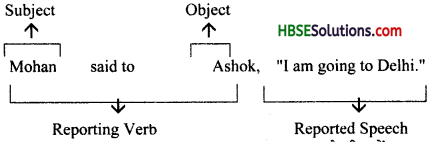
(c) рд╡рдХреНрддрд╛ рдХреЛ Reporting Verb рдХрд╛ subject рдХрд╣рддреЗ рд╣реИрдВред рдЕрдЧрд░ рд╡рд╣ рдХрд┐рд╕реА рдХреЛ рд╕рдВрдмреЛрдзрд┐рдд рдХрд░ рд░рд╣рд╛ рд╣реИ рддреЛ рдЙрд╕реЗ Reporting Verb рдХрд╛ object рдХрд╣рддреЗ рд╣реИрдВред рдирд┐рдореНрдирд▓рд┐рдЦрд┐рдд рдЙрджрд╛рд╣рд░рдг рд╕реЗ рдпрд╣ рдмрд╛рдд рд╕реНрдкрд╖реНрдЯ рд╣реЛ рдЬрд╛рдПрдЧреА :
HBSE 10th Class English Grammar Reported Speech -1
(d) Reported Speech рдХреЛ рд╕рджрд╛ Inverted Commas рдХреЗ рдмреАрдЪ рдореЗрдВ рд░рдЦрд╛ рдЬрд╛рддрд╛ рд╣реИред
(e) Reporting Verb рдФрд░ Reported Speech рдХреЛ Comma рджреНрд╡рд╛рд░рд╛ рдЕрд▓рдЧ рдХрд┐рдпрд╛ рдЬрд╛рддрд╛ рд╣реИред

* Indirect Speech рдХреЗ рдмрд╛рд░реЗ рдореЗрдВ рдорд╣рддреНрддреНрд╡рдкреВрд░реНрдг рдмрд╛рддреЗрдВ:
(a) рдЗрд╕рдореЗрдВ Inverted Commas (” “) рдХрд╛ рдкреНрд░рдпреЛрдЧ рдирд╣реАрдВ рдХрд┐рдпрд╛ рдЬрд╛рддрд╛ред
(b) Reporting Verb рдФрд░ Reported Speech рдХреЗ рдмреАрдЪ рд╡рд╛рд▓рд╛ Comma рд╣рдЯрд╛ рджрд┐рдпрд╛ рдЬрд╛рддрд╛ рд╣реИред
(c) рдмрд╣реБрдд рд╕реЗ рд╡рд╛рдХреНрдпреЛрдВ рдореЗрдВ Reported Speech рд╕реЗ рдкрд╣рд▓реЗ that, if, whether рдЖрджрд┐ conjunction рдХрд╛ рдкреНрд░рдпреЛрдЧ рд╣реЛрддрд╛ рд╣реИред
(d) Reporting Verb рдХрд╛ tense рдХрднреА рдирд╣реАрдВ рдмрджрд▓рддрд╛ред
(e) Reporting Verb рдореЗрдВ Reported Speech рдХреЗ рднрд╛рд╡ рдХреЗ рдЕрдиреБрд╕рд╛рд░ рдХреБрдЫ рдкрд░рд┐рд╡рд░реНрддрди рд╣реЛрддрд╛ рд╣реИред
(f) Reported Speech рдХреЛ assertive sentence рдореЗрдВ рдмрджрд▓ рджреЗрддреЗ рд╣реИрдВред
(g) Reported Speech рдореЗрдВ tense рдФрд░ pronouns рдЖрджрд┐ рдХреЗ рдЖрдзрд╛рд░ рдкрд░ рдХреБрдЫ рдкрд░рд┐рд╡рд░реНрддрди рдХрд┐рдП рдЬрд╛рддреЗ рд╣реИрдВред
рдЗрди рдкрд░рд┐рд╡рд░реНрддрди рдХрд░рдиреЗ рдХреЗ рдирд┐рдпрдореЛрдВ рдХрд╛ рдЕрдм рд╣рдо рдЕрдзреНрдпрдпрди рдХрд░реЗрдВрдЧреЗред

* Rules for the Change of Tenses :
(a) рдЕрдЧрд░ Reporting Verb рд╡рд░реНрддрдорд╛рди рдХрд╛рд▓ рдпрд╛ рднрд╡рд┐рд╖реНрдп рдХрд╛рд▓ рдореЗрдВ рд╣реЛ рддреЛ Reported Speech рдХрд╛ tense рдирд╣реАрдВ рдмрджрд▓рддрд╛, рдЬреИрд╕реЗ-
Direct : He says, “I am going to Agra.”
Indirect : He says that he is going to Agra.

Direct : Amit says, “Ram will write a letter.”
Indirect : Amit says that Ram will write a letter.

Direct : He will say, “Sudha has a doll.”
Indirect : He will say that Sudha has a doll.

Direct : They say, “Raju will be late.”
Indirect : They say that Raju will be late.

(b) рдЕрдЧрд░ reporting verb рднреВрддрдХрд╛рд▓ рдореЗрдВ рд╣реЛ рддреЛ reported speech рдХреЗ tense рдирд┐рдореНрдирд▓рд┐рдЦрд┐рдд рдкреНрд░рдХрд╛рд░ рд╕реЗ рдмрджрд▓реЗ рдЬрд╛рддреЗ рд╣реИрдВ :

(i) Present Indefinite

do go, does go,

do not go, does not go

changes into

changes into

changes into

Past Indefinite

went

did not go

(ii) Present Continuous

is/am/are going

changes into

changes into

Past Continuous

was or were going

(iii) Present Perfect

have or has gone

changes into

changes into

Past Perfect

had gone

(iv) Present Perfect Continuous

has or have been write

changes into

changes into

Past Perfect Continuous

had been writing

(v) Past Indefinite

wrote

changes into

changes into

Past Perfect

had written

(vi) Past Continuous

was writing

changes into

changes into

Past Perfect Continuous

had been writing

(vii) Past Perfect and Past Perfect Continuous Tense change
(viii) Shall, will

May

Can

changes into

changes into

changes into

should or would

might

could

HBSE 10th Class English Grammar Reported Speech

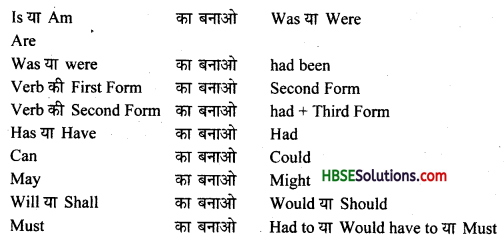
Tense рдмрджрд▓рдиреЗ рдХреЗ рдирд┐рдпрд░реНрдореЛрдВ рдХрд╛ рд╕рд╛рд░ :
HBSE 10th Class English Grammar Reported Speech -2

Examples:
I. Direct : He said, тАЬThe servant has posted the letter.тАЭ
Indirect : He said that the servant had posted the letter.

2. Direct : I said, тАЬIt has been raining since morning.тАЭ
Indirect : I said that it had been raining since morning.

3. Direct : She said, тАЬI gave him the pen.тАЭ
Indirect : She said that she had given him the pen.

4. Direct : He said, тАЬI was solving sums.тАЭ
Indirect : He said that he had been solving sums.

5. Direct : Ram said, тАЬI shall nor lake part in the drama.тАЭ
Indirect : Ram said that he would not take part in the drama.

6. Direct : The teacher said, тАЬThe boys may go home.тАЭ
Indirect : The teacher said that the boys might go home.

(ix) ‘Must’ рд╡рд╛рд▓реЗ рд╡рд╛рдХреНрдпреЛрдВ рдХрд╛ Tense рдирд┐рдореНрдирд▓рд┐рдЦрд┐рдд рдврдВрдЧ рд╕реЗ рдмрджрд▓рд╛ рдЬрд╛рддрд╛ рд╣реИ :
(a) рдЕрдЧрд░ ‘Must’ рдХрд╛ рдЕрд░реНрде рдХрдерди рдХреЗ рд╕рдордп рдЕрдирд┐рд╡рд╛рд░реНрдпрддрд╛ рдпрд╛ рдмрд╛рдзреНрдпрддрд╛ (Necessity or Compulsion at the moment of speaking) рд╣реЛ рддреЛ рдЗрд╕реЗ ‘had to’ рдореЗрдВ рдмрджрд▓рд╛ рдЬрд╛рддрд╛ рд╣реИ, рдЬреИрд╕реЗ
Direct : He said, “Rani must go at once.”
Indirect : He said that Rani had to go at once.

(b) рдЕрдЧрд░ ‘Must’ рдХрд╛ рдЕрд░реНрде рднрд╡рд┐рд╖реНрдп рдХрд╛рд▓ рдХреА рдЕрдирд┐рд╡рд╛рд░реНрдпрддрд╛ рдпрд╛ рдмрд╛рдзреНрдпрддрд╛ (Necessity or Compulsion in the Future) рд╣реЛ рддреЛ ‘Must’ рдХреЛ ‘Would have to’ рдореЗрдВ рдмрджрд▓рддреЗ рд╣реИрдВ, рдЬреИрд╕реЗ
Direct : He said, “Rani must go after a week.”
Indirect . He said that Rani would have to go after a week.

(c) рдЕрдЧрд░ ‘Must’ рдХрд╛ рдЕрд░реНрде рдордирд╛рд╣реА (Prohibition) рдпрд╛ Permanent Ruling (рд╕реНрдерд╛рдпреА рдЖрджреЗрд╢ рдпрд╛ рд╡реНрдпрд╡рд╕реНрдерд╛) рд╣реЛ рддреЛ Must рдХреЛ рдирд╣реАрдВ рдмрджрд▓рд╛ рдЬрд╛рддрд╛, рдЬреИрд╕реЗ
Direct : He said, “One must be punctual.”
Indirect : He said that one must be punctual.

HBSE 10th Class English Grammar Reported Speech

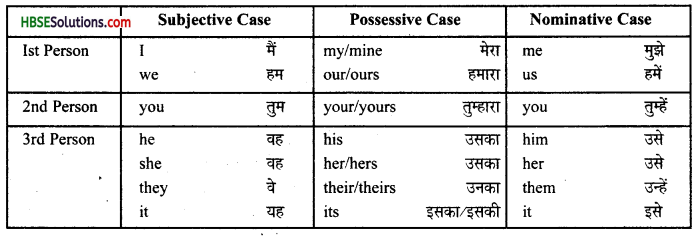
Change of Person :
HBSE 10th Class English Grammar Reported Speech -3
Rule 1. Direct Speech рдореЗрдВ рдпрджрд┐ Reported Speech рдореЗрдВ Ist Person рдХрд╛ рдкреНрд░рдпреЛрдЧ рдХрд┐рдпрд╛ рд╣реЛ рддреЛ рдЙрд╕реЗ Reporting Verb рдХреЗ Subject рдХреЗ рдЕрдиреБрд╕рд╛рд░ рдмрджрд▓рддреЗ рд╣реИрдВ; рдЬреИрд╕реЗ-

Direct : He said, тАЬI am reading my book.тАЭ
Indirect : He said that he was reading his book.

Direct : She said, тАЬWe are reading our books.тАЭ
Indirect : She said that they were reading their books.

Direct : Geeta said. тАЬMine is the best school.тАЭ
Indirect : Geeta said that hers is the best school.

Direct : Gopal said, тАЬOurs is the best team.тАЭ
Indirect : Gopal said that theirs is the best team.

Rule 2. Direct Speech рдореЗрдВ рдпрджрд┐ Reported Speech рдореЗрдВ 2nd Person рдХрд╛ рдкреНрд░рдпреЛрдЧ рдХрд┐рдпрд╛ рд╣реЛ рддреЛ рдЙрд╕реЗ Reporting Verb рдХреЗ Object рдХреЗ рдЕрдирд╕рд╛рд░ рдмрджрд▓рддреЗ рд╣реИрдВ; рдЬреИрд╕реЗ-

Direct : He said to me, ‘TOM are helping your brother.”
Indirect : He told me that I was helping my brother.

Direct : He said to her, “You are wasting your time.”
Indirect : He told her that she was wasting her time.

Direct : He said to us, ‘TOM have not doneyour duty.”
Indirect : He told us that we had not done our duty.

Direct : Renu said to me, тАЬYours is the best painting.тАЭ
Indirect : Renu told me that mine is the best painting.

Rule 3. Direct Speech рдореЗрдВ рдпрджрд┐ Reported Speech рдореЗрдВ 3rd Person рдХрд╛ рдкреНрд░рдпреЛрдЧ рдХрд┐рдпрд╛ рд╣реЛ рддреЛ рдЙрд╕реЗ рдирд╣реАрдВ рдмрджрд▓рддреЗ рд╣реИ; рдЬреИрд╕реЗ

Direct : Ram said, тАЭHe\s working in the office.”
Indirect : Ram said that he was working in the office.

Direct : I said,”She is preparing herself.”
Indirect : I said that she was preparing herself.

HBSE 10th Class English Grammar Reported Speech

рдЗрд╕реЗ рд╣рдо рдирд┐рдореНрди рд╕реВрддреНрд░ рдХреА рд╕рд╣рд╛рдпрддрд╛ рд╕реЗ рдЖрд╕рд╛рдиреА рд╕реЗ рдпрд╛рдж рд░рдЦ рд╕рдХрддреЗ рд╣реИрдВ –
HBSE 10th Class English Grammar Reported Speech -4
The change of words showing nearness:
Direct Speech рдХреЛ Indirect Speech рдореЗрдВ рдмрджрд▓рддреЗ рд╕рдордп Reported Speech рдореЗрдВ рдкреНрд░рдпреЛрдЧ рдХрд┐рдП рдЧрдП рд╕рдордп рд╡ рд╕реНрдерд╛рди рдХреА рдирд┐рдХрдЯрддрд╛ рдкреНрд░рдХрдЯ рдХрд░рдиреЗ рд╡рд╛рд▓реЗ рд╢рдмреНрджреЛрдВ рдХреЛ рдкреНрд░рд╛рдпрдГ рджреВрд░реА рдкреНрд░рдХрдЯ рдХрд░рдиреЗ рд╡рд╛рд▓реЗ рд╢рдмреНрджреЛрдВ рдореЗрдВ рдмрджрд▓ рджрд┐рдпрд╛ рдЬрд╛рддрд╛ рд╣реИред рдРрд╕реЗ рд╢рдмреНрдж рдиреАрдЪреЗ рджрд┐рдП рдЧрдП рд╣реИрдВ-

рдирд┐рдХрдЯрддрд╛ рдкреНрд░рдХрдЯ рдХрд░рдиреЗ рд╡рд╛рд▓реЗ рд╢рдмреНрдж

(Direct Speech)

рджреВрд░реА рдкреНрд░рдХрдЯ рдХрд░рдиреЗ рд╡рд╛рд▓реЗ рд╢рдмреНрдж

(Indirect Speech)

thisthat
thesethose
herethere
hitherthither
nowthen
thusso F in that way
hencethence
agobefore F earlier
todaythat day
yesterdaythe day before F the previous day
tomorrowthe next day
tonightthat night
last night, week, etc.the previous night, week etc.
next week, month, etc.the following week, month, etc.

Direct : He said to me, “I shall meet you here tomorrow.”
Indirect : He told me that he would meet me there the next day.

Direct : She said to me, “I will meet you now.” .
Indirect : She told me that she would meet me then.

Direct : They said, “We bought the new house six months ago.”
Indirect : They said that they had bought the new house six months before.

I. Assertive Sentences

(a) рдпрджрд┐ Direct Speech рдореЗрдВ Reporting Verb рд╡рд░реНрддрдорд╛рди рдХрд╛рд▓ рдпрд╛ рднрд╡рд┐рд╖реНрдп рдХрд╛рд▓ рдореЗрдВ рд╣реЛ рддреЛ Indirect Speech рдореЗрдВ Reported Speech рдХреЗ Tense рдХреЛ рдирд╣реАрдВ рдмрджрд▓рддреЗ; рдЬреИрд╕реЗsay рдХреЛ рдмрджрд▓рддреЗ рд╣реИрдВ-

say рдХреЛ рдмрджрд▓рддреЗ рд╣реИрдВ – say рдореЗрдВ
says рдХреЛ рдмрджрд▓рддреЗ рд╣реИрдВ – says рдореЗрдВ
say to рдХреЛ рдмрджрд▓рддреЗ рд╣реИрдВ – tell рдореЗрдВ
says to рдХреЛ рдмрджрд▓рддреЗ рд╣реИрдВ – tells рдореЗрдВ

Direct : He says, “I am going to Agra.”
Indirect : He says that he is going to Agra.

Direct : Ramesh says to me, “I need your help.”
Indirect : Ramesh tells me that he needs my help.

Direct : He will say to me, “It is your book.”
Indirect : He will tell me that it is my book.

HBSE 10th Class English Grammar Reported Speech

Exercise 1

Change the following sentences into indirect speech :
1. He says, “1 am going to Agra.”
2. Amit says, “Ram will write a letter.”
3. He will say, “Sudha has a doll.”
4. They say, “Raju will be late.”
5. The crow will say, “1 cannot sing so well.”
6. The oldman says to his sons, “I need some money.”
7. He will say to me, “1 am not telling a lie.”
8. He says to his father, “I have done my work.”
9. I say to Sheela, “You are my best friend.”
10. Harish will say to me, “You have spoiled my pen.”
Answers:
1. He says that he is going to Agra.
2. Amit says that Ram will write a letter.
3. He will say that Sudha has a doll.
4. They say that Raju will be late.
5. The crow will say that it cannot sing so well.
6. The oldman tells his sons that he needs some money.
7. He will tell me that he is not telling a lie.
8. He tells his father that he has done his work.
9. I tell Sheela that she is my best friend.
10. Harish will tell me that I have spoiled his pen.

(b) рдпрджрд┐ Direct Speech рдореЗрдВ Reporting Verb Past Tense рдЕрд░реНрдерд╛рдд said рдпрд╛ said to рдореЗрдВ рд╣реЛ рдФрд░ Reported Speech рдореЗрдВ рдХрд┐рд╕реА рд╕рдВрдЬреНрдЮрд╛ рдХреА рдирд┐рдпрдорд┐рдд рдЖрджрдд рдпрд╛ рд╕рд╛рд░реНрд╡рдЬрдирд┐рдХ рд╕рдЪреНрдЪрд╛рдИ рдпрд╛ рдХрд╣рд╛рд╡рддреЛрдВ рдХрд╛ рд╡рд░реНрдгрди рдХрд┐рдпрд╛ рд╣реЛрддрд╛ рд╣реИ рддреЛ Reported Speech рдХрд╛ Tense рдирд╣реАрдВ рдмрджрд▓рддреЗ рд╣реИрдВред

said рдХреЛ рдмрджрд▓рддреЗ рд╣реИрдВ – said рдореЗрдВ
said to рдХреЛ рдмрджрд▓рддреЗ рд╣реИрдВ – told рдореЗрдВ
Reporting Verb рдХреЛ Reported Speech рдХреЗ рд╕рд╛рде рдЬреЛрдбрд╝рдиреЗ рдХреЗ рд▓рд┐рдП that рдХрд╛ рдкреНрд░рдпреЛрдЧ рдХрд░рддреЗ рд╣реИрдВред

Direct : He said to me, “I go for a walk daily.”
Indirect : He told me that he goes for a walk daily.

Direct : The teacher said, “The earth revolves round the sun.”
Indirect : The teacher said that the earth revolves round the sun.

Direct : The father said, “Slow and steady wins the race.”
Indirect : The father said that slow and steady wins the race.

Exercise 2

Change the following sentences into indirect speech :
1. The oldman said, “Eyes are a great blessing.”
2. The saint said, “Man is mortal.”
3. Gopal said, “My father often gets up at 5 a.m.”
4. He said, “Two and two make four.”
5. The teacher said, “The Ganga rises from the Himalayas.”
6. He said, “Honesty is the best policy.” ‘
7. The oldman said, “Union is strength.”
8. The teacher said, “The sun is stationary.”
9. He said to me, тАЬHard work is the key to success.тАЭ
10. The teacher said, “The Himalaya stands in the north of India.”
Answers:
1. The oldman said that eyes are a great blessing.
2. The saint said that man is mortal.
3. Gopal said that his father often gets up at 5 a.m.
4. He said that two and two make four.
5. The teacher said that the Ganga rises from the Himalayas.
6. He said that honesty is the best policy.
7. The oldman said that Union is strength.
8. The teacher said that the sun is stationary.
9. He told me that hard work is the key to success.
10. The teacher said that the Himalayas stand in the north of India.

HBSE 10th Class English Grammar Reported Speech

(c) рдпрджрд┐ Direct Speech рдореЗрдВ Reporting Verb Past Tense рдЕрд░реНрдерд╛рдд said/said to рдореЗрдВ рд╣реЛ рдФрд░ Reported Speech рдореЗрдВ рдХреЛрдИ рд╕рд╛рдорд╛рдиреНрдп Statement рд╣реЛ рддреЛ Reported Speech рдХреЗ Tense рдХреЛ рдирд┐рдпрдорд╛рдиреБрд╕рд╛рд░ рдмрджрд▓рддреЗ рд╣реИрдВред
said рдХреЛ рдмрджрд▓рддреЗ рд╣реИрдВ – said рдореЗрдВ
said to рдХреЛ рдмрджрд▓рддреЗ рд╣реИрдВ – told рдореЗрдВ
Reporting Verb рдХреЛ Reported Speech рдХреЗ рд╕рд╛рде рдЬреЛрдбрд╝рдиреЗ рдХреЗ рд▓рд┐рдП that рдХрд╛ рдкреНрд░рдпреЛрдЧ рдХрд░рддреЗ рд╣реИрдВред

Direct : He said to me, “You are not helping me.”
Indirect : He told me that I was not helping him.

Direct : He said, “I can drive a car.”
Indirect : He said that he could drive a car.

Direct : He said, “I can do this work.”
Indirect : He said that he could do that work.

Exercise 3

Change the following sentences into Indirect Speech :

1. She said to her mother, “It is no longer safe to live here.”
2. Sita said to the teacher, тАЬI need your help.тАЭ
3. Margie said, “I hate school.”
4. The little girl said to me, “This is my doll.”
5. John said to me, “1 hope to win this prize.”
6. I said to Anil, “You are not coming to school regularly.”
7. “Last week our school won a football match,” said Mohan to Leela.
8. The teacher says to the boys, “You can play now.”
9. Rahim said to his brother, “Fortune favours the brave.”
10. Rahul said to me, “I posted your letter.”
Answers:
1. She told her mother that it was no longer safe to live there.
2. Sita told the teacher that she needed her help.
3. Margie said that she hated school.
4. The little girl told me that this was her doll.
5. John told me that he hoped to win that prize.
6. I told Anil that he was not coming to school regularly.
7. Mohan told Leela that the previous week their school had won a football match.
8. The teacher tells the boys that they can play then.
9. Rahim told his brother that fortune favours the brave.
10. Rahul told me that he had posted my letter.

Exercise 4

Change the following sentences into Indirect Speech :

1. He said, “1 do not like coffee.тАЭ
2. My teacher says to me, “You are a brilliant student.”
3. Priyanka said, тАЬMine is the best school.тАЭ
4. The teacher said, “The sun sets in the west.”
5. My father says, “You can be a good player.”
6. Mohan said to me, “I met your brother yesterday.”
7. He said to me, “Slow & steady wins the race.”
8. He said , тАЬLight travels in a straight line.тАЭ
9. They said, “The captain will not play the match.”
10. She said, “1 gave him the pen.”
Answers:
1. He said that he did not like coffee.
2. My teacher tells me that I am a brilliant student. .
3. Priyanka said that hers was the best school.
4. The teacher said that the sun sets in the west.
5. My father says that I can be a good player.
6. Mohan told me that he had met my brother the previous day.
7. He told me that slow and steady wins the race.
8. He said that Light travels in a straight line.
9. They said that the captain would not play the match.
10. She said that she had given him the pen.

HBSE 10th Class English Grammar Reported Speech

II. Interrogative Sentences

Interrogative Sentences рдпрд╛ Questions рдХреЛ Direct Speech рд╕реЗ Indirect Speech рдореЗрдВ рдмрджрд▓рдиреЗ рдХреЗ рдирд┐рдпрдо-
1. Reporting Verb тАШsayтАЩ рдХреЛ тАШaskтАЩ, тАШdemandтАЩ, тАШenquireтАЩ рдпрд╛ тАШinquireтАЩ рдЖрджрд┐ рдореЗрдВ рдмрджрд▓рд╛ рдЬрд╛рддрд╛ рд╣реИред

2. тАШAskтАЩ рдХреЗ рдмрд╛рдж Reporting Verb рдХреЗ Object рд╕реЗ рдкрд╣рд▓реЗ toтАЩ рдХрд╛ рдкреНрд░рдпреЛрдЧ рдирд╣реАрдВ рдХрд┐рдпрд╛ рдЬрд╛рддрд╛ред рд▓реЗрдХрд┐рди тАШdemandтАЩ, тАШenquireтАЩ рдпрд╛ inquireтАЩ рдХреЗ рдмрд╛рдж рдФрд░ Reporting Verb рдХреЗ Object рд╕реЗ рдкрд╣рд▓реЗ тАШofтАЩ рдХрд╛ рдкреНрд░рдпреЛрдЧ рдХрд░рддреЗ рд╣реИрдВред

3. рдпрджрд┐ Direct Question рдХрд┐рд╕реА рд╕рд╣рд╛рдпрдХ рдХреНрд░рд┐рдпрд╛ (is, am, are, was, were, shall, should, will, would, can, could, may, might, do, does, did, have, has, had, must, ought; need, dare рдЖрджрд┐) рд╕реЗ рдЖрд░рдВрдн рд╣реЛ рддреЛ Indirect Question рд╕реЗ рдкрд╣рд▓реЗ Conjunction рдХреЗ рд░реВрдк рдореЗрдВ тАШifтАЩ рдпрд╛ тАШwhetherтАЩ рдХрд╛ рдкреНрд░рдпреЛрдЧ рд╣реЛрддрд╛ рд╣реИред

4. рдЕрдЧрд░ Direct Question рдХрд┐рд╕реА Question Word (what, where, why, which, who, whom, how рдЖрджрд┐) рд╕реЗ рдЖрд░рдВрдн рд╣реЛ рддреЛ Indirect Question рд╕реЗ рдкреВрд░реНрд╡ тАШifтАЩ рдпрд╛ тАШwhetherтАЩ рдЖрджрд┐ рдХрд┐рд╕реА рднреА Conjunction рдХрд╛ рдкреНрд░рдпреЛрдЧ рдирд╣реАрдВ рд╣реЛрддрд╛ред

5. Direct Speech рдХреЗ Question рдХреЛ Statement (Assertive Sentence) рдореЗрдВ рдмрджрд▓ рджрд┐рдпрд╛ рдЬрд╛рддрд╛ рд╣реИ, рдЕрд░реНрдерд╛рдд рд╕рд╣рд╛рдпрдХ рдХреНрд░рд┐рдпрд╛рдУрдВ рдХрд╛ рдкреНрд░рдпреЛрдЧ Subject рдХреЗ рдмрд╛рдж рдХрд┐рдпрд╛ рдЬрд╛рддрд╛ рд╣реИ рдФрд░ рдкреНрд░рд╢реНрдирдЪрд┐рд╣реНрди (?) рдХреЗ рд╕реНрдерд╛рди рдкрд░ full stop (.) рдХрд╛ рдкреНрд░рдпреЛрдЧ рдХрд┐рдпрд╛ рдЬрд╛рддрд╛ рд╣реИред

6. рдЕрдЧрд░ Direct Question тАШdoтАЩ, тАШdoesтАЩ рдпрд╛ тАШdidтАЩ рд╕реЗ рдЖрд░рдВрдн рд╣реЛ рддреЛ Indirect Question рдореЗрдВ рдЗрдирдХрд╛ рдкреНрд░рдпреЛрдЧ рдирд╣реАрдВ рдХрд░рддреЗред рдФрд░ do рдпрд╛ does рдХреЛ рд╣рдЯрд╛рдХрд░ verb рдХреА Ist Form рдХреЛ verb рдХреА 2nd Form рдореЗрдВ рдмрджрд▓ рджреЗрддреЗ рд╣реИрдВ рддрдерд╛ Did рдХреЛ рд╣рдЯрд╛рдХрд░ verb рдХреА Ist Form рдХреЛ had + verb рдХреА 3rd Form рдореЗрдВ рдмрджрд▓ рджреЗрддреЗ рд╣реИрдВред

7. Direct Speech рдХреЗ Inverted Commas рддрдерд╛ Reporting Verb рдФрд░ Reported Speech рдХреЛ рдЕрд▓рдЧ рдХрд░рдиреЗ рд╡рд╛рд▓реЗ Comma рдХреЛ рд╣рдЯрд╛ рджрд┐рдпрд╛ рдЬрд╛рддрд╛ рд╣реИред

8. Words showing Nearness, Tenses рддрдерд╛ Pronouns рдЖрджрд┐ рдирд┐рдпрдорд╛рдиреБрд╕рд╛рд░ рдмрджрд▓ рджрд┐рдП рдЬрд╛рддреЗ рд╣реИрдВред

HBSE 10th Class English Grammar Reported Speech

Some Solved Examples

Direct

  1. She said to him, тАЬWhy did you keep me waiting?тАЭ
  2. The policeman said to Ram, тАЬDid you go out yesterday?тАЭ
  3. I say to you, тАЬHave you gone off your head?тАЭ
  4. He said to me, тАЬWho taught me English ?тАЭ
  5. The teacher said to him, тАЬWhen did the bus leave?тАЭ
  6. He said to me, тАЬHave you taken your lunch?тАЭ
  7. My father said to me тАЬwhy have you failed?тАЭ
  8. My mother said to me, тАЬHave you done your homework?тАЭ
  9. The doctor said to me, тАЬHow is your mother?тАЭ
  10. She said to me, тАЬAre you going to Agra tomorrow?тАЭ
  11. I said to Ram, тАЬDo you know Sita?тАЭ
  12. He asked me, тАЬWhere is the station?тАЭ
  13. The Postmaster said to Lencho, тАЬWhy are you sad?тАЭ
  14. The landlady wondered, тАЬWhy does Griffin wear bandages on his face?
  15. He said to her, тАЬWill you accompany me to the theatre.тАЭ

Indirect

  1. She asked him why he had kept her waiting.
  2. The policeman asked Ram if (whether) he had gone out the previous day.
  3. I ask you if you have gone off your head.
  4. He asked me who had taught him English.
  5. The teacher asked him when the bus had left.
  6. He asked me if 1 had taken my lunch.
  7. My father asked me why I had failed.
  8. My mother asked me if I had done my home work.
  9. The doctor asked me how my mother was.
  10. She asked me if (whether) 1 was going to Agra the next day.
  11. I asked Ram if he knew Sita.
  12. He asked me where the station was. .
  13. The Postmaster asked Lencho why he was sad.
  14. The landlady wondered why Griffin wore bandages on his face.
  15. He asked her if she would accompany him to the theatre.

HBSE 10th Class English Grammar Reported Speech

Exercise 5

Change the following sentences into Indirect Speech :

1. She said to me, тАЬAre you going to Agra tomorrow?тАЭ
2. He said to me, тАЬCan you meet me at the bus stand?тАЭ
3. The stranger said to man тАЬcan you tell me the way to a good hotel?
4. The mother said, тАЬWhat do you want, my children?тАЭ
5. The teacher said, тАЬBoys, why are you making a noise?тАЭ
6. The lion said to the mouse, тАЬWhy were you jumping on me?тАЭ
7. He said to me, тАЬWhy does your uncle not help you ?тАЭ
8. The boss said to the clerk, тАЬAre you satisfied with your salary?тАЭ
9. I said to him, тАЬPlease donтАЩt smoke here.тАЭ
10. Mother said to me, тАЬGo and wash your hand.тАЭ
Answers:
1. She asked me whether I was going to Agra the next day.
2. He asked me if I could meet him at the bus stand.
3. The stranger asked me if 1 could tell him the way to a good hotel.
4. The mother asked her children what they wanted.
5. The teacher asked the boys why they were making a noise.
6. The lion asked the mouse why it had been jumping on him.
7. He asked me why my uncle did not help me.
8. The boss asked the clerk whether he was satisfied with his salary.
9. I requested him not to smoke there.
10. Mother ordered me to go and wash my hands.

III. Imperative Sentences

рдЖрдЬреНрдЮрд╛рд╕реВрдЪрдХ рд╡рд╛рдХреНрдпреЛрдВ рдХреЛ Direct рд╕реЗ Indirect Speech рдореЗрдВ рдмрджрд▓рдиреЗ рдХреЗ рд▓рд┐рдП рдирд┐рдореНрдирд▓рд┐рдЦрд┐рдд рдмрд╛рддреЛрдВ рдХреЛ рдзреНрдпрд╛рди рдореЗрдВ рд░рдЦреЗрдВ
Rule 1.
Reporting Verb рдХреЛ рднрд╛рд╡реЛрдВ рдХреЗ рдЕрдиреБрд╕рд╛рд░ tell, ask, request, order, beg, command, forbid рдЖрджрд┐ рдореЗрдВ рдмрджрд▓рд╛ рдЬрд╛рддрд╛ рд╣реИред
1. рдЙрдкрджреЗрд╢ рд╡рд╛рд▓реЗ рд╡рд╛рдХреНрдпреЛрдВ рдореЗрдВ said to рдХреЛ advised рдореЗрдВ рдмрджрд▓рд╛ рдЬрд╛рддрд╛ рд╣реИред
2. рдЖрджреЗрд╢ рд╡рд╛рд▓реЗ рд╡рд╛рдХреНрдпреЛрдВ рдореЗрдВ said to рдХреЛ ordered рдореЗрдВ рдмрджрд▓рд╛ рдЬрд╛рддрд╛ рд╣реИред
3. рдкреНрд░рд╛рд░реНрдердирд╛ рд╡рд╛рд▓реЗ рд╡рд╛рдХреНрдпреЛрдВ рдореЗрдВ said to рдХреЛ requested рдореЗрдВ рдмрджрд▓рд╛ рдЬрд╛рддрд╛ рд╣реИред
4. рдпрд╛рдЪрдирд╛ рд╡рд╛рд▓реЗ рд╡рд╛рдХреНрдпреЛрдВ рдореЗрдВ said to рдХреЛ begged рдореЗрдВ рдмрджрд▓рд╛ рдЬрд╛рддрд╛ рд╣реИред
5. рд╕рд╛рдзрд╛рд░рдг Imperative рд╡рд╛рдХреНрдпреЛрдВ рдореЗрдВ said to рдХреЛ asked рдореЗрдВ рдмрджрд▓рд╛ рдЬрд╛рддрд╛ рд╣реИред
6. рдирдХрд╛рд░рд╛рддреНрдордХ рд╡рд╛рдХреНрдпреЛрдВ рдореЗрдВ said to рдХреЛ forbade рдореЗрдВ рдмрджрд▓ рджрд┐рдпрд╛ рдЬрд╛рддрд╛ рд╣реИред рдпрд╛рдж рд░рд╣реЗ рдХрд┐ forbade рдХреЗ рдмрд╛рдж тАШnotтАЩ рдХрд╛ рдкреНрд░рдпреЛрдЧ рдирд╣реАрдВ рдХрд┐рдпрд╛ рдЬрд╛рддрд╛ред

HBSE 10th Class English Grammar Reported Speech

Rule 2.
Comma рдХреЛ рд╣рдЯрд╛рдХрд░ рдЙрд╕рдХреЗ рд╕реНрдерд╛рди рдкрд░ тАШtoтАЩ рд╢рдмреНрдж рдХрд╛ рдкреНрд░рдпреЛрдЧ рдХрд┐рдпрд╛ рдЬрд╛рддрд╛ рд╣реИред тАШtoтАЩ рдХреЗ рдмрд╛рдж verb рдХреА рдкрд╣рд▓реА form рдХрд╛ рдкреНрд░рдпреЛрдЧ рдХрд░рддреЗ рд╣реИрдВред
7. тАШLetтАЩ рд╡рд╛рд▓реЗ рд╡рд╛рдХреНрдпреЛрдВ рдХрд╛ рднрд╛рд╡рд╛рд░реНрде рдЕрдЧрд░ тАШрдЕрдиреБрдорддрд┐тАЩ рд╣реЛ рддреЛ тАШLetтАЩ рдХреЛ тАШto letтАЩ рдпрд╛ тАШmight be allowed toтАЩ рдореЗрдВ рдмрджрд▓рд╛ рдЬрд╛рддрд╛ рд╣реИред тАШLetтАЩ рдХреЛ тАШshouldтАЩ рдореЗрдВ рдмрджрд▓рд╛ рдЬрд╛рддрд╛ рд╣реИред
8. тАШLetтАЩ рд╡рд╛рд▓реЗ рд╡рд╛рдХреНрдпреЛрдВ рдХрд╛ рднрд╛рд╡рд╛рд░реНрде рдЕрдЧрд░ тАШрд╕реБрдЭрд╛рд╡тАЩ рдпрд╛ тАШрдкреНрд░рд╕реНрддрд╛рд╡тАЩ рд╣реЛ рддреЛ Reporting Verb тАШsayтАЩ рдХреЛ Suggest to + Object рдпрд╛ Propose to + object рдореЗрдВ рдмрджрд▓рд╛ рдЬрд╛рддрд╛ рд╣реИред рддрдерд╛ тАШLetтАЩ рдХреЛ тАШshouldтАЩ рдореЗрдВ рдмрджрд▓рдХрд░ рдЗрд╕реЗ subject рдХреЗ рдмрд╛рдж рд▓рдЧрд╛рдпрд╛ рдЬрд╛рддрд╛ рд╣реИред
9. тАШLet usтАЩ рд╡рд╛рд▓реЗ рд╡рд╛рдХреНрдпреЛрдВ рдХрд╛ рднрд╛рд╡рд╛рд░реНрде рдЕрдЧрд░ тАШрд╕реБрдЭрд╛рд╡тАЩ рдпрд╛ тАШрдкреНрд░рд╕реНрддрд╛рд╡тАЩ рд╣реЛ рддреЛ Reported Speech рдХреЗ тАШusтАЩ рдХреЛ рдирд┐рдореНрдирд▓рд┐рдЦрд┐рдд рдврдВрдЧ рд╕реЗ рдмрджрд▓рд╛ рдЬрд╛рддрд╛ рд╣реИ-
(a) рдЕрдЧрд░ Reporting Verb рдХрд╛ Subject рдпрд╛ Object рдЙрддреНрддрдо рдкреБрд░реБрд╖ (First Person) рд╣реЛ рддреЛ тАШusтАЩ рдХреЛ тАШweтАЩ рдореЗрдВ рдмрджрд▓рд╛ рдЬрд╛рддрд╛ рд╣реИред
(b) рдЕрдЧрд░ Reporting Verb рдХрд╛ Subject рдпрд╛ Object рдордзреНрдпрдо рдкреБрд░реБрд╖ (Second Person) рд╣реЛ рддреЛ тАШusтАЩ рдХреЛ тАШyouтАЩ рдореЗрдВ рдмрджрд▓рд╛ рдЬрд╛рддрд╛ рд╣реИред
(c) рдмрд╛рдХреА рд╕рднреА рдЕрд╡рд╕реНрдерд╛рдУрдВ рдореЗрдВ тАШusтАЩ рдХреЛ тАШtheyтАЩ рдореЗрдВ рдмрджрд▓рд╛ рдЬрд╛рддрд╛ рд╣реИред

Rule 3.
Reported Speech рдореЗрдВ рдпрджрд┐ do not рдпрд╛ never рд╢рдмреНрдж рд╣реЛрдВ рддреЛ Inverted Commas рдХреЛ рд╣рдЯрд╛рдХрд░ not to рдпрд╛ never to рд▓рдЧрд╛ рджрд┐рдпрд╛ рдЬрд╛рддрд╛ рд╣реИред рдкрд░рдВрддреБ рдЬрдм said to рдХреЛ forbade рдореЗрдВ рдмрджрд▓реЗрдВ рддреЛ do not рддрдерд╛ never рдХреЛ рд╣рдЯрд╛рдХрд░ рдЙрдирдХреЗ рд╕реНрдерд╛рди рдкрд░ рдХреЗрд╡рд▓ тАШtoтАЩ рдЩреНрдХреЗ рд╢рдмреНрдж рдХрд╛ рдкреНрд░рдпреЛрдЧ рдХрд┐рдпрд╛ рдЬрд╛рдирд╛ рдЪрд╛рд╣рд┐рдПред

Direct SpeechIndirect Speech
1. He said to me, тАЬHelp the poor.тАЭHe asked me to help the poor.
2. The mother said to Leela, тАЬDo not waste your time.тАЭThe mother advised Leela not to waste her time.

Or

The mother forbade Leela to waste her time.

3. Harish said to Mohan, тАЬListen to what I say.тАЭHarish asked Mohan to listen to what he said.
4. I said to my father, тАЬAllow me to go on an educational trip, please.тАЭI requested my father to allow me to go on an educational trip.
5. The commander said to his men, тАЬMarch forward.тАЭThe commander ordered his men to march forward.
6. He said to me, тАЬOpen the door.тАЭHe ordered me to open the door.
7. The teacher said to the boys, тАЬObey your parents.тАЭThe teacher advised the boys to obey their parents.
8. He said to me, тАЬPut it on the table.тАЭHe asked me to put it on the table.
9. тАЬWork hard if you want to pass,тАЭ said the teacher.The teacher advised him to work hard if he wanted to pass.
10. Father said to his son, тАЬDo not mix up with bad boys.тАЭFather advised his son not to mix up with bad boys.

HBSE 10th Class English Grammar Reported Speech

Exercise 6

Change into Indirect Speech :

1. I said to Naman, “Look at the map.”
2. He said to me, “Help the poor.”
3. The mother said to Ritu, “Do not waste your time.”
4. Radha said to Reeta, тАЬDo what I say.тАЭ
5. I said to my teacher, тАЬAllow me to meet my uncle.тАЭ
6. тАЬWork hard if you want to pass,” said the teacher.
7. He sai’d to me, тАЬDonтАЩt touch this wire. ItтАЩs live.тАЭ
8. The beggar said to the traveller, “Give me some money, please.”
Answers:
1. I asked Naman to look at the map.
2. He advised me to help the poor.
3. The mother advised Ritu not to waste her time.
4. Radha asked Reeta to do what she said.
5. I requested my teacher to allow me to meet my uncle.
6. The teacher advised the students to work hard if they wanted to pass.
7. He forbade me to touch that wire because it was live.
8. The beggar requested the traveller to give him some money.

Exercise 7

Change the following sentences into Indirect Speech :

1. The Principal said to the peon, “Ring the bell.”
2. The teacher said to the boys, тАЬMay you pass in the first division!тАЭ
3. The hostess said, “Did you sleep well?”
4. She said to the servant, “Open the door.”
5. He said to his son, “Never tell a lie.”
6. The captain said to the soldiers, “Fire at the enemy.”
7. Ram said to Mohan, “Listen to what I say.”
8. The manager said to the servant, “Go and post this letter.”
9. The teacher said to the Vishal, тАЬGet out of the class.тАЭ
10. Mother said to her son, “Do what you are told.”
Answers:
1. The Principal ordered the peon to ring the bell.
2. The teacher blessed the boys that they might pass in the first division.
3. The hostess asked if he had slept well.
4. She ordered the servant to open the door.
5. He advised his son never to tell a lie.
6. The captain ordered the soldiers to fire at the enemy.
7. Ram asked Mohan to listen to what he said.
8. The manager ordered the servant to go and post that letter.
9. The teacher ordered vishal to get out of the class.
10. Mother ordered her son to do what he was told.

HBSE 10th Class English Grammar Reported Speech

Exercise 8

Change the form of narration in the following sentences:

1. I said to her, “Let us sit in the shade.”
2. Mohan said to me, “Let us take tea.”
3. He said to his friend, “Please lend me your book.”
4. I said to him, “Let the child sleep.”
5. Ramesh said to me, “My book is better than yours.”
6. I said, тАЬLet us go out for a walk.тАЭ
Answers:
1. 1 proposed to her that we should sit in the shade.
2. Mohan proposed to me to take tea.
3. I requested his friend to lend him his book.
4. I asked him to let the child sleep.
5. Ramesh told me that his book was better than mine.
6. I proposed that we should go out for a walk.

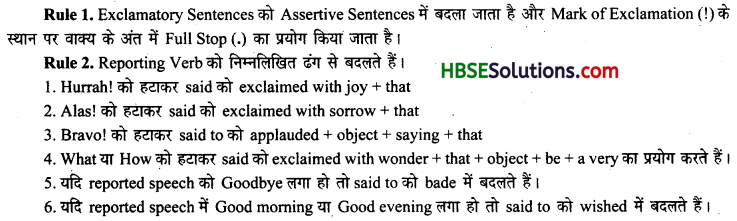
IV. Exclamatory Sentences

HBSE 10th Class English Grammar Reported Speech -5

Direct SpeechIndirect Speech
1. The captain said, тАЬHurrah ! We have won the match.тАЭThe captain exclaimed with joy that they had won the match.
2. The oldman said, тАЬAlas ! I am ruined.тАЭThe oldman exclaimed with sorrow that he was ruined.
3. The captain said, тАЬBravo ! Well done, boys.тАЭThe captain applauded the boys saying that they had done well.
4. She said, тАЬWhat a clever boy !тАЭShe exclaimed with wonder that he was a very clever boy.
5. I said, тАЬHow tall you are !тАЭI exclaimed with wonder that you are very tall.
6. She said to me, тАЬGoodbye !тАЭShe bade me goodbye.
7. I said to him, тАЬGood morning !тАЭI wished him good morning.

HBSE 10th Class English Grammar Reported Speech

V. Opetative Sentences

Optative Sentences May рдпрд╛ Would that рд╕реЗ рд╢реБрд░реВ рд╣реЛрддреЗ рд╣реИрдВ рдФрд░ рд╡рд╛рдХреНрдп рдХреЗ рдЕрдВрдд рдореЗрдВ Mark of Exclamation (!) рд▓рдЧрд╛ рд╣реЛрддрд╛ рд╣реИред
Rule 1. said рдХреЛ prayed рдпрд╛ wished рдореЗрдВ рдмрджрд▓рддреЗ рд╣реИрдВред
Rule 2. Reporting Verb рдХреЛ Reported Speech рдХреЗ рд╕рд╛рде рдЬреЛрдбрд╝рдиреЗ рдХреЗ рд▓рд┐рдП that рдХрд╛ рдкреНрд░рдпреЛрдЧ рдХрд░рддреЗ рд╣реИрдВред
Rule 3. рд╡рд╛рдХреНрдп рдХреЗ рдЕрдВрдд рдореЗрдВ Mark of Exclamation (!) рдХреЗ рд╕реНрдерд╛рди рдкрд░ Full Stop (.) рдХрд╛ рдкреНрд░рдпреЛрдЧ рдХрд░рддреЗ рд╣реИрдВред

1. I said, “May our teacher live long”.
I prayed that our teacher might live long.

2. The beggar said, “May God bless you!”.
The beggar wished that God might bless me/him.

3. He said, “Would that I were a bird!”
He wished that he had been a bird.

4. He said to me, “May you win a scholarship!”
He wished that I might win a scholarship.

5. They said, “May her soul rest in peace!”
They prayed that her soul might rest in peace.

HBSE 10th Class English Grammar Reported Speech

Exercise 10

Change the following into Indirect Speech :

1. Mohan said, тАЬI met her last year.тАЭ
2. He said, тАЬWill you listen to meтАЭ ?
3. Sonali said, тАЬWhere did you find it ?тАЭ
4. My teacher said to me, тАЬHow many brothers & sisters are you ?тАЭ
5. She said to me, тАЬWelcome to the party.тАЭ
6. The teacher said to me, тАЬWhy have you been absent ?тАЭ
7. He said to his brother, тАЬGo and post the letterтАЭ.
8. You said to me, тАЬWhere there is a will, there is a way.тАЭ
9. You said to me, тАЬI am thankful to you.тАЭ
10. She said to me, тАЬHas Ravi invited you to the party?тАЭ
Answers:
1. Mohan said that he had met her the previous year.
2. He said me if 1 would listen to him.
3. Sonali asked me where I had found that.
4. My teacher asked me how many brothers & sisters are we.
5. She welcomed me to the party.
6. The teacher asked me why I had been absent.
7. He ordered his brother to go and post the letter.
8. You told me that where there is a will there is a way.
9. You told me that you were thankful to me.
10. She asked me that if Ravi had invited me to the party.

HBSE 10th Class English Grammar Reported Speech Read More ┬╗

HBSE 10th Class English Grammar Simple Compound Complex Sentences

Haryana State Board HBSE 10th Class English Solutions Grammar Simple Compound Complex Sentences Exercise Questions and Answers.

Haryana Board 9th Class English Grammar Simple Compound Complex Sentences

What is a Sentence ?
A sentence is a group of words which makes complete sense.
(рд╢рдмреНрджреЛрдВ рдХреЗ рд╕рд╛рд░реНрдердХ рд╕рдореВрд╣ рдХреЛ рд╡рд╛рдХреНрдп рдХрд╣рддреЗ рд╣реИрдВред)
He goes to school.
She runs a race.
I won a prize.
They made a mistake.
рдЙрдкрд░реЛрдХреНрдд рд╕рднреА рд╢рдмреНрдж рд╕рдореВрд╣ Sentence рдХрд╛ рдирд┐рд░реНрдорд╛рдг рдХрд░рддреЗ рд╣реИрдВред

* Phrase : Phrase is also a group of words which makes complete sense.
(Phrase рднреА рд╢рдмреНрджреЛрдВ рдХрд╛ рдПрдХ рд╕рд╛рд░реНрдердХ рд╕рдореВрд╣ рд╣реЛрддрд╛ рд╣реИред)
Here and there
in my pocket
on the roof.
рдЙрдкрд░реЛрдХреНрдд рд╕рднреА рд╢рдмреНрдж рд╕рдореВрд╣ Phrase рдХреЗ рдЙрджрд╛рд╣рд░рдг рд╣реИрдВред

HBSE 10th Class English Grammar Simple Compound Complex Sentences

Sentence рдФрд░ Phrase рдореЗрдВ рдЕрдиреНрддрд░:

A sentence has a Subject and a Predicate of its own but a Phrase has no Subject or a Predicate of its own. He goes. (рдпрд╣ рд╡рд╛рдХреНрдп рд╣реИ рдХреНрдпреЛрдВрдХрд┐ рдЗрд╕рдХрд╛ Subject (He) рдФрд░ Predicate (goes) рд╣реИред)
here and there. (рдпрд╣ рдПрдХ рд╕рд╛рд░реНрдердХ рд╢рдмреНрдж рд╕рдореВрд╣ рддреЛ рд╣реИ рдкрд░рдиреНрддреБ рд╡рд╛рдХреНрдп рдирд╣реАрдВ рд╣реИ рдХреНрдпреЛрдВрдХрд┐ рдЗрд╕рдХрд╛ рди рддреЛ рдХреЛрдИ Subject рд╣реИ рдФрд░ рди рд╣реА Predicate рд╣реИред)

* Clause:
A group of words which is meaningful and has a subject and a Predicate of its own but forms part of a sentence is called a clause.
(Clause рд╢рдмреНрджреЛрдВ рдХрд╛ рд╕рд╛рд░реНрдердХ рд╕рдореВрд╣ рд╣реЛрддрд╛ рд╣реИ рдЬрд┐рд╕рдХрд╛ рдЕрдкрдирд╛ Subject рдФрд░ Predicate рд╣реЛрддрд╛ рд╣реИ рд▓реЗрдХрд┐рди рдпрд╣ рд╕реНрд╡рддрдиреНрддреНрд░ рди рд╣реЛрдХрд░ рдПрдХ рд╡рд╛рдХреНрдп рдХрд╛ рдЕрдВрдЧ рд╣реЛрддреА рд╣реИред)

Kinds of Sentences :

There are three kinds of sentences from structure point of view. They are :
1. Simple Sentence
2. Compound Sentence
3. Complex Sentence.
Now we shall discuss the features of these types of sentences :

1. Simple Sentence :
(рд╕рд╛рдзрд╛рд░рдг рд╡рд╛рдХреНрдп рдореЗрдВ рдХреЗрд╡рд▓ рдПрдХ Subject рдФрд░ рдПрдХ Predicate рд╣реЛрддрд╛ рд╣реИ)
The predicate has one finite verb.

Examples:
Gurpreet is writing a letter.
Satwant is proud of her new dress.
Manoj invited his friends to tea.
Swami solved the sum.
Sid and Tom studied together.

In the above sentences тАШGurpreetтАЩ, тАШSatwantтАЩ, тАШManojтАЩ, тАШSwamiтАЩ тАШSid and TomтАЩ are subjects. The rest of each sentehce is a predicate.
тАШwritingтАЩ, тАШisтАЩ, тАШinvitedтАЩ, тАШsolvedтАЩ and тАШstudiedтАЩ are finite verbs.

2. Compound Sentence :
A compound sentence is that sentence which consists of two or more co-ordinate or independent clauses. These clauses are joined to each other by means of conjunctions. (рджреЛ рдпрд╛ рджреЛ рд╕реЗ рдЕрдзрд┐рдХ Independent Clauses рдХреЗ рдореЗрд▓ рд╕реЗ рдмрдиреЗ рд╡рд╛рдХреНрдп рдХреЛ Compound (рд╕рдВрдпреБрдХреНрдд) Sentence рдХрд╣рддреЗ рд╣реИрдВред)

Note : The following are the main co-ordinating conjunctions :
and, as well as, so, therefore, or, otherwise, but, yet, still, nevertheless, consequently, either…or, neither…nor, not only…but (also), etc.

Examples:
Mohan met me and gave me a pen.
Hurry up or you will miss the train.
He wanted to study, but his father asked him to run the family business.
He came late, so he was fined.
He is poor, yet he is honest.
He is mischievous, nevertheless, he is intelligent.

HBSE 10th Class English Grammar Simple Compound Complex Sentences

3. Complex Sentence:
A complex sentence has one Main Clause and one or more Subordinate Clauses.
(рдЬрд┐рд╕ рд╡рд╛рдХреНрдп рдореЗрдВ рдПрдХ Main Clause рдФрд░ рдПрдХ Subordinate Clause рд╣реЛрддреА рд╣реИ, рдЙрд╕реЗ Complex (рдорд┐рд╢реНрд░рд┐рдд) Sentence рдХрд╣рддреЗ рд╣реИрдВред)

Examples:
I met a man who was an engineer.
He walks as if he were the king of Patiala.
When he saw the police, he ran away.
You will pass if you work hard.

Exercise 1

Tell whether the following sentences are simple, complex or compound :

1. Work hard otherwise you will fail.
2. I will tell you the whole truth about the matter.
3. Since you say so, I believe it.
4. He approached me to get my favour.
5. Two and two make four.
6. She does not want to oblige you.
7. If you have a ticket, you may go inside.
8. You cannot come in until you feel sorry.
9. Walk fast lest you should miss the train.
10. As soon as I reached my house, it started raining.
Answers:
1. compound sentence
2. simple sentence
3. complex sentence
4. simple sentence
5. simple sentence
6. simple sentence
7. complex sentence
8. complex sentence
9. complex sentence
10. complex sentence.

HBSE 10th Class English Grammar Simple Compound Complex Sentences

Kinds of Subordinate Clauses :

Three kinds of Subordinate Clauses :
(i) Noun Clauses
(ii) Adjective Clauses
(iii) Adverb Clauses

(i) Noun Clauses

A noun in a sentence functions as a subject or an object. So a noun clause also does the function either of subject or of an object.
(рдПрдХ рд╡рд╛рдХреНрдп рдореЗрдВ рд╕рдВрдЬреНрдЮрд╛ рдПрдХ рдХрд░реНрддрд╛ рдпрд╛ рдХрд░реНрдо рдХреЗ рд░реВрдк рдореЗрдВ рдХрд╛рд░реНрдп рдХрд░рддреА рд╣реИред рдЗрд╕рд▓рд┐рдП рдПрдХ Noun clause рднреА рдПрдХ рдХрд░реНрддрд╛ рдпрд╛ рдХрд░реНрдо рдХрд╛ рдХрд╛рд░реНрдп рдХрд░рддреА рд╣реИред)

How can we recognise a noun clause in a complex sentence ?
Replace the whole subordinate clause with the wordтАШsomethingтАЩ.
If the sentence remains grammatical it will be a Noun Clause.

(рдкреВрд░реА Subordinate Clause рдХреЗ рд╕реНрдерд╛рди рдкрд░ ‘something’ рд╢рдмреНрдж рд▓рд┐рдЦреЛред)
рдпрджрд┐ рд╡рд╛рдХреНрдп рд╡реНрдпрд╛рдХрд░рдг рдХреЗ рдЖрдзрд╛рд░ рдкрд░ рд╕рд╣реА рд▓рдЧрддрд╛ рд╣реИ рддреЛ рд╡рд╣ clause рдирд┐рд╢реНрдЪрд┐рдд рд░реВрдк рд╕реЗ Noun Clause рд╣реА рд╣реЛрдЧреАред рдЬреИрд╕реЗ-
He told me that he would go to Mumbai.
Subordinate Clause = that he would go to Mumbai = something.
Sentence = He told me something.
(рдЙрд╕рдиреЗ рдореБрдЭреЗ рдХреБрдЫ рдмрддрд╛рдпрд╛ред)

Something what ?
Ans. тАШthat he would go to MumbaiтАЩ = Noun Clause.
(рдЬрдм Subordinate Clause, Principal Clause рдХреЗ main verb рд╕реЗ рдХрд┐рдП рдЧрдП рдкреНрд░рд╢реНрди ‘рдХреНрдпрд╛ ?’ рдХрд╛ рдЙрддреНрддрд░ рджреЗ рджреЗрддреА рд╣реИ, рддрдм рднреА рд╡рд╣ Noun Clause рд╣реА рд╣реЛрддреА рд╣реИред)

Combination of Simple Sentences into a complex sentence by using a noun clause:

(рджреЛ рд╡рд╛рдХреНрдп рджрд┐рдП рд╣реЛрдВрдЧреЗред рдЬрд┐рдирдореЗрдВ рд╕реЗ рдПрдХ рд╡рд╛рдХреНрдп Noun Clause рд╣реЛрддрд╛ рд╣реИ рдФрд░ рджреВрд╕рд░рд╛ рд╡рд╛рдХреНрдп Principal Clause рд╣реЛрддрд╛ рд╣реИред рдЗрдиреНрд╣реЗрдВ рдПрдХ рд╡рд╛рдХреНрдп рдореЗрдВ рдЬреЛрдбрд╝рдирд╛ рд╣реИред)

1. рдпрджрд┐ Noun Clause Question Word рд╕реЗ рд╢реБрд░реВ рд╣реЛрддреА рд╣реИ рдФрд░ Principal Clause рдХреЗ рдЕрдиреНрдд рдореЗрдВ thisit рд▓рдЧрд╛ рд╣реЛрддрд╛ рд╣реИ рддреЛ Principal Clause рдХреЛ рдкрд╣рд▓реЗ рд▓рд┐рдЦрддреЗ рд╣реИрдВ, This рдпрд╛ it рдХреЛ рд╣рдЯрд╛ рджреЗрддреЗ рд╣реИрдВ рдФрд░ Noun Clause рдХреЛ рдмрд╛рдж рдореЗрдВ рд▓рд┐рдЦрддреЗ рд╣реИрдВ рд▓реЗрдХрд┐рди Noun Clause рдХреЛ рд▓рд┐рдЦрддреЗ рд╕рдордп рдЗрд╕ рдмрд╛рдд рдХрд╛ рдзреНрдпрд╛рди рд░рдЦрддреЗ рд╣реИрдВ рдХрд┐ Helping Verb (рд╕рд╣рд╛рдпрдХ рдХреНрд░рд┐рдпрд╛) рдХреЛ Noun/Pronoun рдХреЗ рдмрд╛рдж рд▓рд┐рдЦрддреЗ рд╣реИрдВред

(a) Where is your pen ? Tell me this.
Tell me where your pen is.

(b) When will the next train arrive ? Go and ask the guard.
Go and ask the guard when the next train will arrive.

2. рдпрджрд┐ Noun Clause Question Word рд╕реЗ рд╢реБрд░реВ рд╣реЛрддреА рд╣реИ рдФрд░ This/It Principal Clause рдХреЗ рд╢реБрд░реВ рдореЗрдВ рд▓рдЧрд╛ рд╣реЛрддрд╛ рд╣реИ рддреЛ Noun Clause рдХреЛ рд╡рд╛рдХреНрдп рдХреЗ рд╢реБрд░реВ рдореЗрдВ рд▓рд┐рдЦрддреЗ рд╣реИрдВ рдФрд░ This/lt рдХреЛ рд╣рдЯрд╛рдХрд░ Principal Clause рдХреЛ рд╡рд╛рдХреНрдп рдХреЗ рдЕрдВрдд рдореЗрдВ рд▓рд┐рдЦрддреЗ рд╣реИрдВред

(a) When did he leave the town ? It is a wonder.
When he left the town is a wonder.

(b) What does he do for a living ? It is a mystery.
What he does for a living is a mystery.

3. рдпрджрд┐ Noun Clause рд╕рд╛рдзрд╛рд░рдг рд╡рд╛рдХреНрдп рдореЗрдВ рд╣реИ рдФрд░ Principal Clause рдХреЗ рдЕрдВрдд рдореЗрдВ this/it рд▓рдЧрд╛ рд╣реИ рддреЛ Principal Clause рдХреЛ рдкрд╣рд▓реЗ рд▓рд┐рдЦрддреЗ рд╣реИрдВ (this/it рдХреЛ рд╣рдЯрд╛рдХрд░) рдФрд░ рдЙрд╕рдХреЗ рдмрд╛рдж that рд▓рдЧрд╛рдХрд░ Noun Clause рдХреЛ рд▓рд┐рдЦрддреЗ рд╣реИрдВ
(a) He would pass. I knew it.
I knew that he would pass.

(b) The patient will recover soon. The doctor is confident of it.
The doctor is confident that the patient will recover soon.

HBSE 10th Class English Grammar Simple Compound Complex Sentences

4. рдирд┐рдореНрдирд▓рд┐рдЦрд┐рдд рдкрд░рд┐рд╡рд░реНрддрдиреЛрдВ рдкрд░ рдзреНрдпрд╛рди рджреАрдЬрд┐рдП
(a) (Something рдХреЛ рд╣рдЯрд╛рдХрд░ рдпреЛрдЬрдХ рд╢рдмреНрдж What рдХрд╛ рдкреНрд░рдпреЛрдЧ рдХрд░рддреЗ рд╣реИрдВред)
(i) He said something. I am not impressed by it.
I am not impressed by what he said.

(ii) He does something. It is not known to me.
What he does is not known to me.

(b) (Somewhere рдФрд░ the place рдХреЛ рд╣рдЯрд╛рдХрд░ рдпреЛрдЬрдХ рд╢рдмреНрдж Where рдХрд╛ рдкреНрд░рдпреЛрдЧ рдХрд░рддреЗ рд╣реИрдВред)
He worked somewhere. Tell me the place.
Tell me where he worked.

(c) (The reason рдХреЛ рд╣рдЯрд╛рдХрд░ рдпреЛрдЬрдХ рд╢рдмреНрдж Why рдХрд╛ рдкреНрд░рдпреЛрдЧ рдХрд░рддреЗ рд╣реИрдВред)

(i) You have rejected my application. Tell me the reason.
Tell me why you have rejected my application.

(ii) You come late daily. I want to know the reason.
I want to know why you come late daily.

HBSE 9th Class English Grammar Transformation of Sentences

(d) (Someone рдХреЛ рд╣рдЯрд╛рдХрд░ who рдХрд╛ рдкреНрд░рдпреЛрдЧ рдХрд░рддреЗ рд╣реИрдВред)
Someone has stolen your book. I know him.
I know who has stolen your book.

5. (Noun Clause рдХрд╛ рдкреНрд░рдпреЛрдЧ Verb (рдХреНрд░рд┐рдпрд╛) рдХреЗ complement рдХреЗ рд░реВрдк рдореИрдВ)
(i) He will improve. This is our hope.
Our hope is that he will improve.

(ii) I have not got the money. This is the fact.
The fact is that I have not got the money.

6. (Noun Clause рдХрд╛ рдкреНрд░рдпреЛрдЧ Noun/Pronoun рдХреЗ object рдХреЗ рд░реВрдк рдореЗрдВ)
(i) Who is responsible for the loss ? My question has not been answered.
My question who is responsible for the loss has not been answered.

(ii) India has won the match. The news is true.
The news that India has won the match is true.

HBSE 10th Class English Grammar Simple Compound Complex Sentences

Exercise 1

Combine the following pairs of sentences into complex sentences by using Noun Clause:
1. What the thieves did with all the money. It is a mystery.
2. The prices will not come down. You can be sure.
3. He will pass. I am confident.
4. He was saying something. They were listening to it.
5. He has lost his way. This is my fear.
6. He would go on a pilgrimage. He said that.
7. He will win the election. It is clear.
8. The bridge will collapse. The engineers are afraid.
9. They suggested something. We were all against it.
10. He will win a scholarship. I am sure.
Answers:
1. What the thieves did with all the money is a mystery.
2. You can be sure that the prices will not come down.
3. I am confident that he will pass.
4. They were listening to what he was saying.
5. My fear is that he has lost his way.
6. He said that he would go on a pilgrimage.
7. It is clear that he will win the election.
8. The engineers are afraid that the bridge will collapse.
9. We were all against what he suggested.
10. I am sure that he will win a scholarship.

Exercise 2

Combine the following sentences into complex sentences by using one of the sentences in each set into a Noun Clause:

1. He says something. We canтАЩt rely on that.
2. You demand some money. I am ready to lend it.
3. You are innocent. That is a fact.
4. He would soon pay back the debt. He promised it.
5. He was a party to the plot. It is not a fact.
6. The result will be out tomorrow. I am sure of it.
7. He may be honest. I do not know.
8. The accident took place somewhere. I shall take you to the place.
9. I said something. I am sorry for it.
10. Death keeps no calendar. We all know it.
Answers:
1. I can’t rely on what he says.
2. I am ready to lend you what you demand.
3. The fact is that you are innocent.
4. He promised that he would soon pay back the debt
5. It is not a fact that he was a party to the plot
6. I am sure that the result will be out tomorrow.
7. I do not know that he is honest.
8. I shall take you to the place where the accident took place.
9. I am sorry for what I said.
10. We all know that death keeps no calendar.

HBSE 10th Class English Grammar Simple Compound Complex Sentences

Exercise 3

Join the following pairs of sentences, into complex sentences using noun clauses:

1. The patient has died. This is my fear.
2. The police has arrested the murderer. This is the news.
3. She was taking a risk. She realised that.
4. He will get first division. This is certain.
5. The conversation was upsetting him. It was a fact.
6. We should drop the plan. This is my suggestion.
7. There is a lot of corruption in the country. The opposition pointed out this fact.
8. The audience listened to the speech. The speaker gave that speech.
9. The audience followed the speaker. It was a wonder.
10. Mohan has no money. That is a fact.
Answers:
1. My fear is that the patient has died.
2. The news is that the police has arrested the murderer.
3. She realised that she was taking a risk.
4. This is certain that he will get first division.
5. The fact was that the conversation was upsetting him.
6. My suggestion is that we should drop the plan.
7. The opposition pointed out the fact that there was a lot of corruption in the country.
8. The audience listened to what the speaker said.
9. It was a wonder that the audience followed the speaker.
10. The fact is that Mohan has no money.

Exercise 4

Combine the sentences using a noun clause in each case.

1. Why is he coming here? Does Mohan know this?
2. When will I catch the train ? I don’t know this.
3. Why does Mohan beat his brother ? I cannot understand this.
4. The money is missing. This is the fact.
5. When did she leave the town? It is a mystery.
6. How does he earn so much money? Nobody knows this.
7. He would come. I was certain of that.
8. What does the teacher say? Listen to it.
9. He did something. I am not impressed by it.
10. The principal was coming. The whole class knew it.
Answers:
1. Does Mohan know why he is coming here ?
2. I don’t know when I will catch the train.
3. I can’t understand why Mohan beats his brother.
4. The fact is that the money is missing.
5. When she left the town is a mystery.
6. Nobody knows how he earns so much money.
7. I was certain that he would come.
8. Listen to what the teacher says.
9. I am not impressed by what he did.
10. The whole class knew that the principal was coming.

HBSE 10th Class English Grammar Simple Compound Complex Sentences

(ii) Adjective Clauses

An adjective qualifies a noun or a pronoun. So an adjective clause also qualifies a noun or a pronoun. (рд╡рд┐рд╢реЗрд╖рдг рдХрд┐рд╕реА рд╕рдВрдЬреНрдЮрд╛ рдпрд╛ рд╕рд░реНрд╡рдирд╛рдо рдХреА рд╡рд┐рд╢реЗрд╖рддрд╛ рдмрддрд╛рддрд╛ рд╣реИред рдЗрд╕рд▓рд┐рдП Adjective Clause рднреА рдХрд┐рд╕реА рд╕рдВрдЬреНрдЮрд╛ рдпрд╛ рд╕рд░реНрд╡рдирд╛рдо рдХреА рд╡рд┐рд╢реЗрд╖рддрд╛ рдмрддрд╛рддреА рд╣реИред)

рдЬреИрд╕реЗ- This is the house where I was born.
(рдпрд╣ рд╡рд╣ рдШрд░ рд╣реИ рдЬрд╣рд╛рдБ рдкрд░ рдореЗрд░рд╛ рдЬрдиреНрдо рд╣реБрдЖ рдерд╛ред)

Here, the adjective clause тАШwhere I was bornтАЩ qualifies the houseтАЩ.
(рдпрд╣рд╛рдБ рдкрд░ adjectiveclause where I was bornтАЩ тАШthe houseтАЩ рдХреА рд╡рд┐рд╢реЗрд╖рддрд╛ рдмрддрд╛рддреА рд╣реИред)

How to recognise an adjective clause ?
Conjunction (рдпреЛрдЬрдХ) рд╕реЗ рдкрд╣рд▓реЗ рдХреЛрдИ рд╕рдВрдЬреНрдЮрд╛ рдпрд╛ рд╕рд░реНрд╡рдирд╛рдо рдЕрд╡рд╢реНрдп рд╣реЛрдВрдЧреЗ; (рдЬреИрд╕реЗ рдЙрдкрд░реЛрдХреНрдд рд╡рд╛рдХреНрдп рдореЗрдВ рдпреЛрдЬрдХ тАШwhereтАЩ рд╕реЗ рдкрд╣рд▓реЗ тАШthe houseтАЩ рдерд╛ред)

Sub ordinate clause (Adjective Clause) тАШsomethingтАЩ рд╢рдмреНрдж рдХреЛ рдЕрдкрдирд╛ рд╕реНрдерд╛рди рдирд╣реАрдВ рджреЗрдЧреАред (рдпрджрд┐ тАШsomethingтАЩ рдЙрд╕рдХреЗ рд╕реНрдерд╛рди рдкрд░ рд░рдЦ рднреА рджрд┐рдпрд╛ рддреЛ рд╡рд╛рдХреНрдп рдирд┐рд░рд░реНрдердХ рд╣реЛ рдЬрд╛рдПрдЧрд╛; рдЬреИрд╕реЗ)
This is the house something.

(рд╡рд╛рдХреНрдп рдирд┐рд░рд░реНрдердХ рд╣реИред Main clause рд╕реЗ рдореБрдЦреНрдп verb рд╕реЗ рдпрджрд┐ рдкреНрд░рд╢реНрди рдХрд┐рдпрд╛ рдЬрд╛рдП рдХрд┐ тАШрдХреМрдитАЩ, тАШрдХреМрди-рд╕рд╛тАЩ, рдХрд┐рд╕реЗ ?, рдХрд┐рд╕рдХрд╛ ? рддреЛ subordinate clause рдЙрд╕рдХрд╛ рдЙрддреНрддрд░ рджреЗрддреА рд╣реИ; рдЬреИрд╕реЗ This is the house where I was born.)

Principal Clause = This is the house.
(рдкреНрд░рд╢реНрди рдХрд░реЛ-рдХреМрди-рд╕рд╛ рдШрд░ ?)
(рдЙрддреНрддрд░ рдорд┐рд▓реЗрдЧрд╛-where I was borm.)
(рдЬрд╣рд╛рдБ рдкрд░ рдореЗрд░рд╛ рдЬрдиреНрдо рд╣реБрдЖ рдерд╛ред)

HBSE 10th Class English Grammar Simple Compound Complex Sentences

Similarly we may have one more example:
The boy who is wearing a red shirt is a friend of mine.

Principal Clause = The boy is a friend of mine.
(рдкреНрд░рд╢реНрди рдХрд░реЛ рдХрд┐ рдХреМрди-рд╕рд╛ рд▓рдбрд╝рдХрд╛ рд╣реИ ?)
(рдЙрддреНрддрд░ Subordinate Clause рджреЗрдЧреА-)
(тАШрдЬрд┐рд╕рдиреЗ рд▓рд╛рд▓ рдХрдореАрдЬ рдкрд╣рди рд░рдЦреА рд╣реИредтАЩ)

тАШWhois wearing a red shirtтАЩ.
Thus we can recognise an adjective clause.
Conjunctions of relative clauses:
(i) Relative Pronouns: who, whose, whom, which, that etc.
(ii) Relative adverbs when, how, where, why, etc.

Exercise 1

Combine the following pairs of sentences by using defining relative (adjectival) clauses:

1. The man composed this song. He is visiting us tomorrow.
2. I saw several houses. They were quite unsuitable.
3. She was dancing with a student. He had a slight limp.
4. The woman is begging. Her husband is dead.
5. This is Jaidev. His son won the scholarship this year.
6. I saw a picture. It fascinated me.
7. I have bought a watch. It shows date.
8. I met Mohan. He gave me ten rupees.
9. This is Miss Deepika. I talked to you about her.
10. This is Harish. His pocket was picked yesterday.
11. That is the painting. It was praised by everyone.
12. He is the man. I went to see him.
13. The man was sitting in the chair. I had gone to meet him.
14. I was waiting for a man. He did not come.
15. He introduced me to Sheela. She has become famous for painting.
Answers:
1. The man who composed this song is visiting us tomorrow.
2. I saw several houses which were quite unsuitable.
3. She was dancing with a student who had a slight limp.
4. The woman whose husband is dead is begging.
5. This is Jaidev whose son won the scholarship this year.
6. I saw a picture which fascinated me.
7. I have bought a watch which shows date.
8. I met Mohan who gave me ten rupees.
9. This is Miss Deepika about whom I talked to you.
10. This is Harish whose pocket was picked yesterday.
11. That is the painting which was praised by everyone.
12. He is the man with whom I went to see him.
13. The man whom I had gone to meet was sitting in the chair.
14. I was waiting for a man who did not come.
15. He introduced me to Sheela who has become famous for painting.

HBSE 10th Class English Grammar Simple Compound Complex Sentences

(iii) Adverb Clauses

An adverb clause functions as an adverb in the sentence.
(рдПрдХ adverb clause рдореЗрдВ рдХреНрд░рд┐рдпрд╛ рд╡рд┐рд╢реЗрд╖рдг рдХрд╛ рдХрд╛рд░реНрдп рдХрд░рддреА рд╣реИред)

Kinds of Adverb Clauses:
1. Adverb Clauses of Time (рдХрдм ?):
Conjunctions: when, whenever, while, after, before, since, as soon as etc. You may come to my office whenever you like.
The bell rang after I reached school.
The patient had died before the doctor came.

2. Adverb Clauses of Place (рдХрд╣рд╛рдБ ?):
Conjunctions: where, wherever, whence.
I left the car where it broke down.
You may go wherever you like Go whence you came.

3. Adverb Clause of Reason/cause (рдХреНрдпреЛрдВ ?):
Conjunctions: because, since, as, etc.
I could not attend you properly because I was so busy.
Since you say so, I believe you.

4. Adverb Clause of Manner (рдХреИрд╕реЗ ?):
Conjunctions: as if, as though, as Do as I tell you.
She behaves as though she is a fairy queen.

5. Adverb Clause of Purpose (рдЙрджреНрджреЗрд╢реНрдп):
Conjunctions: that, so that, in order that, for fear that etc.
We eat so that we may live. He drove fast in order that he might reach on time.

6. Adverb Clause of Result (рдкрд░рд┐рднрд╛рд╖рд╛):
Conjunctions: So + adjective + that etc.
He worked so hard that he scored 80% marks.

7. Adverb Clause of Contrast/concession:
Conjunctions: though, although, even though etc.
Although he has crossed seventy, he is very active.
Though he is poor, he is very contented.

8. Adverb Clause of Comparison:
Conjunctions: as-as; so-as; than.
She is not so rude as her mother.
She is as bold as her father.
He speaks more softly than his friends.

9. Adverb Clause of Condition:
Conjunctions: if, in case, unless, whether, provided that, as long as supposing that, etc.
If you work hard, you will pass.
Unless you work, you cannot succeed in life.

10. Adverb Clause of Proportion:
The higher you go, the cooler it is.

HBSE 10th Class English Grammar Simple Compound Complex Sentences

Exercise 1

Combine the following sentences using an Adverb Clause in each case:

1. He injured himself. He was alighting from the bus. (use as or while)
2. The platform became quiet. The train had left. (use when or after)
3. Arrange these books. I have shown you. (use as)
4. I was veiy upset. I felt like crying. (use so + adj + that)
5. Your brother is tall. My brother is taller. (use then)
6. You finish the work early. We can play tennis. (use if)
7. It was raining cats and dogs. They were playing football. (use although)
8. Mohan should start very early. It will be better. (use the earlier, yhe better)
9. My brother could not do homework. There was no power last night. (use because)
10. She dan’ces extremely well. You cannot help clapping. (use so…. that)
Answers:
1. He injured himself as/while he was alighting from the bus.
2. The platform became quiet after the train had left.
3. Arrange these books as I have shown you.
4. I was so upset that I left like crying.
5. My brother is taller than your brother.
6. If you finish the work early, we can play tennis.
7. Although it was raining like cats and dogs, they were playing football.
8. The earlier Mohan start, the better it will be for him.
9. My brother could not do homework because there was no power last night
10. She dances so extremely well that you cannot help clapping.

HBSE 10th Class English Grammar Simple Compound Complex Sentences

Compound Sentences:

A compound sentence has more than one main clauses. These clauses are joined together by co-ordinating conjunctions such asтАжтАж (and, but, yet, still, so, therefore, or, otherwise, neitherтАжтАж. nor, not only but also, eitherтАжтАж. or)

(рдПрдХ compound sentence рдореЗрдВ рдПрдХ рд╕реЗ рдЕрдзрд┐рдХ main clauses рд╣реЛрддреА рд╣реИрдВред рдпреЗ clauses co-ordinating conjunctions рдХреЗ рджреНрд╡рд╛рд░рд╛ рдЬреБрдбрд╝реА рд╣реЛрддреА рд╣реИрдВред

Co-ordinating conjunctions рдХреЗ рджреНрд╡рд╛рд░рд╛ рдЬреЛрдбрд╝реА рдЧрдИ рджреЛрдиреЛрдВ clause рдПрдХ рд╕рдорд╛рди status рдХреА рд╣реЛрддреА рд╣реИрдВред
He came in.
He saw everything with his own eyes.
He said nothing.
He came in and he saw everything with his own eyes but he kept silent.
(рдЙрдкрд░реЛрдХреНрдд рд╡рд╛рдХреНрдп рдореЗрдВ рддреАрди main clauses рдХреЛ co-ordinating conjunctions рдХрд╛ рдкреНрд░рдпреЛрдЧ рдХрд░рдХреЗ рдЬреЛрдбрд╝рд╛ рдЧрдпрд╛ рд╣реИ рдЕрддрдГ рдпрд╣ рдПрдХ compound sentence (рд╕рдВрдпреБрдХреНрдд рд╡рд╛рдХреНрдп) рд╣реИред)

Examples:
He should work hard or he will fail.
you can either eat an apple or you can drink apple juice.
He is neither intelligent nor is he a hard worker.
He is ill but he is still working.
He closed the shop and then he went to a temple.

Exercise 1

Combine each of the following groups of sentences into compound sentences using co-ordinating conjunctions.

1. He got the best treatment. He is not out of danger.
2. Mohan worked hard. He passed the examination.
3. He was absent. He was fined.
4. Vinod burnt the midnight oil. He did not get 1st division.
5. Kamla went to the market. She purchased a suit.
6. Work hard. You will fail otherwise.
7. Suresh is very rich. He is not happy.
8. You may write with a pen. You may use a pencil.
9. He knocked several times. No one came to open the door.
10. He is honest. He is faithful.
Answers:
1. He got the best treatment, yet he is not out of danger.
2. Mohan worked hard and passed the examination.
3. He was absent, so he was fined.
4. Vinod burnt the midnight oil, but he did not get 1st division.
5. Kamla went to the market and purchased a suit.
6. Work hard or you will fail.
7. Suresh is very rich, yet he is not happy.
8. You may either write with a pen or you may use a pencil.
9. He knocked several times, but no one came to open the door.
10. He is honest as well as faithful.

HBSE 10th Class English Grammar Simple Compound Complex Sentences

Exercise 2

Combine each of the following groups of sentences into compound sentences using co-ordinating conjunctions.

1. You may read. You may play.
2. The villager could not read. He could not write.
3. RadhaтАЩs marks were not high. She was able to get admission to a College.
4. Suresh is intelligent. His brother is dull.
5. I lost my way. I asked a passer-by the way. Being new he could not guide me.
6. He took me to his home. He gave me good food. He helped me with money.
7. He taught me. He also gave me books free.
8. He is very rich. He is not proud.
9. Mohan is not at school. He is not at home.
10. Iam tired. I have been working all day.
Answers:
1. You may either read or play.
2 The villager could neither read nor write.
3. RadhaтАЩs marks were not high, yet she was able to get admission to a college.
4. Suresh is intelligent, but his brother is dull.
5. I lost my way and asked a passer-by the way, but being new he could not guide me.
6. He took me home, gave me good food and helped me with money.
7. He not only taught me, but also gave me books free.
8. He is very rich yet he is not proud.
9. Mohan is neither at school nor at home.
10.1 am tired as I have been working all day.

Exercise 3

Combine each of the following groups of sentences into compound sentences using co-ordinating conjunctions.

1. Gopal passed. His sister failed.
2. Work hard. You will fail.
3. I help the poor. You tease them.
4. He did not come. He did not send any message.
5. Hire a taxi. You will miss the train.
6. We visited Agra. We visited Mathura also.
7. You should give up smoking. You will suffer from cancer.
8. He talked. The teacher taught.
9. Our team played well. We won the match.
10. Our team played well. We lost the match.
Answers:
1. Gopal passed, but his sister failed.
2. Work hard or you will fail.
3. I help the poor while you tease them.
4. Neither he came nor sent any message.
5. Hire a taxi or you will miss the train.
6. We visited not only Agra but Mathura also.
7. You should give up smoking otherwise you will suffer from cancer.
8. He talked while the teacher taught.
9. Our team played well and we won the match.
10. Our team played well but we lost the match.

HBSE 10th Class English Grammar Simple Compound Complex Sentences

  • What is transformation?

When a sentence is changed from one grammatical form to another, without changing its meaning, it is called Transformation or Conversion of a sentence.

I. Change Of Simple Sentences Into Compound Sentences

1. Simple : You must work hard to get good marks
Compound : You must work hard and get good marks.

2. Simple : To our disgrace, he betrayed the country.
Compotind : He betrayed our country and this was a disgrace to us.

3. Simple : Seeing the police, the culprit escaped.
Compound : The culprit saw the police and escaped.

4. Simple : To our surprises he had reached home before us.
Compound : He had reached home before us and it surprised us.

5. Simple : He fell on the ground to escape being crushed.
Compound : He fell on the ground or he would have been crushed.

6. Simple : Owing to ill health he could not get a promotion.
Compound : He was ill, therefore, he could not get a promotion.

7. Simple : Besides being beautiful, the girl is clever.
Compound : The girl is not only beautiful but also clever.

8. Simple : Being hungry, he demanded food.
Compound : He was hungry and demanded food.

9. Simple : Inspite of being tired, he went on.
Compound : He was tired, but he went on.

10. Simple : Mohan having confessed, Sudhir will now be acquitted.
Compound : Mohan has confessed and Sudhir will now be acquitted.

II. Change Of Compound Sentences Into Simple Sentences

1. Compound : He climbed up the tree and plucked some mangoes.
Simple : Climbing the tree, he plucked some mangoes.

2. Compound : You must take some medicine, otherwise you cannot get well.
Simple : You cannot get well without taking some medicine.

3. Compound : I gave him not only food, but some money also.
Simple : Besides food, I gave him some money also.

4.Compound : He had good luck and was advised by a clever advocate.
Simple : Owing to his good luck he was advised by a clever advocate.

5. Compound : He made sincere efforts and got good marks.
Simple : Through his sincere efforts, he got good marks.

6. Compound : He worked hard but failed.
Simple : Now withstanding his hard work, he failed.

7. Compound : He appeared in the examination a third time and was successful.
Simple : After appearing in the examination a third time, he was successful.

8. Compound : Not only was the stranger given food but was provided with money.
Simple : Besides being given food the stranger was provided with money.

9. Compound : The president arrived and the meeting began.
Simple : The president having arrived, the meeting began.

10. Compound : The train stopped and we returned home.
Simple : The train having stopped, we returned home.

11. Compound : He went to London and studied English.
Simple : He went to London in order to study English.

HBSE 10th Class English Grammar Simple Compound Complex Sentences

III. Change Of Simple Sentences Into Complex Sentences Using Noun Clauses

Transform the following simple sentences into complex sentences using noun clauses:
1. Simple : Mohan promised to help me.
Complex : Mohan promised that he would help me.

2. Simple : According to his order, it must be done.
Complex : He ordered that it must be done.

3. Simple : He admitted defeat.
Complex : He admitted that he had been defeated.

4. Simple : Please listen to me.
Complex : Please listen to what I am saying.

5. Simple : This is my pay.
Complex : This is what I am paid.

6. Simple : He will certainly help you.
Complex : That he will help you is certain.

7. Simple : I am glad to hear of your success.
Complex : I am glad to hear that you have succeeded.

8. Simple : I cannot understand the reason of his failure.
Complex : I cannot understand why he has failed.

9. Simple : The clerk admitted his mistake.
Complex : The clerk admitted that he was mistaken.

10. Simple : Do you want me to go there ?
Complex : Do you want that I should go there ?

IV. Change Of Simple Sentences Into Complex Sentences Using Adjective Clauses

Transform the following simple sentences into complex sentences using adjective clauses:

1. Simple : He has a mischievous son.
Complex : He has a son who is mischievous. Please bring the big chair.

2. Simple : Please bring the chair which is big.
Complex : I have loving parents.

3. Simple : I have parents who love me.
Complex : This is my book.

4. Simple : This is the book which belongs to me.
Complex : He was the first man to come.

5. Simple : He was the first man who came.
Complex : I saw a girl in a red dress.

6. Simple : I saw a girl who was in a red dress.
Complex : This is the time to go.

7. Simple : This is the time when you should go.
Complex : The writer of this book is coming tomorrow.

8. Simple : The man who wrote this book is coming tomorrow.
Complex : The man who wrote this book is coming tomorrow.

9. Simple : I want a red pen.
Complex : I want a pen which is red.

10. Simple : He was coming with a lame man.
Complex : He was coming with a man who was lame.

HBSE 10th Class English Grammar Simple Compound Complex Sentences

V. Change Of Simple Sentences Into Complex Sentences Using Adverbial Clauses

1.Simple : The cat being absent, the mice will play.
Complex : When the cat is away, the mice will play.

2. Simple : I will go on receiving his message.
Complex : I will go when I receive his message.

3. Simple : We eat to live.
Complex : We eat so that we live.

4. Simple : I went early to get a good seat.
Complex : I went early so that I could get a good seat.

5. Simple : We waited for his finishing his work.
Complex : We waited until he finished his work.

6. Simple : He is honest inspite of his poverty.
Complex : Although he is poor, he is honest.

7. Simple : We stayed at home because of the bad weather.
Complex : We stayed at home as the weather was bad.

8. Simple : He acted according to my expectation.
Complex : He acted as I had expected.

9. Simple : He could not speak because of his anger.
Complex : He was so angry that he could not speak.

10. Simple : I met him at our usual meeting place.
Complex : I met him where we usually meet.

VI. Change Of Complex Sentences Into Simple Sentences

1. Complex : He remarked how beautiful the sunset was
Simple : He remarked on the beauty of the sunset.

2. Complex : He said that he was innocent.
Simple : He declared his innocence.

3. Complex : I cannot tell you how long my speech will be.
Simple : I cannot tell you about the length of my speech.

4. Complex : This is the letter which he was written by him.
Simple : This was the letter written by him.

5. Complex : Such as are wise can think.
Simple : Only the wise can think.

6. Complex : This is the road which marks the frontier.
Simple : This is the road marking the frontier.

7. Complex : Give me the book which is red.
Simple : Give me the red book.

8. Complex : I saw an animal which was three-footed.
Simple : I saw a three-footed animal.

9. Complex : I was glad when I heard of your success
Simple : 1 was glad to hear of your success.

10. Complex : The boy is so weak that he cannot walk.
Simple : The boy is too weak to walk.

HBSE 10th Class English Grammar Simple Compound Complex Sentences

VII. Change Of Compound Sentences Into Complex Sentences

1. Compound : Spare the rod and spoil the child.
Complex : If you spare the rod, you will spoil the child.

2. Compound : You must work hard or face punishment.
Complex : If you donтАЩt work hard, you will get punishment.

3. Compound : He took medicine but he did not get well.
Complex : He did not get well although he took medicine.

4. Compound : She worked hard so she got a prize.
Complex : She got a prize as she had worked hard.

5. Compound : Trust God and you will not fail.
Complex : You will not fail if you trust God.

6. Compound : I did not go to Kashmir and missed the fun.
Complex : I missed the fun because I did not go to Kashmir.

7. Compound : Ask no questions and you will be told no lies.
Complex : If you ask no questions, you will not be told lies.

8. Compound : The teacher was strict but always loving.
Complex : Though the teacher was strict, he was always loving.

9. Compound : It is now late, so we had better go to bed.
Complex : As it is now late, we had better go to bed.

10. Compound : Take care of your money, and you will be happy in your old age.
Complex : If you take care of your money, you will be happy in your old age.

VIII. Transformation Of Complex Sentences Into Compound Sentences

1. Complex : Although he is poor, he is contented.
Compound : He is contented, though poor.

2. Complex :As he is generous, people like him.
Compound :He is generous, so people like him.

3. Complex :He would began again after he had taken off his coat.
Compound : He would take off his coat and begin again.

4. Complex :When the nail was found, he would have lost the hammer.
Compound :The nail would be found but he would have lost the hammer.

5. Complex :If you do not hold your tongue, you will be beaten.
Compound :Hold your tongue or you will be beaten.

6. Complex :As soon as the bell rang, the school work commenced.
Compound :The bell rang and the school work commenced.

7. Complex :I am glad that you have recovered from illness.
Compound :You have recovered from illness and I am glad.

8. Complex :Unless you do your home work, your teacher will be angry with you.
Compound :You must do your work or the teacher will be angry with you.

HBSE 10th Class English Grammar Simple Compound Complex Sentences

Solved Exercises

Exercise 1

Transform the following simple sentences into compound sentences:

1. He was too honest a man to tell a lie.
2. Besides the judge the jury believe the man to be guilty.
3. The sun having shone the mist cleared up.
4. Inspite of my advice, he made no use of his time.
5. Through his sincere efforts, he succeeded in life.
6. Not with standing his hard work, he failed.
7. Though frightened, he was not much hurt.
8. On this verandah the poet sat gazing at the scenery.
9. The man sat near the house, smoking and drinking.
10. Though young, he was wise.
Answers:
1. He was very honest and would not tell a lie.
2. He Jury as well as the judge believed the man to the guilty.
3. The sun shone and the mist cleared up.
4. I advised him but he made no use of his time.
5. He made sincere efforts and succeeded in life.
6. He worked hard but failed.
7. He was frightened but not much hurt.
8. The poet sat in the verandah and gazed at the scenery.
9. The man sat near the bouse and smoked and drank.
10. He was young but wise.

HBSE 10th Class English Grammar Simple Compound Complex Sentences

Exercise 2

Transform the following compound sentences into simple sentences:

1. The thief saw the police and ran away.
2. He finished the exercise and put away his books.
3. He put the spade aside and took rest.
4. We are tired, so we should take some tea.
5. The work was completed so I made the payment.
6. He finished his work in the city and came back by train.
7. He slept late and got up late next morning.
8. The child saw the sweets, and his mouth watered.
9. He burst into tears and went away.
10. I looked at the scene and was surprised.
Answers:
1. Seeing the police, the thief ran away.
2. Having finished the exercise, he put away his books.
3. Putting aside the spade, he took rest.
4. Being tired, we should take some tea.
5. The work having been completed, I made payment.
6. Having finished the work in the city, he came back by train.
7. Having slept late, he got up late next morning.
8. Seeing the sweets, the childтАЩs mouth watered.
9. Bursting into tears, he went away.
10. Looking at the scene, I was surprised.

Exercise 3

Transform the following simple sentences into complex sentences using noun clauses:

1. I saw the trouble brewing.
2. This is not the way to clean things.
3. He had evidently expected the challenge.
4. His main work seems to make cigarettes.
5. They seemed to enjoy it.
6. We never expected to see such an animal.
7. The island seemed to be divided up into squares.
8. His aptitude for science was soon apparent.
9. And 1 donтАЩt expect to see his here again.
10. 1 want you to take him out.
Answers:
1. I saw that the trouble was brewing.
2. This is not the way how things are cleared.
3. It was evident that he had expected the challenge.
4. It seemed that his main work was to make cigarettes.
5. It seemed that they enjoyed it
6. We never expected that we would see such an animal.
7. It seemed that the island was divided up into squares.
8. It was soon apparent that he had aptitude for science.
9. And I donтАЩt expect that I should see him again.
10. I want you should take him out.

HBSE 10th Class English Grammar Simple Compound Complex Sentences

Exercise 4

Transform the following simple sentences into complex sentences using adjective clauses:

1. I want to talk to this man.
2. He was bom in this city.
3. He got my letter.
4. Yesterday I met an intelligent girl.
5. Uneasy lies the crowned head.
6. She is a stupid girl.
7. He left because of this reason.
8. Mihir Sen undertook a perilous swim.
9. A hardworking man is liked by all.
10. I cannot understand the hard sum.
Answers:
1. This is the man to whom I want to talk.
2. This is the city where he was born.
3. He got the letter which I sent.
4. Yesterday I met a girl who was intelligent.
5. Uneasy lies the head which wears the crown.
6. She is the girl who is stupid.
7. This is the reason why he left.
8. Mihir Sen undertook the swim which was perilous.
9. A man who is hardworking is liked by all.
10. I cannot understand the sum which is hard.

Exercise 5

Change the following simple sentences into complex sentences using adverbial clauses:

1. It makes my flesh crawl to hear you.
2. Your tooth being out, you can go to school.
3. His mouth began to water at the thought of mangoes.
4. I met him at our usual place.
5. She walks like a queen.
6. Inspite of being poor, he is honest.
7. The conductor pulled the bell and the bus stopped.
8. He will die of sun stroke by keeping on like this.
9. 1 looked at it more closely and found her right.
10. She talked like a mad woman.
Answers:
1. It makes my flesh crawl when I hear you.
2. You can go to school as your tooth is out
3. His mouth began to water when he thought of the mangoes.
4. I met him where we usually met
5. She walks as if she were a queen.
6. Although he is poor, yet he is honest
7. The bus stopped when the conductor pulled the bell.
8. He will die if he keeps on like this.
9. I found her right when I looked at it more closely.
10. She talked as if she were a mad woman.

HBSE 10th Class English Grammar Simple Compound Complex Sentences

Exercise 6

Transform the following complex sentences into simple sentences:

1. I know that you are the noblest of men.
2. I have no sentiments in this matter which are religious.
3. He sat down with us after he had taken bath.
4. I wept when I thought of my own calamity.
5. I bid them that they should drink the poison.
6. It was only Socrates who remained calm.
7. You know what my errand is.
8. We were ashamed when we heard his words.
9. The boy who was carrying a letter, entered.
10. I shall look as if I were poverty stricken.
Answers:
1. I known you to be the noblest of men.
2. I have no religious sentiments in this matter.
3. He sat down with us after taking bath.
4. I wept when 1 thought of my own calamity.
5. I bid them to drink the poison.
6. Only Socrates remained calm.
7. You know my errand.
8. We were ashamed when we heard his words.
9. The boy carrying a letter entered.
10. I shall look poverty stricken.

Exercise 7

Transform the following compound sentences into complex sentences:

1. Do the sum and I will let you go.
2. They reached the top and looked for the man.
3. He is poisonous and will cause sores.
4. He is old but he is full of activity.
5. We started for home and the rain came at once.
6. The TV was not working properly and the mechanic repaired it.
7. He worked hard but he did not get good marks.
8. The teacher came and the students became calm.
9. She came late, so she was punished.
10. He picked up the bag and went to the car.
Answers:
1. If you do the sum, I will let you go.
2. They looked for the man when they reached the top.
3. As he is poisonous the will cause sores.
4. Although he is old, he is full of activity.
5. As soon as he started for home the rain came.
6. As the TV was not working properly, the mechanic repaired it.
7. Although he worked hard, he did not get good marks.
8. When the teacher came, the students became calm.
9. She was punished because she came late.
10. He went to the car after he had picked the bag.

HBSE 10th Class English Grammar Simple Compound Complex Sentences

Exercise 8

Transform the following complex sentences into compound ones :

1. I am certain that you have broken the glass.
2. As soon as I received the information I left for Delhi.
3. The rain came as soon as we started for home.
4. Although he is strict, he is good at heart.
5. Although he was defeated, he could still argue.
6. If you buy a cheap thing, you will repent.
7. As he was sick, he could not eat.
8. I shall receive you at the station when the train arrives.
9. He works hard so that he can please his master.
10. The sun rose and the fog disappeared.
Answers:
1. You have broken the glass and I am certain of it.
2. I received the information and immediately left for Delhi.
3. I started for home and the rain came immediately.
4. He is strict, but he is good at heart
5. He was defeated but he could still argue.
6. Buy a cheap thing and you will repent
7. He was sick and could not eat
8. The train arrives and I will receive at the station.
9. He wants to please his master and therefore works hard.
10. The fog disappeared when the sun rose.

HBSE 10th Class English Grammar Simple Compound Complex Sentences Read More ┬╗

HBSE 10th Class English Grammar Idioms

Haryana State Board HBSE 10th Class English Solutions Grammar Idioms Exercise Questions and Answers.

Haryana Board 9th Class English Grammar Idioms

1. Above all (chiefly, before everything else) – He is rich and good. Above all, he is honest.
2. Above-board (not open to question, honest, straightforward, beyond reproach) – His integrity is above-board.
3. Above par (of superior quality) – Of all my suits, the blue one is above par.
4. On account of – (for the sake of) – The college will be closed on account o/holidays.
5. On no account (not for any reason) – On no account will I help you.
6. To give a good account of oneself (to act with credit to oneself) – She gave a good account of herself in singing.
7. A fidus Achates (a faithful friend) – I can trust Gurgeet as he is a fidus Achates.
8. The heel of Achilles (a weak spot) – Drinking of wine proved to be the heel ofAchilles for him.
9. An Adonis (a very handsome man) – Simran fell in love with Harjeet as he is an Adonis.
10. To build castles in the air (to think of something impossible of realisation; to day-dream; to conceive fanciful ideas) – Do some solid work; do not build castles in the air.
11. To assume airs (to affect superiority) – He is an egoist; he always assumes airs.
12. To air oneтАЩs opinions (to give vent to one’s feelings in public) – DonтАЩt air your opinions in this controversial matter.

HBSE 10th Class English Grammar Idioms

13. To stand aloof (to keep to oneself and not mix with others) – I have decided to stand aloof on this issue.
14. To lead to the altar (to marry) – He is willing to lead Harsharan to the altar.
15. An Amazon (a warlike woman) – He fears his wife as she is an Amazon.
16. An Ananias (a liar) – Nobody trusts him, because he is known as an Ananias.
17. To weigh anchor (to be about to sail) – I boarded the ship as it was to weigh anchor.
18. To cast anchor (to drop anchor into the sea; to fix oneself) – The captain ordered the crew to cast anchor at New York.
19. An Apollo (a man with a perfect physique) – Even an Apollo cannot lift this stone.
20. The apple of discord (a cause of strife, contention, or quarrel) – Land is the apple of discord between the two brothers.
21. To upset the apple cart (to disturb the peace) – His tricks have upset the apple cart of his rival.
22. Apple pie order (in perfect order) – I keep all my things in an apple pie order.
23. To be tied to his motherтАЩs apron strings (to be under the control and influence of his mother) – As he is tied to his motherтАЩs apron strings, he cannot take any decision by himself.
24. Arcadian life (A blissfully happy rural and simple life) – People living in big cities are not acquainted with the Arcadian life.
25. To keep a person at armтАЩs length (to avoid coming in contact with a person) – I always keep selfish friends at armтАЩs length.
26. To take up arms (to fight; to go to war) – Bhagat Singh took up arms against the British Rule.
27. To receive with open arms (to welcome cordially) – My friend in Mumbai received me with open arms.
28. Attic salt [refined subtle wit (for which the Athenians were famous)] – Among the scholarly circles, he is known as a man of attic salt.
29. To cleanse the Augean stables (to effect great improvements in government, or to abolish great abuses) – To remove corruption is like cleansing the Augean stables.
30. To have an axe to grind (to have some selfish objective in view) – Behind his offer of help, he has an axe to grind.

HBSE 10th Class English Grammar Idioms

31. Not to know B from a bullтАЩs foot (to be ignorant of even the simplest things) – He cannot succeed in life as he does not know B from bull s foot.
32. A Babel (A confused noise) – I was disturbed by a Babel of voices from the next room.
33. To break the back of anything (to perform the most difficult part of it) – I have broken the backbone of the problem.
34. To backbite a person (to slander or to speak ill of someone) – He is in the habit of backbiting others.
35. To get oneтАЩs back up (to rouse one s anger) – By making a noise, the students got the teacher s back up.
36. He is the backbone of his team (he is the one on whom his team mainly relies for its successes) – Virat is the backbone of our cricket team.
37. He has no backbone (he has no will of his own) – A henpecked husband has no backbone.
38. Backstairs influence (influence exerted in an underhand or clandestine manner) – He went scot-free in the case because of his backstairs influence.
39. To cause bad blood (to cause strife and enmity) – The land dispute has caused bad blood between the two brothers.
40. A bad egg (a bad penny a worthless fellow) – He has proved a bad egg!penny in his family.
41. Bad form (bad manners) – To curse is bad form.
42. Bag and baggage (with all oneтАЩs belongings) – He has shifted from Ludhiana to Phagwara with bag and
baggage. .
43. To keep the ball rolling (to keep things going on) – DonтАЩt stop the fun; keep the ball rolling.
44. To bandy words (to wrangle or exchange arguments) – You should not bandy words with your seniors.
45. Baptism of fire (a soldierтАЩs first experience of actual war) – He faced his baptism office in the Kargil sector.
46. To call to the bar (to admit as a barrister) – Kulwant was called to the bar last year.
47. BarmicideтАЩs feast (imaginary benefits) – Barmicide s feast has no charm for me.
48. Off oneтАЩs own bat (on one s own initiative) – IтАЩll succeed in life off my own bat.
49. To bear down on (to sail in the direction of) – The angry mob was bearing down on the culprit.

HBSE 10th Class English Grammar Idioms

50. To lose oneтАЩs bearings (to be uncertain of one sposition) – He is sure to lose his bearings when confronted with corrupt police.
51. To beat about the bush (to talk in a round about manner) – Come to point; donтАЩt beat about the bush.
52. To be dead beat (worn out by fatigue) – After a long journey, I am dead beat.
53. Bed and board (lodgings and food) – You will be provided with bed and board at our expenses.
54. As you make your bed, so you must lie on it (you will have to bear the consequences of your own mistakes or misdeeds) – You will have to suffer for your sins for as you make your bed, so you must lie on it.
55. To take to oneтАЩs bed (to have to be confined to bed as a result of sickness) – Due to over work, he took to his bed.
56. To have a bee in oneтАЩs bonnet (to be cranky) – He is a mechanic but wants to buy a Roll Royce car. He must be having a bee in his bonnet.
57. Bee-line (the shortest distance between two places) – There is no bee-line to success. You must work hard for it.
58. To go a-begging (to be sold very cheaply because no one cares to buy) – Soon after the summer season, fans go a begging.
59. Behind oneтАЩs back (without oneтАЩs knowledge) – My son started learning music behind my back.
60. Behind the scenes (in private; out of sight) – Most of the politicians do evil things behind the scenes.
61. To make’believe (to feign or pretend) – He made me believe that he was rich.
62. To bell the cat (to do something extremely dangerous) – Asking the boss for Increasing the salary was like belling the cat.
63. To hit below the belt (to act unfairly in a contest) – If you hit below the belt, you will be punished.
64. To give a person a wide berth (to keep as far away from him as possible) – As he is dishonest, I always like to give him a wide berth.
65. His better half (a man s wife) – He is fully under the control of his better half.
66. A bird in the hand is worth two in the bush (certainly is better than possibility) – I donтАЩt want to wait for the prices to go up for selling my scooter as I believe that a bird in the hand is worth two in the bush.
67. An old bird is not to be caught with chaff (Experienced people are not easily fooled or deceived)-You cannot make him pay you money; an old bird is not to be caught with chaff.
68. To take the bit between oneтАЩs teeth (to get out of control; to become unmanageable) – Because his fatherтАЩs excessive love, Manpreet has taken the bit between his teeth.
69. To bite the dust (to be defeated in war) – In the war India made Pakistan bite the dust.

HBSE 10th Class English Grammar Idioms

70. The bitter bit (to cheat the cheater) – The bitter was bitten at last when he picked the pocket of a thief.
71. His bark was worse than his bite (He usually makes a lot of vain verbal threats) – Although his actions were harmless his bark was worse than his bite.
72. Let me see it in black and white (Write it down) – The agreement was in black and white.
73. A wet blanket (a person who discourages others; one who is a damper to enjoyment) – DonтАЩt take him to the picnic, he is like a wet blanket.
74. To have kissed the blarney stone (to have a very persuasive tongue) – Although he has kissed the blarney storie, he cannot be fool me.
75. In cold blood (deliberately; not in passion) – It was a murder in cold blood.
76. Blood is thicker than water (One usually takes the side of one s relation against another who is not of one s own blood) – He appeared as a witness in favour of his criminal son; after all blood is thicker than water.
77. To blow hot and cold (to do one thing at one time and the opposite soon after) – I donтАЩt trust him, for he always blows hot and cold.
78. A blue stocking (a learned woman, inclined to pedantry) – She is respected in the society of scholars, as she is a blue stocking.
79. Once in a blue moon (a very rare occurrence) – He visits me once in a blue moon.
80. Blue Ribbon (the highest prize in any sport competition or tournament) – He won the Blue Ribbon in the athletic meet.
81. At first blush (at first sight) – He fell in love with her at first blush.
82. In the same boat (in the same misfortune or circumstances) – My friends and I are sailing in the same boat.
83. A bolt from the blue (a sudden and unexpected occurrence) – The crash of the stock market was bolt from the blue for him.
84. A bone of contention (a cause of dispute) – Property is the bone of contention between the two brothers.
85. To have a bone to pick with someone (to have something to say to someone which might cause a quarrel) – He is rough and always has a bone to pick with one or the other.
86. A bookworm (a person who has excessive love of reading books) – He spends most of his time in the library as he is a bookworm.
87. By leaps and bounds (with remarkable speed) – India is making progress by leaps and bounds.
88. Homeward bound (on the way home) – As our cricket team did not reach the semifinals, it was soon homeward bound.
89. To Bowdlerise (to remove all the objectionable passages from a book (Thomas Bawdier in 1818 published an expurgated version of Shakespeare s works) – hence the name)-His speech was published after it had been bowdlerised.

HBSE 10th Class English Grammar Idioms

90. To boycott (to avoid; to shun; to have no dealings with) – Lala Lajpat Rai boycotted the Simon Commission.
91. Breach of promise (Failure to keep a promise to marry one to whom you are betrothed) – She accused Jhanda Singh of breach of promise.
92. OneтАЩs bread and butter (one s means of livelihood) – He earns his bread and butter by selling fruit.
93. His bread is well buttered (He is in fortunate circumstances As his bread is well buttered; he does not care for expenses.)
94. To bread winner – (one who provides the means of livelihood for himself and his family) – Kuldeep is the breadwinner of his family.
95. To break in (to tame; to bring under control in a gentle manner) – The lion was broken in with a great difficulty.
96. To break the news (to reveal something unpleasant in a gentle manner) – I donтАЩt know how to break the news of his failure.
97. To break the ice (to be the first to begin; to break the silence) – Mohan broke the ice in this matter.
98. To make a clean breast of anything (to make a full confession) – He made a clean breast of having committed the theft. Rahul made a clean breast his role in the conspiracy.
99. To breathe oneтАЩs last (to die) – He breathed his last after a long illness.

HBSE 10th Class English Grammar Idioms

100. To breathe freely again (to feel comfortable) – She was able to breathe freely again after the death of her mother-in-law.
101. To make bricks without straw (to attempt to do something without proper materials or due preparation) – Trying to cross the ocean in a boat is like trying to make bricks without straw.
102. Never cross the bridge until you come to it (Do not anticipate difficulties) – Your fear about offending your officer is baseless. In fact, never cross the bridge until you come to it.
103. To bring down the house (to cause rapturous applause) – His musical performance brought down the house.
104. To bring up the rear (to be the last in the line) – As I reached, late, I brought up the rear.
105. It is as broad as it is long (It is the same whichever way you view it) – This room is as broad as it is long.
106. To knit the brow (to frown) – It is a bad habit to knit oneтАЩs brow.
107. To brow beat (to bully) – He is in the habit of brow beating others.
108. To kick the bucket (to die) – He kicked the bucket after a long distance.
109. To buckle on oneтАЩs armour (to set to work energetically) – During the examination days, students buckle on their armour.
110. To take the bull by the horns (to tackle any difficulty in a bold and direct manner) – DonтАЩt be afraid of the difficulty and take the bull by the horns.
111. John Bull (an Englishman) – A John Bull considers himself superior to others.
112. To burke a question (to suppress or prevent any discussion on it.) – The Prime Minister tried to burke the question raised by the opposition parties.
113. To bury the hatchet (to forget past quarrels and be friends again) – The American Indians had the custom of burying their tomahawks when peace was concluded, as a symbol of their peaceful intentions – Let us bury the hatchet and be good friends once again.
114. Good wine needs no bush (there is no need to advertise something good) – Every student knows a good professor because a good wine needs no bush.
115. But me no buts (Do not bring forward objections) – But me no buts in my efforts to help the poor.
116. To raise cain (to rebuke severely) – Do not raise coin your child.
117. To take the cake (to take the first prize; to be the best of the lot) – He, being the best player, took the cake.
118. To burn the candle at both ends (expend energy in two directions at the same time) – He is a spendthrift and bums the candle at both ends.
119. The game is not worth the candle (the undertaking is not worth the trouble) – DonтАЩt run after that worthless girl; the game is not worth the candle.
120. To paddle your own canoe (to be responsible for your actions; to act independently) – Now you are a grown up boy and must learn to paddle your own canoe.

HBSE 10th Class English Grammar Idioms

121. If the cap fits, wear it (If you think the remarks made refer to you, then act accordingly) – The officer has great trust in you; if the cap fits, wear it.
122. To go cap in hand (to beseech in a humble manner) – After making mischief, he went cap in hand to apologise to the teacher.
123. Capital punishment (the death sentence or penalty) – Some people think that capital punishment is better than life imprisonment.
124. Capital ship (a warship of the most powerful kind) – The Capital ship was sunk in the war.
125. To put the cart before the horse (to do first what ought to be done afterwards; to reverse the proper order of things) – By taking the last step first, he tried to put the cart before the horse.
126. To let the cat out of the bag (to expose the trick; to let out the secret) – He let the cat out of the bag by disclosing that his friend was the culprit.
127. To fight like cats and dogs (to be always quarrelling and fighting) – Gurbux and his wife always fight like cats and dogs.
128. Care killed the cat (DonтАЩt worry and fret yourself to death) – You should not worry much about this problem, for care killed the cat.
129. See which way the cat jumps (Sit on the fence; see how things are likely to turn out before deciding on a course of action) – Before joining any party, I will see which way the cat jumps.
130. To rain cats and dogs (to rain incessantly) – It has been raining cats and dogs since morning.
131. He is a catтАЩs paw (one used as a tool to do something dangerous.) – In the fable the Monkey used the CatтАЩs paw to pull chestnuts out of the fire. He is not guilty but he has been used as a catтАЩs paw by his officer.
132. To catch oneтАЩs eye (to attract attention)- – -She caught everyoneтАЩs eye at the function.
133. To give a sop to Cerberus (to appease someone by gift or bribe; to bribe) – These days you have to give a sop to Cerberus in every office for getting your work done.
134. To take the chair (to preside at a meeting) – Mohan took the chair at the meeting of the working committee.
135. To ring the changes (to be continually making alterations and trying new methods) – He never follows old methods and is always ringing the changes.
136. Chauvinism (absurd patriotism which manifests itself in warlike conduct) – From Nicholas Chauvin, a soldier ardently devoted to Napoleon. Chauvinism is a dangerous trait of character.
137. Catch at a straw (a help in dire need) – A drowning man catches at a straw.
138. She is no chicken (She is older than she says, or appears to be) – She appears to be very young but she is no chicken.
139. Chicken-hearted (weak timid, cowardly) – He appears to be very brave but in fact he is a chicken- hearted fellow.

HBSE 10th Class English Grammar Idioms

140. DonтАЩt count your chickens before they are hatched (DonтАЩt calculate your gains before they are realised) – Let the result come; don t count your chickens before they are hatched.
141. A chip of the old block (a son resembling his father in face, disposition, habits etc) – He resembles his father in appearance and actions; he is a chip of the old block.
142. Chock full (full to overflowing) – The drains of the city are chock full.
143. HobsonтАЩs choice (no alternative; take what you are offered or none at all.) – Girls these days are not given Hobson тАЩs choice at the time of their marriage.
144. To pick and choose (to make a careful selection) – It is not easy to pick and choose a wife.
145. A Cicerone (a guide who takes strangers and tourists over a country and explains to them all the curiosities and features of the place ) – A Cicerone enlighted us about the importance of the ancient monument.
146. Cimmerian darkness (profound darkness) – There was Cimmerian darkness in the room.
147. To square the circle (to attempt something impossible) – By trying to reform Harbhajan, you are trying to square the circle.
148. Close fisted (mean, miserly) – DonтАЩt expect any charity from him as he is a close-fisted man.
149. Every cloud has a silver lining (Adverse conditions do not last for ever, brighter days are usually in store) – DonтАЩt lose heart in your adversity as every cloud has a silver lining.
150. To have oneтАЩs head in the clouds (to live in dreamland; to have fanciful ideas) – He is not a practical man; he has his head in the clouds.
151. To live in clover; to be in clover (to be living in great luxury) – Almost all the film stars live in clover he is the son of a millionaire and lives in clover.
152. To carry coals to Newcastle (to do anything superfluous or unnecessary) – Newcastle, a great coal port in England.тАЩ By teaching business tips to that great businessman, you are trying to carry coal to Newcastle.
153. To haul over the coals (to scold severely; to reprimand) – If you make a noise, your teacher will haul you over the coals.
154. To heap coals of fire (to return good for evil) – A saint has no ill will; he heaps coals of fire.
155. The coast is clear (the danger is past; there is no sign of interference) – DonтАЩt be afraid. Everybody is asleep and the coast is clear.
156. Cut your coat according to your cloth (Live within your income; make what you possess serve your needs) – If you donтАЩt cut your coat according to your cloth, you will repent.
157. A cock and bull story (a foolishly incredible story) – Nobody will believe your cock and bull story of having seen a ghost.
158. To be cock-sure (to be absolutely certain; extremely self-reliant) – He is cock-sure of getting first division.
159. To throw cold water upon anything (to discourage effort) – His treachery threw cold water upon my plans.

HBSE 10th Class English Grammar Idioms

160. To give the cold shoulder (to rebuff, to treat with indifference) – He went to meet his friend with great hope but was given a cold shoulder by him.
161. Off colour (not in the usual form) – He is off colour and does not appear cheerful.
162. To show oneтАЩs colours (to reveal one s true intentions by no longer pretending) – In time of my need he showed his colours.
163. To come off flying colours (to succeed brilliantly) – He came off with flying colours in the final examination.
164. To commit to memory (to learn by heart) – He has committed the whole book to memory.
165. Too many cooks spoil the broth (When there are more workers than necessary they are likely to get in each other s way and the result is apt to be a failure) – He was attended by four doctors, yet he died; too many cooks spoiled the broth.
166. To send to Coventry (to boycott; to refuse to be on familiar terms or to have any dealings with someone) – He tried to be friendly with his class-fellows but they sent him to Coventry.
167. An admirable Crichton (a very talented person) – An admirable Crichton is successful in life.
168. Crocodile tears (hypocritical tears) – He shed crocodileтАЩs tears at his uncleтАЩs death.
169. By hook or crook (by fair means or foul) – He wants to succeed in life by hook or crook.
170. As the crow flies (in a direct line, the shortest distance between two points) – For reaching the post office, turn left and then go as the crow flies.
171. To take up the cudgels (to champion or fight for someone) – He has taken up the cudgels against his corrupt officer.
172. To curry favour (to seek favour by flattery) – He does not work but tries to curry favour of his officer.
173. Cut and dry (ready made) – He is in search of a cut and dry formula for success.
174. To cut a dash (to make an impression) – He cut a dash by his excellent performance.
175. A cut-throat (a murderer) – The police has caught the cut-throat who committed two murders.
176. To be at daggers drawn (to be deadly enemies) – Santa Singh dnd Banta Singh are at daggers drawn over a piece of land.
177. To have the sword of Damocles hanging over oneтАЩs head (to be in imminent danger of losing oneтАЩs life; to live in constant fear of some impending danger) – As his post is temporary, he has the sword of Damocles hanging over his head.
178. A Daniel – (an imperial judge) (‘Shakespeare, тАЬMerchant of VeniceтАЭ; Daniel I-VI) – The officer is so honest that people call him a Daniel.
179. A dare-devil (a fearless, reckless man) – He fought like a dare-devil in the battle.

HBSE 10th Class English Grammar Idioms

180. Up to date (recent, modem) – This is an up to date directory.
181. In Davy JonesтАЩs locker (drowned, at the bottom of the sea) – He got in Davy JonesтАЩs locker when swimming.
182. He has seen better days (He was once prosperous) – He is a bankrupt, but he has seen better days.
183. Evil days (a period of misfortune) – I have fallen on evil days. You should face these evil days bravely.
184. To gain or win the day (to be victorious) – Our hockey team has won the day.
185. Halcyon days (a time when there is peace and happiness in the land) – During the reign of Harshwardhan India witnessed its Halcyon days.
186. Dead beat (quite exhausted) – After the long journey, I am dead beat.
187. Dead broke (penniless) – Gambling made him dead broke.
188. To run dead heat (a race in which the contestants came in together) – It was a dead heat race and the winner was judged with the help of video re-play.
189. A dead letter (something which no longer exists) – In some parts of India Sati system is still not a dead letter.
190. To step into dead manтАЩs shoes (to come into an inheritance; to succeed someone who died) – He has stepped into the dead manтАЩs shoes and is managing his fatherтАЩs business.
191. To give the devil his due (give a person credit for his good qualities however worthless he may be) – He is mischievous, but to give the devil his due he is intelligent also.
192. Go to the devil (Be off) – Go to the devil, and donтАЩt disturb me.
193. DevilтАЩs playthings (playing cards) – He has been ruined by DevilтАЩs playthings.
194. DevilтАЩs bones (dice) – In the past a kind of gambling was played with Devil s bones.
195. To be between the devil and the deep sea (to be faced with two dangerous situations, each of which is to be dreaded as much as the other) – I will be ruined both ways; I am between the devil and the deep sea.
196. To be on the horns of a dilemma (to be in such a position that it is difficult to decide what to do) – I am on the horns of a dilemma whether I should lend him money or not.
197. Give a dog a bad name and hang him (Once a person loses his reputation, he is likely to be blamed for the misdeeds of other) – He is not guilty, but the opposition parties are trying to give a dog a bad name and hang him.
198. To be a dog in the manger (to prevent others from using what one cannot use oneself; to be selfish) – He neither plays himself nor lets others play. He is a dog in the manger.
199. Every dog has his day (Sooner or later, everyone has his share of good fortune) – From a clerk, he has become an officer. Every dog has his day.

HBSE 10th Class English Grammar Idioms

200. To be in the doldrums (to be in low spirits; to be out of sorts) – After losses in business Mahinder is in doldrums.
201. The Dole (money given in charity, and also allowances to the unemployed) – The dole granted to the war widow is not sufficient.
202. To dole out (to give out in small quantities) – A very small amount of money is being doled out to the flood victim.The government has doled out a small amount of money to be spent on education.
203. To darken oneтАЩs door (to pay a visit to oneтАЩs house) – Yesterday, one of my old friends darkened my door.
204. Ups and downs (varying fortunes; changes and chances of life) – Life is full of ups and downs.
205. Down and out (penniless, ruined) – After loss in business, he is down and out.
206. Draconian legislation (very severe laws) – From Draco an Athenian legislator, whose laws were extremely severe) – The government passed Draconian legislation during the emergency.
207. To draw the long bow (to relate fantastic stories) – He draws the long bow about his visit to America.
208. To draw the line at (to refuse to go beyond a certain limit) – I have drawn the line and will not give you any more money.
209. To throw dust in oneтАЩs eyes (to try to deceive someone) – He threw dust in the policeтАЩs eyes and ran away.
210. Dutch courage (bravery induced by alcoholic liquors) – His Dutch courage has been of no use to him.
211. Eagle-eye (quick to discover, very discerning) – Nothing can escape MohanтАЩs eagle-eye.
212. To set by the ears (to cause strife or incite to quarrel) – The clever wife set her husband by the ears against his own brother.
213. To eat oneтАЩs words (to apologise; to take back what one has said) – He spoke without thinking and had to eat his words later.
214. A bad egg (a worthless person) – Satvinder is a bad egg in the whole class.
215. To egg on (to spur on to further action) – He egged me on to talk to the officer, but I was hesitant.
216. Do not put all your eggs in one basket (Do not stake all your money on a single industry; Spread your resources over a variety of transactions) – By purchasing the shares of one company, he has put all his eggs in one basket.
217. A white elephant (a useless possession which is extremely expensive to keep) – His imported car is a white elephant for him.
218. At the eleventh hour (at the last moment) – I reached the railway station at the eleventh hour and caught the train.
219. Give him an inch heтАЩll take an ell (He will abuse his privilege and take great libertie) – DonтАЩt give him any concession, for if you give him an inch, he ‘ll take an ell.

HBSE 10th Class English Grammar Idioms

220. Elysian happiness (a state of perfect bliss) – The period of a few months after marriage was Elysian happiness for him.
221. At his WritтАЩs end (utterly confounded) – He was at his witтАЩs end when he got the news of his failure.
222. At the end of his tether (unable to proceed any further) – After working for ten hours, I was at the end of my tether.
223. Odds and ends (remnants) – He gathered his odds and ends and went away.
224. To make both ends meet (lo keep expenses within one income) – These days it is difficult for a poor man lo make both ends meet.
225. Without end (forever lasting) – These days student unrest seems to be without end
226. A blot on the escutcheon (a disgrace on the reputation of a family) – His bad ways are a blot on the escutcheon
227. An exodus (the departure of a large body of people. From the Exodus of the is raelites from Egypt under Moses) – These days there is an exodus of people from villages to cities.
228. An eye for an eye (tit for tat; to return evil for evil; retaliaze) – He believes in the principle of an eye for an eye.
229. To keep an eye on (to watch carefully) – You should keep an eye on your expenses.
230. To see eye to eye (to be in complete agreement with the views of another) – The two brothers cannot see each other eye to eye.
231. Fabian tactics (a policy of wearing down an opponeni by delaying action; harassing an enemy by avoiding open battle) – Fabians Maximus, a Roman Consul, wore down Hannibal by refraining from engaging him in actual battle in the second Public War. The employers adopted Fabian tactics when the workers went on strike.
232. To save oneтАЩs face (to avoid disgrace) – In order lo save face, the corrupt minister resigned.
233. The fairer sex (women) – Many battles have been fought for the sake of the fairer sex.
234. Bad faith (dishonest intentions) – I cannot trust him as he is a man of bad faith,
235. In good faith (with honest intentions) – l told him my secret in good faith.
236. A breach of faith (to act contraly to what one had professed) – It was a breach off faith on your part to disclose my secret to my enemies.
237. To fall out (lo quarrel) – The two friends have fallen out on a trivial matter.
238. To fall through (to fail) – The plan fell through for want of funds.
239. To fall upon (to anack) – The lion fell upon the lamb.

HBSE 10th Class English Grammar Idioms

240. To sail under false colours (to attempt to deceive) – The criminal tried to sail under false colours but was caught.
241. A feather In oneтАЩs cap (an honour; a distinction) – He added another feather in his cap by getting first division.
242. Birds of a feather flock together (People of similar tastes and dispositions crave each other s company) – Most of his friends are of his age, for birds of a feather flock together.
243. To feather oneтАЩs nest (to provide for the furture) – He has feathered his nest by saving a lot of money.
244. To show the white feather (to show signs of cowardice) – H e showed a white feather in the battle.
245. To sit on the fence (to remain neutral; to take neither side in a conhvversy) – He has not joined any party; he is sitting on the fence.
246. As fit as a fiddle (in excellent health) – He remained ┬бII for many days but now he is flt as a fiddle.
247. To play second fiddle (to take a subordinate position) – He plays second fiddle to his wife.
248. To march In single, or Indian file (to march in a single line, one behind another) – The students came out of the class in Indian file.
249. To have at oneтАЩs finger tips (to know thoroughly) – I have all the details of the case at my finger tips.
250. To set the Thames on fire (to do something sensational or remarkable) – His interview to the press has set the Thames on fire.

HBSE 10th Class English Grammar Idioms Read More ┬╗

HBSE 10th Class English Grammar Modals

Haryana State Board HBSE 10th Class English Solutions Grammar Modals Exercise Questions and Answers.

Haryana Board 9th Class English Grammar Modals

What is a Modal?
Modals рдПрдХ рдкреНрд░рдХрд╛рд░ рдХреА рд╕рд╣рд╛рдпрдХ рдХреНрд░рд┐рдпрд╛рдПрдВ рд╣реИрдВред рдпреЗ main verb рдХреЗ рд╕рд╛рде рдорд┐рд▓рдХрд░ рдХрд╛рд░реНрдп рдХрд░рдиреЗ рдХреЗ mode рдпрд╛ рддрд░реАрдХреЗ рдХреЛ рдмрддрд╛рддреА рд╣реИрдВред рдпреЗ рдпреЛрдЧреНрдпрддрд╛, рдЕрдиреБрдорддрд┐, рд╕рдВрднрд╛рд╡рдирд╛, рдХрд░реНрддрд╡реНрдп рдЬреИрд╕реЗ рд╡рд┐рдЪрд╛рд░реЛрдВ рдХреЛ рд╡реНрдпрдХреНрдд рдХрд░рддреА рд╣реИрдВред рдореБрдЦреНрдпрддрдГ will, shall, would, should, can, could, may, might, must, need, dare, ought to рдФрд░ used to рдЖрджрд┐ modal auxiliaries рд╣реИрдВред

Features of Modals (рд╕рд╣рд╛рдпрдХ рдХреНрд░рд┐рдпрд╛рдУрдВ рдХреА рд╡рд┐рд╢реЗрд╖рддрд╛рдПрдБ)
(a) Modals рдХрднреА рдЕрдХреЗрд▓реА рдирд╣реАрдВ рдЖрддреАрдВред рдЗрдирдХрд╛ рдкреНрд░рдпреЛрдЧ рд╕рджрд╛ main verb рдХреЗ рд╕рд╛рде рдХрд┐рдпрд╛ рдЬрд╛рддрд╛ рд╣реИ; рдЬреИрд╕реЗ
You must do this work.
I can solve this sum.

(b) Subject рдХреЗ number, gender рдпрд╛ person рдХрд╛ modals рдкрд░ рдХреЛрдИ рдкреНрд░рднрд╛рд╡ рдирд╣реАрдВ рд╣реЛрддрд╛; рдЬреИрд╕
I can go there.
We can go there.
You can go there.
They can go there.
He can go there.
She can go there.

(c) Modals рдХреЗ рд╕рд╛рде verb рдХреА Ist form рдХрд╛ рдкреНрд░рдпреЛрдЧ рд╣реЛрддрд╛ рд╣реИред рдкрд░рдВрддреБought рдФрд░ used рдХреЗ рд╕рд╛рде ‘to’ Infinitive рдХрд╛ рдкреНрд░рдпреЛрдЧ рд╣реЛрддрд╛ рд╣реИ; рдЬреИрд╕реЗ
He will leave for Mumbai today.
You should work hard.
I can help you.
We ought to serve our country.
He used to help me in the past

(d) Modals рдХреЗ рд╕рд╛рде ‘be’ рд▓рдЧрд╛рдиреЗ рдкрд░ рдЙрд╕рдХреЗ рдмрд╛рдж verb рдХреА Ist form рдФрд░ ing рдХрд╛ рдкреНрд░рдпреЛрдЧ рдХрд░рддреЗ рд╣реИрдВ, рдЬреИрд╕реЗ
Sudha will be writing a letter.
I shall be travelling in a train tomorrow.
Poonam will be dancing.

(e) Modals рдХреЗ рдмрд╛рдж ‘have’ рд▓рдЧрдиреЗ рдкрд░ рдЙрд╕рдХреЗ рдмрд╛рдж verb рдХреА IIIrd form рдХрд╛ рдкреНрд░рдпреЛрдЧ рдХрд░рддреЗ рд╣реИрдВ, рдЬреИрд╕реЗ
He must have done this work.
He should have passed the test.
He may have gone to Delhi.

HBSE 10th Class English Grammar Modals

Uses of Modals:

1. SHALL

(i) Shall рдХрд╛ рдкреНрд░рдпреЛрдЧ Ist person (I, we) рдХреЗ рд╕рд╛рде рд╕рд╛рдзрд╛рд░рдг future tense рдХреЛ рд╡реНрдпрдХреНрдд рдХрд░рдиреЗ рдХреЗ рд▓рд┐рдП рдХрд┐рдпрд╛ рдЬрд╛рддрд╛ рд╣реИ; рдЬреИрд╕реЗ
I shall know my result tomorrow.
We shall leave for Mumbai in the evening.

(ii) рдЖрджреЗрд╢ (command) рдХреЗ рд▓рд┐рдП second рдФрд░ third persons рдХреЗ pronouns рдХреЗ рд╕рд╛рде; рдЬреИрд╕реЗ
You shall do as I say.
You shall not disobey your parents.

(iii) рд╡рдЪрди (promise) рдХреЛ рд╡реНрдпрдХреНрдд рдХрд░рдиреЗ рдХреЗ рд▓рд┐рдП; рдЬреИрд╕реЗ
You shall get a prize.
You shall have a wrist watch on your birthday

(iv) рдмрд╛рдзреНрдпрддрд╛ рдпрд╛ рдЕрдирд┐рд╡рд╛рд░реНрдпрддрд╛ (compulsion or necessity) рдХреЛ рд╡реНрдпрдХреНрдд рдХрд░рдиреЗ рдХреЗ рд▓рд┐рдП; рдЬреИрд╕реЗ
You shall not enter the kitchen with dirty feet.
You shall not make a noise.

(v) рд╕рдВрдХрд▓реНрдк (determination) рдЕрдерд╡рд╛ рдирд┐рд╢реНрдЪрдп (certainty) рдХреЛ рд╡реНрдпрдХреНрдд рдХрд░рдиреЗ рдХреЗ рд▓рд┐рдП; рдЬреИрд╕реЗ
He shall take revenge on his enemy.
He shall get good marks, I am sure.

(vi) рдкреНрд░рд╢реНрдирд╡рд╛рдЪрдХ рд╡рд╛рдХреНрдпреЛрдВ (interrogative sentences) рдореЗрдВ shall рдХрд╛ рдкреНрд░рдпреЛрдЧ I/we рдХреЗ рд╕рд╛рде рдХрд┐рд╕реА рджреВрд╕рд░реЗ рдХреЗ рд╕рд╛рдордиреЗ рдЕрдкрдиреА рд╕реЗрд╡рд╛ . рдкреНрд░рд╕реНрддреБрдд рдХрд░рдиреЗ рдХреЗ рд▓рд┐рдП рдпрд╛ рдкреНрд░рд╛рд░реНрдердирд╛ рдХрд░рдиреЗ рдХреЗ рд▓рд┐рдП рдХрд┐рдпрд╛ рдЬрд╛рддрд╛ рд╣реИ; рдЬреИрд╕реЗ
Shall I carry your heavy bag ?
Shall we go to see a film today ?

HBSE 10th Class English Grammar Modals

2. WILL

(i) Will рдХрд╛ рдкреНрд░рдпреЛрдЧ IInd рдФрд░ IIIrd person (you, he, she, they, it рдЖрджрд┐) рдХреЗ рд╕рд╛рде simple future tense рдХреЛ рд╡реНрдпрдХреНрдд рдХрд░рдиреЗ рдХреЗ рд▓рд┐рдП рдХрд┐рдпрд╛ рдЬрд╛рддрд╛ рд╣реИ; рдЬреИрд╕реЗ
He will come here at Diwali.
They will never learn good manners.

(ii) рдкреНрд░рд╛рд░реНрдердирд╛ рдпрд╛ рдирд┐рдордВрддреНрд░рдг рдХреЗ рд▓рд┐рдП; рдЬреИрд╕реЗ
Will you open the door, please?
Will you have a cup of tea?

(iii) рдЖрджрдд рдХреЗ рд▓рд┐рдП; рдЬреИрд╕реЗ
A dog’s tail will never become straight.
He will never tell the truth.

(iv) Ist person (I/we) рдХреЗ рд╕рд╛рде рдирд┐рд╢реНрдЪрдп (certainty) рдХреЛ рд╡реНрдпрдХреНрдд рдХрд░рдиреЗ рдХреЗ рд▓рд┐рдП; рдЬреИрд╕реЗ
I will write a letter to her in the evening.
We will visit the theatre next week.

(v) I/we рдХреЗ рд╕рд╛рде рд╕рдВрдХрд▓реНрдк (determination) рдХреЛ рд╡реНрдпрдХреНрдд рдХрд░рдиреЗ рдХреЗ рд▓рд┐рдП, рдЬреИрд╕реЗ
I will get 1st division.
We will win the race.
I will become a great man one day.

(vi) ‘рдЗрдЪреНрдЫрд╛’ (willingness) рдХреЛ рд╡реНрдпрдХреНрдд рдХрд░рдиреЗ рдХреЗ рд▓рд┐рдП; рдЬреИрд╕реЗ
I will come with you if you want.
I will help you in this matter.

(vii)рдЖрджреЗрд╢ (order) рдпрд╛ рдирд┐рд░реНрджреЗрд╢ (instruction) рдХреЛ рд╡реНрдпрдХреНрдд рдХрд░рдиреЗ рдХреЗ рд▓рд┐рдП; рдЬреИрд╕реЗ
You will do as I say.
You will not beat your brother.

(viii) рдЕрдиреБрдорд╛рди рдпрд╛ рд╕рдВрднрд╛рд╡рдирд╛ (inference or probability) рдХреЛ рд╡реНрдпрдХреНрдд рдХрд░рдиреЗ рдХреЗ рд▓рд┐рдП; рдЬреИрд╕реЗ
The boys in blue dress will be his brother.
By this time Mohan will be there.

(ix) рд╢рд░реНрдд рд╡рд╛рд▓реЗ (conditional) рд╡рд╛рдХреНрдп рдХреЗ рд▓рд┐рдП; рдЬреИрд╕реЗ
If you work hard, you will pass.
If you don’t run, you will miss the train.

(x) рдЪреЗрддрд╛рд╡рдиреА рджреЗрдиреЗ рдХреЗ рд▓рд┐рдП or рдпрд╛ otherwise рд╡рд╛рд▓реЗ рд╡рд╛рдХреНрдпреЛрдВ рдореЗрдВ; рдЬреИрд╕реЗ
Work hard otherwise you will fail.
Run fast or you will miss the train.

HBSE 10th Class English Grammar Modals

3. SHOULD

(i) Indirect speech рдореЗрдВ shall рдХреЗ past tense рдХреЗ рд░реВрдк рдореЗрдВ; рдЬреИрд╕реЗ-
I told him that I should help him.
He said that they should go there.

(ii) рдХрд░реНрддреНрддрд╡реНрдп (duty) рдХреА рднрд╛рд╡рдирд╛ рдкреНрд░рдХрдЯ рдХрд░рдиреЗ рдХреЗ рд▓рд┐рдП; рдЬреИрд╕реЗ-
We should obey our parents.
We should help the poor.

(iii) рд╕рд▓рд╛рд╣ рддрдерд╛ рд╕рдЭрд╛рд╡ (advice or suggestion) рдХреЛ рд╡реНрдпрдХреНрдд рдХрд░рдиреЗ рдХреЗ рд▓рд┐рдП; рдЬреИрд╕реЗ-
You should work hard.
You should take exercise.

(iv) Lest рдХреЗ рдкрд╢реНрдЪрд╛рдд рдЙрджреНрджреЗрд╢реНрдп (purpose) рдХреЛ рд╡реНрдпрдХреНрдд рдХрд░рдиреЗ рдХреЗ рд▓рд┐рдП; рдЬреИрд╕реЗ-
Work hard lest you should fail.
Walk carefully lest you should fall.

(v) рдиреИрддрд┐рдХ рдЙрддреНрддрд░рджрд╛рдпрд┐рддреНрд╡ (moral obligation) рдХреЛ рд╡реНрдпрдХреНрдд рдХрд░рдиреЗ рдХреЗ рд▓рд┐рдП; рдЬреИрд╕реЗ-
You should not drink wine.
You should help your sister.

(vi) рдХрд▓реНрдкрдирд╛ (supposition), рд╕рдВрднрд╛рд╡рдирд╛ (possibility) рддрдерд╛ рд╢рд░реНрдд (condition) рдХреА рднрд╛рд╡рдирд╛ рдХреЛ рд╡реНрдпрдХреНрдд рдХрд░рдиреЗ рдХреЗ рд▓рд┐рдП; рдЬреИрд╕реЗ-
Should you see my brother ? Tell him to send me a good book.
I think you should win the championship.

(vii) рдЕрдиреБрдорд╛рди (assumption) рдХреА рднрд╛рд╡рдирд╛ рдХреЛ рджрд░реНрд╢рд╛рдиреЗ рдХреЗ рд▓рд┐рдП; рдЬреИрд╕реЗ-
She should be here by now.
They should have reached Delhi.

HBSE 10th Class English Grammar Modals

4. WOULD

(i) Indirect speech рдореЗрдВ will рдХреЗ past рдХреЗ рд░реВрдк рдореЗрдВ; рдЬреИрд╕реЗ
He told me that he would go to Mumbai.
Mohan said that he would not do that work.

(ii) Past рдХреЗ рдХрд┐рд╕реА рдХрд╛рд░реНрдп рдХреЛ рдХрд░рдиреЗ рдХреА рдЖрджрдд рдХреЛ рд╡реНрдпрдХреНрдд рдХрд░рдиреЗ рдХреЗ рд▓рд┐рдП; рдЬреИрд╕реЗ
Gandhiji would spin for hours.
He would often study till late in the night.

(iii) рд╡рд┐рдирдореНрд░ рдкреНрд░рд╛рд░реНрдердирд╛ (polite request) рдХреЗ рд▓рд┐рдП; рдЬреИрд╕реЗ
Would you open the door, please?
Would you lend me your bicycle for an hour?

(iv) рдХрд┐рд╕реА рдХреА рдЗрдЪреНрдЫрд╛ рдХреЛ рдЬрд╛рдирдиреЗ рдХреЗ рд▓рд┐рдП; рдЬреИрд╕реЗ
Would you have a cup of tea?
Would you like to come with me?

(v) рдХреЛрд░реА рдХрд▓реНрдкрдирд╛ (wish) рдХреЛ рд╡реНрдпрдХреНрдд рдХрд░рдиреЗ рдХреЗ рд▓рд┐рдП; рдЬреИрд╕реЗ
Would that I were a king!
Would that my son were a hard worker!

(vi) рдЕрд╕рдВрднрд╛рд╡рд┐рдд рдкрд░рд┐рд╕реНрдерд┐рддрд┐ (improbable condition) рдХреЛ рд╡реНрдпрдХреНрдд рдХрд░рдиреЗ рдХреЗ рд▓рд┐рдП; рдЬреИрд╕реЗ
If a thief came here, he would find only books.
If I got a lottery, I would be very happy.

(vii) рджреГрдврд╝-рдирд┐рд╢реНрдЪрдп (determination) рдХреЛ рд╡реНрдпрдХреНрдд рдХрд░рдиреЗ рдХреЗ рд▓рд┐рдП; рдЬреИрд╕реЗ
He would have his own way.
I would buy that car at any cost.

(viii)рдЕрдзрд┐рдорд╛рди (preference) рдХреЛ рдмрддрд╛рдиреЗ рдХреЗ рд▓рд┐рдП; рдЬреИрд╕реЗ
I would like to have coffee.
I would rather starve than beg.

HBSE 10th Class English Grammar Modals

5. CAN

(i) рдпреЛрдЧреНрдпрддрд╛ (ability) рдХреЛ рд╡реНрдпрдХреНрдд рдХрд░рдиреЗ рдХреЗ рд▓рд┐рдП; рдЬреИрд╕реЗ

He can swim across the river.
Can you stand on your head ?

(ii) рдЕрдиреБрдорддрд┐ (permission) рджреЗрдиреЗ рдХреЗ рд▓рд┐рдП; рдЬреИрд╕реЗ
You can see a film if you like.
You can go home if you have done your work.

(iii) рдЕрдиреБрдорддрд┐ рдорд╛рдВрдЧрдиреЗ рдХреЗ рд▓рд┐рдП; рдЬреИрд╕реЗ
Can I use your dictionary?
Can I go home?

(iv) рд╕рдВрднрд╛рд╡рдирд╛ (possibility) рдХреЛ рд╡реНрдпрдХреНрдд рдХрд░рдиреЗ рдХреЗ рд▓рд┐рдП; рдЬреИрд╕реЗ
Death can come anytime.
He can reach here anytime.

(v) рдХреНрд╖рдорддрд╛ рдпрд╛ рд╢рдХреНрддрд┐ (capacity or power) рдХреЛ рд╡реНрдпрдХреНрдд рдХрд░рдиреЗ рдХреЗ рд▓рд┐рдП; рдЬреИрд╕реЗ
I can lift this heavy table.
The headmaster can remit your fine.

HBSE 9th Class English Grammar Modals

6. COULD

(i) Indirect speech рдореЗрдВ can рдХреЗ past рдХреЗ рд░реВрдк рдореЗрдВ; рдЬреИрд╕реЗ
Mohan said that he could solve the sum.
He asked me if I could help him.

(ii) Past рдХреА рдЕрдиреБрдорддрд┐ (permission) рдХреЛ рджрд░реНрд╢рд╛рдиреЗ рдХреЗ рд▓рд┐рдП; рдЬреИрд╕реЗ
Father said that he could see the film.
She asked me if she could meet me.

(iii) Past рдХреА рд╕рдВрднрд╛рд╡рдирд╛ (possibility) рдХреЛ рд╡реНрдпрдХреНрдд рдХрд░рдиреЗ рдХреЗ рд▓рд┐рдП; рдЬреИрд╕реЗ
If he had money, he could buy a scooter.
I wondered whether the news could be true.

(iv) рднреВрддрдХрд╛рд▓ рдореЗрдВ рдХреНрд╖рдорддрд╛ (capacity) рдпрд╛ рдпреЛрдЧреНрдпрддрд╛ (ability) рдХреЛ рд╡реНрдпрдХреНрдд рдХрд░рдиреЗ рдХреЗ рд▓рд┐рдП; рдЬреИрд╕реЗ
I could swim when I was young.
She could solve the sum when she was only five years old.

HBSE 10th Class English Grammar Modals

7. MAY

(i) рдФрдкрдЪрд╛рд░рд┐рдХ рдЕрдиреБрдорддрд┐ (formal permission) рд▓реЗрдиреЗ рдпрд╛ рджреЗрдиреЗ рдХреЗ рд▓рд┐рдП; рдЬреИрд╕реЗ
May I come in, Sir ? Yes, you may.
May I use your book? Yes, you may use it.

(ii) рдЗрдЪреНрдЫрд╛ (wish), рдкреНрд░рд╛рд░реНрдердирд╛ (prayer) рдпрд╛ рдЖрд╢реАрд░реНрд╡рд╛рдж (blessing) рдХреЛ рд╡реНрдпрдХреНрдд рдХрд░рдиреЗ рдХреЗ рд▓рд┐рдП; рдЬреИрд╕реЗ
May you live long !
May I be able to cross the river !
May God bless her with a son!

(iii) рд╕рдВрднрд╛рд╡рдирд╛ (possibility) рдХреЛ рд╡реНрдпрдХреНрдд рдХрд░рдиреЗ рдХреЗ рд▓рд┐рдП; рдЬреИрд╕реЗ
There are clouds in the sky. It may rain.
Mohan may reach here anytime.

(iv) рдЙрджреНрджреЗрд╢реНрдп (purpose) рдХреЛ рдмрддрд╛рдиреЗ рдХреЗ рд▓рд┐рдП so that рд╕реЗ рдкрд╣рд▓реЗ verb рдХреА Ist Form рд▓рдЧреА рд╣реЛрддреА рд╣реИред рдЬреИрд╕реЗ
We eat so that we may live.
I go to school so that I may become a great man.

(v) рдЕрддреАрдд рдХреА рд╕рдВрднрд╛рд╡рдирд╛ (Past possibility) рдХреЛ рд╡реНрдпрдХреНрдд рдХрд░рдиреЗ рдХреЗ рд▓рд┐рдП may have рдХрд╛ рдкреНрд░рдпреЛрдЧ рд╣реЛрддрд╛ рд╣реИ; рдЬреИрд╕реЗ
He may have reached Kanpur.
You may have heard about Akbar.

HBSE 10th Class English Grammar Modals

8. MIGHT

рдпрд╣ may рдХрд╛ past рд░реВрдк рд╣реИред рдЗрд╕рдХрд╛ рдкреНрд░рдпреЛрдЧ рдирд┐рдореНрдирд▓рд┐рдЦрд┐рдд рдЕрд╡рд╕реНрдерд╛рдУрдВ рдореЗрдВ рдХрд┐рдпрд╛ рдЬрд╛рддрд╛ рд╣реИред
(i) рднреВрддрдХрд╛рд▓ рдореЗрдВ рдЕрдиреБрдорддрд┐ рд▓реЗрдиреЗ рдпрд╛ рджреЗрдиреЗ рдХреЗ рд▓рд┐рдП; рдЬреИрд╕реЗ
I asked him if I might use his book.
My father told me that I might see a picture.

(ii) рднреВрддрдХрд╛рд▓ (past) рдореЗрдВ рд╕рдВрднрд╛рд╡рдирд╛ (possibility) рдХреЛ рд╡реНрдпрдХреНрдд рдХрд░рдиреЗ рдХреЗ рд▓рд┐рдП; рдЬреИрд╕реЗ
The doctor said that the patient might recover.

(iii) рднреВрддрдХрд╛рд▓ рдХреА рдЗрдЪреНрдЫрд░ (wish) рдХреЛ рд╡реНрдпрдХреНрдд рдХрд░рдиреЗ рдХреЗ рд▓рд┐рдП; рдЬреИрд╕реЗ
I wished that I might pass the examination.
Mohan wished that his sister might win the race.

(iv) рднрд╡рд┐рд╖реНрдп рдХрд╛рд▓ рдореЗрдВ рдХрд┐рд╕реА рдХреНрд╖реАрдг рд╕рдВрднрд╛рд╡рдирд╛ (remote possibility) рдХреЛ рд╡реНрдпрдХреНрдд рдХрд░рдиреЗ рдХреЗ рд▓рд┐рдП; рдЬреИрд╕реЗ
I might go to the market, but I am not sure.
He might come, if he gets time.
The prices might fall down a little.

(v) рдЙрджреНрджреЗрд╢реНрдп рдХреЛ рдмрддрд╛рдиреЗ рдХреЗ рд▓рд┐рдП; so that рд╕реЗ рдкрд╣рд▓реЗ verb рдХреА 2nd form рд▓рдЧреА рд╣реЛрддреА рд╣реИред рдЬреИрд╕реЗ
He died so that his country might survive.
He worked hard so that he might pass.
If he worked hard, he might get 1st prize.

9. MUST

(i) рддреАрд╡реНрд░ рдЖрд╡рд╢реНрдпрдХрддрд╛ (dire necessity) рдХреЛ рд╡реНрдпрдХреНрдд рдХрд░рдиреЗ рдХреЗ рд▓рд┐рдП: рдЬреИрд╕реЗ
You must take an umbrella as it is raining.
We must run if we want to catch the train.

(ii) рдЕрдирд┐рд╡рд╛рд░реНрдпрддрд╛ (compulsion) рдпрд╛ рдмрдВрдзрди (obligation) рдХреЛ рд╡реНрдпрдХреНрдд рдХрд░рдиреЗ рдХреЗ рд▓рд┐рдП рдХрд╛рд░реНрдп рди рдХрд░рдиреЗ рдкрд░ рдпрджрд┐ рд╕рдЬрд╛ рдорд┐рд▓рдиреЗ рдХрд╛ рдкреНрд░рд╛рд╡рдзрд╛рди рд╣реЛ; рдЬреИрд╕реЗ
A servant must obey his master.
We must obey the laws of our country.

(iii) рджреГрдврд╝-рд╕рдВрдХрд▓реНрдк (determination) рдХреЛ рд╡реНрдпрдХреНрдд рдХрд░рдиреЗ рдХреЗ рд▓рд┐рдП; рдЬреИрд╕реЗ
I must finish this work by evening.
We must attack the enemy before day-break.

(iv) рдХрд░реНрддреНрддрд╡реНрдп (duty) рдХреЛ рд╡реНрдпрдХреНрдд рдХрд░рдиреЗ рдХреЗ рд▓рд┐рдП; рдЬреИрд╕реЗ
You must obey your parents.
We must serve our country.

(v) рдордирд╛рд╣реА (prohibition) рдХреЛ рд╡реНрдпрдХреНрдд рдХрд░рдиреЗ рдХреЗ рд▓рд┐рдП; рдЬреИрд╕реЗ
We must not touch electricity.
You must not disobey your elders.
Children must not play on the road.

(vi) рд╕рдВрднрд╛рд╡рдирд╛ (possibility) рдХреЛ рд╡реНрдпрдХреНрдд рдХреЗ рд▓рд┐рдП; рдЬреИрд╕реЗ
He must have reached Delhi,
She must have gone to bed by now.

HBSE 10th Class English Grammar Modals

10. OUGHT

Ought рдХрд╛ рдкреНрд░рдпреЛрдЧ should рдХреЗ рд╕реНрдерд╛рди рдкрд░ рдХрд┐рдпрд╛ рдЬрд╛ рд╕рдХрддрд╛ рд╣реИ, рдордЧрд░ рдЗрд╕рдХреЗ рд╕рд╛рде ‘to’ рдХрд╛ рдкреНрд░рдпреЛрдЧ рдЖрд╡рд╢реНрдпрдХ рд╣реИред рдЗрд╕рдХреЗ рдкреНрд░рдпреЛрдЧ рдирд┐рдореНрдирд▓рд┐рдЦрд┐рдд рд╣реИрдВ

(i) рдиреИрддрд┐рдХ рдПрд╡рдВ рд╕рд╛рдорд╛рдЬрд┐рдХ рдХрд░реНрддреНрддрд╡реНрдп (moral and social duty) рдХреЗ рд▓рд┐рдП; рдЬреИрд╕реЗ
We ought to obey our teachers.
You ought to help the poor and the needy.
We ought to take pity on the beggars.

(ii) рд╕рд▓рд╛рд╣ (Advice) рдпрд╛ рд╕реБрдЭрд╛рдм (Suggestion) рдХреЛ рд╡реНрдпрдХреНрдд рдХрд░рдиреЗ рдХреЗ рд▓рд┐рдП; рдЬреИрд╕реЗ
You ought to work hard for the examination.
You ought to consult the doctor.

(iii) Ought to + have + verb рдХреА IIIrd form рдХреЗ рджреНрд╡рд╛рд░рд╛ рдпрд╣ рд╡реНрдпрдХреНрдд рдХрд┐рдпрд╛ рдЬрд╛рддрд╛ рд╣реИ рдХрд┐ рдХрд╛рд░реНрдп рд╣реЛрдирд╛ рдЪрд╛рд╣рд┐рдП рдерд╛, рдордЧрд░ рд╣реБрдЖ рдирд╣реАрдВ; рдЬреИрд╕реЗ
You ought to have met the principal (but you did not).
You ought to have informed the police.

11. NEED

Need рдПрдХ рдирд┐рдпрдорд┐рдд рдХреНрд░рд┐рдпрд╛ рднреА рд╣реИ рдФрд░ рдПрдХ modal рднреАред Modal рдХреЗ рд░реВрдк рдореЗрдВ рдЗрд╕рдХрд╛ рдкреНрд░рдпреЛрдЧ рдХреЗрд╡рд▓ рдирдХрд╛рд░рд╛рддреНрдордХ (Negative) рддрдерд╛ рдкреНрд░рд╢реНрдирд╡рд╛рдЪрдХ (Interrogative) рд╡рд╛рдХреНрдпреЛрдВ рдореЗрдВ рд╣реЛрддрд╛ рд╣реИ; рдЬреИрд╕реЗ
(i) рдЖрд╡рд╢реНрдпрдХрддрд╛ рдХрд╛ рди рд╣реЛрдирд╛; рдЬреИрд╕реЗ
You needn’t take an umbrella as it has stopped raining.
You need not go on foot.

(ii) рдЖрд╡рд╢реНрдпрдХрддрд╛ рдХреЗ рдмрд╛рд░реЗ рдореЗрдВ рдХреЛрдИ рдкреНрд░рд╢реНрди рдкреВрдЫрдирд╛; рдЬреИрд╕реЗ
Need you go home so soon? .
Need you speak so fast?
Need she run for catching the bus ?

HBSE 10th Class English Grammar Modals

12. DARE

Need рдХреА рддрд░рд╣ dare рдХрд╛ рдкреНрд░рдпреЛрдЧ рднреА рдирд┐рдпрдорд┐рдд рдХреНрд░рд┐рдпрд╛ рдПрд╡рдВ modal рджреЛрдиреЛрдВ рдкреНрд░рдХрд╛рд░ рд╕реЗ рд╣реЛрддрд╛ рд╣реИред Modal рдХреЗ рд░реВрдк рдореЗрдВ рдЗрд╕рдХрд╛ рдкреНрд░рдпреЛрдЧ рдХреЗрд╡рд▓ рдирдХрд╛рд░рд╛рддреНрдордХ (Negative) рдФрд░ рдкреНрд░рд╢реНрдирд╡рд╛рдЪрдХ (Interrogative) рд╡рд╛рдХреНрдпреЛрдВ рдореЗрдВ рдирд┐рдореНрдирд▓рд┐рдЦрд┐рдд рд░реВрдк рд╕реЗ рд╣реЛрддрд╛ рд╣реИ
(i) рд╕рд╛рд╣рд╕ рдХрд╛ рди рд╣реЛрдирд╛; рдЬреИрд╕реЗ-
I dare not enter the Headmaster’s office.
The child dare not go into a dark room at night.

(ii) рд╕рд╛рд╣рд╕ рдХреЗ рдмрд╛рд░реЗ рдореЗрдВ рдкреНрд░рд╢реНрди рдХрд░рдирд╛; рдЬреИрд╕реЗ
Dare you catch a lion by its tail?
How dare you insult me?

13. USED TO

Used to рдХрд╛ рдкреНрд░рдпреЛрдЧ рдирд┐рдореНрдирд▓рд┐рдЦрд┐рдд рдЕрд╡рд╕реНрдерд╛рдУрдВ рдореЗрдВ рдХрд┐рдпрд╛ рдЬрд╛рддрд╛ рд╣реИ :

(i) рднреВрддрдХрд╛рд▓ рдХреА рдХрд┐рд╕реА рдЖрджрдд (past habitual action) рдХреЛ рджрд╢рдирд┐ рдХреЗ рд▓рд┐рдП; рдЬреИрд╕реЗ
In the past people used to believe that the earth was flat.
Before marriage, he used to drink a lot.

(ii) рднреВрддрдХрд╛рд▓ рдореЗрдВ рдХрд┐рд╕реА рд╡рд╕реНрддреБ рдХреЗ рдЕрд╕реНрддрд┐рддреНрд╡ рдХреЗ рд▓рд┐рдП; рдЬреИрд╕реЗ-
There used to be a big building at the comer.
A fair used to be held in this ground every year.

HBSE 10th Class English Grammar Modals

Exercise 1

Fill in the blanks-with the models given in brackets :

1. We …………… (serve) our country, (must, should, could)
2. He has burnt midnight oil. He …………… win a scholarship, (will/would/ought to)
3. He …………… read and write english. (can, could, must)
4. …………… your future be bright! (Would/May/Might)
5. …………… we go to see a movie today ? (Will/Would/Shall)
6. …………… you like to come with me? (would, should, could)
7. I have no pets. They …………… be very troublesome, (can, must, should)
8. Before marriage, he …………… drink a lot. (would/could/used to)
9. ……….. she have good health ! (Might/Would/May)
10. It …………… be not in the evening; who knows? (will, shall, may)
Answers:
1. We must (serve) our country, (must, should, could)
2. He has burnt midnight oil. He ought to win a scholarship, (will/would/ought to)
3. He can read and write english. (can, could, must)
4. May your future be bright! (Would/May/Might)
5. Shall we go to see a movie today ? (Will/Would/Shall)
6. Would you like to come with me? (would, should, could)
7. I have no pets. They can be very troublesome, (can, must, should)
8. Before marriage, he used to drink a lot. (would/could/used to)
9. May she have good health ! (Might/Would/May)
10. It may be not in the evening; who knows? (will, shall, may)

HBSE 10th Class English Grammar Modals

Exercise 2

Fill in the blanks with the modals given in brackets :

1. The candidates …………… to appear for an interview, (must, will, have)
2. Work hard lest you …………… fail, (must, will, should)
3. …………… that I were rich (would, could, may)
4. Radha…………… play harmonium well, (will/shall/can)
5. …………… I fetch a doctor, (will, shall, can)
6. We …………… practise virtue, (must/may/might)
7. I still remember my childhood. I …………… play hockey then, (might, used to, must)
8. …………… you have a cup of tea? (Would, Can, Must)
9. I go to school so that I …………… become a great man. (can/may/might)
10. …………… that I were a millionaire, (can, shall, would)
Answers:
1. The candidates have to appear for an interview, (must, will, have)
2. Work hard lest you should fail, (must, will, should)
3. Would that I were rich (would, could, may)
4. Radha can play harmonium well, (will/shall/can)
5. shall I fetch a doctor, (will, shall, can)
6. We must practise virtue, (must/may/might)
7. I still remember my childhood. I used to play hockey then, (might, used to, must)
8. Would you have a cup of tea? (Would, Can, Must)
9. I go to school so that I may become a great man. (can/may/might)
10. Would that I were a millionaire, (can, shall, would)

Exercise 3

Fill in the blanks with the modals given in brackets:

1. Walk slowly lest you …………… fall, (should, could, may)
2. We …………… try to speak correct English, (may/shall/should)
3. …………… that I were a bird ! (Must/Should/Would)
4. You …………… give him a lift. He has his own car. (shouldnтАЩt/mustnтАЩt/neednтАЩt)
5. You …………… to pay your debts, (should, ought, could)
6. He …………… come home late at night, (used, used to, use to)
7. I …………… study day and night in my student life, (can/would/used to)
8. If you work hard, you …………… pass, (could, will, would)
9. …………… I assist you? (shall, will would)
10. …………. build a hospital if I won a lottery, (might, must, wolud)
Answers:
1. Walk slowly lest you should fall, (should, could, may)
2. We should try to speak correct English, (may/shall/should)
3. Would that I were a bird ! (Must/Should/Would)
4. You neednтАЩt give him a lift. He has his own car. (shouldnтАЩt/mustnтАЩt/neednтАЩt)
5. You ought to pay your debts, (should, ought, could)
6. He used to come home late at night, (used, used to, use to)
7. I used to study day and night in my student life, (can/would/used to)
8. If you work hard, you will pass, (could, will, would)
9. Shall I assist you? (shall, will would)
10. Would build a hospital if I won a lottery, (might, must, wolud)

HBSE 10th Class English Grammar Modals

Exercise 4

Fill in the blanks with modals given in the brackets:

1. A dog ………… usually obey his master. (will/can/must)
2. I …………. rather have coffee than tea. (would/should/could)
3. …………. you succeed in the exams ! (may/can/would)
4. …………. that I were a king ! (Would/Should/Might)
5. If you do not run, you …………. miss the flight. (will/shall/can)
6. Rani said that she …………. solve the sum. (could/should/would)
7. …………. that I were a rich man. (Shall/Should/Would)
8. They …………. to pass the exams to appear for interview. (must/have/will)
9. You are strong & wise, you help me. (will/may/can)
10. Children …………. obey their parents. (must/should/would)
11. Talk slowly lest you …………. awaken the baby. (should/would/could)
12. ………. I help you ? (May/Can/Shall)
Answers:
1. A dog must usually obey his master. (will/can/must)
2. I would rather have coffee than tea. (would/should/could)
3. May you succeed in the exams ! (may/can/would)
4. Would that I were a king ! (Would/Should/Might)
5. If you do not run, you will miss the flight. (will/shall/can)
6. Rani said that she could solve the sum. (could/should/would)
7. Would that I were a rich man. (Shall/Should/Would)
8. They have to pass the exams to appear for interview. (must/have/will)
9. You are strong & wise, you help me. (will/may/can)
10. Children should can obey their parents. (must/should/would)
11. Talk slowly lest you should awaken the baby. (should/would/could)
12. May I help you ? (May/Can/Shall)

Exercise 5

HBSE 10th Class English Grammar Modals

We use would to express willingness, an unreal condition and a past habit Example:

(a) If he were a millionaire, he would donate every penny to the needy, (unreal condition)
(b) She would sit for hours listening to music, (past habit)

Complete the following paragraph using will/wonтАЩt/would/wouldnтАЩt. ‘

We wonтАЩt be here in the school next July. It is hard to believe, isnтАЩt it ? Soon we ____ (a) ____ complete our ten years of general education. Once the results are out, I ____ (b) ____ be sure what stream I should take. Then I ____ (c) ____ know where I am heading. It ____ (d) ____ take long. Who knows what the future ____ (e) ____ bring ? I ____ (f) ____ agree with this idea. I feel, as a student I ____ (g) ____ put in my sincere efforts and ____ (h) ____ let any obstacle come in my way. I ____ (i) ____ go by my teacherтАЩs advice. ____ (j) ____ you mind taking a tip ? тАШTo achieve something in life one should have faith in oneself.
Answers:
We wonтАЩt be here in the school next July. It is hard to believe, isnтАЩt it ? Soon we Will complete our ten years of general education. Once the results are out, I would be sure what stream I should take. Then I will know where I am heading. It won’t take long. Who knows what the future will bring ? I would agree with this idea. I feel, as a student I will put in my sincere efforts and won’t let any obstacle come in my way. I will go by my teacherтАЩs advice. would you mind taking a tip ? тАШTo achieve something in life one should have faith in oneself.

Exercise 6

Complete the conversation. Fill ┬бn the blanks with should/can/could/mwst/wih/would/can тАШt.

Suhani : How many instruments (a) ______ you play?
Deepak : Three тАФ the harmonium, the flute and the violin.
Suhani : ThatтАЩs terrific. (b) ______ you please play violin for us?
Deepak : Yes, of course. But youтАЩve to come to my house with me.
Suhani : I (c) ______ say this music room looks like a place of worship.
Deepak : Yes. One has to concentrate and practice a lot to have a mastery over a particular art.
Suhani : How many hours (d) ______ you practise at a stretch?
Deepak : It depends. Normally I practise two hours a day in this room. (e) ______ you like to try the harmonium?
Suhani : IтАЩm not musical at all. I (j) ______ sing.
Deepak : But you appreciate music! You (g) ______ learn if you are interested. For that matter every individual is musical. Even animals, birds and plants react to music.
Suhani : With your encouragement I (h) ______ definitely try.
Answers:
Suhani : How many instruments (a) can you play?
Deepak : Three тАФ the harmonium, the flute and the violin.
Suhani : ThatтАЩs terrific. (b) will you please play violin for us?
Deepak : Yes, of course. But youтАЩve to come to my house with me.
Suhani : I (c) must say this music room looks like a place of worship.
Deepak : Yes. One has to c├│ncentrate and practice a lot to have a mastery over a particular art.
Suhani : How many hours (d) can you practise at a stretch?
Deepak : It depends. Normally I practise two hours a day in this room. (e) would you like to try the harmonium?
Suhani : IтАЩm not musical at all. I (j) canтАЩt sing.
Deepak : But you appreciate music! You (g) should learn if you are interested. For that matter every individual is musical. Even animals, birds and plants react to music.
Suhani : With your encouragement I (h) will definitely try.

HBSE 10th Class English Grammar Modals Read More ┬╗

HBSE 10th Class English Grammar Articles

Haryana State Board HBSE 10th Class English Solutions Grammar Articles Exercise Questions and Answers.

Haryana Board 9th Class English Grammar Articles

Articles :
The demonstrative adjectives a, an and the have been given the collective name тАШArticlesтАЩ. These are divided into two categories :
(a) The Definite Article : The
(b) The Indefinite Article : A or an

HBSE 10th Class English Grammar Articles

The Definite Article:

Uses of the Definite Article:

(a) тАШTheтАЩ is used before a noun which has become definite as it has been mentioned a second time. When it is introduced the first time, it takes тАШa/anтАЩ.
(тАШTheтАЩ рдХрд╛ рдкреНрд░рдпреЛрдЧ рдРрд╕реА рд╕рдВрдЬреНрдЮрд╛ рд╕реЗ рдкрд╣рд▓реЗ рдХрд┐рдпрд╛ рдЬрд╛рддрд╛ рд╣реИ рдЬреЛ рджреЛрдмрд╛рд░рд╛ рдЬрд┐рдХреНрд░ рдХрд░рдиреЗ рдХреЗ рдХрд╛рд░рдг рд╡рд┐рд╢реЗрд╖ рд╣реЛ рдЬрд╛рддреА рд╣реИред рдЬрдм рдЗрд╕рдХрд╛ рдЬрд┐рдХреНрд░ рдкрд╣рд▓реА рдмрд╛рд░ рдХрд░рддреЗ рд╣реИрдВ рддреЛ рдЗрд╕рдХреЗ рд╕рд╛рде a / a n рд▓рдЧрд╛рддреЗ рд╣реИрдВред)
A man is going on a road. The man has a bag.
The bag contains clothes. The road goes to Kamal.

(b) It is used before nouns of which there is only one, or which are considered as one:
(рдРрд╕реА рд╕рдВрдЬреНрдЮрд╛рдУрдВ рдХреЗ рд╕рд╛рде рдЬреЛ рдХреЗрд╡рд▓ рдПрдХ рд╣реА рд╣реИрдВ рдпрд╛ рдПрдХ рд╣реА рдорд╛рдиреЗ рдЬрд╛рддреЗ рд╣реИрдВред)
The earth, the sky, the weather, the North Pole

(c) It is also used with a noun of which there is only one example in some given situation.
(рдРрд╕реА рд╕рдВрдЬреНрдЮрд╛ рдХреЗ рд╕рд╛рде рдЬрд┐рд╕рдХрд╛ рдХрд┐рд╕реА рд╡рд┐рд╢реЗрд╖ рд╣рд╛рд▓рдд рдореЗрдВ рдХреЗрд╡рд▓ рдПрдХ рд╣реА рдЙрджрд╛рд╣рд░рдг рд╣реИред)
The Principal is on leave.
Has the postman come yet ?

(d) The definite article is placed before the superlative degree of adjectives.
(рд╡рд┐рд╢реЗрд╖рдг рдХреЗ рддреАрд╕рд░реЗ рджрд░реНрдЬреЗ рд╕реЗ рдкрд╣рд▓реЗ тАШTheтАЩ рд▓рдЧрд╛рддреЗ рд╣реИрдВред)
He is the best teacher I have known.
She is the most intelligent girl in the class.

HBSE 10th Class English Grammar Articles

(e) When the nouns like English, Russian, French, and Greek mean languageтАЩ no article is placed before them. But when they stand for People (Nations), they are preceded by the definite article :
(рдРрд╕реА рд╕рдВрдЬреНрдЮрд╛рдПрдБ рдЬреИрд╕реЗ рдХрд┐ English, Russian, French, Greek рдЖрджрд┐ рдХреЗ рд╕рд╛рде рдЕрдЧрд░ article рди рд▓рдЧрд╛ рддреЛ рдЙрдирдХрд╛ рдЕрд░реНрде рд╣реИ рд╡рд╣ рднрд╛рд╖рд╛ред рд▓реЗрдХрд┐рди рдЗрдирд╕реЗ рдкрд╣рд▓реЗ тАШTheтАЩ рд▓рдЧрд╛рдиреЗ рд╕реЗ рдЙрдирдХрд╛ рдЕрд░реНрде рд▓реЛрдЧ рдпрд╛ рд░рд╛рд╖реНрдЯреНрд░ рд╣реЛ рдЬрд╛рддрд╛ рд╣реИред)

The English ruled India for a long time. They introduced English as a medium of education in India.

(f) The nouns like hospital, school, college, church, temple, prison, cinema, bed, table, market, office, etc. denote their primary function if no article is placed before them. The use of theтАЩ before them makes them definite and particular.

(рдЗрд╕ рдкреНрд░рдХрд╛рд░ рдХреА рд╕рдВрдЬреНрдЮрд╛рдПрдБ рдЬреИрд╕реЗ рдХрд┐ рд╣рд╕реНрдкрддрд╛рд▓, рд╕реНрдХреВрд▓, рдХреЙрд▓реЗрдЬ, рдЧрд┐рд░рдЬрд╛рдШрд░, рдЬреЗрд▓, рд╕рд┐рдиреЗрдорд╛, рдмрд┐рд╕реНрддрд░, рдореЗрдЬ, рдмрд╛рдЬрд╛рд░, рджрдлрддрд░ рдЖрджрд┐ рд╕реЗ рдкрд╣рд▓реЗ рдЕрдЧрд░ рдХреЛрдИ article рди рд╣реЛ рддреЛ рдЙрдирдХрд╛ рдкреНрд░рд╛рдердорд┐рдХ рдХрд╛рд░реНрдп рд╕реНрдкрд╖реНрдЯ рд╣реЛрддрд╛ рд╣реИред рдЙрдирд╕реЗ рдкрд╣рд▓реЗ тАШTheтАЩ рд▓рдЧрд╛рдиреЗ рд╕реЗ рд╡рд╣ рд╡рд┐рд╢реЗрд╖ рд╣реЛ рдЬрд╛рддреЗ рд╣реИрдВред)
He met with an accident and was taken to hospital.
When I came to know of it, I went to the hospital to meet him.

(g) It is used before singular nouns to represent a class of things.
(рдЗрд╕рдХрд╛ рдкреНрд░рдпреЛрдЧ рдПрдХрд╡рдЪрди рд╕рдВрдЬреНрдЮрд╛рдУрдВ рдХреЗ рд╕рд╛рде рдЪреАрдЬреЛрдВ рдХреЗ рд╡рд░реНрдЧ рдХреЛ рдмрддрд╛рдиреЗ рдХреЗ рд▓рд┐рдП рд╣реЛрддрд╛ рд╣реИред)
The donkey is lazy (All donkeys are lazy).

(h) It is used before an adjective to represent a class of things.
(рдЗрд╕рдХрд╛ рдкреНрд░рдпреЛрдЧ рддрдм рднреА рд╣реЛрддрд╛ рд╣реИ рдЬрдм рдХрд┐рд╕реА рд╡рд┐рд╢реЗрд╖рдг рджреНрд╡рд╛рд░рд╛ рдкреВрд░реЗ рд╡рд░реНрдЧ рдХреЛ рдмрддрд╛рдпрд╛ рдЬрд╛рдПред)
The rich should not exploit the poor.
Today a gap exists between the old and the young.

HBSE 10th Class English Grammar Articles

(i) тАШTheтАЩ is used when we refer to a particular thing or a person.
(тАШTheтАЩ рдХрд╛ рдкреНрд░рдпреЛрдЧ рддрдм рд╣реЛрддрд╛ рд╣реИ рдЬрдм рд╣рдо рд╡рд┐рд╢реЗрд╖ рд╡рд╕реНрддреБ рдпрд╛ рд╡реНрдпрдХреНрддрд┐ рдХрд╛ рдЬрд┐рдХреНрд░ рдХрд░реЗрдВред)
In that group, the boy in red shirt is my son.

(j) The definite article is used before тАШfirst/secondтАЩ, etc. and тАШonlyтАЩ.
(тАШрдкреНрд░рдердо рджреНрд╡рд┐рддреАрдптАЩ рдЖрджрд┐ рддрдерд╛ тАШрдХреЗрд╡рд▓тАЩ рд╕реЗ рдкрд╣рд▓реЗ тАШTheтАЩ рдХрд╛ рдкреНрд░рдпреЛрдЧ рдХрд░рддреЗ рд╣реИрдВред)
He was the first man to reach the party. Sunita was the second guest. In fact, she was the only lady present there.

(k) Before the plural names of countries.
(рдЙрди рджреЗрд╢реЛрдВ рдХреЗ рд╕рд╛рде рдЬрд┐рдирдХреЗ рдирд╛рдо рдмрд╣реБрд╡рдЪрди рдореЗрдВ рд╣реИрдВред)
The United States of America, The West Indies.

(l) Before Special meals; as (рд╡рд┐рд╢реЗрд╖ рднреЛрдЬрдиреЛрдВ рдХреЗ рд╕рд╛рдеред)
I take dinner at 9.00 p.m. (usual dinner)
but Are you attending the dinner being given by Mohan ?

(m) Article the is used before the names of the following nouns:
Mountain ranges : The Himalayas, the Alps. the Pyrenees etc.
Rivers : The Ganga, The Brahamputra, the Thames, etc.
Oceans : The Indi├бn Ocean, the Pacific, the Antractic, etc.
Islands : The Andamans, The West Indies etc.
Holy Books : The Geeta, The Quran, The Bible etc.
Newspapers : The Indian Express, The Times of India. etc.
Magazines : The ReaderтАЩs Digest. The Competition Master. etc.
Historical Buildings : The Parliament. The White House. etc.
Historical Events : The First Battle of Panipat. The First/Second World War.
Trains, Ships. Planes : The Shatabadi Express, The Vikrant. The Ashoka. etc.

HBSE 10th Class English Grammar Articles

The Indefinite Article:

Form
The form of the Indefinite article is a or an. The form тАШaтАЩ is used before a word beginning with a consonant. It is also used with a word beginning with a vowel which sounds like a consonant:
a pen, a table, a boy
also : a university, a European, a useful thing.

The form тАШanтАЩ is used before words beginning with a vowel (a, e, i. o, u) or words beginning with a mute тАШhтАЩ.
an owl, an elephant, an apple, an hour, an honourable man.

Uses of the Indefinite Article
(a) It is used before a singular noun which is countable, when it is mentioned for the first time.
(рдЗрд╕рдХрд╛ рдкреНрд░рдпреЛрдЧ рдРрд╕реА рдПрдХрд╡рдЪрди рд╕рдВрдЬреНрдЮрд╛ рдХреЗ рд╕рд╛рде рд╣реЛрддрд╛ рд╣реИ рдЬреЛ рдЧрд┐рдиреА рдЬрд╛ рд╕рдХреЗ рдФрд░ рдЬрдм рдЗрд╕рдХрд╛ рдЬрд┐рдХреНрд░ рдкрд╣рд▓реА рдмрд╛рд░ рд╣реЛред)
I see a bird on that tree.
A house has a roof.

(b) Before a singular countable noun which is used as an example of the class of things or species.
(рдРрд╕реА рдПрдХрд╡рдЪрди рдЧрд┐рдиреА рдЬрд╛ рд╕рдХрдиреЗ рдпреЛрдЧреНрдп рд╕рдВрдЬреНрдЮрд╛ рдХреЗ рд╕рд╛рде, рдЬреЛ рдЪреАрдЬреЛрдВ рдХреЗ рд╡рд░реНрдЧ рдпрд╛ рдЬрд╛рддрд┐ рдХрд╛ рдЙрджрд╛рд╣рд░рдг рд╣реЛред)
A horse is an animal. A cow has homs.
A pine tree grows very tall.

(c) In the numerical sense of the word тАШoneтАЩ
(тАШрдПрдХтАЩ рд╢рдмреНрдж рдХреЗ рдЧрдгрдирд╛рддреНрдордХ рднрд╛рд╡ рдХреЗ рд░реВрдк рдореЗрдВред)
He gave me a gift.
Not a word was spoken.

(d) In expressions of price, speed, etc. тАШalanтАЩ are used in the sense of тАШperтАЩ.
(тАШa/anтАЩ рдХрд╛ рдкреНрд░рдпреЛрдЧ рдХреАрдордд, рдЧрддрд┐ рдЖрджрд┐ рдХреЗ рд▓рд┐рдП тАЬрдкреНрд░рддрд┐тАЭ рдХреЗ рдЕрд░реНрде рдХреЗ рд░реВрдк рдореЗрдВ рдХрд┐рдпрд╛ рдЬрд╛рддрд╛ рд╣реИред)
Milk sells eight rupees a kilo.
He drives at forty miles an hour.

(e) The names of professions and occupations take the indefinite article:
(рд╡реНрдпрд╡рд╕рд╛рдпреЛрдВ рдпрд╛ рдзрдиреНрдзреЛрдВ рдХреЗ рдирд╛рдореЛрдВ рдХреЗ рд╕рд╛рде рд╣рдо Indefinite article рд▓рдЧрд╛рддреЗ рд╣реИрдВред)
My father is a doctor.
He grew up to be a politician.

HBSE 10th Class English Grammar Articles

(f) Sometimes тАШaтАЩ can be used before Mr./Mrs./Miss + surname. Then it means a man/woman/girl of that name:
(рдХрдИ рдмрд╛рд░ тАШaтАЩ рдХрд╛ рдкреНрд░рдпреЛрдЧ рд╢реНрд░реА/рд╢реНрд░реАрдорддреА рдХреБрдорд╛рд░реА рдХреЗ рдирд╛рдо рдХреЗ рдкрд╣рд▓реЗ рд▓рдЧрддрд╛ рд╣реИред рддрдм рдЗрд╕рдХрд╛ рдЕрд░реНрде рд╣реИ рдХрд┐ рдЙрд╕ рдирд╛рдо рдХрд╛ рдХреЛрдИ рдЖрджрдореА, рдФрд░рдд, рд▓рдбрд╝рдХреА рдЖрджрд┐ред)
Mr. Mehta came to see you when you were away.
(This sentence means : тАЬAman called Mr. Mehta came тАж..тАЭ)

(g) Use of тАШaтАЩ before few and little :

(i) a few and a little mean a small number or a small amount (тАШfew stands for number and little for amount).
(a few рдФрд░ alittle рдХрд╛ рдЕрд░реНрде рд╣реИ рдХреБрдЫ рд╕рдВрдЦреНрдпрд╛ рдпрд╛ рдХреБрдЫ рдорд╛рддреНрд░рд╛ред few рдХрд╛ рдЕрд░реНрде рд╕рдВрдЦреНрдпрд╛ рдФрд░ little рдХрд╛ рдЕрд░реНрде рдорд╛рддреНрд░рд╛ рд╕реЗ рд╣реЛрддрд╛ рд╣реИред)

(ii) тАШfewтАЩ and тАШlittle without article have an almost negative meaning.
(рдмрд┐рдирд╛ article рдХреЗ few рдФрд░ little рдХрд╛ рдЕрд░реНрде рд▓рдЧрднрдЧ рдирдХрд╛рд░рд╛рддреНрдордХ рд╣реЛрддрд╛ рд╣реИред)

I am thirsty but I am afraid there is little water in the pitcher.
But there is a little water in the fridge.
The college reopened today but there were few students in the classes. A few senior students came to the college but remained away from the classes.

(h) To attribute the qualities of a man (usually someone famous) to another person.
(рдХрд┐рд╕реА рдкреНрд░рд╕рд┐рджреНрдз рд╡реНрдпрдХреНрддрд┐ рдХреЗ рдЧреБрдгреЛрдВ рдХрд╛ рдЬрд┐рдХреНрд░ рдХрд┐рд╕реА рдЕрдиреНрдп рд╡реНрдпрдХреНрддрд┐ рдХреЗ рдирд╛рдо рдХреЗ рд╕рд╛рде рдХрд░рдиреЗ рдХреЗ рд▓рд┐рдПред)

He is a Shakespeare (He is a genius like Shakespeare).

HBSE 10th Class English Grammar Articles

Omission of Articles :

Articles are not used in the following cases :
(Articles рдХрд╛ рдкреНрд░рдпреЛрдЧ рдирд┐рдореНрдирд▓рд┐рдЦрд┐рдд рд╣рд╛рд▓рд╛рддреЛрдВ рдореЗрдВ рдирд╣реАрдВ рдХрд┐рдпрд╛ рдЬрд╛рддрд╛ред)

(a) No article is placed before abstract nouns when they are used in a general sense.
(рдЬрд┐рд╕ рднрд╛рд╡рд╡рд╛рдЪрдХ рд╕рдВрдЬреНрдЮрд╛ рдХрд╛ рдкреНрд░рдпреЛрдЧ рд╕рд╛рдорд╛рдиреНрдп рд░реВрдк рд╕реЗ рдХрд┐рдпрд╛ рдЬрд╛рддрд╛ рд╣реИ рддреЛ рдЙрд╕рдХреЗ рд╕рд╛рде article рдирд╣реАрдВ рд▓рдЧрддрд╛ред)
Honesty is the best policy.
Happiness is what everyone longs for.

But abstract nouns take тАЬtheтАЭ before them when they are used in the particular sense.
(рдордЧрд░-рдЬрдм рднрд╛рд╡рд╡рд╛рдЪрдХ рд╕рдВрдЬреНрдЮрд╛ рдХрд╛ рдкреНрд░рдпреЛрдЧ рд╡рд┐рд╢реЗрд╖ рд░реВрдк рд╕реЗ рд╣реЛрддрд╛ рд╣реИ рддреЛ рдЙрд╕рдХреЗ рд╕рд╛рде тАШTheтАЩ рд▓рдЧрддрд╛ рд╣реИред)

We must work for the happiness of all sections of society.

(b) The article is omitted before тАШmanтАЩ and тАШwomanтАЩ when they are used in a general sense.
(рдЬрдм man рдпрд╛ woman рдХрд╛ рдкреНрд░рдпреЛрдЧ рд╕рд╛рдорд╛рдиреНрдп рд░реВрдк рд╕реЗ рд╣реЛ рддреЛ рдЙрдирдХреЗ рд╕рд╛рде article рдирд╣реАрдВ рд▓рдЧрддрд╛ред)
Man is mortal.
Woman is considered weaker than man.

(c) The article тАШtheтАЩ is omitted before the names of meals when used in a general sense. But we use тАШtheтАЩ when a specific meal is mentioned.
(рд╕рд╛рдорд╛рдиреНрдп рд░реВрдк рд╕реЗ рдкреНрд░рдпреЛрдЧ рдХрд┐рдП рдЬрд╛рдиреЗ рдкрд░ рднреЛрдЬрдиреЛрдВ рдХреЗ рдирд╛рдо рд╕реЗ рдкрд╣рд▓реЗ рд╣рдо тАШtheтАЩ рдирд╣реАрдВ рд▓рдЧрд╛рддреЗред рдордЧрд░ рдЬрдм рднреЛрдЬрди рдХрд╛ рдЬрд┐рдХреНрд░ рд╡рд┐рд╢реЗрд╖ рд░реВрдк рд╕реЗ рд╣реЛ рддреЛ тАШtheтАЩ рдХрд╛ рдкреНрд░рдпреЛрдЧ рдХрд░рддреЗ рд╣реИрдВред)
He invited me to dinner. We take breakfast at 8 a.m.
The lunch given by him was fine.

(d) Collective nouns such as humanity, labour, mankind, posterity, society, donтАЩt usually take an article.
(рд╕рд╛рдореВрд╣рд┐рдХ рд╕рдВрдЬреНрдЮрд╛рдУрдВ рдХреЗ рд╕рд╛рде рдЖрдорддреМрд░ рдкрд░ article рдирд╣реАрдВ рд▓рдЧрд╛рддреЗред)
Society must take care of its old persons.
Mother Teresa has devoted her life to the welfare of humanity.

(e) Articles are not used before proper nouns :
(рд╡реНрдпрдХреНрддрд┐рд╡рд╛рдЪрдХ рд╕рдВрдЬреНрдЮрд╛ рд╕реЗ рдкрд╣рд▓реЗ articles рдирд╣реАрдВ рд▓рдЧрд╛рддреЗред)
Shakespeare was a genius.
Mumbai is a metropolitan city.

HBSE 10th Class English Grammar Articles

(f) No article is placed before the names of metals, materials and games when used in a general sense. But when they are used specifically, the is placed before them.
(рд╕рд╛рдорд╛рдиреНрдп рд░реВрдк рд╕реЗ рдкреНрд░рдпреЛрдЧ рдХрд┐рдП рдЬрд╛рдиреЗ рдкрд░ рдзрд╛рддреБрдУрдВ, рдкрджрд╛рд░реНрдереЛрдВ рддрдерд╛ рдЦреЗрд▓реЛрдВ рдХреЗ рдирд╛рдо рд╕реЗ рдкрд╣рд▓реЗ article рдирд╣реАрдВ рд▓рдЧрд╛рддреЗред рдордЧрд░ рдЬрдм рд╡реЗ рд╡рд┐рд╢реЗрд╖ рд░реВрдк рд╕реЗ рдкреНрд░рдпреЛрдЧ рдХрд┐рдП рдЬрд╛рдПрдБ рддреЛ тАШtheтАЩ рдЙрдирд╕реЗ рдкрд╣рд▓реЗ рд▓рдЧрддрд╛ рд╣реИред)

Gold is a costly metal. Many people in India play cricket
The Gold found in Kolar mines is of superior quality.

(g) Articles are not used in certain phrases consisting of a preposition followed by its object :
(рдЙрди рдирд┐рд╢реНрдЪрд┐рдд рд╡рд╛рдХреНрдпрд╛рдВрд╢реЛрдВ рдореЗрдВ рдЬрд╣рд╛рдБ preposition рдХрд╛ рдкреНрд░рдпреЛрдЧ рдХрд░реНрдо рдХреЗ рд╕рд╛рде рдХрд┐рдпрд╛ рд╣реЛ рддреЛ articles рдХрд╛ рдкреНрд░рдпреЛрдЧ рдирд╣реАрдВ рд╣реЛрддрд╛ред)
at home, in hand, in debt, by day/night, on demand, at sunset/night, on earth, by land/water/air, on foot etc.
You must finish the work in hand.
He started the journey at day break.

HBSE 10th Class English Grammar Articles

Exercise 1

Fill in the blanks with тАШaтАЩ, тАШanтАЩ or ‘theтАЩ:

1. The box was made of ……………. wood.
2. According to ……………. Bible, God Made ……………. the world in six days.
3. I saw ……………. one-rupee note lying on the ground.
4. ……………. rose smells sweet.
5. By ……………. united effort w’e may achieve success.
6. He is ……………. African by birth, not European.
7. ……………. camel is ……………. ship of the desert.
8. ……………. man is mortal.
9. This is ……………. first time I have asked for help.
10. My son will be old enough to go to …………… school next year.
Answers:
1. The box was made of wood.
2. According to the Bible, God Made the the world in six days.
3. I saw a one-rupee note lying on the ground.
4. Rose smells sweet.
5. By a united effort w’e may achieve success.
6. He is an African by birth, not European.
7. The camel is a ship of the desert.
8. ……………. man is mortal.
9. This is the first time I have asked for help.
10. My son will be old enough to go to school next year.

Exercise 2

Fill in the blanks with appropriate articles, wherever necessary:
1. Ink is ……………. useful article .
2. ……………. Taj Mahal is ……………. most beautiful building.
3. ……………. flowers in that vase are very beautiful.
4. ……………. Gold is found in Australia and South Africa.
5. The more you earn ……………. more you spend.
6. What are we having for ……………. lunch ?
7. He did not speak ……………. word in self-defence.
8. Have you read ……………. Ramayana.
9. ……………. owl cannot see during day time.
10. She thanked me for ……………. present I gave her.
Answers:
1. Ink is a useful article .
2. The Taj Mahal is the most beautiful building.
3. The flowers in that vase are very beautiful.
4. Gold is found in Australia and South Africa.
5. The more you earn the more you spend.
6. What are we having for lunch ?
7. He did not speak a word in self-defence.
8. Have you read the Ramayana.
9. Owl cannot see during day time.
10. She thanked me for the present I gave her.

HBSE 10th Class English Grammar Articles

Exercise 3

Fill in the blank spaces in the following sentences with the word or words given in brackets. Use either the plain noun, or the noun preceded by the (whichever you think is correct) :

1. In Austria the people speak ……………. (German).
2. ……………. (English) is spoken in many countries.
3. ……………. lunch given by him was fine.
4. Can you speak ……………. ?
5. ……………. (Italians) are a very musical nation.
6. ……………. wise should be sober.
7 ……………. (India) is a very large country in ……………. (Asia)
8. ……………. wisdom is better than wealth.
9. His uncle is manager of ……………. (Overseas Bank) in this town.
10. Everest is ……………. highest mountain peak in ……………. world.
Answers:
1. In Austria the people speak German.
2. English is spoken in many countries.
3. The lunch given by him was fine.
4. Can you speak ?
5. The (Italians) are a very musical nation.
6. The wise should be sober.
7 India is a very large country in Asia.
8. Wisdom is better than wealth.
9. His uncle is manager of the (Overseas Bank) in this town.
10. Everest is the highest mountain peak in the world.

Exercise 4

Insert a or an in the blank spaces in the following sentences:

1. ……………. elephant is a very strong animal.
2. He had always hoped that his son would go to ……………. university.
3. Italy is ……………. European country.
4. He has ……………. ulcer on his mouth.
5. Is there ……………. hospital in this town?
6. Everyone respects ……………. honest person.
7. His brother is ……………. university professor.
8. Ram is ……………. one eyed person.
9. He is ……………. M.P
10. ……………. honour was conferred on him for his services to his country.
Answers:
1. An elephant is a very strong animal.
2. He had always hoped that his son would go to a university.
3. Italy is a European country.
4. He has an ulcer on his mouth.
5. Is there a hospital in this town?
6. Everyone respects an honest person.
7. His brother is a university professor.
8. Ram is a one eyed person.
9. He is an M.P
10. An honour was conferred on him for his services to his country.

HBSE 10th Class English Grammar Articles

Exercise 5

Fill in the blanks with appropriate articles, wherever necessary:

1. Westayedat ……………. hotel in the centre of the town.
2. It is ……………. great honour to be invited to such a gathering.
3. The English introduced ……………. English as a medium of education in India.
4. ……………. honorary secretary is one who is not paid for his services.
5. The proposal was accepted by ……………. unanimous vote.
6. There is ……………. hourly bus service on this route.
7. ……………. pine tree grows very tall.
8. We shall come if we get ……………. opportunity.
9. That was not ……………. very honest thing to do.
10. He gave me ……………. one rupee note.
Answers:
1. Westayedat a hotel in the centre of the town.
2. It is a great honour to be invited to such a gathering.
3. The English introduced English as a medium of education in India.
4. An honorary secretary is one who is not paid for his services.
5. The proposal was accepted by a unanimous vote.
6. There is an hourly bus service on this route.
7. A pine tree grows very tall.
8. We shall come if we get an opportunity.
9. That was not a very honest thing to do.
10. He gave me a one rupee note.

HBSE 10th Class English Grammar Articles

Exercise 6

Fill in the blanks with тАШaтАЩ, тАШanтАЩ or тАШtheтАЩ:

1. I ate ……………. orange.
2. This is ……………. first university in Northern India.
3. ……………. Tribune is a daily newspaper.
4. ……………. dinner given by me was appreciated by all.
5. I shall be back in less than ……………. hour.
6. ……………. rose smells sweet.
7. New York is ……………. large city.
8. I respect him because he is ……………. honest man.
9. ………. little knowledge is ……………. dangerous thing.
Answers:
1. I ate an orange.
2. This is the first university in Northern India.
3. The Tribune is a daily newspaper.
4. The dinner given by me was appreciated by all.
5. I shall be back in less than an hour.
6. Rose smells sweet.
7. New York is a large city.
8. I respect him because he is an honest man.
9. A little knowledge is a dangerous thing.

HBSE 10th Class English Grammar Articles Read More ┬╗

HBSE 10th Class English Grammar Tenses

Haryana State Board┬аHBSE 10th Class English Solutions Grammar Tenses Exercise Questions and Answers.

Haryana Board 10th Class English Grammar Tenses

Tense :
(рдХрд╛рд▓ рдХрд┐рд╕реЗ рдХрд╣рддреЗ рд╣реИрдВ ?)
The tense of a verb shows the time of an action or event. (рдХреНрд░рд┐рдпрд╛ рдХрд╛ рдХрд╛рд▓, рдХрд╛рд░реНрдп рдпрд╛ рдШрдЯрдирд╛ рдХреЗ рд╕рдордп рдХреЗ рдмрд╛рд░реЗ рдореЗрдВ ред рдЬрд╛рдирдХрд╛рд░реА рджреЗрддрд╛ рд╣реИред)

Verb (рдХреНрд░рд┐рдпрд╛ рдХрд┐рд╕реЗ рдХрд╣рддреЗ рд╣реИрдВ ?)
The word that tells us about the process of doing any action or event is known as a verb. (рдЬреЛ рд╢рдмреНрдж рдХрд┐рд╕реА рдХрд╛рд░реНрдп рдпрд╛ рдШрдЯрдирд╛ рдХреЗ рдХрд░рдиреЗ рдпрд╛ рд╣реЛрдиреЗ рдХреЗ рдмрд╛рд░реЗ рдореЗрдВ рдЬрд╛рдирдХрд╛рд░реА рджреЗрддрд╛ рд╣реИ, рдЙрд╕реЗ рдХреНрд░рд┐рдпрд╛ рдХрд╣рддреЗ рд╣реИрдВред)
рдЕрдВрдЧреНрд░реЗрдЬрд╝реА рднрд╛рд╖рд╛ рдореЗрдВ verb рдХреЗ рддреАрди рд░реВрдк рд╣реЛрддреЗ рд╣реИрдВ-
(1) Present
(2) Past
(3) Past Participle.

Some Important Three Forms of The Verb:
HBSE 10th Class English Grammar Tenses -1
HBSE 10th Class English Grammar Tenses -2
HBSE 10th Class English Grammar Tenses -3.1
HBSE 10th Class English Grammar Tenses -3.2
HBSE 10th Class English Grammar Tenses -4.1

HBSE 10th Class English Grammar Tenses -4.2
HBSE 10th Class English Grammar Tenses -5.1

HBSE 10th Class English Grammar Tenses -5.2
HBSE 10th Class English Grammar Tenses -6.1

HBSE 10th Class English Grammar Tenses -6.2

HBSE 10th Class English Grammar Tenses -7

HBSE 10th Class English Grammar Tenses -8

HBSE 10th Class English Grammar Tenses -9

There ate three main tenses corresponding the three divisions of time, these are :
(рдХрд╛рд▓ рдореБрдЦреНрдп рд░реВрдк рд╕реЗ рддреАрди рдкреНрд░рдХрд╛рд░ рдХреЗ рд╣реЛрддреЗ рд╣реИрдВред)
(a) The Present Tense.
(b) The Past Tense.
(c) The Future Tense.

Sack of these thtee main tenses has four forms :
(i) Simple or Indefinite
(ii) Continuous or Progressive
(iii) Perfect
(iv) Perfect Continuous

HBSE 10th Class English Grammar Tenses

There are three main, tenses corresponding the three divisions of time. These are:

(a) The Present Tense.
(b) The Past Tense.
(c) The Future Tense.

Each of these three main tenses has four forms :
(i) Simple or Indefinite
(ii) Continuous or Progressive
(iii) Perfect
(v) Perfect Continuous

HBSE 10th Class English Grammar Tenses

(A)

I. The Simple Present (Or The Present Indefinite)

Form:
рдЗрд╕ Tense рд╕реЗ рд╕рдВрдмрдВрдзрд┐рдд рд╡рд╛рдХреНрдп рдХрд╛ рдЬрдм рд╣рд┐рдВрджреА рдореЗрдВ рдЙрдЪреНрдЪрд╛рд░рдг рдХрд┐рдпрд╛ рдЬрд╛рддрд╛ рд╣реИ рддреЛ рд╡рд╛рдХреНрдп рдХреЗ рдЕрдВрдд рдореЗрдВ рддрд╛ рд╣реИ, рддреА рд╣реИ, рддрд╛ рд╣реВрдБтАж рддреЗ рд╣реИрдВ, рдХреА рдЖрд╡рд╛рдЬ рдЖрддреА рд╣реИред
HBSE 9th Class English Grammar Tenses -10

S= Subject (рдХрд░реНрддрд╛рдХрд╛рд░рдХ)
V= Verb (рдХреНрд░рд┐рдпрд╛)
O= Object (рдХрд░реНрдо рдХрд╛рд░рдХ)
рдпрджрд┐ Subject (he, she, it, singular Noun рд╣реЛ рддреЛ V1 рдХреЗ рд╕рд╛рде s/es рд▓рдЧрд╛рддреЗ рд╣реИрдВред рдЬреИрд╕реЗ-)
My mother goes to temple daily.
My mother does not go to temple daily.
Does your mother go to temple daily?
I play cricket.
They work in a factory.

Uses :
рдЗрди рд╡рд╛рдХреНрдпреЛрдВ рдореЗрдВ daily, every, always, often, usually, generally рд╢рдмреНрдж рд▓рдЧреЗ рд╣реЛрддреЗ рд╣реИрдВред
(a) To describe habitual actions.
(рдЖрджрдд рд╡рд╛рд▓реЗ рдХрд╛рд░реНрдп рдХреЛ рдмрддрд╛рдиреЗ рдХреЗ рд▓рд┐рдПред)
Ram gets up early in the morning. Then he goes for a walk.
He always speaks the truth.

(b) To express a general, universal or scientific truth.
(рд╕рд╛рдорд╛рдиреНрдп, рд╢рд╛рд╢реНрд╡рдд рдпрд╛ рд╡реИрдЬреНрдЮрд╛рдирд┐рдХ рддрдереНрдп рдХреЛ рдмрддрд╛рдиреЗ рдХреЗ рд▓рд┐рдПред)
The sun rises in the east.
The rain falls from the clouds.

(c) To express a fact which is true at the time of speaking.
(рдРрд╕реЗ рддрдереНрдп рдХреЛ рд╡реНрдпрдХреНрдд рдХрд░рдиреЗ рдХреЗ рд▓рд┐рдП рдЬреЛ рдмрд╛рдд рдХрд░рддреЗ рд╕рдордп рд╕рддреНрдп рд╣реИред)
Krishma lives in Mumbai.
The Express train does not stop at this station.

(d) In describing running commentaries :
(рдЖрдБрдЦреЛрдВ рджреЗрдЦрд╛ рд╣рд╛рд▓ рдмрддрд╛рдиреЗ рдХреЗ рд▓рд┐рдПред
Raman passes the ball to Kamal and he hits it into the goal.

HBSE 10th Class English Grammar Tenses

II. The Present Continuous Tense

Form :
рдЗрд╕ Tense рд╕реЗ рд╕рдВрдмрдВрдзрд┐рдд рд╡рд╛рдХреНрдп рдХрд╛ рдЬрдм рд╣рд┐рдВрджреА рдореЗрдВ рдЕрдиреБрд╡рд╛рдж рдХрд┐рдпрд╛ рдЬрд╛рддрд╛ рд╣реИ рддреЛ рд╡рд╛рдХреНрдп рдХреЗ рдЕрдВрдд рдореЗрдВ рд░рд╣рд╛ рд╣реИ, рд░рд╣реА рд╣реИ, рд░рд╣реЗред рд╣реИрдВ, рдХреА рдЖрд╡рд╛рдЬ рдЖрддреА рд╣реИред

Simple Sentences тАУ S+ Is/Am/Are + Vi+ing +O
Negative Sentences тАУ S + Is/Am/Are +not+V, + ing+O
Interrogative Sentences тАУ Is/Am/Are +S+V.+ing +O?

I рдХреЗ рд╕рд╛рде am рдХрд╛ рдкреНрд░рдпреЛрдЧ рдХрд░рддреЗ рд╣реИрдВред
He, She, It рдФрд░ singular noun рдХреЗ рд╕рд╛рде is рдХрд╛ рдкреНрд░рдпреЛрдЧ рдХрд░рддреЗ рд╣реИрдВред
We, you, they рдФрд░ Plural Noun рдХреЗ рд╕рд╛рде are рдХрд╛ рдкреНрд░рдпреЛрдЧ рдХрд░рддреЗ рд╣реИрдВ; рдЬреИрд╕реЗ-
Look ! the two boys are fighting. I am doing my work.

Uses :
(a) It shows what is happening now, at the time of writing or speaking.
(рдЬреЛ рдХрд╛рд░реНрдп рдЕрдм рдмрд╛рдд рдХрд░рддреЗ рдпрд╛ рд▓рд┐рдЦрддреЗ рд╕рдордп рд╣реЛ рд░рд╣рд╛ рд╣реИред)
Shubham is studying in his room, but his brother Arun is playing in the garden.

(b) To express an action which may not be actually going on at the time of speaking, but it is going on in general.
(рдЬреЛ рдХрд╛рд░реНрдп рдмрд╛рдд рдХрд░рддреЗ рд╕рдордп рдирд╣реАрдВ рдЪрд▓ рд░рд╣рд╛, рдордЧрд░ рд╕рд╛рдорд╛рдиреНрдп рд░реВрдк рд╕реЗ рдЪрд▓ рд░рд╣рд╛ рд╣реИ, рдЙрд╕реЗ рд╡реНрдпрдХреНрдд рдХрд░рдиреЗ рдХреЗ рд▓рд┐рдПред)
She is writing a book on Economics.
He is building a new house.

(c) To express an action which is likely to happen in near future.
(рдЙрд╕ рдШрдЯрдирд╛ рдХреЛ рд╡реНрдпрдХреНрдд рдХрд░рдиреЗ рдХреЗ рд▓рд┐рдП рдЬреЛ рдирд┐рдХрдЯ рднрд╡рд┐рд╖реНрдп рдореЗрдВ рд╣реЛ рд╕рдХрддреА рд╣реИред)
My brother is coming next week.
I am going to Delhi tomorrow.

HBSE 10th Class English Grammar Tenses

Exercise 1

Put the verbs in brackets into the simple present tense or the present continuous tense :
1. Suman generally (wear) a white suit but today she (wear) a blue one.
2. He (go) for a walk everyday.
3. What (make) the moon go round the earth?
4. Crime never (pay).
5. The workers (repair) the road at present.
6. People (wear) new clothes at Diwali.
7. My children generally (go) to their uncle during the holidays. But they (not go) this summer as we all (go) to Shimla.
8. I usually (drink) coffee but now I (drink) tea.
9. We (have) our lunch at the Ashoka Restaurant this afternoon.
10. Look! she (tremble) with fear.
11. The doctor (examine) the patient in the next room.
12. Do not make a noise. The baby (sleep) in the cradle. .
13. Bad students never (work) hard.
14. Going to war (mean) killing a lot of people.
15. He (want) to buy a scooter.
Answers:
1. wears; is wearing
2. goes
3. makes
4. pays
5. are repairing
6. wear
7. go ; are not going; are going
8. drink; am drinking
9. are having
10. is trembling
11. is examining
12. is sleeping
13. work
14. means
15. wants.

HBSE 10th Class English Grammar Tenses

Exercise 2

Put the verbs in brackets into the simple present or present continuous tense:
1. Ice (melt) at 0тАЭ centigrade.
2. тАШSilence pleaseтАЩ. The students (write) their examination in the next room.
3. What (make) an apple fall ?
4. I (hear) a continuous noise in the next room. What (go on) there ?
5. She (write) a book on English nowadays.
6. The car (need) servicing. I (send) it to the garage tomorrow.
7. It (rain) hard. 1 am afraid the match will have to be cancelled.
8. My sister (take) lessons in Western music. She (practise) on the piano everyday.
9. He (say) that he (not leave) now.
10. The boys (rehearse) a play for College Day.
Answers:
1. melts
2. are writing
3. makes
4. hear; is going on
5. is writing
6. needs; am sending
7. is raining
8. is taking; practises
9. says; is not leaving
10. are rehearsing.

Exercise 3

Put the verbs in brackets into the simple present or present continuous tense :
1. Snakes (not make) holes. They (live) in the holes made by other creatures.
2. You cannot see Raman; he (have) a bath.
3. Kalpana usually (drink) tea, but today she (drink) coffee.
4. I (write) a book at a present moment.
5. Our teacher (speak) so quickly that most of the students (not understand) him.
6. In Tamil Nadu men usually (wear) lungis.
7. He (wear) a coat today as it is very cold.
8. I cannot answer the telephone because I (make) an omelette.
9. He always (buy) tickets but he never (win) anything.
10. You (love) her ? No, I (like) her manners but I (not love) her.
11. You (know) why water (boil) when we (heat) it ?
12. Who (make) so much noise in the next room ?
13. Irregular work (not bring) success.
14. The stars (shine) during the night.
15. Look! The two boys (fight).
Answers:
1. do not make; live
2. is having
3. drinks; is drinking
4. am writing
5. speaks; do not understand
6. wear
7. is wearing
8. am making
9. buys; wins
10. Do you love; like; do not love
11. Do you know; boils; heat
12. is making
13. does not bring
14. shine
15. are fighting.

HBSE 10th Class English Grammar Tenses

III. The Present Perfect Tense

Form :
рдЗрд╕ Tense рд╕реЗ рд╕рдВрдмрдВрдзрд┐рдд рд╡рд╛рдХреНрдп рдХрд╛ рдЬрдм рд╣рд┐рдВрджреА рдореЗрдВ рдЕрдиреБрд╡рд╛рдж рдХрд┐рдпрд╛ рдЬрд╛рддрд╛ рд╣реИ рддреЛ рд╡рд╛рдХреНрдп рдХреЗ рдЕрдВрдд рдореЗрдВ рдЪреБрдХрд╛ рд╣реИ, рдпрд╛ рд▓рд┐рдпрд╛ рд╣реИ, рдХреА рдЖрд╡рд╛рдЬ рдЖрддреА рд╣реИред

Simple Sentences – S + has/have + V3 + O
Negative Sentences – S + has/have + not + V3 + O
Interrogative Sentences – Has/Have + S + V3 + 0 + ?

He, she, it рдФрд░ singular noun рдХреЗ рд╕рд╛рде has рдХрд╛ рдкреНрд░рдпреЛрдЧ рд╣реЛрддрд╛ рд╣реИред
I, we, you, they рдФрд░ plural noun рдХреЗ рд╕рд╛рде have рдХрд╛ рдкреНрд░рдпреЛрдЧ рд╣реЛрддрд╛ рд╣реИред рдЬреИрд╕реЗ-
The Bell has gone.
I have learnt my lesson.
Have you returned the library books ?

Uses
(a) To express an action which has just been completed.
(рдХрд┐рд╕реА рдРрд╕реЗ рдХрд╛рд░реНрдп рдХрд╛ рд╡рд░реНрдгрди рдХрд░рдиреЗ рдХреЗ рд▓рд┐рдП рдЬреЛ рдЕрднреА-рдЕрднреА рдкреВрд░реНрдг рд╣реБрдЖ рд╣реИред)
Have you written a letter ?
Yes, I-have just completed it.

(b) To express an action which began in the past and has continued upto the present. For this use of the tense, for and since can be used to denote the length of time. For is used to show the length of time and since to show the point of time.
(рдХрд┐рд╕реА рдРрд╕реЗ рдХрд╛рд░реНрдп рдХрд╛ рд╡рд░реНрдгрди рдХрд░рдиреЗ рдХреЗ рд▓рд┐рдП рдЬреЛ рднреВрддрдХрд╛рд▓ рд╕реЗ рдЪрд▓рдХрд░ рд╡рд░реНрддрдорд╛рди рд╕рдордп рддрдХ рдЬрд╛рд░реА рд░рд╣рд╛ рд╣реЛред рд╕рдордп рдХреА рдЕрд╡рдзрд┐ рдХрд╛рдВ рд╡рд░реНрдгрди рдХрд░рдиреЗ рдХреЗ рд▓рд┐рдП since рдФрд░ for рдХрд╛ рдкреНрд░рдпреЛрдЧ рдХрд┐рдпрд╛ рдЬрд╛рддрд╛ рд╣реИред For рдХрд╛ рдкреНрд░рдпреЛрдЧ рд╕рдордп рдХреА рдЕрд╡рдзрд┐ рджрд░реНрд╢рд╛рдиреЗ рдХреЗ рд▓рд┐рдП рдФрд░ Since рдХрд╛ рдкреНрд░рдпреЛрдЧ рдирд┐рд╢реНрдЪрд┐рдд рд╕рдордп-рдмрд┐рдВрджреБ рдХреЛ рджрд░реНрд╢рд╛рдиреЗ рдХреЗ рд▓рд┐рдП рдХрд┐рдпрд╛ рдЬрд╛рддрд╛ рд╣реИред)
He has been a teacher since 1995.
I have known him for the last ten years.

(c) To express an action which happened in the past at an indefinite time. We either donтАЩt know the time of its happening or we donтАЩt mention it.
(рднреВрддрдХрд╛рд▓ рдореЗрдВ рдХрд┐рд╕реА рдЕрдирд┐рд╢реНрдЪрд┐рдд рд╕рдордп рдореЗрдВ рдШрдЯрд┐рдд рд╣реЛрдиреЗ рд╡рд╛рд▓реЗ рдХрд╛рд░реНрдп рдХрд╛ рд╡рд░реНрдгрди рдХрд░рдиреЗ рдХреЗ рд▓рд┐рдПред рд╣рдо рдХрд╛рд░реНрдп рдХреЗ рд╣реЛрдиреЗ рдХреЗ рд╕рдордп рдХреЗ рдмрд╛рд░реЗ рдореЗрдВ рдирд╣реАрдВ рдЬрд╛рдирддреЗ рдФрд░ рди рд╣реА рдЙрд╕рдХрд╛ рд╡рд░реНрдгрди рдХрд░рддреЗ рд╣реИрдВред)
I have seen the Taj Mahal.
I have met the author of this book.

HBSE 10th Class English Grammar Tenses

(d) In the sentences having тАШyetтАЩ, negative sentences of this are formed.
(рдЬрд┐рд╕ рд╡рд╛рдХреНрдп рдореЗрдВ yet рд▓рдЧрд╛ рд╣реЛрддрд╛ рд╣реИ рдЙрд╕рдореЗрдВ рдЗрд╕ tense рдХреЗ рд╕рд╛рде not рдХрд╛ рдкреНрд░рдпреЛрдЧ рдХрд░рддреЗ рд╣реИрдВред)
The match has not started yet.
He has not come yet.
They have not visited us yet.

IV. The Present Perfect Continuous Tense

рдкрд╣рдЪрд╛рди : рд╡рд╛рдХреНрдп рдХреЗ рдЕрдВрдд рдореЗрдВ рд╕реЗ рд░рд╣рд╛ рд╣реИ, рд╕реЗ рд░рд╣реА рд╣реИ, рд╕реЗ рд░рд╣рд╛ рд╣реВрдБ, рд╕реЗ рд░рд╣реЗ рд╣реИрдВ, рдЗрддреНрдпрд╛рджрд┐ рд▓рдЧрд╛ рд╣реЛрддрд╛ рд╣реИред
Simple Sentences – S + has/have + been + V1 + ing + O
Negative Sentences – S + has/have + not been + V1 + ing + O
Interrogative Sentences – Has/Have + S + been + V1 + ing + O + ?

I have been living here only for five years.
No, I have not been living here since long.
Have you been living here for a long time ?

Uses :
(a) To express an action which began in the past but is still continuing. Since and For are used to denote the length of time.
(рдХрд┐рд╕реА рдРрд╕реЗ рдХрд╛рд░реНрдп рдХрд╛ рд╡рд░реНрдгрди рдХрд░рдиреЗ рдХреЗ рд▓рд┐рдП рдЬреЛ рднреВрддрдХрд╛рд▓ рдореЗрдВ рдХрд┐рд╕реА рд╕рдордп рд╕реЗ рдЖрд░рдВрдн рд╣реЛрдХрд░ рдЕрднреА рднреА рдирд┐рд░рдВрддрд░ рд░реВрдк рд╕реЗ рдЪрд▓)
It has been raining since morning.
We have been waiting for the rain to stop.

(b) To express an action, which has just finished, but whose effect or result still continues.
(рдХрд┐рд╕реА рдРрд╕реЗ рдХрд╛рд░реНрдп рдХрд╛ рд╡рд░реНрдгрди рдХрд░рдиреЗ рдХреЗ рд▓рд┐рдП рдЬреЛ рдЕрднреА-рдЕрднреА рдкреВрд░рд╛ рд╣реБрдЖ рд╣реИ рд▓реЗрдХрд┐рди рдЙрд╕рдХрд╛ рдкреНрд░рднрд╛рд╡ рдпрд╛ рдкрд░рд┐рдгрд╛рдо рдЕрднреА рднреА рдЬрд╛рд░реА рд╣реИред)
I am tired; I have been watering the plants since morning.
I am late because I have been washing my car.

HBSE 10th Class English Grammar Tenses

Exercise 4

Put the verbs in the present perfect or present perfect continuous tense:
1. He (take) his meal and is playing in the garden now.
2. Please give me your pen. I (forget) mine at home.
3. I (ring) the bell for five minutes, but nobody (come) to answer.
4. This woman (visit) the shop five times, but so far she (not purchase) anything.
5. He is a famous player. He (play) football since he was ten years old.
6. I (wait) for you for the last one hour.
7. Mohan (live) in this town since 1985.
8. You cannot meet Rajesh. He (just go) out.
9. Geeta went to Delhi six months ago, but I (not hear) from her so far.
10. I (not see) the Taj Mahal but I am planning to visit Agra next week.
11. India and Pakistan (fight) three wars.
12. You cannot go out till you (complete) your home work.
13. I (help) him five times in the past, but he (not improve).
14. He already (write) five letters and is still writing.
15. My uncle just (arrive) from Kolkata.
Answers:
1. has taken
2. have forgotten
3. have been ringing; has come
4. has visited; has not purchased
5. has been playing
6. have been waiting
7. has been living
8. has just gone
9. have not heard
10. have not seen
11. have fought
12. have completed
13. have helped; but has not improved
14. has already written
15. has just arrived.

Exercise 5

Put the verb in brackets into the correct tense (simple present, present continuous, present perfect or present perfect continuous) :
1. He always (find) fault with others.
2. He (play) for two hours and still (not stop).
3. The burglars (try) to get into the house for two hours.
4. We (wait) for the school bus at the moment.
5. He generally (go) to college in a car, but today he (go) on a cycle.
6. Sugar (cost) thirty rupees a kilo.
7. I (not met) the minister so far but I (meet) him tomorrow.
8. There is no use of calling the doctor; the patient already (die).
9. He (work) in the bank since 1976.
10. No one besides the nurse (know) this secret.
11. He (wear) that coat for fifteen years and it (wear out) at the elbows.
12. I never (see) such a beautiful garden.
13. I shall not go to his house unless he (invite) me.
14. I hear that Ram Lai (go) to London.
15. I want to go to the theatre; I not (see) a good play for a long time.
Answers:
1. finds
2. has been playing; has still not stopped
3. have been trying
4. are waiting
5. goes; is going
6. costs
7. have not met; am meeting
8. has already died
9. has been working
10. knows
11. has been wearing; has worn out
12. have never seen
13. invites
14. has gone
15. have not seen.

HBSE 10th Class English Grammar Tenses

(B)
I. The Simple Past Tense

Form:
рдЗрд╕ Tense рд╡рд╛рд▓реЗ рд╡рд╛рдХреНрдпреЛрдВ рдХрд╛ рд╣рд┐рдВрджреА рдЕрдиреБрд╡рд╛рдж рдХрд░рдиреЗ рдкрд░ рд╡рд╛рдХреНрдп рдХреЗ рдЕрдВрдд рдореЗрдВ рдЖ, рдП, рдИ, рдХреА рдЖрд╡рд╛рдЬ рдЖрддреА рд╣реИред
Simple Sentences – S + V2 + O
Negative Sentences – S + did not + V1 + O
Interrogative Sentences – Did + S + V1 + O?
Mohan went to Agra.
Mohan did not go to Agra.
Did Mohan go to Agra?

Some other examples :

AffirmativeNegativeInterrogative
I sang a song.I did not sing a song.Did I sing a song?
Anu sang a song.Anu did not sing a song.Did Anu sing a song?
They sang a song.They did not sing a song.Did they sing a song?
He sang a song.He did not sing a song.Did he sing a song?

(a) To express an action completed in the past at a definite time.
(рдЕрддреАрдд рдореЗрдВ рдирд┐рд╢реНрдЪрд┐рдд рд╕рдордп рдкрд░ рдкреВрд░реЗ рд╣реБрдП рдХрд╛рд░реНрдп рдХреЛ рд╡реНрдпрдХреНрдд рдХрд░рдиреЗ рдХреЗ рд▓рд┐рдПред)

Nehru died in 1964. (die)
I met Shyam yesterday, (meet)
I visited Lucknow four years ago. (visit)
She did not visit us last year, (visit)

рдЗрди рд╡рд╛рдХреНрдпреЛрдВ рдореЗрдВ рднреВрддрдХрд╛рд▓ рдХрд╛ рд╡рд░реНрдгрди рдХрд░рдиреЗ рдХреЗ рд▓рд┐рдП yesterday, last, ago рдФрд░ in + рд╕рдиреН (year) рдЖрджрд┐ рд╢рдмреНрдж рд▓рдЧреЗ рд╣реЛрддреЗ рд╣реИрдВред

(b) To express a past habit.
(рдЕрддреАрдд рдХреА рдЖрджрдд рдХреЛ рд╡реНрдпрдХреНрдд рдХрд░рдиреЗ рд╣реЗрддреБред)

My grandfather always went for a walk in the morning, (go)
He always carried an umbrella, (carry)

(c) To express an action which took place at a definite time in the past even though the time is not given.
(рдЕрддреАрдд рдХреЗ рдЙрд╕ рдХрд╛рд░реНрдп рдХреЛ рд╡реНрдпрдХреНрдд рдХрд░рдиреЗ рдХреЗ рд▓рд┐рдП рдЬреЛ рдХрд┐рд╕реА рдирд┐рд╢реНрдЪрд┐рдд рд╕рдордп рдкрд░ рд╣реБрдЖ рдерд╛ рдЪрд╛рд╣реЗ рдЙрд╕рдХрд╛ рд╕рдордп рдирд╣реАрдВ рдмрддрд╛рдпрд╛ рдЧрдпрд╛ред)

Kamal arrived ten minutes late and his officer rebuked him. (arrive)
I bought this suit at Connaught Place, (buy)

(d) To express some historical events.
(рдХреБрдЫ рдРрддрд┐рд╣рд╛рд╕рд┐рдХ рдШрдЯрдирд╛рдУрдВ рдХрд╛ рд╡рд░реНрдгрди рдХрд░рдиреЗ рдХреЗ рд▓рд┐рдП, рдЬреИрд╕реЗ-)

Shahjahan built the Taj. (build)
Babar founded the Mughal Empire, (found)
Columbus discovered America, (discover)
Gandhiji span on the charkha daily, (spin)

(e) If one part of the sentence is in Past Continuous Tense.
(рдпрджрд┐ рд╡рд╛рдХреНрдп рдХрд╛ рдПрдХ рднрд╛рдЧ Past Continuous Tense рдореЗрдВ рд╣реИред)

I was taking my lunch when he arrived, (arrive)
I saw that the two boys were fighting. (see)

(f) To express the condition of past.
(рднреВрддрдХрд╛рд▓ рдХреА рд╢рд░реНрдд рдХрд╛ рд╡рд░реНрдгрди рдХрд░рдиреЗ рдХреЗ рд▓рд┐рдП if рд╡рд╛рд▓реЗ рд╡рд╛рдХреНрдпреЛрдВ рдореЗрдВ рдпрджрд┐ рдПрдХ рднрд╛рдЧ рдореЗрдВ would/should/could + Verb рдХреА 1st form рд▓рдЧреА рд╣реЛ рддреЛ рджреВрд╕рд░реЗ рднрд╛рдЧ рдореЗрдВ Verb рдХреА IInd form рдХрд╛ – рдкреНрд░рдпреЛрдЧ рдХрд░рддреЗ рд╣реИрдВред)
He would pass if he worked hard, (work)
She would get a job if she applied for it. (apply)

(g) Connectors (neither, and, but, because, as) рдХреЗ рд╕рд╛рде рдпрджрд┐ рдПрдХ рднрд╛рдЧ рдореЗрдВ Verb рдХреА IInd form рд▓рдЧреА рд╣реЛ рддреЛ рджреВрд╕рд░реЗ рднрд╛рдЧ рдореЗрдВ рднреА Verb рдХреА IInd form рдХрд╛ рдкреНрд░рдпреЛрдЧ рдХрд░рддреЗ рд╣реИрдВред

Neither he came nor sent any message, (send)
He failed because he did not work hard, (fail)
He came in and saw everything with his own eyes, (see)

HBSE 10th Class English Grammar Tenses

Exercise 6

Fill in the blanks with the simple Past Tense:
1. I was walking along the road when suddenly I ………….. (meet) an old lady.
2. My uncle just ………….. (arrive) from Kolkata.
3. I ………….. (tell) him that I was going to Pindara.
4. The old man was a beggar. He ………….. (beg) me to give him something.
5. “I have not eaten anything since morning,” the old man ………….. (say).
6. I ………….. (save) fifty hundred rupees last month.
7. I ………….. (feel) happy for helping an old and hungry man.
8. I returned from Pindara after one hour and ………….. (meet) the same old man again.
9. I recognised him but he ………….. (not recognise) me.
10. My servant ………….. (leave) me two weeks ago.
Answers:
1. I was walking along the road when suddenly I met (meet) an old lady.
2. My uncle just arrived (arrive) from Kolkata.
3. I told (tell) him that I was going to Pindara.
4. The old man was a beggar. He begged (beg) me to give him something.
5. “I have not eaten anything since morning,” the old man said (say).
6. I saved (save) fifty hundred rupees last month.
7. I felt (feel) happy for helping an old and hungry man.
8. I returned from Pindara after one hour and met (meet) the same old man again.
9. I recognised him but he did not recognise (not recognise) me.
10. My servant left (leave) me two weeks ago.

II. Past Continuous Tense

Form
рд╡рд╛рдХреНрдп рдХрд╛ рд╣рд┐рдВрджреА рдЕрдиреБрд╡рд╛рдж рдХрд░рдиреЗ рдкрд░ рд╡рд╛рдХреНрдп рдХреЗ рдЕрдВрдд рдореЗрдВ рд░рд╣рд╛ рдерд╛, рд░рд╣реА рдереА, рд░рд╣реЗ рдереЗ рдХреА рдЖрд╡рд╛рдЬ рдЖрддреА рд╣реИред
Simple Sentences – S + was/were + V) + ing + O
Negative Sentences – S + was/were + not + V, + ing + O
Interrogative Sentences – Was/Were + S + V] + ing + 0?

He was writing a letter.
He was not writing a letter.
Was he writing a letter?

Uses
(a) рдЗрд╕ Tense рдХрд╛ рдкреНрд░рдпреЛрдЧ рднреВрддрдХрд╛рд▓ рдореЗрдВ рдХрд┐рд╕реА рдирд┐рд╢реНрдЪрд┐рдд рд╕рдордп рдкрд░ рдХрд┐рд╕реА рдХреНрд░рд┐рдпрд╛ рдХреЗ рдирд┐рд░рдВрддрд░ рд░реВрдк рд╕реЗ рдЬрд╛рд░реА рд░рд╣рдиреЗ рдХреЗ рдмрд╛рд░реЗ рдореЗрдВ рдХрд┐рдпрд╛ рдЬрд╛рддрд╛ рд╣реИ; рдЬреИрд╕реЗ,

The teacher found that the boys were making a noise.
When I visited his house, he was taking his bath.

(b) Past Continuous Tense рдХреЗ рд╕рд╛рде рдореБрдЦреНрдп рд░реВрдк рд╕реЗ when рдпрд╛ while рдХреЗ рд╕рд╛рде Past Indefinite Tense рдХрд╛ рдкреНрд░рдпреЛрдЧ рд╣реЛрддрд╛ рд╣реИред
Past Indefinite Tense рдореЗрдВ рдХреНрд░рд┐рдпрд╛ рдкреВрд░реНрдг рд╣реЛ рдЬрд╛рддреА рд╣реИ рдФрд░ Past Continuous Tense рдореЗрдВ рдХреНрд░рд┐рдпрд╛ рдЪрд▓ рд░рд╣реА рд╣реЛрддреА рд╣реИред

A car left me when I was crossing the road.
He fell down while he was trying to climb a tree.

HBSE 10th Class English Grammar Tenses

Exercise 7

Fill in the blanks using Simple Past or Past Continuous Tense:
1. When the teacher came, the students …………. (make) a noise.
2. I …………. (not notice) that the teacher was standing behind me.
3. I did not see the teacher …………. (stand) behind me.
4. I …………. (take) my breakfast when the door bell rang.
5. The snake bit the boy while he …………. (try) to catch it.
6. Columbus …………. (discover) America.
7. A thief …………. (break) into our house last night.
8. He jumped off the train while it …………. (move).
9. She …………. (copy) from a paper when the teacher caught her red handed.
10. Who …………. (found) the Mughal Empire ?
Answers:
1. When the teacher came, the students were making (make) a noise.
2. I did not notice (not notice) that the teacher was standing behind me.
3. I did not see the teacher was standing (stand) behind me.
4. I was taking (take) my breakfast when the door bell rang.
5. The snake bit the boy while he was trying (try) to catch it.
6. Columbus discovered (discover) America.
7. A thief broke (break) into our house last night.
8. He jumped off the train while it was moving (move).
9. She was copying (copy) from a paper when the teacher caught her red handed.
10. Who founded (found) the Mughal Empire ?

III. Past Perfect Tense

Form
рд╡рд╛рдХреНрдп рдХрд╛ рд╣рд┐рдВрджреА рдЕрдиреБрд╡рд╛рдж рдХрд░рдиреЗ рдкрд░ рд╡рд╛рдХреНрдп рдХреЗ рдЕрдВрдд рдореЗрдВ рдЪреБрдХрд╛ рдерд╛, рдЪреБрдХреЗ рдереЗ, рдЪреБрдХреА рдереА рдХреА рдЖрд╡рд╛рдЬ рдЖрддреА рд╣реИред

Simple Sentences S + had + V3 + O
Negative Sentences S + had + not + V3 + O
Interrogative Sentences Had + S + V3 + O ?
Mohah had made a plan.
Mohan had not made a plan.
Had Mohan made a plan?

Some other examples :

AffirmativeNegativeInterrogative
I had sung a song.I had not sung a song.Had I sung a song?
She had sung a song.She had not sung a song.Had she sung a song?
They had sung a song.They had not sung a song.Had they sung a song?
The boys had sung a song.The boys had not sung a song.Had the boys sung a song?

Uses

(a) To express an action that has completed before the fixed time in past.
(рдХрд┐рд╕реА рдРрд╕реЗ рдХрд╛рд░реНрдп рдХреЛ рд╡реНрдпрдХреНрдд рдХрд░рдиреЗ рдХреЗ рд▓рд┐рдП рдЬреЛ рдХрд┐рд╕реА рджреВрд╕рд░реЗ рдХрд╛рд░реНрдп рдХреЗ рдЖрд░рдВрдн рд╣реЛрдиреЗ рд╕реЗ рдкрд╣рд▓реЗ рдкреВрд░рд╛ рд╣реЛ рдЪреБрдХрд╛ рдерд╛;)
рдЬреИрд╕реЗ-
The fire had burnt the huts before the fire brigade came, (bum)
The thief had run away before the police came, (run)
The patient had died before the doctor came, (die)
The train had left before we reached the station, (leave)

рдиреЛрдЯ-рдЗрди рд╡рд╛рдХреНрдпреЛрдВ рдореЗрдВ рдХрд╛рд░реНрдп рдХреЗ рд╕рдВрдкрдиреНрди рд╣реЛрдиреЗ рдХрд╛ рд╡рд░реНрдгрди рдХрд░рдиреЗ рдХреЗ рд▓рд┐рдП before, after, already, by, till рдФрд░ until рд╢рдмреНрдж рд▓рдЧреЗ рд╣реЛрддреЗ рд╣реИрдВред

(b) To express an action that has completed before the beginning of second action. (рдХрд┐рд╕реА рдРрд╕реЗ рдХрд╛рд░реНрдп рдХреЛ рд╡реНрдпрдХреНрдд рдХрд░рдиреЗ рдХреЗ рд▓рд┐рдП рдЬреЛ past рдХреЗ рдирд┐рд╢реНрдЪрд┐рдд рд╕рдордп рд╕реЗ рдкрд╣рд▓реЗ рдкреВрд░рд╛ рд╣реЛ рдЧрдпрд╛ рдерд╛;) рдЬреИрд╕реЗ-
I had already done my work by 6 p.m. yesterday, (do)
He had not met me before, (not meet)
She had not reached Agra till yesterday, (not reach)

(c) To express an unfulfilled wish of the past. (рдЕрддреАрдд рдХреА рдХрд┐рд╕реА рдЕрдкреВрд░реНрдг рдЗрдЪреНрдЫрд╛ рдХреЛ рд╡реНрдпрдХреНрдд рдХрд░рдиреЗ рдХреЗ рд▓рд┐рдП);
рдЬреИрд╕реЗ-
He wished that he had accepted the offer, (accept)
If only you had worked hard, (work)

HBSE 10th Class English Grammar Tenses

(d) If in past happens more than one action, for former action past perfect is used.
(рдЕрдЧрд░ past рдореЗрдВ рдПрдХ рд╕реЗ рдЕрдзрд┐рдХ рдХрд╛рд░реНрдп рд╣реБрдП рд╣реЛрдВ рддреЛ рдкрд╣рд▓реЗ рд╣реЛрдиреЗ рд╡рд╛рд▓реЗ рдХрд╛рд░реНрдп рдХреЗ рд▓рд┐рдП Past Perfect рдХрд╛ рдкреНрд░рдпреЛрдЧ рдХрд░рддреЗ рд╣реИрдВ);
рдЬреИрд╕реЗ-
I went home after I had finished the work, (finish)
He returned after he had seen off his wife at the station, (see)

(e) To express an impossible condition of the past.
(рдЕрддреАрдд рдХреА рдЕрд╕рдВрднрд╡ рд╢рд░реНрдд рдХреЛ рд╡реНрдпрдХреНрдд рдХрд░рдиреЗ рдХреЗ рд▓рд┐рдП if рд╡рд╛рд▓реЗ рд╡рд╛рдХреНрдпреЛрдВ рдореЗрдВ); рдЬреИрд╕реЗ-
If he had walked carefully, he would not have fallen, (walk)
If you had worked hard, you would have passed, (work)
You would have caught the train if you had run faster, (run)

Exercise 8

Supply the correct Past Tense of the verb given in the brackets:
1. He told the doctor that his son just …………… (break) his leg.
2. The accident …………… (occur) at 6 o’clock this evening.
3. When I reached the house I …………… (find) that thieves …………… (break) into it.
4. I …………… (finish) my homework.
5. The thieves …………… (run) away before I reached the house.
6. If I …………… (have) a dictionary of my own, I would not bother you.
7. The thieves …………… (run) away before the police (arrive).
8. When I reached the cinema hall, the picture already …………… (begin).
9. I wish I …………… (work) harder.
10. If he …………… (walk) carefully, he would not have fallen.
Answers:
1. He told the doctor that his son just had just broken (break) his leg.
2. The accident occurred (occur) at 6 o’clock this evening.
3. When I reached the house I found (find) that thieves had broken (break) into it.
4. I had finished (finish) my homework.
5. The thieves had run away (run) away before I reached the house.
6. If I had (have) a dictionary of my own, I would not bother you.
7. The thieves had run away (run) away before the police arrived (arrive).
8. When I reached the cinema hall, the picture already had already begun (begin).
9. I wish I had worked (work) harder.
10. If he had walked. (walk) carefully, he would not have fallen.

HBSE 10th Class English Grammar Tenses

IV. Past Perfect Continuous Tense

Form
рд╡рд╛рдХреНрдп рдХрд╛ рд╣рд┐рдВрджреА рдЕрдиреБрд╡рд╛рдж рдХрд░рдиреЗ рдкрд░ рд╡рд╛рдХреНрдп рдХреЗ рдЕрдВрдд рдореЗрдВ, рд╕реЗ рд░рд╣рд╛ рдерд╛, рд╕реЗ рд░рд╣реА рдереА, рд╕реЗ рд░рд╣реЗ рдереЗ рдХреА рдЖрд╡рд╛рдЬ рдЖрддреА рд╣реИред

Uses
(I) рдЗрд╕ Tense рд╕реЗ рд╕рдВрдмрдВрдзрд┐рдд рд╡рд╛рдХреНрдпреЛрдВ рдореЗрдВ since/for рдХреЗ рд╕рд╛рде рд╡рд╛рдХреНрдп рдХреЗ рдПрдХ рднрд╛рдЧ рдореЗрдВ verb рдХреА 2nd Form рд▓рдЧреА рд╣реЛрддреА рд╣реИ рдЕрд░реНрдерд╛рддреН рднреВрддрдХрд╛рд▓ рдореЗрдВ рдХрд┐рд╕реА рдирд┐рд╢реНрдЪрд┐рдд рд╕рдордп рддрдХ рдХреЛрдИ рдХрд╛рд░реНрдп рдХрд┐рд╕реА рд╕рдордп рд╕реЗ рдирд┐рд░рдВрддрд░ рд░реВрдк рд╕реЗ рдЪрд▓рд╛ рдЖ рд░рд╣рд╛ рдерд╛ред

Exercise 9

Fill in the blanks with correct forms of verbs given in the brackets:
1. She …………. (sleep) for half an hour w hen I w’ent to her house.
2. I …………. (study) for three hours when the lights off.
3. The maid …………. (cook) the vegetables for fifteen minutes when my mother came.
4. The earthquake …………. (occur) before we reached there.
5. The clouds …………. (gather) in the sky since morning when the storm came.
6. I …………. (wait) for him for an hour when I received this message.
7. It …………. (rain) heavily for a week and the dam was flooded.
8. When I saw her, she …………. (weep).
9. I …………. (prepare) for the test for the last two months, when I received your letter.
10. We …………. (go) for a walk after the rain had stopped.
Answers:
1. She had been sleeping (sleep) for half an hour w hen I w’ent to her house.
2. I had been studying (study) for three hours when the lights off.
3. The maid had been cooking (cook) the vegetables for fifteen minutes when my mother came.
4. The earthquake had occurred (occur) before we reached there.
5. The clouds had been gathering (gather) in the sky since morning when the storm came.
6. I had been waiting (wait) for him for an hour when I received this message.
7. It had been raining (rain) heavily for a week and the dam was flooded.
8. When I saw her, she was weeping (weep).
9. I had been preparing (prepare) for the test for the last two months, when I received your letter.
10. We went (go) for a walk after the rain had stopped.

HBSE 10th Class English Grammar Tenses

(C)
I. The Simple Future Tense

Form
рд╡рд╛рдХреНрдп рдХрд╛ рд╣рд┐рдВрджреА рдЕрдиреБрд╡рд╛рдж рдХрд░рдиреЗ рдкрд░ рдЧрд╛, рдЧреЗ, рдЧреА рдХреА рдЖрд╡рд╛рдЬрд╝ рдЖрдПрдЧреАред
Simple Sentences – S + will/shall + V, + O
Negative Sentences – S + will/shall + not + V] + O
Interrogative Sentences – Will/Shall + S + V, + O ?

Geeta will visit us next week.
Geeta will not visit us next week.
Will Geeta visit us next week?

Uses
(a) To show future. (рднрд╡рд┐рд╖реНрдп рдХреЛ рджрд░реНрд╢рд╛рдиреЗ рдХреЗ рд▓рд┐рдП)
рдХреА рд░рд╛рдп рдпрд╛
He will go to Mumbai next week.

(b) To express the speaker’s opinions or assumptions about the future. (рднрд╡рд┐рд╖реНрдп рдХреЗ рдмрд╛рд░реЗ рдореЗрдВ рд╡рдХреНрддрд╛ рдордд рдХреЛ рд╡реНрдпрдХреНрдд рдХрд░рдиреЗ рдХреЗ рд▓рд┐рдП)
I think he will not come back.
We hope that Mohan will get First Division.

(c) Sometimes, the simple future tense is used to express habitual actions or general truths.
(рдХрд╛ рдкреНрд░рдпреЛрдЧ рдХрдИ рдмрд╛рд░ рдЖрджрдд рд╕рдВрдмрдВрдзреА рдХрд╛рд░реНрдпреЛрдВ рдФрд░ рд╕рд╛рдорд╛рдиреНрдп рд╕рдЪреНрдЪрд╛рдЗрдпреЛрдВ рдХреЗ рд▓рд┐рдП рднреА рдХрд┐рдпрд╛ рдЬрд╛рддрд╛ рд╣реИред)
He will always tell lies.
A dogтАЩs tail will remain crooked.

(d) Generally, shall is used with first person (I, we) and will is used with 2nd and 3rd persons. But will can be used with 1st person in order to express intention or promise. Shall can be used with promise, prohibition, etc. etc.
(рдкреНрд░рд╛рдпрдГ I, we рдХреЗ рдмрд╛рдж shall рддрдерд╛ рдЕрдиреНрдп Nouns/pronouns рдХреЗ рд╕рд╛рде will рдХрд╛ рдкреНрд░рдпреЛрдЧ рд╣реЛрддрд╛ рд╣реИ, рд▓реЗрдХрд┐рди рдзрдордХреА рджреЗрдиреЗ рдпрд╛ рд╡рдЪрди рджреЗрдиреЗ рдХреЗ рдмрджрд▓реЗ I, we рдХреЗ рдмрд╛рдж will рддрдерд╛ рдЕрдиреНрдп Nouns рдХреЗ рд╕рд╛рде shall рдХрд╛ рдкреНрд░рдпреЛрдЧ рд╣реЛрддрд╛ рд╣реИред)

I will always help you in your need (promise).
We will fight to the finish (determination).
You shall not enter my room with muddy feet (prohibition).

HBSE 10th Class English Grammar Tenses

II. The Future Continuous Tense

Form
рдЗрд╕ Tense рдХреЗ рд╡рд╛рдХреНрдпреЛрдВ рдХреЗ рдЕрдиреНрдд рдореЗрдВ рд░рд╣рд╛ рд╣реЛрдЧрд╛, рд░рд╣реА рд╣реЛрдЧреА, рд░рд╣реЗ рд╣реЛрдВрдЧреЗ рдХреА рдЖрд╡рд╛рдЬ рдЖрддреА рд╣реИред
Simple Sentences S + will/shall + be + V, + ing + O
Negative Sentences S + will/shall + not + be + V| + ing + O
Interrogative Sentences Will/Shall + S + be + Vj + ing + O ?

She will be watching movie.
She will not be watching movie.
Will she be watching movie?

Uses
(a) To express an action which is expected to take place in the normal course. It is less definite than the present continuous.
(рднрд╡рд┐рд╖реНрдпрдХрд╛рд▓ рдореЗрдВ рд╕рд╛рдорд╛рдиреНрдп рд░реВрдк рд╕реЗ рд╣реЛрдиреЗ рдХреЗ рдХрд╛рд░реНрдп рдХрд╛ рд╡рд░реНрдгрди рдХрд░рдиреЗ рдХреЗ рд▓рд┐рдПред рдпрд╣ Present Continuous рд╕реЗ рдХрдо рдирд┐рд╢реНрдЪрд┐рдд рд╣реЛрддрд╛ рд╣реИред)
We are seeing the manager tomorrow (definite arrangement).
We shall be seeing the manager tomorrow (less definite).

(b) To express an action that will be in progress at a given point of time in future :
(рднрд╡рд┐рд╖реНрдпрдХрд╛рд▓ рдореЗрдВ рдХрд┐рд╕реА рдирд┐рд╢реНрдЪрд┐рдд рд╕рдордп рдкрд░ рдХреЛрдИ рдХрд╛рд░реНрдп рдЪрд▓ рд░рд╣рд╛ рд╣реЛрдЧрд╛ред)
When you reach Shimla, it will be snowing there.
At this time tomorrow, I shall be travelling in a train.

(c) In the interrogative, the Future Continuous implies a polite request or query.
(рдкреНрд░рд╢реНрдирд╡рд╛рдЪрдХ рд╡рд╛рдХреНрдпреЛрдВ рдореЗрдВ Future Continuous рдмрд┐рдирд╛ рдкреНрд░рд╛рд░реНрдердирд╛ рдХреЛ рд╡реНрдпрдХреНрдд рдХрд░рддрд╛ рд╣реИред)
Will you be coming with me?

HBSE 10th Class English Grammar Tenses

III. The Future Perfect Tense

Form
рдЗрд╕ Tense рдХреЗ рд╡рд╛рдХреНрдпреЛрдВ рдХреЗ рдЕрдиреНрдд рдореЗрдВ рдЪреБрдХрд╛ рд╣реЛрдЧрд╛ рдпрд╛ рд▓рд┐рдпрд╛ рд╣реЛрдЧрд╛ рдЗрддреНрдпрд╛рджрд┐ рдХреА рдЖрд╡рд╛рдЬ рдЖрддреА рд╣реИред

Simple Sentences – S + will/shall + have + V3 + O
Negative Sentences – S + will/shall + not + have + V3 + O
Interrogative Sentences – Will/Shall + S + have + V3 + O ?

She will have done this work.
She will not have started the next work. She will have gone home.
Will she have started the next work also ?

Uses
(a) To express an action which is expected to be completed by a given future time.
(рднрд╡рд┐рд╖реНрдпрдХрд╛рд▓ рдореЗрдВ рдХрд┐рд╕реА рдирд┐рд╢реНрдЪрд┐рдд рд╕рдордп рд╕реЗ рдкрд╣рд▓реЗ рдХрд┐рд╕реА рдХрд╛рд░реНрдп рдХреЗ рдкреВрд░реНрдг рд╣реЛрдиреЗ рдХрд╛ рд╡рд░реНрдгрди рдХрд░рдиреЗ рдХреЗ рд▓рд┐рдП)
By the time the doctor arrives, the patient will have died.

(b) To express the speaker’s belief or guess about an action.
(рд╡рдХреНрддрд╛ рдХреЗ рдЕрдиреБрдорд╛рди рдХрд╛ рд╡рд░реНрдгрди рдХрд░рдиреЗ рдХреЗ рд▓рд┐рдП)
Mohan will have reached Chandigarh by now.
You will have read about Alexander the Great.

HBSE 10th Class English Grammar Tenses

IV. The Future Perfect Continuous Tense

Form
рд╡рд╛рдХреНрдп рдХреЗ рдЕрдиреНрдд рдореЗрдВ рд╕реЗ рд░рд╣рд╛ рд╣реЛрдЧрд╛, рд╕реЗ рд░рд╣реА рд╣реЛрдЧреА, рд╕реЗ рд░рд╣реЗ рд╣реЛрдВрдЧреЗ, рдХреА рдЖрд╡рд╛рдЬрд╝ рдЖрддреА рд╣реИред
Simple Sentences S + will/shall + have been + V j + ing + O
Negative Sentences S + will/shall + not + have been + V, + ing + O
Interrogative Sentences Will/Shall + S + have been + Vj + ing + O ?
She will have been waiting for you for two hours when you reach there.
She will not have been watering the plants.
Will the gardener have been watering the plants in the evening ?

Uses

This tense is used to express an action which began in the past, or will begin before a certain time in the future, will be continuing at that certain point of time and will continue even after that.
(рднрд╡рд┐рд╖реНрдпрдХрд╛рд▓ рдореЗрдВ рдХрд┐рд╕реА point of time рд╕реЗ рдкрд╣рд▓реЗ рдХрд╛рд░реНрдп рдЖрд░рдВрдн рд╣реЛрдХрд░ рдЙрд╕ point of time рдХреЗ рдмрд╛рдж рддрдХ рднреА рдЬрд╛рд░реА рд░рд╣реЗрдЧрд╛ред)

When you reach the ground, the match will have been going on for one hour. (The match will begin, one hour before you reach, will still be in progress at the time of your reaching there and will continue even after your arrival).

Exercise 10

Put the verbs in brackets into the correct future form :
1. I wonder if I ………… (get) tickets in advance.
2. I ………… (know) the results in a weekтАЩs time.
3. This is February. Then the next month ………… (be) march.
4. Perhaps he ………… (arrive) in time for lunch.
5. At this time tomorrow, I ………… (travel) in a train.
6. By six p.m. tomorrow, I ………… (do) this work.
7. You ………… (open) the door, please ?
8. There is going to be a bus strike. Everyone ………… (look) for taxis and rickshaws next week.
9. I donтАЩt like that man and I ………… (not help) him.
10. Mohan says that he ………… (not lend) me the book, because I never return the books.
Answers:
1. I wonder if I shall get (get) tickets in advance.
2. I shall know (know) the results in a weekтАЩs time.
3. This is February. Then the next month will be (be) march.
4. Perhaps he will arrive (arrive) in time for lunch.
5. At this time tomorrow, I shall be travelling (travel) in a train.
6. By six p.m. tomorrow, I shall have done (do) this work.
7. You will you open (open) the door, please ?
8. There is going to be a bus strike. Everyone will be looking (look) for taxis and rickshaws next week.
9. I donтАЩt like that man and I will not help (not help) him.
10. Mohan says that he will not lend me (not lend) me the book, because I never return the books.

HBSE 10th Class English Grammar Tenses

Exercise 11

Put the verbs in brackets into the correct future form (Future Simple, Future Continuous, Future Perfect, Future Perfect Continuous) :
1. If you walk fast, you ………… (catch) the train.
2. When you reach there he ………… (read) a book.
3. By evening I ………… (read) half the book.
4. By the end of this month I ………… (learn) driving for two months.
5. I ………… (return) your book tomorrow.
6. I ………… (finish) my work by 12 p.m.
7. You ………… (know) your result next week.
8. A number of tourists (arrive) Shimla next summer.
9. The train ………… (leave) by the time you reach the station.
10. As you sow, so you ………… (reap).
11. The gardener ………… (water) the plants before the sun rises.
12. The sun ………… (rise) before we reach the top.
13. I ………… (do) the washing tomorrow morning.
14. I ………… (buy) a shirt for you, if I go to market.
15. He ………… (be) sixteen next Monday.
Answers:
1. If you walk fast, you will catch (catch) the train.
2. When you reach there he will be reading (read) a book.
3. By evening I will have read (read) half the book.
4. By the end of this month I shall have been learning (learn) driving for two months.
5. I shall return (return) your book tomorrow.
6. I will finish (finish) my work by 12 p.m.
7. You shall know (know) your result next week.
8. A number of tourists will arrive (arrive) Shimla next summer.
9. The train will have left (leave) by the time you reach the station.
10. As you sow, so you shall you reap (reap).
11. The gardener will have watered (water) the plants before the sun rises.
12. The sun will have arisen (rise) before we reach the top.
13. I will do (do) the washing tomorrow morning.
14. I shall buy (buy) a shirt for you, if I go to market.
15. He will be (be) sixteen next Monday.

Exercise 12

Supply the correct tense forms of the verbs given in brackets:
1. I …………. (finish) my homework.
2. India …………. (get) independence in 1947.
3. It …………. (rain) since morning. .
4. He …………. (kill) a tiger before I reached the forest.
5. They …………. (live) here for many years.
6. The river …………. (overflow) its banks before the dam was built.
7. He …………. (stand) first in the class.
8. I …………. (like) to take tea daily.
9. I …………. (go) out for a walk daily.
10. It …………. (rain) when you reach home.
11. The police …………. (catch) the thief last night.
12. I …………. (not finish) my work yet.
Answers:
1. I have finished (finish) my homework.
2. India got (get) independence in 1947.
3. It has been raining (rain) since morning. .
4. He had killed (kill) a tiger before I reached the forest.
5. They lived (live) here for many years.
6. The river had overflown (overflow) its banks before the dam was built.
7. He stood (stand) first in the class.
8. I like (like) to take tea daily.
9. I go (go) out for a walk daily.
10. It will be raining (rain) when you reach home.
11. The police caught (catch) the thief last night.
12. I have not finished (not finish) my work yet.

HBSE 10th Class English Grammar Tenses

Exercise 13

Supply the correct tense forms of the verbs given in brackets:
1. What you …………. (do) in the afternoon ?
2. You …………. (like) playing cricket ?
3. I …………. (live) here since 1958.
4. Curd …………. (cost) fifty rupees a litre.
5. My mother just …………. (arrive) from Kamal.
6. My sister …………. (write) a book at the present moment.
7. Why not two & two …………. (make) five ?
8. Kashmir …………. (call) heaven on the earth by people.
9. My friend recognized one but I …………. (not recognize) him.
10. Our school …………. (begin) with prayer everyday.
11. We …………. (do) our homework. Do not disturb us.
12. He …………. (buy) a new house last year.
Answers:
1. What you do you do (do) in the afternoon?
2. You Do you like (like) playing cricket ?
3. I have been living (live) here since 1958.
4. Curd costs (cost) fifty rupees a litre.
5. My mother just arrived (arrive) from Kamal.
6. My sister is writing (write) a book at the present moment.
7. Why not two & two do not two & two make (make) five?
8. Kashmir is called (call) heaven on the earth by people.
9. My friend recognized one but I did not recognize (not recognize) him.
10. Our school begins (begin) with prayer everyday.
11. We are doing (do) our homework. Do not disturb us.
12. He bought (buy) a new house last year.

HBSE 10th Class English Grammar Tenses Read More ┬╗

HBSE 10th Class English Solutions First Flight Chapter 6 The Hundred Dresses Part 2

Haryana State Board┬аHBSE 10th Class English Solutions First Flight Chapter 6 The Hundred Dresses Part 2 Textbook Exercise Questions and Answers.

Haryana Board 10th Class English Solutions First Flight Chapter 6 The Hundred Dresses Part 2

HBSE 10th Class English The Hundred Dresses Part 2 Textbook Questions and Answers

Oral Comprehension Check (Page 74)

1. What did Mr Petronski’s letter say? (рдорд┐реж рдкреЗрдЯреНрд░реЛрдВрд╕рдХреА рдХреЗ рдкрддреНрд░ рдореЗрдВ рдХреНрдпрд╛ рдХрд╣рд╛ рдЧрдпрд╛ рдерд╛?)
Answer:
Miss Mason received a letter from Wanda’s father, Mr Petronski. The letter said that Wanda would not come to school any more. They were moving to a big city. In that city, there would be no more fun on names. There were plenty of funny names in the city.
(рдорд┐рд╕ рдореЗрд╕рди рдХреЛ рд╡рд╛рдгреНрдбрд╛ рдХреЗ рдкрд┐рддрд╛ рдорд┐реж рдкреЗрдЯреНрд░реЛрдВрд╕рдХреА рдХрд╛ рдкрддреНрд░ рдорд┐рд▓рд╛ред рдкрддреНрд░ рдореЗрдВ рдХрд╣рд╛ рдЧрдпрд╛ рдерд╛ рдХрд┐ рдЕрдм рд╡рд╛рдгреНрдбрд╛ рд╕реНрдХреВрд▓ рдореЗрдВ рдирд╣реАрдВ рдЖрдПрдЧреАред рд╡реЗ рдПрдХ рдмрдбрд╝реЗ рд╢рд╣рд░ рдореЗрдВ рдЬрд╛ рд░рд╣реЗ рдереЗред рдЙрд╕ рд╢рд╣рд░ рдореЗрдВ, рдирд╛рдореЛрдВ рдХреЛ рд▓реЗрдХрд░ рдордЬрд╛рдХ рдирд╣реАрдВ рдХрд┐рдпрд╛ рдЬрд╛рдПрдЧрд╛ред рд╢рд╣рд░ рдореЗрдВ рдмрд╣реБрдд рд╕рд╛рд░реЗ рдордЬрд╛рдХрд┐рдпрд╛ рдирд╛рдо рдкрд╛рдП рдЬрд╛рддреЗ рдереЗ

HBSE 10th Class English Solutions First Flight Chapter 6 The Hundred Dresses Part 2

2. Is Miss Mason angry with the class, or is she unhappy and upset ?
(рдХреНрдпрд╛ рдорд┐рд╕ рдореЗрд╕рди рдХрдХреНрд╖рд╛ рд╕реЗ рдирд╛рд░рд╛рдЬ рд╣реИ, рдЕрдерд╡рд╛ рдХреНрдпрд╛ рд╡рд╣ рджреБрдЦреА рдФрд░ рдкрд░реЗрд╢рд╛рди рд╣реИ?)
Answer:
Miss Mason is not angry with the class. She is unhappy and upset with the class. She feels sad that Wanda has left because the other students made fun of her. She calls it unfortunate. She advises the class to think and not hurt anyone’s feelings because of a longer name.
(рдорд┐рд╕ рдореЗрд╕рди рдХрдХреНрд╖рд╛ рд╕реЗ рдирд╛рд░рд╛рдЬ рдирд╣реАрдВ рд╣реИред рд╡рд╣ рдХрдХреНрд╖рд╛ рдХреЗ рд╡реНрдпрд╡рд╣рд╛рд░ рд╕реЗ рджреБрдЦреА рдФрд░ рдкрд░реЗрд╢рд╛рди рд╣реИред рдЙрд╕реЗ рдорд╣рд╕реВрд╕ рд╣реЛрддрд╛ рд╣реИ рдХрд┐ рд╡рд╛рдгреНрдбрд╛ рдиреЗ рд╕реНрдХреВрд▓ рдЗрд╕рд▓рд┐рдП рдЫреЛрдбрд╝рд╛ рдХреНрдпреЛрдВрдХрд┐ рджреВрд╕рд░реЗ рд╡рд┐рджреНрдпрд╛рд░реНрдереА рдЙрд╕рдХрд╛ рдордЬрд╛рдХ рдЙрдбрд╝рд╛рддреЗ рдереЗред рд╡рд╣ рдЗрд╕реЗ рджреБрд░реНрднрд╛рдЧреНрдпрдкреВрд░реНрдг рдорд╛рдирддреА рд╣реИред рд╡рд╣ рдХрдХреНрд╖рд╛ рд╕реЗ рд╡рд┐рдЪрд╛рд░ рдХрд░рдиреЗ рдФрд░ рдХрд┐рд╕реА рдХреЗ рд▓рдВрдмреЗ рдирд╛рдо рдХреЗ рдХрд╛рд░рдг рдЙрд╕рдХреА рднрд╛рд╡рдирд╛рдУрдВ рдХреЛ рдЖрд╣рдд рди рдХрд░рдиреЗ рдХреА рд╕рд▓рд╛рд╣ рджреЗрддреА рд╣реИред)

3. How does Maddie feel after listening to the note from Wanda’s father? (рд╡рд╛рдгреНрдбрд╛ рдХреЗ рдкрд┐рддрд╛ рдХреЗ рдиреЛрдЯ рдХреЛ рд╕реБрдирдиреЗ рдХреЗ рдкрд╢реНрдЪрд╛рддреН рдореИрдбреА рдХреЛ рдХреИрд╕рд╛ рдорд╣рд╕реВрд╕ рд╣реЛрддрд╛ рд╣реИ?)
Answer:
Maddie is very sad. She feels greatly hurt. She has a very sick feeling in the bottom of her stomach. She has a feeling to go and tell Wanda that they hadn’t meant to make fun of her and hurt her feelings.
(рдореИрдбреА рдмрд╣реБрдд рдЙрджрд╛рд╕ рд╣реИред рд╡рд╣ рдмрд╣реБрдд рдЕрдзрд┐рдХ рдЖрд╣рдд рдорд╣рд╕реВрд╕ рдХрд░рддреА рд╣реИред рдЕрдкрдиреЗ рдкреЗрдЯ рдХреЗ рдирд┐рдЪрд▓реЗ рд╣рд┐рд╕реНрд╕реЗ рдореЗрдВ рд╡рд╣ рдмрд╣реБрдд рдЕрд╕реНрд╡рд╕реНрде рдорд╣рд╕реВрд╕ рдХрд░рддреА рд╣реИред рд╡рд╣ рд╡рд╛рдгреНрдбрд╛ рдХреЗ рдкрд╛рд╕ рдЬрд╛рдХрд░ рдпрд╣ рдмрддрд╛рдиреЗ рдХреА рд╕реЛрдЪрддреА рд╣реИ рдХрд┐ рдЙрдирдХрд╛ рднрд╛рд╡ рдЙрд╕рдХрд╛ рдордЬрд╛рдХ рдЙрдбрд╝рд╛рдиреЗ рдЕрдерд╡рд╛ рдЙрд╕рдХреА рднрд╛рд╡рдирд╛рдУрдВ рдХреЛ рдЖрд╣рдд рдХрд░рдирд╛ рдирд╣реАрдВ рдерд╛ред)

4. What does Maddie want to do? (рдореИрдбреА рдХреНрдпрд╛ рдХрд░рдирд╛ рдЪрд╛рд╣рддреА рд╣реИ?)
Answer:
Maddie wants to go to Wanda at once and feel sorry for her behaviour. She wants to tell her that they hadn’t meant to hurt her feelings. She wants to tell Wanda that they thought her to be smart and her dresses were beautiful.
(рдореИрдбреА рддреБрд░рдВрдд рд╡рд╛рдгреНрдбрд╛ рдХреЗ рдкрд╛рд╕ рдЬрд╛рдирд╛ рдЪрд╛рд╣рддреА рд╣реИ рдФрд░ рдЕрдкрдиреЗ рд╡реНрдпрд╡рд╣рд╛рд░ рдХреЗ рд▓рд┐рдП рдХреНрд╖рдорд╛ рдорд╛рдБрдЧрдирд╛ рдЪрд╛рд╣рддреА рд╣реИред рд╡рд╣ рдЙрд╕реЗ рдмрддрд╛рдирд╛ рдЪрд╛рд╣рддреА рдереА рдХрд┐ рдЙрдирдХрд╛ рднрд╛рд╡ рдЙрд╕рдХреА рднрд╛рд╡рдирд╛рдУрдВ рдХреЛ рдЖрд╣рдд рдХрд░рдирд╛ рдирд╣реАрдВ рдерд╛ред рд╡рд╣ рд╡рд╛рдгреНрдбрд╛ рдХреЛ рдмрддрд╛рдирд╛ рдЪрд╛рд╣рддреА рд╣реИ рдХрд┐ рд╡реЗ рдЙрд╕реЗ рдЪреБрд╕реНрдд рдорд╛рдирддреЗ рдереЗ рдФрд░ рдЙрд╕рдХреА рд╕рднреА рдкреЛрд╢рд╛рдХреЗрдВ рд╕реБрдВрджрд░ рдереАрдВред)

Oral Comprehension Check (Page 76)

1. What excuses does Peggy think up for her behaviour ? Why ?
(рдкреЗрдЧреНрдЧреА рдЕрдкрдиреЗ рд╡реНрдпрд╡рд╣рд╛рд░ рдХреЗ рд▓рд┐рдП рдХреМрди-рд╕реЗ рдмрд╣рд╛рдиреЗ рд╕реЛрдЪрддреА рд╣реИ? рдХреНрдпреЛрдВ?)
Answer:
Peggy is also sad that Wanda has left the school. But she tries to make excuses for her behaviour. She says that she didn’t call her a foreigner. She also did not make fun of her name. She only thought that Wanda was dumb and had no sense to know that they were mocking at her.
(рдкреЗрдЧреНрдЧреА рднреА рдЙрджрд╛рд╕ рд╣реИ рдХрд┐ рд╡рд╛рдгреНрдбрд╛ рдиреЗ рд╕реНрдХреВрд▓ рдЫреЛрдбрд╝ рджрд┐рдпрд╛ рд╣реИред рд▓реЗрдХрд┐рди рд╡рд╣ рдЕрдкрдиреЗ рд╡реНрдпрд╡рд╣рд╛рд░ рдХреЗ рд▓рд┐рдП рдмрд╣рд╛рдиреЗ рдмрдирд╛рдиреЗ рдХрд╛ рдкреНрд░рдпрд╛рд╕ рдХрд░рддреА рд╣реИред рд╡рд╣ рдХрд╣рддреА рд╣реИ рдХрд┐ рд╡рд╣ рдЙрд╕реЗ рд╡рд┐рджреЗрд╢реА рдирд╣реАрдВ рдХрд╣рддреА рдереАред рд╡рд╣ рдЙрд╕рдХреЗ рдирд╛рдо рдХрд╛ рднреА рдордЬрд╛рдХ рдирд╣реАрдВ рдЙрдбрд╝рд╛рддреА рдереАред рд╡рд╣ рддреЛ рд╡рд╛рдгреНрдбрд╛ рдХреЛ рдХреЗрд╡рд▓ рдЧреВрдВрдЧреА рдорд╛рдирддреА рдереА рдФрд░ рдпрд╣ рдорд╛рдирддреА рдереА рдХрд┐ рдЙрд╕рдореЗрдВ рдЗрддрдиреА рдмреБрджреНрдзрд┐ рд╣реА рдирд╣реАрдВ рдереА рдХрд┐ рд╡рд╣ рдпрд╣ рд╕рдордЭ рд╕рдХреЗ рдХрд┐ рд╡реЗ рдЙрд╕рдХрд╛ рдордЬрд╛рдХ рдЙрдбрд╝рд╛ рд░рд╣реЗ рдереЗред)

2. What are Maddie’s thoughts as they go to Boggins Heights ? (рдЬрдм рд╡реЗ рдмреЛрдЧрд┐рдВрд╕ рд╣рд╛рдИрдЯреНрд╕ рдЬрд╛рддреА рд╣реИ рддреЛ рдореИрдбреА рдХреНрдпрд╛ рд╕реЛрдЪ рд░рд╣реА рд╣реЛрддреА рд╣реИ?)
Answer:
Maddie goes to Boggins Heights in order to meet Wanda. On the way she hopes that they will find Wanda. She wants to tell her that they are sorry. The whole school thinks that she is just wonderful.
(рдореИрдбреА рд╡рд╛рдгреНрдбрд╛ рд╕реЗ рдорд┐рд▓рдиреЗ рдХреЗ рд▓рд┐рдП рдмреЛрдЧрд┐рдВрд╕ рд╣рд╛рдИрдЯреНрд╕ рдЬрд╛рддреА рд╣реИред рд░рд╛рд╕реНрддреЗ рдореЗрдВ рд╡рд╣ рд╕реЛрдЪрддреА рд╣реИ рдХрд┐ рд╡рд╣ рд╡рд╛рдгреНрдбрд╛ рдХреЛ рдвреВрдБрдврд╝ рд▓реЗрдВрдЧреАред рд╡рд╣ рдЙрд╕реЗ рдмрддрд╛рдирд╛ рдЪрд╛рд╣рддреА рд╣реИ рдХрд┐ рдЙрдиреНрд╣реЗрдВ рдЦреЗрдж рд╣реИред рд╕рд╛рд░рд╛ рд╕реНрдХреВрд▓ рд╕реЛрдЪрддрд╛ рд╣реИ рдХрд┐ рд╡рд╣ рд╕рд┐рд░реНрдл рдПрдХ рдЕрджреНрднреБрдд рд▓рдбрд╝рдХреА рд╣реИред)

3. Why does Wanda’s house remind Maddie of Wanda’s blue dress ? (рд╡рд╛рдгреНрдбрд╛ рдХрд╛ рдШрд░ рдореИрдбреА рдХреЛ рдЙрд╕рдХреА рдиреАрд▓реА рдкреЛрд╢рд╛рдХ рдХреА рдпрд╛рдж рдХреНрдпреЛрдВ рджрд┐рд▓рд╛рддрд╛ рд╣реИ?)
Answer:
Wanda’s house is simple, shabby but clean. The house reminds Maddie of Wanda’s blue dress because both look similar. Wanda’s faded blue cotton dress was also shabby but clean.
(рд╡рд╛рдгреНрдбрд╛ рдХрд╛ рдШрд░ рд╕рд╛рджрд╛, рднрджреНрджрд╛ рджрд┐рдЦрдиреЗ рд╡рд╛рд▓рд╛ рд▓реЗрдХрд┐рди рд╕рд╛рдл рд╣реИред рд╡рд╣ рдШрд░ рдореИрдбреА рдХреЛ рд╡рд╛рдгреНрдбрд╛ рдХреА рдиреАрд▓реА рдкреЛрд╢рд╛рдХ рдХреА рдпрд╛рдж рджрд┐рд▓рд╛рддрд╛ рд╣реИ рдХреНрдпреЛрдВрдХрд┐ рджреЛрдиреЛрдВ рдПрдХ-рдЬреИрд╕реЗ рджрд┐рдЦрддреЗ рдереЗред рд╡рд╛рдгреНрдбрд╛ рдХреА рд░рдВрдЧ рдЙрдбрд╝реА рд╣реБрдИ рдиреАрд▓реА рдкреЛрд╢рд╛рдХ рджреЗрдЦрдиреЗ рдореЗрдВ рддреЛ рднрджреНрджреА рдереА рдкрд░рдВрддреБ рд╕рд╛рдл рдереАред)

4. What does Maddie think hard about ? What important decision does she come to ? (рдореИрдбреА рдХрд┐рд╕ рд╡рд┐рд╖рдп рдореЗрдВ рдЬреЛрд░ рд▓рдЧрд╛рдХрд░ рд╕реЛрдЪрддреА рд╣реИ? рд╡рд╣ рдХрд┐рд╕ рдорд╣рддреНрддреНрд╡рдкреВрд░реНрдг рдирд┐рд░реНрдгрдп рдкрд░ рдкрд╣реБрдБрдЪрддреА рд╣реИ?)
Answer:
She decides that in future she will not just stand by see girls making fun of others. She will speak up if she finds someone treating others unkindly. She won’t mind even losing Peggy’s friendship for that. She will never make anybody unhappy.
(рд╡рд╣ рдирд┐рд░реНрдгрдп рд▓реЗрддреА рд╣реИ рдХрд┐ рднрд╡рд┐рд╖реНрдп рдореЗрдВ рд╡рд╣ рд▓рдбрд╝рдХрд┐рдпреЛрдВ рдХреЛ рдХрд┐рд╕реА рджреВрд╕рд░реЗ рдХрд╛ рдордЬрд╛рдХ рдЙрдбрд╝рд╛рддреЗ рд╣реБрдП рдЪреБрдкрдЪрд╛рдк рд╕рд╣рди рдирд╣реАрдВ рдХрд░реЗрдЧреАред рднрд╡рд┐рд╖реНрдп рдореЗрдВ рдпрджрд┐ рд╡рд╣ рдХрд┐рд╕реА рдХреЛ рднреА рдХрд┐рд╕реА рдХреЗ рд╕рд╛рде рдирд┐рд░реНрджрдпрддрд╛ рдХрд╛ рд╡реНрдпрд╡рд╣рд╛рд░ рдХрд░рддрд╛ рджреЗрдЦреЗрдЧреА рддреЛ рдЕрдкрдиреА рдЖрд╡рд╛рдЬ рдЙрдард╛рдПрдЧреАред рд╡рд╣ рдЗрд╕рдХреЗ рд▓рд┐рдП рдкреЗрдЧреНрдЧреА рдХреА рдорд┐рддреНрд░рддрд╛ рдХреЗ рдЦреЛ рдЬрд╛рдиреЗ рдХреА рднреА рдкрд░рд╡рд╛рд╣ рдирд╣реАрдВ рдХрд░реЗрдЧреАред рд╡рд╣ рдХрднреА рдХрд┐рд╕реА рдХреЛ рднреА рджреБрдЦреА рдирд╣реАрдВ рдХрд░реЗрдЧреАред)

HBSE 10th Class English Solutions First Flight Chapter 6 The Hundred Dresses Part 2

Oral Comprehension Check (Page 79)

1. What did the girls write to Wanda ? (рд▓рдбрд╝рдХрд┐рдпреЛрдВ рдиреЗ рд╡рд╛рдгреНрдбрд╛ рдХреЛ рдХреНрдпрд╛ рд▓рд┐рдЦрд╛?)
Answer:
Maddie and Peggy wrote a letter to Wanda. In the letter, they wrote about Wanda’s pretty drawings. They asked her if she liked her new place and her new teacher. They had meant to feel sorry for their behavior. But in the end, it turned out to be just a friendly letter.
(рдореИрдбреА рдФрд░ рдкреЗрдЧреНрдЧреА рдиреЗ рд╡рд╛рдгреНрдбрд╛ рдХреЛ рдПрдХ рдкрддреНрд░ рд▓рд┐рдЦрд╛ред рдкрддреНрд░ рдореЗрдВ рдЙрдиреНрд╣реЛрдВрдиреЗ рд╡рд╛рдгреНрдбрд╛ рдХреЗ рд╕реБрдВрджрд░ рдЪрд┐рддреНрд░реЛрдВ рдХреЗ рдмрд╛рд░реЗ рдореЗрдВ рд▓рд┐рдЦрд╛ред рдЙрдиреНрд╣реЛрдВрдиреЗ рдЙрд╕рд╕реЗ рдкреВрдЫрд╛ рдХрд┐ рдХреНрдпрд╛ рдЙрд╕реЗ рдЕрдкрдирд╛ рдирдпрд╛ рд╕реНрдерд╛рди рдФрд░ рдирдИ рд╢рд┐рдХреНрд╖рдХ рдкрд╕рдВрдж рдЖ рдЧрдИ рд╣реИред рд╡реЗ рдЕрдкрдиреЗ рд╡реНрдпрд╡рд╣рд╛рд░ рдХреЗ рд▓рд┐рдП рдЦреЗрдж рдкреНрд░рдХрдЯ рдХрд░рдирд╛ рдЪрд╛рд╣рддреА рдереАрдВред рд▓реЗрдХрд┐рди рдЖрдЦрд┐рд░ рдореЗрдВ, рд╡рд╣ рдХреЗрд╡рд▓ рдПрдХ рдореИрддреНрд░реА рдкрддреНрд░ рдХреЗ рд░реВрдк рдореЗрдВ рд╣реА рдкреНрд░рддреАрдд рд╣реБрдЖред)

2. Did they get a reply? Who was more anxious for a reply, Peggy or Maddie? How do you know?
(рдХреНрдпрд╛ рдЙрдиреНрд╣реЗрдВ рдЙрддреНрддрд░ рдкреНрд░рд╛рдкреНрдд рд╣реБрдЖ? рдЙрддреНрддрд░ рдХреЗ рд▓рд┐рдП рдХреМрди рдЬреНрдпрд╛рджрд╛ рдЙрддреНрддреЗрдЬрд┐рдд рд╣реЛ рд░рд╣реА рдереА, рдкреЗрдЧреНрдЧреА рдпрд╛ рдореИрдбреА? рдЖрдкрдХреЛ рдХреИрд╕реЗ рдкрддрд╛ рдЪрд▓рд╛?)
Answer:
No, they did not get a reply to their letter. Maddie was more anxious for a reply. Peggy had begun to forget the whole incident. But Maddie still couldn’t sleep properly. She tried to go to sleep making speeches
about Wanda.
(рдирд╣реАрдВ, рдЙрдиреНрд╣реЗрдВ рдЕрдкрдиреЗ рдкрддреНрд░ рдХрд╛ рдХреЛрдИ рдЙрддреНрддрд░ рдкреНрд░рд╛рдкреНрдд рдирд╣реАрдВ рд╣реБрдЖред рдЙрддреНрддрд░ рдХреЗ рд▓рд┐рдП рдореИрдбреА рдЕрдзрд┐рдХ рдЙрддреНрддреЗрдЬрд┐рдд рдереАред рдкреЗрдЧреНрдЧреА рдиреЗ рддреЛ рд╕рд╛рд░реА рдШрдЯрдирд╛ рдХреЛ рд╣реА рднреВрд▓рдирд╛ рд╢реБрд░реВ рдХрд░ рджрд┐рдпрд╛ рдерд╛ред рд▓реЗрдХрд┐рди рдореИрдбреА рдЕрднреА рднреА рдареАрдХ рдврдВрдЧ рд╕реЗ рдирд╣реАрдВ рд╕реЛ рд╕рдХрддреА рдереАред рд╡рд╣ рд╡рд╛рдгреНрдбрд╛ рдХреЗ рдмрд╛рд░реЗ рдореЗрдВ рднрд╛рд╖рдг рдмрдирд╛-рдмрдирд╛рдХрд░ рд╕реЛрдиреЗ рдХрд╛ рдкреНрд░рдпрд╛рд╕ рдХрд░рддреА рдереАред)

3. How did the girls know that Wanda liked them even though they had teased her ?
(рд▓рдбрд╝рдХрд┐рдпреЛрдВ рдХреЛ рдХреИрд╕реЗ рдкрддрд╛ рдЪрд▓рд╛ рдХрд┐ рд╡рд╛рдгреНрдбрд╛ рдЙрдиреНрд╣реЗрдВ рдкрд╕рдВрдж рдХрд░рддреА рдереА рдпрджреНрдпрдкрд┐ рд╡реЗ рдЙрд╕реЗ рдЪрд┐рдбрд╝рд╛рдпрд╛ рдХрд░рддреА рдереА?)
Answer:
In her letter Wanda wrote that two special drawings should be given to Peggy and Maddie. She wished all a merry Christmas. This shows that Wanda liked the girls.
(рдЕрдкрдиреЗ рдкрддреНрд░ рдореЗрдВ рд╡рд╛рдгреНрдбрд╛ рдиреЗ рд▓рд┐рдЦрд╛ рдХрд┐ рдЙрд╕рдХреЗ рджреЛ рдЦрд╛рд╕ рдЪрд┐рддреНрд░ рдкреЗрдЧреНрдЧреА рдФрд░ рдореИрдбреА рдХреЛ рджреЗ рджрд┐рдП рдЬрд╛рдПрдБред рд╡рд╣ рд╕рднреА рдХреЛ рдЦреБрд╢рд╣рд╛рд▓ рдХреНрд░рд┐рд╕рдорд╕ рдХреА рдмрдзрд╛рдИ рджреЗрддреА рд╣реИред рдЗрд╕рд╕реЗ рдкрддрд╛ рдЪрд▓рддрд╛ рд╣реИ рдХрд┐ рд╡рд╛рдгреНрдбрд╛ рд▓рдбрд╝рдХрд┐рдпреЛрдВ рдХреЛ рдкрд╕рдВрдж рдХрд░рддреА рдереАред)

Thinking about the Text

1. Why do you think Wanda’s family moved to a different city? Do you think life there was going to be different for their family?
(рдЖрдкрдХреЗ рд╡рд┐рдЪрд╛рд░ рдореЗрдВ рд╡рд╛рдгреНрдбрд╛ рдХрд╛ рдкрд░рд┐рд╡рд╛рд░ рдПрдХ рджреВрд╕рд░реЗ рд╢рд╣рд░ рдореЗрдВ рдХреНрдпреЛрдВ рдЧрдпрд╛ рдерд╛? рдХреНрдпрд╛ рдЖрдкрдХреЗ рд╡рд┐рдЪрд╛рд░ рдореЗрдВ рдЙрдирдХреЗ рдкрд░рд┐рд╡рд╛рд░ рдХрд╛ рдЬреАрд╡рди рдПрдХ рднрд┐рдиреНрди рдкреНрд░рдХрд╛рд░ рдХрд╛ рд╣реЛрдЧрд╛?)
Answer:
It is possible that Wanda’s family moved to a different city in order to avoid the racial prejudice. In a big city people are busy with their own life and have no time to make fun of others only because of their funny names. Moreover, there are other people with funny names and Wanda will not feel isolated.
(рдпрд╣ рд╕рдВрднрд╡ рд╣реЛ рд╕рдХрддрд╛ рд╣реИ рдХрд┐ рд╡рд╛рдгреНрдбрд╛ рдХреЗ рдкрд░рд┐рд╡рд╛рд░ рдиреЗ рдЬрд╛рддреАрдп рднреЗрджрднрд╛рд╡ рд╕реЗ рдмрдЪрдиреЗ рдХреЗ рд▓рд┐рдП рджреВрд╕рд░реЗ рд╢рд╣рд░ рдореЗрдВ рдЬрд╛рдиреЗ рдХрд╛ рдирд┐рд░реНрдгрдп рд▓рд┐рдпрд╛ рд╣реЛред рдПрдХ рдмрдбрд╝реЗ рд╢рд╣рд░ рдореЗрдВ рд▓реЛрдЧ рдЕрдкрдиреЗ рдЬреАрд╡рди рдХреЗ рд╕рд╛рде рд╣реА рд╡реНрдпрд╕реНрдд рд░рд╣рддреЗ рд╣реИрдВ рдФрд░ рдЙрдирдХреЗ рдкрд╛рд╕ рджреВрд╕рд░реЛрдВ рдХреЗ рдордЬрд╛рдХрд┐рдпрд╛ рдирд╛рдореЛрдВ рдХрд╛ рдордЬрд╛рдХ рдЙрдбрд╝рд╛рдиреЗ рдХрд╛ рд╕рдордп рд╣реА рдирд╣реАрдВ рд╣реЛрддрд╛ред рд╕рд╛рде-рд╣реА-рд╕рд╛рде рд╡рд╣рд╛рдБ рдкрд░ рдордЬрд╛рдХрд┐рдпрд╛ рдирд╛рдореЛрдВ рд╡рд╛рд▓реЗ рдмрд╣реБрдд-рд╕реЗ рд▓реЛрдЧ рд╣реЛрддреЗ рд╣реИрдВред рдЗрд╕рд╕реЗ рд╡рд╛рдгреНрдбрд╛ рд╡рд╣рд╛рдБ рдкрд░ рдЕрд▓рдЧ-рдерд▓рдЧ рдорд╣рд╕реВрд╕ рдирд╣реАрдВ рдХрд░реЗрдЧреАред)

2. Maddie thought her silence was as bad as Peggy’s teasing. Was she right?
(рдореИрдбреА рд╕реЛрдЪрддреА рдереА рдХрд┐ рдЙрд╕рдХреА рдЪреБрдкреНрдкреА, рдкреЗрдЧреНрдЧреА рдХреЗ рдЪрд┐рдбрд╝рд╛рдиреЗ рдЬрд┐рддрдиреА рд╣реА рдмреБрд░реА рдереАред рдХреНрдпрд╛ рд╡рд╣ рд╕рд╣реА рдереА?)
Answer:
Yes, Maddie thought that her silence was as bad as Peggy’s teasing. She thought that she was a cowards because she did not stop Peggy from teasing Wanda. Remaining silent amounted to supporting Peggy. She was right in thinking so.
(рд╣рд╛рдБ, рдореИрдбреА рд╕реЛрдЪрддреА рдереА рдХрд┐ рдЙрд╕рдХреА рдЪреБрдкреНрдкреА рднреА рдкреЗрдЧреНрдЧреА рдХреЗ рдЪрд┐рдбрд╝рд╛рдиреЗ рдХреЗ рдЬрд┐рддрдиреА рд╣реА рдмреБрд░реА рдереАред рд╡рд╣ рд╕реНрд╡рдпрдВ рдХреЛ рдХрд╛рдпрд░ рдорд╛рдирддреА рдереА рдХреНрдпреЛрдВрдХрд┐ рд╡рд╣ рдкреЗрдЧреНрдЧреА рдХреЛ рд╡рд╛рдгреНрдбрд╛ рдХреЛ рдЪрд┐рдбрд╝рд╛рдиреЗ рд╕реЗ рдирд╣реАрдВ рд░реЛрдХрддреА рдереАред рд╢рд╛рдВрдд рд░рд╣рдиреЗ рдХрд╛ рдорддрд▓рдм рдкреЗрдЧреНрдЧреА рдХреЛ рд╕рдорд░реНрдерди рджреЗрдирд╛ рдерд╛ред рдРрд╕рд╛ рд╡рд╣ рдмрд┐рд▓реНрдХреБрд▓ рд╕рд╣реА рд╕реЛрдЪ рд░рд╣реА рдереАред)

3. Peggy says, тАЬI never thought she had the sense to know we were making fun of her anyway. I thought she was too dumb. And gee, look how she can draw!” What led Peggy to believe that Wanda was dumb ? Did she change her opinion later ?
(рдкреЗрдЧреНрдЧреА рдХрд╣рддреА рд╣реИ, “рдореИрдВрдиреЗ рддреЛ рдХрднреА рд╕реЛрдЪрд╛ рднреА рдирд╣реАрдВ рдерд╛ рдХрд┐ рдЙрд╕рдореЗрдВ рдРрд╕реА рдмреБрджреНрдзрд┐ рднреА рд╣реИ рдЬрд┐рд╕рд╕реЗ рдЙрд╕реЗ рдкрддрд╛ рдЪрд▓ рдЬрд╛рдПрдЧрд╛ рдХрд┐ рд╣рдо рдЙрд╕рдХрд╛ рдордЬрд╛рдХ рдЙрдбрд╝рд╛ рд░рд╣реЗ рдереЗред рдореИрдВ рддреЛ рдЙрд╕реЗ рдмрд┐рд▓реНрдХреБрд▓ рдЧреВрдВрдЧреА рдорд╛рдирддреА рдереАред рдФрд░ рд╣рд╛рдБ, рд╡рд╣ рдХрд┐рддрдиреЗ рдЕрдЪреНрдЫреЗ рдЪрд┐рддреНрд░ рдмрдирд╛ рд▓реЗрддреА рд╣реИред” рдкреЗрдЧреНрдЧреА рд╡рд╛рдгреНрдбрд╛ рдХреЛ рдЧреВрдВрдЧреА рдХреНрдпреЛрдВ рдорд╛рдирддреА рдереА? рдХреНрдпрд╛ рдмрд╛рдж рдореЗрдВ рдЙрд╕рдиреЗ рдЕрдкрдирд╛ рджреГрд╖реНрдЯрд┐рдХреЛрдг рдмрджрд▓ рд▓рд┐рдпрд╛? ) ,.
Answer:
Peggy and other girls often teased Wanda. They made fun of her by asking her how many dresses she had. But Wanda never got angry. She would only draw her mouth tight. She would reply innocently that she had hundred dresses. She said everything silently and seriously. That is why Peggy thought that Wanda was dumb. Peggy changed her opinion later.
(рдкреЗрдЧреНрдЧреА рдФрд░ рджреВрд╕рд░реА рд▓рдбрд╝рдХрд┐рдпрд╛рдБ рдкреНрд░рд╛рдпрдГ рд╡рд╛рдгреНрдбрд╛ рдХрд╛ рдордЬрд╛рдХ рдЙрдбрд╝рд╛рдпрд╛ рдХрд░рддреА рдереАрдВред рд╡реЗ рдЙрд╕рд╕реЗ рдпрд╣ рдкреВрдЫрдХрд░ рдХрд┐ рдЙрд╕рдХреЗ рдкрд╛рд╕ рдХрд┐рддрдиреА рдкреЛрд╢рд╛рдХреЗрдВ рд╣реИрдВ рдЙрд╕рдХрд╛ рдордЬрд╛рдХ рдЙрдбрд╝рд╛рддреА рдереАрдВред рд▓реЗрдХрд┐рди рд╡рд╛рдгреНрдбрд╛ рдХреЛ рдХрднреА рдЧреБрд╕реНрд╕рд╛ рдирд╣реАрдВ рдЖрддрд╛ рдерд╛ред рд╡рд╣ рдХреЗрд╡рд▓ рдЕрдкрдиреЗ рдореБрдБрд╣ рдХреЛ рдХрд╕рдХрд░ рдмрдВрдж рдХрд░ рд▓реЗрддреА рдереАред рд╡рд╣ рднреЛрд▓реЗрдкрди рд╕реЗ рдЙрддреНрддрд░ рджрд┐рдпрд╛ рдХрд░рддреА рдереА рдХрд┐ рдЙрд╕рдХреЗ рдкрд╛рд╕ рдПрдХ рд╕реМ рдкреЛрд╢рд╛рдХреЗрдВ рд╣реИрдВред рд╡рд╣ рд╕рдм рдХреБрдЫ рд╢рд╛рдВрдд рдФрд░ рдЧрдВрднреАрд░ рднрд╛рд╡ рд╕реЗ рдХрд╣рддреА рдереАред рдпрд╣реА рдХрд╛рд░рдг рдерд╛ рдХрд┐ рдкреЗрдЧреНрдЧреА рд╡рд╛рдгреНрдбрд╛ рдХреЛ рдЧреВрдВрдЧреА рд╕рдордЭрддреА рдереАред рдкреЗрдЧреНрдЧреА рдиреЗ рдмрд╛рдж рдореЗрдВ рдЕрдкрдиреЗ рджреГрд╖реНрдЯрд┐рдХреЛрдг рдХреЛ рдмрджрд▓рд╛ред)

HBSE 10th Class English Solutions First Flight Chapter 6 The Hundred Dresses Part 2

4. What important decision did Maddie make ? Why did she have to think hard to do so ?
(рдореИрдбреА рдиреЗ рдХреНрдпрд╛ рдорд╣рддреНрддреНрд╡рдкреВрд░реНрдг рдирд┐рд░реНрдгрдп рд▓рд┐рдпрд╛? рдЙрд╕реЗ рдРрд╕рд╛ рдХрд░рдиреЗ рдХреЗ рд▓рд┐рдП рдмрд╣реБрдд рдЕрдзрд┐рдХ рдХреНрдпреЛрдВ рд╕реЛрдЪрдирд╛ рдкрдбрд╝рд╛?)
Answer:
Maddie decided that in future she would not just stand silently when someone was making fun of others. She would speak up even if that meant breaking Peggy’s friendship. She would not make anybody unhappy.
(рдореИрдбреА рдиреЗ рдирд┐рд░реНрдгрдп рд▓рд┐рдпрд╛ рдХрд┐ рднрд╡рд┐рд╖реНрдп рдореЗрдВ рд╡рд╣ рдЙрд╕ рд╕рдордп рдПрдХ рдореВрдХрджрд░реНрд╢рдХ рдмрдирдХрд░ рдЦрдбрд╝реА рдирд╣реАрдВ рд░рд╣реЗрдЧреА рдЬрдм рдХреЛрдИ рджреВрд╕рд░реЛрдВ рдХрд╛ рдордЬрд╛рдХ рдЙрдбрд╝рд╛ рд░рд╣рд╛ рд╣реЛрдЧрд╛ред рд╡рд╣ рдЕрдкрдиреА рдЖрд╡рд╛рдЬ рдЙрдард╛рдПрдЧреА рдЪрд╛рд╣реЗ рдЗрд╕рд╕реЗ рдкреЗрдЧреНрдЧреА рдХреА рдорд┐рддреНрд░рддрд╛ рд╣реА рдХреНрдпреЛрдВ рди рдЯреВрдЯ рдЬрд╛рдПред рд╡рд╣ рдХрд┐рд╕реА рдХреЛ рднреА рджреБрдЦ рдирд╣реАрдВ рдкрд╣реБрдВрдЪрд╛рдПрдЧреАред)

5. Why do you think Wanda gave Maddie and Peggy the drawings of the dresses ? Why are they surprised ?
(рдЖрдкрдХреЗ рд╡рд┐рдЪрд╛рд░ рдореЗрдВ рд╡рд╛рдгреНрдбрд╛ рдиреЗ рдореИрдбреА рдФрд░ рдкреЗрдЧреНрдЧреА рдХреЛ рдкреЛрд╢рд╛рдХреЛрдВ рдХреЗ рдЪрд┐рддреНрд░ рдХреНрдпреЛрдВ рджрд┐рдП рдереЗ ? рд╡реЗ рд╣реИрд░рд╛рди рдХреНрдпреЛрдВ рд╣реИрдВ?)
Answer:
Wanda was a girl with a golden heart. Although Peggy made fun of her and Maddie kept silent, she never hated them. In her letter she asked her teacher to give a drawing each to.Peggy and Maddie. This shows that Wanda did not hate them. She was above petty things like dresses etc. She had great human qualities.
(рд╡рд╛рдгреНрдбрд╛ рдПрдХ рд╕реБрдирд╣рд░реА рд╣реГрджрдп рд╡рд╛рд▓реА рд▓рдбрд╝рдХреА рдереАред рдпрджреНрдпрдкрд┐ рдкреЗрдЧреНрдЧреА рдЙрд╕рдХрд╛ рдордЬрд╛рдХ рдЙрдбрд╝рд╛рдпрд╛ рдХрд░рддреА рдереА рдФрд░ рдореИрдбреА рдЙрд╕реЗ рдЪреБрдкрдЪрд╛рдк рджреЗрдЦрд╛ рдХрд░рддреА рдереА, рдлрд┐рд░ рднреА рд╡рд╣ рдЙрдирд╕реЗ рдирдлрд░рдд рдирд╣реАрдВ рдХрд░рддреА рдереАред рдЯреАрдЪрд░ рдХреЗ рдирд╛рдо рдЕрдкрдиреЗ рдкрддреНрд░ рдореЗрдВ рд╡рд╣ рдЕрдкрдирд╛ рдПрдХ-рдПрдХ рдЪрд┐рддреНрд░ рдкреЗрдЧреНрдЧреА рдФрд░ рдореИрдбреА рдХреЛ рджреЗрдиреЗ рдХреЗ рд▓рд┐рдП рдХрд╣рддреА рд╣реИред рдЗрд╕рд╕реЗ рдкрддрд╛ рдЪрд▓рддрд╛ рд╣реИ рдХрд┐ рд╡рд╛рдгреНрдбрд╛ рдЙрдирд╕реЗ рдШреГрдгрд╛ рдирд╣реАрдВ рдХрд░рддреА рдереАред рд╡рд╣ рдкреЛрд╢рд╛рдХреЛрдВ рдЬреИрд╕реА рдЫреЛрдЯреА-рдЫреЛрдЯреА рдЪреАрдЬреЛрдВ рд╕реЗ рдХрд╣реАрдВ рдКрдкрд░ рдереАред рдЙрд╕рдореЗрдВ рдорд╣рд╛рдиреН рдорд╛рдирд╡реАрдп рдЧреБрдг рдереЗред)

6. Do you think Wanda really thought the girls were teasing her ? Why or Why not?
(рдЖрдкрдХреЗ рд╡рд┐рдЪрд╛рд░ рдореЗрдВ рдХреНрдпрд╛ рд╡рд╛рдгреНрдбрд╛ рд╕рдЪрдореБрдЪ рдЬрд╛рдирддреА рдереА рдХрд┐ рд▓рдбрд╝рдХрд┐рдпрд╛рдБ рдЙрд╕реЗ рдЪрд┐рдбрд╝рд╛ рд░рд╣реА рд╣реИрдВ? рдХреНрдпреЛрдВ рдЕрдерд╡рд╛ рдХреНрдпреЛрдВ рдирд╣реАрдВ ?)
Answer:
Yes, she really thought so. She was an intelligent and sensitive girl. She had more understanding and maturity of mind than others. But she was very wise. She never hated even those who laughed at her. She forgave Peggy and Maddie and gifted them two of her drawings.
(рд╣рд╛рдБ, рд╡рд╣ рд╕рдЪрдореБрдЪ рдореЗрдВ рдРрд╕рд╛ рд╕реЛрдЪрддреА рдереАред рд╡рд╣ рдПрдХ рдмреБрджреНрдзрд┐рдорд╛рди рдФрд░ рднрд╛рд╡реБрдХ рд▓рдбрд╝рдХреА рдереАред рдЙрд╕рдореЗрдВ рджреВрд╕рд░реЛрдВ рдХреА рдЕрдкреЗрдХреНрд╖рд╛ рдЕрдзрд┐рдХ рд╕рдордЭ рдФрд░ рдорди рдХреА рдкрд░рд┐рдкрдХреНрд╡рддрд╛ рдереАред рд▓реЗрдХрд┐рди рд╡рд╣ рдмрд╣реБрдд рдмреБрджреНрдзрд┐рдорд╛рди рдереАред рд╡рд╣ рдХрднреА рдЙрдирд╕реЗ рднреА рдирдлрд░рдд рдирд╣реАрдВ рдХрд░рддреА рдереА рдЬреЛ рдЙрд╕ рдкрд░ рд╣рдБрд╕рддреЗ рдереЗред рдЙрд╕рдиреЗ рдкреЗрдЧреНрдЧреА рдФрд░ рдореИрдбреА рдХреЛ рдХреНрд╖рдорд╛ рдХрд░ рджрд┐рдпрд╛ рдФрд░ рдЕрдкрдиреЗ рджреЛ рдЪрд┐рддреНрд░ рдЙрдиреНрд╣реЗрдВ рднреЗрдВрдЯ рдХрд░ рджрд┐рдПред)

Thinking about Language

I. Here are thirty adjectives describing human qualities. Discuss them with your partner and put them into two word webs (given below) according to whether you think they show positive or negative qualities. You can consult a dictionary if you are not sure of the meanings of some of the words. You may also add to the list the positive or negative ‘pair of a given word.

kind, sarcastic, courteous, arrogant, insipid, timid, placid, cruel, haughty, proud, zealous, intrepid, sensitive, compassionate, introverted, stolid, cheerful, contented, thoughtless, vain, friendly, unforgiving, fashionable, generous, talented, lonely, determined, creative, miserable, complacent

HBSE 10th Class English Solutions First Flight Chapter 6 The Hundred Dresses Part 2 1
Answer:
Meant for class level. These adjectives can be classified as given below :
im

II. What adjectives can we use to describe Peggy, Wanda and Maddie ? You can choose adjectives from the list above. You can also add some of your own.

1. Peggy
2. Wanda
3. Maddie
Answer:
1. Peggy : sarcastic, arrogant, cruel, haughty, proud, zealous, thoughtless, vain, unforgiving.
2. Wanda : kind, courteous, intrepid, sensitive, compassionate, introverted, contented, friendly, generous, talented, lonely, determined, creative, complacent.
3. Maddie : insipid, timid, placid, stolid.

HBSE 10th Class English Solutions First Flight Chapter 6 The Hundred Dresses Part 2

III. 1. Find the sentences in the story with the following phrasal verbs.

lined up
thought up
took off
stood by
Answer:
(a) тАЬYeah, a hundred and all lined up,тАЭ said Wanda.
(b) Peggy, who had thought up this game, and Maddie, her inseparable friend, were always the last to leave.
(c) Miss Mason took off her glasses.
(d) She had stood by silently and that just as bad as Peggy had done.

2. Look up these phrasal verbs in a dictionary to find out if they can be used in some other way. (Look at the entries for line, think, take and stand in the dictionary.) Find out what other prepositions can go with these verbs. What does each of these phrasal verbs mean?
Answer:
Line with-
lined with trees
line up (form a queue)
line something up (arrange or organize)

Think up-
(make a plan)
think about (recall)
think ahead (anticipate)
think back (recall, reconsider)
Think over (reflect upon)

Take off-
(remove)
take on (assume)
take out (bring out )
take over (take charge of)
take away (bought)

Stand by-
(stand near, give support)
stand back (move back)
stand down (leave the witness box)
stand in (take someone’s place)
stand out (be prominent)

3. Use at least five such phrasal verbs in sentences of your own.
Answer:
(i) Line with : This road is lined with beautiful trees.
(ii) Think about : I thought about what I had done and felt regret.
(iii) Took off : He took off his shirt and jumped into the river.
(iv) Stood by : My friend has always stood by me through thick and thin.
(v) Take over : The new manager has taken over the charge of his office.

IV. Colours are used to describe feelings, moods and emotions. Match the following ‘colour expressions’ with a suggested paraphrase.

(i) the Monday morning blues тАФ feel embarrassed/angry/ashamed
(ii) go red in the face – feel very sick, as if about to vomit
(iii) look green – sadness or depression after a weekend of fun .
(iv) the red carpet – the sign or permission to begin an action
(v) blue-blooded – a sign of surrender or acceptance of defeat, a wish to stop fighting
(vi) a green belt in an unlawful act; while doing something wrong
(vii) a blackguard a photographic print of building plans; a detailed plan or scheme
(viii) a grey area
land around a town or city where construction is prohibited
by law
(ix) a white flag :- an area of a subject or a situation where matters are not very clear
(x) a blueprint – a dishonest person with no sense of right or wrong
(xi) red-handed – a special welcome
(xii) the green light – of noble birth or from a royal family
Answer:
(i) the Monday morning blues – sadness or depression after a weekend of fun (ii) go red in the face тАФ feel/embarrassed/angry/ashamed
(ii) look green – feel very sick, as if about to vomit
(iv) the red carpet тАУ a special welcome
(v) blue-blooded – of noble birth or from a royal family
(vi) a green belt — land around a town or city where construction is prohibited by law
(vii) a blackguard – a dishonest person with no sense of right or wrong
(viii) a grey area – an area of a subject or a situation where matters are not very clear
(ix) a white flag – a sign of surrender or acceptance of defeat, a wish to stop fighting
(x) a blueprint – a photographic print of building plans; a detailed plan or scheme
(xi) red-handed – in an unlawful act; while doing something wrong
(xii) the green light – the sign or permission to begin an action.

HBSE 10th Class English Solutions First Flight Chapter 6 The Hundred Dresses Part 2

Speaking

Role Play The story of Wanda Petronski presents many characters engaged in many kinds of behaviour (teasing, playing, sitting in class. ….). Form groups. Choose an episode or episodes from the story. Assign roles to each member of the group from that episode, and try to act it out like a play, using the words in the story.
Answer:
For doing at class level.

Writing

1. Look again at the letter which Wanda’s father writes to Miss Mason, Wanda’s teacher. Mr Petronski is not quite aware how to write a formal letter in English. Can you rewrite it more appropriately ? Discuss the following with your partner before you do so.

The format of a formal letter: How to begin the letter and how to end it; the language of the letter needs to be formal. (Avoid informal words like тАЬholler” and fragments like “No more ask why funny name.”) Write complete sentences.
Answer:
For discussion with a partner at class level. The following language shall help in understanding the appropriateness of language for such letters. The formal letter shall be written like the one given below:

Dear Miss Mason
I am father of Wanda Petronski. I wish to inform you that my daughter, Wanda, shall not be able to come to your school any more. Jake is also leaving your school. We all are moving away to another city. In a big city nobody makes fun of someone because of his long and funny name. We hope that in that city we shall have good times.

Thanking you
Yours sincerely
Jan Petronski

2. Are you interested in drawing and painting ? Ritu Kumar, one of India’s best known dress designers, has no formal training in designing. She started by sketching ideas for her own dresses, and getting them stitched by a tailor. Ritu’s friends liked her dresses so much that they asked her to design clothes for them, and even paid her for it!

Imagine you are going to make a career out of your hobby. What sort of things will you need to learn ? Write a paragraph or two on this topic after consulting an expert or doing reference work on your chosen area.
Answer:
Students should themselves undertake such tasks.

3. Rewrite a part of the story as if Wanda is telling us her own story.
Answer:
I have left my old school as my family has moved to a big city. In that school, I had a very bad time. There was racial discrimination. Some girls laughed at me because of my strange and long name. They considered me a foreigner. Although, they did not say it openly, yet it was clear that they made fun of me because of my poverty. I came to the school daily in a blue faded dress. That is why they asked me how many dresses I had in my closet. I always tried to evade their answers. I said that I had a hundred dresses. And when my back was turned, I could hear their laughter and giggling. My teacher, Miss Mason was a kind and understanding teacher. The two girls, Peggy and Maddie also joined the girls in making fun of me. However, Maggie never said anything. But she did not stop Peggy either. My father was hurt when I told him these things. In the end, he decided to leave that city and move to a big city. Now, in this city, I am at peace. However, I often remember my school and my teacher.

HBSE 10th Class English The Hundred Dresses Part 2 Important Questions and Answers

Very Short Answer Type Questions

Question 1.
What was the content of Mr Petronski’s letter ?
Answer:
The letter said that Wanda would come no more to that school because students made fun of her strange name.

Question 2.
Where was Wanda’s family moving ?
Answer:
Her family was moving to a big city.

Question 3.
Who read Mr Petronski’s letter to the class ?
Answer:
Miss Mason read Mr Petronski’s letter to the class.

Question 4.
What happened when Miss Mason read the letter ?
Answer:
There was a deep silence in the class.

Question 5.
What did Miss Mason say about the hurting of any one’s feeling ?
Answer:
She said that it was unfortunate and sad to hurt someone’s feelings.

HBSE 10th Class English Solutions First Flight Chapter 6 The Hundred Dresses Part 2

Question 6.
Why did Maddie have a sick feeling at the bottom of her stomach ?
Answer:
Maddie felt it very bad of making fun of Wanda by Peggy for her poverty.

Question 7.
Where did Peggy and Maddie go that evening after the school hours ?
Answer:
They both went to the Boggins Heights to meet Wanda.

Question 8.
What did Wanda’s house remind Maddie of ?
Answer:
Wanda’s shabby but clean house reminded Maddie of her faded blue cotton dress.

Question 9.
Who did Maddie and Peggy write a letter to ?
Answer:
They wrote a letter to Wanda

Question 10.
What gift did Wanda give to Peggy ?
Answer:
She gave her the drawing of a dress with green colour.

Question 11.
What gift did Wanda give to Maddie ?
Answer:
She gave her the drawing of a dress with blue colours.

Question 12.
What did Maddie find when she looked at the drawing intently ?
Answer:
She found that the head and face in the drawing resembled her own.

Short Answer Type Questions

Question 1.
Which drawing did Wanda ask to give to Peggy ? (рд╡рд╛рдгреНрдбрд╛ рдиреЗ рдкреЗрдЧреНрдЧреА рдХреЛ рдХреМрди-рд╕рд╛ рдЪрд┐рддреНрд░ рджреЗрдиреЗ рдХреЗ рд▓рд┐рдП рдХрд╣рд╛?)
Answer:
Wanda wrote in the letter that she would like Peggy to have the drawing of the green dress with the red trimming.
(рд╡рд╛рдгреНрдбрд╛ рдиреЗ рдЕрдкрдиреЗ рдкрддреНрд░ рдореЗрдВ рд▓рд┐рдЦрд╛ рдХрд┐ рд╡рд╣ рдЪрд╛рд╣реЗрдЧреА рдХрд┐ рдкреЗрдЧреНрдЧреА рд▓рд╛рд▓ рдЧреЛрдЯрд╛ рд▓рдЧреА рд╣реБрдИ рд╣рд░реА рдкреЛрд╢рд╛рдХ рдХрд╛ рдЪрд┐рддреНрд░ рд▓реЗ рдЬрд╛рдПред)

Question 2.
Where had Maddie pinned Wanda drawing in her bed room ? (рдореИрдбреА рдиреЗ рд╡рд╛рдгреНрдбрд╛ рдХреЗ рдЪрд┐рддреНрд░ рдХреЛ рдЕрдкрдиреЗ рдХрдорд░реЗ рдореЗрдВ рдХрд╣рд╛рдБ рд▓рдЧрд╛ рджрд┐рдпрд╛?).
Answer:
Maddie carried Wanda’s drawing carefully. She pinned her drawing over a torn place in the pinkflowered wall paper in her bedroom. The shabby room came alive from the brilliancy of the colours.
(рдореИрдбреА рд╡рд╛рдгреНрдбрд╛ рдХреЗ рдЪрд┐рддреНрд░ рдХреЛ рд╕рд╛рд╡рдзрд╛рдиреАрдкреВрд░реНрд╡рдХ рд▓реЗ рдЧрдИред рдЙрд╕рдиреЗ рдЙрд╕ рдЪрд┐рддреНрд░ рдХреЛ рдЕрдкрдиреЗ рд╢рдпрдирдХрдХреНрд╖ рдХреА рдЧреБрд▓рд╛рдмреА рдлреВрд▓реЛрдВ рд╡рд╛рд▓реЗ рджреАрд╡рд╛рд░реА рдХрд╛рдЧрдЬ рдХреЗ рдПрдХ рдлрдЯреЗ рд╣реБрдП рд╕реНрдерд╛рди рдкрд░ рд▓рдЧрд╛ рджрд┐рдпрд╛ред рд╢рд╛рдирджрд╛рд░ рд░рдВрдЧреЛрдВ рдХреЗ рдХрд╛рд░рдг рд╡рд╣ рднрджреНрджрд╛-рд╕рд╛ рджрд┐рдЦрдиреЗ рд╡рд╛рд▓рд╛ рдХрдорд░рд╛ рд╕рдЬреАрд╡ рд╣реЛ рдЙрдард╛ред)

Question 3.
What did Wanda do for the dresses ? .. (рд╡рд╛рдгреНрдбрд╛ рдиреЗ рдкреЛрд╢рд╛рдХреЛрдВ рдХрд╛ рдХреНрдпрд╛ рдХрд┐рдпрд╛ рдерд╛?)
Answer:
Wanda gave away hundred dresses to the girls and blue as well as green to Maddie and Peggy respectively. .
(рд╡рд╛рдгреНрдбрд╛ рдиреЗ рд╕рднреА рд╕реМ рдкреЛрд╢рд╛рдХреЗрдВ рд▓рдбрд╝рдХрд┐рдпреЛрдВ рдХреЛ рджреЗ рджреА рдФрд░ рдиреАрд▓реА рддрдерд╛ рд╣рд░реА рдкреЛрд╢рд╛рдХреЗрдВ рдХреНрд░рдорд╢рдГ рдореИрдбреА рдФрд░ рдкреЗрдЧреНрдЧреА рдХреЛ рджреЗ рджреАред)

Question 4.
Mention the important conclusion of Maddie. (рдореИрдбреА рдХреЗ рджреНрд╡рд╛рд░рд╛ рд▓рд┐рдП рдЧрдП рдорд╣рддреНрддреНрд╡рдкреВрд░реНрдг рдирд┐рд╖реНрдХрд░реНрд╖ рдХреЗ рд╡рд┐рд╖рдп рдореЗрдВ рдмрддрд╛рдЗрдПред)
Answer:
Maddie was deeply troubled. She took up an important decision. She found that if anyone speaks unkindly she would speak up. She would not make anybody unhappy again.
(рдореИрдбреА рдмрд╣реБрдд рдЕрдзрд┐рдХ рд╡реНрдпрдерд┐рдд рдереАред рдЙрд╕рдиреЗ рдПрдХ рдорд╣рддреНрддреНрд╡рдкреВрд░реНрдг рдирд┐рд░реНрдгрдп рд▓рд┐рдпрд╛ред рдЙрд╕рдиреЗ рддрдп рдХрд┐рдпрд╛ рдХрд┐ рдпрджрд┐ рдХреЛрдИ рдирд┐рд░реНрджрдпрддрд╛рдкреВрд░реНрд╡рдХ рдмреЛрд▓рддрд╛ рд╣реИ рддреЛ рд╡рд╣ рдЙрд╕рдХреЗ рдЦрд┐рд▓рд╛рдл рдмреЛрд▓реЗрдЧреАред рдЕрдм рд╡рд╣ рдХрднреА рднреА рдХрд┐рд╕реА рдХреЛ рджреБрдЦреА рдирд╣реАрдВ рдХрд░реЗрдЧреАред)

Question 5.
How did Peggy and Maddie find Wanda house at Boggins Heights ? (рдкреЗрдЧреНрдЧреА рдФрд░ рдореИрдбреА рдиреЗ рдмреЛрдЧрд┐рдВрд╕ рд╣рд╛рдИрдЯреНрд╕ рдкрд░ рд╡рд╛рдгреНрдбрд╛ рдХреЗ рдШрд░ рдХреЛ рдХреИрд╕реЗ рдкрд╛рдпрд╛?)
Answer:
They found that it was a little white house. Straws of old grass stuck up here and there along the pathway. The house and its little yard looked shabby but clean.
(рдЙрдиреНрд╣реЛрдВрдиреЗ рдкрд╛рдпрд╛ рдХрд┐ рд╡рд╣ рдПрдХ рдЫреЛрдЯрд╛-рд╕рд╛ рд╕рдлреЗрдж рдШрд░ рдерд╛ред рдкреБрд░рд╛рдиреЗ рдШрд╛рд╕ рдХреЗ рддрд┐рдирдХреЗ рд░рд╛рд╕реНрддреЗ рдХреЗ рд╕рд╛рде-рд╕рд╛рде рд▓рдЧреЗ рд╣реБрдП рдереЗред рдШрд░ рдФрд░ рдЙрд╕рдХрд╛ рдЫреЛрдЯрд╛-рд╕рд╛ рдЖрдБрдЧрди рднрджреНрджреЗ рджрд┐рдЦ рд░рд╣реЗ рдереЗ рдкрд░рдВрддреБ рд╕реНрд╡рдЪреНрдЫ рдереЗред)

Question 6.
How was Room Thirteen decorated ? (рдХрдорд░рд╛ рдирдВрдмрд░ рддреЗрд░рд╣ рдХреИрд╕реЗ рд╕рдЬрд╛рдпрд╛ рдЧрдпрд╛?)
Answer:
Room Thirteen was decorated with Christmas bells and a small tree. (рдХрдорд░рд╛ рдирдВрдмрд░ рддреЗрд░рд╣ рдХреНрд░рд┐рд╕рдорд╕ рдШрдВрдЯрд┐рдпреЛрдВ рдФрд░ рдПрдХ рдЫреЛрдЯреЗ-рд╕реЗ рдкреЗрдбрд╝ рдХреЗ рд╕рд╛рде рд╕рдЬрд╛рдпрд╛ рдЧрдпрд╛ред)

Essay Type Question

Question 1.
What did Wanda’s father wrote in his letter ? How did Maddie feel after listening to that . letter ?
(рд╡рд╛рдгреНрдбрд╛ рдХреЗ рдкрд┐рддрд╛ рдиреЗ рдЕрдкрдиреЗ рдкрддреНрд░ рдореЗрдВ рдХреНрдпрд╛ рд▓рд┐рдЦрд╛? рдЙрд╕ рдкрддреНрд░ рдХреЛ рд╕реБрдирдХрд░ рдореИрдбреА рдХреЛ рдХреИрд╕рд╛ рд▓рдЧрд╛?)
Answer:
In his letter, Wanda’s father had informed Miss Mason that Wanda would not come to the school any more. They were moving to a big city. In that city nobody would consider her name funny and laugh at her. The entire class became silent and felt bad about Wanda. Miss Mason understood their feelings. She told them that no one should hurt anyone’s feelings because his or her name was long or funny. She said that what had happened in the school about Wanda was bad. She asked them to think about that. Maddie listened to what Miss Mason said about Wanda. She could not concentrate on her studies. She had a sick feeling. It was true that she had never made fun of Wanda herself. But at the same time, she had not objected Peggy’s asking Wanda about her dresses. She felt that she was a coward.

(рдЕрдкрдиреЗ рдкрддреНрд░ рдореЗрдВ, рд╡рд╛рдгреНрдбрд╛ рдХреЗ рдкрд┐рддрд╛ рдиреЗ рдорд┐рд╕ рдореЗрд╕рди рдХреЛ рд╕реВрдЪрд┐рдд рдХрд┐рдпрд╛ рдерд╛ рдХрд┐ рдЕрдм рд╡рд╛рдгреНрдбрд╛ рдЙрд╕ рд╕реНрдХреВрд▓ рдореЗрдВ рдФрд░ рдЕрдзрд┐рдХ рдирд╣реАрдВ рдЖрдПрдЧреАред рд╡реЗ рдПрдХ рдмрдбрд╝реЗ рд╢рд╣рд░ рдореЗрдВ рдЬрд╛ рд░рд╣реЗ рдереЗред рдЙрд╕ рд╢рд╣рд░ рдореЗрдВ рдХреЛрдИ рднреА рдЙрд╕рдХреЗ рдирд╛рдо рдХреЛ рдордЬрд╛рдХрд┐рдпрд╛ рдирд╣реАрдВ рдорд╛рдиреЗрдЧрд╛ рдФрд░ рдЙрд╕ рдкрд░ рд╣рдБрд╕реЗрдЧрд╛ рдирд╣реАрдВред рд╕рд╛рд░реА рдХрдХреНрд╖рд╛ рд╢рд╛рдВрдд рд╣реЛ рдЧрдИ рдФрд░ рдЙрдиреНрд╣реЗрдВ рд╡рд╛рдгреНрдбрд╛ рдХреЗ рдмрд╛рд░реЗ рдореЗрдВ рдмреБрд░рд╛ рд▓рдЧрд╛ред рдорд┐рд╕ рдореЗрд╕рди рдиреЗ рдЙрдирдХреА рднрд╛рд╡рдирд╛рдУрдВ рдХреЛ рд╕рдордЭ рд▓рд┐рдпрд╛ред рдЙрд╕рдиреЗ рдЙрдиреНрд╣реЗрдВ рдмрддрд╛рдпрд╛ рдХрд┐ рдХрд┐рд╕реА рдХреЛ рднреА рджреВрд╕рд░реЗ рдХреА рднрд╛рд╡рдирд╛рдУрдВ рдХреЛ рдЖрд╣рдд рдирд╣реАрдВ рдХрд░рдирд╛ рдЪрд╛рд╣рд┐рдП рдХреНрдпреЛрдВрдХрд┐ рдЙрд╕рдХрд╛ рдирд╛рдо рд▓рдВрдмрд╛ рд╣реИ рдЕрдерд╡рд╛ рдордЬрд╛рдХрд┐рдпрд╛ред рдЙрд╕рдиреЗ рдХрд╣рд╛ рдХрд┐ рд╕реНрдХреВрд▓ рдореЗрдВ рд╡рд╛рдгреНрдбрд╛ рдХреЗ рд╕рд╛рде рдЬреЛ рдХреБрдЫ рднреА рд╣реБрдЖ рд╡рд╣ рдмреБрд░рд╛ рдерд╛ред рдЙрд╕рдиреЗ рдЙрдиреНрд╣реЗрдВ рдЙрд╕рдХреЗ рдмрд╛рд░реЗ рдореЗрдВ рд╡рд┐рдЪрд╛рд░ рдХрд░рдиреЗ рдХреЛ рдХрд╣рд╛ред рдореИрдбреА рдиреЗ рдорд┐рд╕ рдореЗрд╕рди рдХреЗ рджреНрд╡рд╛рд░рд╛ рд╡рд╛рдгреНрдбрд╛ рдХреЗ рдмрд╛рд░реЗ рдореЗрдВ рдХрд╣реА рдЧрдИ рд╕рд╛рд░реА рдмрд╛рддреЗрдВ рд╕реБрдиреАрдВред рд╡рд╣ рдЕрдкрдиреА рдкрдврд╝рд╛рдИ рдкрд░ рдзреНрдпрд╛рди рдХреЗрдВрджреНрд░рд┐рдд рди рдХрд░ рд╕рдХреАред рдЙрд╕реЗ рдПрдХ рдЕрд╕реНрд╡рд╕реНрде рднрд╛рд╡рдирд╛ рдХрд╛ рдЕрд╣рд╕рд╛рд╕ рд╣реЛ рд░рд╣рд╛ рдерд╛ред рдпрд╣ рд╕рдЪ рдерд╛ рдХрд┐ рдЙрд╕рдиреЗ рд╕реНрд╡рдпрдВ рдХрднреА рд╡рд╛рдгреНрдбрд╛ рдХрд╛ рдордЬрд╛рдХ рдирд╣реАрдВ рдЙрдбрд╝рд╛рдпрд╛ рдерд╛ред рд▓реЗрдХрд┐рди рд╕рд╛рде-рд╣реА-рд╕рд╛рде рдЙрд╕рдиреЗ рдХрднреА рднреА рдкреЗрдЧреНрдЧреА рдХреЗ рджреНрд╡рд╛рд░рд╛ рд╡рд╛рдгреНрдбрд╛ рд╕реЗ рдЙрд╕рдХреА рдкреЛрд╢рд╛рдХреЛрдВ рдХреЗ рдмрд╛рд░реЗ рдореЗрдВ рдкреВрдЫреЗ рдЬрд╛рдиреЗ рдХрд╛ рд╡рд┐рд░реЛрдз рдирд╣реАрдВ рдХрд┐рдпрд╛ рдерд╛ред рдЙрд╕реЗ рд▓рдЧрддрд╛ рдерд╛ рдХрд┐ рд╡рд╣ рддреЛ рдХрд╛рдпрд░ рд╣реИред)

HBSE 10th Class English Solutions First Flight Chapter 6 The Hundred Dresses Part 2

Question 2.
What did Maddie decide to do after listening to the letter from Wanda’s father ? (рд╡рд╛рдгреНрдбрд╛ рдХреЗ рдкрд┐рддрд╛ рдХреЗ рдкрддреНрд░ рдХреЛ рд╕реБрдирдиреЗ рдХреЗ рдкрд╢реНрдЪрд╛рддреН рдореИрдбреА рдиреЗ рдХреНрдпрд╛ рдХрд░рдиреЗ рдХрд╛ рдирд┐рд░реНрдгрдп рд▓рд┐рдпрд╛?)
Answer:
Maddie wondered if she could do anything. She wanted to meet Wanda and tell her that she had never meant to hurt her feelings. She made up her mind to go to her house and tell Wanda that she had won the contest and her hundred dresses were beautiful. She decided that she would find out Wanda Petronski. She and Peggy would go to her house to meet her. When school was over, Maddie told Peggy to go to Wanda’s house. They walked towards her colony. On the way, Peggy said that she had never called Wanda a foreigner. She always thought that Wanda was a dumb girl. She never imagined that Wanda could sense the girls had been making fun of her. Maddie said nothing. She just wanted to meet Wanda and tell her that they were sorry for their rude treatment. She would request her not to move away.

(рдореИрдбреА рд╣реИрд░рд╛рди рдереА рдХрд┐ рдХреНрдпрд╛ рд╡рд╣ рдХреБрдЫ рдХрд░ рд╕рдХрддреА рдереАред рд╡рд╣ рд╡рд╛рдгреНрдбрд╛ рд╕реЗ рдорд┐рд▓рдХрд░ рдЙрд╕реЗ рдпрд╣ рдмрддрд╛рдирд╛ рдЪрд╛рд╣рддреА рдереА рдХрд┐ рдЙрд╕рдХрд╛ рдЖрд╢рдп рдХрднреА рднреА рдЙрд╕рдХреА рднрд╛рд╡рдирд╛рдУрдВ рдХреЛ рдЖрд╣рдд рдХрд░рдирд╛ рдирд╣реАрдВ рдерд╛ред рдЙрд╕рдиреЗ рдЕрдкрдирд╛ рдорди рдмрдирд╛рдпрд╛ рдХрд┐ рд╡рд╣ рд╡рд╛рдгреНрдбрд╛ рдХреЗ рдШрд░ рдЬрд╛рдПрдЧреА рдФрд░ рдЙрд╕реЗ рдмрддрд╛рдПрдЧреА рдХрд┐ рдЙрд╕рдиреЗ рдореБрдХрд╛рдмрд▓рд╛ рдЬреАрдд рд▓рд┐рдпрд╛ рд╣реИ рдФрд░ рдЙрд╕рдХреА рд╕реМ рдкреЛрд╢рд╛рдХреЗрдВ рдмрд╣реБрдд рд╕реБрдВрджрд░ рдереАрдВред рдЙрд╕рдиреЗ рддрдп рдХрд░ рд▓рд┐рдпрд╛ рдХрд┐ рд╡рд╣ рд╡рд╛рдгреНрдбрд╛ рдкреЗрдЯреНрд░реЛрд╕рдХреА рдХрд╛ рдкрддрд╛ рд▓рдЧрд╛рдПрдЧреАред рд╡рд╣ рдФрд░ рдкреЗрдЧреНрдЧреА рдЙрд╕рд╕реЗ рдорд┐рд▓рдиреЗ рдХреЗ рд▓рд┐рдП рдЙрд╕рдХреЗ рдШрд░ рдЬрд╛рдПрдБрдЧреАред рдЬрдм рд╕реНрдХреВрд▓ рдХреА рдЫреБрдЯреНрдЯреА рд╣реБрдИ рддреЛ рдореИрдбреА рди рдкреЗрдЧреНрдЧреА рд╕реЗ рд╡рд╛рдгреНрдбрд╛ рдХреЗ рдШрд░ рдЪрд▓рдиреЗ рдХреЛ рдХрд╣рд╛ред рд╡реЗ рдЙрд╕рдХреА рдХрд╛рд▓реЛрдиреА рдХреА рдУрд░ рдЪрд▓реЗред рд░рд╛рд╕реНрддреЗ рдореЗрдВ рдкреЗрдЧреНрдЧреА рдиреЗ рдХрд╣рд╛ рдХрд┐ рдЙрд╕рдиреЗ рд╡рд╛рдгреНрдбрд╛ рдХреЛ рдХрднреА рднреА рд╡рд┐рджреЗрд╢реА рдирд╣реАрдВ рдХрд╣рд╛ рд╣реИред рд╡рд╣ рддреЛ рд╣рдореЗрд╢рд╛ рд╣реА рд╡рд╛рдгреНрдбрд╛ рдХреЛ рдПрдХ рдЧреВрдВрдЧреА рд▓рдбрд╝рдХреА рдорд╛рдирддреА рдереАред рд╡рд╣ рдХрднреА рднреА рдРрд╕рд╛ рдирд╣реАрдВ рдорд╛рдирддреА рдереА рдХрд┐ рд╡рд╛рдгреНрдбрд╛ рдХреЛ рдкрддрд╛ рд╣реЛрдЧрд╛ рдХрд┐ рдЕрдиреНрдп рд▓рдбрд╝рдХрд┐рдпрд╛рдБ рдЙрд╕рдХрд╛ рдордЬрд╛рдХ рдЙрдбрд╝рд╛ рд░рд╣реА рд╣реИрдВред рдореИрдбреА рдиреЗ рдХреБрдЫ рдирд╣реАрдВ рдХрд╣рд╛ред рд╡рд╣ рддреЛ рдХреЗрд╡рд▓ рд╡рд╛рдгреНрдбрд╛ рд╕реЗ рдорд┐рд▓рдирд╛ рдЪрд╛рд╣рддреА рдереА рдФрд░ рдЙрд╕реЗ рдпрд╣ рдмрддрд╛рдирд╛ рдЪрд╛рд╣рддреА рдереА рдХрд┐ рдЙрдиреНрд╣реЗрдВ рдЕрдкрдиреЗ рдЕрднрджреНрд░ рд╡реНрдпрд╡рд╣рд╛рд░ рдХрд╛ рдЦреЗрдж рд╣реИред рд╡рд╣ рдЙрд╕рд╕реЗ рд╡рд╣рд╛рдБ рд╕реЗ рди рдЬрд╛рдиреЗ рдХреА рдкреНрд░рд╛рд░реНрдердирд╛ рдХрд░реЗрдЧреАред)

Question 3.
What happened when Maddie and Peggy reached to Wanda’s house ? What decision did Maddie make ?
(рдЬрдм рдореИрдбреА рдФрд░ рдкреЗрдЧреНрдЧреА рд╡рд╛рдгреНрдбрд╛ рдХреЗ рдШрд░ рдкрд╣реБрдБрдЪреЗ рддреЛ рдХреНрдпрд╛ рд╣реБрдЖ? рдореИрдбреА рдиреЗ рдХреНрдпрд╛ рдирд┐рд░реНрдгрдп рд▓рд┐рдпрд╛?)
Answer:
Peggy and Maddie found Wanda’s house in Boggins Heights. The house looked shabby but clean. It reminded Maddie of Wanda’s one dress. But there was no one in the house. Peggy knocked at the door. There was no response. Wanda and her family had already left the place. They came back. Peggy said that her asking Wanda about her dresses actually helped her. Otherwise, perhaps she might not have won the drawing contest. But Maddie was not satisfied. She could not sleep that night. She thought of Wanda, her drawings and her house. At last she made a decision. She decided that she would not keep quiet if someone made fun of anybody before her. She would not mind even she had to lose Peggy’s friendship. She had no way of making things right with Wanda, but now she would never make anybody unhappy.

(рдкреЗрдЧреНрдЧреА рдФрд░ рдореИрдбрд╝реА рдиреЗ рдмреЛрдЧрд┐рдВрд╕ рд╣рд╛рдИрдЯреНрд╕ рдореЗрдВ рд╡рд╛рдгреНрдбрд╛ рдХрд╛ рдШрд░ рдЦреЛрдЬ рдирд┐рдХрд╛рд▓рд╛ред рдШрд░ рднрджреНрджрд╛ рд▓реЗрдХрд┐рди рд╕реНрд╡рдЪреНрдЫ рджрд┐рдЦрд╛рдИ рджреЗ рд░рд╣рд╛ рдерд╛ред рдпрд╣ рдореИрдбреА рдХреЛ рд╡рд╛рдгреНрдбрд╛ рдХреА рдПрдХ рдкреЛрд╢рд╛рдХ рдХреА рдпрд╛рдж рджрд┐рд▓рд╛ рд░рд╣рд╛ рдерд╛ред рд▓реЗрдХрд┐рди рдШрд░ рдореЗрдВ рдХреЛрдИ рдирд╣реАрдВ рдерд╛ред рдкреЗрдЧреНрдЧреА рдиреЗ рджрд░рд╡рд╛рдЬреЗ рдкрд░ рджрд╕реНрддрдХ рджреАред рд▓реЗрдХрд┐рди рдХрд┐рд╕реА рдиреЗ рдЙрддреНрддрд░ рдирд╣реАрдВ рджрд┐рдпрд╛ред рд╡рд╛рдгреНрдбрд╛ рдФрд░ рдЙрд╕рдХрд╛ рдкрд░рд┐рд╡рд╛рд░ рдкрд╣рд▓реЗ рд╣реА рдЙрд╕ рд╕реНрдерд╛рди рдХреЛ рдЫреЛрдбрд╝рдХрд░ рдЬрд╛ рдЪреБрдХреЗ рдереЗред рд╡реЗ рд╡рд╛рдкрд╕ рдЖ рдЧрдИрдВред рдкреЗрдЧреНрдЧреА рдиреЗ рдХрд╣рд╛ рдХрд┐ рдкреЛрд╢рд╛рдХреЛрдВ рдХреЗ рдмрд╛рд░реЗ рдореЗрдВ рдЙрд╕рдХреЗ рджреНрд╡рд╛рд░рд╛ рдкреВрдЫреЗ рдЧрдП рд╕рд╡рд╛рд▓реЛрдВ рдиреЗ рдЙрд╕рдХреА рдмрд╣реБрдд рдЕрдзрд┐рдХ рдорджрдж рдХреА рд╣реИред рд╡рд░рдирд╛, рд╢рд╛рдпрдж рд╡рд╣ рдЪрд┐рддреНрд░рдХрд╛рд░реА рдореБрдХрд╛рдмрд▓рд╛ рдирд╣реАрдВ рдЬреАрдд рд╕рдХрддреА рдереАред рд▓реЗрдХрд┐рди рдореИрдбреА рд╕рдВрддреБрд╖реНрдЯ рдирд╣реАрдВ рдереАред рд╡рд╣ рдЙрд╕ рд░рд╛рдд рд╕реЛ рди рд╕рдХреАред рд╡рд╣ рд╡рд╛рдгреНрдбрд╛, рдЙрд╕рдХреЗ рдЪрд┐рддреНрд░реЛрдВ рдФрд░ рдЙрд╕рдХреЗ рдШрд░ рдХреЗ рдмрд╛рд░реЗ рдореЗрдВ рд╕реЛрдЪрддреА рд░рд╣реАред рдЕрдВрддрддрдГ рдЙрд╕рдиреЗ рдПрдХ рдирд┐рд░реНрдгрдп рд▓рд┐рдпрд╛ред рдЙрд╕рдиреЗ рддрдп рдХрд┐рдпрд╛ рдХрд┐ рднрд╡рд┐рд╖реНрдп рдореЗрдВ рдпрджрд┐ рдХреЛрдИ рдЙрд╕рдХреЗ рд╕рд╛рдордиреЗ рдХрд┐рд╕реА рдХрд╛ рднреА рдордЬрд╛рдХ рдЙрдбрд╝рд╛рдПрдЧрд╛ рддреЛ рд╡рд╣ рдЪреБрдк рдирд╣реАрдВ. рд░рд╣реЗрдЧреАред рдЗрд╕рдХреЗ рд▓рд┐рдП рд╡рд╣ рдкреЗрдЧреНрдЧреА рдХреА рдорд┐рддреНрд░рддрд╛ рдХреЗ рдЦреЛ рдЬрд╛рдиреЗ рдХреА рднреА рдкрд░рд╡рд╛рд╣ рдирд╣реАрдВ рдХрд░реЗрдЧреАред рдЙрд╕рдХреЗ рдкрд╛рд╕ рд╡рд╛рдгреНрдбрд╛ рдХреЗ рд╕рд╛рде рдорд╛рдорд▓реЛрдВ рдХреЛ рд╕рд╣реА рдХрд░рдиреЗ рдХрд╛ рдХреЛрдИ рд░рд╛рд╕реНрддрд╛ рдирд╣реАрдВ рдерд╛, рд▓реЗрдХрд┐рди рдЕрдм рд╡рд╣ рдХрд┐рд╕реА рдХреЛ рднреА рджреБрдЦреА рдирд╣реАрдВ рдХрд░реЗрдЧреАред)

Question 4.
What did Peggy and Maddie write to Wanda ? What happened on the last day of the school before Christmas ?
(рдкреЗрдЧреНрдЧреА рдФрд░ рдореИрдбреА рдиреЗ рд╡рд╛рдгреНрдбрд╛ рдХреЛ рдХреНрдпрд╛ рд▓рд┐рдЦрд╛? рдХреНрд░рд┐рдордорд╕ рд╕реЗ рдкрд╣рд▓реЗ рд╕реНрдХреВрд▓ рдХреЗ рдЖрдЦрд┐рд░реА рджрд┐рди рдХреНрдпрд╛ рд╣реБрдЖ?)
Answer:
Peggy and Maddie wrote a letter to Wanda. They praised Wanda’s drawings. They wrote to her that she had won the contest. A number of days passed but there was no answer from Wanda. Peggy had begun to forget the whole incident. Maddie tried to sleep at night making speeches about Wanda. Then it was Christmas time. On the last day of the school, Miss Mason received a letter from Wanda. She showed the letter to the class and read it. Wanda had written that the girls could keep those hundred dresses because in her new house she had hundred new ones. She had gifted the green dress with the red trimmings to Peggy. She wrote that Maddie could have the blue dress. She wished merry Christmas to all. They accepted the drawings. On the way home Peggy and Maddie held their drawings very carefully:

(рдкреЗрдЧреНрдЧреА рдФрд░ рдореИрдбреА рдиреЗ рд╡рд╛рдгреНрдбрд╛ рдХреЛ рдПрдХ рдкрддреНрд░ рд▓рд┐рдЦрд╛ред рдЙрдиреНрд╣реЛрдВрдиреЗ рд╡рд╛рдгреНрдбрд╛ рдХреЗ рдЪрд┐рддреНрд░реЛрдВ рдХреА рдкреНрд░рд╢рдВрд╕рд╛ рдХреАред рдЙрдиреНрд╣реЛрдВрдиреЗ рдЙрд╕реЗ рд▓рд┐рдЦрд╛ рдХрд┐ рдЙрд╕рдиреЗ рдореБрдХрд╛рдмрд▓рд╛ рдЬреАрдд рд▓рд┐рдпрд╛ рдерд╛ред рдмрд╣реБрдд рджрд┐рди рдмреАрдд рдЧрдП рдкрд░рдВрддреБ рд╡рд╛рдгреНрдбрд╛ рдХрд╛ рдХреЛрдИ рдкрддреНрд░ рдирд╣реАрдВ рдЖрдпрд╛ред рдкреЗрдЧреНрдЧреА рдиреЗ рддреЛ рдЗрд╕ рд╕рд╛рд░реА рдШрдЯрдирд╛ рдХреЛ рд╣реА рднреВрд▓рдирд╛ рд╢реБрд░реВ рдХрд░ рджрд┐рдпрд╛ рдерд╛ред рдореИрдбреА рд░рд╛рдд рдХреЛ рд╡рд╛рдгреНрдбрд╛ рдХреЗ рдмрд╛рд░реЗ рдореЗрдВ рднрд╛рд╖рдг рддреИрдпрд╛рд░ рдХрд░рддреЗ рд╣реБрдП рд╕реЛрдиреЗ рдХрд╛ рдкреНрд░рдпрд╛рд╕ рдХрд░рддреА рдереАред рддрдм рдХреНрд░рд┐рд╕рдорд╕ рдХреЗ рддреНрдпреЛрд╣рд╛рд░ рдХрд╛ рд╕рдордп рдЖ рдЧрдпрд╛ред рд╕реНрдХреВрд▓ рдореЗрдВ рдЖрдЦрд┐рд░реА рджрд┐рди рдорд┐рд╕ рдореЗрд╕рди рдХреЛ рд╡рд╛рдгреНрдбрд╛ рдХрд╛ рдПрдХ рдкрддреНрд░ рдкреНрд░рд╛рдкреНрдд рд╣реБрдЖред рдЙрд╕рдиреЗ рд╡рд╣ рдкрддреНрд░ рдХрдХреНрд╖рд╛ рдХреЛ рджрд┐рдЦрд╛рдпрд╛ рдФрд░ рдЙрд╕реЗ рдкрдврд╝рд╛ред рд╡рд╛рдгреНрдбрд╛ рдиреЗ рд▓рд┐рдЦрд╛ рдерд╛ рдХрд┐ рд▓рдбрд╝рдХрд┐рдпрд╛рдБ рдЙрди рд╕рднреА рд╕реМ рдкреЛрд╢рд╛рдХреЛрдВ рдХреЛ рдЕрдкрдиреЗ рдкрд╛рд╕ рд░рдЦ рд╕рдХрддреА рдереАрдВ рдХреНрдпреЛрдВрдХрд┐ рдЙрд╕рдХреЗ рдирдП рдШрд░ рдореЗрдВ рдЙрд╕рдХреЗ рдкрд╛рд╕ рд╕реМ рдкреЛрд╢рд╛рдХреЗрдВ рдФрд░
рдереАрдВред рдЙрд╕рдиреЗ рд▓рд╛рд▓ рдЧреЛрдЯреЗ рд╡рд╛рд▓реА рд╣рд░реА рдкреЛрд╢рд╛рдХ рдкреЗрдЧреНрдЧреА рдХреЛ рднреЗрдВрдЯ рдХрд░ рджреАред рдЙрд╕рдиреЗ рд▓рд┐рдЦрд╛ рдХрд┐ рдиреАрд▓реА рдкреЛрд╢рд╛рдХ рдореИрдбреА рд▓реЗ рд╕рдХрддреА рдереАред рдЙрд╕рдиреЗ рд╕рднреА рдХреЛ рдХреНрд░рд┐рд╕рдорд╕ рдХреА рд╢реБрдн рдХрд╛рдордирд╛рдПрдБ рджреАрдВред рдЙрдиреНрд╣реЛрдВрдиреЗ рдЪрд┐рддреНрд░реЛрдВ рдХреЛ рд╕реНрд╡реАрдХрд╛рд░ рдХрд░ рд▓рд┐рдпрд╛ред рдШрд░ рд▓реМрдЯрддреЗ рд╕рдордп рдкреЗрдЧреНрдЧреА рдФрд░ рдореИрдбреА рдЕрдкрдиреЗ рдЪрд┐рддреНрд░реЛрдВ рдХреЛ рдмрдбрд╝реА рд╕рд╛рд╡рдзрд╛рдиреА рд╕реЗ рд╕рдБрднрд╛рд▓ рд░рд╣реА рдереАрдВред)

Question 5.
How did Maddie and Peggy realize that Wanda loved them ? (рдореИрдбреА рдФрд░ рдкреЗрдЧреНрдЧреА рдиреЗ рдХреИрд╕реЗ рдорд╣рд╕реВрд╕ рдХрд┐рдпрд╛ рдХрд┐ рд╡рд╛рдгреНрдбрд╛ рдЙрдиреНрд╣реЗрдВ рдкреНрдпрд╛рд░ рдХрд░рддреА рдереА?)
Answer:
Maddie was missing Wanda too much. There were tears in her eyes. She felt sad to think that she would never see Wanda again. She felt that Wanda had been nice to her. She gazed at the drawing for a long time. Suddenly, she noticed the face and head in the drawing. It looked like her own head and face. She was excited to find that Wanda had made that drawing specially for her. She ran to Peggy’s house. She told Peggy that Wanda had drawn the drawing for her. Then they saw her drawing also. There was Peggy’s face in the drawing. Peggy was also happy to see that the face and head of the drawing looked like her. Peggy told Maddie that Wanda really liked them. There were tears in Maddie’s eyes every time, she thought of Wanda Petronski.

(рдореИрдбреА рдХреЛ рд╡рд╛рдгреНрдбрд╛ рдХреА рдмрд╣реБрдд рдЕрдзрд┐рдХ рдпрд╛рдж рдЖ рд░рд╣реА рдереАред рдЙрд╕рдХреА рдЖрдБрдЦреЛрдВ рдореЗрдВ рдЖрдБрд╕реВ рдереЗред рд╡рд╣ рдпрд╣ рд╕реЛрдЪрдХрд░ рдЙрджрд╛рд╕ рд╣реЛ рдЬрд╛рддреА рдереА рдХрд┐ рдЕрдм рдХрднреА рд╡рд╣ рд╡рд╛рдгреНрдбрд╛ рд╕реЗ рдирд╣реАрдВ рдорд┐рд▓ рдкрд╛рдПрдЧреАред рдЙрд╕реЗ рд▓рдЧрддрд╛ рдерд╛ рдХрд┐ рд╡рд╛рдгреНрдбрд╛ рдЙрд╕рдХреЗ рдкреНрд░рддрд┐ рдЕрдЪреНрдЫреА рдереАред рд╡рд╣ рдмрд╣реБрдд рджреЗрд░ рддрдХ рдЪрд┐рддреНрд░ рдХреА рдУрд░ рдирд┐рд╣рд╛рд░рддреА рд░рд╣реАред рдЕрдЪрд╛рдирдХ рд╣реА рдЙрд╕рдиреЗ рдЪрд┐рддреНрд░ рдореЗрдВ рдмрдиреЗ рдЪреЗрд╣рд░реЗ рдФрд░ рд╕рд┐рд░ рдХреЛ рджреЗрдЦрд╛ред рдпрд╣ рдЙрд╕рдХреЗ рд╕рд┐рд░ рдФрд░ рдЪреЗрд╣рд░реЗ рдЬреИрд╕рд╛ рдерд╛ред рд╡рд╣ рдпрд╣ рдЬрд╛рдирдХрд░ рдЙрддреНрддреЗрдЬрд┐рдд рд╣реБрдИ рдХрд┐ рд╡рд╛рдгреНрдбрд╛ рдиреЗ рд╡рд╣ рдЪрд┐рддреНрд░ рдЦрд╛рд╕рддреМрд░ рдкрд░ рдЙрд╕реА рдХреЗ рд▓рд┐рдП рдмрдирд╛рдпрд╛ рдерд╛ред рд╡рд╣ рднрд╛рдЧрдХрд░ рдкреЗрдЧреНрдЧреА рдХреЗ рдШрд░ рдЧрдИред рдЙрд╕рдиреЗ рдкреЗрдЧреНрдЧреА рдХреЛ рдмрддрд╛рдпрд╛ рдХрд┐ рд╡рд╛рдгреНрдбрд╛ рдиреЗ рд╡рд╣ рдЪрд┐рддреНрд░ рдЙрд╕реА рдХреЗ рд▓рд┐рдП рдмрдирд╛рдпрд╛ рдерд╛ред рддрдм рдЙрдиреНрд╣реЛрдВрдиреЗ рдЙрд╕рдХрд╛ рдЪрд┐рддреНрд░ рднреА рджреЗрдЦрд╛ред рдЗрд╕ рдЪрд┐рддреНрд░ рдореЗрдВ рдкреЗрдЧреНрдЧреА рдХрд╛ рдЪреЗрд╣рд░рд╛ рдерд╛ред рдкреЗрдЧреНрдЧреА рднреА рдпрд╣ рджреЗрдЦрдХрд░ рдЦреБрд╢ . . рдереА рдХрд┐ рдЪрд┐рддреНрд░ рдХрд╛ рдЪреЗрд╣рд░рд╛ рдФрд░ рд╕рд┐рд░ рдЙрд╕рдХреЗ рдЬреИрд╕рд╛ рджрд┐рдЦрд╛рдИ рджреЗрддрд╛ рд╣реИред рдкреЗрдЧреНрдЧреА рдиреЗ рдореИрдбреА рдХреЛ рдмрддрд╛рдпрд╛ рдХрд┐ рд╡рд╛рдгреНрдбрд╛ рд╕рдЪрдореБрдЪ рд╣реА рдЙрдиреНрд╣реЗрдВ рдкрд╕рдВрдж рдХрд░рддреА рдереАред рдЬрдм рднреА рдореИрдбреА рд╡рд╛рдгреНрдбрд╛ рдкреЗрдЯреНрд░реЛрд╕рдХреА рдХреЗ рд╡рд┐рд╖рдп рдореЗрдВ рд╕реЛрдЪрддреА рдереА рддреЛ рд╣рд░ рдмрд╛рд░ рдЙрд╕рдХреА рдЖрдБрдЦреЛрдВ рдореЗрдВ рдЖрдБрд╕реВ рдЖ рдЬрд╛рддреЗ рдереЗред)

HBSE 10th Class English Solutions First Flight Chapter 6 The Hundred Dresses Part 2

Multiple Choice Questions

Question 1.
Who wrote a letter to Miss Mason ?
(A) Mr Petronski
(B) the headmistress .
(C) Peggy .
(D) Maddie
Answer:
(A) Mr Petronski

Question 2.
What was the content of Mr Petronski’s letter ?
(A) grant leave to Wanda for one month
(B) Wanda will not come to school any more
(C) Wanda will attend the school regularly
(D) none of the above
Answer:
(B) Wanda will not come to school any more

Question 3.
Who read Mr Petronski’s letter to the class ?
(A) the headmistress
(B) Peggy
(C) Maddie
(D) Miss Mason
Answer:
(D) Miss Mason

Question 4.
Who visited Boggins Heights that evening ?
(A) Peggy
(B) Maddie
(C) both (A) and (B)
(D) none of the above
Answer:
(C) both (A) and (B)

Question 5.
Where had Wanda’s family gone ?
(A) to a village
(B) to a big city
(C) to their own country
(D) none of the above
Answer:
(B) to a big city

HBSE 10th Class English Solutions First Flight Chapter 6 The Hundred Dresses Part 2

Question 6.
Who has hurt the feelings of Wanda ?
(A) Peggy
(B) Maddie
(C) Miss Mason
(D) the whole class
Answer:
(D) the whole class

Question 7.
Who wrote a letter to Wanda ?
(A) Miss Mason
(B) the headmistress
(C) both Peggy and Maddie
(D) none of the above
Answer:
(C) both Peggy and Maddie

Question 8.
Where did Peggy and Maddie mail the letter to Wanda ?
(A) Boggirts Heights
(B) the big city
(C) Poland
(D) none of the above
Answer:
(A) Boggins Heights

Question 9.
How did Wanda’s house at Boggins Heights look ?
(A) shabby
(B) clean
(C) both (A) and (B)
(D) beautiful
Answer:
(C) both (A) and (B)

Question 10.
Who is Miss Mason ?
(A) headmistress
(B) teacher
(C) Wanda’s mother
(D) a student
Answer:
(B) teacher

Question 11.
Who did Wanda send a letter to ?
(A) Peggy
(B) Maddie
(C) the headmistress
(D) Miss Mason
Answer:
(D) Miss Mason

Question 12.
Who was really troubled over Wanda’s incident ?
(A) Peggy
(B) Maddie
(C) Miss Mason
(D) all of the above
Answer:
(B) Maddie

Question 13.
What drawing did Peggy get ?
(A) the green coloured dress with red trimmings
(B) the blue coloured dress the hundred dresses
(D) all of the above
Answer:
(A) the green coloured dress with red trimmings

HBSE 10th Class English Solutions First Flight Chapter 6 The Hundred Dresses Part 2

Question 14.
What drawing did Maddie get ?
(A) the green dress with red trimmings
(B) the blue dress
(C) all the hundred dresses
(D) none of the above
Answer:
(B) the blue dress

Question 15.
Who did Maddie find in her bedroom drawing ?
(A) Peggy
(B) Wanda Petronski.
(C) Maddie herself
(D) an unknown girl
Answer:
(C) Maddie herself

The Hundred Dresses Part 2 Important Passages for Comprehension

Read the following passages and answer the questions that follow :

PASSAGE 1

While the class was circling the room, the monitor from the principal’s office brought Miss Mason a note. Miss Mason read it several times and studied it thoughtfully for a while. Then, she clapped her hands.
“Attention, class. Everyone back to their seat.тАЭ
When the shuffling of feet had stopped and the room was still and quiet, Miss Mason said, тАЬI have a letter from Wanda’s father that I want to read to you.”
Miss Mason stood there a moment and the silence in the room grew tense and expectant. The teacher adjusted her glasses slowly and deliberately. Her m├еnner indicated that what was comingтАФthis letter from Wanda’s fatherтАФwas a matter of great importance. Everybody listened closely as Miss Mason read the brief note.

Word-meanings : Circling = moving around (рдЖрд╕рдкрд╛рд╕ рдШреВрдордирд╛); shuffling = making sound of feet while walking (рдЪрд▓рддреЗ рд╕рдордп рдкреИрд░реЛрдВ рд╕реЗ рдЖрд╡рд╛рдЬрд╝ рдХрд░рдирд╛); tense = serious (рдЧрдВрднреАрд░); deliberately = knowingly (рдЬрд╛рди-рдмреВрдЭрдХрд░); brief = short (рд╕рдВрдХреНрд╖рд┐рдкреНрдд )

Questions :

(a) What happened when the class was circling the room ?
(b) Why did Miss Mason read the letter of Wanda’s father several times ?
What happened when she said that she wanted to read the letter to the class ?
(d) How did Miss Mason treat the letter of Wanda’s father ?
(e) Find a word from the passage which means ‘showed’.
Answers :
(a) The monitor from the principal’s office came and brought a note to Miss Mason.
(b) She read it several times because it had important things about the class.
(c) The shuffling of feet stopped and the room became calm and quiet.
(d) She treated the letter as something very important.
(e) ‘indicated’.

PASSAGE 2

A deep silence met the reading of this letter. Miss Mason took off her glasses, blew on them and wiped them on her soft white handkerchief. Then she put them on again and looked at the class. When she spoke her voice was very low.
“I am sure that none of the boys and girls in Room Thirteen would purposely and deliberately hurt anyone’s feelings because his or her name happened to be a long, unfamiliar one. I prefer to think that what was said was said in thoughtlessness. I know that all of you feel the way I do, that this is a very unfortunate thing to have happenedтАФunfortunate and sad, both. And I want you all to think about it.тАЭ

Word-meanings : Unfamiliar = unacuainted (рдЕрдкрд░рд┐рдЪрд┐рдд); thoughtlessness = without thinking (рдмрд┐рдирд╛ рд╕реЛрдЪреЗ); unfortunate = unlucky (рдЕрднрд╛рдЧрд╛)

Questions :

(a) What happened when Miss Mason read the letter ?
(b) How did Miss Mason behave after reading the letter ?
(c) What did Miss Mason say about the hurting of anyone’s feelings ?
(d) What advice did she give to the class ?
(e) Find a word from the passage which means ‘injure’.
Answers :
(a) There was a deep silence in the class.
(b) She took off her glasses, blew on them and wiped them on her handkerchief. ”
(c) She said that it was тАШunfortunate and sad’ to hurt someone’s feeling. .
(d) She advised the class to think about the incident deeply.
(e) тАШhurt.

PASSAGE 3

The first period was a study period. Maddie tried to prepare her lessons, but she could not put her mind on her work. She had a very sick feeling in the bottom of her stomach. True, she had not enjoyed listening to Peggy ask Wanda how many dresses she had in her closet, but she had said nothing. She had stood by silently, and that was just as bad as what Peggy had done. Worse. She was a coward. At least Peggy hadn’t considered they were being mean but she, Maddie, had thought they were doing wrong. She could put herself in Wanda’s shoes.

Word-meanings : Closet = almirah (рдЕрд▓рдорд╛рд░реА ); coward = lacking courage (рдХрд╛рдпрд░); mean = with bad meantality (рдХрдореАрдирд╛)

Questions :

(a) How did Maddie feel in the first period ?
(b) How did Maddie behave when Peggy teased Wanda ?
(c) What had Maddie not enjoyed ?
(d) Why did Maddie think that she herself was a coward & mean?
(e) Find words from the passage which mean the same as : (a) almirah, (b) lacking courage.
Answers :
(a) In the first period, Maddie had a very sick feeling at the bottom of her stomach.
(b) She felt very bad.
(c) She had not enjoyed listening to Peggy ask Wanda how many dresses she had in her closet.
(d) Maddie thought that she herself was a coward because she remained silent when Peggy teared Wanda.
(e) (a) closet, (b) coward.

PASSAGE 4

тАЬI think that’s where the Petronskis live,тАЭ said Maddie, pointing to a little white house. Wisps of old grass stuck up here and there along the pathway like thin kittens. The house and its sparse little yard looked shabby but clean. It reminded Maddie of Wanda’s one dress, her faded blue cotton dress, shabby but clean.
There was not a sign of life about the house. Peggy knocked firmly on the door, but there was no answer. She and Maddie went around to the backyard and knocked there. Still there was no answer.
There was no doubt about it. The Petronskis were gone. How could they ever make amends ? ‘ They turned slowly and made their way back down the hill.

Word-meanings : Wisps = pieces (рдЯреБрдХрдбрд╝реЗ); kittens = young ones of cats (рдмрд┐рд▓реНрд▓реА рдХреЗ рдмрдЪреНрдЪреЗ); sparse = not dense (рдкрддрд▓рд╛); shabby = simple and cheap (рд╕рд╛рджрд╛ рдПрд╡рдВ рд╕рд╕реНрддрд╛)ред

Questions :

(a) Why did Maddie and Peggy go Wanda’s house?
(b) How did Wanda’s house look ?
(c) What did Wanda’s house remind Maddie of?
(d) Were Maddie and Peggy able to meet Wanda ?
(e) Find a word from the passage which means ‘young ones of cats’.
Answers :
(a) They went to Wanda’s house to feel sorry what they had done to Wanda.
(b) Wanda’s house looked shabby but clean.
(c) Wanda’s house reminded Maddie of Wanda’s one dress, her faded blue cotton dress.
(d) No, they were not able to meet her as Wanda’s family had already moved to another city:
(e) тАШkittens’.

PASSAGE 5

Maddie turned this idea carefully over in her head, for if there were anything in it she would not have to feel so badly. But that night she could not get to sleep. She thought about Wanda and her faded blue dress and the little house she had lived in. And she thought of the glowing picture those hundred dresses madeтАФall lined up in the classroom. At last Maddie sat up in bed and pressed her forehead tight in her hands and really thought. This was the hardest thinking she had ever done. After a long, long time, she reached an important conclusion.

She was never going to stand by and say nothing again.
If she ever heard anybody picking on someone because they were funny looking or because they had strange names, she’d speak up. Even if it meant losing Peggy’s friendship. She had no way of making things right with Wanda, but from now on she would never make anybody else that unhappy again.

Word-meanings : Faded = insipid (рдлреАрдХрд╛); glowing = beautiful (рд╕реБрдВрджрд░); conclusion = result (рдкрд░рд┐рдгрд╛рдо); picking on someone = teasing someone (рдХрд┐рд╕реА рдХреЛ рддрдВрдЧ рдХрд░рдирд╛) |

HBSE 10th Class English Solutions First Flight Chapter 6 The Hundred Dresses Part 2

Questions :

(a) Maddie could not sleep that night. What did she think about ?
(b) What did Maddie do at last ?
(c) What was the hardest thing she had ever done ?
(d) What decision did Maddie take that night ?
(e) Find a phrase from the passage which means ‘teasing someone’.
Answers :
(a) She thought Wanda and her faded blue dress and her little house.
(b) She sat up in bed and pressed her forehead tight in her hands and really thought about the matter.
(c) Thinking really was the hardest thing she had ever done.
(d) She decided that from now onwards she would not make anybody unhappy again.
(e) тАЬpicking on someone’.

PASSAGE 6

Now it was Christmas time and there was snow on the ground. Christmas bells and a small tree decorated the classroom. On the last day of school before the holidays, the teacher showed the class a letter she had received that morning.
тАЬYou remember Wanda Petronski, the gifted little artist who won the drawing contest? Well, she has written me, and I am glad to know where she lives, because now I can send her medal. I want to read her letter to you.тАЭ The class sat up with a sudden interest and listened intently.

Word-meanings : Decorated = (here) beautiful (рд╕реБрдВрджрд░), gifted = talented (рдЧреБрдгреА), glad=happy (рдкреНрд░рд╕рдиреНрдирд╛ )

Questions :

(a) Name the chapter and its author.
(b) When and how was the classroom decorated?
(c) From whom did the teacher receive the letter and when?
(d) Why was the teacher glad to have this letter?
(e) How did the class react to what the teacher was saying?
Answers :
(a) The name of the chapter is тАШThe Hundred Dress├йs-II’ and author is Eleanor Estes.
(b) The classroom was decorated with bells and small tree on the occasion of christmas.
(c) The teacher received the letter from wanda that morning.
(d) The teacher was glad to receive this letter because she came to know where Wanda lived.
(e) The class sat up with a sudden interest and listened intently.

PASSAGE 7

On Saturday Maddie spent the afternoon with Peggy. They were writing a letter to Wanda Petronski. It was just a friendly letter telling about the contest and telling Wanda she had won. They told her how pretty her drawings were. And they asked her if she liked where she was living and if she liked her new teacher. They had meant to say they were sorry, but it ended up with their just writing a friendly letter, the kind they would have written to any good friend, and they signed it with lots of XтАЩs for love. They mailed the letter to Boggins Heights, writing тАШPlease Forward’ on the envelope.

Days passed and there was no answer, but the letter did not come back, so maybe Wanda had received it. Perhaps she was so hurt and angry she was not going to answer. You could not blame her.

Word-meanings : Contest = competition (рдореБрдХрд╛рдмрд▓рд╛); mailed = sent by post (рдбрд╛рдХ рд╕реЗ рднреЗрдЬрдирд╛); maybe = perhaps (рд╢рд╛рдпрдж); blame = censure (рджреЛрд╖ рд▓рдЧрд╛рдирд╛)ред

Questions :

(a) What did they write about in the letter?
(b) What did they mean to say by their letter ?
(c) What did they write to Wanda about her drawings ?
(d) Why did they write тАЬPlease Forward’ on the letter ?
(e) Find out a word from the passage similar in meaning to ‘Censure’.
Answers :
(a) They wrote about the painting contest and told Wanda that she had won.
(b) They meant to say sorry him their letter.
(c) They wrote to Wanda that her drawing were very pretty.
(d) They wrote тАШPlease Forward’ on the letter because Wanda’s family was not living at Boggins Heights, now. They had moved to a new place.
(e) Blame.

The Hundred Dresses Part 2 Summary in English

The Hundred Dresses Part 2 Introduction in English

In this Lesson the author teaches us a lesson of not to hurt anybody’s feelings. All the girls in the school made fun of Wanda, a Polish girl. As a result she left the school. Then the feeling of repentance arose among the students who teased Wanda. Peggy and Maddie even goes to her house to stop her from leaving that place but they could not meet her as she had already left. They write a letter to her accepting their fault. Wanda sends a letter to Miss Mason on the eve of Christmas. She greets everybody тАШMerry Christmas’ and give them the gifts of her paintings.

HBSE 10th Class English Solutions First Flight Chapter 6 The Hundred Dresses Part 2

The Hundred Dresses Part 2 Summary in English

The students were circling the room and admiring the dress designs made by Wanda. A notice from the principal’s office came. Miss Mason told the class that she had received a letter from Wanda’s father. She said that she was going to read it before the class. The students got ready to listen. In his letter, Wanda’s father had informed Miss Mason that Wanda would not come to the school any more. They were moving to big city. In that city nobody would consider her name funny and laugh at her.

The entire class became silent and felt bad about Wanda. Miss Mason understood their feelings. She told them that no one should hurt anyone’s feelings because his or her name was long or funny. She said that what had happened in the school about Wanda, was bad. She asked them to think about that. Maddie listened to what Miss Mason said about Wanda. She could not concentrate on her studies. She had a sick feeling. It was a true that she had never made fun of Wanda herself. But at the same time, she had not enjoyed Peggy’s asking Wanda about her dresses. On such occasions, she said nothing and stood silently. But that was also bad. She felt that she was a coward and never stopped Peggy from making fun of Wanda.

Maddie wondered if she could do anything. She wanted to meet Wanda and tell her that she had never meant to hurt her feelings. She made up her mind to go to her house and tell Wanda that she had won the contest and her hundred dresses were beautiful. She decided that she would find out Wanda Petronski. She and Peggy would go to her house to meet her. When school was over, Maddie told Peggy to go to Wanda’s house. They walked towards her colony. On the way, Peggy said that she had never called Wanda a foreigner. She always thought that Wanda was a dumb girl. She never imagined that Wanda could sense the girls had been making fun of her. Maddie said nothing. She just wanted to meet Wanda and tell her that they were sorry for their rude treatment. She would request her not to move away.

After sometime, Peggy and Maddie found Wanda’s house in the Boggins Heights. The house looked shabby but clean. It reminded Maddie of Wanda’s one dress. But there was no one in the house. Peggy knocked on the door. There was no response. Wanda and her family had already left the place. They came back. Peggy said that her asking Wanda about her dresses actually helped her. Otherwise, perhaps she might not have won the drawing contest. But Maddie was not satisfied. She could not sleep that night. She thought of Wanda, her drawings and her house. At last, she made a decision. She decided that she would not keep quiet if someone made fun of anybody before her. She would not mind even she had to lose Peggy’s friendship. She had no way of making things right with Wanda, but now she would never make anybody unhappy.

On Saturday, Peggy and Maddie wrote a letter to Wanda. It was just a friendly letter. They praised Wanda’s drawings. They wrote to her that she had won the contest. They mailed it to Boggins Heights with the request that it be sent to her new address: A number of days passed but there was no answer from Wanda. Peggy had begun to forget the whole incident. Maddie tried to sleep at night making speeches about Wanda.

Then it was Christmas time. On the last day of the school, Miss Mason received a letter from Wanda. She showed the letter to the class and read it. Wanda had written that the girls could keep those hundred dresses because in her new house she had hundred new ones. She had gifted the green dress with the red trimmings to Peggy. She wrote that Maddie could have the blue dress. She wished merry Christmas to all. They accepted the drawings. On the way home Peggy and Maddie held their drawings very carefully. They pinned the drawings in their bed rooms.

Maddie was missing Wanda too much. There were tears in her eyes. She felt sad to think that she would never see Wanda again. She felt that Wanda had been nice to her. She gazed at the drawing for a long time. Suddenly, she noticed the face and head in the drawing. It looked like her own head and face. She was excited to find that Wanda had made that drawing specially for her. She ran to Peggy’s house. She told Peggy that Wanda had drawn the drawing for her. Then they saw her drawing also. There was Peggy’s face in the drawing. Peggy was also happy to see that the face and head of the drawing looked like her. Peggy told Maddie that Wanda really liked them. There were tears in Maddie’s eyes every time she thought of Wanda Petronski.

The Hundred Dresses Part 2 Summary in Hindi

The Hundred Dresses Part 2 Introduction in Hindi

(рдЗрд╕ рд▓реЗрдЦ рдореЗрдВ рд▓реЗрдЦрдХ рд╣рдореЗрдВ рд╕рдмрдХ рд╕рд┐рдЦрд╛рддрд╛ рд╣реИ рдХрд┐ рд╣рдореЗрдВ рдХрд┐рд╕реА рднреА рд╡реНрдпрдХреНрддрд┐ рдХреА рднрд╛рд╡рдирд╛рдУрдВ рдХреЛ рдареЗрд╕ рдирд╣реАрдВ рдкрд╣реБрдБрдЪрд╛рдиреА рдЪрд╛рд╣рд┐рдПред рд╕реНрдХреВрд▓ рдореЗрдВ рд╕рднреА рд▓рдбрд╝рдХрд┐рдпрд╛рдБ рд╡рд╛рдгреНрдбрд╛ рдирд╛рдо рдХреА рдкреЛрд▓реИрдВрдб рд╡рд╛рд╕реА рдПрдХ рд▓рдбрд╝рдХреА рдХрд╛ рдордЬрд╛рдХ рдЙрдбрд╝рд╛рдпрд╛ рдХрд░рддреА рдереАрдВред рдкрд░рд┐рдгрд╛рдорд╕реНрд╡рд░реВрдк рдЙрд╕рдиреЗ рд╕реНрдХреВрд▓ рдЫреЛрдбрд╝ рджрд┐рдпрд╛ред рддрдм рдЙрди рд╡рд┐рджреНрдпрд╛рд░реНрдерд┐рдпреЛрдВ рдореЗрдВ, рдЬреЛ рд╡рд╛рдгреНрдбрд╛ рдХреЛ рдЪрд┐рдбрд╝рд╛рдпрд╛ рдХрд░рддреЗ рдереЗ, рдкрд╢реНрдЪрд╛рддрд╛рдк рдХреА рднрд╛рд╡рдирд╛ рдкреИрджрд╛ рд╣реБрдИред рдкреЗрдЧреНрдЧреА рдФрд░ рдореИрдбреА рддреЛ рдЙрд╕рдХреЗ рдШрд░ рднреА рдЬрд╛рддреА рд╣реИрдВ рддрд╛рдХрд┐ рдЙрд╕реЗ рд╡рд╣ рд╕реНрдерд╛рди рдЫреЛрдбрд╝рдХрд░ рдЬрд╛рдиреЗ рд╕реЗ рд░реЛрдХ рд╕рдХреЗрдВ рд▓реЗрдХрд┐рди рд╡реЗ рдЙрд╕рд╕реЗ рдирд╣реАрдВ рдорд┐рд▓ рд╕рдХреА рдХреНрдпреЛрдВрдХрд┐ рд╡рд╣ рдкрд╣рд▓реЗ рд╣реА рдЬрд╛ рдЪреБрдХреА рдереАред рд╡реЗ рдЕрдкрдиреА рдЧрд▓рддреА рдХреЛ рд╕реНрд╡реАрдХрд╛рд░ рдХрд░рддреЗ рд╣реБрдП рдЙрд╕реЗ рдПрдХ рдкрддреНрд░ рд▓рд┐рдЦрддреА рд╣реИрдВред рд╡рд╛рдгреНрдбрд╛ рдХреНрд░рд┐рд╕рдорд╕ рдХреА рдкреВрд░реНрд╡ рд╕рдВрдзреНрдпрд╛ рдкрд░ рдорд┐рд╕ рдореЗрд╕рди рдХреЛ рдПрдХ рдкрддреНрд░ рд▓рд┐рдЦрддреА рд╣реИред рд╡рд╣ рд╕рднреА рдХреЛ ‘рдХреНрд░рд┐рд╕рдорд╕ рдХреА рд╢реБрднрдХрд╛рдордирд╛рдПрдБ рджреЗрддреА рд╣реИ рдФрд░ рдЙрдиреНрд╣реЗрдВ рдЕрдкрдиреЗ рдЪрд┐рддреНрд░реЛрдВ рдХреЗ рдЙрдкрд╣рд╛рд░ рджреЗрддреА рд╣реИред)

HBSE 10th Class English Solutions First Flight Chapter 6 The Hundred Dresses Part 2

The Hundred Dresses Part 2 Summary in Hindi

рдЫрд╛рддреНрд░ рдХрдорд░реЗ рдХрд╛ рдЪрдХреНрдХрд░ рд▓рдЧрд╛ рд░рд╣реЗ рдереЗ рдФрд░ рд╡рд╛рдгреНрдбрд╛ рджреНрд╡рд╛рд░рд╛ рдмрдирд╛рдП рдЧрдП рдбрд┐рдЬрд╝рд╛рдЗрдиреЛрдВ рдХреА рдкреНрд░рд╢рдВрд╕рд╛ рдХрд░ рд░рд╣реЗ рдереЗред рдкреНрд░рд┐рдВрд╕рд┐рдкрд▓ рдХреЗ рдХрдорд░реЗ рд╕реЗ рдПрдХ рдиреЛрдЯрд┐рд╕ рдЖрдпрд╛ред рдорд┐рд╕ рдореЗрд╕рди рдиреЗ рдХрдХреНрд╖рд╛ рдХреЛ рдмрддрд╛рдпрд╛ рдХрд┐ рдЙрд╕реЗ рд╡рд╛рдгреНрдбрд╛ рдХреЗ рдкрд┐рддрд╛ рд╕реЗ рдПрдХ рдкрддреНрд░ рдорд┐рд▓рд╛ рд╣реИред рдЙрд╕рдиреЗ рдХрд╣рд╛ рдХрд┐ рд╡рд╣ рдЗрд╕ рдкрддреНрд░ рдХреЛ рдХрдХреНрд╖рд╛ рдореЗрдВ рдкрдврд╝рдиреЗ рдЬрд╛ рд░рд╣реА рд╣реИред рдЫрд╛рддреНрд░ рдкрддреНрд░ рдХреЛ рд╕реБрдирдиреЗ рдХреЗ рд▓рд┐рдП рддреИрдпрд╛рд░ рд╣реЛ рдЧрдПред рдЕрдкрдиреЗ рдкрддреНрд░ рдореЗрдВ рд╡рд╛рдгреНрдбрд╛ рдХреЗ рдкрд┐рддрд╛ рдиреЗ рдорд┐рд╕ рдореЗрд╕рди рдХреЛ рдмрддрд╛рдпрд╛ рдХрд┐ рд╡рд╛рдгреНрдбрд╛ рдЕрдм рд╕реНрдХреВрд▓ рдореЗрдВ рдирд╣реАрдВ рдЖрдПрдЧреАред рд╡реЗ рдПрдХ рдмрдбрд╝реЗ рд╢рд╣рд░ рдореЗрдВ рдЬрд╛ рд░рд╣реЗ рд╣реИрдВред рдЙрд╕ рд╢рд╣рд░ рдореЗрдВ рдХреЛрдИ рднреА рдЙрд╕рдХреЗ рдирд╛рдо рдХреЛ рд╣рд╛рд╕реНрдпрдкреВрд░реНрдг рдирд╣реАрдВ рд╕рдордЭреЗрдЧрд╛ рдФрд░ рдЙрд╕ рдкрд░ рд╣рдБрд╕реЗрдЧрд╛ рдирд╣реАрдВред
рд╕рд╛рд░реА рдХрдХреНрд╖рд╛ рд╢рд╛рдВрдд рд╣реЛ рдЧрдИ рдФрд░ рдЙрдиреНрд╣реЗрдВ рд╡рд╛рдгреНрдбрд╛ рдХреЗ рдмрд╛рд░реЗ рдореЗрдВ рдмрд╣реБрдд рджреБрдГрдЦ рд╣реБрдЖред рдорд┐рд╕ рдореЗрд╕рди рдЙрдирдХреА рднрд╛рд╡рдирд╛рдУрдВ рдХреЛ рд╕рдордЭ рдЧрдИред рдЙрд╕рдиреЗ рдЙрдиреНрд╣реЗрдВ рдмрддрд╛рдпрд╛ рдХрд┐ рдХрд┐рд╕реА рдХреЛ рдХрд┐рд╕реА рдХреА рднрд╛рд╡рдирд╛рдУрдВ рдХреЛ рдЗрд╕рд▓рд┐рдП рдареЗрд╕ рдирд╣реАрдВ рдкрд╣реБрдБрдЪрд╛рдиреА рдЪрд╛рд╣рд┐рдП рдХреНрдпреЛрдВрдХрд┐ рдЙрд╕рдХрд╛ рдирд╛рдо рд▓рдВрдмрд╛ рдпрд╛ рд╣рд╛рд╕реНрдпрдкреВрд░реНрдг рд╣реИред рдЙрд╕рдиреЗ рдХрд╣рд╛ рдХрд┐ рд╕реНрдХреВрд▓ рдореЗрдВ рд╡рд╛рдгреНрдбрд╛ рдХреЗ рдмрд╛рд░реЗ рдореЗрдВ рдЬреЛ рдХреБрдЫ рд╣реБрдЖ рд╡рд╣ рдмреБрд░рд╛ рдерд╛ред рдЙрд╕рдиреЗ рдЙрдиреНрд╣реЗрдВ рдХрд╣рд╛ рдХрд┐ рд╡реЗ рдЗрд╕ рдмрд╛рд░реЗ рдореЗрдВ рд╕реЛрдЪреЗрдВред рдореИрдбреА рдиреЗ рдЙрд╕рдХреЗ рдмрд╛рд░реЗ рдореЗрдВ рд╕реЛрдЪрд╛ рдЬреЛ рдХреБрдЫ рдорд┐рд╕ рдореЗрд╕рди рдиреЗ рд╡рд╛рдгреНрдбрд╛ рдХреЗ рдмрд╛рд░реЗ рдореЗрдВ рдХрд╣рд╛ред рд╡рд╣ рдЕрдкрдиреА рдкрдврд╝рд╛рдИ рдкрд░ рдзреНрдпрд╛рди рдирд╣реАрдВ рджреЗ рдкрд╛рдИред рдЙрд╕реЗ рдмреАрдорд╛рд░реА рдЬреИрд╕реА рднрд╛рд╡рдирд╛рдПрдБ рдорд╣рд╕реВрд╕ рд╣реБрдИрдВред рдпрд╣ рд╕рдЪ рдерд╛ рдХрд┐ рдЙрд╕рдиреЗ рдЦреБрдж рдХрднреА рд╡рд╛рдгреНрдбрд╛ рдХрд╛ рдордЬрд╛рдХ рдирд╣реАрдВ рдЙрдбрд╝рд╛рдпрд╛ рдерд╛ред рдордЧрд░ рдЗрд╕рдХреЗ рд╕рд╛рде-рд╕рд╛рде, рдЙрд╕рдиреЗ рдХрднреА рднреА рдкреЗрдЧреНрдЧреА рдХреЛ рддрдм рдирд╣реАрдВ рд░реЛрдХрд╛ рдерд╛ рдЬрдм рд╡рд╣ рд╡рд╛рдгреНрдбрд╛ рд╕реЗ рдЙрд╕рдХреА рдкреЛрд╢рд╛рдХреЛрдВ рдХреЗ рдмрд╛рд░реЗ рдореЗрдВ рдкреВрдЫрддреА рдереАред рдРрд╕реЗ рдЕрд╡рд╕рд░реЛрдВ рдкрд░ рд╡рд╣ рдХрдЫ рдирд╣реАрдВ рдХрд╣рддреА рдереА рдФрд░ рдЦрд╛рдореЛрд╢ рдЦрдбреА рд░рд╣рддреА рдереАред рдордЧрд░ рдпрд╣ рдмрд╛рдд рднреА рдмреБрд░реА рдереАред рдЙрд╕рдиреЗ рдорд╣рд╕реВрд╕ рдХрд┐рдпрд╛ рдХрд┐ рд╡рд╣ рдХрд╛рдпрд░ рд╣реИ рдФрд░ рдЙрд╕рдиреЗ рдХрднреА рднреА рдкреЗрдЧреНрдЧреА рдХреЛ рд╡рд╛рдгреНрдбрд╛ рдХрд╛ рдордЬрд╛рдХ рдЙрдбрд╝рд╛рдиреЗ рд╕реЗ рдирд╣реАрдВ рд░реЛрдХрд╛ред

рдореИрдбреА рдХреЛ рд╣реИрд░рд╛рдиреА рд╣реБрдИ рдХрд┐ рдХреНрдпрд╛ рд╡рд╣ рдХреБрдЫ рдХрд░ рд╕рдХрддреА рд╣реИред рд╡рд╣ рд╡рд╛рдгреНрдбрд╛ рд╕реЗ рдорд┐рд▓рдирд╛ рдЪрд╛рд╣рддреА рдереА рдФрд░ рдЙрд╕реЗ рдмрддрд╛рдирд╛ рдЪрд╛рд╣рддреА рдереА рдХрд┐ рдЙрд╕рдХрд╛ рдЗрд░рд╛рджрд╛ рдХрднреА рднреА рдЙрд╕рдХреА рднрд╛рд╡рдирд╛рдУрдВ рдХреЛ рдареЗрд╕ рдкрд╣реБрдБрдЪрд╛рдирд╛ рдирд╣реАрдВ рдерд╛ред рдЙрд╕рдиреЗ рдлреИрд╕рд▓рд╛ рдХрд┐рдпрд╛ рд╡рд╣ рдЙрд╕рдХреЗ рдШрд░ рдЬрд╛рдПрдЧреА рдФрд░ рд╡рд╛рдгреНрдбрд╛ рдХреЛ рдмрддрд╛рдПрдЧреА рдХрд┐ рдЙрд╕рдиреЗ рдкреНрд░рддрд┐рдпреЛрдЧрд┐рддрд╛ рдЬреАрдд рд▓реА рд╣реИ рдФрд░ рдЙрд╕рдХреА рд╕реМ рдкреМрд╢рд╛рдХреЗрдВ рдмрд╣реБрдд рд╕реБрдВрджрд░ рд╣реИрдВред рдЙрд╕рдиреЗ рдлреИрд╕рд▓рд╛ рдХрд┐рдпрд╛ рдХрд┐ рд╡рд╣ рд╡рд╛рдгреНрдбрд╛ рдкреЗрдЯреНрд░реЛрд╕реНрдХреА рдХреЛ рдвреВрдВрдв рдирд┐рдХрд╛рд▓реЗрдЧреАред рд╡рд╣ рдФрд░ рдкреЗрдЧреНрдЧреА рдЙрд╕рд╕реЗ рдорд┐рд▓рдиреЗ рдЙрд╕рдХреЗ рдШрд░ рдЬрд╛рдПрдБрдЧреАред рдЬрдм рд╕реНрдХреВрд▓ рдХрд╛ рд╕рдордп рдЦрддреНрдо рд╣реЛ рдЧрдпрд╛ рддреЛ рдореИрдбреА рдиреЗ рдкреЗрдЧреНрдЧреА рд╕реЗ рд╡рд╛рдгреНрдбрд╛ рдХреЗ рдШрд░ рдЪрд▓рдиреЗ рдХреЛ рдХрд╣рд╛ред рд╡реЗ рдЙрд╕рдХреА рдХреЙрд▓реЛрдиреА рдХреА рддрд░рдл рдЪрд▓ рджреАред рд░рд╛рд╕реНрддреЗ рдореЗрдВ рдкреЗрдЧреНрдЧреА рдиреЗ рдХрд╣рд╛ рдХрд┐ рдЙрд╕рдиреЗ рдХрднреА рднреА рд╡рд╛рдгреНрдбрд╛ рдХреЛ рд╡рд┐рджреЗрд╢реА рдирд╣реАрдВ рдХрд╣рд╛ рдерд╛ред рд╡рд╣ рд╕рджрд╛ рд╕реЛрдЪрддреА рдереА рдХрд┐ рд╡рд╛рдгреНрдбрд╛ рдмреБрджреНрдз рд▓рдбрд╝рдХреА рд╣реИред рдЙрд╕рдиреЗ рдХрднреА рдХрд▓реНрдкрдирд╛ рднреА рдирд╣реАрдВ рдХреА рдереА рдХрд┐ рд╡рд╛рдгреНрдбрд╛ рдХреЛ рдЗрд╕ рдмрд╛рдд рдХрд╛ рдЖрднрд╛рд╕ рд╣реЛрдЧрд╛ рдХрд┐ рд▓рдбрд╝рдХрд┐рдпрд╛рдБ рдЙрд╕рдХрд╛ рдордЬрд╛рдХ рдЙрдбрд╝рд╛ рд░рд╣реА рд╣реИрдВред рдореИрдбреА рдиреЗ рдХреБрдЫ рдирд╣реАрдВ рдХрд╣рд╛ред рд╡рд╣ рддреЛ рдХреЗрд╡рд▓ рд╡рд╛рдгреНрдбрд╛ рд╕реЗ рдорд┐рд▓рдирд╛ рдЪрд╛рд╣рддреА рдереА рдФрд░ рдЙрд╕реЗ рдмрддрд╛рдирд╛ рдЪрд╛рд╣рддреА рдереА рдХрд┐ рд╡реЗ рдЙрд╕рдХреЗ рдкреНрд░рддрд┐ рдХрд┐рдП рдЧрдП рдЕрдкрдиреЗ рдЕрднрджреНрд░ рд╡реНрдпрд╡рд╣рд╛рд░ рдХреЗ рд▓рд┐рдП рд╢рд░реНрдорд┐рдВрджрд╛ рд╣реИрдВред рд╡рд╣ рдЙрд╕рд╕реЗ рдкреНрд░рд╛рд░реНрдердирд╛ рдХрд░реЗрдЧреА рдХрд┐ рд╡рд╣ рдЙрд╕ рд╢рд╣рд░ рдХреЛ рдЫреЛрдбрд╝рдХрд░ рди рдЬрд╛рдПред

рдХреБрдЫ рджреЗрд░ рдмрд╛рдж рдкреЗрдЧреНрдЧреА рдФрд░ рдореИрдбреА рдХреЛ рдмреЛрдЧрд┐рдВрдЬрд╝ рд╣рд╛рдИрдЯреНрд╕ рдореЗрдВ рд╡рд╛рдгреНрдбрд╛ рдХрд╛ рдШрд░ рдорд┐рд▓ рдЧрдпрд╛ред рдШрд░ рд╕рд╕реНрддрд╛ рдордЧрд░ рд╕рд╛рдл рдерд╛ред рдЗрд╕рд╕реЗ рдореИрдбреА рдХреЛ рд╡рд╛рдгреНрдбрд╛ рдХреА рд╡рд╣ рдПрдХрдорд╛рддреНрд░ рдкреЛрд╢рд╛рдХ рдпрд╛рдж рдЖ рдЧрдИред рдордЧрд░ рдШрд░ рдореЗрдВ рдХреЛрдИ рдирд╣реАрдВ рдерд╛ред рдкреЗрдЧреНрдЧреА рдиреЗ рджрд░рд╡рд╛рдЬреЗ рдкрд░ рджрд╕реНрддрдХ рджреАред рдХреЛрдИ рдЙрддреНрддрд░ рдирд╣реАрдВ рдорд┐рд▓рд╛ред рд╡рд╛рдгреНрдбрд╛ рдФрд░ рдЙрд╕рдХрд╛ рдкрд░рд┐рд╡рд╛рд░ рдкрд╣рд▓реЗ рд╣реА рд╡рд╣рд╛рдБ рд╕реЗ рдЬрд╛ рдЪреБрдХрд╛ рдерд╛ред рд╡реЗ рд╡рд╛рдкрд┐рд╕ рдЖ рдЧрдИрдВред рдкреЗрдЧреНрдЧреА рдиреЗ рдХрд╣рд╛ рдХрд┐ рдЙрд╕рдХреЗ рджреНрд╡рд╛рд░рд╛ рд╡рд╛рдгреНрдбрд╛ рдХреЛ рдЙрд╕рдХреА рдкреЛрд╢рд╛рдХреЛрдВ рдХреЗ рдмрд╛рд░реЗ рдореЗрдВ рдкреВрдЫрдиреЗ рд╕реЗ рд╡рд╛рд╕реНрддрд╡ рдореЗрдВ рдЙрд╕реЗ рдлрд╛рдпрджрд╛ рд╣реБрдЖ рдерд╛ред рдирд╣реАрдВ рддреЛ рд╢рд╛рдпрдж рд╡рд╣ рдбреНрд░рд╛рдЗрдВрдЧ рдкреНрд░рддрд┐рдпреЛрдЧрд┐рддрд╛ рди рдЬреАрдд рдкрд╛рддреАред рдордЧрд░ рдореИрдбреА рд╕рдВрддреБрд╖реНрдЯ рдирд╣реАрдВ рдереАред рд╡рд╣ рдЙрд╕ рд░рд╛рдд рдХреЛ рд╕реЛ рдирд╣реАрдВ рд╕рдХреАред рд╡рд╣ рд╡рд╛рдгреНрдбрд╛, рдЙрд╕рдХреА рдбреНрд░рд╛рдЗрдВрдЧ рдФрд░ рдЙрд╕рдХреЗ рдШрд░ рдХреЗ рдмрд╛рд░реЗ рдореЗрдВ рд╕реЛрдЪрддреА рд░рд╣реАред рдЕрдВрдд рдореЗрдВ рдЙрд╕рдиреЗ рдПрдХ рдлреИрд╕рд▓рд╛ рдХрд┐рдпрд╛ред рдЙрд╕рдиреЗ рдлреИрд╕рд▓рд╛ рдХрд┐рдпрд╛ рдХрд┐ рднрд╡рд┐рд╖реНрдп рдореЗрдВ рдЕрдЧрд░ рдХреЛрдИ рдЙрд╕рдХреЗ рд╕рд╛рдордиреЗ рдХрд┐рд╕реА рдХрд╛ рдордЬрд╛рдХ рдЙрдбрд╝рд╛рдПрдЧрд╛ рддреЛ рд╡рд╣ рдЪреБрдк рдирд╣реАрдВ рд░рд╣реЗрдЧреАред рдЕрдЧрд░ рдРрд╕рд╛ рдХрд░рдиреЗ рд╕реЗ рдЙрд╕реЗ рдкреЗрдЧреНрдЧреА рдХреА рдорд┐рддреНрд░рддрд╛ рднреА рдЧрдБрд╡рд╛рдиреА рдкрдбрд╝реЗ рддреЛ рднреА рд╡рд╣ рдкрд░рд╡рд╛рд╣ рдирд╣реАрдВ рдХрд░реЗрдЧреАред рдЙрд╕рдХреЗ рд╕рд╛рдордиреЗ рд╡рд╛рдгреНрдбрд╛ рд╕реЗ рдорд╛рдлреА рдорд╛рдБрдЧрдиреЗ рдХрд╛ рдХреЛрдИ рд░рд╛рд╕реНрддрд╛ рдирд╣реАрдВ рдерд╛ред рдордЧрд░ рд╡рд╣ рдЕрдм рдХрд┐рд╕реА рдХреЛ рднреА рджреБрдГрдЦреА рдирд╣реАрдВ рдХрд░реЗрдЧреАред

рд╢рдирд┐рд╡рд╛рд░ рдХреЛ рдкреЗрдЧреНрдЧреА рдФрд░ рдореИрдбреА рдиреЗ рд╡рд╛рдгреНрдбрд╛ рдХреЛ рдПрдХ рдкрддреНрд░ рд▓рд┐рдЦрд╛ред рдпрд╣ рдХреЗрд╡рд▓ рдПрдХ рдорд┐рддреНрд░рддрд╛рдкреВрд░реНрдг рдкрддреНрд░ рдерд╛ред рдЙрдиреНрд╣реЛрдВрдиреЗ рд╡рд╛рдгреНрдбрд╛ рдХреА рдбреНрд░рд╛рдЗрдВрдЧреЛрдВ рдХреА рддрд╛рд░реАрдл рдХреАред рдЙрдиреНрд╣реЛрдВрдиреЗ рдЙрд╕реЗ рд▓рд┐рдЦрд╛ рдХрд┐ рд╡рд╣ рдкреНрд░рддрд┐рдпреЛрдЧрд┐рддрд╛ рдЬреАрдд рдЧрдИ рд╣реИред рдЙрдиреНрд╣реЛрдВрдиреЗ рд╡рд╣ рдкрддреНрд░ рдмреЛрдЧрд┐рдВрдЬрд╝ рд╣рд╛рдИрдЯреНрд╕ рдХреЗ рдкрддреЗ рдкрд░ рднреЗрдЬ рджрд┐рдпрд╛ рдФрд░ рд╕рд╛рде рд╣реА рдпрд╣ рдкреНрд░рд╛рд░реНрдердирд╛ рднреА рд▓рд┐рдЦ рджреА рдХрд┐ рдЗрд╕реЗ рдЙрд╕рдХреЗ рдирдП рдкрддреЗ рдкрд░ рднреЗрдЬ рджрд┐рдпрд╛ рдЬрд╛рдПред рдХрдИ рджрд┐рди рдмреАрдд рдЧрдП, рдордЧрд░ рд╡рд╛рдгреНрдбрд╛ рд╕реЗ рдХреЛрдИ рдЬрд╡рд╛рдм рдирд╣реАрдВ рдЖрдпрд╛ред рдкреЗрдЧреНрдЧреА рдиреЗ рд╕рд╛рд░реА рдШрдЯрдирд╛ рдХреЛ рднреВрд▓рдирд╛ рдЖрд░рдВрдн рдХрд░ рджрд┐рдпрд╛ред рдореИрдбреА рд░рд╛рдд рдХреЛ рд╡рд╛рдгреНрдбрд╛ рдХреЗ рдмрд╛рд░реЗ рдореЗрдВ рднрд╛рд╖рдг рдмрдирд╛рддреЗ рд╣реБрдП рд╕реЛрдиреЗ рдХрд╛ рдкреНрд░рдпрддреНрди рдХрд░рддреА рдереАред

рдлрд┐рд░ рдХреНрд░рд┐рд╕рдорд╕ рдХрд╛ рд╕рдордп рдЖ рдЧрдпрд╛ред рд╕реНрдХреВрд▓ рдХреЗ рдЕрдВрддрд┐рдо рджрд┐рди, рдорд┐рд╕ рдореЗрд╕рди рдХреЛ рд╡рд╛рдгреНрдбрд╛ рд╕реЗ рдПрдХ рдкрддреНрд░ рдорд┐рд▓рд╛ред рдЙрд╕рдиреЗ рд╡рд╣ рдкрддреНрд░ рдХрдХреНрд╖рд╛ рдХреЛ рджрд┐рдЦрд╛рдпрд╛ рдФрд░ рдЙрд╕реЗ рдкрдврд╝рдХрд░ рд╕реБрдирд╛рдпрд╛ред рд╡рд╛рдгреНрдбрд╛ рдиреЗ рдЙрд╕реЗ рд▓рд┐рдЦрд╛ рдерд╛ рдХрд┐ рд▓рдбрд╝рдХрд┐рдпрд╛рдБ рдЙрди рд╕реМ рдкреЛрд╢рд╛рдХреЛрдВ рдХреА рдбреНрд░рд╛рдЗрдВрдЧреЛрдВ рдХреЛ рд░рдЦ рд╕рдХрддреА рд╣реИрдВ рдХреНрдпреЛрдВрдХрд┐ рдЙрд╕рдХреЗ рдШрд░ рдореЗрдВ рд╕реМ рдирдИ рдкреЛрд╢рд╛рдХреЗрдВ рд╣реИрдВред рдЙрд╕рдиреЗ рд▓рд╛рд▓ рд╕рдЬрд╛рд╡рдЯ рд╡рд╛рд▓реА рд╣рд░реА рдкреЛрд╢рд╛рдХ рдкреЗрдЧреНрдЧреА рдХреЛ рдЙрдкрд╣рд╛рд░ рдореЗрдВ рджреАред рдЙрд╕рдиреЗ рд▓рд┐рдЦрд╛ рдХрд┐ рдореИрдбреА рдиреАрд▓реА рдкреЛрд╢рд╛рдХ рд▓реЗ рд╕рдХрддреА рд╣реИред рдЙрд╕рдиреЗ рд╕рдмрдХреЛ рдХреНрд░рд┐рд╕рдорд╕ рдХреА рдмрдзрд╛рдИ рджреАред рдЙрдиреНрд╣реЛрдВрдиреЗ рдбреНрд░рд╛рдЗрдВрдЧреЛрдВ рдХреЛ рд╕реНрд╡реАрдХрд╛рд░ рдХрд░ рд▓рд┐рдпрд╛ред рдШрд░ рдХреЗ рд░рд╛рд╕реНрддреЗ рдореЗрдВ рдкреЗрдЧреНрдЧреА рдФрд░ рдореИрдбреА рдиреЗ рдЕрдкрдиреА рдбреНрд░рд╛рдЗрдВрдЧреЛрдВ рдХреЛ рд╕рд╛рд╡рдзрд╛рдиреА рд╕реЗ рдкрдХрдбрд╝реЗ рд░рдЦрд╛ред рдЙрдиреНрд╣реЛрдВрдиреЗ рдЕрдкрдиреА рдбреНрд░рд╛рдЗрдВрдЧреЛрдВ рдХреЛ рдЕрдкрдиреЗ-рдЕрдкрдиреЗ рдмреЗрдбрд░реВрдо рдореЗрдВ рд▓рдЧрд╛ рджрд┐рдпрд╛ред

рдореИрдбреА рдХреЛ рд╡рд╛рдгреНрдбрд╛ рдХреА рдмрд╣реБрдд рдпрд╛рдж рдЖ рд░рд╣реА рдереАред рдЙрд╕рдХреА рдЖрдБрдЦреЛрдВ рдореЗрдВ рдЖрдБрд╕реВ рдереЗред рдЙрд╕реЗ рдпрд╣ рд╕реЛрдЪрдХрд░ рдЙрджрд╛рд╕реА рд╣реБрдИ рдХрд┐ рд╡рд╣ рдЕрдм рд╡рд╛рдгреНрдбрд╛ рдХреЛ рдХрднреА рдирд╣реАрдВ рдорд┐рд▓ рдкрд╛рдПрдЧреАред рдЙрд╕реЗ рдорд╣рд╕реВрд╕ рд╣реБрдЖ рдХрд┐ рд╡рд╛рдгреНрдбрд╛ рдЙрд╕рдХреЗ рдкреНрд░рддрд┐ рдЕрдЪреНрдЫреА рдереАред рд╡рд╣ рдбреНрд░рд╛рдЗрдВрдЧ рдХреЛ рдмрдбрд╝реА рджреЗрд░ рддрдХ рджреЗрдЦрддреА рд░рд╣реАред рдЕрдЪрд╛рдирдХ рдЙрд╕рдиреЗ рдбреНрд░рд╛рдЗрдВрдЧ рдХреЗ рд╕рд┐рд░ рдФрд░ рдЪреЗрд╣рд░реЗ рдкрд░ рдзреНрдпрд╛рди рджрд┐рдпрд╛ред рдпрд╣ рдЙрд╕рдХреЗ рдЕрдкрдиреЗ рд╕рд┐рд░ рдФрд░ рдЪреЗрд╣рд░реЗ рдХреА рддрд░рд╣ рд▓рдЧрддрд╛ рдерд╛ред рдЙрд╕реЗ рдпрд╣ рд╕реЛрдЪрдХрд░ рдЙрддреНрддреЗрдЬрдирд╛ рд╣реБрдИ рдХрд┐ рд╡рд╛рдгреНрдбрд╛ рдиреЗ рд╡рд╣ рдбреНрд░рд╛рдЗрдВрдЧ рд╡рд┐рд╢реЗрд╖ рддреМрд░ рдкрд░ рдЙрд╕рдХреЗ рд▓рд┐рдП рдмрдирд╛рдИ рдереАред рд╡рд╣ рднрд╛рдЧрдХрд░ рдкреЗрдЧреНрдЧреА рдХреЗ рдШрд░ рдЧрдИред рдЙрд╕рдиреЗ рдкреЗрдЧреНрдЧреА рдХреЛ рдмрддрд╛рдпрд╛ рдХрд┐ рд╡рд╛рдгреНрдбрд╛ рдиреЗ рдЙрд╕рдХреЗ рд▓рд┐рдП рд╣реА рдбреНрд░рд╛рдЗрдВрдЧ рдмрдирд╛рдИ рдереАред рддрдм рдЙрдиреНрд╣реЛрдВрдиреЗ рдкреЗрдЧреНрдЧреА рдХреА рдбреНрд░рд╛рдЗрдВрдЧ рднреА рджреЗрдЦреАред рдбреНрд░рд╛рдЗрдВрдЧ рдореЗрдВ рдкреЗрдЧреНрдЧреА рдХрд╛ рдЪреЗрд╣рд░рд╛ рдерд╛ред рдкреЗрдЧреНрдЧреА рдХреЛ рднреА рдпрд╣ рджреЗрдЦ рдХрд░ рдЦреБрд╢реА рд╣реБрдИ рдХрд┐ рдбреНрд░рд╛рдЗрдВрдЧ рдХрд╛ рд╕рд┐рд░ рдФрд░ рдЪреЗрд╣рд░рд╛ рдЙрд╕рд╕реЗ рдорд┐рд▓рддрд╛ рд╣реИред рдкреЗрдЧреНрдЧреА рдиреЗ рдореИрдбреА рдХреЛ рдХрд╣рд╛ рдХрд┐ рд╡рд╛рдгреНрдбрд╛ рд╕рдЪрдореБрдЪ рдЙрдирд╕реЗ рдкреНрдпрд╛рд░ рдХрд░рддреА рдереАред рдЬрдм рднреА рдореИрдбреА рд╡рд╛рдгреНрдбрд╛ рдкреЗрдЯреНрд░реЛрдВрд╕рдХреА рдХреЗ рдмрд╛рд░реЗ рдореЗрдВ рд╕реЛрдЪрддреА рдереА рддреЛ рдЙрд╕рдХреА рдЖрдБрдЦреЛрдВ рдореЗрдВ рдЖрдБрд╕реВ рдЖ рдЬрд╛рддреЗ рдереЗред

The Hundred Dresses Part 2 Translation in Hindi

[PAGES73-74] : рдЬрд┐рд╕ рд╕рдордп рдХрдХреНрд╖рд╛ рдХрдорд░реЗ рдХрд╛ рдЪрдХреНрдХрд░ рд▓рдЧрд╛ рд░рд╣реА рдереА, рдореЙрдирд┐рдЯрд░ рдкреНрд░рдзрд╛рдирд╛рдЪрд╛рд░реНрдп рдХрд╛рд░реНрдпрд╛рд▓рдп рд╕реЗ рдорд┐рд╕ рдореЗрд╕рди рдХреЗ рд▓рд┐рдП рдПрдХ рдиреЛрдЯ рд▓реЗрдХрд░ рдЖрдпрд╛ред рдорд┐рд╕ рдореЗрд╕рди рдиреЗ рдЙрд╕реЗ рдХрдИ рдмрд╛рд░ рдкрдврд╝рд╛ рдФрд░ рдереЛрдбрд╝реА рджреЗрд░ рдХреЗ рд▓рд┐рдП рдЙрд╕рдХрд╛ рдзреНрдпрд╛рдирдкреВрд░реНрд╡рдХ рдЕрдзреНрдпрдпрди рдХрд┐рдпрд╛ред рддрдм рдЙрд╕рдиреЗ рдЕрдкрдиреЗ рд╣рд╛рдереЛрдВ рд╕реЗ рддрд╛рд▓реА рдмрдЬрд╛рдИред
тАЬрд╕рднреА рдмрдЪреНрдЪреЛ, рд╕реБрдирд┐рдП, рд╕рднреА рдЕрдкрдиреА-рдЕрдкрдиреА рд╕реАрдЯреЛрдВ рдкрд░ рд╡рд╛рдкрд╕ рдЪрд▓реЗ рдЬрд╛рдПрдБредтАЭ рдЬрдм рдкреИрд░реЛрдВ рдХреЗ рд░рдЧрдбрд╝рдиреЗ рдХреА рдЖрд╡рд╛рдЬ рдмрдВрдж рд╣реЛ рдЧрдИ рдФрд░ рдХрдорд░рд╛ рдкреВрд░реНрдг рд░реВрдк рд╕реЗ рд╢рд╛рдВрдд рд╣реЛ рдЧрдпрд╛, рдорд┐рд╕ рдореЗрд╕рди рдиреЗ рдХрд╣рд╛, “рдореЗрд░реЗ рдкрд╛рд╕ рд╡рд╛рдгреНрдбрд╛ рдХреЗ рдкрд┐рддрд╛ рдХрд╛ рдкрддреНрд░ рд╣реИ рдЬреЛ рдореИрдВ рдЖрдкрдХреЛ рдкрдврд╝рдХрд░ рд╕реБрдирд╛рдирд╛ рдЪрд╛рд╣рддреА рд╣реВрдБред”
рдорд┐рд╕ рдореЗрд╕рди рдПрдХ рдХреНрд╖рдг рдХреЗ рд▓рд┐рдП рд╡рд╣рд╛рдБ рдЦрдбрд╝реА рд░рд╣реА рдФрд░ рдХрдорд░реЗ рдХреЗ рдЕрдВрджрд░ рдХреА рдЦрд╛рдореЛрд╢реА рддрдирд╛рд╡рдкреВрд░реНрдг рддрдерд╛ рдЙрддреНрд╕реБрдХрддрд╛рдкреВрд░реНрдг рд╣реЛ рдЧрдИ рдереАред рдЕрдзреНрдпрд╛рдкрд┐рдХрд╛ рдиреЗ рдзреАрд░реЗ-рд╕реЗ рдФрд░ рдЬрд╛рди-рдмреВрдЭрдХрд░ рдХреЗ рдЕрдкрдиреЗ рдЪрд╢реНрдореЛрдВ рдХреЛ рдареАрдХ рдХрд░рдХреЗ рд▓рдЧрд╛рдпрд╛ред рдЙрд╕рдХрд╛ рднрд╛рд╡ рджрд┐рдЦрд╛ рд░рд╣рд╛ рдерд╛ рдХрд┐ рдХреНрдпрд╛ рд╣реЛрдиреЗ рдЬрд╛ рд░рд╣рд╛ рдерд╛ рдпрд╣ рд╡рд╛рдгреНрдбрд╛ рдХреЗ рдкрд┐рддрд╛ рдХреА рдУрд░ рд╕реЗ рдкрддреНрд░ рдерд╛ред рдкреНрд░рддреНрдпреЗрдХ рдиреЗ рдмрдбрд╝реЗ рдзреНрдпрд╛рди рдХреЗ рд╕рд╛рде рд╕реБрдирд╛ред рдЬрдм рдорд┐рд╕ рдореЗрд╕рди рдиреЗ рдЙрд╕реЗ рдЫреЛрдЯреЗ-рд╕реЗ рдиреЛрдЯ рдХреЛ рдкрдврд╝рд╛ред

рдкреНрд░рд┐рдп рдЕрдзреНрдпрд╛рдкрдХ,

рдЕрдм рдореЗрд░реА рд╡рд╛рдгреНрдбрд╛ рдЖрдкрдХреЗ рд╕реНрдХреВрд▓ рдореЗрдВ рдирд╣реАрдВ рдЖрдПрдЧреА, рдЬреЗрдХ рднреА рдирд╣реАрдВ рдЖрдПрдЧрд╛ред рдЕрдм рд╣рдо рдПрдХ рдмрдбрд╝реЗ рд╢рд╣рд░ рдореЗрдВ рдЬрд╛ рд░рд╣реЗ рд╣реИрдВ рдЕрдм рд╣рдореЗрдВ тАШрдкреЛрд▓рдХ’ рдХрд╣рдХрд░ рдкреБрдХрд╛рд░рд╛ рдЬрд╛рдирд╛ рдФрд░ рдЕрдзрд┐рдХ рдирд╣реАрдВ рд╕реБрдирдирд╛ рд╣реИред рдЕрдм рд╣рдореЗрдВ рдФрд░ рдЕрдзрд┐рдХ рдпрд╣ рдирд╣реАрдВ рд╕реБрдирдирд╛ рд╣реИ рдХрд┐ рдпрд╣ рдордЬрд╛рдХрд┐рдпрд╛ рдирд╛рдо рдХреНрдпреЛрдВ рд╣реИред рдмрдбрд╝реЗ рд╢рд╣рд░ рдореЗрдВ рдордЬрд╛рдХрд┐рдпрд╛ рдирд╛рдореЛрдВ рд╡рд╛рд▓реЗ рдмрд╣реБрдд-рд╕реЗ рд▓реЛрдЧ рд╣реЛрддреЗ рд╣реИрдВред

рднрд╡рджреАрдп
рдЬреЙрди рдкреЗрдЯреНрд░реЛрдВрд╕рдХреА

рдЗрд╕ рдкрддреНрд░ рдХреЛ рдкрдврд╝реЗ рдЬрд╛рдиреЗ рдХреЗ рд╕рдордп рдЧрд╣рд░реА рдЦрд╛рдореЛрд╢реА рд░рд╣реАред рдорд┐рд╕ рдореЗрд╕рди рдиреЗ рдЕрдкрдирд╛ рдЪрд╢реНрдорд╛ рдЙрддрд╛рд░рд╛, рдЙрд╕рдиреЗ рд╢реАрд╢реЛрдВ рдкрд░ рдлреВрдВрдХ рдорд╛рд░реА рдФрд░ рдЙрдиреНрд╣реЗрдВ рдЕрдкрдиреЗ рдирд░реНрдо рд╕рдлреЗрдж рд░реВрдорд╛рд▓ рдХреЗ рд╕рд╛рде рдкреЛрдВрдЫ рджрд┐рдпрд╛ред рддрдм рдЙрд╕рдиреЗ рдЪрд╢реНрдореЗрдВ рдХреЛ рдкреБрдирдГ рдкрд╣рди рд▓рд┐рдпрд╛ рдФрд░ рдХрдХреНрд╖рд╛ рдХреА рдУрд░ рджреЗрдЦрд╛ред рдЬрдм рд╡рд╣ рдмреЛрд▓реА рддреЛ рдЙрд╕рдХреА рдЖрд╡рд╛рдЬ рдмрд╣реБрдд рдзреАрдореА рдереАред

тАЬрдореБрдЭреЗ рдкрдХреНрдХрд╛ рдпрдХреАрди рд╣реИ рдХрд┐ рдХрдорд░рд╛ рдирдВрдмрд░ рддреЗрд░рд╣ рдореЗрдВ рдХрд┐рд╕реА рднреА рд▓рдбрд╝рдХреЗ рдпрд╛ рд▓рдбрд╝рдХреА рдиреЗ рдЬрд╛рди-рдмреВрдЭрдХрд░ рдХрд┐рд╕реА рдХреА рднрд╛рд╡рдирд╛рдУрдВ рдХреЛ рдЗрд╕ рдХрд╛рд░рдг рддреЛ рдареЗрд╕ рдирд╣реАрдВ рдкрд╣реБрдБрдЪрд╛рдИ рд╣реЛрдЧреА рдХрд┐ рдЙрд╕рдХрд╛ рдирд╛рдо рд▓рдВрдмрд╛ рд╣реИ рдЕрдерд╡рд╛ рдЕрдкрд░рд┐рдЪрд┐рдд рд╣реИред

рдореИрдВ рдпрд╣реА рд╕реЛрдЪрдирд╛ рдкрд╕рдВрдж рдХрд░реВрдБрдЧреА рдХрд┐ рдЬреЛ рдХреБрдЫ рднреА рдХрд╣рд╛ рдЧрдпрд╛ рд╣реИ рд╡рд╣ рдмрд┐рдирд╛ рд╕реЛрдЪ-рд╡рд┐рдЪрд╛рд░ рдХреЗ рдХрд╣рд╛ рдЧрдпрд╛ рд╣реИред рдореИрдВ рдЬрд╛рдирддреА рд╣реВрдБ рдХрд┐ рдЖрдк рд╕рднреА рднреА рдореЗрд░реА рддрд░рд╣ рд╣реА рд╕реЛрдЪрддреЗ рд╣реЛрдВрдЧреЗ, рдФрд░ рдРрд╕рд╛ рдШрдЯрд┐рдд рд╣реЛрдирд╛ рдПрдХ рдмрд╣реБрдд рд╣реА рджреБрд░реНрднрд╛рдЧреНрдпрдкреВрд░реНрдг рдШрдЯрдирд╛ рд╣реИ рджреБрд░реНрднрд╛рдЧреНрдпрдкреВрд░реНрдг рдФрд░ рджреБрдЦрдж рджреЛрдиреЛрдВ, рдФрд░ рдореИрдВ рдЪрд╛рд╣рддреА рд╣реВрдБ рдХрд┐ рдЖрдк . рд╕рднреА рдЗрд╕рдХреЗ рдмрд╛рд░реЗ рдореЗрдВ рд╡рд┐рдЪрд╛рд░ рдХрд░реЗрдВредтАЭ

рдкрд╣рд▓рд╛ рдкреАрд░рд┐рдпрдб рдкрдврд╝рд╛рдИ рдХрд░рдиреЗ рдХрд╛ рдкреАрд░рд┐рдпрдб рдерд╛ред рдореИрдбреА рдиреЗ рдЕрдкрдиреЗ рдкрд╛рда рддреИрдпрд╛рд░ рдХрд░рдиреЗ рдХреА рдХреЛрд╢рд┐рд╢ рдХреАред рд▓реЗрдХрд┐рди рд╡рд╣ рдЕрдкрдиреЗ рджрд┐рдорд╛рдЧ рдХреЛ рдЕрдкрдиреЗ рдХрд╛рдо рдкрд░ рдирд╣реАрдВ рд▓рдЧрд╛ рдкрд╛рдИред рдЙрд╕реЗ рдЕрдкрдиреЗ рдкреЗрдЯ рдХреЗ рд╕рдмрд╕реЗ рдирд┐рдЪрд▓реЗ рд╣рд┐рд╕реНрд╕реЗ рдореЗрдВ рдмрд╣реБрдд рдЕрд╕реНрд╡рд╕реНрдерддрд╛ рдорд╣рд╕реВрд╕ рд╣реЛ рд░рд╣реА рдереАред рд╕рдЪрдореБрдЪ, рдЙрд╕реЗ рдкреЗрдЧреНрдЧреА рджреНрд╡рд╛рд░рд╛ рд╡рд╛рдгреНрдбрд╛ рдХреЛ рдпрд╣ рдкреВрдЫрддреЗ рд╣реБрдП рд╕реБрдирдирд╛ рдмрд┐рд▓реНрдХреБрд▓ рдЕрдЪреНрдЫрд╛ рдирд╣реАрдВ рд▓рдЧрд╛ рдерд╛ рдХрд┐ рдЙрд╕рдХреЗ рдкрд╛рд╕ рдЕрд▓рдорд╛рд░реА рдореЗрдВ рдХрд┐рддрдиреА рдкреЛрд╢рд╛рдХреЗрдВ рд╣реИрдВ, рд▓реЗрдХрд┐рди рдЙрд╕рдиреЗ рддреЛ рдХреБрдЫ рдирд╣реАрдВ рдХрд╣рд╛ рдерд╛ред рд╡рд╣ рддреЛ рдЪреБрдкрдЪрд╛рдк рдЦрдбрд╝реА рд░рд╣рддреА рдереА рдФрд░ рд╡рд╣ рднреА рдЙрддрдирд╛ рд╣реА рдмреБрд░рд╛ рдХрд╛рдо рдерд╛ рдЬрд┐рддрдирд╛ рдХрд┐ рдкреЗрдЧреНрдЧреА рдиреЗ рдХрд┐рдпрд╛ рдерд╛ред рдЙрд╕рд╕реЗ рднреА рдмреБрд░рд╛ рдерд╛ред рд╡рд╣ рдПрдХ рдХрд╛рдпрд░ рдереАред рдХрдо-рд╕реЗ-рдХрдо рдкреЗрдЧреНрдЧреА рдиреЗ рдРрд╕рд╛ рддреЛ рдирд╣реАрдВ рд╕реЛрдЪрд╛ рдерд╛ рдХрд┐ рд╡реЗ рдиреАрдЪрддрд╛ рд╡рд╛рд▓рд╛ рдХрд╛рдо рдХрд░ рд░рд╣реА рд╣реИ, рдкрд░рдВрддреБ рдЙрд╕рдиреЗ, рдореИрдбреА рдиреЗ, рдРрд╕рд╛ рдЕрд╡рд╢реНрдп рд╕реЛрдЪрд╛ рдерд╛ред рд╡рд╣ рд╕реНрд╡рдпрдВ рдХреЛ рд╡рд╛рдгреНрдбрд╛ рдХреА рд╕реНрдерд┐рддрд┐ рдореЗрдВ рд░рдЦрдХрд░ рдорд╣рд╕реВрд╕ рдХрд░ рд╕рдХрддреА рдереАред

рд╣реЗ рднрдЧрд╡рд╛рди! рдХреНрдпрд╛ рд╡рд╣ рдЕрдм рдХреБрдЫ рднреА рдирд╣реАрдВ рдХрд░ рд╕рдХрддреА рдереА? рдХрд╛рд╢ рд╡рд╣ рд╡рд╛рдгреНрдбрд╛ рдХреЛ рдпрд╣ рдмрддрд╛ рд╕рдХрддреА рдХрд┐ рдЙрд╕рдХрд╛ рднрд╛рд╡ рдЙрд╕рдХреА рднрд╛рд╡рдирд╛рдУрдВ рдХреЛ рдареЗрд╕ рдкрд╣реБрдБрдЪрд╛рдирд╛ рдирд╣реАрдВ рдерд╛ред рд╡рд╣ рдкреАрдЫреЗ рдХреА рдУрд░ рдШреВрдореА рдФрд░ рдЪреЛрд░реА рд╕реЗ рдкреЗрдЧреНрдЧреА рдХреА рдУрд░ рджреЗрдЦрд╛, рд▓реЗрдХрд┐рди рдкреЗрдЧреНрдЧреА рдиреЗ рдКрдкрд░ рдЖрдБрдЦ рдЙрдард╛рдХрд░ рдирд╣реАрдВ рджреЗрдЦрд╛ред рд╡рд╣ рдЕрдкрдиреА рдкрдврд╝рд╛рдИ рдореЗрдВ рдЧрд╣рд░рд╛рдИ рд╕реЗ рдбреВрдмреА рд╣реБрдИ рд▓рдЧ рд░рд╣реА рдереАред рдареАрдХ рд╣реИ, рдЪрд╛рд╣реЗ рдкреЗрдЧреНрдЧреА рдХреЛ рдЕрдЪреНрдЫрд╛ рд▓рдЧреЗ рдпрд╛ рдмреБрд░рд╛ рдореИрдбреА рдХреЛ рдХреБрдЫ-рди-рдХреБрдЫ рддреЛ рдХрд░рдирд╛ рдерд╛ред рдЙрд╕реЗ рд╡рд╛рдгреНрдбрд╛ рдкреЗрдЯреНрд░реЛрдВрд╕рдХреА рдХреЛ рдвреВрдБрдврдирд╛ рдерд╛ред рд╣реЛ рд╕рдХрддрд╛ рд╣реИ рдХрд┐ рд╡рд╣ рдЕрднреА рди рдЧрдИ рд╣реЛред рд╢рд╛рдпрдж рдкреЗрдЧреНрдЧреА рднреА рдЙрд╕рдХреЗ рд╕рд╛рде Heights рдкрд░ рдЪрдврд╝ рдЬрд╛рдПрдЧреА, рдФрд░ рд╡реЗ рд╡рд╛рдгреНрдбрд╛ рдХреЛ рдмрддрд╛рдПрдБрдЧреА рдХрд┐ рдЙрд╕рдиреЗ, рдореБрдХрд╛рдмрд▓рд╛ рдЬреАрдд рд▓рд┐рдпрд╛ рд╣реИ, рддрдерд╛ рдпрд╣ рдХрд┐ рд╡реЗ рдЙрд╕реЗ рд╣реЛрд╢рд┐рдпрд╛рд░ рдорд╛рдирддреА рдереА рдФрд░ рдЙрд╕рдХреА рд╕реМ рдкреЛрд╢рд╛рдХреЗрдВ рд╕реБрдВрджрд░ рдереАрдВред

[PAGE 75] : рдЬрдм рджреЛрдкрд╣рд░ рдмрд╛рдж рд╕реНрдХреВрд▓ рд╕реЗ рдЫреБрдЯреНрдЯреА рд╣реБрдИ, рдкреЗрдЧреНрдЧреА рдиреЗ рдмрдирд╛рд╡рдЯреА рд▓рд╛рдкрд░рд╡рд╛рд╣реА рдХреЗ рднрд╛рд╡ рд╕реЗ рдХрд╣рд╛, тАЬрдЕрд░реЗ, рдЖрдУ рдЬрд╛рдХрд░ рджреЗрдЦрддреЗ рд╣реИрдВ рдЕрддрдГ рдкреЗрдЧреНрдЧреА рдХреЗ рджрд┐рдорд╛рдЧ рдореЗрдВ рднреА рд╡рд╣реА рд╡рд┐рдЪрд╛рд░ рдерд╛ред рдореИрдбреА рдЦрд┐рд▓ рдЙрдареАред рд╕рдЪрдореБрдЪ рд╣реА рдкреЗрдЧреНрдЧреА рдареАрдХ рдХрд╣ рд░рд╣реА рдереАред”

рджреЛрдиреЛрдВ рд▓рдбрд╝рдХрд┐рдпрд╛рдБ рддреЗрдЬреА рдХреЗ рд╕рд╛рде рдЙрд╕ рднрд╡рди рд╕реЗ рдмрд╛рд╣рд░ рдирд┐рдХрд▓реАрдВ рдФрд░ рдмреЛрдЧрд┐рдВрд╕ рд╣рд╛рдИрдЯреНрд╕ рдХреА рдУрд░ рдЬрд╛рдиреЗ рд▓рдЧреА, рдирдЧрд░ рдХрд╛ рд╡рд╣ рд╣рд┐рд╕реНрд╕рд╛ рдЬрд╣рд╛рдБ рдирд╡рдВрдмрд░ рдорд╛рд╕ рдХреА рд╢рд╛рдо рдХреЛ рдмреВрдВрджрд╛-рдмрд╛рдБрджреА рд╡рд╛рд▓реА, рдирдореАрдпреБрдХреНрдд, рдордирд╣реВрд╕ рдбрд░рд╛рд╡рдиреА рд╣рд╡рд╛ рдЪрд▓ рд░рд╣реА рдереАред

“рддреЛ рдЖрдЦрд┐рд░” рдкреЗрдЧреНрдЧреА рдиреЗ рдХрд░реНрдХрд╢ рд╕реНрд╡рд░ рдореЗрдВ рдХрд╣рд╛, “рдореИрдВрдиреЗ рддреЛ рдЙрд╕реЗ рдХрднреА рд╡рд┐рджреЗрд╢реА рдирд╣реАрдВ рдХрд╣рд╛ рдЕрдерд╡рд╛ рдЙрд╕рдХреЗ рдирд╛рдо рдХрд╛ рдордЬрд╛рдХ рдирд╣реАрдВ рдЙрдбрд╝рд╛рдпрд╛ред рдореИрдВрдиреЗ рдХрднреА рдРрд╕рд╛ рдирд╣реАрдВ рд╕реЛрдЪрд╛ рдерд╛ рдХрд┐ рдЙрд╕рдореЗрдВ рдЗрддрдиреА рдмреБрджреНрдзрд┐ рд╣реЛрдЧреА рдХрд┐ рд╡рд╣ рдЬрд╛рди рдЬрд╛рдПрдЧреА рдХрд┐ рд╣рдо рдЙрд╕рдХрд╛ рдордЬрд╛рдХ рдЙрдбрд╝рд╛ рд░рд╣реЗ рд╣реИрдВред рдореИрдВ рддреЛ рдЙрд╕реЗ рдмрд┐рд▓реНрдХреБрд▓ рдЧреВрдВрдЧреА рд╕рдордЭрддреА рдереА рдФрд░ рджреЗрдЦреЛ рд╡рд╣ рдХреИрд╕реЗ рдЪрд┐рддреНрд░ рдмрдирд╛ рд╕рдХрддреА рд╣реИред” ред

рдореИрдбреА рдХреБрдЫ рднреА рдирд╣реАрдВ рдХрд╣ рд╕рдХреАред рд╡рд╣ рддреЛ рд╕рд┐рд░реНрдл рдпрд╣ рдЖрд╢рд╛ рд▓рдЧрд╛рдП рдереА рдХрд┐ рдЙрдиреНрд╣реЗрдВ рд╡рд╛рдгреНрдбрд╛ рдорд┐рд▓ рдЬрд╛рдПред рд╡рд╣ рдЙрд╕реЗ рдмрддрд╛рдирд╛ рдЪрд╛рд╣рддреА рдереА рдХрд┐ рдЙрдиреНрд╣реЗрдВ рдЗрд╕ рдмрд╛рдд рдХрд╛ рдЦреЗрдж рдерд╛ рдХрд┐ рдЙрдиреНрд╣реЛрдВрдиреЗ рдЙрд╕рдХреЗ рд╕рд╛рде рдРрд╕рд╛ рд╡реНрдпрд╡рд╣рд╛рд░ рдХрд┐рдпрд╛ рдерд╛ рдФрд░ рдХрд┐рд╕ рдкреНрд░рдХрд╛рд░ рд╕реЗ рд╕рд╛рд░рд╛ рд╕реНрдХреВрд▓ рдЙрд╕реЗ рдПрдХ рдЕрджреНрднреБрдд рд▓рдбрд╝рдХреА рд╕рдордЭрддрд╛ рдерд╛ рдФрд░ рдХреГрдкрдпрд╛ рд╡рд╣ рд╡рд╣рд╛рдБ рд╕реЗ рдХрд╣реАрдВ рди рдЬрд╛рдП рдФрд░ рд╣рд░ рдХреЛрдИ рдЙрд╕рдХреЗ рд╕рд╛рде рдЕрдЪреНрдЫрд╛ рд╡реНрдпрд╡рд╣рд╛рд░ рдХрд░реЗрдЧрд╛ред

рджреЛрдиреЛрдВ рд▓рдбрд╝рдХрд┐рдпрд╛рдБ рдЬрд▓реНрджреА-рд╕реЗ рдЖрдЧреЗ рдмрдврд╝рддреА рдЧрдИрдВред рд╡реЗ рдЕрдБрдзреЗрд░рд╛ рд╣реЛрдиреЗ рд╕реЗ рдкрд╣рд▓реЗ рдкрд╣рд╛рдбрд╝реА рдХреЗ рд╢рд┐рдЦрд░ рдкрд░ рдкрд╣реБрдБрдЪрдиреЗ рдХреА рдЖрд╢рд╛ рд▓рдЧрд╛рдП рдереАред

тАЬрдореЗрд░реЗ рд╡рд┐рдЪрд╛рд░ рдореЗрдВ рдкреЗрдЯреНрд░реЛрд╕рдХреА рдпрд╣реАрдВ рдкрд░ рд░рд╣рддреЗ рд╣реИрдВ,” рдореИрдбреА рдиреЗ рдПрдХ рдЫреЛрдЯреЗ-рд╕реЗ рд╕рдлреЗрдж рдШрд░ рдХреА рдУрд░ рдЗрд╢рд╛рд░рд╛ рдХрд░рддреЗ рд╣реБрдП рдХрд╣рд╛ред рдкрдЧрдбрдВрдбреА рдХреЗ рд╕рд╛рде-рд╕рд╛рде рдЗрдзрд░-рдЙрдзрд░ рдкреБрд░рд╛рдиреА рдШрд╛рд╕ рдХреЗ рдЫреЛрдЯреЗ-рдЫреЛрдЯреЗ рдЧрдЯреНрдард░ рд╕реЗ рд▓рдЯрдХ рд░рд╣реЗ рдереЗ рдЬреИрд╕реЗ рдХрд┐ рд╡реЗ рдмрд┐рд▓реНрд▓реА рдХреЗ рдмрдЪреНрдЪреЗ рд╣реЛрдВ рдШрд░ рдФрд░ рдЙрд╕рдХрд╛ рдЫреЛрдЯрд╛-рд╕рд╛ рдЖрдБрдЧрди рджреЗрдЦрдиреЗ рдореЗрдВ рднрджреНрджрд╛ рдкрд░рдВрддреБ рд╕рд╛рдл рдкреНрд░рддреАрдд рд╣реЛрддрд╛ рдерд╛ред рдпрд╣ рдореИрдбреА рдХреЛ рд╡рд╛рдгреНрдбрд╛ рдХреА рдПрдХ рдкреЛрд╢рд╛рдХ рдХреА рдпрд╛рдж рджрд┐рд▓рд╛ рд░рд╣рд╛ рдерд╛, рдЙрд╕рдХреА рд░рдВрдЧ рдЙрдбрд╝реА рд╣реБрдИ рдиреАрд▓реА рдкреЛрд╢рд╛рдХ рдЬреЛрдХрд┐ рджреЗрдЦрдиреЗ рдореЗрдВ рднрджреНрджреА рдкрд░рдВрддреБ рд╕рд╛рдл рд▓рдЧрддреА рдереАред

рдШрд░ рдХреЗ рдЖрд╕-рдкрд╛рд╕ рдЬреАрд╡рди рдХреЗ рд╣реЛрдиреЗ рдХрд╛ рдХреЛрдИ рд╕рдВрдХреЗрдд рдирд╣реАрдВ рдерд╛ред рдкреЗрдЧреНрдЧреА рдиреЗ рджрд░рд╡рд╛рдЬреЗ рдкрд░ рдЬреЛрд░-рд╕реЗ рджрд╕реНрддрдХ рджреА, рд▓реЗрдХрд┐рди рдХреЛрдИ рдЙрддреНрддрд░ рдирд╣реАрдВ рдорд┐рд▓рд╛ред рд╡рд╣ рдФрд░ рдореИрдбреА рдкреАрдЫреЗ рд╡рд╛рд▓реЗ рдЖрдБрдЧрди рдХреА рддрд░рдл рдЧрдП рдФрд░ рд╡рд╣рд╛рдБ рдЬрд╛рдХрд░ рджрд╕реНрддрдХ рджреАред рд╡рд╣рд╛рдБ рднреА рдХреЛрдИ рдЙрддреНрддрд░ рдирд╣реАрдВ рдорд┐рд▓рд╛ред

HBSE 10th Class English Solutions First Flight Chapter 6 The Hundred Dresses Part 2

[PAGE 76] : рдЗрд╕рдХреЗ рдмрд╛рд░реЗ рдореЗрдВ рдХреЛрдИ рд╕рдВрджреЗрд╣ рдирд╣реАрдВ рдерд╛ред рдкреЗрдЯреНрд░реЛрд╕рдХреА рдЬрд╛ рдЪреБрдХреЗ рдереЗ рд╡реЗ рдХрднреА рднреА рдЕрдкрдирд╛ рдкрд╢реНрдЪрд╛рддрд╛рдк рдХреИрд╕реЗ рд╡реНрдпрдХреНрдд рдХрд░ рд╕рдХреЗрдВрдЧреА? рд╡реЗ рдзреАрдореЗ-рд╕реЗ рдореБрдбрд╝реА рдФрд░ рдкрд╣рд╛рдбрд╝реА рд╕реЗ рдиреАрдЪреЗ рдЙрддрд░рдиреЗ рдХрд╛ рд░рд╛рд╕реНрддрд╛ рд▓рд┐рдпрд╛ред
“рдЪрд▓реЛ, рдХреБрдЫ рднреА рд╣реЛ” рдкреЗрдЧреНрдЧреА рдиреЗ рдХрд╣рд╛, тАЬрдЕрдм рд╡рд╣ рдЬрд╛ рдЪреБрдХреА рд╣реИ, рдЕрддрдГ рдЕрдм рд╣рдо рдХреНрдпрд╛ рдХрд░ рд╕рдХрддреЗ рд╣реИрдВ? рдЗрд╕рдХреЗ рдЕрддрд┐рд░рд┐рдХреНрдд рдЬрдм рдореИрдВ рдЙрд╕рд╕реЗ рдЙрд╕рдХреА рд╕рднреА рдкреЛрд╢рд╛рдХреЛрдВ рдХреЗ рдмрд╛рд░реЗ рдореЗрдВ рдкреВрдЫ рд░рд╣реА рдереА, рддреЛ рд╕рдВрднрд╡рддрдГ рд╡рд╣ рдЕрдкрдиреА рдЪрд┐рддреНрд░рдХрд╛рд░реА рдХреЗ рд▓рд┐рдП рдЕрдЪреНрдЫреЗ рд╡рд┐рдЪрд╛рд░ рдкреНрд░рд╛рдкреНрдд рдХрд░ рд░рд╣реА рдереАред рд╡рд░рдирд╛ рд╢рд╛рдпрдж рд╡рд╣ рдЙрд╕ рдореБрдХрд╛рдмрд▓реЗ рдХреЛ рдЬреАрдд рди рдкрд╛рддреАред” .

рдореИрдбреА рдиреЗ рдЗрд╕ рд╡рд┐рдЪрд╛рд░ рдХреЛ рдзреНрдпрд╛рдирдкреВрд░реНрд╡рдХ рдЕрдкрдиреЗ рджрд┐рдорд╛рдЧ рдореЗрдВ рдШреБрдорд╛рдпрд╛ рдХреНрдпреЛрдВрдХрд┐ рдпрджрд┐ рдЗрд╕рдореЗрдВ рдХреБрдЫ рднреА рдРрд╕реА рдмрд╛рдд рдереА рддреЛ рдЙрд╕реЗ рдЗрддрдирд╛ рдмреБрд░рд╛ рд▓рдЧрдирд╛ рд╣реА рдирд╣реАрдВ рдЪрд╛рд╣рд┐рдП рдерд╛ред рд▓реЗрдХрд┐рди рдЙрд╕ рд░рд╛рдд рд╡рд╣ рд╕реЛ рди рд╕рдХреАред рд╡рд╣ рд╡рд╛рдгреНрдбрд╛ рдФрд░ рдЙрд╕рдХреА рд░рдВрдЧ рдЙрдбрд╝реА рд╣реБрдИ рдиреАрд▓реА рдкреЛрд╢рд╛рдХ рдФрд░ рдЙрд╕ рдЫреЛрдЯреЗ-рд╕реЗ рдШрд░ рдЬрд┐рд╕рдореЗрдВ рд╡рд╣ рд░рд╣рддреА рдереА, рдХреЗ рдмрд╛рд░реЗ рдореЗрдВ рд╕реЛрдЪрддреА рд░рд╣реАред рдФрд░ рд╡рд╣ рдЙрди рдЪрдордХрджрд╛рд░ рд╕реМ рдкреЛрд╢рд╛рдХреЛрдВ рд╕реЗ рдмрдиреЗ рдирдЬрд╛рд░реЗ рдХреЗ рдмрд╛рд░реЗ рдореЗрдВ рд╕реЛрдЪрддреА рд░рд╣реАред рд╕рднреА рдХрдХреНрд╖рд╛ рдХреЗ рдХрдорд░реЗ рдореЗрдВ рдПрдХ рдкрдВрдХреНрддрд┐ рдореЗрдВ рдереАрдВред рдЕрдВрддрддрдГ рдореИрдбреА рдмрд┐рд╕реНрддрд░ рдкрд░ рдЙрда рдмреИрдареА рдФрд░ рдЕрдкрдиреЗ рдорд╛рдереЗ рдХреЛ рдЕрдкрдиреЗ рд╣рд╛рдереЛрдВ рд╕реЗ рдХрд╕рдХрд░ рджрдмрд╛рдпрд╛ рдФрд░ рд╕рдЪрдореБрдЪ рдореЗрдВ рд╕реЛрдЪрдиреЗ рд▓рдЧреАред рдпрд╣ рд╕рдмрд╕реЗ рдЧрд╣рди рд╡рд┐рдЪрд╛рд░ рдерд╛ рдЬреЛ рдореИрдбреА рдиреЗ рдХрднреА рдХрд┐рдпрд╛ рдерд╛ред рдХрд╛рдлреА рджреЗрд░ рдХреЗ рдмрд╛рдж рд╡рд╣ рдПрдХ рдирд┐рд╖реНрдХрд░реНрд╖ рдкрд░ рдкрд╣реБрдБрдЪреАред

рд╡рд╣ рди рддреЛ рдХрднреА рдХрд┐рд╕реА рдРрд╕реА рдмрд╛рдд рдХрд╛ рд╕рд╛рде рджреЗрдЧреА рдФрд░ рди рд╣реА рдХрднреА рдХреБрдЫ рдХрд╣реЗрдЧреАред .
рдпрджрд┐ рдХрднреА рд╡рд╣ рдХрд┐рд╕реА рдХреЛ рдХрд┐рд╕реА рдХреЗ рд╕рд╛рде рдЕрднрджреНрд░рддрд╛ рдХрд╛ рд╡реНрдпрд╡рд╣рд╛рд░ рдХрд░рддрд╛ рджреЗрдЦреЗрдЧреА рд╕рд┐рд░реНрдл рдЗрд╕ рдХрд╛рд░рдг рд╕реЗ рдХрд┐ рд╡реЗ рджрд┐рдЦрдиреЗ рдореЗрдВ рдордЬрд╛рдХрд┐рдпрд╛ рд╣реИрдВ, рдпрд╛, рдлрд┐рд░ рдЙрдирдХреЗ рдЕрдЬреАрдмреЛ-рдЧрд░реАрдм рдирд╛рдо рд╣реИрдВ рддреЛ рд╡рд╣ рдЪреБрдк рдирд╣реАрдВ рд░рд╣реЗрдЧреАред рдЪрд╛рд╣реЗ рдЗрд╕рд╕реЗ рдкреЗрдЧреНрдЧреА рдХреА рдорд┐рддреНрд░рддрд╛ рд╣реА рдХреНрдпреЛрдВ рди рдЦреЛ рдЬрд╛рдПред рдЕрдм рдЙрд╕рдХреЗ рдкрд╛рд╕ рд╡рд╛рдгреНрдбрд╛ рд╕реЗ рд░рд┐рд╢реНрддреЗ рд╕реБрдзрд╛рд░рдиреЗ рдХрд╛ рдХреЛрдИ рд░рд╛рд╕реНрддрд╛ рдирд╣реАрдВ рдмрдЪрд╛ рдерд╛, рд▓реЗрдХрд┐рди рдЕрдм рдХреЗ рдмрд╛рдж рд╕реЗ рд╡рд╣ рдХрднреА рднреА рджреЛрдмрд╛рд░рд╛ рдХрд┐рд╕реА рдХреЛ рдЗрддрдирд╛ рджреБрдЦреА рдирд╣реАрдВ рдХрд░реЗрдЧреАред

[PAGE 77]: рд╢рдирд┐рд╡рд╛рд░ рдХреЗ рджрд┐рди рдореИрдбреА рдиреЗ рджреЛрдкрд╣рд░ рдмрд╛рдж рдХрд╛ рд╕рдордп рдкреЗрдЧреНрдЧреА рдХреЗ рд╕рд╛рде рдмрд┐рддрд╛рдпрд╛ред рд╡реЗ рд╡рд╛рдгреНрдбрд╛ рдкреЗрдЯреНрд░реЛрд╕рдХреА рдХреЛ рдкрддреНрд░ рд▓рд┐рдЦ рд░рд╣реА рдереАред рдпрд╣ рдПрдХ рдорд┐рддреНрд░рддрд╛ рднрд░рд╛ рдкрддреНрд░ рдерд╛ рдЬрд┐рд╕рдореЗрдВ рдЙрд╕реЗ рдореБрдХрд╛рдмрд▓реЗ рдХреЗ рдмрд╛рд░реЗ рдореЗрдВ рдФрд░ рд╡рд╛рдгреНрдбрд╛ рдХреА рд╡рд┐рдЬрдп рдХреЗ рдмрд╛рд░реЗ рдореЗрдВ рдмрддрд╛ рд░рд╣реА рдереАред рдЙрдиреНрд╣реЛрдВрдиреЗ рдЙрд╕реЗ рдмрддрд╛рдпрд╛ рдХрд┐ рдЙрд╕рдХреА рдЪрд┐рддреНрд░рдХрд╛рд░рд┐рдпрд╛рдБ рдХрд┐рддрдиреА рд╕реБрдВрджрд░ рдереАрдВ рдФрд░ рдЙрдиреНрд╣реЛрдВрдиреЗ рдЙрд╕рд╕реЗ рдкреВрдЫрд╛ рдХрд┐ рдХреНрдпрд╛ рдЙрд╕реЗ рд╡рд╣ рдЬрдЧрд╣ рдкрд╕рдВрдж рдЖ рдЧрдИ рдереА рдЬрд╣рд╛рдБ рд╡рд╣ рд░рд╣ рд░рд╣реА рдереА рдФрд░ рдХрд┐ рдХреНрдпрд╛ рдЙрд╕реЗ рдЕрдкрдиреА рдирдИ рдЯреАрдЪрд░ рдкрд╕рдВрдж рдЖ рдЧрдИ рдереАред рдЙрдирдХрд╛ рдХрд╣рдиреЗ рдХрд╛ рднрд╛рд╡ рдерд╛ рдХрд┐ рдЙрдиреНрд╣реЗрдВ рдЦреЗрдж рд╣реИред рдХрд┐рдВрддреБ рдЕрдВрдд рдореЗрдВ рдпрд╣ рдПрдХ рдорд┐рддреНрд░реЛрдВ рд╡рд╛рд▓реЗ рдкрддреНрд░ рдХреЗ рд░реВрдк рдореЗрдВ рд╕рдорд╛рдкреНрдд рд╣реЛ рдЧрдпрд╛, рдПрдХ рдРрд╕рд╛ рдкрддреНрд░ рдЬреЛ рд╡реЗ рдХрд┐рд╕реА рдПрдХ рдЕрдЪреНрдЫреЗ рдорд┐рддреНрд░ рдХреЛ рд▓рд┐рдЦрддреА, рдЙрдиреНрд╣реЛрдВрдиреЗ рдЗрд╕ рдкрд░ рдкреНрдпрд╛рд░ рдХреЗ рдЕрдиреЗрдХ рдкреНрд░рддреАрдХреЛрдВ рдХреЗ рд░реВрдк рдореЗрдВ x рдЕрдХреНрд╖рд░ рдмрдирд╛рдХрд░ рдЗрд╕реЗ Boggins Heights рдХреЗ рдкрддреЗ рдкрд░ рдбрд╛рдХ рдореЗрдВ рдбрд╛рд▓ рджрд┐рдпрд╛ рдФрд░ рд▓рд┐рдлрд╛рдлреЗ рдкрд░ рд▓рд┐рдЦ рджрд┐рдпрд╛, тАЬрдХреГрдкрдпрд╛ рдЕрдЧреНрд░реЗрд╖рд┐рдд рдХрд░реЗрдВред”

рдХрдИ рджрд┐рди рдмреАрдд рдЧрдП рдкрд░рдВрддреБ рдХреЛрдИ рдЙрддреНрддрд░ рдирд╣реАрдВ рдЖрдпрд╛ рд▓реЗрдХрд┐рди рдкрддреНрд░ рднреА рд╡рд╛рдкрд╕ рдирд╣реАрдВ рдЖрдпрд╛, рд╢рд╛рдпрдж рд╡рд╣ рд╡рд╛рдгреНрдбрд╛ рдХреЛ рдорд┐рд▓ рдЧрдпрд╛ рд╣реЛред рд╢рд╛рдпрдж рд╡рд╣ рдЗрддрдиреА рдЖрд╣рдд рдФрд░ рдХреНрд░реЛрдзрд┐рдд рд╣реЛ рдХрд┐ рдкрддреНрд░ рдХрд╛ рдЙрддреНрддрд░ рд╣реА рди рджреЗрдирд╛ рдЪрд╛рд╣рддреА рд╣реЛред рдЖрдк рдЙрд╕реЗ рджреЛрд╖ рдирд╣реАрдВ рджреЗ рд╕рдХрддреЗ рдереЗред

рдХрдИ рд╕рдкреНрддрд╛рд╣ рдмреАрдд рдЧрдП рдкрд░рдВрддреБ рд╡рд╛рдгреНрдбрд╛ рдиреЗ рдЕрднреА рднреА рдЙрддреНрддрд░ рдирд╣реАрдВ рджрд┐рдпрд╛ред рдкреЗрдЧреНрдЧреА рдиреЗ рдЗрд╕ рд╕рд╛рд░реЗ рдорд╛рдорд▓реЗ рдХреЛ рднреВрд▓рдирд╛ рд╢реБрд░реВ рдХрд░ рджрд┐рдпрд╛ рдерд╛ рдФрд░ рдореИрдбреА рд░рд╛рдд рдХреЛ рд╡рд╛рдгреНрдбрд╛ рдХреЗ рдмрд╛рд░реЗ рдмрд╛рддреЗрдВ рдХрд░рддреЗ рд╣реБрдП рд╕реНрд╡рдпрдВ рдХреЛ рд╕реБрд▓рд╛ рд▓реЗрддреА рдереА, рдЙрд╕реЗ рд▓рдбрд╝рдХрд┐рдпреЛрдВ рдХреА рднрд╛рд░реА рднреАрдбрд╝реЛрдВ рд╕реЗ рдмрдЪрд╛рддреЗ рд╣реБрдП рдЬреЛ рдЙрд╕реЗ рдпрд╣ рдХрд╣ рдХрд░ рд╕рддрд╛рдиреЗ рдХреА рдХреЛрд╢рд┐рд╢ рдХрд░ рд░рд╣реА рд╣реЛрддреА-“рддреБрдореНрд╣рд╛рд░реЗ рдкрд╛рд╕ рдХрд┐рддрдиреА рдкреЛрд╢рд╛рдХреЗрдВ рд╣реИрдВ?” рдФрд░ рдЗрд╕рд╕реЗ рдкрд╣рд▓реЗ рдХрд┐ рд╡рд╛рдгреНрдбрд╛ рдЕрдкрдиреЗ рд╣реЛрдареЛрдВ рдХреЛ рдПрдХ рдкрддрд▓реА рд░реЗрдЦрд╛ рдХреЗ рд░реВрдк рдореЗрдВ рдХрд╕рдХрд░ рдмрдВрдж рдХрд░ рд▓реЗрддреА рдЬреИрд╕рд╛ рдХрд┐ рд╡рд╣ рдЙрддреНрддрд░ рджреЗрдиреЗ рд╕реЗ рдкрд╣рд▓реЗ рдХрд┐рдпрд╛ рдХрд░рддреА рдереАред рддрдм рдореИрдбреА рдЪрд┐рд▓реНрд▓рд╛ рдЙрдарддреА, тАЬрдмрдВрдж рдХрд░реЛредтАЭ рддрдм рд╣рд░ рдХреЛрдИ рд╢рд░реНрдорд┐рдВрджрд╛ рдорд╣рд╕реВрд╕ рдХрд░рддрд╛ рдЬреИрд╕рд╛рдХрд┐ рд╡рд╣ рд╕реНрд╡рдпрдВ рдХреЛ рдХрд┐рдпрд╛ рдХрд░рддреА рдереАред

рдЕрдм рдХреНрд░рд┐рд╕рдорд╕ рдХрд╛ рд╕рдордп рдерд╛ рдФрд░ рдЬрдореАрди рдмрд░реНрдл рд╕реЗ рдврдХ рдЧрдИ рдереАред рдХреНрд░рд┐рд╕рдорд╕ рдХреА рдШрдВрдЯрд┐рдпреЛрдВ рдФрд░ рдПрдХ рдЫреЛрдЯреЗ-рд╕реЗ рд╡реГрдХреНрд╖ рдиреЗ рдХрдХреНрд╖рд╛ рдХреЗ рдХрдорд░реЗ рдХреЛ рд╕рдЬрд╛ рджрд┐рдпрд╛ред рдЫреБрдЯреНрдЯрд┐рдпреЛрдВ рд╕реЗ рдкрд╣рд▓реЗ рд╕реНрдХреВрд▓ рдХреЗ рдЖрдЦрд┐рд░реА рджрд┐рд╡рд╕ рдХреЛ рдЕрдзреНрдпрд╛рдкрд┐рдХрд╛ рдиреЗ рдХрдХреНрд╖рд╛ рдХреЛ рдПрдХ рдкрддреНрд░ рджрд┐рдЦрд╛рдпрд╛ рдЬреЛ рдЙрд╕реЗ рдЙрд╕ рд╕реБрдмрд╣ рд╣реА рдорд┐рд▓рд╛ рдерд╛ред

[PAGE 78] : рдХреНрдпрд╛ рдЖрдкрдХреЛ рд╡рд╛рдгреНрдбрд╛ рдкреЗрдЯреНрд░реЛрдВрд╕рдХреА рдХреА рдпрд╛рдж рд╣реИ, рд╡рд╣ рдЫреЛрдЯреА-рд╕реА рдкреНрд░рддрд┐рднрд╛рд╡рд╛рди рдХрд▓рд╛рдХрд╛рд░ рдЬрд┐рд╕рдиреЗ рдЪрд┐рддреНрд░рдХрд╛рд░реА рдореБрдХрд╛рдмрд▓рд╛ рдЬреАрддрд╛ рдерд╛? рд╣рд╛рдБ, рдЙрд╕рдиреЗ рдореБрдЭреЗ рдкрддреНрд░ рд▓рд┐рдЦрд╛ рд╣реИ, рдФрд░ рдореИрдВ рдпрд╣ рдЬрд╛рдирдХрд░ рдкреНрд░рд╕рдиреНрди рд╣реВрдБ рдХрд┐ рд╡рд╣ рдХрд╣рд╛рдБ рд░рд╣рддреА рд╣реИ, рдХреНрдпреЛрдВрдХрд┐ рдЕрдм рдореИрдВ рдЙрд╕реЗ рдкрджрдХ рднреЗрдЬрд╝ рд╕рдХрддреА рд╣реВрдБред рдореИ рдЙрд╕рдХрд╛ рдкрддреНрд░ рдЖрдкрдХреЛ рдкрдврд╝рдХрд░ рд╕реБрдирд╛рддреА рд╣реВрдБред”

рдХрдХреНрд╖рд╛ рдПрдХрджрдо рд╕реЗ рдкреИрджрд╛ рд╣реБрдИ рд░реБрдЪрд┐ рдХреЗ рд╕рд╛рде рдзреНрдпрд╛рди рд╕реЗ рд╕реБрдирдиреЗ рдХреЗ рд▓рд┐рдП рдмреИрда рдЧрдИред
рдкреНрд░рд┐рдп рдорд┐рд╕ рдореЗрд╕рди,

рдЖрдк рдФрд░ рдХрдорд░рд╛ рдирдВрдмрд░ рддреЗрд░рд╣ рдХреИрд╕реЗ рд╣реИрдВ? рдХреГрдкрдпрд╛ рд▓рдбрд╝рдХрд┐рдпреЛрдВ рд╕реЗ рдХрд╣ рджреАрдЬрд┐рдПрдЧрд╛ рдХрд┐ рд╡реЗ рдЙрди рд╕реМ рдкреЛрд╢рд╛рдХреЛрдВ рдХреЛ рдЕрдкрдиреЗ рдкрд╛рд╕ рд░рдЦ рд╕рдХрддреА рд╣реИрдВ рдХреНрдпреЛрдВрдХрд┐ рдореЗрд░реЗ рдирдП рдШрд░ рдореЗрдВ рдореЗрд░реЗ рдкрд╛рд╕ рд╕реМ рдирдИ рдкреЛрд╢рд╛рдХреЗрдВ рд╣реИрдВ, рдореЗрд░реА рдЕрд▓рдорд╛рд░реА рдореЗрдВ рд╕рд╛рд░реА рдкреЛрд╢рд╛рдХреЗрдВ рдкрдВрдХреНрддрд┐ рдореЗрдВ рд░рдЦреА рд╣реИрдВред рдореИрдВ рдЪрд╛рд╣реВрдБрдЧреА рдХрд┐ рдкреЗрдЧреНрдЧреА рдирд╛рдо рдХреА рд▓рдбрд╝рдХреА рд▓рд╛рд▓ рдЧреЛрдЯреЗ рд╡рд╛рд▓реА рд╣рд░реЗ рд░рдВрдЧ рдХреА рдкреЛрд╢рд╛рдХ рдХрд╛ рдЪрд┐рддреНрд░ рд░рдЦ рд▓реЗ; рдФрд░ рдЙрд╕рдХреА рд╕рд╣реЗрд▓реА рдореИрдбреА рдиреАрд▓реЗ рд╡рд╛рд▓реА рдкреЛрд╢рд╛рдХ рд▓реЗред рдХреНрд░рд┐рд╕рдорд╕ рдХреЗ рд╕рдордп рдореБрдЭреЗ рдЙрд╕ рд╕реНрдХреВрд▓ рдХреА рдмрд╣реБрдд рдпрд╛рдж рдЖ рд░рд╣реА рд╣реИ рдФрд░ рдирдИ рд╢рд┐рдХреНрд╖рдХ рдЖрдкрдХреА рдмрд░рд╛рдмрд░реА рдХреА рдирд╣реАрдВ рд╣реИред рдЖрдкрдХреЛ рддрдерд╛ рд╕рдмрдХреЛ рд╢реБрдн рдХреНрд░рд┐рд╕рдорд╕ред

рдЖрдкрдХреА рдЕрдкрдиреА
рд╡рд╛рдгреНрдбрд╛ рдкреЗрдЯреНрд░реЛрд╕рдХреА

рд╕реНрдХреВрд▓ рд╕реЗ рдШрд░ рд▓реМрдЯрддреЗ рд╕рдордп рдореИрдбреА рдФрд░ рдкреЗрдЧреНрдЧреА рдЕрдкрдиреЗ-рдЕрдкрдиреЗ рдЪрд┐рддреНрд░реЛрдВ рдХреЛ рдмрдбрд╝реА рд╕рд╛рд╡рдзрд╛рдиреА рд╕реЗ рдкрдХрдбрд╝реЗ рд╣реБрдП рдереАрдВред рд╕рднреА рдШрд░реЛрдВ рдХреА рдЦрд┐рдбрд╝рдХрд┐рдпреЛрдВ рдкрд░ рдорд╛рд▓рд╛рдПрдБ рдФрд░ рдкрд╡рд┐рддреНрд░ рдкреЗрдбрд╝ рдХреЗ рдкрддреНрддреЗ рд▓рдЯрдХ рд░рд╣реЗ рдереЗред рдХрд░рд┐рдпрд╛рдиреЗ рдХреА рджреБрдХрд╛рди рдХреЗ рдмрд╛рд╣рд░ рдХреНрд░рд┐рд╕рдорд╕ рдЯреНрд░реА рдЧрдбреНрдбрд┐рдпреЛрдВ рдореЗрдВ рдмрд╛рдБрдзрдХрд░ рд░рдЦреЗ рдЧрдП рдереЗ рдФрд░ рдЦрд┐рдбрд╝рдХреА рдореЗрдВ рдореАрдареА рдкрд┐рдкрд░рдорд┐рдВрдЯ рдФрд░ рдлреВрд▓реЛрдВ рд╕реЗ рднрд░реЗ рдмрд░реНрддрди рдЬрд┐рдирдореЗрдВ рдкрд╛рд░рджрд░реНрд╢рдХ рдЪрдордХрджрд╛рд░ рдХрд╛рдЧрдЬ рд▓рдЧреЗ рдереЗ, рд╡реЗ рдмрдБрдзреЗ рд╣реБрдП рдереЗред рд╣рд╡рд╛ рдХреНрд░рд┐рд╕рдорд╕ рдХреА рднрд╛рдБрддрд┐ рд╕реБрдЧрдВрдзрд┐рдд рдереА рдФрд░ рдкреНрд░рдХрд╛рд╢ рдХреА рдЪрдордХ рдмрд░реНрдл рдкрд░ рд╣рд░ рдЬрдЧрд╣ рднрд┐рдиреНрди-рднрд┐рдиреНрди рд░рдВрдЧреЛрдВ рдХрд╛ рдкреНрд░рджрд░реНрд╢рди рдХрд░ рд░рд╣реА рдереАред

тАЬрд╡рд╛рд╣!тАЭ рдкреЗрдЧреНрдЧреА рдиреЗ рдХрд╣рд╛ тАЬрдЗрд╕рд╕реЗ рдкрддрд╛ рдЪрд▓рддрд╛ рд╣реИ рдХрд┐ рд╡рд╣ рд╕рдЪрдореБрдЪ рд╣рдореЗрдВ рдкрд╕рдВрдж рдХрд░рддреА рд╣реИред рдЗрд╕рд╕реЗ рдкрддрд╛ рдЪрд▓рддрд╛ рд╣реИ рдХрд┐ рдЙрд╕реЗ рд╣рдорд╛рд░рд╛ рдкрддреНрд░ рдорд┐рд▓ рдЧрдпрд╛ рдерд╛ рдФрд░ рдпрд╣ рдЙрд╕рдХрд╛ рдпрд╣ рдмрддрд╛рдиреЗ рдХрд╛ рдПрдХ рддрд░реАрдХрд╛ рд╣реИ рдХрд┐ рд╕рдм рдХреБрдЫ рдареАрдХ рдард╛рдХ рд╣реИ, рдФрд░ рдпрд╣реА рд╕рдм рд╣реИред”

“рдореИрдВ рднреА рдРрд╕реА рд╣реА рдЖрд╢рд╛ рдХрд░рддреА рд╣реВрдБ,тАЭ рдореИрдбреА рдиреЗ рдЙрджрд╛рд╕реАрдкреВрд░реНрд╡рдХ рдХрд╣рд╛ред рд╡рд╣ рдЙрджрд╛рд╕ рдереА рдХреНрдпреЛрдВрдХрд┐ рд╡рд╣ рдЬрд╛рдирддреА рдереА рдХрд┐ рд╡рд╣ рдлрд┐рд░ рдХрднреА рдЙрд╕ рдХрд╕реЗ рд╣реБрдП рд╣реЛрдареЛрдВ рд╡рд╛рд▓реА рдкреЛрд▓реИрдВрдб рд╡рд╛рд╕реА рд▓рдбрд╝рдХреА рдХреЛ рдирд╣реАрдВ рджреЗрдЦ рдкрд╛рдПрдЧреА рдФрд░ рдлрд┐рд░ рдХрднреА рднреА рдЕрдкрдиреЗ рдмреАрдЪ рдХреА рдмрд╛рдд рдХреЛ рдирд╣реАрдВ рд╕реБрдзрд╛рд░ рдкрд╛рдПрдЧреАред

рд╡рд╣ рдШрд░ рдЪрд▓реА рдЧрдИ рдФрд░ рдЙрд╕рдиреЗ рдЕрдкрдиреЗ рдЪрд┐рддреНрд░ рдХреЛ рд╕реЛрдиреЗ рд╡рд╛рд▓реЗ рдЧреБрд▓рд╛рдмреА рдлреВрд▓реЛрдВ рд╡рд╛рд▓реА рджреАрд╡рд╛рд░реА рдХрд╛рдЧрдЬ рдХреА рдлрдЯреА рд╣реБрдИ рдЬрдЧрд╣ рдХреЗ рдКрдкрд░ рдкрд┐рди рд▓рдЧрд╛рдХрд░ рдЪрд┐рдкрдХрд╛ рджрд┐рдпрд╛ред рд╢рд╛рдирджрд╛рд░ рд░рдВрдЧреЛрдВ рдХреЗ рдХрд╛рд░рдг рд╡рд╣ рднрджреНрджрд╛-рд╕рд╛ рджрд┐рдЦрдиреЗ рд╡рд╛рд▓рд╛ рдХрдорд░рд╛ рдЪрдордХ рдЙрдард╛ред рдореИрдбреА рдЕрдкрдиреЗ рдмрд┐рд╕реНрддрд░ рдкрд░ рдмреИрда рдЧрдИ рдФрд░ рдЪрд┐рддреНрд░ рдХреА рдУрд░ рджреЗрдЦрдиреЗ рд▓рдЧреАред рд╡рд╣ рдкрд╛рд╕ рдЦрдбрд╝реА рд░рд╣рддреА рдереА рдФрд░ рдХреБрдЫ рдирд╣реАрдВ рдмреЛрд▓рддреА рдереА рд▓реЗрдХрд┐рди рдлрд┐рд░ рднреА рд╡рд╛рдгреНрдбрд╛ рдЙрд╕рд╕реЗ рдХрд┐рддрдиреА рдЕрдЪреНрдЫреА рддрд░рд╣ рд╕реЗ рдкреЗрд╢ рдЖрдИ рдереАред

[PAGE 79] : рдЖрдБрд╕реБрдУрдВ рдиреЗ рдЙрд╕рдХреА рдЖрдБрдЦреЛрдВ рдХреЛ рдзреБрдВрдзрд▓рд╛ рдХрд░ рджрд┐рдпрд╛ рдФрд░ рд╡рд╣ рдмрд╣реБрдд рджреЗрд░ рддрдХ рдЙрд╕ рдЪрд┐рддреНрд░ рдХреЛ рджреЗрдЦрддреА рд░рд╣реАред рддрдм рдЬрд▓реНрджреА рд╕реЗ рдЙрд╕рдиреЗ рдЕрдкрдиреА рдЖрдБрдЦреЛрдВ рдХреЛ рд░рдЧрдбрд╝рд╛ рдФрд░ рдзреНрдпрд╛рди рд╕реЗ рдЪрд┐рддреНрд░ рдХрд╛ рдЕрдзреНрдпрдпрди рдХрд┐рдпрд╛ред рдкреЛрд╢рд╛рдХ рдореЗрдВ рджрд┐рдП рдЧрдП рд░рдВрдЧ рдЗрддрдиреЗ рд╕реНрдкрд╖реНрдЯ рдереЗ рдХрд┐ рдЙрд╕рдиреЗ рдЪрд┐рддреНрд░ рдореЗрдВ рдмрдиреЗ рдЪреЗрд╣рд░реЗ рдФрд░ рд╕рд┐рд░ рдХреА рддрд░рдл рдореБрд╢реНрдХрд┐рд▓ рд╕реЗ рд╣реА рдХреЛрдИ рдзреНрдпрд╛рди рджрд┐рдпрд╛ рдерд╛ред рд▓реЗрдХрд┐рди рд╡рд╣ рдЙрд╕рдХреЗ (рдореИрдбреА) рдЬреИрд╕рд╛ рдкреНрд░рддреАрдд рд╣реЛрддрд╛ рдерд╛ред рд╡рд╣ рдЙрд╕рдХреЗ рдЕрдкрдиреЗ рдореБрдБрд╣ рдХреА рднрд╛рдБрддрд┐ рджрд┐рдЦрд╛рдИ рджреЗрддрд╛ рдерд╛ред рд╡рд╣ рд╕рдЪрдореБрдЪ рдореЗрдВ рдЙрд╕рдХреЗ рдЬреИрд╕рд╛ рдХреНрдпреЛрдВ рджрд┐рдЦрд╛рдИ рджреЗ рд░рд╣рд╛ рдерд╛ред рд╡рд╛рдгреНрдбрд╛ рдиреЗ рд╕рдЪрдореБрдЪ рд╣реА рдпрд╣ рдЪрд┐рддреНрд░ рдЙрд╕рдХреЗ рд▓рд┐рдП рдмрдирд╛рдпрд╛ рдерд╛ред рдЙрддреНрддреЗрдЬрдирд╛рдкреВрд░реНрд╡рдХ рд╡рд╣ рднрд╛рдЧрдХрд░ рдкреЗрдЧреНрдЧреА рдХреЗ рдкрд╛рд╕ рдЧрдИред

“рдкреЗрдЧреНрдЧреАредтАЭ рдЙрд╕рдиреЗ рдХрд╣рд╛, тАЬрдореБрдЭреЗ рдЕрдкрдиреЗ рд╡рд╛рд▓рд╛ рдЪрд┐рддреНрд░ рджреЗрдЦрдиреЗ рджреЛред”
тАЬрдХреНрдпрд╛ рдмрд╛рдд рд╣реИ?” рдкреЗрдЧреНрдЧреА рдиреЗ рдкреВрдЫрд╛, рдЬрдм рд╡реЗ рдЦрдЯ-рдЦрдЯ рдХреА рдЖрд╡рд╛рдЬ рдХрд░рддреА рд╣реБрдИ рдКрдкрд░ рдЙрд╕ рдХрдорд░реЗ рдореЗрдВ рдЧрдИ рдЬрд╣рд╛рдБ рд╡рд╛рдгреНрдбрд╛ рдХрд╛ рдЪрд┐рддреНрд░ рдмрд┐рд╕реНрддрд░ рдкрд░ рдЙрд▓реНрдЯрд╛ рдкрдбрд╝рд╛ рдерд╛ред рдореИрдбреА рдиреЗ рдЙрд╕реЗ рдзреНрдпрд╛рдирдкреВрд░реНрд╡рдХ рдЙрдард╛рдпрд╛ред
“рджреЗрдЦреЛ! рдЙрд╕рдиреЗ рддреБрдореНрд╣рд╛рд░рд╛ рдЪрд┐рддреНрд░ рдмрдирд╛рдпрд╛ рд╣реИред рдпрд╣ рддреБрдо рд╣реЛредтАЭ рдЙрд╕рдиреЗ рд╡рд┐рд╕реНрдордпрдкреВрд░реНрд╡рдХ рдХрд╣рд╛ред рдФрд░ рдЪрд┐рддреНрд░ рдХрд╛ рд╕рд┐рд░ рдФрд░ рдЪреЗрд╣рд░рд╛ рдкреЗрдЧреНрдЧреА рдХреА рддрд░рд╣ рджрд┐рдЦ рд░рд╣рд╛ рдерд╛ред
“рдореИрдВрдиреЗ рдХреНрдпрд╛ рдХрд╣рд╛ рдерд╛?” рдкреЗрдЧреНрдЧреА рдиреЗ рдХрд╣рд╛, “рд╡рд╣ рд╕рдЪрдореБрдЪ рд╣рдореЗрдВ рдкрд╕рдВрдж рдХрд░рддреА рдереА, рдХрд┐рд╕реА рднреА рддрд░рд╣ рд╕реЗред”
тАЬрд╣рд╛рдБ, рд╡рд╣ рдЕрд╡рд╢реНрдп рд╣реА рдкрд╕рдВрдж рдХрд░рддреА рд╣реЛрдЧреА,тАЭ рдореИрдбреА рдиреЗ рд╕рд╣рдорддрд┐ рдкреНрд░рдХрдЯ рдХреА рддрдерд╛ рдЙрд╕рдиреЗ рдЖрдБрдЦреЗрдВ рдЭрдкрдХрддреЗ рд╣реБрдП рдЙрди рдЖрдБрд╕реБрдУрдВ рдХреЛ рд╣рдЯрд╛ рджрд┐рдпрд╛ рдЬреЛ рд╣рд░ рдмрд╛рд░ рдирд┐рдХрд▓ рдЖрддреЗ рдереЗ, рдЬрдм рд╡рд╣ рд╡рд╛рдгреНрдбрд╛ рдмрд╛рд░реЗ рдореЗ рд╕реЛрдЪрддреА рдереА рдХрд┐ рд╡рд╣ рдХрд┐рд╕ рддрд░рд╣ рд╕реЗ рд╕реНрдХреВрд▓ рдХреЗ рдкреНрд░рд╛рдВрдЧрдг рдореЗрдВ рдзреВрдк рд╡рд╛рд▓реА рдЬрдЧрд╣ рдкрд░ рдЕрдХреЗрд▓реА рдЦрдбрд╝реА рд░рд╣рд╛ рдХрд░рддреА рдереАред рдЬрдм рд╡рд╣ рд╣рдБрд╕ рд░рд╣реА рд▓рдбрд╝рдХрд┐рдпреЛрдВ рдХреЗ рд╕рдореВрд╣ рдХреЛ рднрд╛рд╡рд╢реВрдиреНрдп рдврдВрдЧ рд╕реЗ рджреЗрдЦрдиреЗ рдХреЗ рдмрд╛рдж рдЪрд▓ рджреА рд╣реЛрддреА рдереА, рдпрд╣ рдХрд╣рдиреЗ рдХреЗ рдмрд╛рдж, “рдирд┐рд╢реНрдЪрд┐рдд рд░реВрдк рд╕реЗ рдПрдХ рд╕реМ, рдФрд░ рд╕рднреА рдПрдХ рдкрдВрдХреНрддрд┐ рдореЗрдВ рд░рдЦреА рд╣реБрдИред”

HBSE 10th Class English Solutions First Flight Chapter 6 The Hundred Dresses Part 2

The Hundred Dresses Part 2 Word-Meanings in Hindi

[PAGE 73] : Circling = moving round (рдЖрд╕рдкрд╛рд╕ рдШреВрдордирд╛); thoughtfully = thinking deeply (рдЧрд╣рд░рд╛ рд╕реЛрдЪрдирд╛); shuffling = making sound of feet while walking (рдЪрд▓рддреЗ рд╕рдордп рдкреИрд░реЛрдВ рд╕реЗ рдЖрд╡рд╛рдЬрд╝ рдХрд░рдирд╛); tense = serious (рдЧрдВрднреАрд░); deliberately = intentionally (рдЬрд╛рди-рдмреВрдЭрдХрд░); indicated = showed (рджрд┐рдЦрд╛рдпрд╛); listened closely = heard attentively (рдзреНрдпрд╛рди рд╕реЗ рд╕реБрдирд╛); holler = cry loudly (рдЬреЛрд░-рд╕реЗ рдЪреАрдЦрдирд╛); pollack = a word suggesting anger (рдЧреБрд╕реНрд╕рд╛ рджрд░реНрд╢рд╛рдиреЗ рд╡рд╛рд▓рд╛ рд╢рдмреНрдж); plenty = enough (рдХрд╛рдлреА); unfamiliar = unacquainted (рдЕрдкрд░рд┐рдЪрд┐рдд)ред

[PAGE 74] : Thoughtlessness == without thinking (рдмрд┐рдирд╛ рд╕реЛрдЪреЗ); unfortunate = unlucky (рдЕрднрд╛рдЧрд╛); stood by = supported (рд╕рд╣рд╛рд░рд╛ рджрд┐рдпрд╛); coward = lacking courage (рдХрд╛рдпрд░); mean = with bad mentality (рдХрдореАрдирд╛); stoleaglance = looked secretly (рдЪреЛрд░реА рд╕реЗ рджреЗрдЦрд╛)ред

[PAGE 75] : Pretended = showy (рджрд┐рдЦрд╛рд╡рд╛рдкреВрд░реНрдг); casualness = carelessness (рд▓рд╛рдкрд░рд╡рд╛рд╣реА); glowed= became hopeful (рдЖрд╢рд╛рд╡рд╛рди); forbidding = bad (рдмреБрд░рд╛); drizzly = rainy (рдмрд░рд╕рд╛рдд рд╡рд╛рд▓рд╛); damp = wet (рдЧреАрд▓рд╛); dismal = sad (рдЙрджрд╛рд╕); gruffly = roughly (рдХрдареЛрд░рддрд╛ рд╕реЗ); dumb = unfeeling (рдмрд┐рдирд╛ рднрд╛рд╡рдирд╛ рдХреЗ); gee = exclamation of joy (рдЦреБрд╢реА рдХреА рдЕрднрд┐рд╡реНрдпрдХреНрддрд┐); wisps = pieces (рдЯреБрдХрдбрд╝реЗ); pathway = footpath (рдлреБрдЯрдкрд╛рде); kittens = young ones of cats (рдмрд┐рд▓реНрд▓реА рдХреЗ рдмрдЪреНрдЪреЗ); shabby = simple and cheap (рд╕рд╛рджрд╛ рдПрд╡рдВ рд╕рд╕реНрддрд╛)ред

[PAGE 76] : Make amends = patch up (рд╕рдордЭреМрддрд╛ рдХрд░рдирд╛); probably = perhaps (рд╢рд╛рдпрдж); glowing = beautiful (рд╕реБрдВрджрд░); conclusion = result (рдкрд░рд┐рдгрд╛рдо); picking on someone = teasing someone (рдХрд┐рд╕реА рдХреЛ рддрдВрдЧ рдХрд░рдирд╛)ред

[PAGE 77]: Mailed = sent by post (рдбрд╛рдХ рд╕реЗ рднреЗрдЬрдирд╛); defending = protecting (рдмрдЪрд╛рдирд╛); tease = trouble someone (рдХрд┐рд╕реА рдХреЛ рддрдВрдЧ рдХрд░рдирд╛); decorated = beautiful (рд╕реБрдВрджрд░)ред

[PAGE 78] : Gifted = talented (рдЧреБрдгреА); intently = with attention (рдзреНрдпрд╛рди рд╕реЗ); trimming = decorating (рд╕рдЬрд╛рдирд╛); wreaths = garlands (рдорд╛рд▓рд╛рдПрдБ); holly = a plant (рдПрдХ рдкреМрдзрд╛); grocery = a provisions shop (рдХрд┐рд░рдпрд╛рдиреЗ рдХреА рджреБрдХрд╛рди); stacked = kept (рд░рдЦрд╛); candy = a sweet (рдорд┐рдард╛рдИ); cornucopias = decorative containers (рд╕рдЬрд╛рд╡рдЯреА рдбрд┐рдмреНрдмреЗ); shiny = bright (рдЪрдордХреАрд▓рд╛); reflected = shown back (рдкрд░рд╛рд╡рд░реНрддрд┐рдд рдХрд┐рдпрд╛); brilliancy = brightness (рдЪрдордХ)ред

[PAGE 79] : Blurred = unclear (рдзреБрдВрдзрд▓рд╛); gazed = looked intently (рдзреНрдпрд╛рди рд╕реЗ рджреЗрдЦрд╛); vivid = clear (рд╕реНрдкрд╖реНрдЯ); stolidly = without any feeling (рдмрд┐рдирд╛ рд╕реЛрдЪреЗ)ред

HBSE 10th Class English Solutions First Flight Chapter 6 The Hundred Dresses Part 2 Read More ┬╗

HBSE 10th Class English Solutions First Flight Chapter 5 The Hundred Dresses Part 1

Haryana State Board┬аHBSE 10th Class English Solutions First Flight Chapter 5 The Hundred Dresses Part 1 Textbook Exercise Questions and Answers.

Haryana Board 10th Class English Solutions First Flight Chapter 5 The Hundred Dresses Part 1

HBSE 10th Class English The Hundred Dresses Part 1 Textbook Questions and Answers

Before You Read

1. How do we judge the people around us by their money, wealth and possessions ? Or is there something of more enduring value to look for in a person ?
(рд╣рдо рдЕрдкрдиреЗ рдЗрд░реНрдж-рдЧрд┐рд░реНрдж рд▓реЛрдЧреЛрдВ рдХреА рдкрд░рдЦ рдХреИрд╕реЗ рдХрд░рддреЗ рд╣реИрдВ рдЙрдирдХреЗ рд░реБрдкрдпрд╛-рдкреИрд╕рд╛, рдзрди рдЕрдерд╡рд╛ рд╕рдВрдкрддреНрддрд┐ рд╕реЗ? рдпрд╛ рдФрд░ рдХреЛрдИ рдЪрд┐рд░рд╕реНрдерд╛рдпреА рдореВрд▓реНрдп рд╡рд╛рд▓реА рд╡рд╕реНрддреБ рд╣реИ рдЬрд┐рд╕рдХреЗ рдЧреБрдг рдХрд┐рд╕реА рд╡реНрдпрдХреНрддрд┐ рдореЗрдВ рдкрд╛рдХрд░ рдЙрд╕рдХреА рдкрд░рдЦ рдХрд░рддреЗ рд╣реИрдВ?) .
Answer:
In today’s life we usually judge the people around us by their money, wealth and possessions. But it is not of enduring value. We should judge people by their human qualities. It is the most enduring and appropriate.
(рдЖрдЬ рдХреЗ рдЬреАрд╡рди рдореЗрдВ рд╣рдо рдЕрдкрдиреЗ рдЗрд░реНрдж-рдЧрд┐рд░реНрдж рдХреЗ рд▓реЛрдЧреЛрдВ рдХреА рдкрд░рдЦ рдЙрдирдХреЗ рд░реБрдкрдП-рдкреИрд╕реЗ, рдзрди рдФрд░ рд╕рдВрдкрддреНрддрд┐ рдХреЗ рдЖрдзрд╛рд░ рдкрд░ рдХрд░рддреЗ рд╣реИрдВред рд▓реЗрдХрд┐рди рдпреЗ рдЪреАрдЬреЗрдВ рдЪрд┐рд░рд╕реНрдерд╛рдпреА рдорд╣рддреНрддреНрд╡ рд╡рд╛рд▓реА рдирд╣реАрдВ рд╣реИрдВред рд╣рдореЗрдВ рд▓реЛрдЧреЛрдВ рдХреА рдкрд░рдЦ рдЙрдирдХреЗ рдорд╛рдирд╡реАрдп рдЧреБрдгреЛрдВ рдХреЗ рдЖрдзрд╛рд░ рдкрд░ рдХрд░рдиреА рдЪрд╛рд╣рд┐рдПред рдпрд╣реА рд╕рдмрд╕реЗ рдЕрдзрд┐рдХ рдЪрд┐рд░рд╕реНрдерд╛рдпреА рдФрд░ рдЙрдЪрд┐рдд рд╣реИред)

2. This story is a sensitive aecount of how a poor young girl is judged by her classmates. Wanda Petronski is a young Polish girl who goes to school with other American children in an American town. These other children see Wanda as ‘different’ in many ways. Can you guess how they treat her ?
(рдпрд╣ рдХрд╣рд╛рдиреА рдПрдХ рд░реЛрдЪрдХ рд╡рд░реНрдгрди рд╣реИ рдХрд┐ рдПрдХ рдЫреЛрдЯреА рдЧрд░реАрдм рд▓рдбрд╝рдХреА рдХреА рдкрд░рдЦ рдЙрд╕рдХреЗ рд╕рд╣рдкрд╛рдард┐рдпреЛрдВ рдХреЗ рджреНрд╡рд╛рд░рд╛ рдХреИрд╕реЗ рдХреА рдЬрд╛рддреА рд╣реИред рд╡рд╛рдгреНрдбрд╛ рдкреЗрдЯреНрд░реЛрдВрд╕рдХреА рдкреЛрд▓реИрдВрдб рд╡рд╛рд╕реА рдПрдХ рдЫреЛрдЯреА рд▓рдбрд╝рдХреА рд╣реИ рдЬреЛрдХрд┐ рдПрдХ рдЕрдореЗрд░рд┐рдХреА рдХрд╕реНрдмреЗ рдореЗрдВ рдЕрдореЗрд░рд┐рдХреА рдмрдЪреНрдЪреЛрдВ рдХреЗ рд╕рд╛рде рд╕реНрдХреВрд▓ рдЬрд╛рддреА рд╣реИред рдпреЗ рджреВрд╕рд░реЗ рдмрдЪреНрдЪреЗ рд╡рд╛рдгреНрдбрд╛ рдХреЛ рдХрдИ рдкреНрд░рдХрд╛рд░ рд╕реЗ рдЕрдкрдиреЗ рд╕реЗ рднрд┐рдиреНрди рдкрд╛рддреЗ рд╣реИрдВред рдХреНрдпрд╛ рдЖрдк рдЕрдиреБрдорд╛рди рд▓рдЧрд╛ рд╕рдХрддреЗ рд╣реЛ рдХрд┐ рд╡реЗ рдЙрд╕рд╕реЗ рдХреИрд╕реЗ рд╡реНрдпрд╡рд╣рд╛рд░ рдХрд░рддреЗ рд╣реИрдВред) .
Answer:
These other children see Wanda as different’ in many ways. It may be because of her different physical appearance. Secondly her name is long and different from the names of other students. Thirdly, she wears the same dress everyday. So they make fun of her.
(рдпреЗ рджреВрд╕рд░реЗ рдмрдЪреНрдЪреЗ рд╡рд╛рдгреНрдбрд╛ рдХреЛ рд╡рд┐рднрд┐рдиреНрди рдкреНрд░рдХрд╛рд░ рд╕реЗ рдЕрдкрдиреЗ рд╕реЗ рдЕрд▓рдЧ рдкрд╛рддреЗ рд╣реИрдВред рдРрд╕рд╛ рдЙрд╕рдХреА рд╢рд╛рд░реАрд░рд┐рдХ рдмрдирд╛рд╡рдЯ рдХреА рднрд┐рдиреНрдирддрд╛ рдХреЗ рдХрд╛рд░рдг рд╣реЛ рд╕рдХрддрд╛ рд╣реИред рджреВрд╕рд░реЗ рдЙрд╕рдХрд╛ рдирд╛рдо рдЕрдиреНрдп рдмрдЪреНрдЪреЛрдВ рдХреА рддреБрд▓рдирд╛ рдореЗрдВ рд▓рдВрдмрд╛ рдФрд░ рднрд┐рдиреНрди рд╣реИред рддреАрд╕рд░реЗ рд╡рд╣ рд╣рд░ рд░реЛрдЬрд╝ рдПрдХ рд╣реА рдкреЛрд╢рд╛рдХ рдкрд╣рдирдХрд░ рдЖрддреА рд╣реИред рдЗрд╕рд▓рд┐рдП рд╡реЗ рдЙрд╕рдХрд╛ рдордЬрд╛рдХ рдЙрдбрд╝рд╛рддреЗ рд╣реИрдВред)

HBSE 10th Class English Solutions First Flight Chapter 5 The Hundred Dresses Part 1

3. Read the information in the box below. Find out more about this community (or about a related topic) from an encyclopedia, or the Internet.
(рдиреАрдЪреЗ рдЦрд╛рдиреЗ рдореЗрдВ рджреА рдЧрдИ рдЬрд╛рдирдХрд╛рд░реА рдХреЛ рдкрдврд╝рд┐рдПред рдЗрд╕ рд╕рдореБрджрд╛рдп рдХреЗ рдмрд╛рд░реЗ рдореЗрдВ рд╡рд┐рд╢реНрд╡рдХреЛрд╖ рдпрд╛ рдЗрдВрдЯрд░рдиреЗрдЯ рд╕реЗ рдФрд░ рдЕрдзрд┐рдХ рдЬрд╛рдирдХрд╛рд░реА рд╣рд╛рд╕рд┐рд▓ рдХреАрдЬрд┐рдП (рдпрд╛ рдХрд┐рд╕реА рдФрд░ рд╕рдВрдмрдВрдзрд┐рдд рд╡рд┐рд╖рдп рдкрд░)

The Polish-American Community in the United States

The first Polish immigrants arrived in America in 1608, but the largest wave of Polish immigration occurred in the early twentieth century, when more than one million Poles migrated to the United States. The Polish State did not exist at that time, and the immigrants were identified according to their country of origin rather than to ethnicity. They were identified as Russian Poles, German Poles and Austrian Poles.

One of the most notable Polish-American communities is in Chicago and its suburbs; so Chicago is sometimes called the second largest тАШPolish’city in the world, next only to Warsaw, the capital of Poland. Polish-Americans were sometimes discriminated against in the United States, as were the Irish, Italians, and Jews.

According to the United States 2000 Census, 667,414 Americans of age Five years and older reported Polish as the language spoken at home, which is about 1.4 percent of the people who speak languages other than English, or 0.25 percent of the U.S. population.
Answer:
For self-attempt.

Oral Comprehension Check (Page 65)

1. Where in the classroom does Wanda sit and why ?
(рдХрдХреНрд╖рд╛-рдХрдХреНрд╖ рдореЗрдВ рд╡рд╛рдгреНрдбрд╛ рдХрд╣рд╛рдБ рдмреИрдарддреА рд╣реИ рдФрд░ рдХреНрдпреЛрдВ?)
Answer:
Wanda sits in the next to the last seat in the last row in Room Thirteen. She sits in the corner of the room. There is noise by the scuffling of feet and roar of laughter. Wanda is not rough and noisy. But she sits there as she does not mix with other students.
(рд╡рд╛рдгреНрдбрд╛ рдХрдорд░рд╛ рдирдВрдмрд░ рддреЗрд░рд╣ рдореЗрдВ рдЖрдЦрд┐рд░реА рдкрдВрдХреНрддрд┐ рдХреА рдЕрдВрддрд┐рдо рд╕реАрдЯ рд╕реЗ рдЖрдЧреЗ рдмреИрдарддреА рд╣реИред рд╡рд╣ рдХрдорд░реЗ рдХреЗ рдХреЛрдиреЗ рдореЗрдВ рдмреИрдарддреА рд╣реИред рд╡рд╣рд╛рдБ рдкрд░ рдкреИрд░реЛрдВ рдХреЗ рд░рдЧрдбрд╝реЗ рдЬрд╛рдиреЗ рдФрд░ рд╣рдБрд╕реА рдХреЗ рдард╣рд╛рдХреЛрдВ рдХрд╛ рд╢реЛрд░ рд╣реИред рд╡рд╛рдгреНрдбрд╛ рдЕрднрджреНрд░ рдФрд░ рд╢реЛрд░ рдХрд░рдиреЗ рд╡рд╛рд▓реА рдирд╣реАрдВ рд╣реИред рд▓реЗрдХрд┐рди рд╡рд╣ рд╡рд╣рд╛рдБ рдЗрд╕рд▓рд┐рдП рдмреИрдарддреА рд╣реИ рдХреНрдпреЛрдВрдХрд┐ рд╡рд╣ рджреВрд╕рд░реЗ рдмрдЪреНрдЪреЛрдВ рдХреЗ рд╕рд╛рде рдШреБрд▓реА-рдорд┐рд▓реА рдирд╣реАрдВ рд╣реИред)

2. Where does Wanda live ? What kind of a place do you think it is ?
(рд╡рд╛рдгреНрдбрд╛ рдХрд╣рд╛рдБ рд░рд╣рддреА рд╣реИ? рдпрд╣ рдХрд┐рд╕ рддрд░рд╣ рдХрд╛ рд╕реНрдерд╛рди рд╣реИ?) .
Answer:
Wanda lives at Boggins Heights. It is not a clean place. It is muddy. That is why, Wanda’s feet are usually caked with mud on her way to school daily.
(рд╡рд╛рдгреНрдбрд╛ рдмреЛрдЧрд┐рдВрд╕ рд╣рд╛рдИрдЯреНрд╕ рдкрд░ рд░рд╣рддреА рд╣реИред рдпрд╣ рдПрдХ рд╕рд╛рдл-рд╕реБрдерд░рд╛ рд╕реНрдерд╛рди рдирд╣реАрдВ рд╣реИред рдпрд╣ рдХреАрдЪрдбрд╝ рднрд░рд╛ рд╣реИ, рдпрд╣реА рдХрд╛рд░рдг рд╣реИ рдХрд┐ рд╡рд╛рдгреНрдбрд╛ рдХреЗ рдкрд╛рдБрд╡ рд╣рд░ рд░реЛрдЬрд╝ рд╕реНрдХреВрд▓ рдЖрддреЗ рд╕рдордп рдзреВрд▓ рд╕реЗ рд╕рди рдЬрд╛рддреЗ рд╣реИрдВред)

3. When and why do Peggy and Maddie notice Wanda’s absence ? (рдкреЗрдЧреНрдЧреА рдФрд░ рдореИрдбреА рд╡рд╛рдгреНрдбрд╛ рдХреА рдЕрдиреБрдкрд╕реНрдерд┐рддрд┐ рдкрд░ рдХрдм рдФрд░ рдХреНрдпреЛрдВ рдзреНрдпрд╛рди рджреЗрддреА рд╣реИрдВ?)
Answer:
Peggy and Maddie notice Wanda’s absence on Wednesday. It was because Wanda had made them late to school. They used to make fun of her for her muddy shoes.
(рдкреЗрдЧреНрдЧреА рдФрд░ рдореИрдбреА рдмреБрдзрд╡рд╛рд░ рдХреЗ рджрд┐рди рд╡рд╛рдгреНрдбрд╛ рдХреА рдЕрдиреБрдкрд╕реНрдерд┐рддрд┐ рдкрд░ рдзреНрдпрд╛рди рджреЗрддреА рд╣реИрдВред рдРрд╕рд╛ рдЗрд╕рд▓рд┐рдП рдерд╛ рдХреНрдпреЛрдВрдХрд┐ рдЙрд╕ рджрд┐рди рд╡реЗ рд╡рд╛рдгреНрдбрд╛ рдХреЗ рдХрд╛рд░рдг рд╕реНрдХреВрд▓ рд╕реЗ рд▓реЗрдЯ рд╣реЛ рдЧрдИ рдереАрдВред рд╡реЗ рдкреНрд░рд╛рдпрдГ рдЙрд╕рдХреЗ рдорд┐рдЯреНрдЯреА рд╕реЗ рд╕рдиреЗ рдЬреВрддреЛрдВ рдХреЗ рдХрд╛рд░рдг рдЙрд╕рдХрд╛ рдордЬрд╛рдХ рдЙрдбрд╝рд╛рддреА рдереАрдВред)

4. What do you think тАЬto have fun with herтАЭ means ?
(рдЗрд╕ рдХрдерди рдХрд╛ рдХреНрдпрд╛ рдЕрд░реНрде рд╣реИ, тАЬрдЙрд╕рдХреЗ рд╕рд╛рде рдордЬрд╛рдХ рдХрд░реЗрдВ”?)
Answer:
тАЬTo have fun with herтАЭ means to laugh at her or to make a fool of her.
(тАЬрдЙрд╕рдХреЗ рд╕рд╛рде рдордЬрд╛рдХ рдХрд░реЗрдВ” рдХрд╛ рдЕрд░реНрде рд╣реИ рдЙрд╕ рдкрд░ рд╣рдБрд╕реЗ рдпрд╛ рдЙрд╕рдХреЛ рдореВрд░реНрдЦ рдмрдирд╛рдПрдБред)

Oral Comprehension Check (Page 67)

1. In what way was Wanda different from the other children ?
(рд╡рд╛рдгреНрдбрд╛ рджреВрд╕рд░реЗ рдмрдЪреНрдЪреЛрдВ рд╕реЗ рдХрд┐рд╕ рдкреНрд░рдХрд╛рд░ рднрд┐рдиреНрди рдереА?)
Answer:
Wanda was different from the other children because her name was long and strange. Secondly, she always wore a faded blue dress. It didn’t hang right. She didn’t have any friends.
. (рд╡рд╛рдгреНрдбрд╛ рджреВрд╕рд░реЗ рдмрдЪреНрдЪреЛрдВ рд╕реЗ рднрд┐рдиреНрди рдереА рдХреНрдпреЛрдВрдХрд┐ рдЙрд╕рдХрд╛ рдирд╛рдо рд▓рдВрдмрд╛ рдФрд░ рдЕрдЬреАрдм рдерд╛ред рджреВрд╕рд░реЗ рд╡рд╣ рд╣рдореЗрд╢рд╛ рд╣рд▓реНрдХреЗ рдиреАрд▓реЗ рд░рдВрдЧ рдХреА рд╣реА рдкреЛрд╢рд╛рдХ рдкрд╣рдирддреА рдереАред рд╡рд╣ рдЙрд╕реЗ рдареАрдХ рдкреНрд░рдХрд╛рд░ рд╕реЗ рдирд╣реАрдВ рдкрд╣рдирдХрд░ рдЖрддреА рдереАред рдЙрд╕рдХрд╛ рдХреЛрдИ рднреА рдорд┐рддреНрд░ рдирд╣реАрдВ рдерд╛ред)

2. Did Wanda have a hundred dresses ? Why do you think she said she did ? (рдХреНрдпрд╛ рд╡рд╛рдгреНрдбрд╛ рдХреЗ рдкрд╛рд╕ рдПрдХ рд╕реМ рдкреЛрд╢рд╛рдХреЗрдВ рдереАрдВ? рдЖрдкрдХреЗ рд╡рд┐рдЪрд╛рд░ рдореЗрдВ рдЙрд╕рдиреЗ рдРрд╕рд╛ рдХреНрдпреЛрдВ рдХрд╣рд╛?)
Answer:
No, Wanda did not have a hundred dresses. She said this because she was making a hundred drawings of different kinds of dresses for the contest.
(рдирд╣реАрдВ, рд╡рд╛рдгреНрдбрд╛ рдХреЗ рдкрд╛рд╕ рдПрдХ рд╕реМ рдкреЛрд╢рд╛рдХреЗрдВ рдирд╣реАрдВ рдереАрдВред рдЙрд╕рдиреЗ рдРрд╕рд╛ рдЗрд╕рд▓рд┐рдП рдХрд╣рд╛ рдХреНрдпреЛрдВрдХрд┐ рд╡рд╣ рдореБрдХрд╛рдмрд▓реЗ рдХреЗ рд▓рд┐рдП рд╡рд┐рднрд┐рдиреНрди рдкреНрд░рдХрд╛рд░ рдХреА рдкреЛрд╢рд╛рдХреЛрдВ рдХреЗ рдЪрд┐рддреНрд░ рдмрдирд╛ рд░рд╣реА рдереАред)

HBSE 10th Class English Solutions First Flight Chapter 5 The Hundred Dresses Part 1

3. Why is Maddie embarrassed by the questions Peggy asks Wanda ? Is she also like Wanda, or is she different ?
(рдкреЗрдЧреНрдЧреА рджреНрд╡рд╛рд░рд╛ рд╡рд╛рдгреНрдбрд╛ рд╕реЗ рдкреНрд░рд╢реНрди рдкреВрдЫреЗ рдЬрд╛рдиреЗ рдкрд░ рдореИрдбреА рдХреНрдпреЛрдВ рдШрдмрд░рд╛ рдЬрд╛рддреА рд╣реИ? рдХреНрдпрд╛ рд╡рд╣ рднреА рд╡рд╛рдгреНрдбрд╛ рдХреА рддрд░рд╣ рд╣реИ рдпрд╛ рдЙрд╕рд╕реЗ рднрд┐рдиреНрди рд╣реИ?)
Answer:
Maddie is embarrassed by the questions Peggy asks Wanda because she was also poor. She is like Wanda in temperament though she is an American
(рдкреЗрдЧреНрдЧреА рджреНрд╡рд╛рд░рд╛ рд╡рд╛рдгреНрдбрд╛ рд╕реЗ рдкреВрдЫреЗ рдЧрдП рдкреНрд░рд╢реНрдиреЛрдВ рд╕реЗ рдореИрдбреА рдШрдмрд░рд╛ рдЬрд╛рддреА рд╣реИ рдХреНрдпреЛрдВрдХрд┐ рд╡рд╣ рднреА рдЧрд░реАрдм рдереАред рдЕрдореЗрд░рд┐рдХреА рдореВрд▓ рдХреА рд╣реЛрдиреЗ рдкрд░ рднреА рдЙрд╕рдХрд╛ рд╕реНрд╡рднрд╛рд╡ рдмрд┐рд▓реНрдХреБрд▓ рд╡рд╛рдгреНрдбрд╛ рдЬреИрд╕рд╛ рд╣реИред)

Oral Comprehension Check (Page 70)

1. Why didn’t Maddie ask Peggie to stop teasing Wanda ? What was she afraid of ? (рдореИрдбреА рдиреЗ рдкреЗрдЧреНрдЧреА рд╕реЗ рдХреНрдпреЛрдВ рдирд╣реАрдВ рдХрд╣рд╛ рдХрд┐ рд╡рд╣ рд╡рд╛рдгреНрдбрд╛ рдХреЛ рдЪрд┐рдврд╝рд╛рдирд╛ рдмрдВрдж рдХрд░ рджреЗ? рд╡рд╣ рдХрд┐рд╕ рдмрд╛рдд рд╕реЗ рдбрд░реА рд╣реБрдИ рдереА?)
Answer:
Maddie didn’t ask Peggy to stop teasing Wanda because she didn’t have the courage to say so. Secondly, she was afraid of losing her friendship with Peggy. Moreover, she shuddered to think what would happen if Peggy started making fun of Maddie instead of Wanda.
(рдореИрдбреА рдиреЗ рдкреЗрдЧреНрдЧреА рд╕реЗ рдирд╣реАрдВ рдХрд╣рд╛ рдХрд┐ рд╡рд╣ рд╡рд╛рдгреНрдбрд╛ рдХреЛ рдЪрд┐рдврд╝рд╛рдирд╛ рдмрдВрдж рдХрд░ рджреЗ рдХреНрдпреЛрдВрдХрд┐ рдЙрд╕рдХреЗ рдЕрдиреНрджрд░ рдРрд╕рд╛ рдХрд╣рдиреЗ рдХрд╛ рд╕рд╛рд╣рд╕ рдирд╣реАрдВ рдерд╛ред рджреВрд╕рд░реЗ, рдЙрд╕реЗ рдкреЗрдЧреНрдЧреА рдХреЗ рд╕рд╛рде рдорд┐рддреНрд░рддрд╛ рдЯреВрдЯ рдЬрд╛рдиреЗ рдХрд╛ рдбрд░ рдерд╛ред рд▓реЗрдХрд┐рди рдлрд┐рд░ рднреА рд╡рд╣ рд╕реЛрдЪрдХрд░ рдХрд╛рдБрдкрдиреЗ рд▓рдЧ рдЬрд╛рддреА рдереА рдХрд┐ рдпрджрд┐ рдкреЗрдЧреНрдЧреА рдиреЗ рд╡рд╛рдгреНрдбрд╛ рдХреЗ рд╕реНрдерд╛рди рдкрд░ рдЙрд╕рдХрд╛ рдордЬрд╛рдХ рдЙрдбрд╝рд╛рдирд╛ рд╢реБрд░реВ рдХрд░ рджрд┐рдпрд╛ рддреЛ рдЙрд╕рдХрд╛ рдХреНрдпрд╛ рд╣реЛрдЧрд╛ред)

2. Who did Maddie think would win the drawing contest ? Why? (рдореИрдбреА рдХреЗ рд╡рд┐рдЪрд╛рд░ рдореЗрдВ рдЪрд┐рддреНрд░рдХрд╛рд░реА рдореБрдХрд╛рдмрд▓рд╛ рдХреМрди рдЬреАрддреЗрдЧрд╛ рдФрд░ рдХреНрдпреЛрдВ?)
Answer:
Maddie thought that Peggy would win the girls’ medal as she drew better than anyone else in the room.
(рдореИрдбреА рд╕реЛрдЪрддреА рдереА рдХрд┐ рд▓рдбрд╝рдХрд┐рдпреЛрдВ рдХрд╛ рдкрджрдХ рдкреЗрдЧреНрдЧреА рдЬреАрддреЗрдЧреА рдХреНрдпреЛрдВрдХрд┐ рд╡рд╣ рдХрдорд░реЗ рдореЗрдВ рдЕрдиреНрдп рд╕рднреА рд╕реЗ рдЕрдЪреНрдЫреЗ рдЪрд┐рддреНрд░ рдмрдирд╛рддреА рдереАред)

3. Who won the drawing contest? What had the winner drawn ? (рдЪрд┐рддреНрд░рдХрд╛рд░реА рдореБрдХрд╛рдмрд▓рд╛ рдХрд┐рд╕рдиреЗ рдЬреАрддрд╛? рд╡рд┐рдЬреЗрддрд╛ рдиреЗ рдХреНрдпрд╛ рдмрдирд╛рдпрд╛ рдерд╛?)
Answer:
Wanda won the drawing contest. She had drawn the designs of one hundred dresses. These were all different and all beautiful.
(рдЪрд┐рддреНрд░рдХрд╛рд░реА рдореБрдХрд╛рдмрд▓рд╛ рд╡рд╛рдгреНрдбрд╛ рдиреЗ рдЬреАрддрд╛ рдерд╛ред рдЙрд╕рдиреЗ рдПрдХ рд╕реМ рдкреЛрд╢рд╛рдХреЛрдВ рдХреЗ рдирдореВрдиреЗ рдмрдирд╛рдП рдереЗред рд╡реЗ рд╕рднреА рднрд┐рдиреНрди рдереЗ рдФрд░ рд╕рднреА рд╕рдВрджрд░ рдереЗред)

Thinking about the Text

HBSE 10th Class English Solutions First Flight Chapter 5 The Hundred Dresses Part 1

1. How is Wanda seen as different by the other girls ? How do they treat her ? (рджреВрд╕рд░реА рд▓рдбрд╝рдХрд┐рдпрд╛рдБ рд╡рд╛рдгреНрдбрд╛ рдХреЛ рдХрд┐рд╕ рдкреНрд░рдХрд╛рд░ рдЕрд▓рдЧ рджреЗрдЦрддреА рд╣реИрдВ ? рд╡реЗ рдЙрд╕рдХреЗ рд╕рд╛рде рдХреИрд╕реЗ рд╡реНрдпрд╡рд╣рд╛рд░ рдХрд░рддреА рд╣реИрдВ ?)
Answer:
The other girls see Wanda as different because of her origin and dress. She is Polish by origin. Her name is long and strange. She always wears the same faded blue dress. Her feet are usually caked with dry mud. The other girls often make fun of her.

(рджреВрд╕рд░реА рд▓рдбрд╝рдХрд┐рдпрд╛рдБ рд╡рд╛рдгреНрдбрд╛ рдХреЛ рдЙрд╕рдХреЗ рдЬрдиреНрдо рдФрд░ рдЙрд╕рдХреА рдкреЛрд╢рд╛рдХ рдХреЗ рдХрд╛рд░рдг рднрд┐рдиреНрди рджреЗрдЦрддреА рд╣реИрдВред рдЬрдиреНрдо рд╕реЗ рд╡рд╣ рдкреЛрд▓реИрдВрдб рд╡рд╛рд╕реА рд╣реИред рдЙрд╕рдХрд╛ рдирд╛рдо рд▓рдВрдмрд╛ рдФрд░ рд╡рд┐рдЪрд┐рддреНрд░ рд╣реИред рд╡рд╣ рд╣рдореЗрд╢рд╛ рд░рдВрдЧ рдЙрдбрд╝реЗ рд╣реБрдП рдиреАрд▓реЗ рд░рдВрдЧ рдХреА рдПрдХ рд╣реА рдкреЛрд╢рд╛рдХ рдкрд╣рдирддреА рд╣реИред рдЙрд╕рдХреЗ рдкрд╛рдБрд╡ рд╣рдореЗрд╢рд╛ рд╕реВрдЦреА рдорд┐рдЯреНрдЯреА рд╕реЗ рд╕рдиреЗ рд░рд╣рддреЗ рд╣реИрдВред рджреВрд╕рд░реА рд▓рдбрд╝рдХрд┐рдпрд╛рдБ рдкреНрд░рд╛рдпрдГ рдЙрд╕рдХрд╛ рдордЬрд╛рдХ рдЙрдбрд╝рд╛рддреА рд░рд╣рддреА рд╣реИрдВред)

2. How does Wanda feel about the dresses game ? Why does she say that she has a hundred dresses ?
(рдкреЛрд╢рд╛рдХреЛрдВ рд╡рд╛рд▓реЗ рдЦреЗрд▓ рдХреЗ рд╡рд┐рд╖рдп рдореЗрдВ рд╡рд╛рдгреНрдбрд╛ рдХреНрдпрд╛ рдорд╣рд╕реВрд╕ рдХрд░рддреА рд╣реИ? рд╡рд╣ рдХреНрдпреЛрдВ рдХрд╣рддреА рд╣реИ рдХрд┐ рдЙрд╕рдХреЗ рдкрд╛рд╕ рдПрдХ рд╕реМ рдкреЛрд╢рд╛рдХреЗрдВ рд╣реИрдВ?)
Answer:
Wanda feels badly about the dresses game. She tells them that she has a hundred dresses at home. In fact, she doesn’t have these dresses. She says so because she is making a hundred drawings of dresses.
(рдкреЛрд╢рд╛рдХреЛрдВ рд╡рд╛рд▓реЗ рдЦреЗрд▓ рдХреЗ рдмрд╛рд░реЗ рдореЗрдВ рд╡рд╛рдгреНрдбрд╛ рдХреЛ рдмреБрд░рд╛ рд▓рдЧрддрд╛ рд╣реИред рд╡рд╣ рдЙрдиреНрд╣реЗрдВ рдмрддрд╛рддреА рд╣реИ рдХрд┐ рдЙрд╕рдХреЗ рдкрд╛рд╕ рдШрд░ рдкрд░ рдПрдХ рд╕реМ рдкреЛрд╢рд╛рдХреЗрдВ рд╣реИрдВред рд╡рд╛рд╕реНрддрд╡ рдореЗрдВ рдЙрд╕рдХреЗ рдкрд╛рд╕ рдпреЗ рдкреЛрд╢рд╛рдХреЗрдВ рдирд╣реАрдВ рд╣реИрдВред рд╡рд╣ рдРрд╕рд╛ рдЗрд╕рд▓рд┐рдП рдХрд╣рддреА рд╣реИ рдХреНрдпреЛрдВрдХрд┐ рд╡рд╣ рдПрдХ рд╕реМ рдкреЛрд╢рд╛рдХреЛрдВ рдХреЗ рдЪрд┐рддреНрд░ рдмрдирд╛ рд░рд╣реА рд╣реИред)

3. Why does Maddie stand by and not do anything ? How is she different from Peggy ? (Was Peggy’s friendship important to Maddie ? Why? Which lines in the text tell you this ?)
(рдореИрдбреА рдкреЗрдЧреНрдЧреА рдХрд╛ рд╕рд╛рде рдХреНрдпреЛрдВ рджреЗрддреА рд╣реИ рдФрд░ рд╡рд╣ рдХреБрдЫ рдирд╣реАрдВ рдХрд░рддреА рд╣реИ? рд╡рд╣ рдХрд┐рд╕ рдкреНрд░рдХрд╛рд░ рдкреЗрдЧреНрдЧреА рд╕реЗ рдЕрд▓рдЧ рд╣реИред рдХреНрдпрд╛ рдкреЗрдЧреНрдЧреА рдХреА рдорд┐рддреНрд░рддрд╛ рдореИрдбреА рдХреЗ рд▓рд┐рдП рдорд╣рддреНрддреНрд╡рдкреВрд░реНрдг рдереА? рдХреНрдпреЛрдВ? рдЕрдзреНрдпрд╛рдп рдореЗрдВ рдХреМрди-рд╕реА рд▓рд╛рдЗрди рдЖрдкрдХреЛ рдЗрд╕рдХреЗ рдмрд╛рд░реЗ рдореЗрдВ рдмрддрд╛рддреА рд╣реИ?)
Answer:
In her heart Maddie does not like that Peggy should make fun of Wanda. But she stands by and does nothing because she doesn’t have the courage to do so. She does not want to lose Peggy’s friendship. She is different from Peggy as she doesn’t make fun of Wanda. Peggy’s friendship is important to her because she is the best-liked girl in the whole room. The lines are : тАЬShe was Peggy’s best friend and Peggy was the best-liked girl in the whole room. Peggy could not possibly do anything that was really wrong.”
(рдЕрдкрдиреЗ рд╣реГрджрдп рд╕реЗ рдореИрдбреА рдирд╣реАрдВ рдЪрд╛рд╣рддреА рдХрд┐ рдкреЗрдЧреНрдЧреА рд╡рд╛рдгреНрдбрд╛ рдХрд╛ рдордЬрд╛рдХ рдЙрдбрд╝рд╛рдПред рд▓реЗрдХрд┐рди рд╡рд╣ рдЙрд╕рдХрд╛ рд╕рд╛рде рджреЗрддреА рд╣реИ рдФрд░ рдХреБрдЫ рдирд╣реАрдВ рдХрд░рддреА рд╣реИ рдХреНрдпреЛрдВрдХрд┐ рдЙрд╕рдореЗрдВ рдРрд╕рд╛ рдХрд░рдиреЗ рдХрд╛ рд╕рд╛рд╣рд╕ рдирд╣реАрдВ рд╣реИред рд╡рд╣ рдкреЗрдЧреНрдЧреА рдХреА рдорд┐рддреНрд░рддрд╛ рдХреЛ рдЦреЛрдирд╛ рдирд╣реАрдВ рдЪрд╛рд╣рддреАред рд╡рд╣ рдкреЗрдЧреНрдЧреА рд╕реЗ рдЕрд▓рдЧ рд╣реИ рдХреНрдпреЛрдВрдХрд┐ рд╡рд╣ рд╡рд╛рдгреНрдбрд╛ рдХрд╛ рдордЬрд╝рд╛рдХ рдирд╣реАрдВ рдмрдирд╛рдирд╛ рдЪрд╛рд╣рддреАред рдкреЗрдЧреНрдЧреА рд╕реЗ рдорд┐рддреНрд░рддрд╛ рдЙрд╕рдХреЗ рд▓рд┐рдП рдорд╣рддреНрддреНрд╡рдкреВрд░реНрдг рд╣реИ рдХреНрдпреЛрдВрдХрд┐ рд╡рд╣ рдкреВрд░реЗ рдХрдХреНрд╖ рдореЗрдВ рд╕рдмрд╕реЗ рдЕрдзрд┐рдХ рдкрд╕рдВрдж рдХреА рдЬрд╛рдиреЗ рд╡рд╛рд▓реА рд▓рдбрд╝рдХреА рд╣реИред
рдпреЗ рдкрдВрдХреНрддрд┐рдпрд╛рдБ рдЙрд╕рдХреЗ рдмрд╛рд░реЗ рдореЗрдВ рдмрддрд╛рддреА рд╣реИрдВ тАЬрд╡рд╣ рдкреЗрдЧреНрдЧреА рдХреА рд╕рдмрд╕реЗ рдкрдХреНрдХреА рдорд┐рддреНрд░ рдереА рдФрд░ рдкреЗрдЧреНрдЧреА рдкреВрд░реЗ рдХрдорд░реЗ рдореЗрдВ рд╕рдмрд╕реЗ рдЕрдзрд┐рдХ рдкрд╕рдВрдж рдХреА рдЬрд╛рдиреЗ рд╡рд╛рд▓реА рд▓рдбрд╝рдХреА рдереАред рдкреЗрдЧреНрдЧреА рд╕рдВрднрд╡рддрдГ рдХреБрдЫ рднреА рдРрд╕рд╛ рдХрд╛рдо рдирд╣реАрдВ рдХрд░ рд╕рдХрддреА рдереА рдЬреЛ рдЧрд▓рдд рд╣реЛред”)

4. What does Miss Mason think of Wanda’s drawings ? What do the children think of them ? How do you know?
(рдорд┐рд╕ рдореЗрд╕рди рд╡рд╛рдгреНрдбрд╛ рдХреА рдбреНрд░рд╛рдЗрдВрдЧ рдХреЗ рд╡рд┐рд╖рдп рдореЗрдВ рдХреНрдпрд╛ рд╕реЛрдЪрддреА рдереА? рдмрдЪреНрдЪреЗ рдЙрд╕рдХреЗ рдмрд╛рд░реЗ рдореЗрдВ рдХреНрдпрд╛ рд╕реЛрдЪрддреЗ рдереЗ? рдЖрдк рдХреИрд╕реЗ рдЬрд╛рдирддреЗ рд╣реЛ?)
Answer:
Miss Mason thinks of Wanda’s drawings as тАЬexquisiteтАЭ, тАЬall different and all beautifulтАЭ. The children think of them as amazing’. They stop short and gasp when they look at these drawings. The reaction of children shows that the dresses were beautiful. They praise their dazzling colours and lavish designs.
(рдорд┐рд╕ рдореЗрд╕рди рд╡рд╛рдгреНрдбрд╛ рдХреА рдЪрд┐рддреНрд░рдХрд╛рд░реА рдХреЛ тАЬрд╢рд╛рдирджрд╛рд░” рдорд╛рдирддреА рд╣реИ, “рдмрд┐рд▓реНрдХреБрд▓ рднрд┐рдиреНрди рдФрд░ рд╕реБрдВрджрд░редтАЭ рдмрдЪреНрдЪреЗ рдЙрдиреНрд╣реЗрдВ рд╡рд┐рд╕реНрдордпрдХрд╛рд░реА рдорд╛рдирддреЗ рд╣реИрдВред рдЬрдм рдЙрдиреНрд╣реЛрдВрдиреЗ рдЙрди рдЪрд┐рддреНрд░реЛрдВ рдХреА рдУрд░ рджреЗрдЦрд╛ рддреЛ рд╡реЗ рд░реБрдХрдХрд░ рд╣реИрд░рд╛рдиреА’ рд╕реЗ рджреЗрдЦрдиреЗ рд▓рдЧреЗред рдмрдЪреНрдЪреЛрдВ рдХреА рдкреНрд░рддрд┐рдХреНрд░рд┐рдпрд╛рдПрдБ рджрд┐рдЦрд╛рддреА рд╣реИрдВ рдХрд┐ рд╡реЗ рдкреЛрд╢рд╛рдХреЗрдВ рдмрд╣реБрдд рд╕реБрдВрджрд░ рдереАрдВред рд╡реЗ рдЙрдирдХреЗ рдЪрдордХрджрд╛рд░ рд░рдВрдЧреЛрдВ рдФрд░ рд╢рд╛рдирджрд╛рд░ рдирдореВрдиреЛрдВ рдХреА рдкреНрд░рд╢рдВрд╕рд╛ рдХрд░рддреЗ рд╣реИрдВред)

Thinking about Language

I. Look at these sentences :

(a) She sat in the corner of the room where the rough boys who did not make good marks sat, the corner of the room where there was most scuffling of feet, …
(b) The time when they thought about Wanda was outside of school hours …
These italicised clauses help us to identify a set of boys, a place, and a time. They are answers to the questions тАШWhat kind of rough boys ?’ ‘Which corner did she sit in ?’ and ‘What particular time outside of school hours ?’ They are ‘defining’ or ‘restrictive’ relative clauses. (Compare them with the ‘non-defining’ relative clauses discussed in Unit 1.)

Combine the following to make sentences like those above.

1. This is the bus (what kind of bus ?). It goes to Agra. (use which or that)
2. I would like to buy (a) shirt (which shirt ?). (The) shirt is in the shop window. (use which or that)
3. You must break your fast at a particular time (when ?). You see the moon in the sky. (use when)
4. Find a word (what kind of word ?). It begins with the letter Z. (use which or that)
5. Now find a person (what kind of person). His or her name begins with the letter 2. (use whose)
6. Then go to a place (what place ?). There are no people whose name begins with Z in that place.(use where)
Answer:
1. This is the bus which (that) goes to Agra.
2. ‘I would like to buy the shirt which is in the shop window.
3. You must break your fast when you see the moon in the sky.
4. Find a word which begins with the letter Z.
5. Now find a person whose name begins with the letter Z.
6. Then go to a place where there are no people whose name begins with Z.

HBSE 10th Class English Solutions First Flight Chapter 5 The Hundred Dresses Part 1

II. The Narrative Voice

This story is in the third person’that is, the narrator is not a participant in the story. But the narrator often seems to tell the story from the point of view of one of the characters in the story. For example, look at the italicised words in this sentence. Thank goodness, she did not live up on Boggins Heights or have a funny name. Whose thoughts do the words ‘Thank goodness’ express ? Maddie’s, who is grateful that although she is poor, she is yet not as poor as Wanda, or as different’. (So she does not get teased; she is thankful about that.)

1. Here are two other sentences from the story. Can you say whose point of view the italicised words express ?

(i) But on Wednesday, Peggy and Maddie, who sat down front with other children who got good marks and who didn’t track in a whole lot of mud, did notice that Wanda wasn’t there.
(ii) Wanda Petronski. Most of the children in Room Thirteen didn’t have names like that. They had names easy to say, like Thomas, Smith or Allen.
Answer:
(i) The italicised words express the point of view of Peggy and Maddie.
(ii) These italicised words express the point of view of other children excluding Peggy and Maddie.

2. Can you find other such sentences in the story ? You can do this after you read the second part of the story as well.
Answer:
The other such sentences are there in the second part of the story which are as follows: тАЬGoodness! Wasn’t there anything she could do ? If only she could tell Wanda she hadn’t meant to hurt her feelings.”

III. Look at this sentence. The italicised adverb expresses an opinion or point of view.
Obviously, the only dress Wanda had was the blue one she wore every day. (This was obvious to the speaker.)

Other such adverbs are apparently, evidently, surprisingly, possibly, hopefully, incredibly, luckily. Use these words appropriately in the blanks in the sentences below. (You may use a word more than once, and more than one word may be appropriate for a given blank.)

1. …………….., he finished his work on time.
2. ………………,it will not rain on the day of the match.
3. ……………., he had been stealing money from his employer.
4. Television is …………….. to blame for the increase in violence in society.
5.’ The children will …………………. learn from their mistakes.
6. I can’t ………….. lend you that much money.
7. The thief had …………. been watching the house for many days.
8. The thief …………….. escaped by bribing the jailor.
9. ……………… no one had suggested this before.
10. The water was ………………. hot.
Ans.
1. Surprisingly
2. Hopefully
3. Possibly
4. evidently
5. apparently
6. possibly
7. incredibly
8. luckily
9. Incredibly
10. incredibly

HBSE 10th Class English Solutions First Flight Chapter 5 The Hundred Dresses Part 1

HBSE 10th Class English The Hundred Dresses Part 1 Important Questions and Answers

Very Short Answer Type Questions

Question 1.
Where did Wanda Petronski live ?
Answer:
She lived at Boggins Heights.

Question 2.
Where did Wanda use to sit in the class ?
Answer:
She used to sit in the seat next to the last.

Question 3.
Who was Peggy’s best friend ?
Answer:
Maddie was Peggy’s best friend.

Question 4.
Who was Miss Mason ?
Answer:
She was Peggy’s class teacher.

Question 5.
Why were Wanda’s shoes always mud caked ?
Answer:
Wanda’s shoes were always mud caked because she had to come on foot all the way from Boggins Height to the school.

Question 6.
What was strange about Wanda’s name?
Answer:
She had a long name which was a funny one.

Question 7.
What was the attitude of the other children towards Wanda ?
Answer:
They often made fun of her.

Question 8.
What was Wanda’s response to Peggy’s question about dresses?
Answer:
She said that she had one hundred dresses, all lined up in her closet.

HBSE 10th Class English Solutions First Flight Chapter 5 The Hundred Dresses Part 1

Question 9.
How did Peggy react when she saw an animal mistreated ?
Answer:
When Peggy saw an animal mistreated, she would cry for hours.

Question 10.
What kind of dress did Wanda wear ?
Answer:
She always wore a faded blue dress.

Short Answer Type Questions

Question 1.
Who was Maddie? (AST anta eft?)
Answer:
Maddie belonged to a poor family. She wore old clothes which were given by others. Her parents were not rich.’ They lived in a simple house.
(рдореИрдбреА рдХрд╛ рд╕рдВрдмрдВрдз рдПрдХ рдЧрд░реАрдм рдкрд░рд┐рд╡рд╛рд░ рд╕реЗ рдерд╛ред рд╡рд╣ рджреВрд╕рд░реЛрдВ рдХреЗ рджреНрд╡рд╛рд░рд╛ рджрд┐рдП рдЧрдПрдВ рдкреБрд░рд╛рдиреЗ рдХрдкрдбрд╝реЗ рдкрд╣рдирддреА рдереАред рдЙрд╕рдХреЗ рдорд╛рддрд╛-рдкрд┐рддрд╛ рдЕрдореАрд░ рдирд╣реАрдВ рдереЗред рд╡реЗ рдПрдХ рд╕рд╛рдзрд╛рд░рдг рдордХрд╛рди рдореЗрдВ рд░рд╣рддреЗ рдереЗред)

Question 2.
What was the opinion of the judges about Wanda?
(рд╡рд╛рдгреНрдбрд╛ рдХреЗ рдкреНрд░рддрд┐ рдирд┐рд░реНрдгрд╛рдпрдХреЛрдВ рдХрд╛ рдХреНрдпрд╛ рдордд рдерд╛?)
Answer:
Wanda had drawn one hundred designs of dresses, which were all different and all beautiful. In the opinion of the judges any one of the drawings was worthy of winning the prize. So she was declared winner of the girls medal.
(рд╡рд╛рдгреНрдбрд╛ рдиреЗ рдкреЛрд╢рд╛рдХреЛрдВ рдХреЗ рдПрдХ рд╕реМ рдирдореВрдиреЗ рдЪрд┐рддреНрд░рд┐рдд рдХрд┐рдП рдереЗ, рдЬреЛрдХрд┐ рд╕рднреА рднрд┐рдиреНрди рдФрд░ рд╕реБрдВрджрд░ рдереЗред рдирд┐рд░реНрдгрд╛рдпрдХреЛрдВ рдХреЗ рдорддрд╛рдиреБрд╕рд╛рд░ рдЗрди рд╕рднреА рдЪрд┐рддреНрд░реЛрдВ рдореЗрдВ рд╕реЗ рдХреЛрдИ рдПрдХ рдкреБрд░рд╕реНрдХрд╛рд░ рдХрд╛ рдкрд╛рддреНрд░ рдерд╛ред рдЗрд╕рд▓рд┐рдП рдЙрд╕реЗ рд▓рдбрд╝рдХрд┐рдпреЛрдВ рдХреЗ рдкрджрдХ рдХрд╛ рд╡рд┐рдЬреЗрддрд╛ рдШреЛрд╖рд┐рдд рдХрд░ рджрд┐рдпрд╛ рдЧрдпрд╛ред)

Question 3.
How can you say that Peggy was a soft girl ? (рдЖрдк рдХреИрд╕реЗ рдХрд╣ рд╕рдХрддреЗ рд╣реЛ рдХрд┐ рдкреЗрдЧреНрдЧреА рдПрдХ рд╕реМрдореНрдп рд╕реНрд╡рднрд╛рд╡ рдХреА рд▓рдбрд╝рдХреА рдереА?)
Answer:
Peggy was not really cruel. She protected smaller children from bullies. If she saw an animal mistreated, she would cry for hours.
(рдкреЗрдЧреНрдЧреА рдПрдХ рдирд┐рд░реНрджрдпреА рд▓рдбрд╝рдХреА рдирд╣реАрдВ рдереАред рд╡рд╣ рдЫреЛрдЯреЗ рдмрдЪреНрдЪреЛрдВ рдХреЛ рдзреМрдВрд╕ рдЬрдорд╛рдиреЗ рд╡рд╛рд▓реЛрдВ рд╕реЗ рдмрдЪрд╛рддреА рдереАред рдпрджрд┐ рд╡рд╣ рдХрд┐рд╕реА рдЬрд╛рдирд╡рд░ рдХреЗ рд╕рд╛рде рдЧрд▓рдд рд╡реНрдпрд╡рд╣рд╛рд░ рд╣реЛрддрд╛ рджреЗрдЦрддреА рдереА рддреЛ рд╡рд╣ рдШрдВрдЯреЛрдВ рдЪрд┐рд▓реНрд▓рд╛рддреА рд░рд╣рддреА рдереАред)

Question 4.
Maddie wrote a note for Peggy but she tore it away. Why? (рдореИрдбреА рдиреЗ рдкреЗрдЧреНрдЧреА рдХреЗ рд▓рд┐рдП рдПрдХ рдиреЛрдЯ рд▓рд┐рдЦрд╛ рдкрд░рдВрддреБ рдЙрд╕рдиреЗ рдЙрд╕реЗ рдлрд╛рдбрд╝ рджрд┐рдпрд╛ред рдХреНрдпреЛрдВ?)
Answer:
Maddie wanted that Peggy should stop teasing and making fun of Wanda. So she wrote a note to . Peggy. But she lacked courage to give that note to Peggy fearing lest she should lose Peggy’s friendship. So she tore the note.
(рдореИрдбреА рдЪрд╛рд╣рддреА рдереА рдХрд┐ рдкреЗрдЧреНрдЧреА рд╡рд╛рдгреНрдбрд╛ рдХреЛ рдЪрд┐рдврд╝рд╛рдирд╛ рдФрд░ рдЙрд╕рдХрд╛ рдордЬрд╛рдХ рдЙрдбрд╝рд╛рдирд╛ рдмрдВрдж рдХрд░ рджреЗред рдЗрд╕рд▓рд┐рдП рдЙрд╕рдиреЗ рдкреЗрдЧреНрдЧреА рдХреЛ рдПрдХ рдиреЛрдЯ рд▓рд┐рдЦрд╛ред рд▓реЗрдХрд┐рди рдЙрд╕рдореЗрдВ рдЗрддрдирд╛ рд╕рд╛рд╣рд╕ рдирд╣реАрдВ рдерд╛ рдХрд┐ рд╡рд╣ рдиреЛрдЯ рдкреЗрдЧреНрдЧреА рдХреЛ рджреЗ рджреЗ рдХреНрдпреЛрдВрдХрд┐ рдЙрд╕реЗ рдкреЗрдЧреНрдЧреА рдХреА рдорд┐рддреНрд░рддрд╛ рдХреЗ рдЦреЛ рдЬрд╛рдиреЗ рдХрд╛ рднрдп рдерд╛ред рдЗрд╕рд▓рд┐рдП рдЙрд╕рдиреЗ рд╡рд╣ рдиреЛрдЯ рдлрд╛рдбрд╝ рджрд┐рдпрд╛ред)

Essay Type Question

Question 1.
What does this story tell us about Wanda Petronski? (рдпрд╣ рдХрд╣рд╛рдиреА рд╣рдореЗрдВ рд╡рд╛рдгреНрдбрд╛ рдкреЗрдЯреНрд░реЛрд╕рдХреА рдХреЗ рд╡рд┐рд╖рдп рдореЗрдВ рдХреНрдпрд╛ рдмрддрд╛рддреА рд╣реИ?)
Or
Give a brief character sketch of Wanda Petronski. (рд╡рд╛рдгреНрдбрд╛ рдкреЗрдЯреНрд░реЛрд╕рдХреА рдХрд╛ рдЪрд░рд┐рддреНрд░-рдЪрд┐рддреНрд░рдг рдХреАрдЬрд┐рдПред) Or
What do you learn about Wanda Petronski from the stroy тАЬThe Hundred DressesтАЭ? (тАЬThe Hundred Dresses” рдХрд╣рд╛рдиреА рд╕реЗ рд╡рд╛рдгреНрдбрд╛ рдкреЗрдЯреНрд░реЛрдВрд╕рдХреА рдХреЗ рд╡рд┐рд╖рдп рдореЗрдВ рддреБрдордиреЗ рдХреНрдпрд╛ рд╕реАрдЦрд╛?) Or
Answer:
Wanda Petronski was a Polish girl. Her family had immigrated to America. She studied in a school with other American students. She belonged to a very poor family. Daily she came to school in a faded blue dress. It was clean but not properly ironed. She used to sit in the corner of room number thirteen in the last row. This was a corner where the rough boys, who did not make good marks, sat. Wanda did not sit there because she was rough and noisy. On the contrary she was very quiet. But she came on foot from Boggins Heights area and brought a lot of dirt with her shoes. She was a reserve girl and did not speak much in the class. No one had ever heard her laugh.

(рд╡рд╛рдгреНрдбрд╛ рдкреЗрдЯреНрд░реЛрд╕рдХреА рдкреЛрд▓реИрдВрдб рдореВрд▓ рдХреА рд░рд╣рдиреЗ рд╡рд╛рд▓реА рдереАред рдЙрд╕рдХрд╛ рдкрд░рд┐рд╡рд╛рд░ рдЕрдореЗрд░рд┐рдХрд╛ рд╡рд┐рд╕реНрдерд╛рдкрд┐рдд рд╣реЛ рдЧрдпрд╛ рдерд╛ред рд╡рд╣ рдЕрдиреНрдп рдЕрдореЗрд░рд┐рдХреА рд╡рд┐рджреНрдпрд╛рд░реНрдерд┐рдпреЛрдВ рдХреЗ рд╕рд╛рде рдПрдХ рд╕реНрдХреВрд▓ рдореЗрдВ рдкрдврд╝рддреА рдереАред рд╡рд╣ рдПрдХ рдмрд╣реБрдд рд╣реА рдЧрд░реАрдм рдкрд░рд┐рд╡рд╛рд░ рд╕реЗ рд╕рдВрдмрдВрдз рд░рдЦрддреА рдереАред рд╣рд░ рд░реЛрдЬрд╝ рд╡рд╣ рд░рдВрдЧ рдЙрдбрд╝реА рд╣реБрдИ рдПрдХ рдиреАрд▓реЗ рд░рдВрдЧ рдХреА рдкреЛрд╢рд╛рдХ рдореЗрдВ рд╕реНрдХреВрд▓ рдЖрддреА рдереАред рд╡рд╣ рд╕рд╛рдл рддреЛ рд╣реЛрддреА рдереА рдкрд░рдВрддреБ рдЙрд╕ рдкрд░ рд╕рд╣реА рдкреНрд░рдХрд╛рд░ рд╕реЗ рдкреНрд░реИрд╕ рдирд╣реАрдВ рдХреА рд╣реЛрддреА рдереАред рд╡рд╣ рдХрдорд░рд╛ рдирдВрдмрд░ рддреЗрд░рд╣ рдореЗрдВ рдЖрдЦрд┐рд░реА рдкрдВрдХреНрддрд┐ рдореЗрдВ рдмреИрдард╛ рдХрд░рддреА рдереАред рдпрд╣ рд╡рд╣ рдХреЛрдирд╛ рдерд╛ рдЬрд┐рд╕рдореЗрдВ рд╡реЗ рд▓рдбрд╝рдХреЗ рдмреИрдарддреЗ рдереЗ рдЬрд┐рдирдХреЗ рдЕрдЪреНрдЫреЗ рдЕрдВрдХ рдирд╣реАрдВ рдЖрддреЗ рдереЗред рд╡рд╛рдгреНрдбрд╛ рд╡рд╣рд╛рдБ рдЗрд╕рд▓рд┐рдП рдирд╣реАрдВ рдмреИрдарддреА рдереА рдХрд┐ рд╡рд╣ рдЕрднрджреНрд░ рдФрд░ рд╢реЛрд░ рдордЪрд╛рдиреЗ рд╡рд╛рд▓реА рдереАред рдЗрд╕рдХреЗ рдмрд┐рд▓реНрдХреБрд▓ рд╡рд┐рдкрд░реАрдд рд╡рд╣ рдмрд╣реБрдд рд╢рд╛рдВрдд рдереАред рдкрд░рдВрддреБ рд╡рд╣ рдмреЛрдЧрд┐рдВрд╕ рд╣рд╛рдИрдЯреНрд╕ рд╕реЗ рдкреИрджрд▓ рд╕реНрдХреВрд▓ рдЖрддреА рдереА рдФрд░ рдЕрдкрдиреЗ рдЬреВрддреЛрдВ рдХреЗ рд╕рд╛рде рдвреЗрд░ рд╕рд╛рд░реА рдзреВрд▓ рдорд┐рдЯреНрдЯреА рд▓реЗрдХрд░ рдЖрддреА рдереАред рд╡рд╣ рдПрдХ рдЖрддреНрдордХреЗрдВрджреНрд░рд┐рдд рд▓рдбрд╝рдХреА рдереА рдФрд░ рдХрдХреНрд╖рд╛ рдореЗрдВ рдЕрдзрд┐рдХ рдирд╣реАрдВ рдмреЛрд▓рддреА рдереАред рдХрднреА рдХрд┐рд╕реА рдиреЗ рднреА рдЙрд╕реЗ рд╣рдБрд╕рддреЗ рд╣реБрдП рдирд╣реАрдВ рд╕реБрдирд╛ рдерд╛ред)

HBSE 10th Class English Solutions First Flight Chapter 5 The Hundred Dresses Part 1

Question 2.
Who were Peggy and Maddie? How did they and other girls make fun of Wanda? (рдкреЗрдЧреНрдЧреА рдФрд░ рдореИрдбреА рдХреМрди рдереА? рд╡реЗ рдФрд░ рджреВрд╕рд░реА рд▓рдбрд╝рдХрд┐рдпрд╛рдБ рд╡рд╛рдгреНрдбрд╛ рдХрд╛ рдордЬрд╛рдХ рдХреИрд╕реЗ рдЙрдбрд╝рд╛рддреА рдереАрдВ?)
Answer:
Peggy and Maddie were the two classmates of Wanda. Peggy was the most popular girl in the school. She was pretty and had curly hair. She belonged to a rich family. She had many pretty clothes. Maddie was her closest friend. Peggy and Maddie were not bad girls but they used to have some fun with Wanda Petronski. The students in Wanda’s class found her name funny. Wanda was always alone in her class. Peggy made fun of Wanda and asked her how many dresses she had in her closet. Wanda replied that she had one hundred dresses. Then Peggy would ask her whether the dresses were of silk or velvet. Wanda would reply that she had dresses of velvet as well as silk. The girls would ask her how many pairs of shoes she had. At this Wanda would tell them that she had sixty pairs of shoes. The girls would suppress their laugh while talking to her. But as soon as Wanda’s back was turned, they would burst into peals of laughter.

(рдкреЗрдЧреНрдЧреА рдФрд░ рдореИрдбреА рд╡рд╛рдгреНрдбрд╛ рдХреА рджреЛ рд╕рд╣рдкрд╛рдареА рдереАрдВред рдкреЗрдЧреНрдЧреА рд╕реНрдХреВрд▓ рдореЗрдВ рд╕рдмрд╕реЗ рдкреНрд░рд╕рд┐рджреНрдз рд▓рдбрд╝рдХреА рдереАред рд╡рд╣ рд╕реБрдВрджрд░ рдереА рдФрд░ рдЙрд╕рдХреЗ рдзреБрдВрдШрд░рд╛рд▓реЗ рдмрд╛рд▓ рдереЗред рдЙрд╕рдХрд╛ рд╕рдВрдмрдВрдз рдПрдХ рдЕрдореАрд░ рдкрд░рд┐рд╡рд╛рд░ рдХреЗ рд╕рд╛рде рдерд╛ред рдЙрд╕рдХреЗ рдкрд╛рд╕ рдмрд╣реБрдд-рд╕реЗ рд╕реБрдВрджрд░ рдХрдкрдбрд╝реЗ рдереЗред рдореИрдбреА рдЙрд╕рдХреА рд╕рдмрд╕реЗ рдирд┐рдХрдЯрддрдо рд╕рд╣реЗрд▓реА рдереАред рдкреЗрдЧреНрдЧреА рдФрд░ рдореИрдбреА рдмреБрд░реА рд▓рдбрд╝рдХрд┐рдпрд╛рдБ рдирд╣реАрдВ рдереАрдВ рд▓реЗрдХрд┐рди рд╡реЗ рд╡рд╛рдгреНрдбрд╛ рдкреЗрдЯреНрд░реЛрдВрд╕рдХреА рдХреЗ рд╕рд╛рде рдордЬрд╛рдХ рдХрд░ рд▓рд┐рдпрд╛ рдХрд░рддреА рдереАред рд╡рд╛рдгреНрдбрд╛ рдХреА рдХрдХреНрд╖рд╛ рдХреЗ рд╡рд┐рджреНрдпрд╛рд░реНрдерд┐рдпреЛрдВ рдХреЛ рдЙрд╕рдХрд╛ рдирд╛рдо рдордЬрд╛рдХрд┐рдпрд╛ рд▓рдЧрддрд╛ рдерд╛ред рд╡рд╛рдгреНрдбрд╛ рдЕрдкрдиреА рдХрдХреНрд╖рд╛ рдореЗрдВ рд╣рдореЗрд╢рд╛ рдЕрдХреЗрд▓реА рд░рд╣рддреА рдереАред рдкреЗрдЧреНрдЧреА рд╡рд╛рдгреНрдбрд╛ рдХреЛ рдордЬрд╛рдХ рдХрд░рддреА рдереА рдФрд░ рдЙрд╕рд╕реЗ рдкреВрдЫрддреА рдереА рдХрд┐ рдЙрд╕рдХреА рдЕрд▓рдорд╛рд░реА рдореЗрдВ рдЙрд╕рдХреЗ рдкрд╛рд╕ рдХрд┐рддрдиреА рдкреЛрд╢рд╛рдХреЗрдВ рд╣реИрдВред рд╡рд╛рдгреНрдбрд╛ рдЙрддреНрддрд░ рджреЗрддреА рдереА рдХрд┐ рдЙрд╕рдХреЗ рдкрд╛рд╕ рд╕реМ рдкреЛрд╢рд╛рдХреЗрдВ рд╣реИрдВред рддрдм рдкреЗрдЧреНрдЧреА рдЙрд╕рд╕реЗ рдкреВрдЫрддреА рдереА рдХрд┐ рдХреНрдпрд╛ рд╡реЗ рдкреЛрд╢рд╛рдХреЗрдВ рд░реЗрд╢рдо рдХреА рд╣реИрдВ рдпрд╛ рдордЦрдорд▓ рдХреАред рддрдм рд╡рд╛рдгреНрдбрд╛ рдЙрддреНрддрд░ рджреЗрддреА рдереА рдХрд┐ рдЙрд╕рдХреЗ рдкрд╛рд╕ рд░реЗрд╢рдореА рдФрд░ рдордЦрдорд▓реА рджреЛрдиреЛрдВ рдкреНрд░рдХрд╛рд░ рдХреА рдкреЛрд╢рд╛рдХреЗрдВ рд╣реИрдВред рд▓рдбрд╝рдХрд┐рдпрд╛рдБ рдЙрд╕рд╕реЗ рдкреВрдЫрддреА рдереАрдВ рдХрд┐ рдЙрд╕рдХреЗ рдкрд╛рд╕ рдХрд┐рддрдиреЗ рдЬреЛрдбрд╝реА рдЬреВрддреЗ рд╣реИрдВред рдЗрд╕ рдкрд░ рд╡рд╛рдгреНрдбрд╛ рдЙрдиреНрд╣реЗрдВ рдмрддрд╛рддреА рдереА рдХрд┐ рдЙрд╕рдХреЗ рдкрд╛рд╕ рд╕рд╛рда рдЬреЛрдбрд╝реА рдЬреВрддреЗ рд╣реИрдВред рдЙрд╕рд╕реЗ рдмрд╛рддреЗрдВ рдХрд░рддреЗ рд╕рдордп рддреЛ рд▓рдбрд╝рдХрд┐рдпрд╛рдБ рдЕрдкрдиреА рд╣рдБрд╕реА рдХреЛ рджрдмрд╛рдХрд░ рд░рдЦрддреА рдереАрдВ рд▓реЗрдХрд┐рди рдЬреИрд╕реЗ рд╣реА рд╡рд╛рдгреНрдбрд╛ рдЕрдкрдиреА рдкреАрда рдШреБрдорд╛рддреА рдереА, рддреЛ рд╡реЗ рдард╣рд╛рдХреЗ рд▓рдЧрд╛рдХрд░ рд╣рдБрд╕рдирд╛ рд╢реБрд░реВ рдХрд░ рджреЗрддреА рдереАред)

Question 3.
What do you know about Maddie? (рдЖрдк рдореИрдбреА рдХреЗ рд╡рд┐рд╖рдп рдореЗрдВ рдХреНрдпрд╛ рдЬрд╛рдирддреЗ рд╣реЛ ?)
Answer:
Maddie was one of the classmates of Wanda. She was Peggy’s best friend. Maddie herself was a poor girl. She used to wear the clothes given by other persons. So she was sympathetic to Wanda. She and Peggy were fast friends. That is why she never said anything when Peggy made fun of Wanda. But she herself never laughed at Wanda. She did not like Peggy’s asking Wanda about the dresses. Whenever, Peggy mocked at Wanda, Maddie felt bad. She wished that Peggy would stop teasing Wanda Petronski. Maddie decided to write a note for Peggy asking her to stop making fun of Wanda but she could not muster the courage to give the note to her.

(рдореИрдбреА рд╡рд╛рдгреНрдбрд╛ рдХреА рдПрдХ рд╕рд╣рдкрд╛рдареА рдереАред рд╡рд╣ рдкреЗрдЧреНрдЧреА рдХреА рд╕рдмрд╕реЗ рдкрдХреНрдХреА рд╕рд╣реЗрд▓реА рдереАред рдореИрдбреА рд╕реНрд╡рдпрдВ рдПрдХ рдЧрд░реАрдм рд▓рдбрд╝рдХреА рдереАред рд╡рд╣ рд╣рдореЗрд╢рд╛ рджреВрд╕рд░реЗ рд▓реЛрдЧреЛрдВ рджреНрд╡рд╛рд░рд╛ рджрд┐рдП рдЧрдП рдХрдкрдбрд╝реЗ рдкрд╣рдирд╛ рдХрд░рддреА рдереАред рдЗрд╕рд▓рд┐рдП рдЙрд╕реЗ рд╡рд╛рдгреНрдбрд╛ рдХреЗ рдкреНрд░рддрд┐ рд╕рд╣рд╛рдиреБрднреВрддрд┐ рдереАред рд╡рд╣ рдФрд░ рдкреЗрдЧреНрдЧреА рдкрдХреНрдХреА рд╕рд╣реЗрд▓рд┐рдпрд╛рдБ рдереАрдВред рдЗрд╕рд▓рд┐рдП рдЬрдм рднреА рдкреЗрдЧреНрдЧреА рд╡рд╛рдгреНрдбрд╛ рдХрд╛ рдордЬрд╛рдХ рдЙрдбрд╝рд╛рддреА рдереА рддреЛ рдореИрдбреА рдХреБрдЫ рдирд╣реАрдВ рдХрд░рддреА рдереАред рд▓реЗрдХрд┐рди рд╡рд╣ рд╕реНрд╡рдпрдВ рдХрднреА рднреА рд╡рд╛рдгреНрдбрд╛ рдкрд░ рдирд╣реАрдВ рд╣рдБрд╕рддреА рдереАрдВред рд╡рд╣ рдкреЗрдЧреНрдЧреА рдХреЗ рджреНрд╡рд╛рд░рд╛ рд╡рд╛рдгреНрдбрд╛ рдХреЛ рдЙрд╕рдХреА рдкреЛрд╢рд╛рдХреЛрдВ рдХреЗ рдмрд╛рд░реЗ рдореЗрдВ рдкреВрдЫрдирд╛ рдкрд╕рдВрдж рдирд╣реАрдВ рдХрд░рддреА рдереАред рдЬрдм рднреА рдкреЗрдЧреНрдЧреА рд╡рд╛рдгреНрдбрд╛ рдХрд╛ рдордЬрд╛рдХ рдЙрдбрд╝рд╛рддреА рдереА рддреЛ рдореИрдбреА рдХреЛ рдмреБрд░рд╛ рд▓рдЧрддрд╛ рдерд╛ред рдЙрд╕рдХреА рдЗрдЪреНрдЫрд╛ рдереА рдХрд┐ рдкреЗрдЧреНрдЧреА рд╡рд╛рдгреНрдбрд╛ рдХрд╛ рдордЬрд╛рдХ рдЙрдбрд╝рд╛рдирд╛ рдмрдВрдж рдХрд░ рджреЗред рдореИрдбреА рдиреЗ рдкреЗрдЧреНрдЧреА рдХреЗ рд▓рд┐рдП рдПрдХ рдиреЛрдЯ рд▓рд┐рдЦрдиреЗ рдХрд╛ рднреА рдирд┐рд░реНрдгрдп рд▓рд┐рдпрд╛ рдЬрд┐рд╕рдореЗрдВ рд╡рд╣ рдкреЗрдЧреНрдЧреА рд╕реЗ рд╡рд╛рдгреНрдбрд╛ рдХрд╛ рдордЬрд╛рдХ рдЙрдбрд╝рд╛рдирд╛ рдмрдВрдж рдХрд░рдиреЗ рдХреЛ рдХрд╣реЗрдЧреА рд▓реЗрдХрд┐рди рд╡рд╣ рдЙрд╕ рдиреЛрдЯ рдХреЛ рдкреЗрдЧреНрдЧреА рдХреЛ рджреЗрдиреЗ рдХреЗ рд▓рд┐рдП рд╕рд╛рд╣рд╕ рдирд╣реАрдВ рдЬреБрдЯрд╛ рд╕рдХреАред)ред

Question 4.
When did Peggy and Maddie notice Wanda’s absence from school?
(рдкреЗрдЧреНрдЧреА рдФрд░ рдореИрдбреА рдиреЗ рд╡рд╛рдгреНрдбрд╛ рдХреА рд╕реНрдХреВрд▓ рд╕реЗ рдЕрдиреБрдкрд╕реНрдерд┐рддрд┐ рдкрд░ рдХрдм рдзреНрдпрд╛рди рджрд┐рдпрд╛?)
Answer:
Wanda did not come to school on Monday. But nobody noticed her. She did not come on Tuesday also. But when she missed the school on Wednesday also, Peggy and Maddie noted her absence. They wondered why she had not come to school. Maddie remembered Wanda talking about one of her dresses which was pale blue with coloured trimmings. Then Maddie thought about the drawing and colour contest in the school. The girls were to design dresses and the boys were to design motorboats. Maddie thought that Peggy would win the contest as she was very good in designing.

(рд╡рд╛рдгреНрдбрд╛ рд╕реЛрдорд╡рд╛рд░ рдХреЗ рджрд┐рди рд╕реНрдХреВрд▓ рдирд╣реАрдВ рдЖрдИред рд▓реЗрдХрд┐рди рдХрд┐рд╕реА рдиреЗ рднреА рдЙрд╕рдХреА рдУрд░ рдзреНрдпрд╛рди рдирд╣реАрдВ рджрд┐рдпрд╛ред рд╡рд╣ рдордВрдЧрд▓рд╡рд╛рд░ рдХреЛ рднреА рдирд╣реАрдВ рдЖрдИред рд▓реЗрдХрд┐рди рдЬрдм рд╡рд╣ рдмреБрдзрд╡рд╛рд░ рдХреЛ рднреА рд╕реНрдХреВрд▓ рдирд╣реАрдВ рдЖрдИ рддреЛ рдкреЗрдЧреНрдЧреА рдФрд░ рдореИрдбреА рдиреЗ рдЙрд╕рдХреА рдЕрдиреБрдкрд╕реНрдерд┐рддрд┐ рдкрд░ рдзреНрдпрд╛рди рджрд┐рдпрд╛ред рд╡реЗ рд╣реИрд░рд╛рди рдереАрдВ рдХрд┐ рд╡рд╣ рд╕реНрдХреВрд▓ рдХреНрдпреЛрдВ рдирд╣реАрдВ рдЖрдИ рд╣реИред рдореИрдбреА рдХреЛ рд╡рд╛рдгреНрдбрд╛ рдХреА рд╡рд╣ рдмрд╛рдд рдпрд╛рдж рдЖ рд░рд╣реА рдереА рдЬрдм рд╡рд╣ рд╣рд▓реНрдХреЗ рдиреАрд▓реЗ рд░рдВрдЧ рдХреА рдЧреЛрдЯрд╛ рд▓рдЧреА рд╣реБрдИ рдкреЛрд╢рд╛рдХ рдХреЗ рдмрд╛рд░реЗ рдореЗрдВ рдмрд╛рдд рдХрд░ рд░рд╣реА рдереА рддрдм рдореИрдбреА рдиреЗ рд╕реНрдХреВрд▓ рдореЗрдВ рд╣реЛрдиреЗ рд╡рд╛рд▓реЗ рдЪрд┐рддреНрд░рдХрд╛рд░реА рдФрд░ рд░рдВрдЧреЛрдВ рдХреЗ рдореБрдХрд╛рдмрд▓реЗ рдХреЗ рдмрд╛рд░реЗ рдореЗрдВ рд╕реЛрдЪрд╛ред рд▓рдбрд╝рдХрд┐рдпреЛрдВ рдХреЛ рдкреЛрд╢рд╛рдХреЛрдВ рдХреЗ рдирдореВрдиреЗ рдмрдирд╛рдиреЗ рдереЗ рдФрд░ рд▓рдбрд╝рдХреЛрдВ рдХреЛ рдореЛрдЯрд░ рд╡рд╛рд▓реА рдХрд┐рд╢реНрддрд┐рдпреЛрдВ рдХреЗред рдореИрдбреА рд╕реЛрдЪрддреА рдереА рдХрд┐ рдкреЗрдЧреНрдЧреА рд╣реА рдЪрд┐рддреНрд░рдХрд╛рд░реА рдкреНрд░рддрд┐рдпреЛрдЧрд┐рддрд╛ рдХрд╛ рдкрджрдХ рдЬреАрддреЗрдЧреА рдХреНрдпреЛрдВрдХрд┐ рдирдореВрдиреЗ рдмрдирд╛рдиреЗ рдореЗрдВ рд╡рд╣ рдорд╛рд╣рд┐рд░ рдереАред)

Question 5.
Describe the scene where Wanda’s dress drawings are displayed? Who won the drawing contest for the girls ?
(рдЙрд╕ рджреГрд╢реНрдп рдХрд╛ рд╡рд░реНрдгрди рдХреАрдЬрд┐рдП рдЬрд╣рд╛рдБ рд╡рд╛рдгреНрдбрд╛ рдХреА рдкреЛрд╢рд╛рдХреЗрдВ рдкреНрд░рджрд░реНрд╢рд┐рдд рдХреА рдЧрдИ рдереАрдВ ? рд▓рдбрд╝рдХрд┐рдпреЛрдВ рдХреЗ рд▓рд┐рдП рдЪрд┐рддреНрд░рдХрд╛рд░реА рдореБрдХрд╛рдмрд▓рд╛ рдХрд┐рд╕рдиреЗ рдЬреАрддрд╛ рдерд╛ ?)
Answer:
The next day it was drizzling. Peggy and Maddie hurried to their school as Miss Mason would announce the results of the drawing contest. They did not wait for Wanda. When the girls reached their school they were surprised. There were hundreds of designs of dresses displayed in the room. Then Miss Mason announced the names of the winners. Jack Beggles had won for the boys. She said that all the hundred designs of dresses had been made by one girl and she had won the Medal. Her name was Wanda Petronski. But Wanda was absent. The children clapped their hands in joy. Maddie asked Peggy to look at the blue dress about which Wanda had told them earlier. They appreciated the drawings made by Wanda.

(рдЕрдЧрд▓реЗ рджрд┐рди рджрд╛-рдмрд╛рдБрджреА рд╣реЛ рд░рд╣реА рдереАред рдкреЗрдЧреНрдЧреА рдФрд░ рдореИрдбреА рдЬрд▓реНрджреА рд╕реЗ рд╕реНрдХреВрд▓ рдЧрдИрдВ рдХреНрдпреЛрдВрдХрд┐ рдорд┐рд╕ рдореЗрд╕рди рдЪрд┐рддреНрд░рдХрд╛рд░реА рдореБрдХрд╛рдмрд▓реЗ рдХрд╛ рдкрд░рд┐рдгрд╛рдо рдШреЛрд╖рд┐рдд рдХрд░рдиреЗ рдЬрд╛ рд░рд╣реА рдереАред рдЙрдиреНрд╣реЛрдВрдиреЗ рд╡рд╛рдгреНрдбрд╛ рдХреА рдкреНрд░рддреАрдХреНрд╖рд╛ рдирд╣реАрдВ рдХреАред рдЬрдм рд▓рдбрд╝рдХрд┐рдпрд╛рдБ рдЕрдкрдиреЗ рд╕реНрдХреВрд▓ рдкрд╣реБрдВрдЪреА рддреЛ рд╡реЗ рдмрд╣реБрдд рд╣реИрд░рд╛рди рдереАрдВред рдХрдорд░реЗ рдореЗрдВ рдкреЛрд╢рд╛рдХреЛрдВ рдХреЗ рд╕реИрдХрдбрд╝реЛрдВ рдирдореВрдиреЗ рдкреНрд░рджрд░реНрд╢рди рдХреЗ рд▓рд┐рдП рдереЗред рддрдм рдорд┐рд╕ рдореЗрд╕рди рдиреЗ рд╡рд┐рдЬреЗрддрд╛рдУрдВ рдХреЗ рдирд╛рдореЛрдВ рдХреА рдШреЛрд╖рдгрд╛ рдХреАред рдЬреИрдХ рдмреЗрдЧреНрдЧрд▓реНрдЬрд╝ рдиреЗ рд▓рдбрд╝рдХреЛрдВ рдХрд╛ рдкрджрдХ рдЬреАрддрд╛ рдерд╛ред рдЙрд╕рдиреЗ рдХрд╣рд╛ рдХрд┐ рдкреЛрд╢рд╛рдХреЛрдВ рдХреЗ рд╕рд╛рд░реЗ рд╕реИрдХрдбрд╝реЛрдВ рдирдореВрдиреЗ рдПрдХ рд╣реА рд▓рдбрд╝рдХреА рдХреЗ рджреНрд╡рд╛рд░рд╛ рдмрдирд╛рдП рдЧрдП рд╣реИрдВ рдФрд░ рдЙрд╕реА рдиреЗ рд╣реА рдкрджрдХ рдЬреАрддрд╛ рдерд╛ред рдЙрд╕рдХрд╛ рдирд╛рдо рд╡рд╛рдгреНрдбрд╛ рдкреЗрдЯреНрд░реЛрдВрд╕рдХреА рдерд╛ред рд▓реЗрдХрд┐рди рд╡рд╛рдгреНрдбрд╛ рдЕрдиреБрдкрд╕реНрдерд┐рдд рдереАред рдмрдЪреНрдЪреЛрдВ рдиреЗ рдЦреБрд╢реА рд╕реЗ рддрд╛рд▓рд┐рдпрд╛рдБ рдмрдЬрд╛рдИрдВред рдореИрдбреА рдиреЗ рд╡рд╛рдгреНрдбрд╛ рд╕реЗ рдХрд╣рд╛ рдХрд┐ рд╡рд╣ рдЙрд╕ рдиреАрд▓реА рдкреЛрд╢рд╛рдХ рдХреЛ рджреЗрдЦреЗ рдЬрд┐рд╕рдХреЗ рдмрд╛рд░реЗ рдореЗрдВ рд╡рд╛рдгреНрдбрд╛ рдиреЗ рдЙрдиреНрд╣реЗрдВ рдкрд╣рд▓реЗ рдмрддрд╛рдпрд╛ рдерд╛ред рдЙрдиреНрд╣реЛрдВрдиреЗ рд╡рд╛рдгреНрдбрд╛ рдХреЗ рджреНрд╡рд╛рд░рд╛ рдмрдирд╛рдП рдЧрдП рдЪрд┐рддреНрд░реЛрдВ рдХреА рдкреНрд░рд╢рдВрд╕рд╛ рдХреАред)

HBSE 10th Class English Solutions First Flight Chapter 5 The Hundred Dresses Part 1

Multiple Choice Questions

Question 1.
Who was Wanda ?
(A) a Polish girl
(B) a French girl
(C) anAmerican girl
(D) an English girl
Answer:
(A) a Polish girl

Question 2.
Who was the most popular girl of the school ?
(A) Wanda
(B) Peggy
(C) Maddie
(D) Miss Mason
Answer:
(B) Peggy

Question 3.
Who was Peggy’s closest friend ?
(A) Wanda
(B) Maddie
(C) both (A) and (B)
(D) none of the above
Answer:
(B) Maddie

Question 4.
Wanda’s class used to sit in Room No. :
(A) ten
(B) eleven
(C) twelve
(D) thirteen
Answer:
(D) thirteen

Question 5.
Where did Wanda Petronski live ?
(A) Poland
(B) Boston
(C) Boggins Heights
(D) London
Answer:
(C) Boggins Heights

Question 6.
On which particular day was Wanda’s absence noticed ?
(A) Sunday
(B) Monday
(C) Tuesday
(D) Wednesday
Answer:
(D) Wednesday

Question 7.
How did the other girls treat Wanda ?
(A) they made fun of her
(B) they helped her in studies
(C) they sympathised with her
(D) all of the above
Answer:
(A) they made fun of her

HBSE 10th Class English Solutions First Flight Chapter 5 The Hundred Dresses Part 1

Question 8.
What was the contest for the boys ?
(A) dress designs
(B) motorboats
(C) motorbikes
(D) all of the above
Answer:
(B) motorboats

Question 9.
Who was the first winner among the boys ?
(A) Thomas
(B) Smith
(C) Jack Beggles
(D) Bounce
Answer:
(C) Jack Beggles

Question 10.
What was the contest for the girls ?
(A) dress designs
(B) motorboats designs
(C) both (A) and (B)
(D) none of the above
Answer:
(A) dress designs

Question 11.
Who was the first winner among the girls ?
(A) Peggy
(B) Wanda
(C) Maddie
(D) Miss Mason
Answer:
(B) Wanda

Question 12.
Who decides to write a note to Peggy ?
(A) Maddie
(B) Wanda
(C) Smith
(D) Jack Beggles
Answer:
(A) Maddie

Question 13.
Who was Wanda’s friend in the school ?
(A) Peggy
(B) Maddie
(C) both (A) and (B)
(D) she had no friend in the school
Answer:
(D) she had no friend in the school

Question 14.
Who did Peggy protect small children from ?
(A) bullies
(B) clever
(C) foolish
(D) teacher
Answer:
(A) bullies

HBSE 10th Class English Solutions First Flight Chapter 5 The Hundred Dresses Part 1

Question 15.
Where were Wanda’s designs at display?
(A) Room No. Ten
(B) Room No. Eleven
(C) Room No. Twelve
(D) Room No. Thirteen
Answer:
(C) Room No. Twelve

The Hundred Dresses Part 1 Important Passages for Comprehension

Read the following passages and answer the questions that follow :

PASSAGE 1

Today, Monday, Wanda Petronski was not in her seat. But nobody, not even Peggy and Madeline, the girls who started all the fun, noticed her absence. Usually Wanda sat in the seat next to the last seat in the last row in Room Thirteen. She sat in the corner of the room where the rough boys who did not make good marks sat, the corner of the room where there was most scuffling of feet, most roars of laughter when anything funny was said, and most mud and dirt on the floor.

Wanda did not sit there because she was rough and noisy. On the contrary, she was very quiet and rarely said anything at all. And nobody had ever heard her laugh out loud. Sometimes she twisted her mouth into a crooked sort of smile, but that was all.

Word-meanings : Rough = indisciplined (рдЕрдиреБрд╢рд╛рд╕рдирд╣реАрди); scuffing of feet = creating noise by thumping shoes (рдкреИрд░ рдкрдЯрдХрдХрд░ рд╢реЛрд░ рдХрд░рдирд╛); on the contrary = on the other hand (рдЗрд╕рдХреЗ рд╡рд┐рдкрд░реАрдд); roars = cries (рдЪреАрдЦреЗ); rarely = very seldom (рдмрд╣реБрдд рдХрдо); crooked sort = awkward ( рдмреЗрдврдВрдЧреА) :

HBSE 10th Class English Solutions First Flight Chapter 5 The Hundred Dresses Part 1

Questions :

(a) Where did Wanda Petronski usually sit ?
(b) Did Peggy and Madeline notice Wanda’s absence ?
(c) How did most of the boys create fun in the classroom?
(d) What kind of a girl was Wanda ?
(e) Find words or phrases from the passage which mean the same as :
(i) on the other hand,
(ii) very seldom.
Answers :
(a) She usually sat in the corner next to the last seat in the last row.
(b) No, Peggy and Madeline did not notice Wanda’s absence.
(c) They created fun by scuffling their feet on the ground and laughing loudly.
(d) Wanda was a quiet and calm girl.
(e) (i) on the contrary, (ii) rarely.

PASSAGE 2

Nobody knew exactly why Wanda sat in that seat, unless it was because she came all the way from Petronski, once she sat in the corner of the room.
The time when they thought about Wanda was outside of school hours – at noon-time when they were coming back to school or in the morning early before school began, when groups of two or three, or even more, would be talking and laughing on their way to the school yard.
Then, sometimes, they waited for Wanda – to have fun with her.

Word-meanings : Caked with = covered with (рд╕реЗ рдврдХреА рд╣реБрдИ); exactly = correctly (рд╕рд╣реА рдврдВрдЧ рд╕реЗ) I

Questions :

(a) Where did Wanda come from ?
(b) What happened after Wanda sat in the corner of the room ?
(c) When did classmates think of Wanda ?
(d) Why did they wait for Wanda ?
(e) Find a word in the passage which means ‘precise’.
Answers :
(a) Wanda came from Boggins Heights.
(b) After she sat in the corner of the room nobody thought much of her.
(c) They thought of her outsides of school hours.
(d) They waited for her to have fun with her.
(e) exactly

PASSAGE 3

Peggy was the most popular girl in school. She was pretty, she had many pretty clothes and her hair was curly. Maddie was her closest friend. The reason Peggy and Maddie noticed Wanda’s absence was because Wanda had made them late to school. They had waited and waited for Wanda, to have some fun with her, and she just hadn’t come.

They often waited for Wanda Petronski – to have fun with her.
Wanda Petronski. Most of the children in Room Thirteen didn’t have names like that. They had names easy to say, like Thomas, Smith or Allen. There was one boy named Bounce, Willie Bounce, and people thought that was funny, but not funny in the same way that Petronski was.

Word-meanings : Popular = famous (рдкреНрд░рд╕рд┐рджреНрдзрд╛ ); curly hair = wavy hair (рдШреБрдВрдЧрд░рд╛рд▓реЗ рдмрд╛рд▓)

Questions :

(a) Name the chapter.
(b) Who was Maddie’s closest friend ?
(c) Why did most of the children not like Wanda’s name?
(d) Why had Peggy and Maddie waited for Wanda ?
(e) Find out a word from the passage similar in meaning to ‘famous’.
Answers :
(a) The name of the chapter is тАШThe Hundred Dresses-i’.
(b) Peggy was Maddie’s closest friend.
(c) They did not like Wanda’s name because it was a long and funny name.
(d) They wanted to have some fun with Wanda.
(e) Popular

PASSAGE 4

Wanda didn’t have any friends. She came to school alone and went home alone. She always wore a faded blue dress that didn’t hang right. It was clean, but it looked as though it had never been ironed properly. She didn’t have any friends, but a lot of girls talked to her. Sometimes, they surrounded her in the school yard as she stood watching the little girls play hopscotch on the worn hard ground.

тАЬWanda,тАЭ Peggy would say in a most courteous manner as though she were talking to Miss Mason. тАЬWanda,тАЭ she’d say, giving one of her friends a nudge, тАЬtell us. How many dresses did you say you had hanging up in your closet ?тАЭ
“A hundred,тАЭ Wanda would say.

тАЬA hundred!тАЭ exclaimed all the little girls incredulously, and the little ones would stop playing hopscotch and listen.

Word-meanings : Didn’t hang right = not fit properly (рдард┐рдХ рд╕реЗ рди рдЖрдирд╛ ); ironed = pressed with iron (рдкреНрд░реЗрд╕ рдХрд░рдирд╛); surrounded = circled (рджрд╛рдпрд░рд╛ рдмрдирд╛рдирд╛); hopscotch = a kind of game (рдПрдХ рдкреНрд░рдХрд╛рд░ рдХрд╛ рдЦреЗрд▓); incredulously = showing disbelief (рдЕрд╡рд┐рд╢реНрд╡рд╛рд╕ рдкреНрд░рдХрдЯ рдХрд░рддреЗ рд╣реБрдП) |

Questions :
(a) What kind of dress did Wanda wear ?
(b) How did Peggy make fun of Wanda ?
(c) Did Wanda have many friends ?
(d) What would Wanda say when Peggy questioned her about dresses ?
(e) Find a word from the passage which means тАЬpolite’.
Answers :
(a) She wore a faded blue dress.
(b) Peggy made fun of Wanda by asking a question about how many dresses she had at home.
(c) No, Wanda did not have many friends.
(d) Wanda would say that she had a hundred dresses lined up in her closet.
(e) courteous.

PASSAGE 5

Finally Wanda would move up the street, her eyes dull and her mouth closed, hitching her left shoulder every now and then in the funny way she had, finishing the walk to school alone.

Peggy was not really cruel. She protected small children from bullies. And she cried for hours if she saw an animal mistreated. If anybody had said to her, тАЬDon’t you think that is a cruel way to treat Wanda ?тАЭ She would have been very surprised. Cruel ? Why did the girl say she had a hundred dresses ? Anybody could tell that was a lie. Why did she want to lie ? And she wasn’t just an ordinary person, else why did she have a name like that? Anyway, they never made her cry.
As for Maddie, this business for asking Wanda every day how many dresses and how many hats, and how many this and that she had was bothering her.

Word-meanings : Bullies = those who frighten the weaker persons (рдзреМрдВрд╕рд┐рдпрд╛); mistreated = behaved cruelly (рдХреНрд░реВрд░рддрд╛рдкреВрд░реНрдг рд╡реНрдпрд╡рд╣рд╛рд░); cruel = unkind (рдирд┐рд░реНрджрдпреА); ordinary = simple (рд╕рд╛рдзрд╛рд░рдг)ред

Questions :

(a) Name the chapter.
(b) Who protected small children from bullies ?
(c) What was bothering Maddie ?
(d) What did Peggy think was clearly a lie ?
(e) Find out a word from the passage which means тАЬthose who use their strength to frighten weaker people’.
Answers:
(a) The name of the chapter is ‘The Hundred Dresses-l’.
(B) Peggy protected small children from bullies.
(c) The business for asking Wanda every day how many dresses, she had was bothering Maddie.
(d) Peggy thought that the girl’s saying that she had one hundred dresses was clearly a lie.
(e) Bullies.

HBSE 10th Class English Solutions First Flight Chapter 5 The Hundred Dresses Part 1

PASSAGE 6

Sometimes, when Peggy was asking Wanda those questions in that mocking polite voice, Maddie felt embarrassed and studied the marbles in the palm of her hand, rolling them around and saying nothing herself. Not that she felt sorry for Wanda, exactly. She would never have paid any attention to Wanda if Peggy hadn’t invented the dresses game. But suppose Peggy and all the others started in on her next ? She wasn’t as poor as Wanda, perhaps, but she was poor. Of course she would have more sense than to say she had a hundred dresses. Still she would not like for them to begin on her. She wished Peggy would stop teasing Wanda Petronski.

Word-meanings : Mocking = making fun of (рдордЬрд╝рд╛рдХ рдЙрдбрд╝рд╛рдирд╛); embarrassed = ashamed of (рд╢рд░реНрдорд╕рд╛рд░ рд╣реЛрдирд╛); invented = discovered (рдЖрд╡рд┐рд╖реНрдХрд╛рд░ рдХрд┐рдпрд╛); teasing = bothering (рдкрд░реЗрд╢рд╛рди рдХрд░рдирд╛) |

Questions :

(a) How did Maddie feel and behave when Peggy mocked Wanda ?
(b) What made Maddie pay attention to Wanda ?
(c) What was the fear in Maddie’s mind when she saw Peggy mocking Wanda ?
(d) What did Maddie wish ?
(e) Name the chapter and its writer.
Answers :
(i) Maddie felt embarrassed and studied the marbles in the palm of hand, rolling them around but said nothing.
(ii) Peggy’s invention of the dresses game, made Maddie pay attention to Wanda. (iii) The fear in Maddie’s mind was that Peggy and other girls may start mocking her too.
(iv) Maddie wished that Peggy would stop tearing Wanda.
(v) Chapter : ‘The Hundred Dresses-l’. Writer : тАШEleanor Estes’

PASSAGE 7

Today, even though they had been late to school, Maddie was glad she had not had to make fun of Wanda. She worked her arithmetic problems absent-mindedly. тАЬEight times eight-let’s see …тАЭ She wished she had the nerve to write Peggy a note, because she knew she never would have the courage to speak right out to Peggy, to say, “Hey, Peg, let’s stop asking Wanda how many dresses she has.тАЭ When she finished her arithmetic she did start a note to Peggy. Suddenly she paused and shuddered. She pictured herself in the school yard, a new target for Peggy and the girls. Peggy might ask her where she got the dress that she had on, and Maddie would have to say it was one of Peggy’s old ones that Maddie’s mother had tried to disguise with new trimmings so no one in Room Thirteen would recognise it.

Word-meanings : Absent-mindedly = without thinking much paused-stopped (рдмрд┐рдирд╛ рд╕реЛрдЪреЗ-рд╕рдордЭреЗ); shuddered = trembled (рдХрд╛рдБрдкрдиреЗ рд▓рдЧреА); target = mark (рдирд┐рд╢рд╛рдирд╛); disguise = conceal (рдЫреБрдкрд╛рдирд╛) |

Questions :

(a) Why was Maddie glad ?
(b) How did Maddie want to ask Peggy not to make fun of Wanda ?.
(c) What made Maddie feel тАШshuddered’?
(d) How did Maddie think Peggy would humiliate her ?
(e) Find a word from the passage which means ‘trembled’.
Answers :
(a)Maddie was glad she had not had to make fun of Wanda.
(b) She wanted to ask Peggy not to make fun of Wanda by writing a note to her.
(c) She shuddered when she thought that Peggy would find Maddie a new target for making fun of her.
(d) She thought that Peggy would humiliate her by pointing out that she was wearing a dress given to her by her (Peggy’s) mother.
(e) ‘shuddered’.

The Hundred Dresses Part 1 Summary in English

The Hundred Dresses Part 1 Introduction in English

This is a beautiful story about a small girl Wanda by Eleanor Estes Ester. Wanda used to go to school on foot and sit next to the last bench in one corner of her room. All the girls of her class used to make fun of her poverty and funny name. She never quarrelled with anyone. She was always calm. When a drawing competition was held in her school, Wanda took part in that competition. He made design of one hundred dresses. All the designs were very beautiful. She was selected for the first prize. This surprised everyone very much.

The Hundred Dresses Part 1 Summary in English

This is a story about a Polish girl. Her name was Wanda Petronski. Her family had immigrated to America. She studied in a school with other American students. She belonged to a very poor family. Daily she came to school in a faded blue dress. It was clean but not properly ironed. She used to sit in the corner of room number thirteen in the last row. This was a corner where the rough boys, who did not make good marks, sat. They made a lot of noise. There was the most noise of the feet when some fun occurred. Wanda did not sit there because she was rough and noisy. On the contrary she was very quiet. But she came on foot from Boggins Heights area and brought a lot of dirt with her shoes.

She was an introvert girl and did not speak much in the class. No one had ever heard her laugh. Nobody really thought much about Wanda. Students thought of Wanda only outside the school hours. They waited for her while she was going to or coming from home. They waited for her in order to have fun with her. Two girls of her class, Peggy and Maddie, often talked to her and made fun of her. Peggy was the most popular girl in the school. She was pretty and had curly hair. She belonged to a rich family. She had many pretty clothes. Maddie was her closest friend.

Peggy and Maddie were not bad girls but they used to have some fun with Wanda Petronski. The students in Wanda’s class found her name funny. Wanda was always alone in her class. Wanda did not have any friend but a lot of girls talked to her. They surrounded her in the school yard. Peggy made fun of Wanda and asked her how many dresses she had in her closet. Wanda replied that she had one hundred dresses. These dresses were of different colours and designs. Then Peggy would ask her whether the dresses were of silk or velvet. Wanda would reply that she had dresses of velvet as well as silk. The girls would ask her how many pairs of shoes she had. At this Wanda would tell them that she had sixty pairs of shoes. The girls would suppress their laugh when talking to her. But as soon as Wanda’s back was turned, they would burst into peals of laughter.

Peggy was rich but she was not arrogant. She was not cruel. On the other hand, she saved younger girls from bullies. But she and other girls could not understand why Wanda told a lie about her dresses and shoes. But the girls only made fun of Wanda. They never made her cry.

Maddie herself was a poor girl. She used to wear the clothes given by other persons. So she was sympathetic to Wanda. She and Peggy were fast friends. That is why she never said anything when Peggy made fun of Wanda. But she herself never laughed at Wanda. She did not like Peggy’s asking Wanda about the dresses. Whenever, Peggy mocked at Wanda, Maddie felt bad. She wished that Peggy would stop teasing Wanda Petronski. Maddie decided to write a note for Peggy asking her to stop making fun of Wanda but she could not muster the courage to do so.

Wanda did not come to school on Monday. But nobody missed her. She did not come on Tuesday also. But when she missed the school on Wednesday also, Peggy and Maddie noted her absence. They wondered why she had not come to school. Maddie remembered Wanda talking about one of her dresses which was pale blue with coloured trimmings. Then Maddie thought about the drawing and colour contest in the school. The girls were to design dresses and the boys were to design motorboats. Maddie thought that Peggy would win the contest as she was very good in designing.

Next day it was drizzled. Peggy and Maddie hurried to their school as Miss Mason would announce the results of the drawing contest. They did not wait for Wanda. When the girls reached their school they were surprised. There were hundreds of designs of dresses displayed in the room. Then Miss Mason announced names of the winners. Jack Beggles had won for the boys. She said that all the hundred designs of dresses had been made by one girl and she had won the Medal. Her name was Wanda Petronski.
But Wanda was absent. The children clapped their hands in joy. Maddie asked Peggy to look at the blue dress about which Wanda had told them earlier. They appreciated the drawings made by Wanda.

The Hundred Dresses Part 1 Summary in Hindi

The Hundred Dresses Part 1 Introduction in Hindi

(рдпрд╣ рд╡рд╛рдгреНрдбрд╛ рдирд╛рдо рдХреА рдПрдХ рдЫреЛрдЯреА-рд╕реА рд▓рдбрд╝рдХреА рдХреЗ рдмрд╛рд░реЗ рдореЗрдВ Eleanor Estes рджреНрд╡рд╛рд░рд╛ рд▓рд┐рдЦрд┐рдд рдПрдХ рд╕реБрдВрджрд░ рдХрд╣рд╛рдиреА рд╣реИред рд╡рд╛рдгреНрдбрд╛ рдкреИрджрд▓ рд╕реНрдХреВрд▓ рдЬрд╛рдпрд╛ рдХрд░рддреА рдереА рдФрд░ рдЕрдкрдиреЗ рдХрдорд░реЗ рдХреЗ рдХреЛрдиреЗ рдореЗрдВ рдЖрдЦрд┐рд░реА рд╕реАрдЯ рд╕реЗ рдкрд╣рд▓реЗ рд╡рд╛рд▓реА рд╕реАрдЯ рдкрд░ рдмреИрдард╛ рдХрд░рддреА рдереАред рдЙрд╕рдХреА рдХрдХреНрд╖рд╛ рдХреА рд╕рднреА рд▓рдбрд╝рдХрд┐рдпрд╛рдБ рдЙрд╕рдХреА рдЧрд░реАрдмреА рдФрд░ рдЙрд╕рдХреЗ рдордЬрд╛рдХрд┐рдпрд╛ рдирд╛рдо рдХрд╛ рдЙрдкрд╣рд╛рд╕ рдЙрдбрд╝рд╛рдпрд╛ рдХрд░рддреА рдереАрдВред рд╡рд╣ рдХрднреА рдХрд┐рд╕реА рдХреЗ рд╕рд╛рде рдЭрдЧрдбрд╝рд╛ рдирд╣реАрдВ рдХрд░рддреА рдереАред рд╡рд╣ рд╣рдореЗрд╢рд╛ рд╢рд╛рдВрдд рд░рд╣рддреА рдереАред рдЬрдм рдЙрд╕рдХреЗ рд╕реНрдХреВрд▓ рдореЗрдВ рдПрдХ рдЪрд┐рддреНрд░рдХрд╛рд░реА рдкреНрд░рддрд┐рдпреЛрдЧрд┐рддрд╛ рдХрд╛ рдЖрдпреЛрдЬрди рдХрд┐рдпрд╛ рдЧрдпрд╛ рддреЛ рдЙрд╕рдиреЗ рднреА рдЗрд╕ рдкреНрд░рддрд┐рдпреЛрдЧрд┐рддрд╛ рдореЗрдВ рд╣рд┐рд╕реНрд╕рд╛ рд▓рд┐рдпрд╛ред рдЙрд╕рдиреЗ рдПрдХ рд╕реМ рдкреЛрд╢рд╛рдХреЛрдВ рдХреЗ рдЪрд┐рддреНрд░ рдмрдирд╛рдПред рд╕рднреА рдЪрд┐рддреНрд░ рдмрд╣реБрдд рд╣реА рд╕реБрдВрджрд░ рдереЗред рдЙрд╕реЗ рдкреНрд░рдердо рдкреБрд░рд╕реНрдХрд╛рд░ рдХреЗ рд▓рд┐рдП рдЪреБрдирд╛ рдЧрдпрд╛ред рдЙрд╕рдХреА рдЗрд╕ рдЙрдкрд▓рдмреНрдзрд┐ рд╕реЗ рдкреНрд░рддреНрдпреЗрдХ рдмрд╣реБрдд рд╣реИрд░рд╛рди рдерд╛ред)

The Hundred Dresses Part 1 Summary in Hindi

рдпрд╣ рдПрдХ рдкреЛрд▓рд┐рд╢ (рдкреЛрд▓реИрдВрдб рдХреЗ рдореВрд▓ рдХреА) рд▓рдбрд╝рдХреА рдХреА рдХрд╣рд╛рдиреА рд╣реИред рдЙрд╕рдХрд╛ рдирд╛рдо рд╡рд╛рдгреНрдбрд╛ рдкреЗрдЯреНрд░реЛрдВрд╕рдХреА рдерд╛ред рдЙрд╕рдХрд╛ рдкрд░рд┐рд╡рд╛рд░ рдЕрдореЗрд░рд┐рдХрд╛ рдореЗрдВ рдЖрдХрд░ рдмрд╕рд╛ рд╣реБрдЖ рдерд╛ред рд╡рд╣ рдПрдХ рд╕реНрдХреВрд▓ рдореЗрдВ рдЕрдиреНрдп рдЕрдореЗрд░рд┐рдХреА рдЫрд╛рддреНрд░реЛрдВ рдХреЗ рд╕рд╛рде рдкрдврд╝рддреА рдереАред рд╡рд╣ рдПрдХ рдмрд╣реБрдд рдЧрд░реАрдм рдШрд░ рдХреА рд▓рдбрд╝рдХреА рдереАред рд╡рд╣ рд╣рд░ рд░реЛрдЬ рд╕реНрдХреВрд▓ рдореЗрдВ рдордВрдж рдкрдбрд╝реЗ рдиреАрд▓реЗ рд░рдВрдЧ рдХреА рдкреЛрд╢рд╛рдХ рдкрд╣рдирдХрд░ рдЖрддреА рдереАред рдпрд╣ рд╕рд╛рдл-рд╕реБрдерд░реА рд╣реЛрддреА рдереА рдордЧрд░ рдЗрд╕ рдкрд░ рд╕рд╣реА рддрд░реАрдХреЗ рд╕реЗ рдЗрд╕реНрд░реА рдирд╣реАрдВ рдХреА рд╣реЛрддреА рдереАред рд╡рд╣ рдХрдорд░рд╛ рдирдВрдмрд░ рддреЗрд░рд╣ рдХреА рдЖрдЦрд┐рд░реА рдкрдВрдХреНрддрд┐ рдореЗрдВ рдПрдХ рдХреЛрдиреЗ рдореЗрдВ рдмреИрдарддреА рдереАред рдпрд╣ рд╡рд╣ рдХреЛрдирд╛ рдерд╛ рдЬрд╣рд╛рдБ рдкрд░ рдРрд╕реЗ рд▓рдбрд╝рдХреЗ рдмреИрдарддреЗ рдереЗ рдЬреЛ рдпрд╛ рддреЛ рдмрд╣реБрдд рдмрд╛рддреВрдиреА рдереЗ рдпрд╛ рдкрдврд╝рд╛рдИ рдореЗрдВ рдХрдордЬреЛрд░ рдереЗред рд╡реЗ рдмрд╣реБрдд рдЕрдзрд┐рдХ рд╢реЛрд░ рдордЪрд╛рддреЗ рдереЗред рдЬрдм рдХреЛрдИ рдордЬрд╛рдХ рдХреА рдмрд╛рдд рд╣реЛрддреА рдереА рддреЛ рдкреИрд░реЛрдВ рдХрд╛ рдмрд╣реБрдд рдЕрдзрд┐рдХ рд╢реЛрд░ рд╣реЛрддрд╛ рдерд╛ред рд╡рд╛рдгреНрдбрд╛ рд╡рд╣рд╛рдБ рдЗрд╕рд▓рд┐рдП рдирд╣реАрдВ рдмреИрдарддреА рдереА рдХреНрдпреЛрдВрдХрд┐ рд╡рд╣ рдкрдврд╝рд╛рдИ рдореЗрдВ рдХрдордЬреЛрд░ рдФрд░ рдЬреНрдпрд╛рджрд╛ рд╢реЛрд░ рдордЪрд╛рддреА рдереАред рдЗрд╕рдХреЗ рд╡рд┐рдкрд░реАрдд рд╡рд╣ рдмрд╣реБрдд рд╢рд╛рдВрдд рдереАред рдордЧрд░ рд╡рд╣ рдмреЛрдЧрд┐рдВрд╕ рд╣рд╛рдИрдЯреНрд╕ рдХреЗ рдЗрд▓рд╛рдХреЗ рд╕реЗ рдкреИрджрд▓ рдЖрддреА рдереА рдФрд░ рдЕрдкрдиреЗ рдкреИрд░реЛрдВ рдХреЗ рд╕рд╛рде рдмрд╣реБрдд рдЕрдзрд┐рдХ рдорд┐рдЯреНрдЯреА рд▓рд╛рддреА рдереАред

HBSE 10th Class English Solutions First Flight Chapter 5 The Hundred Dresses Part 1

рд╡рд╣ рдПрдХ рдЕрдВрддрд░реНрдореБрдЦреА рд▓рдбрд╝рдХреА рдереА рдФрд░ рдХрдХреНрд╖рд╛ рдореЗрдВ рдЕрдзрд┐рдХ рдирд╣реАрдВ рдмреЛрд▓рддреА рдереАред рдХрд┐рд╕реА рдиреЗ рдЙрд╕реЗ рдХрднреА рд╣рдБрд╕рддреЗ рд╣реБрдП рдирд╣реАрдВ рджреЗрдЦрд╛ рдерд╛ред рдХреЛрдИ рднреА рд╡рд╛рдгреНрдбрд╛ рдХреЗ рдмрд╛рд░реЗ рдореЗрдВ рдЕрдзрд┐рдХ рдирд╣реАрдВ рд╕реЛрдЪрддрд╛ рдерд╛ред рдЫрд╛рддреНрд░ рд╡рд╛рдгреНрдбрд╛ рдХреЗ рдмрд╛рд░реЗ рдореЗрдВ рдХреЗрд╡рд▓ рд╕реНрдХреВрд▓ рдХреЗ рд╕рдордп рдХреЗ рдмрд╛рдж рд╕реЛрдЪрддреЗ рдереЗред рдЬрдм рд╡рд╣ рдШрд░ рдХреЛ рдЬрд╛ рд░рд╣реА рд╣реЛрддреА рдереА рдпрд╛ рдШрд░ рд╕реЗ рдЖ рд░рд╣реА рд╣реЛрддреА рдереА рддреЛ рд╡реЗ рдЙрд╕рдХрд╛ рдЗрдВрддрдЬрд╛рд░ рдХрд░рддреЗ рдереЗред рд╡реЗ рдЙрд╕рдХрд╛ рдордЬрд╛рдХ рдЙрдбрд╝рд╛рдиреЗ рдХреЗ рд▓рд┐рдП рдЙрд╕рдХрд╛ рдЗрдВрддрдЬрд╝рд╛рд░ рдХрд░рддреЗ рдереЗред рдЙрд╕рдХреА рдХрдХреНрд╖рд╛ рдХреА рджреЛ рд▓рдбрд╝рдХрд┐рдпрд╛рдБ, рдкреЗрдЧреНрдЧреА рдФрд░ рдореИрдбреА, рдЕрдХрд╕рд░ рдЙрд╕рд╕реЗ рдмрд╛рдд рдХрд░рддреА рдереАрдВ рдФрд░ рдЙрд╕рдХрд╛ рдордЬрд╛рдХ рдЙрдбрд╝рд╛рддреА рдереАрдВред рдкреЗрдЧреНрдЧреА рд╕реНрдХреВрд▓ рдХреА рд╕рдмрд╕реЗ рд▓реЛрдХрдкреНрд░рд┐рдп рд▓рдбрд╝рдХреА рдереАред рд╡рд╣ рд╕реБрдВрджрд░ рдереА рдФрд░ рдЙрд╕рдХреЗ рдмрд╛рд▓ рдШреБрдШрд░рд╛рд▓реЗ рдереЗред рд╡рд╣ рдПрдХ рдЕрдореАрд░ рдкрд░рд┐рд╡рд╛рд░ рд╕реЗ рдереАред рдЙрд╕рдХреЗ рдкрд╛рд╕ рдмрд╣реБрдд-рд╕реА рдЕрдЪреНрдЫреА-рдЕрдЪреНрдЫреА рдкреЛрд╢рд╛рдХреЗрдВ рдереАрдВред рдореИрдбреА рдЙрд╕рдХреА рд╕рдмрд╕реЗ рдкрдХреНрдХреА рд╕рд╣реЗрд▓реА рдереАред

– рдкреЗрдЧреНрдЧреА рдФрд░ рдореИрдбреА рдмреБрд░реА рд▓рдбрд╝рдХрд┐рдпрд╛рдБ рдирд╣реАрдВ рдереАрдВ рдордЧрд░ рд╡реЗ рд╡рд╛рдгреНрдбрд╛ рдкреЗрдЯреНрд░реЛрд╕рдХреА рдХрд╛ рдХреБрдЫ рдордЬрд╛рдХ рдЙрдбрд╝рд╛рдпрд╛ рдХрд░рддреА рдереАрдВред рд╡рд╛рдгреНрдбрд╛ рдХреА рдХрдХреНрд╖рд╛ рдХреЗ рдЫрд╛рддреНрд░ рд╕реЛрдЪрддреЗ рдереЗ рдХрд┐ рдЙрд╕рдХрд╛ рдирд╛рдо рдордЬрд╝рд╛рдХрд┐рдпрд╛ рд╣реИред рд╡рд╛рдгреНрдбрд╛ рдХрдХреНрд╖рд╛ рдореЗрдВ рд╕рджрд╛ рдЕрдХреЗрд▓реА рдереАред рд╡рд╛рдгреНрдбрд╛ рдХрд╛ рдХреЛрдИ рдорд┐рддреНрд░ рдирд╣реАрдВ рдерд╛ рдордЧрд░ рдЙрд╕рд╕реЗ рдмрд╣реБрдд-рд╕реА рд▓рдбрд╝рдХрд┐рдпрд╛рдБ рдмрд╛рддреЗрдВ рдХрд░рддреА рдереАрдВред рд╡реЗ рдЙрд╕реЗ рд╕реНрдХреВрд▓ рдХреЗ рдкреНрд░рд╛рдВрдЧрдг рдореЗрдВ рдШреЗрд░ рд▓реЗрддреА рдереАрдВред рдкреЗрдЧреНрдЧреА рд╡рд╛рдгреНрдбрд╛ рдХрд╛ рдордЬрд╛рдХ рдЙрдбрд╝рд╛рддреА рдереА рдФрд░ рдЙрд╕рд╕реЗ рдкреВрдЫрддреА рдереА рдХрд┐ рдЙрд╕рдХреА рдЕрд▓рдорд╛рд░реА рдореЗрдВ рдХрд┐рддрдиреА рдкреЛрд╢рд╛рдХреЗрдВ рд╣реИрдВред рд╡рд╛рдгреНрдбрд╛ рдЙрддреНрддрд░ рджреЗрддреА рдереА рдХрд┐ рдЙрд╕рдХреЗ рдкрд╛рд╕ рдПрдХ рд╕реМ рдкреЛрд╢рд╛рдХреЗрдВ рд╣реИрдВред рдпреЗ рдкреЛрд╢рд╛рдХреЗрдВ рдЕрд▓рдЧ-рдЕрд▓рдЧ рд░рдВрдЧреЛрдВ рдФрд░ рдбрд┐рдЬрд╝рд╛рдЗрдиреЛрдВ рдХреА рдереАрдВред рддрдм рдкреЗрдЧреНрдЧреА рдЙрд╕рд╕реЗ рдкреВрдЫрддреА рдереА рдХрд┐ рдХреНрдпрд╛ рд╡реЗ рдкреЛрд╢рд╛рдХреЗрдВ рд░реЗрд╢рдо рдХреА рд╣реИрдВ рдпрд╛ рдордЦрдорд▓ рдХреАред рд╡рд╛рдгреНрдбрд╛ рдЙрддреНрддрд░ рджреЗрддреА рдереА рдХрд┐ рдЙрд╕рдХреА рдкреЛрд╢рд╛рдХреЗрдВ рд░реЗрд╢рдо рдХреА рдФрд░ рдордЦрдорд▓ рджреЛрдиреЛрдВ рдХреА рд╣реИрдВред рд▓рдбрд╝рдХрд┐рдпрд╛рдБ рдЙрд╕рд╕реЗ рдкреВрдЫрддреА рдереАрдВ рдХрд┐ рдЙрд╕рдХреЗ рдкрд╛рд╕ рдХрд┐рддрдиреЗ рдЬреЛрдбрд╝реА рдЬреВрддреЗ рд╣реИрдВред рдЗрд╕ рдкрд░ рд╡рд╛рдгреНрдбрд╛ рдЙрдиреНрд╣реЗрдВ рдмрддрд╛рддреА рдХрд┐ рдЙрд╕рдХреЗ рдкрд╛рд╕ рд╕рд╛рда рдЬреЛрдбрд╝реЗ рдЬреВрддреЗ рд╣реИрдВред рд▓рдбрд╝рдХрд┐рдпрд╛рдБ рдЙрд╕рд╕реЗ рдмрд╛рдд рдХрд░рддреЗ рд╕рдордп рдЕрдкрдиреА рд╣рдБрд╕реА рдХреЛ рджрдмрд╛рдП рд░рдЦрддреА рдереАрдВред рдордЧрд░ рдЬреНрдпреЛрдВ рд╣реА рд╡рд╛рдгреНрдбрд╛ рдХреА рдкреАрда рдореБрдбрд╝рддреА, рд╡реЗ рдЬрд╝реЛрд░-рдЬрд╝реЛрд░ рд╕реЗ рд╣рдБрд╕ рджреЗрддреА рдереАрдВред

рдкреЗрдЧреНрдЧреА рдЕрдореАрд░ рдереА рдордЧрд░ рд╡рд╣ рдШрдордВрдбреА рдирд╣реАрдВ рдереАред рд╡рд╣ рдХреНрд░реВрд░ рднреА рдирд╣реАрдВ рдереАред рдЗрд╕рдХреЗ рд╡рд┐рдкрд░реАрдд рд╡рд╣ рдЫреЛрдЯреА рд▓рдбрд╝рдХрд┐рдпреЛрдВ рдХреЛ рдзреМрдВрд╕рд┐рдпрд╛ рд▓рдбрд╝рдХрд┐рдпреЛрдВ рд╕реЗ рдмрдЪрд╛рддреА рдереАред рдордЧрд░ рд╡рд╣ рдФрд░ рдЕрдиреНрдп рд▓рдбрд╝рдХрд┐рдпрд╛рдБ рдпрд╣ рдирд╣реАрдВ рд╕рдордЭ рдкрд╛рддреА рдереАрдВ рдХрд┐ рд╡рд╛рдгреНрдбрд╛ рдЕрдкрдиреА рдкреЛрд╢рд╛рдХреЛрдВ рдФрд░ рдЬреВрддреЛрдВ рдХреЗ рдмрд╛рд░реЗ рдореЗрдВ рдЭреВрда рдХреНрдпреЛрдВ рдмреЛрд▓рддреА рдереАред рдордЧрд░ рд▓рдбрд╝рдХрд┐рдпрд╛рдБ рд╡рд╛рдгреНрдбрд╛ рдХрд╛ рдХреЗрд╡рд▓ рдордЬрд╛рдХ рдЙрдбрд╝рд╛рддреА рдереАрдВред рд╡реЗ рдЙрд╕реЗ рдХрднреА рднреА рд░реБрд▓рд╛рддреА рдирд╣реАрдВ рдереАрдВред

рдореИрдбреА рд╕реНрд╡рдпрдВ рдПрдХ рдЧрд░реАрдм рд▓рдбрд╝рдХреА рдереАред рд╡рд╣ рдЕрдиреНрдп рд▓реЛрдЧреЛрдВ рдХреЗ рджреНрд╡рд╛рд░рд╛ рджрд┐рдП рдЧрдП рдХрдкрдбрд╝реЗ рдкрд╣рдирддреА рдереАред рдЗрд╕рд▓рд┐рдП рд╡рд╣ рд╡рд╛рдгреНрдбрд╛ рдХреЗ рдкреНрд░рддрд┐ рд╕рд╣рд╛рдиреБрднреВрддрд┐рдкреВрд░реНрдг рдереАред рд╡рд╣ рдФрд░ рдкреЗрдЧреНрдЧреА рдкрдХреНрдХреА рд╕рд╣реЗрд▓рд┐рдпрд╛рдБ рдереАрдВред рдЗрд╕реАрд▓рд┐рдП рдЬрдм рдкреЗрдЧреНрдЧреА рд╡рд╛рдгреНрдбрд╛ рдХрд╛ рдордЬрд╛рдХ рдЙрдбрд╝рд╛рддреА рдереА рддреЛ рд╡рд╣ рдХреБрдЫ рдирд╣реАрдВ рдмреЛрд▓рддреА рдереАред рдордЧрд░ рд╡рд╣ рд╕реНрд╡рдпрдВ рдХрднреА рднреА рд╡рд╛рдгреНрдбрд╛ рдкрд░ рдирд╣реАрдВ рд╣рдБрд╕рддреА рдереАред рд╡рд╣ рдЗрд╕ рдмрд╛рдд рдХреЛ рдкрд╕рдВрдж рдирд╣реАрдВ рдХрд░рддреА рдереА рдХрд┐ рдкреЗрдЧреНрдЧреА рд╡рд╛рдгреНрдбрд╛ рд╕реЗ рдЙрд╕рдХреА рдкреЛрд╢рд╛рдХреЛрдВ рдХреЗ рдмрд╛рд░реЗ рдореЗрдВ рдкреВрдЫреЗред рдЬрдм рднреА рдкреЗрдЧреНрдЧреА рд╡рд╛рдгреНрдбрд╛ рдкрд░ рд╣рдБрд╕рддреА рдереА рддреЛ рдореИрдбреА рдХреЛ рдмреБрд░рд╛ рд▓рдЧрддрд╛ рдерд╛ред рд╡рд╣ рдЪрд╛рд╣рддреА рдереА рдХрд┐ рдкреЗрдЧреНрдЧреА рд╡рд╛рдгреНрдбрд╛ рдкреЗрдЯреНрд░реЛрдВрд╕рдХреА рдХреЛ рддрдВрдЧ рдХрд░рдирд╛ рдмрдВрдж рдХрд░ рджреЗред рдореИрдбреА рдиреЗ рдлреИрд╕рд▓рд╛ рдХрд┐рдпрд╛ рдХрд┐ рд╡рд╣ рдкреЗрдЧреНрдЧреА рдХреЛ рдПрдХ рдЪрд┐рдЯреНрдареА рд▓рд┐рдЦреЗрдЧреА рдФрд░ рдЙрд╕рд╕реЗ рдХрд╣реЗрдЧреА рдХрд┐ рд╡рд╣ рд╡рд╛рдгреНрдбрд╛ рдХрд╛ рдордЬрд╛рдХ рдЙрдбрд╝рд╛рдирд╛ рдмрдВрдж рдХрд░ рджреЗ рдордЧрд░ рд╡рд╣ рдРрд╕рд╛ рдХрд░рдиреЗ рдХрд╛ рд╕рд╛рд╣рд╕ рдирд╣реАрдВ рдЬреБрдЯрд╛ рдкрд╛рдИред

рд╡рд╛рдгреНрдбрд╛ рд╕реЛрдорд╡рд╛рд░ рдХреЛ рд╕реНрдХреВрд▓ рдирд╣реАрдВ рдЖрдИред рдордЧрд░ рдХрд┐рд╕реА рдХреЛ рднреА рдЙрд╕рдХреА рдЕрдиреБрдкрд╕реНрдерд┐рддрд┐ рдЦрд▓реА рдирд╣реАрдВред рд╡рд╣ рдордВрдЧрд▓рд╡рд╛рд░ рдХреЛ рднреА рдирд╣реАрдВ рдЖрдИред рдордЧрд░ рдЬрдм рд╡рд╣ рдмреБрдзрд╡рд╛рд░ рдХреЛ рднреА рд╕реНрдХреВрд▓ рдирд╣реАрдВ рдЖрдИ рддреЛ рдкреЗрдЧреНрдЧреА рдФрд░ рдореИрдбреА рдХреЛ рдЙрд╕рдХреА рдЕрдиреБрдкрд╕реНрдерд┐рддрд┐ рдХрд╛ рдЖрднрд╛рд╕ рд╣реБрдЖред рдЙрдиреНрд╣реЗрдВ рдЗрд╕ рдмрд╛рдд рдкрд░ рд╣реИрд░рд╛рдиреА рд╣реБрдИ рдХрд┐ рд╡рд╛рдгреНрдбрд╛ рд╕реНрдХреВрд▓ рдХреНрдпреЛрдВ рдирд╣реАрдВ рдЖрдИред рдореИрдбреА рдХреЛ рдпрд╛рдж рдЖрдпрд╛ рдХрд┐ рд╡рд╛рдгреНрдбрд╛ рдиреЗ рдПрдХ рдбреНрд░реИрд╕ рдХреЗ рдмрд╛рд░реЗ рдореЗрдВ рдХрд╣рд╛ рдерд╛ рдЬреЛ рд╣рд▓реНрдХреЗ рдиреАрд▓реЗ рд░рдВрдЧ рдХреА рдереА рдФрд░ рдЬрд┐рд╕рдореЗрдВ рд░рдВрдЧреАрди рд╕рдЬрд╛рд╡рдЯ рд▓рдЧреА рд╣реБрдИ рдереАред рддрдм рдореИрдбреА рдиреЗ рд╕реНрдХреВрд▓ рдореЗрдВ рд╣реБрдП рдбреНрд░рд╛рдЗрдВрдЧ рдФрд░ рд░рдВрдЧ рдХреЗ рдореБрдХрд╛рдмрд▓реЗ рдХреЗ рдмрд╛рд░реЗ рдореЗрдВ рд╕реЛрдЪрд╛ред рд▓рдбрд╝рдХрд┐рдпреЛрдВ рдиреЗ рдкреЛрд╢рд╛рдХреЛрдВ рдХреЗ рдбрд┐рдЬрд╝рд╛рдЗрди рдмрдирд╛рдиреЗ рдереЗ рдФрд░ рд▓рдбрд╝рдХреЛрдВ рдиреЗ рдореЛрдЯрд░рдмреЛрдЯреЛрдВ рдХреЗ рдЪрд┐рддреНрд░ рдмрдирд╛рдиреЗ рдереЗред рдореИрдбреА рдиреЗ рд╕реЛрдЪрд╛ рдХрд┐ рдкреЗрдЧреНрдЧреА рдореБрдХрд╛рдмрд▓реЗ рдХреЛ рдЬреАрддреЗрдЧреА рдХреНрдпреЛрдВрдХрд┐ рд╡рд╣ рдбрд┐рдЬрд╝рд╛рдЗрдирд┐рдВрдЧ рдореЗрдВ рдмрд╣реБрдд рдЕрдЪреНрдЫреА рдереАред

рдЕрдЧрд▓реЗ рджрд┐рди рдмреВрдВрджрд╛-рдмрд╛рдБрджреА рдЖрд░рдВрдн рд╣реЛ рдЧрдИред рдкреЗрдЧреНрдЧреА рдФрд░ рдореИрдбреА рд╕реНрдХреВрд▓ рдЬрд▓реНрджреА-рдЬрд▓реНрджреА рдЧрдИрдВ рдХреНрдпреЛрдВрдХрд┐ рдорд┐рд╕ рдореЗрд╕рди рдиреЗ рдбреНрд░рд╛рдЗрдВрдЧ рдХреЗ рдореБрдХрд╛рдмрд▓реЗ рдХреЗ рдкрд░рд┐рдгрд╛рдо рдШреЛрд╖рд┐рдд рдХрд░рдиреЗ рдереЗред рдЙрдиреНрд╣реЛрдВрдиреЗ рд╡рд╛рдгреНрдбрд╛ рдХрд╛ рдЗрдВрддрдЬрд╝рд╛рд░ рдирд╣реАрдВ рдХрд┐рдпрд╛ред рдЬрдм рд▓рдбрд╝рдХрд┐рдпрд╛рдБ рдЕрдкрдиреЗ рд╕реНрдХреВрд▓ рдореЗрдВ рдкрд╣реБрдБрдЪреА рддреЛ рд╡реЗ рд╣реИрд░рд╛рди рд╣реЛ рдЧрдИрдВред рдХрдорд░реЗрдВ рдореЗрдВ рдкреЛрд╢рд╛рдХреЛрдВ рдХреЗ рд╕реИрдХрдбрд╝реЛрдВ рдбрд┐рдЬрд╝рд╛рдЗрди рдкреНрд░рджрд░реНрд╢рд┐рдд рдХрд┐рдП рд╣реБрдП рдереЗред рддрдм рдорд┐рд╕ рдореЗрд╕рди рдиреЗ рд╡рд┐рдЬреЗрддрд╛рдУрдВ рдХреЗ рдирд╛рдо рдШреЛрд╖рд┐рдд рдХрд┐рдПред рд▓рдбрд╝рдХреЛрдВ рдХреА рддрд░рдл рд╕реЗ рдЬреИрдХ рдмреЗрдЧреНрдЧрд▓реНрдЬрд╝ рдиреЗ рдЗрдирд╛рдо рдЬреАрддрд╛ рдерд╛ред рдЙрд╕рдиреЗ рдХрд╣рд╛ рдХрд┐ рдкреЛрд╢рд╛рдХреЛрдВ рдХреЗ рд╕рднреА рд╕реМ рдбрд┐рдЬрд╝рд╛рдЗрди рдПрдХ рд╣реА рд▓рдбрд╝рдХреА рдиреЗ рдмрдирд╛рдП рдереЗ рдФрд░ рдЙрд╕реА рдиреЗ рдЗрдирд╛рдо рдЬреАрддрд╛ рд╣реИред рдЙрд╕рдХрд╛ рдирд╛рдо рд╣реИ рд╡рд╛рдгреНрдбрд╛ рдкреЗрдЯреНрд░реЛрд╕рдХреАред

рдордЧрд░ рд╡рд╛рдгреНрдбрд╛ рдЕрдиреБрдкрд╕реНрдерд┐рдд рдереАред рдмрдЪреНрдЪреЛрдВ рдиреЗ рдЦреБрд╢реА рд╕реЗ рддрд╛рд▓рд┐рдпрд╛рдБ рдмрдЬрд╛рдИрдВред рдореИрдбреА рдиреЗ рдкреЗрдЧреНрдЧреА рд╕реЗ рдХрд╣рд╛ рдХрд┐ рд╡рд╣ рдЙрд╕ рдиреАрд▓реА рдкреЛрд╢рд╛рдХ рдХреЛ рджреЗрдЦреЗ рдЬрд┐рд╕рдХреЗ рдмрд╛рд░реЗ рдореЗрдВ рд╡рд╛рдгреНрдбрд╛ рдиреЗ рдкрд╣рд▓реЗ рдЙрдиреНрд╣реЗрдВ рдмрддрд╛рдпрд╛ рдерд╛ред рдЙрдиреНрд╣реЛрдВрдиреЗ рд╡рд╛рдгреНрдбрд╛ рдХреЗ рджреНрд╡рд╛рд░рд╛ рдмрдирд╛рдП рдЧрдП рдЪрд┐рддреНрд░реЛрдВ рдХреА рд╕рд░рд╛рд╣рдирд╛ рдХреАред

From the Diary of Anne Frank Translation in Hindi

[PAGE 64] : рдЖрдЬ, рд╕реЛрдорд╡рд╛рд░ рд╡рд╛рдгреНрдбрд╛ рдкреЗрдЯреНрд░реЛрдВрд╕рдХреА рдЕрдкрдиреА рд╕реАрдЯ рдкрд░ рдирд╣реАрдВ рдереАред рд▓реЗрдХрд┐рди рдкреЗрдЧреНрдЧреА рдФрд░ рдореЗрдбрд▓реАрди рд╕рд╣рд┐рдд рдЙрди рд╕рднреА рд▓рдбрд╝рдХрд┐рдпреЛрдВ рдиреЗ рдЬрд┐рдиреНрд╣реЛрдВрдиреЗ рдЙрд╕рдХрд╛ рдордЬрд╛рдХ рдЙрдбрд╝рд╛рдирд╛ рд╢реБрд░реВ рдХрд┐рдпрд╛ рдерд╛ред рдХрд┐рд╕реА рдиреЗ рднреА рдЙрд╕рдХреА рдЧреИрд░-рд╣рд╛рдЬрд┐рд░реА рдкрд░ рдзреНрдпрд╛рди рдирд╣реАрдВ рджрд┐рдпрд╛ред рдЖрдорддреМрд░ рдкрд░ рд╡рд╛рдгреНрдбрд╛ рдХрдорд░рд╛ рдиреж 13 рдореЗрдВ рдЖрдЦрд┐рд░реА рд╕реАрдЯ рд╕реЗ рдЖрдЧреЗ рдмреИрдарддреА рдереАред рд╡рд╣ рдХрдорд░реЗ рдХреЗ рдПрдХ рдХреЛрдиреЗ рдореЗрдВ рдмреИрдарддреА рдереА рдЬрд╣рд╛рдБ рдкрд░ рдЕрднрджреНрд░ рд▓рдбрд╝рдХреЗ рдЬреЛ рдЕрдЪреНрдЫреЗ рдЕрдВрдХ рдирд╣реАрдВ рд▓реЗрддреЗ рдереЗ рдмреИрдарддреЗ рдереЗ, рдХрдорд░реЗ рдХреЗ рдЗрд╕ рдХреЛрдиреЗ рдореЗрдВ рдЕрдзрд┐рдХрддрд░ рдмрдЪреНрдЪреЗ рдкреИрд░ рд░рдЧрдбрд╝рдХрд░ рд╢реЛрд░ рдХрд░рддреЗ рдереЗ, рдЕрдзрд┐рдХрддрд░ рдмрдЪреНрдЪреЗ рдЬрд░рд╛-рд╕реА рднреА рдордЬрд╛рдХ рдХреА рдмрд╛рдд рд╣реЛрдиреЗ рдкрд░ рдЬреЛрд░ рд╕реЗ рд╣рдБрд╕рддреЗ рдереЗ рдФрд░ рдлрд░реНрд╢ рдкрд░ рд╕рдмрд╕реЗ рдЕрдзрд┐рдХ рдорд┐рдЯреНрдЯреА рдФрд░ рдзреВрд▓ рдкрдбрд╝реА рд╣реЛрддреА рдереАред

рд╡рд╛рдгреНрдбрд╛ рд╡рд╣рд╛рдБ рдЗрд╕рд▓рд┐рдП рдирд╣реАрдВ рдмреИрдарддреА рдереА рдХрд┐ рд╡рд╣ рдЕрднрджреНрд░ рдереА рдпрд╛ рд╢реЛрд░ рдордЪрд╛рддреА рдереАред рдЗрд╕рдХреЗ рдмрд┐рд▓реНрдХреБрд▓ рд╡рд┐рдкрд░реАрдд рд╡рд╣ рдмрд╣реБрдд рд╢рд╛рдВрдд рдереА рдФрд░ рдХрднреА-рдХрднрд╛рд░ рд╣реА рдХреБрдЫ рдмреЛрд▓рддреА рдереАред рдФрд░ рдХрд┐рд╕реА рдиреЗ рднреА рдЙрд╕реЗ рдХрднреА рднреА рдЬреЛрд░ рд╕реЗ рд╣рдБрд╕рддреЗ рд╣реБрдП рдирд╣реАрдВ рд╕реБрдирд╛ рдерд╛ред рдХрдИ рдмрд╛рд░ рд╡рд╣ рдЕрдкрдиреЗ рдореБрдБрд╣ рдХреЛ рдорд░реЛрдбрд╝рдХрд░ рд╣рд▓реНрдХреА рдореБрд╕реНрдХрд╛рди рднрд░ рд▓реЗрддреА рдереА, рдмрд╕ рдЗрддрдирд╛ рд╣реАред

рд╕рдЪрдореБрдЪ рдореЗрдВ рдпрд╣ рдХреЛрдИ рднреА рдирд╣реАрдВ рдЬрд╛рдирддрд╛ рдерд╛ рдХрд┐ рд╡рд╛рдгреНрдбрд╛ рдЙрд╕ рд╕реАрдЯ рдкрд░ рдХреНрдпреЛрдВ рдмреИрдарддреА рдереА рдХреНрдпреЛрдВрдХрд┐ рдРрд╕рд╛ рдерд╛ рдХрд┐ рд╡рд╣ Boggins Height рд╕реЗ рд╕рд╛рд░реЗ рд░рд╛рд╕реНрддреЗ рдкреИрджрд▓ рдЪрд▓рдХрд░ рдЖрдИ рдереА рдФрд░ рдЙрд╕рдХреЗ рдкрд╛рдБрд╡ рд╕реВрдЦреА рдорд┐рдЯреНрдЯреА рд╕реЗ рд╕рдиреЗ рд╣реЛрддреЗ рдереЗред рд▓реЗрдХрд┐рди рдЬрдм рд╡рд╛рдгреНрдбрд╛ рдкреЗрдЯреНрд░реЛрдВрд╕рдХреА рдХрдорд░реЗ рдХреЗ рдПрдХ рдХреЛрдиреЗ рдореЗрдВ рдмреИрда рдЬрд╛рддреА рдереА рддреЛ рдХреЛрдИ рднреА рдЙрд╕рдХреЗ рдмрд╛рд░реЗ рдореЗрдВ рдХреБрдЫ рдирд╣реАрдВ рд╕реЛрдЪрддрд╛ рдерд╛ред

рд╡реЗ рд╡рд╛рдгреНрдбрд╛ рдХреЗ рдмрд╛рд░реЗ рдореЗрдВ рдХреЗрд╡рд▓ рд╕реНрдХреВрд▓ рдХреЗ рд╕рдордп рдмрд╛рдж рд╣реА рд╕реЛрдЪрддреЗ рдереЗ-рдпрд╛ рддреЛ рджреЛрдкрд╣рд░ рдХреЗ рд╕рдордп рдЬрдм рд╡реЗ рд╕реНрдХреВрд▓ рдореЗрдВ рд╡рд╛рдкрд╕ рдЖ рд░рд╣реЗ рд╣реЛрддреЗ рдереЗ рдпрд╛ рд╕рд╡реЗрд░реЗ рдЬрд▓реНрджреА рд╕реНрдХреВрд▓ рд▓рдЧрдиреЗ рд╕реЗ рдкрд╣рд▓реЗ, рдЬрдм рджреЛ рдпрд╛ рддреАрди рд╕рдореВрд╣реЛрдВ рдЕрдерд╡рд╛ рдЗрд╕рд╕реЗ рднреА рдЕрдзрд┐рдХ рд╕реНрдХреВрд▓ рдкреНрд░рд╛рдБрдЧрдг рддрдХ рдЖрддреЗ рд╕рдордп рдмрд╛рддреЗрдВ рдХрд░рддреЗ рд░рд╣рддреЗ рдереЗ рдпрд╛ рд╣рдБрд╕рддреЗ рд░рд╣рддреЗ рдереЗред

рддрдм рдХрдИ рдмрд╛рд░ рддреЛ рд╡реЗ рд╡рд╛рдгреНрдбрд╛ рдХреА рдкреНрд░рддреАрдХреНрд╖рд╛ рднреА рдХрд░рддреЗ рдереЗ-рддрд╛рдХрд┐ рдЙрд╕рдХреЗ рд╕рд╛рде рдордЬрд╛рдХ рдХрд░ рд╕рдХреЗрдВред
рдЕрдЧрд▓рд╛ рджрд┐рди, рдордВрдЧрд▓рд╡рд╛рд░ рдерд╛ред рд╡рд╛рдгреНрдбрд╛ рдЙрд╕ рджрд┐рди рднреА рд╕реНрдХреВрд▓ рдирд╣реАрдВ рдЖрдИ рдереАред рдФрд░ рдлрд┐рд░ рдХрд┐рд╕реА рдиреЗ рднреА рдЙрд╕рдХреА рдЕрдиреБрдкрд╕реНрдерд┐рддрд┐ рдкрд░ рдзреНрдпрд╛рди рдирд╣реАрдВ рджрд┐рдпрд╛ред рд▓реЗрдХрд┐рди рдмреБрдзрд╡рд╛рд░ рдХреЛ рдкреЗрдЧреНрдЧреА рдФрд░ рдореИрдбреА рдЬреЛрдХрд┐ рдмрд╛рдХреА рдмрдЪреНрдЪреЛрдВ рдХреЗ рд╕рд╛рде рдЕрдЧрд▓реА рд╕реАрдЯреЛрдВ рдкрд░ рдмреИрдарддреА рдереАрдВ рдФрд░ рдЕрдЪреНрдЫреЗ рдЕрдВрдХ рдкреНрд░рд╛рдкреНрдд рдХрд░рддреА рдереАрдВ рдФрд░ рдЬреЛрдХрд┐ рдорд┐рдЯреНрдЯреА рд╡рд╛рд▓реЗ рд░рд╛рд╕реНрддреЗ рдкрд░ рдЪрд▓рдХрд░ рдирд╣реАрдВ рдЖрддреА рдереАрдВ, рдЙрдиреНрд╣реЛрдВрдиреЗ рджреЗрдЦрд╛ рдХрд┐ рд╡рд╛рдгреНрдбрд╛ рдирд╣реАрдВ рдЖ рд░рд╣реА рдереАред рдкреЗрдЧреНрдЧреА рд╕реНрдХреВрд▓ рдХреА рд╕рдмрд╕реЗ рдкреНрд░рд╕рд┐рджреНрдз рд▓рдбрд╝рдХреА рдереАред рд╡рд╣ рд╕реБрдВрджрд░ рдереА, рдЙрд╕рдХреЗ рдкрд╛рд╕ рдмрд╣реБрдд-рд╕реА рд╕реБрдВрджрд░ рдкреЛрд╢рд╛рдХреЗрдВ рдереА рдФрд░ рдЙрд╕рдХреЗ рдмрд╛рд▓ рдШреБрдШрд░рд╛рд▓реЗ рдереЗред рдореИрдбреА рдЙрд╕рдХреА рд╕рдмрд╕реЗ рдирдЬрджреАрдХреА рд╕рд╣реЗрд▓реА рдереАред рдкреЗрдЧреНрдЧреА рдФрд░ рдореИрдбреА рдиреЗ рд╡рд╛рдгреНрдбрд╛ рдХреА рдЕрдиреБрдкрд╕реНрдерд┐рддрд┐ рдХрд╛ рдХрд╛рд░рдг рдЗрд╕рд▓рд┐рдП рд╕реЛрдЪрд╛ рдХреНрдпреЛрдВрдХрд┐ рд╡рд╛рдгреНрдбрд╛ рдиреЗ рдЙрдиреНрд╣реЗрдВ рд╕реНрдХреВрд▓ рд╕реЗ рд▓реЗрдЯ рдХрд░ рджрд┐рдпрд╛ рдерд╛ред

[PAGE 65] : рд╡реЗ рдмрд╣реБрдд рджреЗрд░ рддрдХ рд╡рд╛рдгреНрдбрд╛ рдХреА рдкреНрд░рддреАрдХреНрд╖рд╛ рдХрд░рддреА рд░рд╣реАрдВ, рддрд╛рдХрд┐ рдЙрд╕рдХреЗ рд╕рд╛рде рдХреБрдЫ рдордЬрд╛рдХ рдХрд░ рд╕рдХреЗрдВ, рдФрд░ рд╡рд╣ рдЖрдИ рд╣реА рдирд╣реАрдВред рд╡реЗ рдЙрд╕рдХреЗ рд╕рд╛рде рдордЬрд╛рдХ рдХрд░рдиреЗ рдХреЗ рд▓рд┐рдП рд╣рдореЗрд╢рд╛ рд╡рд╛рдгреНрдбрд╛ рдкреЗрдЯреНрд░реЛрд╕рдХреА рдХреА рдкреНрд░рддреАрдХреНрд╖рд╛ рдХрд░рддреА рдереАред
рд╡рд╛рдгреНрдбрд╛ рдкреЗрдЯреНрд░реЛрдВрд╕рдХреАред рдХрдорд░рд╛ рдирдВреж 13 рдореЗрдВ рдЕрдзрд┐рдХрддрд░ рдмрдЪреНрдЪреЛрдВ рдХреЗ рдирд╛рдо рдЗрд╕ рддрд░рд╣ рдХреЗ рдирд╣реАрдВ рдереЗред рдЙрдирдХреЗ рдРрд╕реЗ рдирд╛рдо рдереЗ рдЬреЛ рдЖрд╕рд╛рдиреА рд╕реЗ рдХрд╣реЗ рдЬрд╛ рд╕рдХреЗрдВ рдЬреИрд╕реЗ рдереЙрдорд╕, рд╕реНрдорд┐рде, рдЕрд▓реИрдиред рдПрдХ рд▓рдбрд╝рдХреЗ рдХрд╛ рдирд╛рдо рдмрд╛рдЙрдиреНрд╕ рднреА рдерд╛-рд╡рд┐рд▓реА рдмрд╛рдЙрдиреНрд╕ рдФрд░ рд▓реЛрдЧ рдЙрд╕рдХреЗ рдирд╛рдо рдХреЛ рдордЬрд╛рдХрд┐рдпрд╛ рдорд╛рдирддреЗ рдереЗ рд▓реЗрдХрд┐рди рдЙрддрдирд╛ рдордЬрд╛рдХрд┐рдпрд╛ рдирд╣реАрдВ рдЬрд┐рддрдирд╛ рдХрд┐ рдкреЗрдЯреНрд░реЛрдВрд╕рдХреА рдХреЛред

рд╡рд╛рдгреНрдбрд╛ рдХрд╛ рдХреЛрдИ рднреА рдорд┐рддреНрд░ рдирд╣реАрдВ рдерд╛ред рд╡рд╣ рдЕрдХреЗрд▓реА рд╕реНрдХреВрд▓ рдЖрддреА рдереА рдФрд░ рдЕрдХреЗрд▓реА рд╣реА рдШрд░ рдЬрд╛рддреА рдереАред рд╡рд╣ рд╣рдореЗрд╢рд╛ рд╣реА рд░рдВрдЧ рдЙрдбрд╝реА рд╣реБрдИ рдПрдХ рдиреАрд▓реЗ рд░рдВрдЧ рдХреА рдкреЛрд╢рд╛рдХ рдкрд╣рдирддреА рдереА рдЬреЛ рдЙрд╕реЗ рдареАрдХ рд╕реЗ рдирд╣реАрдВ рдЖрддреА рдереАред рд╡рд╣ рд╕рд╛рдл рддреЛ рдереА рд▓реЗрдХрд┐рди рдРрд╕рд╛ рд▓рдЧрддрд╛ рдерд╛ рдХрд┐ рдХрднреА рднреА рдЙрд╕ рдкрд░ рдареАрдХ рдкреНрд░рдХрд╛рд░ рд╕реЗ рдкреНрд░реИрд╕ рдирд╣реАрдВ рдХреА рдЧрдИ рдереАред рдЙрд╕рдХрд╛ рдХреЛрдИ рднреА рдорд┐рддреНрд░ рдирд╣реАрдВ рдерд╛, рдкрд░рдВрддреБ рдмрд╣реБрдд рд╕рд╛рд░реА рд▓рдбрд╝рдХрд┐рдпрд╛рдБ рдЙрд╕рд╕реЗ рдмрд╛рдд рдХрд░рддреА рдереАрдВред рдХрдИ рдмрд╛рд░ рд╡рд╣ рдЬрдм рдЫреЛрдЯреА рд▓рдбрд╝рдХрд┐рдпреЛрдВ рдХреЛ рдЯреВрдЯреЗ-рдлреВрдЯреЗ рдФрд░ рдХрдареЛрд░ рдореИрджрд╛рди рдореЗрдВ hopscotch(рдЯрдкреНрдкрд╛) рдХрд╛ рдЦреЗрд▓ рдЦреЗрд▓рддреЗ рджреЗрдЦрддреА рдереА рддреЛ рджреВрд╕рд░реА рд▓рдбрд╝рдХрд┐рдпрд╛рдБ рдЙрд╕реЗ рдШреЗрд░ рд▓реЗрддреА рдереАрдВред _ тАЬрд╡рд╛рдгреНрдбрд╛” рдкреЗрдЧреНрдЧреА рдЕрддрд┐ рд╡рд┐рд╢рд┐рд╖реНрдЯрддрд╛ рдХреЗ рд╕рд╛рде рдХрд╣рддреА рдереА рдЬреИрд╕реЗ рдХрд┐ рд╡рд╣ рдорд┐рд╕ рдореЗрд╕рди рд╕реЗ рдмрд╛рддреЗрдВ рдХрд░ рд░рд╣реА рд╣реЛ, рд╡рд╣ рдЕрдкрдиреА рдПрдХ рд╕рд╣реЗрд▓реА рдХреЛ рдПрдХ рдкреНрдпрд╛рд░ рднрд░рд╛ рдзрдХреНрдХрд╛ рджреЗрдХрд░ рдХрд╣рддреА рдереА тАЬрд╡рд╛рдгреНрдбрд╛, рд╣рдореЗрдВ рдмрддрд╛рдЗрдП, рддреБрдореНрд╣рд╛рд░реЗ рдкрд╛рд╕ рддреБрдореНрд╣рд╛рд░реА рдЕрд▓рдорд╛рд░реА рдореЗрдВ рдХрд┐рддрдиреА рдкреЛрд╢рд╛рдХреЗрдВ рд▓рдЯрдХ рд░рд╣реА рд╣реИрдВредтАЭ

[PAGE66] : тАЬрдПрдХ рд╕реМ” рд╡рд╛рдгреНрдбрд╛ рдХрд╣рддреА рдереА тАЬрдПрдХ рд╕реМ!” рд╕рднреА рдЫреЛрдЯреА рд▓рдбрд╝рдХрд┐рдпрд╛рдБ рдЕрд╡рд┐рд╢реНрд╡рд╕рдиреАрдп рдврдВрдЧ рд╕реЗ рдЖрдЪрдВрднрд┐рдд рд╣реЛ рдЬрд╛рддреА рдереАрдВ, рдФрд░ рдЙрдирд╕реЗ рднреА рдЫреЛрдЯреА рд▓рдбрд╝рдХрд┐рдпрд╛рдБ рддреЛ hopscotch рдХрд╛ рдЦреЗрд▓ рдмрдВрдж рдХрд░рдХреЗ рдЙрд╕рдХреА рдмрд╛рдд рд╕реБрдирддреА рдереАред
тАЬрд╣рд╛рдБ, рдПрдХ рд╕реМ, рд╕рднреА рдПрдХ рдкрдВрдХреНрддрд┐ рдореЗрдВ рд░рдЦреА рд╣реБрдИ рд╣реИрдВ” рд╡рд╛рдгреНрдбрд╛ рдХрд╣рддреА рдереА рдФрд░ рдлрд┐рд░ рдЙрд╕рдХреЗ рдкрддрд▓реЗ рд╣реЛрдВрда рдЦрд╛рдореЛрд╢реА рдореЗрдВ рдЗрдХрдбреЗ рдорд┐рд▓ рдЬрд╛рддреЗ рдереЗред
“рд╡реЗ рдХреИрд╕реА рд▓рдЧрддреА рд╣реИрдВ? рд╕рднреА рд░реЗрд╢рдореА рд╣реИрдВ, рдореИрдВ рд╢рд░реНрдд рдХреЗ рд╕рд╛рде рдХрд╣ рд╕рдХрддреА рд╣реВрдБ, рдкреЗрдЧреНрдЧреА рдХрд╣рддреА рдереАред
“рд╣рд╛рдБ, рд╕рднреА рд░реЗрд╢рдореА рд╣реИрдВ, рд╕рднреА рдкреНрд░рдХрд╛рд░ рдХреЗ рд░рдВрдЧреЛрдВ рдХреА рд╣реИрдВред”
тАЬрдордЦрдорд▓реА рднреА рд╣реИрдВ?”
“рд╣рд╛рдБ, рдордЦрдорд▓реА рднреА рд╣реИрдВ, рдПрдХ рд╕реМ рдкреЛрд╢рд╛рдХреЗрдВ рд╣реИрдВ,” рд╡рд╛рдгреНрдбрд╛ рдмрд┐рдирд╛ рдХрд┐рд╕реА рднрд╛рд╡рдирд╛ рдХреЗ рдкреБрдирдГ рджреЛрд╣рд░рд╛рддреА, тАЬрд╕рднреА рдкреЛрд╢рд╛рдХреЗрдВ рдореЗрд░реА рдЕрд▓рдорд╛рд░реА рдореЗрдВ рдкрдВрдХреНрддрд┐ рдореЗрдВ рд░рдЦреА рд╣реИрдВред”

рддрдм рд╡реЗ рдЙрд╕реЗ рдЬрд╛рдиреЗ рджреЗрддреА рдФрд░ рддрдм рдЬрдм рд╡рд╣ рдЕрдзрд┐рдХ рджреВрд░ рднреА рдирд╣реАрдВ рдЧрдИ рд╣реЛрддреА рддреЛ рд╡реЗ рд╣рдБрд╕реА рдХреА рдЪреАрдЦреЗрдВ рдФрд░ рдард╣рд╛рдХреЗ рд▓рдЧрд╛рдП рдмрд┐рдирд╛ рдирд╣реАрдВ рд░рд╣ рд╕рдХрддреА рдереАрдВред
рдПрдХ рд╕реМ рдкреЛрд╢рд╛рдХреЗрдВ! рд╕реНрдкрд╖реНрдЯрддрдпрд╛, рд╡рд╛рдгреНрдбрд╛ рдХреЗ рдкрд╛рд╕ рдХреЗрд╡рд▓ рдПрдХ рд╣реА рдиреАрд▓реЗ рд░рдВрдЧ рд╡рд╛рд▓реА рдкреЛрд╢рд╛рдХ рдереА рдЬрд┐рд╕реЗ рд╡рд╣ рд╣рд░ рд░реЛрдЬ рдкрд╣рдирдХрд░ рдЖрддреА рдереАред рдЗрд╕рд▓рд┐рдП рд╡рд╣ рдХреНрдпреЛрдВ рдХрд╣рддреА рдереА рдХрд┐ рдЙрд╕рдХреЗ рдкрд╛рд╕ рд╕реМ рдкреЛрд╢рд╛рдХреЗрдВ рд╣реИрдВ? рдХреНрдпрд╛ рдХрд╣рд╛рдиреА рд╣реИред

“рддреБрдореНрд╣рд╛рд░реЗ рдкрд╛рд╕ рдХрд┐рддрдиреЗ рдЬреЛрдбрд╝реА рдЬреВрддреЗ рд╣реИрдВ?тАЭ
“рд╕рд╛рда рдЬреЛрдбрд╝реЗ! рд╕рд╛рд░реЗ рдЬреВрддреЗ рдЕрд▓рдорд╛рд░реА рдореЗрдВ рдкрдВрдХреНрддрд┐ рдореЗрдВ рд░рдЦреЗ рд╣реИрдВ?
рдмрд╣реБрдд рдмрдврд╝рд╛-рдЪрдврд╝рд╛рдХрд░ рдХрд╣реА рдЧрдИ рдЗрд╕ рд╡рд┐рдирдореНрд░рддрд╛ рдХреА рдЪреАрдЦреЗрдВ рдЗрд╕ рдЙрддреНрддрд░ рдХрд╛ рд╕реНрд╡рд╛рдЧрдд рдХрд░рддреАрдВред тАЬрдХреНрдпрд╛ рд╕рднреА рдЬреВрддреЗ рдПрдХ-рдЬреИрд╕реЗ рд╣реИрдВ?”
тАЬрдЕрд░реЗ, рдирд╣реАрдВ, рдкреНрд░рддреНрдпреЗрдХ рдЬреЛрдбрд╝реА рдЕрд▓рдЧ-рдХрд┐рд╕реНрдо рдХреА рд╣реИред рд╕рднреА рд░рдВрдЧреЛрдВ рдХреЗ рд╣реИрдВред рд╕рднреА рдПрдХ рдкрдВрдХреНрддрд┐ рдореЗрдВ рд░рдЦреЗ рд╣реИрдВред”

рдкреЗрдЧреНрдЧреА рдФрд░ рдЙрд╕рдХреА рдХрднреА рдЬреБрджрд╛ рди рд╣реЛрдиреЗ рд╡рд╛рд▓реА рд╕рд╣реЗрд▓реА рдореИрдбреА рдЬрд┐рдиреНрд╣реЛрдВрдиреЗ рдЗрд╕ рдЦреЗрд▓ рдХреЗ рд╡рд┐рд╖рдп рдореЗрдВ рд╕реЛрдЪрд╛ рдерд╛, рд╡рд╣рд╛рдБ рд╕реЗ рд╕рдмрд╕реЗ рдмрд╛рдж рдореЗрдВ рдЬрд╛рддреА рдереАред рдЕрдВрддрддрдГ рд╡рд╛рдгреНрдбрд╛ рднреА рдЧрд▓реА рдореЗрдВ рдЖрдЧреЗ рдХреЛ рдмрдврд╝рддреА рдЙрд╕рдХреА рдЖрдБрдЦреЗрдВ рдиреАрд░рд╕ рдФрд░ рдореБрдБрд╣ рдмрдВрдж рд╣реЛрддрд╛ рддрдерд╛ рд╡рд╣ рд╣рд░ рдереЛрдбрд╝реА рджреЗрд░ рдХреЗ рдмрд╛рдж рдЕрдкрдиреЗ рдХрдВрдзреЗ рдХреЛ рдЬреИрд╕реА рдХрд┐ рдЙрд╕рдХреА рдЖрджрдд рдереА рдЭрдЯрдХ рджреЗрддреА рдереА рдФрд░ рд╕реНрдХреВрд▓ рддрдХ рдЕрдкрдирд╛ рд░рд╛рд╕реНрддрд╛ рдЕрдХреЗрд▓реЗ рд╣реА рдкреВрд░рд╛ рдХрд░рддреАред

рдкреЗрдЧреНрдЧреА рд╡рд╛рд╕реНрддрд╡ рдореЗрдВ рдирд┐рд░реНрджрдпреА рдирд╣реАрдВ рдереАред рд╡рд╣ рдЫреЛрдЯреЗ-рдЫреЛрдЯреЗ рдмрдЪреНрдЪреЛрдВ рдХреА рдзреМрдВрд╕ рдЬрдорд╛рдиреЗ рд╡рд╛рд▓реЛрдВ рд╕реЗ рд░рдХреНрд╖рд╛ рдХрд░рддреА рдереАред рдФрд░ рдпрджрд┐ рд╡рд╣ рдХрд┐рд╕реА рдЬрд╛рдирд╡рд░ рдХреЗ рд╕рд╛рде рджреБрд░реНрд╡реНрдпрд╡рд╣рд╛рд░ рд╣реЛрддрд╛ рджреЗрдЦрддреА рдереА рддреЛ рд╡рд╣ рдШрдВрдЯреЛрдВ рдЪрд┐рд▓реНрд▓рд╛рддреА рдереА рдпрджрд┐ рдХреЛрдИ рдЙрд╕рд╕реЗ рдХрд╣рддрд╛, тАЬрдХреНрдпрд╛ рдЖрдкрдХреЗ рд╡рд┐рдЪрд╛рд░ рдореЗрдВ рдХрд┐ рд╡рд╛рдгреНрдбрд╛ рдХреЗ рд╕рд╛рде рдРрд╕рд╛ рд╡реНрдпрд╡рд╣рд╛рд░ рдХрд░рдирд╛ рдирд┐рд░реНрджрдпреА рдирд╣реАрдВ рд╣реИ? рддреЛ рдЙрд╕реЗ рдмрд╣реБрдд рд╣реИрд░рд╛рдиреА рдорд╣рд╕реВрд╕ рд╣реЛрддреАред рдирд┐рд░реНрджрдпрддрд╛рдкреВрд░реНрд╡рдХ? рддреЛ рдЙрд╕ рд▓рдбрд╝рдХреА рдиреЗ рдРрд╕рд╛ рдХреНрдпреЛрдВ рдХрд╣рд╛ рдХрд┐ рдЙрд╕рдХреЗ рдкрд╛рд╕ рдПрдХ рдереА? рдХреЛрдИ рднреА рд╕рдордЭ рд╕рдХрддрд╛ рдерд╛ рдХрд┐ рд╡рд╣ рдПрдХ рдЭреВрдареА рдмрд╛рдд рдереАред рд╡рд╣ рдЭреВрда рдХреНрдпреЛрдВ рдмреЛрд▓рдирд╛ рдЪрд╛рд╣рддреА рдереАред рдФрд░ рд╡рд╣ рдПрдХ рд╕рд╛рдзрд╛рд░рдг рд╡реНрдпрдХреНрддрд┐ рдорд╛рддреНрд░ рдирд╣реАрдВ рдереА, рд╡рд░рдирд╛ рдЙрд╕рдХрд╛ рдРрд╕рд╛ рдирд╛рдо рдХреНрдпреЛрдВ рдерд╛? рдХреБрдЫ рднреА рд╣реЛ рд╡реЗ рдЙрд╕реЗ рдХрднреА рд░реБрд▓рд╛рддреА рдирд╣реАрдВ рдереАред”

рдЬрд╣рд╛рдБ рддрдХ рдореИрдбреА рдХрд╛ рд╕рдВрдмрдВрдз рд╣реИ, рд╡рд╛рдгреНрдбрд╛ рд╕реЗ рд╣рд░ рд░реЛрдЬ рдпрд╣ рдкреВрдЫрд╛ рдЬрд╛рдирд╛ рдХрд┐ рдЙрд╕рдХреЗ рдкрд╛рд╕ рдХрд┐рддрдиреА рдкреЛрд╢рд╛рдХреЗрдВ, рдХрд┐рддрдиреЗ рдЯреЛрдк, рдХрд┐рддрдиреА рдпреЗ рдЪреАрдЬреЗрдВ, рдФрд░ рдХрд┐рддрдиреЗ рд╡реЗ рдЪреАрдЬреЗрдВ рд╣реИрдВ, рдЙрд╕реЗ рдкрд░реЗрд╢рд╛рди рдХрд░рдиреЗ рд▓рдЧреА рдереАред

HBSE 10th Class English Solutions First Flight Chapter 5 The Hundred Dresses Part 1

(PAGE 67] : рдореИрдбреА рд╕реНрд╡рдпрдВ рдЧрд░реАрдм рдереАред рд╡рд╣ рдкреНрд░рд╛рдпрдГ рджреВрд╕рд░реЛрдВ рдХреЗ рдкрд╣рдиреЗ рд╣реБрдП рдХрдкрдбрд╝реЗ рдкрд╣рдирд╛ рдХрд░рддреА рдереАред рднрдЧрд╡рд╛рди рдХрд╛ рд╢реБрдХреНрд░ рд╣реИ рдХрд┐ рд╡рд╣ Boggins Height рдкрд░ рдирд╣реАрдВ рд░рд╣рддреА рдереА рдФрд░ рдЙрд╕рдХрд╛ рдордЬрд╛рдХрд┐рдпрд╛ рдирд╛рдо рдирд╣реАрдВ рдерд╛ред

рдХрдИ рдмрд╛рд░ рдЬрдм рдкреЗрдЧреНрдЧреА рд╡рд╛рдгреНрдбрд╛ рд╕реЗ рдЕрдкрдиреА рд╡рд┐рдирдореНрд░ рдФрд░ рдордЬрд╛рдХрд┐рдпрд╛ рд╢реИрд▓реА рдореЗрдВ рдкреНрд░рд╢реНрди рдкреВрдЫрддреА рдереА, рддреЛ рдореИрдбреА рдкрд░реЗрд╢рд╛рди рд╣реЛ рдЬрд╛рддреА рдереА рдФрд░ рдЕрдкрдиреЗ рд╣рд╛рде рдореЗрдВ рдкрдХрдбрд╝реА рдЧреЛрд▓рд┐рдпреЛрдВ рдХреЛ рдЧрд┐рдирдиреЗ рд▓рдЧ рдЬрд╛рддреА рдереА рдФрд░ рдЙрдиреНрд╣реЗрдВ рдЗрдзрд░-рдЙрдзрд░ рдШреБрдорд╛рдиреЗ рд▓рдЧ рдЬрд╛рддреА рдереА рдФрд░ рдХрд╣рддреА рдХреБрдЫ рдирд╣реАрдВ рдереАред рдРрд╕рд╛ рдирд╣реАрдВ рдХрд┐ рд╡рд╣ рд╡рд╛рд╕реНрддрд╡ рдореЗрдВ рд╡рд╛рдгреНрдбрд╛ рдХреЗ рд▓рд┐рдП рджреБрдЦреА рд╣реЛ рд░рд╣реА рдереАред рдпрджрд┐ рдкреЗрдЧреНрдЧреА рдпрд╣ рдкреЛрд╢рд╛рдХреЛрдВ рд╡рд╛рд▓рд╛ рдЦреЗрд▓ рди рдЦреЗрд▓рддреА рддреЛ рдЙрд╕рдХрд╛ рд╡рд╛рдгреНрдбрд╛ рдХреА рдУрд░ рдХрднреА рднреА рдзреНрдпрд╛рди рди рдЧрдпрд╛ рд╣реЛрддрд╛ред рдкрд░рдВрддреБ рдорд╛рди рд▓реЛ рдкреЗрдЧреНрдЧреА рдФрд░ рджреВрд╕рд░реА рд▓рдбрд╝рдХрд┐рдпреЛрдВ рдиреЗ рдЕрдЧрд▓реА рдмрд╛рд░ рдЕрдкрдирд╛ рдирд┐рд╢рд╛рдирд╛ рдмрдирд╛ рд▓рд┐рдпрд╛? рд╢рд╛рдпрдж рд╡рд╣ рд╡рд╛рдгреНрдбрд╛ рдЬрд┐рддрдиреА рдЧрд░реАрдм рдирд╣реАрдВ рдереА рд▓реЗрдХрд┐рди рд╡рд╣ рдереА рдЧрд░реАрдм ред рдирд┐рд╕рдВрджреЗрд╣ рдЙрд╕рдореЗрдВ рдпрд╣ рдХрд╣рдиреЗ рдХрд┐ рдЙрд╕рдХреЗ рдкрд╛рд╕ рд╕реМ рдкреЛрд╢рд╛рдХреЗрдВ рд╣реИрдВ рдХреА рдЬреНрдпрд╛рджрд╛ рдмреБрджреНрдзрд┐ рдереАред рдлрд┐рд░ рднреА рд╡рд╣ рдирд╣реАрдВ рдЪрд╛рд╣рддреА рдереА рдХрд┐ рд╡реЗ рдЙрд╕реА рдкрд░ рд╢реБрд░реВ рд╣реЛ рдЬрд╛рдПред рд╡рд╣ рдЪрд╛рд╣рддреА рдереА рдХрд┐ рдкреЗрдЧреНрдЧреА рд╡рд╛рдгреНрдбрд╛ рдкреЗрдЯреНрд░реЛрд╕рдХреА рдХреЛ рдЪрд┐рдврд╝рд╛рдирд╛ рдмрдВрдж рдХрд░ рджреЗред

рдпрджреНрдпрдкрд┐ рдЖрдЬ рдЙрдиреНрд╣реЗрдВ рд╕реНрдХреВрд▓ рд╕реЗ рджреЗрд░ рд╣реЛ рдЧрдИ рдереА, рдореИрдбреА рдкреНрд░рд╕рдиреНрди рдереА рдХреНрдпреЛрдВрдХрд┐ рдЖрдЬ рдЙрд╕реЗ рд╡рд╛рдгреНрдбрд╛ рдХрд╛ рдордЬрд╛рдХ рдирд╣реАрдВ рдЙрдбрд╝рд╛рдирд╛ рдкрдбрд╝рд╛ рдерд╛ред рдЙрд╕рдиреЗ рдЕрдкрдиреЗ рдЧрдгрд┐рдд рдХреЗ рдкреНрд░рд╢реНрди рдЕрдирдордиреЗ рдврдВрдЧ рд╕реЗ рдкреВрд░реЗ рдХрд░ рд▓рд┐рдП ‘рдЖрда рдЧреБрдгрд╛ рдЖрда-рдХрд┐рддрдирд╛ рд╣реЛрддрд╛ рд╣реИ’-рдЗрд╕рдХреА рдЗрдЪреНрдЫрд╛ рдереА рдХрд┐ рдХрд╛рд╢ рд╡рд╣ рдкреЗрдЧреНрдЧреА рдХреЛ рдПрдХ рдкрддреНрд░ рд▓рд┐рдЦрдиреЗ рдХрд╛ рд╕рд╛рд╣рд╕ рдХрд░ рд╕рдХреЗ рдХреНрдпреЛрдВрдХрд┐ рд╡рд╣ рдЬрд╛рдирддреА рдереА рдХрд┐ рд╡рд╣ рдХрднреА рднреА рдкреЗрдЧреНрдЧреА рдХреЛ рдпрд╣ рдХрд╣рдиреЗ рдХрд╛ рд╕рд╛рд╣рд╕ рдирд╣реАрдВ рдХрд░ рд╕рдХреЗрдЧреА, тАЬрдЕрд░реЗ рдкреЗрдЧреНрдЧреА,

рдЖрдУ рд╣рдо рд╡рд╛рдгреНрдбрд╛ рд╕реЗ рдпрд╣ рдкреВрдЫрдирд╛ рдмрдж рдХрд░ рджреЗрдВ рдХрд┐ рдЙрд╕рдХреЗ рдкрд╛рд╕ рдХрд┐рддрдиреА рдкреЛрд╢рд╛рдХреЗрдВ рд╣реИрдВред рдЬрдм рдЙрд╕рдиреЗ рдЕрдкрдиреЗ рдЧрдгрд┐рдд рдХреЗ рдкреНрд░рд╢реНрди рд╣рд▓ рдХрд░ рд▓рд┐рдП рддреЛ рдЙрд╕рдиреЗ рдкреЗрдЧреНрдЧреА рдХреЛ рдПрдХ рдкрд░реНрдЪреА рд▓рд┐рдЦрдиреА рдЖрд░рдВрдн рдХреАред рдЕрдЪрд╛рдирдХ рд╣реА рд╡рд╣ рд░реБрдХ рдЧрдИ рдФрд░ рдХрд╛рдБрдк рдЙрдареАред рдЙрд╕рдиреЗ рдЕрдкрдиреЗ рдорди рдореЗрдВ рдХрд▓реНрдкрдирд╛ рдХреА рдХрд┐ рд╡рд╣ рд╕реНрдХреВрд▓ рдкреНрд░рд╛рдВрдЧрдг рдореЗрдВ рдЦрдбрд╝реА рд╣реИ, рдФрд░ рдкреЗрдЧреНрдЧреА рддрдерд╛ рдЙрд╕рдХреА рд╕рд╣реЗрд▓рд┐рдпреЛрдВ рдХреЗ рд▓рд┐рдП рдПрдХ рдирдпрд╛ рдирд┐рд╢рд╛рдирд╛ рд╣реИред рд╢рд╛рдпрдж рдкреЗрдЧреНрдЧреА рдЙрд╕рд╕реЗ рдкреВрдЫ рд▓реЗ рдХрд┐ рдЬреЛ рдкреЛрд╢рд╛рдХ рдЙрд╕рдиреЗ рдкрд╣рди рд░рдЦреА рд╣реИ рд╡рд╣ рдХрд╣рд╛рдБ рд╕реЗ рдкреНрд░рд╛рдкреНрдд рдХреА рд╣реИ, рдФрд░ рдореИрдбреА рдХреЛ рд╢рд╛рдпрдж рдХрд╣рдирд╛ рдкрдбрд╝реЗ рдХрд┐ рд╡рд╣ рдкреЗрдЧреНрдЧреА рдХреА рдкреБрд░рд╛рдиреА рдкреЛрд╢рд╛рдХреЛрдВ рдореЗрдВ рд╕реЗ рдПрдХ рдереА рдЬрд┐рд╕ рдкрд░ рдореИрдбреА рдХреА рдорд╛рдБ рдиреЗ рдЧреЛрдЯрд╛-рдкрдЯреНрдЯреА рд▓рдЧрд╛рдХрд░ рдЫрд┐рдкрд╛рдиреЗ рдХреА рдХреЛрд╢рд┐рд╢ рдХреА рдереА рддрд╛рдХрд┐ рдХрдорд░рд╛ рдирдВреж 13 рдореЗрдВ рдХреЛрдИ рдЙрд╕реЗ рдкрд╣рдЪрд╛рди рди рд▓реЗред”

[PAGE 68] : рдХрд╛рд╢ рдкреЗрдЧреНрдЧреА рдЕрдкрдиреА рдЗрдЪреНрдЫрд╛ рд╕реЗ рд╣реА рд╡рд╛рдгреНрдбрд╛ рдХрд╛ рдордЬрд╛рдХ рдЙрдбрд╝рд╛рдирд╛ рдмрдВрдж рдХрд░ рджреЗред рдЪрд▓реЛ рдЫреЛрдбрд╝реЛ, рдореИрдбреА рдиреЗ рдЕрдкрдирд╛ рд╣рд╛рде рдЕрдкрдиреЗ рдЫреЛрдЯреЗ-рдЫреЛрдЯреЗ рд╕реБрдирд╣рд░реА рдмрд╛рд▓реЛрдВ рдореЗрдВ рдлреЗрд░рд╛ рдЬреИрд╕реЗ рдХрд┐ рд╡рд╣ рдмреЗрдЪреИрди рдХрд░рдиреЗ рд╡рд╛рд▓реЗ рдЙрди рд╡рд┐рдЪрд╛рд░реЛрдВ рдХреЛ рджреВрд░ рднрдЧрд╛ рджреЗред рдЗрд╕рд╕реЗ рдХреНрдпрд╛ рдЕрдВрддрд░ рдкрдбрд╝рдирд╛ рдерд╛? рдзреАрд░реЗ-рдзреАрд░реЗ рдореИрдбреА рдиреЗ рдЙрд╕ рдкрд░рдЪреА рдЬреЛ рд▓рд┐рдЦрдиреА рд╢реБрд░реВ рдХреА рдереА рдХреЗ рдЫреЛрдЯреЗ-рдЫреЛрдЯреЗ рдЯреБрдХрдбрд╝реЗ рдХрд░ рджрд┐рдПред рд╡рд╣ рдкреЗрдЧреНрдЧреА рдХреА рд╕рдмрд╕реЗ рдШрдирд┐рд╖реНрда рдорд┐рддреНрд░ рдереА рдФрд░ рдкреЗрдЧреНрдЧреА рдкреВрд░реЗ рдХрдорд░реЗ рдореЗрдВ рд╕рд░реНрд╡рдкреНрд░рд┐рдп рд▓рдбрд╝рдХреА рдереА рдкреЗрдЧреНрдЧреА рд╕рдореНрднрд╡рддрдГ рдХреЛрдИ рднреА рдРрд╕рд╛ рдХрд╛рдо рдирд╣реАрдВ рдХрд░ рд╕рдХрддреА рдереА, рдЬреЛ рдЧрд▓рдд рд╣реЛ, рдЙрд╕рдиреЗ рд╕реЛрдЪрд╛ред

рдЬрд╣рд╛рдБ рддрдХ рд╡рд╛рдгреНрдбрд╛ рдХрд╛ рд╕рдВрдмрдВрдз рдерд╛ рд╡рд╣ рддреЛ рдорд╛рддреНрд░ рдПрдХ рд▓рдбрд╝рдХреА рдереА рдЬреЛ Boggins Height рдкрд░ рд░рд╣рддреА рдереА рдФрд░ рд╕реНрдХреВрд▓ рдХреЗ рдкреНрд░рд╛рдВрдЧрдг рдореЗрдВ рдЕрдХреЗрд▓реА рдЦрдбрд╝реА рд░рд╣рддреА рдереАред рдЙрд╕рдиреЗ рдХрднреА рдХрд┐рд╕реА рд╕реЗ рдХреБрдЫ рднреА рдирд╣реАрдВ рдХрд╣рд╛ рдерд╛ред рдПрдХрдорд╛рддреНрд░ рд╕рдордп рдЬрдм рдЙрд╕рдиреЗ рд╕реНрдХреВрд▓ рдкреНрд░рд╛рдВрдЧрдг рдореЗрдВ рдЕрдкрдиреА рд╕реМ рдкреЛрд╢рд╛рдХреЛрдВ рдХреЗ рдмрд╛рд░реЗ рдореЗрдВ рдХреБрдЫ рдХрд╣рд╛ рдерд╛ред рдореИрдбреА рдХреЛ рдпрд╛рдж рдерд╛ рдХрд┐ рдХрд┐рд╕ рддрд░рд╣ рдЙрд╕рдиреЗ рдЕрдкрдиреА рдПрдХ рдкреЛрд╢рд╛рдХ рдХреЗ рдмрд╛рд░реЗ рдореЗрдВ рдмрддрд╛рдпрд╛ рдерд╛, рд╣рд▓реНрдХреЗ рдиреАрд▓реЗ рд░рдВрдЧ рдХреА рдЬрд┐рд╕ рдкрд░ рд╡рд┐рднрд┐рдиреНрди рд░рдВрдЧреЛрдВ рдХреЗ рдЧреЛрдЯреЗ рд▓рдЧреЗ рд╣реБрдП рдереЗ рдФрд░ рдЙрд╕реЗ рдПрдХ рдФрд░ рдкреЛрд╢рд╛рдХ рдХреА рдпрд╛рдж рдЖ рд░рд╣реА рдереА рдЬреЛ рдЧрд╣рд░реЗ рд░рдВрдЧ рдХреА рдереА рдФрд░ рдЬрд┐рд╕рдХреА рдХрдорд░ рдкрд░ рдПрдХ рдкреЗрдЯреА рдмрдиреА рд╣реБрдИ рдереА “рдЗрд╕рдореЗрдВ рддреЛ рддреБрдо рдПрдХ рдХреНрд░рд┐рд╕рдорд╕ рдЯреНрд░реА рдХреА рддрд░рд╣ рд▓рдЧреЛрдЧреАредтАЭ рд▓рдбрд╝рдХрд┐рдпреЛрдВ рдиреЗ рдкреНрд░рд╢рдВрд╕рд╛ рдХрд░рдиреЗ рдХрд╛ рдирд╛рдЯрдХ рдХрд░рддреЗ рд╣реБрдП рдХрд╣рд╛ред

рд╡рд╛рдгреНрдбрд╛ рдФрд░ рдЙрд╕рдХреА рдЕрд▓рдорд╛рд░реА рдореЗрдВ рдПрдХ рдкрдВрдХреНрддрд┐ рдореЗрдВ рд░рдЦреА рд╕реМ рдкреЛрд╢рд╛рдХреЛрдВ рдХреЗ рд╡рд┐рд╖рдп рдореЗрдВ рд╕реЛрдЪрддреЗ рд╣реБрдП, рдореИрдбреА рдХреЛ рд╣реИрд░рд╛рдиреА рд╣реЛрдиреЗ рд▓рдЧреА рдХрд┐ рдбреНрд░рд╛рдИрдВрдЧ рдФрд░ рд░рдВрдЧреЛрдВ рдХреЗ рдореБрдХрд╛рдмрд▓реЗ рдореЗрдВ рдХреМрди рдЬреАрддреЗрдЧрд╛ред рд▓рдбрд╝рдХрд┐рдпреЛрдВ рдХреЗ рд▓рд┐рдП рдкреЛрд╢рд╛рдХреЛрдВ рдХреЗ рдЪрд┐рддреНрд░ рдмрдирд╛рдиреЗ рдХрд╛ рдореБрдХрд╛рдмрд▓рд╛ рдерд╛ рдФрд░ рд▓рдбрд╝рдХреЛрдВ рдХреЗ рд▓рд┐рдП рдореЛрдЯрд░ рд╡рд╛рд▓реА рдХрд┐рд╢реНрддрд┐рдпреЛрдВ рдХреЗ рдЪрд┐рддреНрд░ рдмрдирд╛рдиреЗ рдХрд╛ред рдирд┐рдГрд╕рдВрджреЗрд╣ рд▓рдбрд╝рдХрд┐рдпреЛрдВ рдХрд╛ рдкрджрдХ рдкреЗрдЧреНрдЧреА рдЬреАрддреЗрдЧреАред рдкреЗрдЧреНрдЧреА рдкреВрд░реЗ рдХрдорд░реЗ рдореЗрдВ рд╕рдмрд╕реЗ рдЕрдЪреНрдЫрд╛ рдЪрд┐рддреНрд░рд╛рдВрдХрди рдХрд░рддреА.рдереАред рдХрдо-рд╕реЗ-рдХрдо рдкреНрд░рддреНрдпреЗрдХ рдХреЗ рджрд┐рдорд╛рдЧ рдореЗрдВ рдпрд╣реА рдмрд╛рдд рдереАред рд╡рд╣ рдХрд┐рд╕реА рдкрддреНрд░рд┐рдХрд╛ рдореЗрдВ рджрд┐рдП рдЧрдП рдЪрд┐рддреНрд░ рдХреЛ рджреЗрдЦрдХрд░ рдЙрд╕рдХреЗ рдЬреИрд╕рд╛ рдЪрд┐рддреНрд░ рдмрдирд╛ рд╕рдХрддреА рдереА рдпрд╛ рдХрд┐рд╕реА рдлрд┐рд▓реНрдореА рд╕рд┐рддрд╛рд░реЗ рдХреЗ рд╕рд┐рд░ рдХрд╛ рдЪрд┐рддреНрд░ рдмрдирд╛ рд╕рдХрддреА рдереА рдЬрд┐рд╕реЗ рджреЗрдЦрдХрд░ рдЖрдк рдЙрд╕рдХреА рдкрд╣рдЪрд╛рди рдмрддрд╛ рд╕рдХрддреЗ рдереЗред рдУрд╣, рдореИрдЧреА рдХреЛ рдкрдХреНрдХрд╛ рдпрдХреАрди рдерд╛ рдХрд┐ рдкреЗрдЧреНрдЧреА рд╣реА рдЬреАрддреЗрдЧреАред рдареАрдХ рд╣реИ, рдХрд▓ рдЕрдзреНрдпрд╛рдкрдХ рд╡рд┐рдЬреЗрддрд╛рдУрдВ рдХреЗ рдирд╛рдо рдШреЛрд╖рд┐рдд рдХрд░реЗрдВрдЧреЗ рддрдм рдЙрдиреНрд╣реЗрдВ рдкрддрд╛ рдЪрд▓ рдЬрд╛рдПрдЧрд╛ред

рдЕрдЧрд▓реЗ рджрд┐рди рдмреВрдВрджрд╛-рдмрд╛рдБрджреА рд╣реЛ рд░рд╣реА рдереАред рдкреЗрдЧреНрдЧреА рдХрд╛ рдЫрд╛рддрд╛ рд▓реЗрдХрд░ рдореИрдЧреА рдФрд░ рдкреЗрдЧреНрдЧреА рдЬрд▓реНрджреА-рдЬрд▓реНрджреА рд╕реНрдХреВрд▓ рдЧрдИрдВред рд╕реНрд╡рд╛рднрд╛рд╡рд┐рдХ рд░реВрдк рд╕реЗ рдРрд╕реЗ рджрд┐рди рдЙрдиреНрд╣реЛрдВрдиреЗ рдУрд▓рд┐рд╡рд░ рд╕реНрдЯреНрд░реАрдЯ рдХреЗ рдХреЛрдиреЗ рдкрд░ рдЦрдбрд╝реЗ рд╣реЛрдХрд░ рд╡рд╛рдгреНрдбрд╛ рдХреА рдкреНрд░рддреАрдХреНрд╖рд╛ рдирд╣реАрдВ рдХреАред рдЙрд╕рдХреЗ рдмрд╛рдж рдХреА рд╕рдбрд╝рдХ, рдЬреЛ рджреВрд░ рд╕реНрдерд┐рдд рдереА рдЬреЛ рд░реЗрд▓ рдХреА рдкрдЯрд░рд┐рдпреЛрдВ рдХреЗ рдиреАрдЪреЗ рд╕реЗ рд╣реЛрдХрд░ рдЬрд╛рддреА рдереА рдФрд░ рдКрдкрд░ рдкрд╣рд╛рдбрд╝реА рдкрд░ рдЬрд╛рддреА рдереА рд╡рд╣ Boggins Heights рдЬрд╛рддреА рдереАред рдХреБрдЫ рднреА рд╣реЛ рдЙрд╕ рджрд┐рди рд╡реЗ рд╕реНрдХреВрд▓ рд╕реЗ рд▓реЗрдЯ рд╣реЛрдиреЗ рдХрд╛ рдореМрдХрд╛ рдирд╣реАрдВ рдкрд╛рдирд╛ рдЪрд╛рд╣рддреА рдереА, рдХреНрдпреЛрдВрдХрд┐ рдЖрдЬ рдХрд╛ рджрд┐рди рдорд╣рддреНрддреНрд╡рдкреВрд░реНрдг рдерд╛ред

[PAGE 69] : “рдЖрдкрдХреЗ рд╡рд┐рдЪрд╛рд░ рдореЗрдВ рдХреНрдпрд╛ рдЖрдЬ рд╡рд┐рдЬреЗрддрд╛рдУрдВ рдХреЗ рдирд╛рдореЛрдВ рдХреА рдШреЛрд╖рдгрд╛ рдорд┐рд╕ рдореЗрд╕рди рдХрд░реЗрдВрдЧреА?” рдкреЗрдЧреНрдЧреА рдиреЗ рдкреВрдЫрд╛ред “рд╣рд╛рдБ рдореБрдЭреЗ рдРрд╕реА рдЖрд╢рд╛ рд╣реИ, рдЬреИрд╕реЗ рд╣реА рд╣рдо рдкреНрд░рд╡реЗрд╢ рдХрд░реЗрдВрдЧреЗ,тАЭ рдореИрдбреА рдиреЗ рдХрд╣рд╛, “рдирд┐рдГрд╕рдВрджреЗрд╣ рддреБрдо рд╣реА рдЬреАрддреЛрдЧреА, рдкреЗрдЧреНрдЧреАред”

“рдРрд╕реА рд╣реА рдЖрд╢рд╛ рд╣реИ,тАЭ рдкреЗрдЧреНрдЧреА рдиреЗ рдЙрддреНрд╕реБрдХрддрд╛рдкреВрд░реНрд╡рдХ рдХрд╣рд╛ред рдЬрд┐рд╕ рдХреНрд╖рдг рдЙрдиреНрд╣реЛрдВрдиреЗ рдХрдХреНрд╖рд╛ рдореЗрдВ рдкреНрд░рд╡реЗрд╢ рдХрд┐рдпрд╛ рддреЛ рд╡реЗ рдЕрдЪрд╛рдирдХ рдард╣рд░ рдЧрдИ рдФрд░ рд╣рд╛рдБрдлрдиреЗ рд▓рдЧреАред рд╕рд╛рд░реЗ рдХрдорд░реЗ рдореЗрдВ рдЪрд┐рддреНрд░-рд╣реА-рдЪрд┐рддреНрд░ рдереЗ, рдкреНрд░рддреНрдпреЗрдХ рд╕рд┐рд░реЗ рдФрд░ рдЦрд┐рдбрд╝рдХреА рдХреЗ рдмрд╛рд╣рд░ рдирд┐рдХрд▓реЗ рд╢реЗрд▓реНрдлреЛрдВ рдкрд░, рдЪрдордХрджрд╛рд░ рд░рдВрдЧ рдФрд░ рд╢рд╛рдирджрд╛рд░ рддрдерд╛ рдкреНрд░рднрд╛рд╡рд╢рд╛рд▓реА рдирдореВрдиреЗ рдереЗ, рд╕рднреА рдмрдбрд╝реЗ-рдмрдбрд╝реЗ рд▓рдкреЗрдЯрдиреЗ рд╡рд╛рд▓реЗ рдХрд╛рдЧрдЬреЛрдВ рдХреЗ рдКрдкрд░ рдмрдиреЗ рд╣реБрдП рдереЗред рдЙрдирдХреА рд╕рдВрдЦреНрдпрд╛ рд▓рдЧрднрдЧ рд╕реМ рд╣реЛрдЧреА рдФрд░ рд╡реЗ рд╕рднреА рдПрдХ рдкрдВрдХреНрддрд┐ рдореЗрдВ рд░рдЦреЗ рдереЗред рд╡реЗ рдЪрд┐рддреНрд░ рдЕрд╡рд╢реНрдп рд╣реА рдореБрдХрд╛рдмрд▓реЗ рдХреЗ рд▓рд┐рдП рд░рдЦреЗ рдЧрдП рд╣реЛрдВрдЧреЗред рд╡реЗ рдореБрдХрд╛рдмрд▓реЗ рдХреЗ рд▓рд┐рдП рд╣реА рдереЗред рд╣рд░ рдХреЛрдИ рд╡рд╣реАрдВ рд░реБрдХ рдЧрдпрд╛ рдФрд░ рд╕реАрдЯрд┐рдпрд╛рдБ рдмрдЬрд╛рдиреЗ рд▓рдЧрд╛ рдпрд╛ рдзреАрдореЗ рд╕реНрд╡рд░ рдореЗрдВ рдкреНрд░рд╢рдВрд╕рд╛ рдХрд░рдиреЗ рд▓рдЧрд╛ред

рдЬреИрд╕реЗ рд╣реА рдХрдХреНрд╖рд╛ рдПрдХрддреНрд░рд┐рдд рд╣рдИ рдорд┐рд╕ рдореЗрд╕рди рдиреЗ рд╡рд┐рдЬреЗрддрд╛рдУрдВ рдХреЗ рдирд╛рдореЛрдВ рдХреА рдШреЛрд╖рдгрд╛ рдХреАред рд▓рдбрд╝рдХреЛрдВ рдореЗрдВ рдЬреИрдХ рдмреЗрдЧреНрдЧрд▓реНрдЬрд╝ рдиреЗ рдореБрдХрд╛рдмрд▓рд╛ рдЬреАрддрд╛ рдерд╛, рдЙрд╕рдиреЗ рдХрд╣рд╛ рдФрд░ рдЙрд╕рдХрд╛ рдХрд┐рд╢реНрддреА рдХреЗ рдмрд╛рд╣рд░ рдХреА рддрд░рдл рд▓рдЧреА рд╣реБрдИ рдореЛрдЯрд░ рд╡рд╛рд▓рд╛ рдирдореВрдирд╛ рдмрд╛рд░рд╣ рдирдВрдмрд░ рдХрдорд░реЗ рдореЗрдВ рдиреБрдорд╛рдЗрд╢ рдХреЗ рд▓рд┐рдП рдкрдбрд╝рд╛ рдерд╛, рд╡рд╣рд╛рдБ рджреВрд╕рд░реЗ рд▓рдбрд╝рдХреЛрдВ рдХреЗ рдЪрд┐рддреНрд░ рднреА рдкрдбрд╝реЗ рдереЗред – ‘рдЬрд╣рд╛рдБ рддрдХ рд▓рдбрд╝рдХрд┐рдпреЛрдВ рдХреА рдмрд╛рдд рд╣реИ,’ рдЙрд╕рдиреЗ рдХрд╣рд╛, тАЬрдпрджреНрдпрдкрд┐ рдЕрдзрд┐рдХрддрд░ рд▓рдбрд╝рдХрд┐рдпреЛрдВ рджреНрд╡рд╛рд░рд╛ рдПрдХ рдпрд╛ рджреЛ рдЪрд┐рддреНрд░ рд╣реА рдкреНрд░рд╕реНрддреБрдд рдХрд┐рдП рдЧрдП-рдПрдХ рд▓рдбрд╝рдХреА рдиреЗ рдФрд░ рдХрдорд░рд╛ рдирдВрдмрд░ рддреЗрд░рд╣ рдХреЛ рдЗрд╕рдХреЗ рд▓рд┐рдП рдЧрд░реНрд╡ рдХрд░рдирд╛, рдЪрд╛рд╣рд┐рдП- рдЗрд╕ рдПрдХ рд▓рдбрд╝рдХреА рдиреЗ рд╡рд╛рд╕реНрддрд╡ рдореЗрдВ рд╣реА рд╕реМ рдЪрд┐рддреНрд░ рдмрдирд╛рдП рдереЗред рд╕рднреА рд╡рд┐рднрд┐рдиреНрди рдкреНрд░рдХрд╛рд░ рдХреЗ рдФрд░ рд╕рднреА рд╕реБрдВрджрд░ рдереЗред рдЬрдЬреЛрдВ (рдирд┐рд░реНрдгрд╛рдпрдХрдордВрдбрд▓) рдХреЗ рджреГрд╖реНрдЯрд┐рдХреЛрдг рдореЗрдВ рдЙрди рдЪрд┐рддреНрд░реЛрдВ рдореЗрдВ рд╕реЗ рдХреЛрдИ-рд╕рд╛ рднреА рдЗрдирд╛рдо рдЬреАрддрдиреЗ рдХрд╛ рдкрд╛рддреНрд░ рдерд╛ред рдореБрдЭреЗ рдпрд╣ рдХрд╣рддреЗ рд╣реБрдП рдЕрддрд┐ рдкреНрд░рд╕рдиреНрдирддрд╛ рд╣реЛ рд░рд╣реА рд╣реИ рдХрд┐ рд▓рдбрд╝рдХрд┐рдпреЛрдВ рдХреЗ рдкрджрдХ рдХреА рд╡рд┐рдЬреЗрддрд╛ рд╡рд╛рдгреНрдбрд╛ рдкреЗрдЯреНрд░реЛрдВрд╕рдХреА рд╣реИред

[PAGE70] : рджреБрд░реНрднрд╛рдЧреНрдпрд╡рд╢, рд╡рд╛рдгреНрдбрд╛ рдХреБрдЫ рджрд┐рдиреЛрдВ рд╕реЗ рд╕реНрдХреВрд▓ рд╕реЗ рдЧреИрд░-рд╣рд╛рдЬрд┐рд░ рдЪрд▓ рд░рд╣реА рд╣реИ рдФрд░ рд╡рд╣ рдЙрд╕ рдкреНрд░рд╢рдВрд╕рд╛ рдХреЛ рдкреНрд░рд╛рдкреНрдд рдХрд░рдиреЗ рдХреЗ рд▓рд┐рдП рд╡рд╣рд╛рдБ рдирд╣реАрдВ рд╣реИ рдЬреЛ рдЙрд╕реЗ рдорд┐рд▓рдиреА рдЪрд╛рд╣рд┐рдПред рдЖрдУ рдЖрд╢рд╛ рдХрд░реЗрдВ рдХрд┐ рд╡рд╣ рдХрд▓ рд╕реНрдХреВрд▓ рдЖ рдЬрд╛рдПред рдЕрдм рдЗрд╕ рдХрдХреНрд╖рд╛ рдХреЗ рд╡рд┐рджреНрдпрд╛рд░реНрдерд┐рдпреЛрдВ, рдЖрдк рдЪреБрдкрдЪрд╛рдк рд▓рд╛рдЗрди рдмрдирд╛рдХрд░ рдЙрд╕ рдХрдорд░реЗ рдХрд╛ рдЪрдХреНрдХрд░ рд▓рдЧрд╛рдПрдБ рдФрд░ рдЙрд╕рдХреЗ рд╢рд╛рдирджрд╛рд░ рдЪрд┐рддреНрд░реЛрдВ рдХреЛ рджреЗрдЦреЗрдВред”

рдмрдЪреНрдЪреЗ рдПрдХрджрдо рд╕реЗ рддрд╛рд░реАрдл рдХрд░рдиреЗ рд▓рдЧреЗ, рдФрд░ рд▓рдбрд╝рдХреЗ рддреЛ рдЕрдкрдиреЗ рдкрд╛рдБрд╡реЛрдВ рдХреЛ рдлрд░реНрд╢ рдкрд░ рдкрдЯрдХрдиреЗ рдХрд╛ рдЕрд╡рд╕рд░ рдкрд╛рдХрд░, рдЕрдкрдиреА рдЙрдБрдЧрд▓рд┐рдпреЛрдВ рдХреЛ рдореБрдБрд╣ рдореЗрдВ рдбрд╛рд▓рдиреЗ рдФрд░ рд╕реАрдЯрд┐рдпрд╛рдБ рдмрдЬрд╛рдиреЗ рдХрд╛ рдЕрд╡рд╕рд░ рдкрд╛рдХрд░ рдкреНрд░рд╕рдиреНрди рдереЗ, рдпрджреНрдпрдкрд┐ рдЙрдирдХреА рдкреЛрд╢рд╛рдХреЛрдВ рдореЗрдВ рдХреЛрдИ рд░реБрдЪрд┐ рдирд╣реАрдВ рдереАред
тАЬрдкреЗрдЧреНрдЧреА рджреЗрдЦреЛ” рдореИрдбреА рдзреАрд░реЗ-рд╕реЗ рдмреЛрд▓реА тАЬрдпреЗ рд░рд╣реА рд╡рд╣ рдиреАрд▓реЗ рд╡рд╛рд▓реА рдкреЛрд╢рд╛рдХ рдЬрд┐рд╕рдХреЗ рдмрд╛рд░реЗ рдореЗрдВ рдЙрд╕рдиреЗ рд╣рдореЗрдВ рдмрддрд╛рдпрд╛ рдерд╛ред рдХреНрдпрд╛ рдпрд╣ рд╕реБрдВрджрд░ рдирд╣реАрдВ рд╣реИ?” “рд╣рд╛рдБ” рдкреЗрдЧреНрдЧреА рдиреЗ рдХрд╣рд╛, тАЬрдФрд░ рд╡рд╣рд╛рдБ рд╡рд╣ рд╣рд░реЗ рд░рдВрдЧ рдХреА рдкреЛрд╢рд╛рдХ рд╣реИ, рдмрдЪреНрдЪреЗ рдФрд░ рдореИрдВрдиреЗ рд╕реЛрдЪрд╛ рдХрд┐ рдореИрдВ рднреА рдЗрд╕реЗ рдЪрд┐рддреНрд░рд┐рдд рдХрд░ рд╕рдХрддреА рдереАред”

From the Diary of Anne Frank Word-Meanings in Hindi

[PAGE 63]:Possessions =wealth/things kept (рджреМрд▓рдд/рдкрд╛рд╕ рд░рдЦреА рд╡рд╕реНрддреБрдПрдБ); enduring = long lasting (рджреЗрд░ рддрдХ рдЪрд▓рдиреЗ рд╡рд╛рд▓реА);account=detail (рд╡рд┐рд╕реНрддрд╛рд░);judged = assessed (рдореВрд▓реНрдпрд╛рдВрдХрди рдХрд┐рдпрд╛);encyclopedia=book dealing with all branches of knowledge (fagachtgt); immigrants = settlers in another country (Farcit); occurred = took place (ufca ESTT); identified =recognised (рдкрд╣рдЪрд╛рдирд╛); ethnicity =pertaining to race (рдЬрд╛рддрд┐ рд╕рдВрдмрдВрдзреА); treat= behave with (рд╡реНрдпрд╡рд╣рд╛рд░ рдХрд░рдирд╛); notable = famous (рдкреНрд░рд╕рд┐рджреНрдз); suburbs = outskirts of the city (рдмрд╛рд╣рд░реА рдмрд╕реНрддреА); discriminated = made discrimination (рднреЗрджрднрд╛рд╡ рдХрд┐рдпрд╛); census = counting of people (рдЬрдирдЧрдгрдирд╛)ред

[PAGE 64] : Rough = (here) indisciplined (рдЕрдиреБрд╢рд╛рд╕рдирд╣реАрди); scuffling of feet = creating noise by thumping shoes (рдкреИрд░ рдкрдЯрдХрдХрд░ рд╢реЛрд░ рдХрд░рдирд╛); roars=cries (рд╢реЛрд░ рдЪреАрдЦреЗрдВ); on the contrary = on the other hand (рдЗрд╕рдХреЗ рд╡рд┐рдкрд░реАрдд); rarely = very seldom (рдмрд╣реБрдд рдХрдо); twisted=moved (рд╣рд┐рд▓реЗ); crooked sort=awkward (рдмреЗрдврдВрдЧреА); caked with =covered with (рд╕реЗ рдврдХреА рд╣реБрдИ); curly hair = wavy hair (рдШреБрдШрд░рд╛рд▓реЗ рдмрд╛рд▓)ред

[PAGE 65] : Faded = dim coloured (рдорджреНрдзрдо рд░рдВрдЧ рдХреА); hang right= fit properly (рд╕рд╣реА рдврдВрдЧ рд╕реЗ рдлрд┐рдЯ рд╣реЛрдирд╛); ironed = pressed with iron (рдкреНрд░реЗрд╕ рдХрд░рдирд╛); surrounded = encircled (рджрд╛рдпрд░рд╛ рдмрдирд╛рдирд╛); hopscotch = a kind of game (рдПрдХ рдкреНрд░рдХрд╛рд░ рдХрд╛ рдЦреЗрд▓); courteous = polite (рд╡рд┐рдирдореНрд░); nudge = a gentle push (рд╣рд▓реНрдХрд╛-рд╕рд╛ рдЗрд╢рд╛рд░рд╛ рдХрд░рдирд╛)ред

[PAGE 66] : Incredulously = showing disbelief (рдЕрд╡рд┐рд╢реНрд╡рд╛рд╕ рдкреНрд░рдХрдЯ рдХрд░рддреЗ рд╣реБрдП); velvet = a kind of cloth (рдордЦрдорд▓); stolidly = without showing any feeling (рдмрд┐рдирд╛ рднрд╛рд╡рдирд╛ рдХреЗ); peals of laughter = loud laughter (рдЬреЛрд░рджрд╛рд░ рд╣рдБрд╕реА); obviously = apparently (рд╕реНрдкрд╖реНрдЯ рд░реВрдк рд╕реЗ); exaggerated = enhanced (рдмрдврд╝рд╛-рдЪрдврд╝рд╛рдХрд░ рдХрд╣рдирд╛); greeted = welcomed (рд╕реНрд╡рд╛рдЧрдд рдХрд┐рдпрд╛); inseparable = that which cannot be separated (рдЕрднрд┐рдиреНрди); hitching = catching (рдкрдХрдбрд╝рдирд╛); protected = saved (рдмрдЪрд╛рдпрд╛); bullies = those who frighten the weaker persons (рдзреМрдВрд╕рд┐рдпрд╛); cruel = unkind (рдХреНрд░реВрд░)ред

[PAGE 67] : Mocking = making fun of (рдордЬрд╝рд╛рдХ рдЙрдбрд╝рд╛рдирд╛); embarrassed = ashamed of (рд╢рд░реНрдорд╕рд╛рд░ рд╣реЛрдирд╛); exactly = correctly (рд╕рд╣реА рдврдВрдЧ рд╕реЗ); invented = discovered (рдЖрд╡рд┐рд╖реНрдХрд╛рд░ рдХрд┐рдпрд╛); teasing = bothering (рдкрд░реЗрд╢рд╛рди рдХрд░рдирд╛); absent-mindedly = without thinking much (рдмрд┐рдирд╛ рд╕реЛрдЪреЗ-рд╕рдордЭреЗ); paused = stopped (рд░реБрдХреА); shuddered = trembled (рдХрд╛рдБрдкрдиреЗ рд▓рдЧреА); target = person chosen for attack (рдирд┐рд╢рд╛рдирд╛); disguise = conceal (рдЫреБрдкрд╛рдирд╛)ред

[PAGE 68] : Trimmings = ornamentation of a dress (рдкреЛрд╢рд╛рдХ рдХреА рд╕рдЬрд╛рд╡рдЯ); accord = wish (рдЗрдЪреНрдЫрд╛); blonde hair = golden hair (рд╕реБрдирд╣рд░реА рдмрд╛рд▓); scarcely = hardly (рдореБрд╢реНрдХрд┐рд▓ рд╕реЗ рд╣реА); brilliant = shining (рдЪрдордХрддрд╛ рд╣реБрдЖ); sash = scarf (рд╕реНрдХрд╛рдл); pretended = false (рдЭреВрда); admiration = praise (рддрд╛рд░реАрдл); probably = perhaps (рд╢рд╛рдпрдж); announce = declare (рдШреЛрд╖рдгрд╛ рдХрд░рдирд╛); drizzling = light rain (рдмреВрдВрджрд╛-рдмрд╛рдБрджреА)ред

HBSE 10th Class English Solutions First Flight Chapter 5 The Hundred Dresses Part 1

[PAGE 69] : Eagerly with eagerness (рдЙрддреНрд╕реБрдХрддрд╛ рд╕реЗ); gasped = breathed with open mouth (рдЦреБрд▓реЗ рдореБрдБрд╣ рд╕реЗ рд╕рд╛рдБрд╕ рд▓реЗрдирд╛); ledge = outer part (рдмрд╛рд╣рд░реА рднрд╛рдЧ); windowsill = lower portion of a window (рдЦрд┐рдбрд╝рдХреА рдХрд╛ рдиреАрдЪреЗ рдХрд╛ рднрд╛рдЧ); dazzling = shining (рдЪрдордХрддрд╛ рд╣реБрдЖ); lavish = grand (рднрд╡реНрдп); wrapping = outer cover of something wrapped (рдмрд╛рд╣рд░реА рдХрд╡рд░); contest = competition (рдкреНрд░рддрд┐рдпреЛрдЧрд┐рддрд╛); murmured = muttered (рдмреБрдбрд╝рдмреБрдбрд╝рд╛рдирд╛); admiringly = in a praising manner (рдкреНрд░рд╢рдВрд╕рд╛рддреНрдордХ рд░реВрдк рд╕реЗ); assembled = gathered (рдЗрдХрдЯреНрдареЗ рд╣реБрдП) exhibition = on show (рджрд┐рдЦрд╛рдирд╛); sketches = drawings (рдбреНрд░рд╛рдЗрдВрдЧ)ред

[PAGE 70] : Unfortunately = unluckily (рджреБрд░реНрднрд╛рдЧреНрдпрдкреВрд░реНрдг); applause = praise (рддрд╛рд░реАрдл); exquisite = beautiful (рд╕реБрдВрджрд░); stamp = strike floor with feet (рдкреИрд░реЛрдВ рд╕реЗ рдлрд░реНрд╢ рдердкрдердкрд╛рдирд╛); whispered = spoke in a low voice (рдХрд╛рдирд╛-рдлреВрд╕реА рдХрд░рдирд╛)ред

HBSE 10th Class English Solutions First Flight Chapter 5 The Hundred Dresses Part 1 Read More ┬╗

HBSE 10th Class English Grammar Punctuation

Haryana State Board┬аHBSE 10th Class English Solutions┬аGrammar Punctuation Exercise Questions and Answers.

Haryana Board 10th Class English Grammar Punctuation

What is Punctuation?
Punctuation рдХрд╛ рдЕрд░реНрде рд╣реИ, рд╡рд┐рд░рд╛рдо рдЪрд┐рд╣реНрдиреЛрдВ рдХрд╛ рд╕рд╣реА рдкреНрд░рдпреЛрдЧред рд▓рд┐рдЦрддреЗ рд╕рдордп рднрд╛рд╡реЛрдВ рдХреЛ рд╕рдордЭрд╛рдиреЗ рдХреЗ рд▓рд┐рдП рдХрд╣реАрдВ-рдХрд╣реАрдВ рд░реБрдХрдирд╛ рдкрдбрд╝рддрд╛ рд╣реИред рдЗрд╕рдХреЗ рд▓рд┐рдП рдХреБрдЫ рдЪрд┐рд╣реНрди рд▓рдЧрд╛рдиреЗ рд╣реЛрддреЗ рд╣реИрдВред рдЗрди рд░реБрдХрдиреЗ рдХреЗ рдпрд╛ рд╡рд┐рд░рд╛рдо рдЪрд┐рд╣реНрдиреЛрдВ рдХреЗ рдкреНрд░рдпреЛрдЧ рдХреЛ Punctuation рдХрд╣рддреЗ рд╣реИрдВред рдЗрдирдХреЗ рд▓рд┐рдП рдХреБрдЫ рд╡рд┐рд╢реЗрд╖ рдирд┐рдпрдо рд╣реИрдВ рдЬрд┐рдирдХрд╛ рдЕрдзреНрдпрдпрди рд╣рдо рдПрдХ-рдПрдХ рдХрд░рдХреЗ рдХрд░реЗрдВрдЧреЗред

Important Marks of Punctuation :

1. Capital letters (A, B, C, …………)
2. Full stop (.)
3. Comma (,)
4. Mark of interrogation or Question Mark (?)
5. Inverted commas (” “)
6. Apostrophe (‘)
7. Sign of exclamation (!)
8. Semicolon (;)
9. Colon (:)
10. Hyphen (-)
11. Dash (_)
12. Brackets or Parenthesis [( )]

HBSE 10th Class English Grammar Punctuation

Uses Of The Marks of Punctuation :

1. Capital Letters (A, B, C, ………..) :

(a) рдкреНрд░рддреНрдпреЗрдХ рд╡рд╛рдХреНрдп рдХрд╛ рдкрд╣рд▓рд╛ рдЕрдХреНрд╖рд░ Capital (рдмрдбрд╝рд╛) рд╣реЛрддрд╛ рд╣реИ; рдЬреИрд╕реЗ-
Radha is an intelligent girl. She goes to school daily. Last year she stood first in the class. Her teachers praise her.

(b) Proper Nouns рдФрд░ Proper Adjectives рдХрд╛ рдкрд╣рд▓рд╛ рдЕрдХреНрд╖рд░ рдмрдбрд╝рд╛ рд╣реЛрддрд╛ рд╣реИред
He is Mohan, (proper noun)
John is a European, (proper adjective)
She lives in Mumbai, (proper noun)
I love Chinese food, (proper adjective)

(c) Direct Speech Inverted Commas (тАЬ тАЭ) рдХреЗ рднреАрддрд░ рд▓рд┐рдЦреЗ рд╡рд╛рдХреНрдп рдХрд╛ рдкрд╣рд▓рд╛ рдЕрдХреНрд╖рд░ рдмрдбрд╝рд╛ рд╣реЛрддрд╛ рд╣реИред
I She said, тАЬI am going to Ludhiana.тАЭ

(d) рджрд┐рдиреЛрдВ, рдорд╣реАрдиреЛрдВ рдФрд░ рддреНрдпреЛрд╣рд╛рд░реЛрдВ рдХреЗ рдирд╛рдореЛрдВ рдХреЗ рдкрд╣рд▓реЗ рдЕрдХреНрд╖рд░ Capital (рдмрдбрд╝реЗ) рд╣реЛрддреЗ рд╣реИрдВ; рдЬреИрд╕реЗ-
I shall visit Delhi in December.
He came here on Friday.
People wear new clothes on Diwali.

(e) Abbreviations рдЕрд░реНрдерд╛рддреН рд╕рдВрдХреНрд╖рд┐рдкреНрдд рд░реВрдк рдХрд╛ рдкрд╣рд▓рд╛ рдЕрдХреНрд╖рд░ рдмрдбрд╝рд╛ рд╣реЛрддрд╛ рд╣реИ; рдЬреИрд╕реЗ-
M.A., M.B.B.S., M.L.A., P.M., Mr., etc.

(f) рдзрд░реНрдореЛрдВ рдпрд╛ рдорддреЛрдВ рдХреЗ рдирд╛рдо рдХреЗ рдкрд╣рд▓реЗ рдЕрдХреНрд╖рд░ Capital рд╣реЛрддреЗ рд╣реИрдВ, рдЬреИрд╕реЗ-
Hinduism, Christianity, Jainism.

(g) рднрд╛рд╖рд╛рдУрдВ рдФрд░ рд╡рд┐рд╖рдпреЛрдВ рдХреЗ рдирд╛рдореЛрдВ рдХреЗ рдкрд╣рд▓реЗ рдЕрдХреНрд╖рд░ capital рд╣реЛрддреЗ рд╣реИрдВ, рдЬреИрд╕реЗ-
History, English, Science, Hindi, etc.

HBSE 10th Class English Grammar Punctuation

2. Full Stop (.)
(a) рдкреНрд░рддреНрдпреЗрдХ рд╡рд╛рдХреНрдп рдХреЗ рдЕрдВрдд рдореЗрдВ Full Stop рд▓рдЧрддрд╛ рд╣реИред рдордЧрд░ рдпрд╣ рдирд┐рдпрдо рд╡рд┐рд╕реНрдордпрд╕реВрдЪрдХ рдПрд╡рдВ рдкреНрд░рд╢реНрдирд╡рд╛рдЪрдХ рд╡рд╛рдХреНрдпреЛрдВ рдкрд░ рд▓рд╛рдЧреВ рдирд╣реАрдВ рд╣реЛрддрд╛, рдЬреИрд╕реЗ-
Mohan is a good singer.
Come here.
Post this letter.
Go and bring some sugar.

(b) Abbreviations рдФрд░ рдЙрди рдЫреЛрдЯреЗ рд░реВрдкреЛрдВ рдХреЗ рд╕рд╛рде full Stop рдХрд╛ рдкреНрд░рдпреЛрдЧ рд╣реЛрддрд╛ рд╣реИ рдЬреЛ рдмрдбрд╝реЗ рд╢рдмреНрджреЛрдВ рдХреЗ рд╕реНрдерд╛рди рдкрд░ рдкреНрд░рдпреЛрдЧ рдХрд┐рдП рдЬрд╛рддреЗ рдЬреИрд╕реЗ-
M.L. Verma, M.B.B.S., M.P., N.R., Mr., Mrs., etc.

3. Comma (,) :
Comma рдПрдХ рдорд╣рддреНрддреНрд╡рдкрд░реНрдг рд╡рд┐рд░рд╛рдо рдЪрд┐рд╣рди рд╣реИред рдЗрд╕рд▓рд┐рдП рдЗрд╕рдХреЗ рдкреНрд░рдпреЛрдЧ рдХреЗ рдирд┐рдпрдореЛрдВ рдХреЛ рдзреНрдпрд╛рди рд╕реЗ рдкрдврд╝реЗрдВред

(a) рд╡рд┐рднрд┐рдиреНрди nouns, adjectives рдЖрджрд┐ рдХреЛ рдПрдХ-рджреВрд╕рд░реЗ рд╕реЗ рдЕрд▓рдЧ рд╡реНрдпрдХреНрдд рдХрд░рдиреЗ рдХреЗ рд▓рд┐рдП, рдЬреИрд╕реЗ-
I want a pen, a pencil, an inkpot, a few books, some papers and a table.
He is kind, brave, gentle and handsome.

(b) Apposition рдЕрд░реНрдерд╛рддреН рдХрд┐рд╕реА рд╢рдмреНрдж рдХреЗ рд╕рд╛рде рд▓рдЧрдХрд░ рд╡реНрдпрд╛рдЦреНрдпрд╛ рдХрд░рдиреЗ рдХреЗ рд▓рд┐рдП Comma рдХрд╛ рдкреНрд░рдпрд╛рдЧ рдХрд░рдд рд╣реИред
Akbar. the Great, ruled India for a long time.
Pawan, my friend, is a reporter.
Madan, a landlord, is very famous.

(c) Direct Narration рдХреЗ рд╡рд╛рдХреНрдпреЛрдВ рдореЗрдВ Reporting Verb рдФрд░ Reported Speech рдХреЗ рдмреАрдЪ рдореЗрдВ Comma рд▓рдЧрддрд╛ рд╣реИред
Navneet said, тАЬI am going, to Delhi.тАЭ
Radha said, тАЬI love Krishan.тАЭ

(d) Yes рдпрд╛ No рдХреЗ рдкрд╢реНрдЪрд╛рддреН; рдЬреИрд╕реЗ-
Yes, I will help you.
No, I cannot do this work.

(e) рддрд┐рдерд┐ рдХреЛ рд╕рд╛рд▓ рд╕реЗ рдЕрд▓рдЧ рдХрд░рдиреЗ рдХреЗ рд▓рд┐рдП; рдЬреИрд╕реЗ-
May 10, 20….. рдпрд╛ 10th May 10…………

(f) When, if, as рдЖрджрд┐ рд╕реЗ рдЖрд░рдореНрдн рд╣реЛрдиреЗ рд╡рд╛рд▓реЗ Clauses рдХреЛ рдореБрдЦреНрдп Clause рд╕реЗ рдЕрд▓рдЧ рдХрд░рдиреЗ рдХреЗ рд▓рд┐рдП, рдЬреИрд╕реЗ-
When I saw a lion, I ran away.
As I was going in, I met Subhash.
If you work hard, you will get first division.

4. Marks of interrogation Or Question Works (?)

рдкреНрд░рд╢реНрдирд╕реВрдЪрдХ рдЪрд┐рд╣реНрди (?) рдХрд╛ рдкреНрд░рдпреЛрдЧ рд╕реАрдзреЗ рдкреНрд░рд╢реНрди (Direct Question) рдореЗрдВ рдХрд┐рдпрд╛ рдЬрд╛рддрд╛ рд╣реИ; рдЬреИрд╕реЗ-
Are you going to Jaipur?
Have you taken your lunch?
May I come in, Sir? .
What is your name?
рдордЧрд░ рдЕрдкреНрд░рддреНрдпрдХреНрд╖ рдкреНрд░рд╢реНрдиреЛрдВ (Indirect Questions) рдХреЗ рд╕рд╛рде Sign of Interrogation рдХрд╛ рдкреНрд░рдпреЛрдЧ рдирд╣реАрдВ рд╣реЛрддрд╛; рдЬреИрд╕реЗ-
The teacher asked me where I was going.

5. Inverted Commas (тАЬ тАЭ) :

Inverted Commas рдХреЗ рдкреНрд░рдпреЛрдЧ рдирд┐рдореНрдирд▓рд┐рдЦрд┐рдд рд╣реИрдВ-
(a) Direct Speech рдореЗрдВ; рдЬреИрд╕реЗ-
I said to him, тАЬWhat are you doing ?тАЭ
Kishore said, тАЬI have won the first prize.тАЭ

(b) рдХрд┐рддрд╛рдмреЛрдВ, рдХрд╡рд┐рддрд╛рдУрдВ, рдХрд╣рд╛рдирд┐рдпреЛрдВ, рдлрд┐рд▓реНрдореЛрдВ рдЖрджрд┐ рдХреЗ рдирд╛рдореЛрдВ рдХреЛ Inverted Commas рдореЗрдВ рд░рдЦрд╛ рдЬрд╛рддрд╛ рд╣реИ-
Shakespeare has written the play тАЬThe Merchant of Venice.тАЭ
I have seen the film тАЬDil Se.тАЭ
I am reading the chapter тАЬThe Clever Rogue.тАЭ

HBSE 10th Class English Grammar Punctuation

6. Apostrophe (тАЩ) :

рдпрд╣ рд╡рд┐рд░рд╛рдо рдЪрд┐рд╣реНрди рдЕрдзрд┐рдХрд╛рд░рд╛рддреНрдордХ рдмрд╛рдд рдХреЛ рдкреНрд░рдХрдЯ рдХрд░рдиреЗ рдХреЗ рд▓рд┐рдП рдкреНрд░рдпреЛрдЧ рдХрд┐рдпрд╛ рдЬрд╛рддрд╛ рд╣реИред

(a) рд╕рдВрдЬреНрдЮрд╛ рдХрд╛ Possessive Case рдмрдирд╛рдиреЗ рдХреЗ рд▓рд┐рдП рдпрд╣ рд╡рд┐рд░рд╛рдо рдЪрд┐рд╣реНрди Noun рдХреЗ рдЕрдиреНрддрд┐рдо рдЕрдХреНрд╖рд░ рдФрд░ ‘s’ рдХреЗ рдмреАрдЪ рдореЗрдВ рд▓рдЧрд╛рдпрд╛ рдЬрд╛рддрд╛ рд╣реИред
ShyamтАЩs house.
I saw RamтАЩs book lying on SohanтАЩs table.
SheelaтАЩs father met NarenтАЩs father.

(b) рдРрд╕реЗ рдмрд╣реБрд╡рдЪрди Noun рдЬрд┐рдирдХреЗ рдкреАрдЫреЗ ‘s’ рдЖрддрд╛ рд╣реИ, рдЙрдирдореЗрдВ Apostrophe рдХреЛ ‘s’ рдХреЗ рдмрд╛рдж рдореЗрдВ рд▓рдЧрд╛рддреЗ рд╣реИрдВ-
This is a girlsтАЩschool.
That is the kidsтАЩroom.
She went to a boysтАЩ hostel.
The teachersтАЩ rooms are separate.

(c) рд╡рд┐рд╕реНрдордпрд╕реВрдЪрдХ рд╡рд╛рдХреНрдпреЛрдВ рдЕрд░реНрдерд╛рддреН рд╕реБрдЦ, рджреБрдГрдЦ рдЖрджрд┐ рд╡рд╛рд▓реЗ рд╡рд╛рдХреНрдпреЛрдВ рдХреЗ рд▓рд┐рдП рдЗрд╕рдХрд╛ рдкреНрд░рдпреЛрдЧ рдХрд░рддреЗ рд╣реИрдВ; рдЬреИрд╕реЗ-
M.L.A.тАЩs, M.P.тАЩs, the threeтАЩs

(d) рдХрд┐рд╕реА рд╡рд╕реНрддреБ рдпрд╛ рд╡реНрдпрдХреНрддрд┐ рдХреЗ рдмрд╛рд░реЗ рдореЗрдВ рд╣рдорд╛рд░реЗ рд╡рд┐рдЪрд╛рд░реЛрдВ рдХреЛ рдЬреЛрд░ рджреЗрдХрд░ рдмрддрд╛рдиреЗ рдХреЗ рд▓рд┐рдП; рдЬреИрд╕реЗ-
DonтАЩt, WonтАЩt, DidnтАЩt, ThatтАЩs.

7. Sign of Exclamation (!) :

(a) рд╢реБрднрдХрд╛рдордирд╛ рдкреНрд░рдХрдЯ рдХрд░рдиреЗ рд╡рд╛рд▓реЗ рд╡рд╛рдХреНрдпреЛрдВ рдХреЗ рдЕрдиреНрдд рдореЗрдВ рдпрд╣ рдЪрд┐рд╣реНрди рд▓рдЧрд╛рдпрд╛ рдЬрд╛рддрд╛ рд╣реИ; рдЬреИрд╕реЗ-
Alas ! I have injured my foot.
Hurrah ! We have won the match.

(b) рдХрд┐рд╕реА рд╡рд╕реНрддреБ рдпрд╛ рд╡реНрдпрдХреНрддрд┐ рдХреЗ рдмрд╛рд░реЗ рдореЗрдВ рд╣рдорд╛рд░реЗ рд╡рд┐рдЪрд╛рд░реЛрдВ рдХреЛ рдЬреЛрд░ рджреЗрдХрд░ рдмрддрд╛рдиреЗ рдХреЗ рд▓рд┐рдП; рдЬреИрд╕реЗ-
What a beautiful girl!
How fine is the weather !

(c) рд╢реБрднрдХрд╛рдордирд╛ рдкреНрд░рдХрдЯ рдХрд░рдиреЗ рд╡рд╛рд▓реЗ рд╡рд╛рдХреНрдпреЛрдВ рдХреЗ рдЕрдиреНрдд рдореЗрдВ рдпрд╣ рдЪрд┐рд╣реНрди рд▓рдЧрд╛рдпрд╛ рдЬрд╛рддрд╛ рд╣реИ; рдЬреИрд╕реЗ-
May you live long !
May you stand first!

HBSE Class 9 English Grammar Punctuation

8. Semicolon (;) :

The semicolon is a pause longer than the comma but shorter than that of the full stop. It is used :
(a) When two opposite things are said in the same sentence :
I admire his intelligence; I hate his character.
God made the country; man made the town.

(b) to separate co-ordinate clauses, joined by the conjunctions, for, therefore, while, otherwise, etc. You must work hard; otherwise you will not get good marks.

(c) between itcnis in a suies of items that contain commas
The bedroom contained one wardrobe, one double bed. two chairs. one dressing cable; the nursery. one cot, one cheat of drawers, two chairs, one racking horse: the dinning room, six chairs. one table and one side board.

9. Colon (:) :

A colon is used:
(a) Lo imiтАЩoducc a quotation
Keats said : тАШA thing of beauty la a joy for everтАЭ.

(b) to explain and ebboraLe what has already been said
There is bad news : our team has lost the match.

(c) to introduce allai or a sencs
Faut boys have wan prizes : Suresh. Mahesh, Lalit and Rain.

10. Dash (_) :

The dash is used:
(a) to expees.s a sudden change of thought:
I donтАЩt like itтАФbut let us forget the matter altogether.

(b) to indicate a break in thought or hesitation:
IтАФl donтАЩt accept this charge.

(c) to act as a bracket:
Drinking of wineтАФwe all know it is a curseтАФhas spoiled the Lives of countless people.

11. Hyphen (-) :

A hyphen is a shorter horizontal line than the dash. h is used to join the parts of a compound word:
Father-in-law, prisoner-of-war. toodi-brush.

Brackets or Parenthesis [()] :
Brackets serve the purpose of double dashes. They are used to separate from the main part of the
sentence a phrase or a clause which doca not belong to it.
Pappu (I do not know his full name) is a very intelligent boy.

HBSE 10th Class English Grammar Punctuation

Exercises for Pratice (Solved)

Exercise 1

Punctuate the following:
1. her father died on 24th jane 2004
2. his marriage has been fixed for monday the 26th may 20…
3. his father mr s m acharya is ma.bed
4. he says i am ill
5. sit down my Friend i have to talk to you
6. ram says that mr sham lad teaches him Hindi
7. i met mohan on friday
8. drop Sharma is an mbb
9. the name of his wife is veena gaba
Answers :
1. Her father died on 24th June, 2004.
2. His marriage has been fixed for Monday, the 26th May, 20..
3. His father, Mr. S. M. Acharya, is M.A., B.Ed.
4. He says, тАЬI am ill.тАЭ
5. Sit down, my friend, I have to talk to you.
6. Ram says that Mr. Sham Lai teaches him Hindi.
7. I met Mohan on Friday.
8. Dr. O.P. Sharma is an M. B. B. S.
9. The name of his wife is Veena Gaba.

HBSE 10th Class English Grammar Punctuation

Exercise 2

Punctuate the following:
1. she is a beautiful lady
2. she has done her ma in english
3. for some time she worked as lecturer in english
4. ram said i am a good boy
5. sham and ram live in delhi
6. delhi is the capital of india
7. you should help the poor the teacher said
8. in that room there is an indian a Chinese a japanese a russian and a Pakistani
9. i am william tell replied the man
Answers:
1. She is a beautiful lady.
2. She has done her M. A. in English.
3. For some time, she worked as Lecturer in English.
4. Ram said, тАЬI am a good boy.тАЭ
5. Sham and Ram live in Delhi.
6. Delhi is the capital of India.
7. тАЬYou should help the poor,тАЭ the teacher said.
8. In that room, there is an Indian, a Chinese, a Japanese, a Russian and a Pakistani.
9. тАЬI am William TellтАЭ, replied the man.

Exercise 3

Punctuate the following:
1. alas my dog is thirsty said the old man will you give him a drop of water
2. the monkey took away the money of mithu
3. delhi is 121 kms from kamal
4. mohan das karam chand gandhi was born in a small town in gujarat
5. our prime minister knows german Chinese and russian languages
6. mohan said i go to the library
7. hari said sheela is my sister
8. the himalayas are in the north of india
9. they, all said it is a lovely scene
Answers :
1. тАЬAlas ! My dog is thirsty,тАЭ said the old man, тАЬWill you give him a drop of water ?тАЭ
2. The monkey took away the money of Mithu.
3. Delhi is 121 kms from kamal.
4. Mohan Das Karam Chand Gandhi was born in a small town in Gujarat.
5. Our Prime Minister knows German, Chinese and Russian languages.
6. Mohan said, тАЬI go to the library.тАЭ
7. Hari said, тАЬSheela is my sister.тАЭ
8. The Himalayas are in the north of India.
9. They all said, тАЬIt is a lovely scene.тАЭ

HBSE 10th Class English Grammar Punctuation

Exercise 4

Punctuate the following :
1. he said to me why do you want so much money
2. ranti deva helped the poor
3. i want a pen a pencil a book and a table
4. go home raju said gopal
5. if you were a king what would you do
6. father i want a knife
7. yes replied mohan i beat him
8. the fox said these grapes are sour
9. mr m l verma is a reporter
Answers:
1. He said to me, тАЬWhy do you want so much money ?тАЭ
2. Ranti Deva helped the poor.
3. I want a pen, a pencil, a book and a table.
4. тАЬGo home, Raju,тАЭ said Gopal.
5. If you were a king what would you do? ‘
6. Father, I want a knife.
7. тАЬYesтАЭ, replied Mohan, тАЬI beat him.тАЭ
8. The fox said, тАЬThese grapes are sour.тАЭ
9. Mr. M.L. Verma is a reporter.

Exercise 5

Punctuate the following:
1. gandhi fought for indiaтАЩs freedom
2. the ramayana is the holy book of the hindus
3. how did you spend the money, father asked sohan
4. he was poor hungry and sad
5. we went to nainital on friday
6. we saw many buildings in agra
7. the taj mahal stands on the banks of the yamuna
8. i purchased one shirt one tie two socks and shoes
9. Chandigarh is the capital of haryana
Answers :
1. Gandhi fought for IndiaтАЩs freedom.
2. The Ramayana is the holy book of the Hindus.
3. тАЬHow did you spend the money ?тАЭ father asked Sohan.
4. He was poor, hungry and sad.
5. We went to Nainital on Friday.
6. We saw many buildings in Agra.
7. The Taj Mahal stands on the banks of the Yamuna.
8. I purchased one shirt, one tie, two socks and shoes.
9. Chandigarh is the capital of Haryana.

HBSE 10th Class English Grammar Punctuation

Exercise 6

Punctuate the following:
1. he said this is gods will
2. he said to rama he has got his fathers share
3. what have you to sell dear lady he asked
4. the fox said these grapes are sour
5. he said to me please give me your pen
6. work hard because the examination is drawing near said the father to his son
7. rewari is twenty miles from my village
8. of all the mughal emperors akbar is the most popular
Answers :
1. He said, тАЬThis is GodтАЩs will.тАЭ
2. He said to Rama, тАЬHe has got his fatherтАЩs share.тАЭ
3. тАЬWhat have you to sell, dear lady,тАЭ he asked.
4. The fox said, тАЬThese grapes are sour.тАЭ
5. He said to me, тАЬPlease give me your pen.тАЭ
6. тАЬWork hard because the examination is drawing near,тАЭ said the father to his son.
7. Rewari is twenty miles from my village.
8. Of all the Mughal Emperors, Akbar is the most popular.

Exercise 7

Rewrite the following sentences with marks of punctuation by using capital letter, full stops and question marks where necessary:
1. please bring three cups of ice-cream
2. what do you want
3. all the boys are present
4. where are they sitting
5. was there a theft in your house last night
6. you , are a very kind man
7. have you any red bangles
8. two policemen came to our house this morning
9. open your books at page twenty
10. look at the blackboard
Answers:
1. Please bring three cups of ice-cream.
2. What do you want?
3. All the boys were present.
4. Where are they sitting?
5. Was there a theft in your house, last night?
6. You are a very kind man.
7. Have you any red bangles?
8. Two policemen came to our house this morning.
9. Open your books at page twenty.
10. Look at the blackboard.

HBSE 10th Class English Grammar Punctuation

Exercise 8

Rewrite the following sentences by using capital letters, full stops and question marks where necessary :
1. she knows sita and gopal
2. his name is balbir singh
3. when will kuldip come here
4. i am going to ludhiana
5. durga dass is a rich man
6. the himalayas are in the north of india
7. the rajdhani express is a very fast train
8. did mohan and kamala go to the park with their father and mother
9. a hockey team from delhi went to sri lanka last month
10. who is he talking to he is talking to rajinder singh
Answers :
1. She knows Sita and Gopal.
2. His name is Balbir Singh.
3. When will Kuldip come here ?
4. I am going to Ludhiana.
5. Durga Dass is a rich man.
6. The Himalayas are in the north of India.
7. The Rajdhani Express is a fast train.
8. Did Mohan and Kamla go to the park with their father and mother ?
9. A hockey team from Delhi went to Sri Lanka last month.
10. Who is he talking to ? He is talking to Rajinder Singh.

Exercise 9

Punctuate the following sentences with commas and inverted commas where necessary :
1. Rajan said Goodbye.
2. Meena said I will miss you.
3. Sheela says In our house there are chairs tables fans and radios.
4. Kamla says Are your parents coming ?
5. Leela said have you any small bangles ?
6. The driver said Which way shall we go ?
7. The headmaster said Perhaps it is in your bag. Did you look for it there?
8. Mohan said I looked for my pen everywhere.
9. Ajit said We will go to the dam. It is a beautiful spot and we shall enjoy the trip.
10. mr das said whose books are these
Answers:
1. Rajan said, тАЬGoodbye.тАЭ
2. Meena said, тАЬI will miss you.тАЭ
3. Sheela says, тАЬIn our house there are chairs, tables., fans and radios.тАЭ
4. Kamla says, тАЬAre your parents coming ?тАЭ
5. [cela said, тАЬHave you any small bangles ?тАЭ
6. The driver said, тАЬWhich way shall we go ?тАЭ
7. The headmaster said, тАЬPerhaps it is in your bag. Did you look for it there ?тАЭ
8. Mohan said. тАЬI looked for my pen everywhere.тАЭ
9. Ajit said, тАЬWe will go to the dam. It is a beautiful spot and we shall enjoy the trip.тАЭ
10. Mr. Das said, тАЬWhose books are these ?тАЭ

HBSE 10th Class English Grammar Punctuation

Exercise 10

Punctuate the following sentences with commas and inverted commas where necessary :
1. my sister is a ph d student
2. i would rather die she said than beg
3. may i come in sir
4. the ramayana is a sacred book of the hindus
5. harpreet was elected an m 1 a
6. he asked me why i was crying
7. he passed the b a exam last year
8. long live the president
9. he was honest sincere and hard working
10. the teacher said honesty is the best policy
11. my uncle dr c 1 sharma lives in shimla
12. if you go to agra do visit the taj mahal
Answers:
1. My sister is a Ph.D student.
2. тАЬI would rather die,тАЭ she said, тАЬthan beg.тАЭ
3. May I come in, sir ?
4. The Ramayana is a sacred book of the Hindus.
5. Harpreet was elected an M.L.A.
6. He asked me w hy I was crying ?
7. He passed the B.A. exam last year.
8. Long live the President.
9. He was honest, sincere and hard working.
10. The teacher said, тАЬHonesty is the best policy.тАЭ
11. My uncle, Dr C.L. Sharma, lives in Shimla.
12. If you go to Agra, do visit the Taj Mahal.

HBSE 10th Class English Grammar Punctuation Read More ┬╗

HBSE 10th Class English Solutions First Flight Chapter 3 Two Stories about Flying

Haryana State Board┬аHBSE 10th Class English Solutions First Flight Chapter 3 Two Stories about Flying Textbook Exercise Questions and Answers.

Haryana Board 10th Class English Solutions First Flight Chapter 3 Two Stories about Flying

HBSE 10th Class English Two Stories about Flying Textbook Questions and Answers


Part I:┬аHis First Flight

Thinking about the Text

I. Answer these questions in a few words or a couple of sentences each.

Before You Read

1. A young seagull is afraid to fly. How does he conquer his fear? (рдПрдХ рдЫреЛрдЯрд╛ рд╕реАрдЧрд▓ рдкрдХреНрд╖реА рдЙрдбрд╝рд╛рди рднрд░рдиреЗ рд╕реЗ рдбрд░ рд░рд╣рд╛ рд╣реИред рд╡рд╣ рдЕрдкрдиреЗ рднрдп рдкрд░ рдХреИрд╕реЗ рд╡рд┐рдЬрдп рдкреНрд░рд╛рдкреНрдд рдХрд░рддрд╛ рд╣реИ ?)
Answer:
The seagull is very hungry. He thinks if he does not fly, he will remain hungry. So he conquers his fear of flying. Finally he is able to fly.
(рд╕реАрдЧрд▓ рдкрдХреНрд╖реА рдмрд╣реБрдд рднреВрдЦрд╛ рд╣реИред рд╡рд╣ рд╕реЛрдЪрддрд╛ рд╣реИ рдХрд┐ рдпрджрд┐ рдЙрд╕рдиреЗ рдЙрдбрд╝рдирд╛ рдирд╣реАрдВ рд╕реАрдЦрд╛ рддреЛ рд╡рд╣ рднреВрдЦрд╛ рд╣реА рд░рд╣ рдЬрд╛рдПрдЧрд╛ред рдЗрд╕рд▓рд┐рдП рд╡рд╣ рдЕрдкрдиреА рдЙрдбрд╝рд╛рди рдХреЗ рдкреНрд░рддрд┐ рднрдп рдкрд░ рд╡рд┐рдЬрдп рд╣рд╛рд╕рд┐рд▓ рдХрд░ рд▓реЗрддрд╛ рд╣реИред рдЕрдВрддрддрдГ рд╡рд╣ рдЙрдбрд╝рд╛рди рднрд░рдиреЗ рдореЗрдВ рд╕рдлрд▓ рд╣реЛ рдЬрд╛рддрд╛ рд╣реИред)

Thinking about the Text

1. Why was the young seagull afraid to fly? Do you think all young birds are afraid to make their first flight, or are some birds more timid than others ? Do you think a human baby also finds it a challenge to take its first steps ?
(рдЫреЛрдЯрд╛ рд╕реАрдЧрд▓ рдкрдХреНрд╖реА рдЙрдбрд╝рд╛рди рднрд░рдиреЗ рд╕реЗ рдХреНрдпреЛрдВ рдбрд░ рд░рд╣рд╛ рдерд╛? рдЖрдкрдХреЗ рд╡рд┐рдЪрд╛рд░ рдореЗрдВ рдХреНрдпрд╛ рд╕рднреА рдЫреЛрдЯреЗ рдкрдХреНрд╖реА рдЕрдкрдиреА рдкрд╣рд▓реА рдЙрдбрд╝рд╛рди рднрд░рдиреЗ рд╕реЗ рдбрд░рддреЗ рд╣реИрдВ, рдпрд╛ рдХреБрдЫ рдкрдХреНрд╖реА рджреВрд╕рд░реЛрдВ рдХреА рдЕрдкреЗрдХреНрд╖рд╛ рдЕрдзрд┐рдХ рдХрдордЬреЛрд░ рд╣реЛрддреЗ рд╣реИрдВ? рдЖрдкрдХреЗ рд╡рд┐рдЪрд╛рд░ рдореЗрдВ рдХреНрдпрд╛ рдПрдХ рдмрдЪреНрдЪрд╛ рднреА рдЕрдкрдиреЗ рдкрд╣рд▓реЗ рдХрджрдореЛрдВ рдХреЛ рдПрдХ рдЪреБрдиреМрддреА рдорд╛рдирддрд╛ рд╣реИ ?)
Answer:
The young seagull was afraid to fly. When he tried to flap his wings, he was seized with fear. The birds take care of their young ones. But a time comes when the young bird has to fly on its own. All young birds are afraid to fly for the first time. Same is the case with human babies. When a baby learns to walk, it is afraid to take its first steps.

(рдЫреЛрдЯрд╛ рд╕реАрдЧрд▓ рдкрдХреНрд╖реА рдЙрдбрд╝рд╛рди рднрд░рдиреЗ рд╕реЗ рдбрд░ рд░рд╣рд╛ рдерд╛ред рдЬрдм рдЙрд╕рдиреЗ рдЕрдкрдиреЗ рдкрдВрдЦ рдлрдбрд╝рдлрдбрд╝рд╛рдиреЗ рдХрд╛ рдкреНрд░рдпрд╛рд╕ рдХрд┐рдпрд╛, рддреЛ рд╡рд╣ рдбрд░ рд╕реЗ рднрд░ рдЧрдпрд╛ред рдкрдХреНрд╖реА рдЕрдкрдиреЗ рдЫреЛрдЯреЗ рдмрдЪреНрдЪреЛрдВ рдХреА рджреЗрдЦрднрд╛рд▓ рдХрд░рддреЗ рд╣реИрдВред рд▓реЗрдХрд┐рди рдПрдХ рд╕рдордп рд╡рд╣ рднреА рдЖрддрд╛ рд╣реИ рдЬрдм рдкрдХреНрд╖реА рдХреЛ рд╕реНрд╡рдпрдВ рдЙрдбрд╝рд╛рди рднрд░рдиреА рдкрдбрд╝рддреА рд╣реИред рд╕рднреА рдЫреЛрдЯреЗ рдкрдХреНрд╖реА рдкрд╣рд▓реА рдмрд╛рд░ рдЙрдбрд╝рд╛рди рднрд░рддреЗ рд╣реБрдП рдбрд░рддреЗ рд╣реИрдВред рдпрд╣реА рдорд╛рдорд▓рд╛ рдмрдЪреНрдЪреЛрдВ рдХреЗ рд╕рд╛рде рд╣реИред рдЬрдм рдПрдХ рд╢рд┐рд╢реБ рдЪрд▓рдирд╛ рд╕реАрдЦрддрд╛ рд╣реИ, рддреЛ рд╡рд╣ рдЕрдкрдиреЗ рдкрд╣рд▓реЗ рдХрджрдо рдЙрдард╛рдиреЗ рд╕реЗ рдбрд░рддрд╛ рд╣реИред)

HBSE 10th Class English Solutions First Flight Chapter 3 Two Stories about Flying

2. “The sight of the food maddened him.тАЭ What does this suggest ? What compelled the young seagull to finally fly ?
(“рднреЛрдЬрди рдХреЗ рджреГрд╢реНрдп рдиреЗ рдЙрд╕реЗ рдкрд╛рдЧрд▓ рдмрдирд╛ рджрд┐рдпрд╛” рдЗрд╕рд╕реЗ рдХреНрдпрд╛ рдкрддрд╛ рдЪрд▓рддрд╛ рд╣реИ ? рдХрд┐рд╕ рдЪреАрдЬ рдиреЗ рдЫреЛрдЯреЗ рд╕реАрдЧрд▓ рдХреЛ рдЕрдВрддрддрдГ рдЙрдбрд╝рдиреЗ рдХреЗ рд▓рд┐рдП рдмрд╛рдзреНрдп рдХрд░ рджрд┐рдпрд╛ ?)
Answer:
The seagull did not want to fly. But in order to get food, he had to fly. He was very hungry. The sight of food that made the seagull risk flying for the first time.
(рд╕реАрдЧрд▓ рдЙрдбрд╝рдирд╛ рдирд╣реАрдВ рдЪрд╛рд╣рддрд╛ рдерд╛ред рд▓реЗрдХрд┐рди рднреЛрдЬрди рдкреНрд░рд╛рдкреНрдд рдХрд░рдиреЗ рдХреЗ рд▓рд┐рдП рдЙрд╕реЗ рдЙрдбрд╝рдирд╛ рдкрдбрд╝рд╛ред рд╡рд╣ рдмрд╣реБрдд рднреВрдЦрд╛ рдерд╛ред рднреЛрдЬрди рдХреЗ рджреГрд╢реНрдп рдиреЗ рд╕реАрдЧрд▓ рдХреЛ рдЕрдкрдиреА рдкрд╣рд▓реА рдЙрдбрд╝рд╛рди рднрд░рдиреЗ рдХрд╛ рдЬреЛрдЦрд┐рдо рдЙрдард╛рдиреЗ рдХреЗ рд▓рд┐рдП рдмрд╛рдзреНрдп рдХрд░ рджрд┐рдпрд╛ред)

3. тАЬThey were beckoning to him, calling shrilly.тАЭ Why did the seagull’s father and mother threaten him and cajole him to fly ?
(“рд╡реЗ рдЙрд╕реЗ рддреЗрдЬ рдЖрд╡рд╛рдЬ рдореЗрдВ рдЪрд┐рд▓реНрд▓рд╛рдХрд░ рдкреБрдХрд╛рд░ рд░рд╣реЗ рдереЗ” рд╕реАрдЧрд▓ рдХреЗ рдкрд┐рддрд╛ рдФрд░ рдорд╛рддрд╛ рдиреЗ рдЙрд╕реЗ рдЪреЗрддрд╛рд╡рдиреА рдХреНрдпреЛрдВ рджреА рдФрд░ рдЙрд╕реЗ рдЙрдбрд╝рд╛рди рднрд░рдиреЗ рдХреЗ рд▓рд┐рдП рдХреНрдпреЛрдВ рдлреБрд╕рд▓рд╛рдпрд╛ ?)
Answer:
The seagull’s father and mother wanted that the seagull should learn to fly. They wanted to make him fight his fear. So they threatened him and cajoled him to fly because if he did not fly, he would starve to death.
(рд╕реАрдЧрд▓ рдХреЗ рдкрд┐рддрд╛ рдФрд░ рдорд╛рддрд╛ рдЪрд╛рд╣рддреЗ рдереЗ рдХрд┐ рд╡рд╣ рдЙрдбрд╝рдирд╛ рд╕реАрдЦ рдЬрд╛рдПред рд╡реЗ рдЪрд╛рд╣рддреЗ рдереЗ рдХрд┐ рд╡рд╣ рдЕрдкрдиреЗ рдбрд░ рдХреЛ рджреВрд░ рднрдЧрд╛ рджреЗред рдЗрд╕рд▓рд┐рдП рдЙрдиреНрд╣реЛрдВрдиреЗ рдЙрд╕реЗ рдЪреЗрддрд╛рд╡рдиреА рджреА рдФрд░ рдЦреБрд╢рд╛рдордж рднреА рдХреА рдХрд┐ рд╡рд╣ рдЙрдбрд╝рд╛рди рднрд░реЗрдВ рдХреНрдпреЛрдВрдХрд┐ рдпрджрд┐ рд╡рд╣ рдЙрдбрд╝рд╛рди рди рднрд░рддрд╛ рддреЛ рд╡рд╣ рднреВрдЦрд╛ рдорд░ рдЬрд╛рддрд╛ред)

4. Have you ever had a similar experience, where your parents encouraged you to do something that you were too scared to try ? Discuss this in pairs or groups.
(рдХреНрдпрд╛ рдЖрдкрдХреЗ рд╕рд╛рде рднреА рдХрднреА рдРрд╕рд╛ рд╣реБрдЖ рд╣реИ, рдЬрд╣рд╛рдБ рдЖрдкрдХреЗ рдорд╛рддрд╛-рдкрд┐рддрд╛ рдиреЗ рдЙрд╕ рдХрд╛рдо рдХреЛ рдХрд░рдиреЗ рдХреЗ рд▓рд┐рдП рдЖрдкрдХрд╛ рд╣реМрд╕рд▓рд╛ рдмрдврд╝рд╛рдпрд╛ рд╣реЛ рдЬрд┐рд╕реЗ рдХрд░рдиреЗ рд╕реЗ рдЖрдк рдбрд░ рд░рд╣реЗ рдереЗ ? рд╕рдореВрд╣ рдмрдирд╛рдХрд░ рдЗрд╕ рдкрд░ рдЪрд░реНрдЪрд╛ рдХрд░реЛред)
Answer:
Yes, I had a similar experience. My parents wanted me to learn cycling. They purchased a bicycle for me. My father made me sit on the saddle and slowly moved it. I was very nervous. I feared that I would fall down. I wavered this way or that and then fell down. But my parents encouraged me. I got up and after three or four attempts, I was able to control the bicycle. (To be discussed in groups).
(рд╣рд╛рдБ, рдореЗрд░рд╛ рднреА рдПрдХ рдРрд╕рд╛ рд╣реА рдЕрдиреБрднрд╡ рд░рд╣рд╛ рд╣реИред рдореЗрд░реЗ рдорд╛рддрд╛-рдкрд┐рддрд╛ рдЪрд╛рд╣рддреЗ рдереЗ рдХрд┐ рдореИрдВ рд╕рд╛рдЗрдХрд┐рд▓ рд╕реАрдЦреВред рдЙрдиреНрд╣реЛрдВрдиреЗ рдореЗрд░реЗ рд▓рд┐рдП рдПрдХ рд╕рд╛рдЗрдХрд┐рд▓ рдЦрд░реАрдж рд▓реАред рдореЗрд░реЗ рдкрд┐рддрд╛ рдиреЗ рдореБрдЭреЗ рдЧрджреНрджреА рдкрд░ рдмрд┐рдард╛ рджрд┐рдпрд╛ рдФрд░ рдЙрд╕реЗ рдзреАрд░реЗ-рдзреАрд░реЗ рдЪрд▓рд╛ рд░рд╣рд╛ рдерд╛ред рдореИрдВ рдмрд╣реБрдд рдШрдмрд░рд╛рдпрд╛ рд╣реБрдЖ рдерд╛ред рдореБрдЭреЗ рдбрд░ рдерд╛ рдХрд┐ рдореИрдВ рдиреАрдЪреЗ рдЧрд┐рд░ рдЬрд╛рдКрдБрдЧрд╛ред рдореИрдВ рдЗрдзрд░-рдЙрдзрд░ рдбрдЧрдордЧрд╛рдпрд╛ рдФрд░ рддрдм рдиреАрдЪреЗ рдЧрд┐рд░ рдЧрдпрд╛ред рд▓реЗрдХрд┐рди рдореЗрд░реЗ рдорд╛рддрд╛-рдкрд┐рддрд╛ рдиреЗ рдореЗрд░рд╛ рд╣реМрдВрд╕рд▓рд╛ рдмрдврд╝рд╛рдпрд╛ред рдореИрдВ рдЙрда рдЦрдбрд╝рд╛ рд╣реБрдЖ рдФрд░ рддреАрди рдЪрд╛рд░ рдкреНрд░рдпрд╛рд╕реЛрдВ рдХреЗ рдмрд╛рдж рдореИрдВ рд╕рд╛рдЗрдХрд┐рд▓ рдХреЛ рдирд┐рдпрдВрддреНрд░рд┐рдд рдХрд░рдиреЗ рдореЗрдВ рд╕рдлрд▓ рд╣реЛ рдЧрдпрд╛ рдерд╛ред)

5. In the case of a bird flying, it seems a natural act, and a foregone conclusion that it should succeed. In the examples you have given in answer to the previous question, was your success guaranteed, or was it important for you to try, regardless of a possibility of failure ?
(рдкрдХреНрд╖реА рдХреЗ рдЙрдбрд╝рд╛рди рднрд░рдиреЗ рдХреЗ рдорд╛рдорд▓реЗ рдореЗрдВ, рдпрд╣ рддреЛ рдПрдХ рдкреНрд░рд╛рдХреГрддрд┐рдХ рдХрд╛рд░реНрдп рдерд╛ рдЬрд┐рд╕рдореЗрдВ рдкрдХреНрд╖реА рдХреЛ рд╕рдлрд▓рддрд╛ рдорд┐рд▓рдиреА рд╣реА рдереАред рд▓реЗрдХрд┐рди рдЬреЛ рдЙрджрд╛рд╣рд░рдг рдЖрдкрдиреЗ рдЗрд╕рд╕реЗ рдкрд╣рд▓реЗ рдкреНрд░рд╢реНрди рдХреЗ рдЙрддреНрддрд░ рдХреЗ рд▓рд┐рдП рджрд┐рдпрд╛ рд╣реИ, рдХреНрдпрд╛ рдЙрд╕рд╕реЗ рдЖрдкрдХреА рд╕рдлрд▓рддрд╛ рдкрдХреНрдХреА рдереА, рдпрд╛ рдЖрдкрдХреЗ рд▓рд┐рдП рдЕрд╕рдлрд▓рддрд╛ рдХреА рдкрд░рд╡рд╛рд╣ рдХрд┐рдП рдмрд┐рдирд╛ рдирд┐рд░рдВрддрд░ рдкреНрд░рдпрд╛рд╕ рдХрд░рддреЗ рд░рд╣рдирд╛ рдорд╣рддреНрддреНрд╡рдкреВрд░реНрдг рдерд╛?)
Answer:
It is said that success comes to those who don’t lose heart. My success was not guaranteed. It only depended on my determination. Simply wishing would not have taught me cycling. It was more important for me to try and try. Success comes to those who are determined.
(рдХрд╣рд╛ рдЬрд╛рддрд╛ рд╣реИ рдХрд┐ рд╕рдлрд▓рддрд╛ рдЙрдиреНрд╣реАрдВ рдХреЛ рдорд┐рд▓рддреА рд╣реИ рдЬреЛ рд╣рд┐рдореНрдордд рдирд╣реАрдВ рд╣рд╛рд░рддреЗ рд╣реИрдВред рдореЗрд░реА рд╕рдлрд▓рддрд╛ рдпрдХреАрдиреА рдирд╣реАрдВ рдереАред рдпрд╣ рдХреЗрд╡рд▓ рдореЗрд░реА рдЗрдЪреНрдЫрд╛ рд╢рдХреНрддрд┐ рдкрд░ рдирд┐рд░реНрднрд░ рдХрд░рддреА рдереАред рдХреЗрд╡рд▓ рдЪрд╛рд╣рдиреЗ рдорд╛рддреНрд░ рд╕реЗ рдореИрдВ рд╕рд╛рдЗрдХрд┐рд▓ рдЪрд▓рд╛рдирд╛ рдирд╣реАрдВ рд╕реАрдЦ рд╕рдХрддрд╛ рдерд╛ред рдмрд╛рд░-рдмрд╛рд░ рдкреНрд░рдпрд╛рд╕ рдХрд░рдирд╛ рдореЗрд░реЗ рд▓рд┐рдП рдЕрдзрд┐рдХ рдорд╣рддреНрддреНрд╡рдкреВрд░реНрдг рдерд╛ред рд╕рдлрд▓рддрд╛ рдЙрдиреНрд╣реАрдВ рдХреЛ рдорд┐рд▓рддреА рд╣реИ рдЬрд┐рдирдХреЗ рдЗрд░рд╛рджреЗ рдордЬрдмреВрдд рд╣реЛрддреЗ рд╣реИрдВред)

Speaking

We have just read about the first flight of a young seagull. Your teacher will now divide the class into groups. Each group will work on one of the following topics. Prepare a presentation with your group members and then present it to the entire class.

тАв Progression of Models of Airplanes
тАв Progression of Models of Motorcars
тАв Birds and Their Wing Span :
тАв Migratory Birds-Tracing Their Flights
Answer:
Meant only for class level. The students should attempt it under the teacher’s supervision and guidance.

Writing

Write a short composition on your initial attempts at learning a skill. You could describe the challenges of learning to ride a bicycle or learning to swim. Make it as humorous as possible.
Answer:
When I Learnt to Ride a Bicycle :

My school was about five miles from my home. I had to go to school on foot. It was a long way and I was often late. So my father bought a bicycle for me. I was very glad. But when the time came to learning cycling, I was very nervous. My father took me to a ground. There he taught me how to ride the bicycle. He made me sit on the saddle. He placed my hands on the handle bars. Then he told me to control the bicycle and push it ahead with the pedals. I tried very hard but the cycle would not move. After a few attempts I was able to move it. But I could not control it. As a result, I had hardly gone five yards when I lost the balance and fell down. I was on the ground and the bicycle was on me. A few onlookers started laughing. I was red in the face. But my father encouraged me. The next time I went twenty yards before falling. After about ten trials, I was able to control the bicycle and move it slowly though I was very awkward in my motions. However, with the encouragement given by my father, I soon learnt it perfectly well.
I was thrilled when I first went to school on my own new bicycle.

HBSE 10th Class English Solutions First Flight Chapter 3 Two Stories about Flying

Part II: The Black Aeroplane

Before You Read

1. A pilot is lost in storm clouds. Does he arrive safe ? Who helps him ? (рдПрдХ рдкрд╛рдпрд▓рдЯ рддреВрдлрд╛рдиреА рдмрд╛рджрд▓реЛрдВ рдореЗрдВ рднрдЯрдХ рдЬрд╛рддрд╛ рд╣реИред рдХреНрдпрд╛ рд╡рд╣ рд╕реБрд░рдХреНрд╖рд┐рдд рд╡рд╛рдкрд┐рд╕ рдЖрддрд╛ рд╣реИ ? рдЙрд╕рдХреА рдорджрдж рдХреМрди рдХрд░рддрд╛ рд╣реИ ?)
Answer:
Yes, he arrives safe. The pilot of another strange plane helps him to take out of the cloud storm safe. None knew who the pilot of the other plane was and where the plane was.
(рд╣рд╛рдБ, рд╡рд╣ рд╕реБрд░рдХреНрд╖рд┐рдд рд╡рд╛рдкрд╕ рд▓реМрдЯ рдЖрддрд╛ рд╣реИред рдПрдХ рдЕрдиреНрдп рд╡рд┐рдЪрд┐рддреНрд░ рдЬрд╣рд╛рдЬ рдХрд╛ рдкрд╛рдпрд▓рдЯ рддреВрдлрд╛рдиреА рдмрд╛рджрд▓реЛрдВ рд╕реЗ рдмрд╛рд╣рд░ рдирд┐рдХрд▓рдиреЗ рдореЗрдВ рдЙрд╕рдХреА рдорджрдж рдХрд░рддрд╛ рд╣реИред рдХреЛрдИ рдирд╣реАрдВ рдЬрд╛рдирддрд╛ рдерд╛ рдХрд┐ рджреВрд╕рд░реЗ рдЬрд╣рд╛рдЬ рдХрд╛ рдкрд╛рдпрд▓рдЯ рдХреМрди рдерд╛ рдФрд░ рд╡рд╣ рдЬрд╣рд╛рдЬ рдХрд╣рд╛рдБ рдерд╛ред)

Thinking about the Text

1. тАЬI’ll take the risk.тАЭ What is the risk ? Why does the narrator take it ? [B.S.E.H. 2018 (Set-B)] (“рдореИрдВ рдЬреЛрдЦрд┐рдо рдЙрдард╛рдКрдБрдЧрд╛ред” рдпрд╣ рдЬреЛрдЦрд┐рдо рдХреНрдпрд╛ рд╣реИ? рд╡рд░реНрдгрдирдХрд░реНрддрд╛ рдЬреЛрдЦрд┐рдо рдХреНрдпреЛрдВ рдЙрдард╛рддрд╛ рд╣реИ ?)
Answer:
The author wanted to get home to be present at the breakfast table. He wanted to fly the old Dakota aeroplane though the storm clouds. So he took the risk of flying straight into the storm cloud.
(рд▓реЗрдЦрдХ рдирд╛рд╢реНрддреЗ рдХреА рдореЗрдЬ рдкрд░ рдЙрдкрд╕реНрдерд┐рдд рд╣реЛрдиреЗ рдХреЗ рд▓рд┐рдП рдШрд░ рдкрд╣реБрдБрдЪрдирд╛ рдЪрд╛рд╣рддрд╛ рдерд╛ред рд╡рд╣ рдЕрдкрдиреЗ рдкреБрд░рд╛рдиреЗ рдбрд╛рдХреЛрдЯрд╛ рдЬрд╣рд╛рдЬ рдХреЛ рддреВрдлрд╛рдиреА рдмрд╛рджрд▓реЛрдВ рдХреЗ рдмреАрдЪ рд╕реЗ рдЙрдбрд╝рд╛рдирд╛ рдЪрд╛рд╣рддрд╛ рдерд╛ред рдЗрд╕рд▓рд┐рдП рдЙрд╕рдиреЗ рдЬрд╣рд╛рдЬ рдХреЛ рддреВрдлрд╛рдиреА рдмрд╛рджрд▓реЛрдВ рдХреЗ рдмреАрдЪ рд╕реЗ рдЙрдбрд╝рд╛рдиреЗ рдХрд╛ рдЬреЛрдЦрд┐рдо рд▓реЗрдиреЗ рдХрд╛ рдирд┐рд░реНрдгрдп рд▓рд┐рдпрд╛ред)

2. Describe the narrator’s experience as he flew the aeroplane into the storm. [B.S.E.H. 2019 (Set-C)] (рд╡рд░реНрдгрдирдХрд░реНрддрд╛ рдХреЗ рдЕрдиреБрднрд╡ рдХрд╛ рд╡рд░реНрдгрди рдХреАрдЬрд┐рдП рдЬрдм рд╡рд╣ рддреВрдлрд╛рди рдХреЗ рдмреАрдЪ рд╕реЗ рдЕрдкрдиреЗ рдЬрд╣рд╛рдЬ рдХреЛ рдЙрдбрд╝рд╛рддрд╛ рд╣реИред)
Answer:
The narrator flew his aeroplane through the storm cloud. Suddenly, he found that there was blackness around him inside the clouds. He could see nothing. The aeroplane jumped and twisted in the air. The compass did not work. The radio also went out of order. He was lost in the storm. Then he saw another aeroplane. It had no light on its wings. But it guided him ahead. Then it went out of sight. But the author was safe. The black clouds were behind him.
(рд╡рд░реНрдгрдирдХрд░реНрддрд╛ рдиреЗ рддреВрдлрд╛рдиреА рдмрд╛рджрд▓реЛрдВ рдХреЗ рдмреАрдЪ рд╕реЗ рдЕрдкрдирд╛ рдЬрд╣рд╛рдЬ рдЙрдбрд╝рд╛рдпрд╛ред рдЕрдЪрд╛рдирдХ рд╣реА рдЙрд╕рдиреЗ рдкрд╛рдпрд╛ рдХрд┐ рдмрд╛рджрд▓реЛрдВ рдореЗрдВ рдЙрд╕рдХреЗ рдЪрд╛рд░реЛрдВ рдУрд░ рдЕрдБрдзреЗрд░рд╛ рдерд╛ред рд╡рд╣ рдХреБрдЫ рднреА рдирд╣реАрдВ рджреЗрдЦ рд╕рдХрддрд╛ рдерд╛ред рдЬрд╣рд╛рдЬ рд╣рд╡рд╛ рдореЗрдВ рдЙрдЫрд▓рд╛ рдФрд░ рдбрдЧрдордЧрд╛рдиреЗ рд▓рдЧрд╛ред рджрд┐рд╢рд╛рд╕реВрдЪрдХ рдпрдВрддреНрд░ рдХрд╛рдо рдирд╣реАрдВ рдХрд░ рд░рд╣рд╛ рдерд╛ред рд░реЗрдбрд┐рдпреЛ рднреА рдЦрд░рд╛рдм рд╣реЛ рдЪреБрдХрд╛ рдерд╛ред рд╡рд╣ рддреВрдлрд╛рди рдореЗрдВ рдЦреЛ рдЪреБрдХрд╛ рдерд╛ред рддрдм рдЙрд╕рдиреЗ рджреВрд╕рд░рд╛ рдЬрд╣рд╛рдЬ рджреЗрдЦрд╛ред рдЙрд╕рдХреЗ рдкрдВрдЦреЛрдВ рдкрд░ рд▓рд╛рдЗрдЯреЗрдВ рдирд╣реАрдВ рд▓рдЧреА рдереАрдВред рд▓реЗрдХрд┐рди рдЙрд╕рдиреЗ рдЖрдЧреЗ рдЪрд▓рдХрд░ рдЙрд╕рдХрд╛ рдорд╛рд░реНрдЧрджрд░реНрд╢рди рдХрд┐рдпрд╛ред рддрдм рд╡рд╣ рдЖрдБрдЦреЛрдВ рд╕реЗ рдУрдЭрд▓ рд╣реЛ рдЧрдпрд╛ред рд▓реЗрдХрд┐рди рдЕрдм рд▓реЗрдЦрдХ рд╕реБрд░рдХреНрд╖рд┐рдд рдерд╛ред рд╡рд╣ рдХрд╛рд▓реЗ рдмрд╛рджрд▓реЛрдВ рд╕реЗ рдмрд╛рд╣рд░ рдЖ рдЪреБрдХрд╛ рдерд╛ред) .

3. Why does the narrator say, тАЬI landed and was not sorry to walk away from the old Dakota…тАЭ ?
(рд╡рд░реНрдгрдирдХрд░реНрддрд╛ рдХреНрдпреЛрдВ рдХрд╣рддрд╛ рд╣реИ, тАЬрдореИрдВ рдиреАрдЪреЗ рдЙрддрд░рд╛ рдФрд░ рдореБрдЭреЗ рдУрд▓реНрдб рдбрд╛рдХреЛрдЯрд╛ рдХреЗ рдкрд╛рд╕ рд╕реЗ рдкреИрджрд▓ рдЪрд▓рдХрд░ рдЖрдиреЗ рдХрд╛ рдЕрдлрд╕реЛрд╕ рдирд╣реАрдВ рдерд╛”?)
Answer:
The author had landed safely. He was not sorry to walk away from the old Dakota because it had saved his life. He had come safely out of the storm cloud though it seemed impossible.
(рд▓реЗрдЦрдХ рд╕реБрд░рдХреНрд╖рд┐рдд рд░реВрдк рд╕реЗ рдиреАрдЪреЗ рдЙрддрд░ рдЪреБрдХрд╛ рдерд╛ред рдЙрд╕реЗ рдУрд▓реНрдб рдбрд╛рдХреЛрдЯрд╛ рдЬрд╣рд╛рдЬ рдХреЗ рдкрд╛рд╕ рд╕реЗ рдкреИрджрд▓ рдЪрд▓рдХрд░ рдЬрд╛рдиреЗ рдХрд╛ рдЕрдлрд╕реЛрд╕ рдирд╣реАрдВ рдерд╛ рдХреНрдпреЛрдВрдХрд┐ рдЙрд╕рдиреЗ рдЙрд╕рдХрд╛ рдЬреАрд╡рди рдмрдЪрд╛ рд▓рд┐рдпрд╛ рдерд╛ред рд╡рд╣ рддреВрдлрд╛рдиреА рдмрд╛рджрд▓реЛрдВ рд╕реЗ рд╕реБрд░рдХреНрд╖рд┐рдд рдмрд╛рд╣рд░ рдЖ рдЪреБрдХрд╛ рдерд╛ рдпрджреНрдпрдкрд┐ рдРрд╕рд╛ рдЕрд╕рдВрднрд╡ рд▓рдЧрддрд╛ рдерд╛ред)

4. What made the woman in the control centre look at the narrator strangely ? (рдирд┐рдпрдВрддреНрд░рдг рдХреЗрдВрджреНрд░ рдореЗрдВ рдЙрдкрд╕реНрдерд┐рдд рдорд╣рд┐рд▓рд╛ рдиреЗ рд╡рд░реНрдгрдирдХрд░реНрддрд╛ рдХреА рдУрд░ рд╣реИрд░рд╛рдиреА рдХреЗ рд╕рд╛рде рдХреНрдпреЛрдВ рджреЗрдЦрд╛?)[B.S.E.H. March, 2019 (Set-D)]
Answer:
After landing, the narrator asked about the mysterious aeroplane that had guided him through the dark clouds. But no such aeroplane had been seen on the radar. The lady did not come into contact with that aeroplane. So she was startled when the narrator asked questions about that aeroplane.
(рдиреАрдЪреЗ рдЙрддрд░рдиреЗ рдХреЗ рдмрд╛рдж, рд╡рд░реНрдгрдирдХрд░реНрддрд╛ рдиреЗ рдЙрд╕ рд░рд╣рд╕реНрдпрдордпреА рдЬрд╣рд╛рдЬ рдХреЗ рдмрд╛рд░реЗ рдореЗрдВ рдкреВрдЫрд╛ рдЬреЛрдХрд┐ рдХрд╛рд▓реЗ рдмрд╛рджрд▓реЛрдВ рдореЗрдВ рдЙрд╕рдХрд╛ рдорд╛рд░реНрдЧрджрд░реНрд╢рди рдХрд░рдХреЗ рдЙрд╕реЗ рдмрд╛рд╣рд░ рд▓рд╛рдпрд╛ рдерд╛ред рд▓реЗрдХрд┐рди рдРрд╕рд╛ рдХреЛрдИ рднреА рдЬрд╣рд╛рдЬ рд░рд╛рдбрд╛рд░ рдкрд░ рдирд╣реАрдВ рджреЗрдЦрд╛ рдЧрдпрд╛ рдерд╛ред рд╡рд╣ рдорд╣рд┐рд▓рд╛ рдЙрд╕ рдЬрд╣рд╛рдЬ рдХреЗ рд╕рдВрдкрд░реНрдХ рдореЗрдВ рдирд╣реАрдВ рдЖрдИ рдереАред рдЗрд╕рд▓рд┐рдП рдЬрдм рд╡рд░реНрдгрдирдХрд░реНрддрд╛ рдиреЗ рдЙрд╕ рдЬрд╣рд╛рдЬ рдХреЗ рдмрд╛рд░реЗ рдореЗрдВ рд╕рд╡рд╛рд▓ рдкреВрдЫрд╛ рддреЛ рд╡рд╣ рдЪреМрдВрдХ рдЧрдИред)

5. Who do you think helped the narrator to reach safely? Discuss this among yourselves and give reasons for your answer.
(рдЖрдкрдХреЗ рд╡рд┐рдЪрд╛рд░ рдореЗрдВ рд╕реБрд░рдХреНрд╖рд┐рдд рдкрд╣реБрдБрдЪрдиреЗ рдореЗрдВ рдХрд┐рд╕рдиреЗ рд╡рд░реНрдгрдирдХрд░реНрддрд╛ рдХреА рд╕рд╣рд╛рдпрддрд╛ рдХреА? рдЗрд╕ рдмрд╛рдд рдкрд░ рд╕реНрд╡рдпрдВ рдХреЗ рдмреАрдЪ рдЪрд░реНрдЪрд╛ рдХрд░реЗрдВ рдФрд░ рдЕрдкрдиреЗ рдЙрддреНрддрд░ рдХреЗ рдкрдХреНрд╖ рдореЗрдВ рдХрд╛рд░рдг рджреАрдЬрд┐рдПред)
Answer:
I think God helped the narrator. He employed some supernatural power to help the narrator to reach safely. Otherwise how could he fly safely through those dark clouds? Various things suggest this. For example, the appearance of the mysterious aeroplane at that particular time; how it knew the narrator was in trouble; how the pilot of the mysterious plane could guide him; where it disappeared; why the control tower had no such contact, etc.
(рдореЗрд░реЗ рд╡рд┐рдЪрд╛рд░ рдореЗрдВ рднрдЧрд╡рд╛рди рдиреЗ рд╡рд░реНрдгрдирдХрд░реНрддрд╛ рдХреА рд╕рд╣рд╛рдпрддрд╛ рдХреА рдереАред рдЙрд╕рдиреЗ рдХрд┐рд╕реА рджреИрд╡рд┐рдХ рд╢рдХреНрддрд┐ рдХреЛ рд╡рд░реНрдгрдирдХрд░реНрддрд╛ рдХреА рд╕рд╣рд╛рдпрддрд╛ рдХреЗ рд▓рд┐рдП рднреЗрдЬрд╛ рдерд╛ рддрд╛рдХрд┐ рд╡рд╣ рд╕реБрд░рдХреНрд╖рд┐рдд рд░реВрдк рд╕реЗ рдЬрдореАрди рдкрд░ рдЙрддрд░ рд╕рдХреЗред рд╡рд░рдирд╛ рд╡рд╣ рдЙрди рдХрд╛рд▓реЗ рдмрд╛рджрд▓реЛрдВ рдХреЗ рдмреАрдЪ рд╕реЗ рдХреИрд╕реЗ рд╕реБрд░рдХреНрд╖рд┐рдд рдЙрдбрд╝ рд╕рдХрддрд╛ рдерд╛? рдХрдИ рдмрд╛рддреЗрдВ рдЗрд╕рдХрд╛ рд╕рдорд░реНрдерди рдХрд░рддреА рд╣реИрдВред рдЙрджрд╛рд╣рд░рдгрд╕реНрд╡рд░реВрдк; рдЙрд╕ рд╡рд┐рд╢реЗрд╖ рд╕рдордп рдкрд░ рд░рд╣рд╕реНрдпрдордпреА рдЬрд╣рд╛рдЬ рдХреА рдЙрдкрд╕реНрдерд┐рддрд┐, рдЙрд╕рдХреЛ рдХреИрд╕реЗ рдкрддрд╛ рдерд╛ рдХрд┐ рд╡рд░реНрдгрдирдХрд░реНрддрд╛ рдореБрд╕реАрдмрдд рдореЗрдВ рд╣реИ, рд░рд╣рд╕реНрдпрдордпреА рдЬрд╣рд╛рдЬ рдХрд╛ рдкрд╛рдпрд▓рдЯ рдЙрд╕рдХрд╛ рдорд╛рд░реНрдЧрджрд░реНрд╢рди рдХреИрд╕реЗ рдХрд░ рд╕рдХрддрд╛ рдерд╛, рд╡рд╣ рдХрд╣рд╛рдБ рдЕрджреГрд╢реНрдп рд╣реЛ рдЧрдпрд╛, рдирд┐рдпрдВрддреНрд░рдг рдХрдХреНрд╖ рдХрд╛ рдЙрд╕рдХреЗ рд╕рд╛рде рд╕рдВрдкрд░реНрдХ рдХреНрдпреЛрдВ рдирд╣реАрдВ рдерд╛, рдЗрддреНрдпрд╛рджрд┐ред)

Thinking about Language

I. Study the sentences given below :

(a) They looked like black mountains.
(b) Inside the clouds, everything was suddenly black.
(c). In the black clouds near me, I saw another aeroplane.
(d) The strange black aeroplane was there.

The word black’ in sentences (a) and (c) refers to the very darkest colour. But in (b) and (d) (here) it means without light/with no light. ‘Black’ has a variety of meanings in different contexts.

For example:
(a) ‘I prefer black tea’ means ‘I prefer tea without milkтАЭ.
(b) ‘With increasing pollution the future of the world is black’ means ‘With increasing pollution the . future of the world is very depressing/without hope’.

Now, try to guess the meanings of the word ‘black’in the sentences given below. Check the meanings in the dictionary and find out whether you have guessed right.

1. Go and have a bath; your hands and face are absolutely black.
2. The taxi-driver gave Ratan a black look as he crossed the road when the traffic light was green.
3. The bombardment of Hiroshima is one of the blackest crimes against humanity.
4. Very few people enjoy Harold Pinter’s black comedy.
5. Sometimes shopkeepers store essential goods to create false scarcity and then sell these in black.
6. Villagers had beaten the criminal black and blue.
Answer:
1. black refers to black colour
2. black refers to angry look
3. black means here a very horrible crime .
4. black here means тАЬgrim’ (not pleasing)
5. black here means charging more
6. black and blue means severely

II. Look at these sentences taken from the lesson you have just read :

(a) I was flying my old Dakota aeroplane.
(b) The young seagull had been afraid to fly with them. In the first sentence the author was controlling an aircraft in the air. Another example is : Children are flying kites. In the second sentence the seagull was afraid to move through the air, using its wings.

Match the phrases given under Column A with their meanings given under Column B:
A — B
1. Fly a flag – Move quickly/suddenly
2. Fly into rage – Be successful
3. Fly along – Display a flag on a long pole
4. Fly high тАУ Escape from a place
5. Fly the coop – Become suddenly very angry
Answer:
A — B
1. Fly a flag – Display a flag on a long pole
2. Fly into rage – Become suddenly very angry
3. Fly along – Move quickly/suddenly
4. Fly high тАУ Be successful
5. Fly the coop – Escape from a place

III. We know that the word тАЬfly’ (of birds/insects) means to move through air using wings. Tick the words which have the same or nearly the same meaning.

HBSE 10th Class English Solutions First Flight Chapter 3 Two Stories about Flying 1 HBSE 10th Class English Solutions First Flight Chapter 3 Two Stories about Flying 2

Answer:
The following words have the same or nearly the same meaning of ‘move through air using wings’:
HBSE 10th Class English Solutions First Flight Chapter 3 Two Stories about Flying 2

Writing

Have you ever been alone or away from home during a thunderstorm ? Narrate your experience in a paragraph.
Answer:
When I was Caught in a Thunderstorm

Once I had an experience of a natural upheaval. I went to Himachal Pradesh to meet my uncle who lives at Joginder Nagar. I was in a car along with my father, my younger brother, my sister and mother. My father was driving the car. After crossing Kullu, the weather suddenly changed. Strong winds started blowing. There were dark clouds in the sky. Soon a thunderstorm began to blow. The velocity of the wind was very rapid. There was no shelter in sight for many miles. My father stopped the car on one side of a hill under a big tree. But it appeared as if the tree itself would be uprooted. The car seemed to be shaking in the storm. It was not safe to keep sitting in the car. So we came out. Luckily we found a small cave-type hollow in the hill. We took refuge in the hollow.

Then it started raining. The rain, the hails and the wind lashed against the car. It was getting dark. It was clear that we could not remain in the cave for the whole night. Luckily, after two hours, the thunderstorm stopped. We came out and resumed our journey. After going for a few miles, we spotted a hotel. We took rest there for the night. The next morning we resumed our journey for Joginder Nagar.

HBSE 10th Class English Two Stories about Flying Important Questions and Answers

Part I: His First Flight

Very Short Answer Type Questions

Question 1.
For how long had the seagull been alone?
Answer:
The seagull had been alone for twenty-four hours.

Question 2.
Why did the seagull not go with the rest of his family ?
Answer:
He did not go because he was afraid to fly.

Question 3.
Why was the seagull afraid to fly?
Answer:
He was afraid to fly because he felt that his wings could not support him.

Question 4.
What were the ways the seagull had thought of to join his family?
Answer:
He thought of joining his family by jumping and by walking up to them.

Question 5.
Why did the seagull dived towards his mother?
Answer:
The seagull dived towards his mother because he wanted the fish in his mother’s beak.

Question 6.
He stood at the edge of the ledge on one leg and closed his eyes. Why?
Answer:
He wanted to get the attention of his family.

Question 7.
Who included the seagull’s family except him ?
Answer:
There were five members in his family except him his father, mother, two brothers and a sister.

Question 8.
For how long time had the seagull been alone ?
Answer:
He had been alone for the last twenty four hours.

Question 9.
How was the seagull feeling ?
Answer:
He was feeling very hungry.

HBSE 10th Class English Solutions First Flight Chapter 3 Two Stories about Flying

Question 10.
What sight maddened the young seagull ?
Answer:
The sight of food maddened him.

Short Answer Type Questions

Question 1.
Did the seagull think the sea was like land ? Pick out the words that suggest this.
(рдХреНрдпрд╛ рд╕реАрдЧрд▓ рдкрдХреНрд╖реА рдиреЗ рдРрд╕рд╛ рд╕реЛрдЪрд╛ рдХрд┐ рд╕рд╛рдЧрд░ рдзрд░рддреА рдХреА рддрд░рд╣ рд╣реИ ? рд╡реЗ рд╢рдмреНрдж рдЪреБрдирд┐рдП рдЬреЛ рдпрд╣ рдмрддрд╛рддреЗ рд╣реИрдВред)
Answer:
Yes, the seagull thought that the sea was like land. He called it the green flooring. When he had learnt how to fly, he flew for sometime. Then he came down and stood on the sea surface thinking it to be like land: But his legs sank into the sea. ‘Dropped his legs to stand on’, ‘sank into’ and ‘screamed with fright’ are the words that suggest this.

(рд╣рд╛рдБ, рд╕реАрдЧрд▓ рдкрдХреНрд╖реА рдиреЗ рд╕реЛрдЪрд╛ рдерд╛ рдХрд┐ рд╕рд╛рдЧрд░ рдзрд░рддреА рдХреА рддрд░рд╣ рд╣реИред рдЙрд╕рдиреЗ рдЗрд╕реЗ рд╣рд░рд╛ рдлрд░реНрд╢ рдХрд╣рд╛ред рдЬрдм рдЙрд╕рдиреЗ рдЙрдбрд╝рдирд╛ рд╕реАрдЦ рд▓рд┐рдпрд╛ рддреЛ рд╡рд╣ рдХреБрдЫ рд╕рдордп рддрдХ рдЙрдбрд╝рддрд╛ рд░рд╣рд╛ред рддрдм рд╡рд╣ рдиреАрдЪреЗ рдЖрдпрд╛ рдФрд░ рд╕рд╛рдЧрд░ рдХреА рд╕рддрд╣ рдХреЛ рдЬрд╝рдореАрди рдХреА рддрд░рд╣ рдХрд╛ рд╕рдордЭрдХрд░ рдЙрд╕ рдкрд░ рдЦрдбрд╝рд╛ рд╣реБрдЖред рдордЧрд░ рдЙрд╕рдХреА рдЯрд╛рдБрдЧреЗрдВ рд╕рд╛рдЧрд░ рдореЗрдВ рдбреВрдм рдЧрдИрдВред тАШрдЦрдбрд╝реЗ рд╣реЛрдиреЗ рдХреЗ рд▓рд┐рдП рдЯрд╛рдБрдЧреЗрдВ рд╕реАрдзреА рдХреА’, ‘рдзрдВрд╕ рдЧрдИ’ рдФрд░ ‘рдбрд░ рд╕реЗ рдЪрд┐рд▓реНрд▓рд╛рдпрд╛’ рд╡реЗ рд╢рдмреНрдж рд╣реИрдВ рдЬреЛ рдпрд╣ рдмрддрд╛рддреЗ рд╣реИрдВред)

Question 2.
When did the seagull’s flight begin ? (рд╕реАрдЧрд▓ рдкрдХреНрд╖реА рдХреА рдЙрдбрд╝рд╛рди рдХрдм рдЖрд░рдВрдн рд╣реБрдИ ?)
Answer:
The seagull was very hungry. When he saw his mother bringing food in her beak, he dived towards her. But he fell from the brink of the ledge. He screamed with fear. But his fear lasted only for a moment. The next moment, he felt that his wings spread outwards. He was flying now. Now he screamed with joy.

(рд╕реАрдЧрд▓ рдкрдХреНрд╖реА рдмрд╣реБрдд рднреВрдЦрд╛ рдерд╛ред рдЬрдм рдЙрд╕реЗ рдЕрдкрдиреА рдорд╛рдБ рдХреЛ рдЪреЛрдВрдЪ рдореЗрдВ рднреЛрдЬрди рд▓рд╛рддреЗ рджреЗрдЦрд╛ рддреЛ рдЙрд╕рдиреЗ рдЙрд╕рдХреА рддрд░рдл рдЫрд▓рд╛рдБрдЧ рд▓рдЧрд╛рдИред рдордЧрд░ рд╡рд╣ рд╢рд┐рдЦрд╛рдлрд▓рдХ рдХреЗ рдХрд┐рдирд╛рд░реЗ рд╕реЗ рдЧрд┐рд░ рдЧрдпрд╛ред рд╡рд╣ рдбрд░ рдХреЗ рдорд╛рд░реЗ рдЪрд┐рд▓реНрд▓рд╛рдпрд╛ред рдордЧрд░ рдЙрд╕рдХрд╛ рдбрд░ рдХреЗрд╡рд▓ рдПрдХ рдХреНрд╖рдг рдХрд╛ рдерд╛ред рдЕрдЧрд▓реЗ рдХреНрд╖рдг рдЙрд╕рдиреЗ рдЕрдкрдиреЗ рдкрдВрдЦреЛрдВ рдХреЛ рдмрд╛рд╣рд░ рдХреА рдУрд░ рдлреИрд▓рддреЗ рдорд╣рд╕реВрд╕ рдХрд┐рдпрд╛ред рдЕрдм рд╡рд╣ рдЙрдбрд╝ рд░рд╣рд╛ рдерд╛ред рдЕрдм рд╡рд╣ рдЦреБрд╢реА рд╕реЗ рдЪрд┐рд▓реНрд▓рд╛рдпрд╛ред)

Question 3.
Where did the seagull’s flight end ? (рд╕реАрдЧрд▓ рдкрдХреНрд╖реА рдХреА рдЙрдбрд╝рд╛рди рдХрд╣рд╛рдБ рд╕рдорд╛рдкреНрдд рд╣реБрдИ ?)
Answer:
The seagull was very happy as he had learnt how to fly. He kept flying for sometime. His parents, brothers and sister flew around him. Then they landed on the sea surface. The seagull also came down. When he tried to land, his legs sank into the sea. He cried with fear again. But then his belly touched the water. He did not drown. He started floating on the surface of the sea. Thus his first flight ended.

(рд╕реАрдЧрд▓ рдкрдХреНрд╖реА рдмрд╣реБрдд рдЦреБрд╢ рдерд╛ рдХреНрдпреЛрдВрдХрд┐ рдЙрд╕рдиреЗ рдЙрдбрд╝рдирд╛ рд╕реАрдЦ рд▓рд┐рдпрд╛ рдерд╛ред рд╡рд╣ рдХреБрдЫ рджреЗрд░ рддрдХ рдЙрдбрд╝рддрд╛ рд░рд╣рд╛ред рдЙрд╕рдХреЗ рдорд╛рддрд╛-рдкрд┐рддрд╛, рднрд╛рдИ рдПрд╡рдВ рдмрд╣рди рдЙрд╕рдХреЗ рдЖрд╕рдкрд╛рд╕ рдЙрдбрд╝рдиреЗ рд▓рдЧреЗред рдлрд┐рд░ рд╡реЗ рд╕рд╛рдЧрд░ рдХреА рд╕рддрд╣ рдкрд░ рдЙрддрд░ рдЧрдПред рд╕реАрдЧрд▓ рдкрдХреНрд╖реА рднреА рдиреАрдЪреЗ рдЖ рдЧрдпрд╛ред рдЬрдм рдЙрд╕рдиреЗ рд╕рддрд╣ рдкрд░ рдЙрддрд░рдиреЗ рдХрд╛ рдкреНрд░рдпрд╛рд╕ рдХрд┐рдпрд╛ рддреЛ рдЙрд╕рдХреА рдЯрд╛рдБрдЧреЗрдВ рд╕рд╛рдЧрд░ рдореЗрдВ рдзрдВрд╕ рдЧрдИред рд╡рд╣ рдлрд┐рд░ рдбрд░ рд╕реЗ рдЪрд┐рд▓реНрд▓рд╛рдпрд╛ред рдордЧрд░ рддрдм рдЙрд╕рдХрд╛ рдкреЗрдЯ рдкрд╛рдиреА рд╕реЗ рдЫреБрдЖред рд╡рд╣ рдирд╣реАрдВ рдбреВрдмрд╛ред рдЙрд╕рдиреЗ рд╕рд╛рдЧрд░ рдХреА рд╕рддрд╣ рдкрд░ рддреИрд░рдирд╛ рдЖрд░рдВрдн рдХрд░ рджрд┐рдпрд╛ред рдЗрд╕ рдкреНрд░рдХрд╛рд░, рдЙрд╕рдХреА рдкрд╣рд▓реА рдЙрдбрд╝рд╛рди рдЦрддреНрдо рд╣реБрдИред)

Question 4.
When did the seagull get over his fear of the water ? (рд╕реАрдЧрд▓ рдкрдХреНрд╖реА рдиреЗ рдкрд╛рдиреА рдХреЗ рдбрд░ рд╕реЗ рдХреИрд╕реЗ рдЫреБрдЯрдХрд╛рд░рд╛ рдкрд╛рдпрд╛ ?)
Answer:
After flying for some time, the seagull saw that his parents and brothers and sister were sitting on the surface of the sea. He came down and landed on it. But his legs sank into it. He cried with fear. However, his belly touched the surface and he did not drown. Now the seagull got over his fear of the water.

(рдХреБрдЫ рд╕рдордп рддрдХ рдЙрдбрд╝рдиреЗ рдХреЗ рдмрд╛рдж рд╕реАрдЧрд▓ рдкрдХреНрд╖реА рдиреЗ рджреЗрдЦрд╛ рдХрд┐ рдЙрд╕рдХреЗ рдорд╛рддрд╛-рдкрд┐рддрд╛, рднрд╛рдИ рдПрд╡рдВ рдмрд╣рди рд╕рд╛рдЧрд░ рдХреА рд╕рддрд╣ рдкрд░ рдмреИрдареЗ рд╣реБрдП рдереЗред рд╡рд╣ рдиреАрдЪреЗ рдЖрдпрд╛ рдФрд░ рдЗрд╕ рдкрд░ рдЙрддрд░рд╛ред рдордЧрд░ рдЙрд╕рдХреА рдЯрд╛рдБрдЧреЗрдВ рдЗрд╕рдореЗрдВ рдбреВрдм рдЧрдИрдВред рд╡рд╣ рдбрд░ рд╕реЗ рдЪрд┐рд▓реНрд▓рд╛рдпрд╛ред рд▓реЗрдХрд┐рди рдЙрд╕рдХреЗ рдкреЗрдЯ рдиреЗ рд╕рддрд╣ рдХреЛ рд╕реНрдкрд░реНрд╢ рдХрд┐рдпрд╛ рдФрд░ рд╡рд╣ рдирд╣реАрдВ рдбреВрдмрд╛ред рдЕрдм рд╕реАрдЧрд▓ рдкрдХреНрд╖реА рдиреЗ рдкрд╛рдиреА рдХреЗ рдЕрдкрдиреЗ рднрдп рдкрд░ рдХрд╛рдмреВ рдкрд╛ рд▓рд┐рдпрд╛ рдерд╛ред)

HBSE 10th Class English Solutions First Flight Chapter 3 Two Stories about Flying

Question 5.
Do you sympathise with the seagull ? Give reasons. (рдХреНрдпрд╛ рдЖрдкрдХреЛ рд╕реАрдЧрд▓ рдкрдХреНрд╖реА рд╕реЗ рд╕рд╣рд╛рдиреБрднреВрддрд┐ рд╣реИ ? рдХрд╛рд░рдг рджреАрдЬрд┐рдПред)
Answer:
Yes, we sympathise with the seagull. He is a very young bird. He has not yet learnt how to fly. His parents want that he should fly. They encourage him. But he is afraid of falling. His parents starve him for twenty-four hours. In the end, however, the seagull learns how to fly.

(рд╣рд╛рдБ, рд╣рдореЗрдВ рд╕реАрдЧрд▓ рдкрдХреНрд╖реА рд╕реЗ рд╕рд╣рд╛рдиреБрднреВрддрд┐ рд╣реИред рд╡рд╣ рдмрд╣реБрдд рдЫреЛрдЯрд╛ рдкрдХреНрд╖реА рд╣реИред рдЙрд╕рдиреЗ рдЕрднреА рдЙрдбрд╝рдирд╛ рдирд╣реАрдВ рд╕реАрдЦрд╛ рд╣реИред рдЙрд╕рдХреЗ рдорд╛рддрд╛-рдкрд┐рддрд╛ рдЪрд╛рд╣рддреЗ рд╣реИрдВ рдХрд┐ рд╡рд╣ рдЙрдбрд╝реЗред рд╡реЗ рдЙрд╕реЗ рдкреНрд░реЛрддреНрд╕рд╛рд╣рд┐рдд рдХрд░рддреЗ рд╣реИрдВред рдордЧрд░ рдЙрд╕реЗ рдЧрд┐рд░рдиреЗ рд╕реЗ рдбрд░ рд▓рдЧрддрд╛ рд╣реИред рдЙрд╕рдХреЗ рдорд╛рддрд╛-рдкрд┐рддрд╛ рдЙрд╕реЗ рдЪреМрдмреАрд╕ рдШрдВрдЯреЗ рддрдХ рднреВрдЦрд╛ рд░рдЦрддреЗ рд╣реИрдВред рдЕрдВрдд рдореЗрдВ, рд▓реЗрдХрд┐рди, рд╕реАрдЧрд▓ рдкрдХреНрд╖реА рдЙрдбрд╝рдирд╛ рд╕реАрдЦ рдЬрд╛рддрд╛ рд╣реИред)

Question 6.
How did the seagull express his excitement when he saw his mother bringing food for him ?
(рдЬрдм рд╕реАрдЧрд▓ рдкрдХреНрд╖реА рдиреЗ рдЕрдкрдиреА рдорд╛рдБ рдХреЛ рдЙрд╕рдХреЗ рд▓рд┐рдП рднреЛрдЬрди рд▓рд╛рддреЗ рджреЗрдЦрд╛ рддреЛ рдЙрд╕рдиреЗ рдЕрдкрдиреА рдЙрддреНрддреЗрдЬрдирд╛ рдХреЛ рдХреИрд╕реЗ рд╡реНрдпрдХреНрдд рдХрд┐рдпрд╛ ?)
Answer:
The seagull saw his mother bringing food for him. He screamed with joy. He leaned out eagerly. He tapped rock with his feet and tried to get nearer to her as she flew towards him.

(рд╕реАрдЧрд▓ рдкрдХреНрд╖реА рдиреЗ рдЕрдкрдиреА рдорд╛рдБ рдХреЛ рдЕрдкрдиреЗ рд▓рд┐рдП рднреЛрдЬрди рд▓рд╛рддреЗ рджреЗрдЦрд╛ред рд╡рд╣ рдЦреБрд╢реА рд╕реЗ рдЪрд┐рд▓реНрд▓рд╛рдпрд╛ред рд╡рд╣ рдЙрддреНрд╕реБрдХрддрд╛ рд╕реЗ рдЖрдЧреЗ рдЭреБрдХрд╛ред рдЙрд╕рдиреЗ рдЪрдЯреНрдЯрд╛рди рдкрд░ рдкрд╛рдБрд╡ рдкрдЯрдХреЗ рдФрд░ рдЬрдм рд╡рд╣ рдЙрд╕рдХреЗ рдкрд╛рд╕ рдЖрдИ рддреЛ рдЙрд╕рдиреЗ рдЬрд┐рддрдирд╛ рдЕрдзрд┐рдХ рдкрд╛рд╕ рд╣реЛ рд╕рдХреЗ, рд╣реЛрдиреЗ рдХрд╛ рдкреНрд░рдпрд╛рд╕ рдХрд┐рдпрд╛ред)

Question 7.
How did the young seagull’s parents teach him the art of flying ? (рдпреБрд╡рд╛ рд╕реАрдЧрд▓ рдХреЗ рдорд╛рддрд╛-рдкрд┐рддрд╛ рдиреЗ рдЙрд╕реЗ рдЙрдбрд╝рдиреЗ рдХреА рдХрд▓рд╛ рдХрд┐рд╕ рдкреНрд░рдХрд╛рд░ рд╕рд┐рдЦрд╛рдИ ?)
Answer:
The seagull’s parents encouraged him to fly. But he was too afraid to fly. Then they kept him hungry for twenty-four hours. Even then the seagull did not fly. Then they thought that experience would teach him. So they made him fall from the ledge. Now when he fell, he felt his wings spread and started flying.
(рд╕реАрдЧрд▓ рдкрдХреНрд╖реА рдХреЗ рдорд╛рддрд╛-рдкрд┐рддрд╛ рдиреЗ рдЙрд╕реЗ рдЙрдбрд╝рдиреЗ рдХреЗ рд▓рд┐рдП рдкреНрд░реЛрддреНрд╕рд╛рд╣рд┐рдд рдХрд┐рдпрд╛ред рдордЧрд░ рд╡рд╣ рдЗрддрдирд╛ рднрдпрднреАрдд рдерд╛ рдХрд┐ рдЙрдбрд╝ рдирд╣реАрдВ рд╕рдХрддрд╛ рдерд╛ред рддрдм рдЙрдиреНрд╣реЛрдВрдиреЗ рдЙрд╕реЗ рдЪреМрдмреАрд╕ рдШрдВрдЯреЗ рдХреЗ рд▓рд┐рдП рднреВрдЦрд╛ рд░рдЦрд╛ред рдлрд┐рд░ рднреА рд╕реАрдЧрд▓ рдкрдХреНрд╖реА рдирд╣реАрдВ рдЙрдбрд╝рд╛ред рддрдм рдЙрдиреНрд╣реЛрдВрдиреЗ рд╕реЛрдЪрд╛ рдХрд┐ рдЕрдиреБрднрд╡ рдЙрд╕реЗ рд╕рд┐рдЦрд╛рдПрдЧрд╛ред рдЗрд╕рд▓рд┐рдП рдЙрдиреНрд╣реЛрдВрдиреЗ рдЙрд╕реЗ рд╢рд┐рдЦрд╛рдлрд▓рдХ рд╕реЗ рдЧрд┐рд░рдиреЗ рдкрд░ рдордЬрдмреВрд░ рдХрд┐рдпрд╛ред рдЕрдм, рдЬрдм рд╡рд╣ рдЧрд┐рд░рд╛ рддреЛ рдЙрд╕рдиреЗ рдЕрдкрдиреЗ рдкрдВрдЦ рдлреИрд▓реЗ рд╣реБрдП рдЕрдиреБрднрд╡ рдХрд┐рдП рдФрд░ рдЙрдбрд╝рдирд╛ рдЖрд░рдВрдн рдХрд░ рджрд┐рдпрд╛ред)

Essay Type Question

Question 1.
Compare and contrast the young seagull in the beginning and at the end of the lesson. You can use the words given in the following box.
frightened
coward
terrified
desperate
afraid
impatient
confident
joyous
triumphant
amused
(рдХрд╣рд╛рдиреА рдХреЗ рдЖрд░рдВрдн рдПрд╡рдВ рдЕрдВрдд рдХреЗ рдпреБрд╡рд╛ рд╕реАрдЧрд▓ рдХреА рддреБрд▓рдирд╛ рдХрд░реЛред рдЖрдк рдиреАрдЪреЗ рджрд┐рдП рдЧрдП рдмреЙрдХреНрд╕ рдореЗрдВ рд╕реЗ рд╢рдмреНрджреЛрдВ рдХрд╛ рдкреНрд░рдпреЛрдЧ рдХрд░ рд╕рдХрддреЗ рд╣реИрдВ)
рдбрд░рд╛ рд╣реБрдЖ
рдбрд░рдкреЛрдХ
рднрдпрднреАрдд
рдирд┐рд░рд╛рд╢
рднрдпрднреАрдд
рдЕрдзреАрд░
рд╡рд┐рд╢реНрд╡рд╕реНрдд
рдкреНрд░рд╕рдиреНрди
рд╡рд┐рдЬрдпреА .
рдкреНрд░рд╕рдиреНрди
Answer:
In the beginning, the seagull is a coward. He lacks confidence. The time has come when he should fly. His parents try to teach him how to fly. But he is too afraid to fly. He refuses to fly. His parents leave him alone on the ledge. They threaten him that he would starve. His brothers and sister make fun of him. They call ┬╖ him a coward. Even then the seagull does not fly. However, he falls from the rock when he tries to get the fish from his mother. The next moment he flaps his wings and starts flying. Now he is full of confidence crying with joy. He flies higher and higher. He is no longer afraid. He overcomes his fear of the water also. He finds that he can float on the surface of the sea. His family members praise him and give him pieces of fish to eat. In this way, there is difference in the behaviour of the seagull at the beginning and end of the story.

(рдЖрд░рдВрдн рдореЗрдВ рд╕реАрдЧрд▓ рдХрд╛рдпрд░ рд╣реИред рдЙрд╕рдореЗрдВ рд╡рд┐рд╢реНрд╡рд╛рд╕ рдХреА рдХрдореА рд╣реИред рд╕рдордп рдЖ рдЧрдпрд╛ рд╣реИ рдЬрдм рдЙрд╕реЗ рдЙрдбрд╝рдирд╛ рдЪрд╛рд╣рд┐рдПред рдЙрд╕рдХреЗ рдорд╛рддрд╛-рдкрд┐рддрд╛ рдЙрд╕реЗ рдЙрдбрд╝рдирд╛ рд╕рд┐рдЦрд╛рдиреЗ рдХрд╛ рдкреНрд░рдпрддреНрди рдХрд░рддреЗ рд╣реИрдВред рдордЧрд░ рд╡рд╣ рдЗрддрдирд╛ рднрдпрднреАрдд рд╣реИ рдХрд┐ рдЙрдбрд╝рддрд╛ рдирд╣реАрдВред рд╡рд╣ рдЙрдбрд╝рдиреЗ рд╕реЗ рдЗрдВрдХрд╛рд░ рдХрд░ рджреЗрддрд╛ рд╣реИред рдЙрд╕рдХреЗ рдорд╛рддрд╛-рдкрд┐рддрд╛ рдЙрд╕реЗ рд╢рд┐рдЦрд╛рдлрд▓рдХ рдкрд░ рдЕрдХреЗрд▓рд╛ рдЫреЛрдбрд╝ рджреЗрддреЗ рд╣реИрдВред рдЙрд╕реЗ рдзрдордХреА рджреЗрддреЗ рд╣реИрдВ рдХрд┐ рд╡рд╣ рднреВрдЦрд╛ рдорд░реЗрдЧрд╛ред рдЙрд╕рдХреЗ рднрд╛рдИ рдПрд╡рдВ рдмрд╣рди рдЙрд╕рдХрд╛ рдордЬрд╛рдХ рдЙрдбрд╝рд╛рддреЗ рд╣реИрдВред рд╡реЗ рдЙрд╕реЗ рдХрд╛рдпрд░ рдХрд╣рддреЗ рд╣реИрдВред рдлрд┐рд░ рднреА рд╕реАрдЧрд▓ рдкрдХреНрд╖реА рдирд╣реАрдВ рдЙрдбрд╝рддрд╛ред рд▓реЗрдХрд┐рди рдЬрдм рд╡рд╣ рдЕрдкрдиреА рдорд╛рдБ рд╕реЗ рдордЫрд▓реА рд▓реЗрдиреЗ рдХрд╛ рдкреНрд░рдпрддреНрди рдХрд░рддрд╛ рд╣реИ рддреЛ рд╡рд╣ рдЪрдЯреНрдЯрд╛рди рд╕реЗ рдЧрд┐рд░ рдЬрд╛рддрд╛ рд╣реИред рдЕрдЧрд▓реЗ рдХреНрд╖рдг рд╡рд╣ рдЕрдкрдиреЗ рдкрдВрдЦ рдлрдбрд╝рдлрдбрд╝рд╛рддрд╛ рд╣реИ рдФрд░ рдЙрдбрд╝рдирд╛ рдЖрд░рдВрдн рдХрд░ рджреЗрддрд╛ рд╣реИред рдЕрдм рд╡рд╣ рд╡рд┐рд╢реНрд╡рд╛рд╕ рд╕реЗ рднрд░ рдЧрдпрд╛ рд╣реИред рд╡рд╣ рдЦреБрд╢реА рд╕реЗ рдЪрд┐рд▓реНрд▓рд╛рдиреЗ рд▓рдЧрддрд╛ рд╣реИред рд╡рд╣ рдФрд░ рдЕрдзрд┐рдХ рдКрдБрдЪреЗ рдЙрдбрд╝рддрд╛ рд╣реИред рдЕрдм рд╡рд╣ рднрдпрднреАрдд рдирд╣реАрдВ рд╣реИред рд╡рд╣ рдкрд╛рдиреА рдХреЗ рдЕрдкрдиреЗ рдбрд░ рдкрд░ рднреА рдХрд╛рдмреВ рдкрд╛ рд▓реЗрддрд╛ рд╣реИред рд╡рд╣ рджреЗрдЦрддрд╛ рд╣реИ рдХрд┐ рд╕рд╛рдЧрд░ рдХреА рд╕рддрд╣ рдкрд░ рддреИрд░ рд╕рдХрддрд╛ рд╣реИред рдЙрд╕рдХреЗ рдкрд░рд┐рд╡рд╛рд░ рдХреЗ рд▓реЛрдЧ рдЙрд╕рдХреА рддрд╛рд░реАрдл рдХрд░рддреЗ рд╣реИрдВ рдФрд░ рдЙрд╕реЗ рдордЫрд▓реА рдХреЗ рдЯреБрдХрдбрд╝реЗ рдЦрд╛рдиреЗ рдХреЗ рд▓рд┐рдП рджреЗрддреЗ рд╣реИрдВред рдЗрд╕ рдкреНрд░рдХрд╛рд░ рд╕реАрдЧрд▓ рдкрдХреНрд╖реА рдХреЗ рд╡реНрдпрд╡рд╣рд╛рд░ рдореЗрдВ рдХрд╣рд╛рдиреА рдХреЗ рдЖрд░рдВрдн рдПрд╡рдВ рдЕрдВрдд рдореЗрдВ рдЕрдВрддрд░ рд╣реИред)

HBSE 10th Class English Solutions First Flight Chapter 3 Two Stories about Flying

Question 2.
Describe the methods used by the seagull family to help the young seagull overcome his fear and fly.
(рдЙрди рддрд░реАрдХреЛрдВ рдХрд╛ рд╡рд░реНрдгрди рдХрд░реЛ рдЬреЛ рд╕реАрдЧрд▓ рдкрдХреНрд╖реА рдХреЗ рдкрд░рд┐рд╡рд╛рд░ рдиреЗ рдЙрд╕реЗ рдЙрдбрд╝рдиреЗ рдХреЗ рдмрд╛рд░реЗ рдореЗрдВ рдбрд░ рдкрд░ рдХрд╛рдмреВ рдкрд╛рдиреЗ рдореЗрдВ рд╕рд╣рд╛рдпрддрд╛ рджреЗрдиреЗ рдХреЗ рд▓рд┐рдП рдкреНрд░рдпреЛрдЧ рдХрд┐рдПред)
Or Write the story of the chapter ‘His First Flight’.
(рдкреНрд░рд╛рда ‘His First Flight’ рдХреА рдХрд╣рд╛рдиреА рдХрд╛ рд╡рд░реНрдгрди рдХрд░реЗрдВред)
Answer:
This story is about a young seagull. The time had come when he should fly like his parents and brothers and sister. But he was afraid to fly. His parents tried their best to teach him how to fly. But he refused to fly. They left him alone on his ledge. They threatened him that he would starve. Even then he was too afraid to fly. His brothers and sister made fun of him. They laughed at his cowardice. At last, his mother thought of a plan. She took a piece of fish in her beak and flew towards him. She came near him but did not land on the ledge. The young seagull was very hungry. He came to the brink of the ledge. In order to get food, he dived at the fish. But he fell from the rock. He became terrified. But it was only for a moment. The next moment, he flapped his wings and started flying. In this way, his mother was able to make him fly.

(рдпрд╣ рдХрд╣рд╛рдиреА рдПрдХ рдпреБрд╡рд╛ рд╕реАрдЧрд▓ рдкрдХреНрд╖реА рдХреЗ рдмрд╛рд░реЗ рдореЗрдВ рд╣реИред рд╡рд╣ рд╕рдордп рдЖ рдЧрдпрд╛ рд╣реИ рдЬрдм рдЙрд╕реЗ рдЕрдкрдиреЗ рдорд╛рддрд╛-рдкрд┐рддрд╛, рднрд╛рдЗрдпреЛрдВ рдПрд╡рдВ рдмрд╣рди рдХреА рддрд░рд╣ рдЙрдбрд╝рдирд╛ рдЪрд╛рд╣рд┐рдПред рдордЧрд░ рдЙрд╕реЗ рдЙрдбрд╝рдиреЗ рд╕реЗ рдбрд░ рд▓рдЧрддрд╛ рд╣реИред рдЙрд╕рдХреЗ рдорд╛рддрд╛-рдкрд┐рддрд╛ рдиреЗ рдЙрд╕реЗ рдЙрдбрд╝рдирд╛ рд╕рд┐рдЦрд╛рдиреЗ рдХрд╛ рдмрд╣реБрдд рдкреНрд░рдпрддреНрди рдХрд┐рдпрд╛ред рдордЧрд░ рдЙрд╕рдиреЗ рдЙрдбрд╝рдиреЗ рд╕реЗ рдЗрдВрдХрд╛рд░ рдХрд░ рджрд┐рдпрд╛ред рд╡реЗ рдЙрд╕реЗ рдЙрд╕рдХреА рд╢рд┐рдЦрд╛рдлрд▓рдХ рдкрд░ рдЕрдХреЗрд▓рд╛ рдЫреЛрдбрд╝ рдЧрдПред рдЙрдиреНрд╣реЛрдВрдиреЗ рдЙрд╕реЗ рдзрдордХреА рджреА рдХрд┐ рд╡рд╣ рд╡рд╣рд╛рдБ рднреВрдЦ рд╕реЗ рдорд░реЗрдЧрд╛ред рдлрд┐рд░ рднреА рд╡рд╣ рдЙрдбрд╝рдиреЗ рд╕реЗ рдмрд╣реБрдд рдбрд░рддрд╛ рдерд╛ред рдЙрд╕рдХреЗ рднрд╛рдЗрдпреЛрдВ рдПрд╡рдВ рдмрд╣рди рдиреЗ рдЙрд╕рдХрд╛ рдордЬрд╛рдХ рдЙрдбрд╝рд╛рдпрд╛ред рд╡реЗ рдЙрд╕рдХреА рдХрд╛рдпрд░рддрд╛ рдкрд░ рд╣рдБрд╕реЗред рдЖрдЦрд┐рд░ рдЙрд╕рдХреА рдорд╛рдБ рдХреЛ рдПрдХ рдпреЛрдЬрдирд╛ рд╕реВрдЭреАред рдЙрд╕рдиреЗ рдЕрдкрдиреА рдЪреЛрдВрдЪ рдореЗрдВ рдордЫрд▓реА рдХрд╛ рдПрдХ рдЯреБрдХрдбрд╝рд╛ рд▓рд┐рдпрд╛ рдФрд░ рдЙрд╕рдХреА рддрд░рдл рдЙрдбрд╝рдХрд░ рдЖрдИред рд╡рд╣ рдЙрд╕рдХреЗ рдкрд╛рд╕ рдЖрдИ рдордЧрд░ рд╡рд╣ рд╢рд┐рдЦрд╛рдлрд▓рдХ рдкрд░ рдирд╣реАрдВ рдЙрддрд░реАред рдпреБрд╡рд╛ рд╕реАрдЧрд▓ рдмрд╣реБрдд рднреВрдЦрд╛ рдерд╛ред рд╡рд╣ рд╢рд┐рдЦрд╛рдлрд▓рдХ рдХреЗ рдХрд┐рдирд╛рд░реЗ рддрдХ рдЖрдпрд╛ред рднреЛрдЬрди рдкреНрд░рд╛рдкреНрдд рдХрд░рдиреЗ рдХреЗ рд▓рд┐рдП рд╡рд╣ рдордЫрд▓реА рдХреА рддрд░рдл рдХреВрджрд╛ред рдордЧрд░ рд╡рд╣ рдЪрдЯреНрдЯрд╛рди рд╕реЗ рдЧрд┐рд░ рдЧрдпрд╛ред рд╡рд╣ рднрдпрднреАрдд рд╣реЛ рдЧрдпрд╛ред рдордЧрд░ рдРрд╕рд╛ рдХреЗрд╡рд▓ рдПрдХ рдХреНрд╖рдг рдХреЗ рд▓рд┐рдП рд╣реБрдЖред рдЕрдЧрд▓реЗ рдХреНрд╖рдг рдЙрд╕рдиреЗ рдЕрдкрдиреЗ рдкрдВрдЦ рдлрдбрд╝рдлрдбрд╝рд╛рдП рдПрд╡рдВ рдЙрдбрд╝рдирд╛ рдЖрд░рдВрдн рдХрд░ рджрд┐рдпрд╛ред рдЗрд╕ рдкреНрд░рдХрд╛рд░ рдЙрд╕рдХреА рдорд╛рдБ рдЙрд╕реЗ рдЙрдбрд╝рд╛рдиреЗ рдореЗрдВ рд╕рдлрд▓ рд╣реЛ рдЧрдИред)

HBSE 10th Class English Solutions First Flight Chapter 3 Two Stories about Flying

Question 3.
What message does the story ‘His First Flight’ convey?
(рдХрд╣рд╛рдиреА ‘His First Flight’ рдХреНрдпрд╛ рд╕рдВрджреЗрд╢ рджреЗрддреА рд╣реИ ?)
Answer:
This is an imaginary story. The story conveys the message that we learn by taking courage and not by sitting idle. A young seagull is fed lovingly by his parents. But when the time comes for him to fly, he feels afraid. His parents try many tricks to teach him to fly. But he is so afraid that he refuses to fly. At last, his mother hits upon a plan. She tempts him with food in her beak. But she only flies near his ledge and does not land there. In order to get food, the hungry seagull comes to the edge of the rock and falls from it. At first he is terrified but then he opens his wings and starts flying. He is happy to note that he did not fall in the sea. In this way, the young seagull makes the first flight of his life when he takes courage.

(рдпрд╣ рдПрдХ рдХрд╛рд▓реНрдкрдирд┐рдХ рдХрд╣рд╛рдиреА рд╣реИред рдХрд╣рд╛рдиреА рдпрд╣ рд╕рдВрджреЗрд╢ рд╡реНрдпрдХреНрдд рдХрд░рддреА рд╣реИ рдХрд┐ рд╣рдо рд╕рд╛рд╣рд╕ рдХрд░рдиреЗ рд╕реЗ рд╕реАрдЦрддреЗ рд╣реИрдВ рди рдХрд┐ рд╕реБрд╕реНрдд рдмреИрдардХрд░ред рдПрдХ рдпреБрд╡рд╛ рд╕реАрдЧрд▓ рдкрдХреНрд╖реА рдХреЛ рдЙрд╕рдХреЗ рдорд╛рддрд╛-рдкрд┐рддрд╛ рдкреНрдпрд╛рд░ рд╕реЗ рднреЛрдЬрди рдХрд░рд╡рд╛рддреЗ рд╣реИрдВред рдордЧрд░ рдЬрдм рдЙрд╕рдХреЗ рдЙрдбрд╝рдиреЗ рдХрд╛ рд╕рдордп рдЖрддрд╛ рд╣реИ рддреЛ рдЙрд╕реЗ рдбрд░ рд▓рдЧрддрд╛ рд╣реИред рдЙрд╕рдХреЗ рдорд╛рддрд╛-рдкрд┐рддрд╛ рдЙрд╕реЗ рдЙрдбрд╝рдирд╛ рд╕рд┐рдЦрд╛рдиреЗ рдХреЗ рд▓рд┐рдП рдХрдИ рддрд░реАрдХреЛрдВ рдХрд╛ рдкреНрд░рдпреЛрдЧ рдХрд░рддреЗ рд╣реИрдВред рдордЧрд░ рд╡рд╣ рдЗрддрдирд╛ рднрдпрднреАрдд рд╣реИ рдХрд┐ рд╡рд╣ рдЙрдбрд╝рдиреЗ рд╕реЗ рдЗрдВрдХрд╛рд░ рдХрд░ рджреЗрддрд╛ рд╣реИред рдЖрдЦрд┐рд░ рдЙрд╕рдХреА рдорд╛рдБ рдХреЛ рдПрдХ рдпреЛрдЬрдирд╛ рд╕реВрдЭрддреА рд╣реИред рд╡рд╣ рдЕрдкрдиреА рдЪреЛрдВрдЪ рдореЗрдВ рднреЛрдЬрди рд▓реЗрдХрд░ рдЙрд╕реЗ рд▓реБрднрд╛рддреА рд╣реИред рдордЧрд░ рд╡рд╣ рдХреЗрд╡рд▓ рдЙрд╕рдХреЗ рд╢рд┐рдЦрд╛рдлрд▓рдХ рдХреЗ рдкрд╛рд╕ рдЙрдбрд╝рддреА рд╣реИ рдФрд░ рд╡рд╣рд╛рдБ рдЙрддрд░рддреА рдирд╣реАрдВ рд╣реИред рднреЛрдЬрди рдкреНрд░рд╛рдкреНрдд рдХрд░рдиреЗ рдХреЗ рд▓рд┐рдП рднреВрдЦрд╛ рд╕реАрдЧрд▓ рдкрдХреНрд╖реА рдЪрдЯреНрдЯрд╛рди рдХреЗ рдХрд┐рдирд╛рд░реЗ рдХреЗ рдкрд╛рд╕ рдЖрддрд╛ рд╣реИ рдФрд░ рд╡рд╣рд╛рдБ рд╕реЗ рдЧрд┐рд░ рдЬрд╛рддрд╛ рд╣реИред рдкрд╣рд▓реЗ рддреЛ рд╡рд╣ рдбрд░рддрд╛ рд╣реИ рдордЧрд░ рдлрд┐рд░ рд╡рд╣ рдЕрдкрдиреЗ рдкрдВрдЦ рдлреИрд▓рд╛рддрд╛ рд╣реИ рдПрд╡рдВ рдЙрдбрд╝рдирд╛ рдЖрд░рдВрдн рдХрд░ рджреЗрддрд╛ рд╣реИред рдЙрд╕реЗ рдпрд╣ рджреЗрдЦрдХрд░ рдкреНрд░рд╕рдиреНрдирддрд╛ рд╣реЛрддреА рд╣реИ рдХрд┐ рд╡рд╣ рд╕рд╛рдЧрд░ рдореЗрдВ рдирд╣реАрдВ рдЧрд┐рд░рддрд╛ред рдЗрд╕ рдкреНрд░рдХрд╛рд░ рдпреБрд╡рд╛ рд╕реАрдЧрд▓ рдЬрдм рд╣рд┐рдореНрдордд рдХрд░рддрд╛ рд╣реИ рддреЛ рдЕрдкрдиреА рдкрд╣рд▓реА рдЙрдбрд╝рд╛рди рдХреЛ рдкреВрд░рд╛ рдХрд░рддрд╛ рд╣реИред)

Question 4.
When did the seagull’s flight begin and where did it end?
(рд╕реАрдЧрд▓ рдкрдХреНрд╖реА рдХреА рдЙрдбрд╝рд╛рди рдХрдм рдЖрд░рдВрдн рд╣реБрдИ рдПрд╡рдВ рдпрд╣ рдХрд╣рд╛рдБ рд╕рдорд╛рдкреНрдд рд╣реБрдИ ?)
Or
Describe how the young seagull made his maiden flight.
(рд╡рд░реНрдгрди рдХреАрдЬрд┐рдП рдХрд┐ рд╕реАрдЧрд▓ рдиреЗ рдЕрдкрдиреА рдкрд╣рд▓реА рдЙрдбрд╝рд╛рди рдХреИрд╕реЗ рднрд░реА ?)
Answer:
The seagull was very hungry. When he saw his mother bringing food in her beak, he dived towards her. But he fell from the brink of the ledge. He screamed with fear. But his fear lasted only for a moment. The next moment, he felt that his wings spread outwards. He was flying now. Now he screamed with joy. The seagull was very happy as he had learnt how to fly. He kept flying for some time. His parents, brothers and sister flew around him. Then they landed on the sea surface. The seagull also came down. When he tried to land, his legs sank into the sea. He cried with fear again. But then his belly touched the water. He did not drown. He started floating on the surface of the sea. Thus the seagull made the first flight of his life.

(рд╕реАрдЧрд▓ рдкрдХреНрд╖реА рдмрд╣реБрдд рднреВрдЦрд╛ рдерд╛ред рдЬрдм рдЙрд╕рдиреЗ рдЕрдкрдиреА рдорд╛рдБ рдХреЛ рдЪреЛрдВрдЪ рдореЗрдВ рднреЛрдЬрди рд▓рд╛рддреЗ рджреЗрдЦрд╛, рддреЛ рдЙрд╕рдиреЗ рдЙрд╕рдХреА рддрд░рдл рдЫрд▓рд╛рдБрдЧ рд▓рдЧрд╛рдИред рдордЧрд░ рд╡рд╣ рд╢рд┐рдЦрд╛рдлрд▓рдХ рдХреЗ рдХрд┐рдирд╛рд░реЗ рд╕реЗ рдЧрд┐рд░ рдЧрдпрд╛ред рд╡рд╣ рдбрд░ рдХреЗ рдорд╛рд░реЗ рдЪрд┐рд▓реНрд▓рд╛рдпрд╛ред рдордЧрд░ рдЙрд╕рдХрд╛ рдбрд░ рдХреЗрд╡рд▓ рдПрдХ рд╣реА рдХреНрд╖рдг рдХрд╛ рдерд╛ред рдЕрдЧрд▓реЗ рдХреНрд╖рдг рдЙрд╕рдиреЗ рдЕрдкрдиреЗ рдкрдВрдЦреЛрдВ рдХреЛ рдмрд╛рд╣рд░ рдХреА рдУрд░ рдлреИрд▓рддреЗ рдорд╣рд╕реВрд╕ рдХрд┐рдпрд╛ред рдЕрдм рд╡рд╣ рдЙрдбрд╝ рд░рд╣рд╛ рдерд╛ред рдЕрдм рд╡рд╣ рдЦреБрд╢реА рд╕реЗ рдЪрд┐рд▓реНрд▓рд╛рдпрд╛ред рд╕реАрдЧрд▓ рдкрдХреНрд╖реА рдмрд╣реБрдд рдкреНрд░рд╕рдиреНрди рдерд╛ рдХреНрдпреЛрдВрдХрд┐ рдЙрд╕рдиреЗ рдЙрдбрд╝рдирд╛ рд╕реАрдЦ рд▓рд┐рдпрд╛ рдерд╛ред рд╡рд╣ рдХреБрдЫ рджреЗрд░ рддрдХ рдЙрдбрд╝рддрд╛ рд░рд╣рд╛ред рдЙрд╕рдХреЗ рдорд╛рддрд╛-рдкрд┐рддрд╛, рднрд╛рдИ рдПрд╡рдВ рдмрд╣рди рдЙрд╕рдХреЗ рдЖрд╕рдкрд╛рд╕ рдЙрдбрд╝реЗред рдлрд┐рд░ рд╡реЗ рд╕рд╛рдЧрд░ рдХреА рд╕рддрд╣ рдкрд░ рдЙрддрд░ рдЧрдПред рд╕реАрдЧрд▓ рдкрдХреНрд╖реА рднреА рдиреАрдЪреЗ рдЖрдпрд╛ред рдЬрдм рдЙрд╕рдиреЗ рдЙрддрд░рдиреЗ рдХрд╛ рдкреНрд░рдпрддреНрди рдХрд┐рдпрд╛ рддреЛ рдЙрд╕рдХреА рдЯрд╛рдБрдЧреЗрдВ рд╕рд╛рдЧрд░ рдореЗрдВ рдзрдВрд╕ рдЧрдИрдВред

рд╡рд╣ рдлрд┐рд░ рдбрд░ рд╕реЗ рдЪрд┐рд▓реНрд▓рд╛рдпрд╛ред рдордЧрд░ рддрдм рдЙрд╕рдХрд╛ рдкреЗрдЯ рдкрд╛рдиреА рд╕реЗ рдЫреБрдЖред рд╡рд╣ рдирд╣реАрдВ рдбреВрдмрд╛ред рдЙрд╕рдиреЗ рд╕рд╛рдЧрд░ рдХреА рд╕рддрд╣ рдкрд░ рддреИрд░рдирд╛ рдЖрд░рдВрдн рдХрд░ рджрд┐рдпрд╛ред рдЗрд╕ рдкреНрд░рдХрд╛рд░ рд╕реАрдЧрд▓ рдкрдХреНрд╖реА рдиреЗ рдЕрдкрдиреЗ рдЬреАрд╡рди рдХреА рдкреНрд░рдердо рдЙрдбрд╝рд╛рди рднрд░реАред)

Question 5.
What happened after the seagull had learnt how to fly ? (рдЬрдм рд╕реАрдЧрд▓ рдкрдХреНрд╖реА рдиреЗ рдЙрдбрд╝рдирд╛ рд╕реАрдЦ рд▓рд┐рдпрд╛ рддреЛ рдХреНрдпрд╛ рд╣реБрдЖ ?)
Answer:
The seagull came to the brink of the ledge in order to get the fish from his mother. But his mother remained in the air, a little away from the ledge. The seagull dived at the fish. But he fell from the rock into the space. He cried with fear. But this fear lasted only a moment. The next moment, he flapped his wings. He was surprised to find that he was flying. He screamed with joy. He soared higher and higher. His parents flew around him. They praised him for learning how to fly. Then his parents, brothers and sister landed on the sea. They beckoned the young seagull to come to them. The seagull dropped his legs and came down on the surface of the sea. He had thought that the surface of the sea was green flooring. But his legs started sinking into the water. He again screamed with fear. However, his belly touched the water and he did not drown. He started floating on the water. His family members were also happy. They gave him pieces of a fish to eat.

HBSE 10th Class English Solutions First Flight Chapter 3 Two Stories about Flying

(рд╕реАрдЧрд▓ рдкрдХреНрд╖реА рдЕрдкрдиреА рдорд╛рдБ рд╕реЗ рдордЫрд▓реА рдкреНрд░рд╛рдкреНрдд рдХрд░рдиреЗ рдХреЗ рд▓рд┐рдП рд╢рд┐рдЦрд╛рдлрд▓рдХ рдХреЗ рдХрд┐рдирд╛рд░реЗ рддрдХ рдЖрдпрд╛ред рдордЧрд░ рдЙрд╕рдХреА рдорд╛рдБ рд╢рд┐рдЦрд╛рдлрд▓рдХ рд╕реЗ рдХреБрдЫ рджреВрд░ рд╣рд╡рд╛ рдореЗрдВ рд░рд╣реАред рд╕реАрдЧрд▓ рдордЫрд▓реА рдкрд░ рдХреВрджрд╛ред рдордЧрд░ рд╡рд╣ рдЪрдЯреНрдЯрд╛рди рд╕реЗ рд╣рд╡рд╛ рдореЗрдВ рдЧрд┐рд░ рдЧрдпрд╛ред рд╡рд╣ рдбрд░ рдХреЗ рдорд╛рд░реЗ рдЪрд┐рд▓реНрд▓рд╛рдпрд╛ред рдордЧрд░ рдпрд╣ рдбрд░ рдХреЗрд╡рд▓ рдПрдХ рдХреНрд╖рдг рддрдХ рд░рд╣рд╛ред рдЕрдЧрд▓реЗ рдХреНрд╖рдг рдЙрд╕рдиреЗ рдЕрдкрдиреЗ рдкрдВрдЦ рдлрдбрд╝рдлрдбрд╝рд╛рдПред рдЙрд╕реЗ рдпрд╣ рджреЗрдЦрдХрд░ рд╣реИрд░рд╛рдиреА рд╣реБрдИ рдХрд┐ рд╡рд╣ рдЙрдбрд╝ рд░рд╣рд╛ рдерд╛ред рд╡рд╣ рдЦреБрд╢реА рд╕реЗ рдЪрд┐рд▓реНрд▓рд╛рдпрд╛ред рд╡рд╣ рдФрд░ рдЕрдзрд┐рдХ рдКрдБрдЪрд╛ рдЙрдард╛ред рдЙрд╕рдХреЗ рдорд╛рддрд╛-рдкрд┐рддрд╛ рдЙрд╕рдХреЗ рдЖрд╕рдкрд╛рд╕ рдЙрдбрд╝реЗред рдЙрдиреНрд╣реЛрдВрдиреЗ рдЙрд╕рдХреА рдЙрдбрд╝рдирд╛ рд╕реАрдЦрдиреЗ рдХреЗ рд▓рд┐рдП рддрд╛рд░реАрдл рдХреАред рддрдм рдЙрд╕рдХреЗ рдорд╛рддрд╛-рдкрд┐рддрд╛, рднрд╛рдИ рдПрд╡рдВ рдмрд╣рди рд╕рд╛рдЧрд░ рдХреЗ рдКрдкрд░ рдЙрддрд░ рдЧрдПред рдЙрдиреНрд╣реЛрдВрдиреЗ рдпреБрд╡рд╛ рд╕реАрдЧрд▓ рдХреЛ рдЙрдирдХреЗ рдкрд╛рд╕ рдЖрдиреЗ рдХрд╛ рдЗрд╢рд╛рд░рд╛ рдХрд┐рдпрд╛ред рд╕реАрдЧрд▓ рдиреЗ рдЕрдкрдиреА рдЯрд╛рдБрдЧреЗрдВ рдиреАрдЪреЗ рдХреА рдФрд░ рд╕рд╛рдЧрд░ рдХреА рд╕рддрд╣ рдкрд░ рдЖрдпрд╛ред рдЙрд╕рдиреЗ рд╕реЛрдЪрд╛ рдерд╛ рдХрд┐ рд╕рд╛рдЧрд░ рдХреА рд╕рддрд╣ рдПрдХ рд╣рд░рд╛ рдлрд░реНрд╢ рд╣реИред рдордЧрд░ рдЙрд╕рдХреА рдЯрд╛рдБрдЧреЗрдВ рдкрд╛рдиреА рдореЗрдВ рдбреВрдмрдиреЗ рд▓рдЧреАрдВред рд╡рд╣ рдлрд┐рд░ рдбрд░ рд╕реЗ рдЪрд┐рд▓реНрд▓рд╛рдпрд╛ред рд▓реЗрдХрд┐рди рдЙрд╕рдХреЗ рдкреЗрдЯ рдиреЗ рдкрд╛рдиреА рдХреЛ рдЫреБрдЖ рдПрд╡рдВ рд╡рд╣ рдбреВрдмрд╛ рдирд╣реАрдВред рдЙрд╕рдиреЗ рдкрд╛рдиреА рдкрд░ рддреИрд░рдирд╛ рдЖрд░рдВрдн рдХрд░ рджрд┐рдпрд╛ред рдЙрд╕рдХреЗ рдкрд░рд┐рд╡рд╛рд░ рдХреЗ рд╕рджрд╕реНрдп рднреА рдкреНрд░рд╕рдиреНрди рд╣реЛ рдЧрдПред рдЙрдиреНрд╣реЛрдВрдиреЗ рдЙрд╕реЗ рдЦрд╛рдиреЗ рдХреЗ рд▓рд┐рдП рдПрдХ рдордЫрд▓реА рдХреЗ рдЯреБрдХрдбрд╝реЗ рджрд┐рдПред)

Multiple Choice Questions

Question 1.
Who was there on the ledge with the young seagull for the last twenty four hours ?
(A) his two brothers
(B) his sister
(C) his parents
(D) he was alone
Answer:
(D) he was alone

Question 2.
How did the young seagull feel to fly ?
(A) afraid
(B) enjoyed
(C) willing
(D) all of the above
Answer:
(A) afraid

Question 3.
There was a great expanse of …. stretched down beneath.
(A) land
(B) rocks
(C) sky
(D) sea
Answer:
(D) sea

Question 4.
What were the young seagull’s parents doing to him ?
(A) calling to him shrilly
(B) upbraiding him
(C) threatening him
(D) all of the above
Answer:
(D) all of the above

HBSE 10th Class English Solutions First Flight Chapter 3 Two Stories about Flying

Question 5.
Nobody had come near the young seagull for the last :
(A) ten hours
(B) twelve hours
(C) twenty hours
(D) twenty-four hours
Answer:
(D) twenty-four hours

Question 6.
His parents were perfecting his brothers and sisters in the art of ………………. (A) flying
(B) hunting
(C) swimming
(D) chirping
Answer:
(A) flying

Question 7.
Only one family member was looking at the young seagull. It was his :
(A) father
(B) mother
(C) brother
(D) sister
Answer:
(B) mother

HBSE 10th Class English Solutions First Flight Chapter 3 Two Stories about Flying

Question 8.
Whom did the young seagull beg to bring him some food ?
(A) his father
(B) his mother
(C) his brothers
(D) his sister
Answer:
(B) his mother

Question 9.
The young seagull dived at the fish maddened by …..
(A) hunger
(B) heat
(C) tiredness
(D) sleep
Answer:
(A) hunger

Question 10.
How did the young seagull fall into the air ?
(A) upward
(B) downward
(C) both (A) and (B)
(D) none of the above
Answer:
(C) both (A) and (B)

Question 11.
What were the young seagull’s brothers and sister doing around him ?
(A) curveting
(B) banking
(C) soaring
(D) all of the above
Answer:
(D) all of the above

HBSE 10th Class English Solutions First Flight Chapter 3 Two Stories about Flying

Question 12.
Of what colour vast sea did the young seagull see beneath him ?
(A) blue
(B) green
(C) white
(D) brown
Answer:
(B) green

Question 13.
The seagull dived towards his mother because :
(A) a strong wind pushed him
(B) he wanted to fly
(C) he wanted the fish in his mother’s beak
(D) he wanted to reach his mother
Answer:
(C) he wanted the fish in his mother’s beak

Question 14.
He stood at the edge of the ledge on one leg and closed his eyes because :
(A) he was feeling sleepy
(B) it was a natural habit of seagulls
(C) he wanted to get the attention of
(D) he was afraid of the sea his family
Answer:
(C) he wanted to get the attention of his family

Question 15.
The young seagull was afraid to fly because :
(A) he had hurt his wings
(B) his wings were not as well developed as those of his brothers and sister
(C) he felt that his wings could not support him
(D) he was not confident
Answer:
(C) he felt that his wings could not support him

HBSE 10th Class English Solutions First Flight Chapter 3 Two Stories about Flying

Question 16.
Who is the author of the lesson тАШHis First Flight ?
(A) Fredrick Forsyth
(B) Cynthia Moss
(C) Liam O’Flaherty
(D) Jayanta Mahapatra
Answer:
(C) Liam O’Flaherty

Question 17.
Was the young seagull successful in making his first fly?
(A) yes
(B) no
(C) may be
(D) not known
Answer:
(A) yes

Two Stories about Flying Important Passages For Comprehension

PASSAGE 1

The young seagull was alone on his ledge. His two brothers and his sister had already flown away the day before. He had been afraid to fly with them. Somehow when he had taken a little run forward to the brink of the ledge and attempted to flap his wings he became afraid. The great expanse of sea stretched down beneath, and it was such a long way down-miles down. He felt certain that his wings would never support him, so he bent his head and ran away back to the little hole under the ledge where he slept at night.

Word-meanings : Brink = edge (рдХрд┐рдирд╛рд░рд╛); attempted = tried (рдкреНрд░рдпрддреНрди рдХрд┐рдпрд╛); expanse = stretch (рдлреИрд▓рд╛рд╡)ред

Questions:

(a) How many brothers and sisters did the young seagull have?
(b) Why had he not gone with them?
(c) What happened when he ran to the brink of the ledge?
(d) What was he certain about?
(e) Find in the passage a word which means ‘edge’.
Answers :
(a) He had two brothers and one sister.
(b) He had not gone with them because he was afraid to fly.
(c) When he ran to the brink of the ledge and attempted to flap his wings he became afraid.
(d) He was certain that his wings would never support him.
(e) brink.

HBSE 10th Class English Solutions First Flight Chapter 3 Two Stories about Flying

PASSAGE 2

That was twenty-four hours ago. Since then nobody had come near him. The day before, all day long, he had watched his parents flying about with his brothers and sister, perfecting them in the art of flight, teaching them how to skim the waves and how to dive for fish. He had, in fact, seen his older brother catch his first herring and devour it, standing on a rock, while his parents circled around raising a proud cackle. And all the morning the whole family had walked about on the big plateau midway down the opposite cliff taunting him with his cowardice.

Word-meanings : Watched = saw (рджреЗрдЦрд╛); skim=touch lightly (рд╣рд▓реНрдХреЗ рд╕реЗ рдЫреВрдирд╛); cackle = cawing (рдХрд╛рдБрдп рдХрд╛рдБрдп); taunting = mocking (рд╡реНрдпрдВрдЧреНрдп рдХрд░рдирд╛ , рдард╛рдгреЗ рдХрд░рдирд╛) |

Questions :
(a) Name the chapter and its author.
(b) What two lessons had his parents taught the day before ?
(c) Why did his parents circle around his elder brother ?
(d) What had he seen his brother do ?
(e) Find a word from the passage which means ‘to swallow’.
Answers :
(a) ‘His First Flight’: Liam O’Flaherty.
(b) (i) how to skim the waves, (ii) how to dive for fish.
(c) to show their pride at his ability.
(d) He had seen his brother catch and eat his first fish.
(e) The word is ‘devour’.

PASSAGE 3

He stepped slowly out to the brink on the ledge, and standing on one leg with the other leg hidden under his wing, he closed one eye, then the other, and pretended to be falling asleep. Still they took no notice of him. He saw his two brothers and his sister lying on the plateau dozing with their heads sunk into their necks. His father was preening the feathers on his white back. Only his mother was looking at him. She was standing on a little high hump on the plateau, her white breast thrust forward. Now and again, she tore at a piece of fish that lay at her feet and then scrapped each side of her beak on the rock. The sight of the food maddened him. How he loved to tear food that way, scrapping his beak now and again to whet it.

Word-meanings : Brink=edge (рдХрд┐рд░рд╛рдирд╛); pretended =made a show (рджрд┐рдЦрд╛рд╡рд╛ рдХрд░рдирд╛); preening = dressing (рд╕рдБрд╡рд╛рд░рдирд╛); plateau = level stretch of land on a mountain (рдкрдард╛рд░рд╛); scrapped = rubbed (рд░рдЧреЬрд╛)

Questions :

(a) What did the seagull pretend ?
(b) What were his two brothers and sister doing ?
(c) What was his father doing ?
(d) What maddened him ?
(e) Find a word or a phrase in the passage that means тАЬpaid no attention’. Answers :
(a) The seagull pretended to be asleep.
(b) His two brothers and sister were dozing.
(c) His father was preening his feathers.
(d) The sight of food maddened him.
(e) ‘took no notice’.

PASSAGE 4

He waited a moment in surprise, wondering why she did not come nearer, and then maddened by hunger, he dived at the fish. With a loud scream he fell outwards and downwards into space. Then a monstrous terror seized him and his heart stood still. He could hear nothing. But it only lasted a minute. The next moment he felt his wings spread outwards. The wind rushed against his breast feathers, then under his stomach, and against his wings.

HBSE 10th Class English Solutions First Flight Chapter 3 Two Stories about Flying

Word-meanings : Screamed=cried (рдЪрд┐рд▓реНрд▓рд╛рдпрд╛); monstrous = very big (рдмрд╣реБрдд рдмреЬрд╛); stomach=belly (рдкреЗрдЯ) |

Questions :

(a) Name the lesson and its author.
(b) Why did тАШheтАЩ wait a moment in surprise ?
(c) What happened when he dived at the fish ?
(d) What did he feel about his wings ?
(e) Which word in the passage means тАЬextreme fear’.
Answers :
(a) Lesson : тАШHis First Flight, Author : тАШLiam O’Flaherty’.
(b) He wondered why his mother did not come nearer to supply him food.
(c) He fell outwards and downwards into the space.
(d) He felt his wings spread outwards.
(e) The word is ‘terror’.

PASSAGE 5

His parents and his brothers and sister had landed on this green flooring ahead of him. They were beckoning to him, calling shrilly. He dropped his legs to stand on the green sea. His legs sank into it. He screamed with fright and attempted to rise again flapping his wings. But he was tired and weak with hunger and he could not rise, exhausted by the strange exercise. His feet sank into the green sea, and then his belly touched it and he sank no farther. He was floating on it, and around him his family was screaming, praising him and their beaks were offering him scraps of dog-fish.

Word-meanings : Beckoning = calling (рдкреБрдХрд╛рд░рдирд╛); fright = terror (рднрдп); exhausted = tired (рдердХрд╛ рд╣реБрдЖ); floating = swimming (рддреИрд░рдирд╛); scraps = pieces (рдЯреБрдХреЬреЗ)

HBSE 10th Class English Solutions First Flight Chapter 3 Two Stories about Flying

Questions :

(a) What has been called the green flooring ?
(b) What had the seagull’s parents and brothers and sister done?
(c) Why did he scream with fright?
(d) Did the seagull drown in the sea ?
(e) Find words from the passage which mean the same as : (i) terror (ii) tired.
Answers :
(a) The green sea has been called the green flooring.
(b) They had landed on the sea surface.
(c) He screamed with fright because his legs sank into the sea.
(d) No, he did not drown in the sea.
(e) (i) Fright (ii) exhausted.

PASSAGES FOR PRACTICE (UNSOLVED)

PASSAGE 6

He felt certain that his wings would never support him; so he bent his head and ran away back to the little hole under the ledge where he slept at night. Even when each of his brothers and his little sister, whose wings were far shorter than his own, ran to the brink, flapped their wings, and flew away, he failed to muster up courage to take that plunge which appeared to him so desperate. His father and mother had come around calling to him shrilly, upbraiding him, threatening to let him starve on his ledge unless he flew away.

Word-meanings : Flapped = hutlered (рдлреЬрдлреЬрд╛рдирд╛); upbraiding = scolding (рдбрд╛рдБрдЯрдирд╛) i

Questions :

(a) Name the chapter.
(b) Name the author
(c) How did the seagull’s brothers and sister fly away ?
(d) What did his parents tell him ?
(e) Find a word from the passage which means тАЬscolding/reproaching’.

PASSAGE 7

“Ga, ga, ga,тАЭ he cried begging her to bring him some food. тАЬGaw-col-ah,тАЭ she screamed back derisively. But he kept calling plaintively, and after a minute or so he uttered a joyful scream. His mother had picked up a piece of the fish and was flying across to him with it. He leaned out eagerly, tapping the rock with his feet, trying to get nearer to her as she flew across. But when she was just opposite to him, she halted, her wings motionless, the piece of fish in her beak almost within reach of his beak. He waited a moment in surprise, wondering why she did not come nearer, and then maddened by hunger, he dived at the fish.

Word-meanings : Derisively = scornfully (рджреБрдГрдЦ рд╕реЗ); plaintively = sadly (рдЙрджрд╛рд╕реА рд╕реЗ); halted = stopped (рд░реБрдХрд╛); dived = jumped (рдЫрд▓рд╛рдБрдЧ рд▓рдЧрд╛рдИ)ред

Questions :

(a) Name the chapter this passage has been taken from.
(b) Who screamed back derisively ?
(c) What had his mother picked up?
(d) Maddened by hunger, what did the seagull do ?
(e) Find words from the passage which mean the same as: (i) stopped (ii) jumped.

Part II: The Black Aeroplane

Very Short Answer Type Questions

Question 1.
Why was the pilot happy ? Give two reasons.
Answer:
He was happy because he was flying up above the sleeping countryside. Secondly, he was going to be with his family.

Question 2.
Why did the pilot call the Paris Control Room the first time ?
Answer:
He called the Paris Control Room to guide him on his way to England.

Question 3.
What was the advice of the Paris Control ?
Answer:
The Paris Control advised him to turn twelve degrees west.

Question 4.
How many fuel tanks were there in the plane? How much fuel was left ?
Answer:
There were two fuel tanks in the plane. There was fuel for five or ten minutes only.

HBSE 10th Class English Solutions First Flight Chapter 3 Two Stories about Flying

Question 5.
What did the pilot encounter 150 kilometers from Paris?
Answer:
He encountered big stormy clouds 150 kilometers from Paris.

Question 6.
Why did the pilot fly straight into the storm instead of returning to Paris ?
Answer:
He did not return to Paris because he wanted to get home.

Question 7.
Did Paris control hear the pilot the second time he called ? Why?
Answer:
The Paris Control did not hear him because his radio had gone dead.

Question 8.
Which plane was the narrator flying ?
Answer:
He was flying the old Dakota plane DS088.

Question 9.
Which country was the narrator flying his plane over ?
Answer:
He was flying his plane over France.

Question 10.
What type of a story is the тАШBlack Aeroplane ?
Answer:
It is a mysterious story.

Short Answer Type Questions

Question 1.
Describe the black clouds from the point of view of the pilot. (рдкрд╛рдпрд▓рдЯ рдХреЗ рджреГрд╖реНрдЯрд┐рдХреЛрдг рд╕реЗ рдХрд╛рд▓реЗ рдмрд╛рджрд▓реЛрдВ рдХрд╛ рд╡рд░реНрдгрди рдХрд░реЛред)
Answer:
The writer was going from France to England. He was flying his Dakota aeroplane. When he had gone 150 kilometers from France, he saw storm clouds. They were huge. They looked like black mountains standing in front of him across the sky.
(рд▓реЗрдЦрдХ рдлреНрд░рд╛рдВрд╕ рд╕реЗ рдЗрдВрдЧреНрд▓реИрдВрдб рдЬрд╛ рд░рд╣рд╛ рдерд╛ред рд╡рд╣ рдЕрдкрдирд╛ рдбрд╛рдХреЛрдЯрд╛ рд╣рд╡рд╛рдИ рдЬрд╣рд╛рдЬрд╝ рдЙрдбрд╝рд╛ рд░рд╣рд╛ рдерд╛ред рдЬрдм рд╡рд╣ рдлреНрд░рд╛рдВрд╕ рд╕реЗ 150 рдХрд┐рд▓реЛрдореАрдЯрд░ рдЬрд╛ рдЪреБрдХрд╛ рдерд╛, рддреЛ рдЙрд╕рдиреЗ рддреВрдлрд╛рдиреА рдмрд╛рджрд▓ рджреЗрдЦреЗред рд╡реЗ рдмрд╣реБрдд рдмрдбрд╝реЗ рдереЗред рд╡реЗ рдЖрдХрд╛рд╢ рдореЗрдВ рдЙрд╕рдХреЗ рд╕рд╛рдордиреЗ рдЦрдбрд╝реЗ рдХрд╛рд▓реЗ рдкрд╣рд╛рдбрд╝ рдкреНрд░рддреАрдд рд╣реЛрддреЗ рдереЗред)

Question 2.
Recount the experience of the pilot of the Dakota inside the black clouds. (рдХрд╛рд▓реЗ рдмрд╛рджрд▓реЛрдВ рдореЗрдВ рдбрд╛рдХреЛрдЯрд╛ рдХреЗ рдкрд╛рдпрд▓рдЯ рдХреЗ рдЕрдиреБрднрд╡ рдХрд╛ рд╡рд░реНрдгрди рдХрд░реЛред)
Answer:
The pilot found that everything was black inside the clouds. It was impossible to see anything outside the aeroplane. The old aeroplane rolled and jumped in the air. The compass and other instruments stopped working. Suddenly his radio also went dead.
(рдкрд╛рдпрд▓рдЯ рдиреЗ рджреЗрдЦрд╛ рдХрд┐ рдмрд╛рджрд▓реЛрдВ рдХреЗ рдЕрдВрджрд░ рд╣рд░ рд╡рд╕реНрддреБ рдХрд╛рд▓реА рдереАред рд╣рд╡рд╛рдИ рдЬрд╣рд╛рдЬрд╝ рдХреЗ рдмрд╛рд╣рд░ рдХреБрдЫ рднреА рджреЗрдЦрдирд╛ рдЕрд╕рдВрднрд╡ рдерд╛ред рдкреБрд░рд╛рдирд╛ рдЬрд╣рд╛рдЬрд╝ рд╣рд╡рд╛ рдореЗрдВ рд▓реБрдврд╝рдХ рдПрд╡рдВ рдХреВрдж рд░рд╣рд╛ рдерд╛ред рджрд┐рд╢рд╛-рд╕реВрдЪрдХ рдпрдВрддреНрд░ рдПрд╡рдВ рдЕрдиреНрдп рдпрдВрддреНрд░реЛрдВ рдиреЗ рдХрд╛рдо рдХрд░рдирд╛ рдмрдВрдж рдХрд░ рджрд┐рдпрд╛ред рдЕрдЪрд╛рдирдХ рдЙрд╕рдХрд╛ рд░реЗрдбрд┐рдпреЛ рднреА рдЦрд░рд╛рдм рд╣реЛ рдЧрдпрд╛ред)

Question 3.
How did the black aeroplane rescue the first pilot ? (рдХрд╛рд▓реЗ рд╣рд╡рд╛рдИ рдЬрд╣рд╛рдЬ рдиреЗ рдкрд╣рд▓реЗ рдкрд╛рдпрд▓рдЯ рдХреЛ рдХреИрд╕реЗ рдмрдЪрд╛рдпрд╛ ?)
Answer:
The pilot of the black aeroplane waved his hand. He gestured the first pilot to follow him. The writer followed him. He followed the black plane for half an hour. Suddenly, his plane was out of the clouds. He could see the lights of the airport and landed his aeroplane. In this way, the black aeroplane rescued the first pilot.
(рдХрд╛рд▓реЗ рд╣рд╡рд╛рдИ рдЬрд╣рд╛рдЬрд╝ рдХреЗ рдкрд╛рдпрд▓рдЯ рдиреЗ рдЕрдкрдирд╛ рд╣рд╛рде рд╣рд┐рд▓рд╛рдпрд╛ред рдЙрд╕рдиреЗ рдкрд╣рд▓реЗ рдкрд╛рдпрд▓рдЯ рдХреЛ рдЕрдкрдиреЗ рдкреАрдЫреЗ рдЖрдиреЗ рдХрд╛ рдЗрд╢рд╛рд░рд╛ рдХрд┐рдпрд╛ред рд▓реЗрдЦрдХ рдиреЗ рдЙрд╕рдХрд╛ рдкреАрдЫрд╛ рдХрд┐рдпрд╛ред рдЙрд╕рдиреЗ рдХрд╛рд▓реЗ рдЬрд╣рд╛рдЬрд╝ рдХрд╛ рдЖрдзреЗ рдШрдВрдЯреЗ рддрдХ рдкреАрдЫрд╛ рдХрд┐рдпрд╛ред рдЕрдЪрд╛рдирдХ рдЙрд╕рдХрд╛ рдЬрд╣рд╛рдЬрд╝ рдмрд╛рджрд▓реЛрдВ рд╕реЗ рдмрд╛рд╣рд░ рдерд╛ред рд╡рд╣ рд╣рд╡рд╛рдИ рдЕрдбреНрдбреЗ рдХреА рд░реЛрд╢рдирд┐рдпрд╛рдБ рджреЗрдЦ рд╕рдХрддрд╛ рдерд╛ рдФрд░ рдЙрд╕рдиреЗ рдЬрд╣рд╛рдЬрд╝ рдХреЛ рдиреАрдЪреЗ рдЙрддрд╛рд░ рджрд┐рдпрд╛ред рдЗрд╕ рдкреНрд░рдХрд╛рд░ рдХрд╛рд▓реЗ рдЬрд╣рд╛рдЬрд╝ рдиреЗ рдкрд╣рд▓реЗ рдкрд╛рдпрд▓рдЯ рдХреЛ рдмрдЪрд╛рдпрд╛ред)

Question 4.
Was the pilot of the Dakota able to meet the pilot of the black aeroplane ? (рдХреНрдпрд╛ рдбрд╛рдХреЛрдЯрд╛ рдХрд╛ рдкрд╛рдпрд▓рдЯ рдХрд╛рд▓реЗ рд╣рд╡рд╛рдИ рдЬрд╣рд╛рдЬ рдХреЗ рдкрд╛рдпрд▓рдЯ рдХреЛ рдорд┐рд▓рдиреЗ рдореЗрдВ рд╕рдлрд▓ рд╣реБрдЖ ?)
Answer:
No, he was not able to meet the pilot of the black aeroplane. When he was going to land his plane, he looked behind him. But the black plane was not there. The sky was empty. The woman at the control centre told him that no other planes were flying on that stormy night.
(рдирд╣реАрдВ, рд╡рд╣ рдХрд╛рд▓реЗ рд╣рд╡рд╛рдИ рдЬрд╣рд╛рдЬрд╝ рдХреЗ рдкрд╛рдпрд▓рдЯ рдХреЛ рдорд┐рд▓рдиреЗ рдореЗрдВ рд╕рдлрд▓ рдирд╣реАрдВ рд╣реБрдЖред рдЬрдм рд╡рд╣ рдЙрд╕рдХрд╛ рдЬрд╣рд╛рдЬрд╝ рдЙрддрд╛рд░ рд░рд╣рд╛ рдерд╛ рдЙрд╕рдиреЗ рдореБрдбрд╝рдХрд░ рджреЗрдЦрд╛ред рдордЧрд░ рдХрд╛рд▓рд╛ рд╣рд╡рд╛рдИ рдЬрд╣рд╛рдЬрд╝ рд╡рд╣рд╛рдБ рдирд╣реАрдВ рдерд╛ред рдЖрдХрд╛рд╢ рдЦрд╛рд▓реА рдерд╛ред рдирд┐рдпрдВрддреНрд░рдг рдХреЗрдВрджреНрд░ рдХреА рд╕реНрддреНрд░реА рдиреЗ рдЙрд╕реЗ рдмрддрд╛рдпрд╛ рдХрд┐ рдЙрд╕ рддреВрдлрд╛рдиреА рд░рд╛рдд рдореЗрдВ рдХреЛрдИ рдЕрдиреНрдп рдЬрд╣рд╛рдЬрд╝ рдирд╣реАрдВ рдЙрдбрд╝ рд░рд╣реЗ рдереЗред)

Question 5.
Why did the writer feel frightened once again ? (рд▓реЗрдЦрдХ рдПрдХ рдмрд╛рд░ рдлрд┐рд░ рд╕реЗ рдХреНрдпреЛрдВ рднрдпрднреАрдд рд╣реЛ рдЧрдпрд╛ ?) .
Answer:
The pilot of the black plane waved to the writer to follow him. The writer flew his plane behind him for half an hour. He found that there was fuel in his aeroplane for five or ten minutes more. So he felt frightened once again. ..
(рдХрд╛рд▓реЗ рдЬрд╣рд╛рдЬ рдХреЗ рдкрд╛рдпрд▓рдЯ рдиреЗ рд▓реЗрдЦрдХ рдХреЛ рдЗрд╢рд╛рд░рд╛ рдХрд┐рдпрд╛ рдХрд┐ рд╡рд╣ рдЙрд╕рдХрд╛ рдЕрдиреБрд╕рд░рдг рдХрд░реЗред рд▓реЗрдЦрдХ рдЖрдзреЗ рдШрдВрдЯреЗ рддрдХ рдЕрдкрдиреЗ рдЬрд╣рд╛рдЬ рдХреЛ рдЙрд╕рдХреЗ рдкреАрдЫреЗ рдЙрдбрд╝рд╛рддрд╛ рд░рд╣рд╛ред рдЙрд╕рдиреЗ рдорд╣рд╕реВрд╕ рдХрд┐рдпрд╛ рдХрд┐ рдЬрд╣рд╛рдЬ рдореЗрдВ рдкрд╛рдБрдЪ рд╕реЗ рджрд╕ рдорд┐рдирдЯ рдХреЗ рд▓рд┐рдП рд╣реА рдИрдВрдзрди рд╣реИред рдЗрд╕рд▓рд┐рдП рд╡рд╣ рдлрд┐рд░ рд╕реЗ рднрдпрднреАрдд рд╣реЛ рдЧрдпрд╛ред)

Essay Type Questions

Question 1.
The author asks a question at the end, “Who was the pilot on the strange black aeroplane ?тАЭ Try to answer this question.
(рд▓реЗрдЦрдХ рдЕрдВрдд рдореЗрдВ рдПрдХ рдкреНрд░рд╢реНрди рдкреВрдЫрддрд╛ рд╣реИ, “рдЙрд╕ рдЕрдЬреАрдм рдХрд╛рд▓реЗ рд╡рд╛рдпреБрдпрд╛рди рдореЗрдВ рдкрд╛рдпрд▓рдЯ рдХреМрди рдерд╛ ?” рдЗрд╕ рдкреНрд░рд╢реНрди рдХрд╛ рдЙрддреНрддрд░ рджреЗрдиреЗ рдХрд╛ рдкреНрд░рдпрддреНрди рдХреАрдЬрд┐рдПред
Answer:
‘The BlackAeroplane’ is an interesting story. The writer is a pilot. One day, he was returning from France in his Dakota aeroplane. He was going to England. Suddenly, he saw huge storm clouds on his way.

He had not much fuel in his plane. So he could not fly around the clouds. He took a risk and entered the clouds. His compass and other instruments failed. His radio also went out of order. The writer’s life was in danger. Suddenly, he saw a black aeroplane near him. The pilot of the plane gestured him to follow him. The writer followed him and landed his plane safely. But when he looked back, he did not find the black aeroplane anywhere. The woman at the control tower told him that there had been no other plane that night. Then who saved the writer’s life? Who was the pilot of the black aeroplane ? The writer had no answer to these questions. Thus it is a mysterious story.

(‘The BlackAeroplane’ рдПрдХ рд░реЛрдЪрдХ рдХрд╣рд╛рдиреА рд╣реИред рд▓реЗрдЦрдХ рдПрдХ рдкрд╛рдпрд▓рдЯ рд╣реИред рдПрдХ рджрд┐рди рд╡рд╣ рдЕрдкрдиреЗ рдбрд╛рдХреЛрдЯрд╛ рдЬрд╣рд╛рдЬрд╝ рдореЗрдВ рдлреНрд░рд╛рдВрд╕ рд╕реЗ рд▓реМрдЯ . рд░рд╣рд╛ рдерд╛ред рд╡рд╣ рдЗрдВрдЧреНрд▓реИрдВрдб рдЬрд╛ рд░рд╣рд╛ рдерд╛ред рдЕрдЪрд╛рдирдХ рдЙрд╕рдиреЗ рдЕрдкрдиреЗ рд░рд╛рд╕реНрддреЗ рдореЗрдВ рдмрдбрд╝реЗ-рдмрдбрд╝реЗ рддреВрдлрд╛рдиреА рдмрд╛рджрд▓ рджреЗрдЦреЗред рдЙрд╕рдХреЗ рдЬрд╣рд╛рдЬрд╝ рдореЗрдВ рдЕрдзрд┐рдХ рдИрдВрдзрди рдирд╣реАрдВ рдерд╛ред рдЗрд╕рд▓рд┐рдП рд╡рд╣ рдмрд╛рджрд▓реЛрдВ рдХреЗ рдЗрд░реНрдж-рдЧрд┐рд░реНрдж рд╕реЗ рдирд╣реАрдВ рдЙрдбрд╝ рд╕рдХрддрд╛ рдерд╛ред рдЙрд╕рдиреЗ рдЦрддрд░рд╛ рдореЛрд▓ рд▓рд┐рдпрд╛ рдФрд░ рдмрд╛рджрд▓реЛрдВ рдореЗрдВ рдкреНрд░рд╡реЗрд╢ рдХрд░ рд▓рд┐рдпрд╛ред рдЙрд╕рдХрд╛ рджрд┐рд╢рд╛-рд╕реВрдЪрдХ рдпрдВрддреНрд░ рдПрд╡рдВ рдЕрдиреНрдп рдпрдВрддреНрд░ рдмрдВрдж рд╣реЛ рдЧрдПред рдЙрд╕рдХрд╛ рд░реЗрдбрд┐рдпреЛ рднреА рдЦрд░рд╛рдм рд╣реЛ рдЧрдпрд╛ред рд▓реЗрдЦрдХ рдХрд╛ рдЬреАрд╡рди рдЦрддрд░реЗ рдореЗрдВ рдерд╛ред рдЕрдЪрд╛рдирдХ рдЙрд╕рдиреЗ рдЕрдкрдиреЗ рдирдЬрд╝рджреАрдХ рдПрдХ рдХрд╛рд▓рд╛ рд╣рд╡рд╛рдИ рдЬрд╣рд╛рдЬрд╝ рджреЗрдЦрд╛ред рдЬрд╣рд╛рдЬрд╝ рдХреЗ рдкрд╛рдпрд▓рдЯ рдиреЗ рдЙрд╕реЗ рдЗрд╢рд╛рд░рд╛ рдХрд┐рдпрд╛ рдХрд┐ рд╡рд╣ рдЙрд╕рдХреЗ рдкреАрдЫреЗ рдЖрдПред рд▓реЗрдЦрдХ рдиреЗ рдЙрд╕рдХрд╛ рдкреАрдЫрд╛ рдХрд┐рдпрд╛ рдПрд╡рдВ рдЬрд╣рд╛рдЬрд╝ рдХреЛ рд╕реБрд░рдХреНрд╖рд╛рддреНрдордХ рд░реВрдк рд╕реЗ рдиреАрдЪреЗ рдЙрддрд╛рд░ рд▓рд┐рдпрд╛ред рдордЧрд░ рдЬрдм рдЙрд╕рдиреЗ рдореБрдбрд╝рдХрд░ рдкреАрдЫреЗ рджреЗрдЦрд╛ рддреЛ рдЙрд╕реЗ рдХрд╛рд▓рд╛ рд╣рд╡рд╛рдИ рдЬрд╣рд╛рдЬрд╝ рдХрд╣реАрдВ рднреА рдирдЬрд╝рд░ рдирд╣реАрдВ рдЖрдпрд╛ред рдХрдВрдЯреНрд░реЛрд▓ рдЯреЙрд╡рд░ рдХреА рд╕реНрддреНрд░реА рдиреЗ рдЙрд╕реЗ рдмрддрд╛рдпрд╛ рдХрд┐ рдЙрд╕ рд░рд╛рдд рд╡рд╣рд╛рдБ рдкрд░ рдХреЛрдИ рднреА рдЕрдиреНрдп рдЬрд╣рд╛рдЬрд╝ рдирд╣реАрдВ рдерд╛ред рддреЛ рдлрд┐рд░ рд▓реЗрдЦрдХ рдХреА рдЬрд╛рди рдХрд┐рд╕рдиреЗ рдмрдЪрд╛рдИ ? рдХрд╛рд▓реЗ рдЬрд╣рд╛рдЬрд╝ рдХрд╛ рдкрд╛рдпрд▓рдЯ рдХреМрди рдерд╛ ? рд▓реЗрдЦрдХ рдХреЗ рдкрд╛рд╕ рдЗрди рдкреНрд░рд╢реНрдиреЛрдВ рдХрд╛ рдЙрддреНрддрд░ рдирд╣реАрдВ рдерд╛ред рдЗрд╕ рдкреНрд░рдХрд╛рд░, рдпрд╣ рдПрдХ рд░рд╣рд╕реНрдпрд╛рддреНрдордХ рдХрдерд╛ рд╣реИред)

HBSE 10th Class English Solutions First Flight Chapter 3 Two Stories about Flying

Question 2.
Describe the flight of the pilot before he encountered dark clouds.
(рдХрд╛рд▓реЗ рдмрд╛рджрд▓реЛрдВ рд╕реЗ рд╕рд╛рдордирд╛ рд╣реЛрдиреЗ рд╕реЗ рдкрд╣рд▓реЗ рдкрд╛рдпрд▓рдЯ рдХреА рдЙрдбрд╝рд╛рди рдХрд╛ рд╡рд░реНрдгрди рдХрд░реЛред)
Answer:
The writer of this story is a pilot. One night he was flying his old Dakota aeroplane over France. It was a starry night. He was going to England. He hoped to spend his holiday with his family. It was an easy journey and he was in a joyful mood. He looked at his watch. It was one thirty in the morning. Through – his wireless, he contacted the Paris Control. They told him to turn twelve degrees west. He did as he was advised to do. He was 150 kilometres from Paris. Suddenly the writer saw huge black clouds before him. It was not possible to fly up and over the clouds. He had not much fuel with him. So it was not possible to fly around the big mountains of clouds to the right or left. He decided to take the risk and flew his aeroplane straight into the clouds.

(рдЗрд╕ рдХрд╣рд╛рдиреА рдХрд╛ рд▓реЗрдЦрдХ рдПрдХ рдкрд╛рдпрд▓рдЯ рд╣реИред рдПрдХ рджрд┐рди рд╡рд╣ рдЕрдкрдирд╛ рдкреБрд░рд╛рдирд╛ рдбрд╛рдХреЛрдЯрд╛ рд╣рд╡рд╛рдИ рдЬрд╣рд╛рдЬрд╝ рдлреНрд░рд╛рдВрд╕ рдХреЗ рдКрдкрд░ рдЙрдбрд╝рд╛ рд░рд╣рд╛ рдерд╛ред рдпрд╣ рдПрдХ рддрд╛рд░реЛрдВ-рднрд░реА рд░рд╛рдд рдереАред рд╡рд╣ рдЗрдВрдЧреНрд▓реИрдВрдб рдЬрд╛ рд░рд╣рд╛ рдерд╛ред рдЙрд╕реЗ рдЕрдкрдиреА рдЫреБрдЯреНрдЯрд┐рдпрд╛рдБ рдЕрдкрдиреЗ рдкрд░рд┐рд╡рд╛рд░ рдХреЗ рд╕рд╛рде рдмрд┐рддрд╛рдиреЗ рдХреА рдЖрд╢рд╛ рдереАред рдпрд╛рддреНрд░рд╛ рдЖрд╕рд╛рди рдереА рдПрд╡рдВ рд╡рд╣ рдкреНрд░рд╕рдиреНрдирдЪрд┐рддреНрдд рдерд╛ред рдЙрд╕рдиреЗ рдЕрдкрдиреА рдШрдбрд╝реА рджреЗрдЦреАред рд╕реБрдмрд╣ рдХреЗ рдПрдХ рдмрдЬрдХрд░ рддреАрд╕ рдорд┐рдирдЯ рд╣реБрдП рдереЗред рдЙрд╕рдиреЗ рдЕрдкрдиреЗ рдмреЗрддрд╛рд░ рд╕реЗ рдкреЗрд░рд┐рд╕ рдХрдВрдЯреНрд░реЛрд▓ рд╕реЗ рд╕рдВрдкрд░реНрдХ рдХрд┐рдпрд╛ред рдЙрдиреНрд╣реЛрдВрдиреЗ рдЙрд╕реЗ рдмрд╛рд░рд╣ рдбрд┐рдЧреНрд░реА рдкрд╢реНрдЪрд┐рдо рдореЗрдВ рдореБрдбрд╝рдиреЗ рдХреЛ рдХрд╣рд╛ред рдЙрд╕реЗ рдЬреИрд╕рд╛ рдХрд╣рд╛ рдЧрдпрд╛ рдЙрд╕рдиреЗ рд╡реИрд╕рд╛ рд╣реА рдХрд┐рдпрд╛ред рд╡рд╣ рдкреЗрд░рд┐рд╕ рд╕реЗ 150 рдХрд┐рд▓реЛрдореАрдЯрд░ рджреВрд░ рдЖ рдЧрдпрд╛ рдерд╛ред рдЕрдЪрд╛рдирдХ рд▓реЗрдЦрдХ рдиреЗ рдЕрдкрдиреЗ рд╕рд╛рдордиреЗ рдмрдбрд╝реЗ-рдмрдбрд╝реЗ рдмрд╛рджрд▓ рджреЗрдЦреЗред рдмрд╛рджрд▓реЛрдВ рдХреЗ рдКрдкрд░ рд╕реЗ рдЙрдбрд╝рд╛рди рднрд░рдирд╛ рд╕рдВрднрд╡ рдирд╣реАрдВ рдерд╛ред рдЙрд╕рдХреЗ рдкрд╛рд╕ рдЕрдзрд┐рдХ рдИрдВрдзрди рдирд╣реАрдВ рдерд╛ред рдЗрд╕рд▓рд┐рдП рдмрд╛рджрд▓реЛрдВ рдХреЗ рдмрдбрд╝реЗ рдкрд╣рд╛рдбрд╝реЛрдВ рдХреЗ рдЧрд┐рд░реНрдж рджрд╛рдПрдБ рдпрд╛ рдмрд╛рдПрдБ рд╕реЗ рдЬрд╛рдирд╛ рд╕рдВрднрд╡ рдирд╣реАрдВ рдерд╛ред рдЙрд╕рдиреЗ рдЦрддрд░рд╛ рдореЛрд▓ рд▓реЗрдиреЗ рдХрд╛ рдлреИрд╕рд▓рд╛ рдХрд┐рдпрд╛ рдФрд░ рдЕрдкрдиреЗ рдЬрд╣рд╛рдЬрд╝ рдХреЛ рдЙрдбрд╝рд╛рдХрд░ рд╕реАрдзреЗ рдмрд╛рджрд▓реЛрдВ рдореЗрдВ рд▓реЗ рдЧрдпрд╛ред)

Question 3.
How was the writer rescued ? (рд▓реЗрдЦрдХ рдХреЛ рдХреИрд╕реЗ рдмрдЪрд╛рдпрд╛ рдЧрдпрд╛ ?)
Answer:
The writer flew his aeroplane into the big dark clouds. As he entered the clouds, everything suddenly went black. He found that his compass had ceased to work. He tried to contact the Paris Control for directions. But he was shocked to find that his radio had also stopped working. Suddenly, the writer saw a black aeroplane near him. He could also see the pilot in it. The pilot waved the writer to follow him. He followed the black aeroplane like an obedient child. Now it was half an hour since the writer had been following the black aeroplane. He was worried because the fuel in his plane could last only five or ten minutes. But just then the black aeroplane started to go down and the writer followed it. Suddenly the writer was out of the clouds. He could see the lights of the runway of the airport. The writer landed his Dakota aeroplane. In this way, he was rescued.

(рд▓реЗрдЦрдХ рдЕрдкрдиреЗ рдЬрд╣рд╛рдЬрд╝ рдХреЛ рдЙрдбрд╝рд╛рдХрд░ рдмрдбрд╝реЗ рдХрд╛рд▓реЗ рдмрд╛рджрд▓реЛрдВ рдХреЗ рдмреАрдЪ рд▓реЗ рдЧрдпрд╛ред рдЬрдм рд╡рд╣ рдмрд╛рджрд▓реЛрдВ рдореЗрдВ рдШреБрд╕рд╛ рддреЛ рд╣рд░ рд╡рд╕реНрддреБ рдЕрдЪрд╛рдирдХ рдХрд╛рд▓реА рд╣реЛ рдЧрдИред рдЙрд╕рдиреЗ рджреЗрдЦрд╛ рдХрд┐ рдЙрд╕рдХреЗ рджрд┐рд╢рд╛-рд╕реВрдЪрдХ рдпрдВрддреНрд░ рдиреЗ рдХрд╛рдо рдХрд░рдирд╛ рдмрдВрдж рдХрд░ рджрд┐рдпрд╛ рдерд╛ред рдЙрд╕рдиреЗ рдирд┐рд░реНрджреЗрд╢реЛрдВ рдХреЗ рд▓рд┐рдП рдкреЗрд░рд┐рд╕ рдХрдВрдЯреНрд░реЛрд▓ рдХреЛ рд╕рдВрдкрд░реНрдХ рдХрд░рдиреЗ рдХрд╛ рдкреНрд░рдпрддреНрди рдХрд┐рдпрд╛ред рдордЧрд░ рдЙрд╕реЗ рдпрд╣ рджреЗрдЦрдХрд░ рдзрдХреНрдХрд╛ рд▓рдЧрд╛ рдХрд┐ рдЙрд╕рдХреЗ рд░реЗрдбрд┐рдпреЛ рдиреЗ рднреА рдХрд╛рдо рдХрд░рдирд╛ рдмрдВрдж рдХрд░ рджрд┐рдпрд╛ рдерд╛ред рдЕрдЪрд╛рдирдХ, рд▓реЗрдЦрдХ рдиреЗ рдЕрдкрдиреЗ рдкрд╛рд╕ рдПрдХ рдХрд╛рд▓рд╛ рд╣рд╡рд╛рдИ рдЬрд╣рд╛рдЬрд╝ рджреЗрдЦрд╛ред рд╡рд╣ рдЙрд╕рдХреЗ рдЕрдВрджрд░ рдХреЗ рдкрд╛рдпрд▓рдЯ рдХреЛ рднреА рджреЗрдЦ рд╕рдХрддрд╛ рдерд╛ред рдкрд╛рдпрд▓рдЯ рдиреЗ рд▓реЗрдЦрдХ рдХреЛ рдЕрдкрдиреЗ рдкреАрдЫреЗ-рдкреАрдЫреЗ рдЖрдиреЗ рдХрд╛ рдЗрд╢рд╛рд░рд╛ рдХрд┐рдпрд╛ред рд╡рд╣ рдХрд╛рд▓реЗ рдЬрд╣рд╛рдЬрд╝ рдХреЗ рдкреАрдЫреЗ-рдкреАрдЫреЗ рдПрдХ рдЖрдЬреНрдЮрд╛рдХрд╛рд░реА рдмрдЪреНрдЪреЗ рдХреА рддрд░рд╣ рдЧрдпрд╛ред рдЕрдм рдЙрд╕реЗ рдХрд╛рд▓реЗ рдЬрд╣рд╛рдЬрд╝ рдХрд╛ рдкреАрдЫрд╛ рдХрд░рддреЗ рдЖрдзрд╛ рдШрдВрдЯрд╛ рд╣реЛ рдЧрдпрд╛ рдерд╛ред рдЙрд╕реЗ рдЪрд┐рдВрддрд╛ рд╣реЛ рдЧрдИ, рдХреНрдпреЛрдВрдХрд┐ рдЙрд╕рдХреЗ рдЬрд╣рд╛рдЬрд╝ рдореЗрдВ рдХреЗрд╡рд▓ рдкрд╛рдБрдЪ рдпрд╛ рджрд╕ рдорд┐рдирдЯ рдХрд╛ рдИрдВрдзрди рд╣реА рд░рд╣ рдЧрдпрд╛ рдерд╛ред рдордЧрд░ рддрднреА рдХрд╛рд▓реЗ рдЬрд╣рд╛рдЬрд╝ рдиреЗ рдиреАрдЪреЗ рдЬрд╛рдирд╛ рдЖрд░рдВрдн рдХрд┐рдпрд╛ рдФрд░ рд▓реЗрдЦрдХ рдиреЗ рдЙрд╕рдХрд╛ рдкреАрдЫрд╛ рдХрд┐рдпрд╛ред рдЕрдЪрд╛рдирдХ рд▓реЗрдЦрдХ рдмрд╛рджрд▓реЛрдВ рд╕реЗ рдмрд╛рд╣рд░ рдерд╛ред рд╡рд╣ рд╣рд╡рд╛рдИ рдЕрдбреНрдбреЗ рдХреА рдкрдЯреНрдЯреА рдХреА рд░реЛрд╢рдирд┐рдпреЛрдВ рдХреЛ рджреЗрдЦ рд╕рдХрддрд╛ рдерд╛ред рд▓реЗрдЦрдХ рдиреЗ рдЕрдкрдирд╛ рдбрд╛рдХреЛрдЯрд╛ рдЬрд╣рд╛рдЬрд╝ рдЙрддрд╛рд░рд╛ред рдЗрд╕ рдкреНрд░рдХрд╛рд░ рд╡рд╣ рдмрдЪ рдЧрдпрд╛ред)

Multiple Choice Questions

Question 1.
What was coming up in the east behind the pilot ?
(A) the moon
(B) the sun
(C) the stars
(D) all of the above
Answer:
(A) the moon

Question 2.
Which plane was the author flying ?
(A) Dakota
(B) Boing-47
(C) Mig-29
(D) none of the above
Answer:
(A) Dakota

Question 3.
Which country was the pilot flying over ?
(A) England
(B) France
(C) India
(D) Italy
Answer:
(B) France

Question 4.
Which country did the pilot belong to ?
(A) England
(B) France
(C) India
(D) Italy
Answer:
(A) England

Question 5.
What happened when the pilot had covered a distance of 150 kilometres from Paris ?
(A) he saw another plane
(B) a strong wind began to blow
(C) a heavy rain began to fall
(D) there were storm clouds all around
Answer:
(D) there were storm clouds all around

Question 6.
Inside the clouds how was everything ?
(A) green
(B) fresh
(C) black
(D) all of the above
Answer:
(C) black

Question 7.
What happened as the plane entered the storm clouds ?
(A) the aeroplane jumped and twisted in the air
(B) the compass was dead
(C) the other instruments were suddenly dead
(D) all of the above
Answer:
(D) all of the above

Question 8.
When the author’s plane was caught in the storm who came to help him?
(A) another aeroplane
(B) a helicopter
(C) a god
(D) all of the above
Answer:
(A) another aeroplane

Question 9.
How did the author follow the strange aeroplane ?
(A) like a disciplined soldier
(B) like an obedient boy
(C) like a mischievous boy
(D) all of the above
Answer:
(B) like an obedient boy

HBSE 10th Class English Solutions First Flight Chapter 3 Two Stories about Flying

Question 10.
What made the pilot frighten again while following the strange aeroplane ?
(A) the density of the storm
(B) the technical problem in the engine
(C) the shortage of fuel
(D) all of the above
Answer:
(C) the shortage of fuel

Question 11.
What did the pilot notice when he was safe at the airport ?
(A) the other plane was still in the sky
(B) the sky was empty
(C) the other plane was following him
(D) none of the above
Answer:
(B) the sky was empty

Question 12.
What was the advice of Paris control ?
(A) turn to twelve degree east
(B) turn to twelve degree west
(C) turn to twelve degree south
(D) turn to twelve degree north
Answer:
(B) turn to twelve degree west

Question 13.
How many fuel tanks were there in the plane DS 088 ?
(A) one
(B) two
(C) three
(D) four
Answer:
(B) two

Question 14.
Did Paris Control hear the pilot the second time he called ?
(A) yes
(B) no
(C) may be
(D) not know
Answer:
(B) no

Question 15.
Who is the author of the lesson тАШThe Black Aeroplane’?
(A) Cynthia Moss
(B) Frederick Forsyth
(C) Kofi Annan
(D) Liam O’Flaherty
Answer:
(B) Frederick Forsyth

The Black Aeroplane Important Passages For Comprehension

PASSAGE 1

The moon was coming up in the east, behind me, and stars were shining in the clear sky above me. There wasn’t a cloud in the sky. I was happy to be alone high up above the sleeping countryside. I was flying my old Dakota aeroplane over France back to England. I was dreaming of my holiday and looking forward to being with my family. I looked at my watch : one thirty in the morning.

I should call Paris Control soon,’ I thought. As I looked down past the nose of the aeroplane, I saw the lights of a big city in front of me. I switched on the radio and said, тАЬParis Control, Dakota DS 088 here. Can you hear me ? I’m on my way to England. Over.”

The voice from the radio answered me immediately: тАЬDS 088, I can hear you. You ought to turn twelve degrees west now, DS 088. Over.тАЭ

Word-meanings : Countryside = rural area ( рдЧреНрд░рд╛рдореАрдг рдХреНрд╖реЗрддреНрд░); looking forward to = waiting eagerly (рдЙрд╕реНрддреБрдХрджрд╛ рд╕реЗ рдЗрддрдЬрд╛рд░рд╛ рдХрд░рдирд╛ ); immediately = at once (рдПрдХрджрдо )

Questions :
(a) What did the writer see when he looked down past the nose of the aeroplane?
(b) What did he do to talk to Paris Control?
(c) What plane was the writer flying?
(d) Where was he going?
(e) What advice did he get from Paris Control?
Answers :
(a) He saw the lights of a big city in front of him.
(b) He switched on the radio to talk to the Paris control.
(c) The writer was flying Dakota DS 088.
(d) He was going to England.
(e) He got advice to turn twelve degrees west.

HBSE 10th Class English Solutions First Flight Chapter 3 Two Stories about Flying

PASSAGE 2

I checked the map and the compass, switched over to my second and last fuel tank, and turned the Dakota twelve degrees west towards England.

тАЬI’ll be in time for breakfast,’ I thought. A good big English breakfast! Everything was going well-it was an easy flight.

Paris was about 150 kilometres behind me when I saw the clouds. Storm clouds. They were huge. They looked like black mountains standing in front of me across the sky. I knew I could not fly up and over them, and I did not have enough fuel to fly around them to the north or south.

тАЬI ought to go back to Paris,” I thought, but I wanted to get home. I wanted that breakfast.
I’ll take the risk,’ I thought, and flew that old Dakota straight into the storm.

Word-meanings : Compass = instrument for telling direction (рджрд┐рд╢рд╛ рд╕реВрдЪрдХрдпрдВрддреНрд░); fuel = petrol, diesel etc. (рдИрдВрдзрди ); huge = big (рдмреЬреЗ ); risk = danger (рдЦрддрд░рд╛)

Questions :

(a) Where did the writer turn his aeroplane ?
(b) What did he think about his breakfast ?
(c) When did he see the clouds ?
(d) How did the clouds look ?
(e) Find words from the passage which mean the same as:
(1) big, (ii) danger.
Answers :
(a) The writer turned his aeroplane twelve degrees west towards England.
(b) He thought that he would be in time for breakfast.
(c) He saw the clouds when he was about 150 kilometres from Paris.
(d) The clouds looked like huge mountains.
(e) (i) huge, (ii) risk.

PASSAGE 3

Inside the clouds, everything was suddenly black. It was impossible to see anything outside the aeroplane. The old aeroplane jumped and twisted in the air. I looked at the compass. I couldn’t believe my eyes : the compass was turning round and round and round. It was dead. It would not work! The other instruments were suddenly dead, too. I tried the radio.
“Paris control ? Paris control ? Can you hear me ?”
There was no answer. The radio was dead too. I had no radio, no compass, and I could not see where I was. I was lost in the storm.

Word-meanings : Suddenly = at once (рдПрдХрджрдо); twisted = rolled (рд╣рд┐рд▓рдирд╛); instruments = machines (рдпрдВрддреНрд░)

Questions :

(a) Name the chapter these lines have been taken from.
(b) How was the scene inside the clouds ?
(c) How did the old aeroplane behave ?
(d) What happened to the compass and other instruments ?
(e) Why did the writer not receive a reply from the Paris Control ?
Answers :
(a) These lines have been taken from the chapter ‘The Black Aeroplane’.
(b) Inside the clouds, everything was suddenly black.
(c) The old aeroplane jumped and twisted in the air.
(d) The compass and other instruments went dead.
(e) He did not receive a reply because his radio was dead.

PASSAGE 4

тАЬParis Control? Paris Control? Can you hear me?тАЭ
There was no answer. The radio was dead too. I had no radio, no compass, and I could not see where I was. I was lost in the storm. Then, in the black clouds quite near me, I saw another aeroplane. It had no lights on its wings, but I could see it flying next to me through the storm. I could see the pilot’s face-turned towards me. I was very glad to see another person. He lifted one hand and waved.

тАЬFollow m─Щ,тАЭ he was saying. тАЬFollow me.тАЭ “He knows that I am lost,” I thought. тАЬHe’s trying to help me.тАЭ
He turned his aeroplane slowly to the north, in front of my Dakota, so that it would be easier for me to follow him. I was very happy to go behind the strange aeroplane like an obedient child.

Word-meanings : Compass = instrument for telling direction (рджрд┐рд╢рд╛ рд╕реВрдЪрдХ рдпрдВрддреНрд░ ); follow = come after (рдкреАрдЫрд╛ рдХрд░рдирд╛); obedient = one who obeys the orders (рдЖрдЬреНрдЮрд╛рдХрд╛рд░реА )

Questions :
(a) How do you know that the pilot was completely lost in the storm?
(b) Where did the writer see the another plane?
(c) According to the writer, why was the another plane there?
(d) What did the pilot of Dakota do when the other pilot gave him a signal?
(e) Which word in the passage means the same as “an instrument used to know the direction ?
Answers :
(a) The pilot had no radio, no compass and he could not see where he was.
(b) He saw the another plane in the black cloud just near him.
(c) According to the writer, the another plane was there to help him.
(d) The pilot of Dakota followed the other plane like an obedient boy.
(e) ‘Compass’.

HBSE 10th Class English Solutions First Flight Chapter 3 Two Stories about Flying

PASSAGE 5

He turned his aeroplane slowly to the north, in front of my Dakota, so that it would be easier for me to follow him. I was very happy to go behind the strange aeroplane like an obedient child.
After half an hour the strange black aeroplane was still there in front of me in the clouds. Now there was only enough fuel in the old Dakota’s last tank to fly for five or ten minutes more. I was starting to feel frightened again. But then he started to go down and I followed through the storm. [B.S.E.H. 2020 (Set-C)]

Word-meanings : Obedient = one who obeys the orders (рдЖрдЬреНрдЮрд╛рдХрд╛рд░реА); frightened = terrified (рднрдпрднреАрдд); followed = chased (рдкреАрдЫрд╛ рдХрд┐рдпрд╛ ) |

Questions :

(a) Name the chapter and its author.
(b) What did the other pilot do and why?
(c) How did the narrator follow the strange aeroplane ?
(d) Why did the narrator feel terrified again ? (e) What is the noun form of “obedientтАЭ ?
Answers :
(a) Chapter : тАШThe Black Aeroplane’.
Author : Frederick Forsyth’.
(b). He turned his aeroplane slowly to the porth because it was easier to follow the other aeroplane by the Dakota aeroplane’s Pilot.
(c) He followed the strange aeroplane like an obedient child.
(d) The narrator felt terrified again because there was only enough fuel in plane’s tank to fly for five or ten minutes more.
(e) тАЬObedienceтАЭ.

PASSAGES FOR PRACTICE (UNSOLVED)

PASSAGE 6

Then, in the black clouds quite near me, I saw another aeroplane. It had no lights on its wings, but I could see it flying next to me through the storm. I could see the pilot’s face turned towards me. I was very glad to see another person. He lifted one hand and waved.
тАЬFollow me,тАЭ he was saying. тАЬFollow me.тАЭ
‘He knows that I am lost,’ I thought. “He’s trying to help me.’ He turned his aeroplane slowly to the north, in front of my Dakota, so that it would be easier for me to follow him. I was very happy to go behind the strange aeroplane like an obedient child.

Word-meanings : Glad = happy (рдкреНрд░рд╕рдиреНрди); waved = shook (рд╣рд┐рд▓рд╛рдпрд╛); follow = come after (рдкреАрдЫрд╛ рдХрд░рдирд╛ ); obedient = one who obeys (рдЖрдЬреНрдЮрд╛рдХрд╛рд░реА)

Questions :
(a) Name the chapter this passage has been taken from.
(b) What did the writer see?
(c) What did the pilot of the black aeroplane do?
(d) What did the writer think?
(e) What was the writer happy to do?

PASSAGE 7

After half an hour the strange black aeroplane was still there in front of me in the clouds. Now there was only enough fuel in the old Dakota’s last tank to fly for five or ten minutes more. I was starting to feel frightened again. But then he started to go down and I followed through the storm.
Suddenly I came out of the clouds and saw two long straight lines of lights in front of me. It was a runway! An airport ! I was safe ! I turned to look for my friend in the black aeroplane, but the sky was empty. There was nothing there. The black aeroplane was gone. I could not see it anywhere.

Word-meanings : Frightened = terrified (рднрдпрднреАрдд); followed = chased (рдкреАрдЫрд╛ рдХрд┐рдпрд╛); run away = a strip of land at the airport (рд╣рд╡рд╛рдИ рд╣рдбреНрдбреЗ рдХреА рдкрдЯреНрдЯреА)

Two Stories about Flying Summary

His First Flight Introduction in English

This is an imaginary story. The story conveys the message that one learns by taking courage and not by sitting idle. A young seagull is fed lovingly by his parents. But when the time comes for him to fly, he feels afraid. His parents try many tricks to teach him to fly. But he is so afraid that he refuses to fly. At last, his mother hits upon a plan. She tempts him with food in her beak. But she only flies near his ledge but does not land there. In order to get food, the hungry seagull comes to the edge of the rock and falls from it. At first he is terrified but then he opens his wings and starts flying. He is happy to note that he did not fall in the sea. ├Оn this way, the young seagull learns how to fly.

His First Flight Summary in English

This is an imaginary story of a young seagull. The time had come when he must learn how to fly. His two brothers and a little sister had learnt how to fly by emulating their parents. They had simply run to brink of the ledge, flapped their wings and flown a way. But when the young seagull came to the brink and tried to fly in the air, he became afraid. He felt sure that if he tried to fly, he would fall into the sea below. So he ran back to his hole on the ledge.

The seagull’s parents came to take him along with them. But he refused to fly. They threatened that he would starve on the ledge. But the bird was too afraid to move. Twenty four hours passed. The seagull had not eaten anything. He began to feel very hungry. He saw his mother sitting on a plateau. She was eating a fish. This sight only increased his hunger. He requested his mother to bring him some food. The mother looked at him derisively. But then she picked up a piece of fish and flew towards him.

The mother did not come to him. She halted her wings and became motionless. The seagull wondered why she was not coming near him. He could not bear it any longer. He was maddened by hunger. He dived at fish. He could not reach his mother but fell from the ledge downwards into space. He was filled with fear and cried. But this fear lasted only a minute. He spread his wings and tried to fly. Suddenly he found that he was flying. He cried with joy and started flying higher and higher. His parents, brothers and sister flew around him and screamed with joy.

After some time, the seagull’s parents, brothers and sister landed on the sea. They asked him to come there. The seagull thought that it was green flooring. He dropped his legs to stand on the green sea. His legs sank into it and he cried with fear. But his belly touched the water and he did not drown. He began to float on the sea. His family members praised him and gave him pieces of fish to eat. Thus the seagull had made his first flight.

HBSE 10th Class English Solutions First Flight Chapter 3 Two Stories about Flying

His First Flight Introduction in Hindi

(рдпрд╣ рдПрдХ рдХрд╛рд▓реНрдкрдирд┐рдХ рдХрд╣рд╛рдиреА рд╣реИред рдХрд╣рд╛рдиреА рдпрд╣ рд╕рдВрджреЗрд╢ рджреЗрддреА рд╣реИ рдХрд┐ рдХреЛрдИ рд╡реНрдпрдХреНрддрд┐ рд╕рд╛рд╣рд╕ рдХреЗ рд╕рд╛рде рд╣реА рдХреБрдЫ рдХрд░рдирд╛ рд╕реАрдЦрддрд╛ рд╣реИ рди рдХрд┐ рдирд┐рдХрдореНрдорд╛ рдмреИрдареЗ рд░рд╣рдиреЗ рд╕реЗред рдПрдХ рдЫреЛрдЯреЗ рд╕реАрдЧрд▓ рдкрдХреНрд╖реА рдХреЛ рдЙрд╕рдХреЗ рдорд╛рддрд╛-рдкрд┐рддрд╛ рдХреЗ рджреНрд╡рд╛рд░рд╛ рд▓рд╛рдбрд╝-рдкреНрдпрд╛рд░ рдХреЗ рд╕рд╛рде рднреЛрдЬрди рдЦрд┐рд▓рд╛рдпрд╛ рдЬрд╛рддрд╛ рд╣реИред рд▓реЗрдХрд┐рди рдЬрдм рдЙрд╕рдХреЗ рд▓рд┐рдП рдЙрдбрд╝рд╛рди рднрд░рдиреЗ рдХрд╛ рд╕рдордп рдЖрддрд╛ рд╣реИ рддреЛ рд╡рд╣ рдбрд░ рдЬрд╛рддрд╛ рд╣реИред рдЙрд╕рдХреЗ рдорд╛рддрд╛-рдкрд┐рддрд╛ рдЙрд╕реЗ рдЙрдбрд╝рдирд╛ рд╕рд┐рдЦрд╛рдиреЗ рдХреЗ рд▓рд┐рдП рдмрд╣реБрдд-рд╕реА рдЪрд╛рд▓реЗрдВ рдЪрд▓рддреЗ рд╣реИрдВред рд▓реЗрдХрд┐рди рд╡рд╣ рдЗрддрдирд╛ рднрдпрднреАрдд рд╣реИ рдХрд┐ рдЙрдбрд╝рд╛рди рднрд░рдиреЗ рд╕реЗ рдордирд╛ рдХрд░ рджреЗрддрд╛ рд╣реИред рдЕрдВрдд рдореЗрдВ, рдЙрд╕рдХреА рдорд╛рдБ рдХреЛ рдПрдХ рдпреЛрдЬрдирд╛ рд╕реВрдЭреАред рд╡рд╣ рдЕрдкрдиреА рдЪреЛрдВрдЪ рдореЗрдВ рднреЛрдЬрди рд▓реЗрдХрд░ рдЙрд╕реЗ рд▓рд▓рдЪрд╛рддреА рд╣реИред рд▓реЗрдХрд┐рди рд╡рд╣ рдХреЗрд╡рд▓ рдЙрд╕рдХреА рдЪрдЯреНрдЯрд╛рди рддрдХ рд╣реА рдЙрдбрд╝рд╛рди рднрд░рддреА рд╣реИ, рд▓реЗрдХрд┐рди рд╡рд╣рд╛рдБ рдиреАрдЪреЗ рдирд╣реАрдВ рдЙрддрд░рддреА рд╣реИред рднреВрдЦрд╛ рд╕реАрдЧрд▓ рдкрдХреНрд╖реА рднреЛрдЬрди рдкреНрд░рд╛рдкреНрдд рдХрд░рдиреЗ рдХреЗ рд▓рд┐рдП рдЪрдЯреНрдЯрд╛рди рдХреЗ рд╕рд┐рд░реЗ рддрдХ рдЖрддрд╛ рд╣реИ рдФрд░ рдЙрд╕рд╕реЗ рдиреАрдЪреЗ рдЧрд┐рд░ рдЬрд╛рддрд╛ рд╣реИред рдкрд╣рд▓реЗ рддреЛ рд╡рд╣ рднрдпрднреАрдд рд╣реЛ рдЬрд╛рддрд╛ рд╣реИ рд▓реЗрдХрд┐рди рддрдм рд╡рд╣ рдЕрдкрдиреЗ рдкрдВрдЦ рдлреИрд▓рд╛рддрд╛ рд╣реИ рдФрд░ рдЙрдбрд╝рдирд╛ рд╢реБрд░реБ рдХрд░ рджреЗрддрд╛ рд╣реИред рд╡рд╣ рдпрд╣ рджреЗрдЦрдХрд░ рдмрдбрд╝рд╛ рдкреНрд░рд╕рдиреНрди рд╣реЛрддрд╛ рд╣реИ рдХрд┐ рдЕрдм рд╡рд╣ рд╕рдореБрджреНрд░ рдореЗрдВ рдиреАрдЪреЗ рдирд╣реАрдВ рдЧрд┐рд░ рд░рд╣рд╛ рдерд╛ред рдЗрд╕ рдкреНрд░рдХрд╛рд░ рд╕реЗ рдЫреЛрдЯрд╛ рд╕реАрдЧрд▓ рдкрдХреНрд╖реА рдЙрдбрд╝рдирд╛ рд╕реАрдЦрддрд╛ рд╣реИред)

His First Flight Summary in Hindi

рдпрд╣ рдПрдХ рд╢рд┐рд╢реБ рд╕реАрдЧрд▓ рдкрдХреНрд╖реА рдХреА рдХрд╛рд▓реНрдкрдирд┐рдХ рдХрд╣рд╛рдиреА рд╣реИред рд╡рд╣ рд╕рдордп рдЖ рдЧрдпрд╛ рдерд╛ рдЬрдм рдЙрд╕реЗ рдЕрд╡рд╢реНрдп рд╣реА рдЙрдбрд╝рдирд╛ рд╕реАрдЦрдирд╛ рдерд╛ред рдЙрд╕рдХреЗ рджреЛ рднрд╛рдЗрдпреЛрдВ рдПрд╡рдВ рдЫреЛрдЯреА-рд╕реА рдмрд╣рди рдиреЗ рдЕрдкрдиреЗ рдорд╛рддрд╛-рдкрд┐рддрд╛ рдХреА рдирдХрд▓ рдХрд░рдХреЗ рдЙрдбрд╝рдирд╛ рд╕реАрдЦ рд▓рд┐рдпрд╛ рдерд╛ред рд╡реЗ рдХреЗрд╡рд▓ рд╢рд┐рдЦрд╛рдлрд▓рдХ рдХреЗ рдХрд┐рдирд╛рд░реЗ рддрдХ рдкрд╣реБрдБрдЪреЗ рдереЗ, рдЕрдкрдиреЗ рдкрдВрдЦ рдлрдбрд╝рдлрдбрд╝рд╛рдП рдФрд░ рдЙрдбрд╝ рдЧрдП рдереЗред рдордЧрд░ рдЬрдм рдмрдЪреНрдЪрд╛ рд╕реАрдЧрд▓ рдкрдХреНрд╖реА рдХрд┐рдирд╛рд░реЗ рддрдХ рдЖрдпрд╛ рдПрд╡рдВ рд╣рд╡рд╛ рдореЗрдВ рдЙрдбрд╝рдиреЗ рдХрд╛ рдкреНрд░рдпрд╛рд╕ рдХрд┐рдпрд╛, рд╡рд╣ рдбрд░ рдЧрдпрд╛ред рдЙрд╕реЗ рд╡рд┐рд╢реНрд╡рд╛рд╕ рдерд╛ рдХрд┐ рдЕрдЧрд░ рдЙрд╕рдиреЗ рдЙрдбрд╝рдиреЗ рдХрд╛ рдкреНрд░рдпрддреНрди рдХрд┐рдпрд╛ рддреЛ рд╡рд╣ рдиреАрдЪреЗ рд╕рд╛рдЧрд░ рдореЗрдВ рдЧрд┐рд░ рдЬрд╛рдПрдЧрд╛ред рдЗрд╕рд▓рд┐рдП рд╡рд╣ рднрд╛рдЧрдХрд░ рд╢рд┐рдЦрд╛рдлрд▓рдХ рдкрд░ рдЕрдкрдиреЗ рдЫрд┐рджреНрд░ рдореЗрдВ рдЪрд▓рд╛ рдЧрдпрд╛ред

рд╕реАрдЧрд▓ рдкрдХреНрд╖реА рдХреЗ рдорд╛рддрд╛-рдкрд┐рддрд╛ рдЙрд╕реЗ рдЕрдкрдиреЗ рд╕рд╛рде рд▓реЗрдиреЗ рдЖрдПред рдордЧрд░ рдЙрд╕рдиреЗ рдЙрдбрд╝рдиреЗ рд╕реЗ рдЗрдВрдХрд╛рд░ рдХрд░ рджрд┐рдпрд╛ред рдЙрдиреНрд╣реЛрдВрдиреЗ рдзрдордХреА рджреА рдХрд┐ рд╡рд╣ рд╢рд┐рдЦрд╛рдлрд▓рдХ рдкрд░ рднреВрдЦрд╛ рдорд░ рдЬрд╛рдПрдЧрд╛ред рдордЧрд░ рдкрдХреНрд╖реА рдЗрддрдирд╛ рднрдпрднреАрдд рдерд╛ рдХрд┐ рд╡рд╣ рдЙрдбрд╝рд╛ рдирд╣реАрдВред рдЪреМрдмреАрд╕ рдШрдВрдЯреЗ рдмреАрдд рдЧрдПред рд╕реАрдЧрд▓ рдкрдХреНрд╖реА рдиреЗ рдХреБрдЫ рдирд╣реАрдВ рдЦрд╛рдпрд╛ рдерд╛ред рдЙрд╕реЗ рдмрд╣реБрдд рднреВрдЦ рд▓рдЧрдиреА рдЖрд░рдВрдн рд╣реЛ рдЧрдИред рдЙрд╕рдиреЗ рдЕрдкрдиреА рдорд╛рдБ рдХреЛ рдПрдХ рдкрдард╛рд░ рдкрд░ рдмреИрдареЗ рджреЗрдЦрд╛ред рд╡рд╣ рдПрдХ рдордЫрд▓реА рдЦрд╛ рд░рд╣реА рдереАред рдЗрд╕ рджреГрд╢реНрдп рдиреЗ рдХреЗрд╡рд▓ рдЙрд╕рдХреА рднреВрдЦ рдХреЛ рдФрд░ рдмрдврд╝рд╛ рджрд┐рдпрд╛ред рдЙрд╕рдиреЗ рдЕрдкрдиреА рдорд╛рдБ рд╕реЗ рдЙрд╕рдХреЗ рд▓рд┐рдП рдХреБрдЫ рднреЛрдЬрди рд▓рд╛рдиреЗ рдХреА рдкреНрд░рд╛рд░реНрдердирд╛ рдХреАред рдорд╛рдБ рдиреЗ рдЙрд╕рдХреА рдУрд░ рдирд┐рдВрджрд╛рддреНрдордХ рддрд░реАрдХреЗ рд╕реЗ рджреЗрдЦрд╛ред рдордЧрд░ рддрдм рдЙрд╕рдиреЗ рдордЫрд▓реА рдХрд╛ рдПрдХ рдЯреБрдХрдбрд╝рд╛ рдЙрдард╛рдпрд╛ рдПрд╡рдВ рдЙрд╕рдХреА рддрд░рдл рдЙрдбрд╝рдХрд░ рдЖрдИред

рдорд╛рдБ рдЙрд╕ рддрдХ рдирд╣реАрдВ рдЖрдИред рдЙрд╕рдиреЗ рдЕрдкрдиреЗ рдкрдВрдЦ рд░реЛрдХ рджрд┐рдП рдПрд╡рдВ рдЧрддрд┐рд╣реАрди рдмрди рдЧрдИред рд╕реАрдЧрд▓ рдкрдХреНрд╖реА рдХреЛ рд╣реИрд░рд╛рдиреА рд╣реБрдИ рдХрд┐ рд╡рд╣ рдЙрд╕рдХреЗ рдкрд╛рд╕ рдХреНрдпреЛрдВ рдирд╣реАрдВ рдЖ рд░рд╣реА рдереАред рд╡рд╣ рдФрд░ рдЕрдзрд┐рдХ рд╕рд╣рди рдирд╣реАрдВ рдХрд░ рд╕рдХрд╛ред рд╡рд╣ рднреВрдЦ рд╕реЗ рдкрд╛рдЧрд▓ рд╣реЛ рдЧрдпрд╛ред рдЙрд╕рдиреЗ рдордЫрд▓реА рдкрд░ рдЫрд▓рд╛рдВрдЧ рд▓рдЧрд╛рдИред рд╡рд╣ рдЕрдкрдиреА рдорд╛рдБ рддрдХ рдирд╣реАрдВ рдкрд╣реБрдБрдЪ рд╕рдХрд╛, рдордЧрд░ рд╡рд╣ рд╢рд┐рдЦрд╛рдлрд▓рдХ рд╕реЗ рдиреАрдЪреЗ рд╣рд╡рд╛ рдореЗрдВ рдЧрд┐рд░ рдЧрдпрд╛ред рд╡рд╣ рднрдпрднреАрдд рд╣реЛ рдЧрдпрд╛ рдПрд╡рдВ рдЪрд┐рд▓реНрд▓рд╛рдпрд╛ред рдордЧрд░ рдпрд╣ рднрдп рдХреЗрд╡рд▓ рдПрдХ рдорд┐рдирдЯ рддрдХ рд░рд╣рд╛ред рдЙрд╕рдиреЗ рдЕрдкрдиреЗ рдкрдВрдЦ рдлреИрд▓рд╛рдП рдПрд╡рдВ рдЙрдбрд╝рдиреЗ рдХрд╛ рдкреНрд░рдпрддреНрди рдХрд┐рдпрд╛ред рдЕрдЪрд╛рдирдХ рдЙрд╕рдиреЗ рджреЗрдЦрд╛ рдХрд┐ рд╡рд╣ рдЙрдбрд╝ рд░рд╣рд╛ рдерд╛ред рд╡рд╣ рдЦреБрд╢реА рд╕реЗ рдЪрд┐рд▓реНрд▓рд╛рдпрд╛ рдФрд░ рдЕрдзрд┐рдХ рдКрдБрдЪрд╛ рдЙрдбрд╝рдирд╛ рдЖрд░рдВрдн рдХрд░ рджрд┐рдпрд╛ред рдЙрд╕рдХреЗ рдорд╛рддрд╛-рдкрд┐рддрд╛, рднрд╛рдИ рдПрд╡рдВ рдмрд╣рди рдЙрд╕рдХреЗ рдЪрд╛рд░реЛрдВ рдУрд░ рдЙрдбрд╝реЗ рдФрд░ рдЦреБрд╢реА рд╕реЗ рдЪрд┐рд▓реНрд▓рд╛рдПред

рдХреБрдЫ рджреЗрд░ рдХреЗ рдмрд╛рдж, рд╕реАрдЧрд▓ рдХреЗ рдорд╛рддрд╛-рдкрд┐рддрд╛, рднрд╛рдИ рдФрд░ рдмрд╣рди рд╕рдореБрджреНрд░ рдХреА рд╕рддрд╣ рдкрд░ рдЙрддрд░ рдЧрдПред рдЙрдиреНрд╣реЛрдВрдиреЗ рдЙрд╕реЗ рд╡рд╣рд╛рдБ рдЖрдиреЗ рдХреЗ рд▓рд┐рдП рдХрд╣рд╛ред рд╕реАрдЧрд▓ рдиреЗ рд╕реЛрдЪрд╛ рдерд╛ рдХрд┐ рдпрд╣ рдПрдХ рд╣рд░рд╛ рдлрд░реНрд╢ рд╣реИред рдЙрд╕рдиреЗ рд╣рд░реЗ рд╕рдореБрджреНрд░ рдкрд░ рдЦрдбрд╝реЗ рд╣реЛрдиреЗ рдХреЗ рд▓рд┐рдП рдЕрдкрдиреА рдЯрд╛рдБрдЧреЗрдВ рдиреАрдЪреЗ рдХреАрдВред рдЙрд╕рдХреА рдЯрд╛рдБрдЧреЗрдВ рдЗрд╕рдореЗрдВ рдбреВрдм рдЧрдИрдВ рдФрд░ рд╡рд╣ рдбрд░ рдХреЗ рдорд╛рд░реЗ рдЪрд┐рд▓реНрд▓рд╛рдпрд╛ред рдкрд░рдВрддреБ рдЙрд╕рдХреЗ рдкреЗрдЯ рдиреЗ рдкрд╛рдиреА рдХреЛ рдЫреБрдЖ рдФрд░ рд╡рд╣ рдбреВрдмрд╛ рдирд╣реАрдВред рдЙрд╕рдиреЗ рд╕рдореБрджреНрд░ рдореЗрдВ рддреИрд░рдирд╛ рдЖрд░рдВрдн рдХрд░ рджрд┐рдпрд╛ред рдЙрд╕рдХреЗ рдкрд░рд┐рд╡рд╛рд░ рдХреЗ рд╕рджрд╕реНрдпреЛрдВ рдиреЗ рдЙрд╕рдХреА рдкреНрд░рд╢рдВрд╕рд╛ рдХреА рдФрд░ рдЙрд╕реЗ рдордЫрд▓реА рдХреЗ рдЯреБрдХрдбрд╝реЗ рдЦрд╛рдиреЗ рдХреЗ рд▓рд┐рдП рджрд┐рдПред рдЗрд╕ рдкреНрд░рдХрд╛рд░ рд╕реАрдЧрд▓ рдиреЗ рдЕрдкрдиреА рдкрд╣рд▓реА рдЙрдбрд╝рд╛рди рднрд░ рд▓реА рдереАред

His First Flight Word-Meanings

[PAGE 32] : Seagullsa sea bird (рд╕рдореБрджреНрд░реА рдкрдХреНрд╖реА); ledge=a part of arock that is jutting out (рд╢рд┐рдЦрд╛рдлрд▓рдХ); brink= edge (рдХрд┐рдирд╛рд░рд╛); flap = move (рдлрдбрд╝рдлрдбрд╝рд╛рдирд╛); expanse = stretch (рдлреИрд▓рд╛рд╡); beneath = under (рдХреЗ рдиреАрдЪреЗ); muster = gather (рдЗрдХрдЯреНрдард╛ рдХрд░рдирд╛); courage = boldness (рд╕рд╛рд╣рд╕); desperate = full of disappointment (рдирд┐рд░рд╛рд╢рд╛рдкреВрд░реНрдг)ред

[PAGE 33] : Shrilly = in a sharp voice (рддреАрдЦреА рдЖрд╡рд╛рдЬрд╝ рдореЗрдВ); upbraiding = rebuking (рдбрд╛рдБрдЯрдирд╛); watched = saw (рджреЗрдЦрд╛); perfecting = making perfect (рдкреВрд░реНрдг рдХрд░рдирд╛); skim = touch lightly (рд╣рд▓реНрдХреЗ-рд╕реЗ рдЫреВрдирд╛); herring = fish (рдордЫрд▓реА); devour = eat (рдЦрд╛рдирд╛); cackle = sound of a bird (рдкрдХреНрд╖реА рдХреА рдЖрд╡рд╛рдЬрд╝); plateau = level stretch on a mountain (рдкрдард╛рд░); cliff = hill (рдкрд╣рд╛рдбрд╝реА); taunting = mocking (рд╡реНрдпрдВрдЧреНрдп рдХрд░рдирд╛); cowardice = lack of courage (рдХрд╛рдпрд░рддрд╛); ascending = rising (рдЙрдардирд╛); blazing = burning (рдЬрд▓рдирд╛)ред

[PAGE 34] : Pretended = made a show (рджрд┐рдЦрд╛рд╡рд╛ рдХрд┐рдпрд╛); dozing = sleeping (рдКрдБрдШрдирд╛); preening = dressing (рд╕рдБрд╡рд╛рд░рдирд╛); hump = raised rock (рдЙрдареА рд╣реБрдИ рдЪрдЯреНрдЯрд╛рди); scrapped =rubbed (рд░рдЧрдбрд╝рдирд╛); whet = sharpen (рддреАрдЦрд╛ рдХрд░рдирд╛); screamed = cried (рдЪрд┐рд▓реНрд▓рд╛рдпрд╛); derisively = scornfully (рдирд┐рдВрджрд╛ рд╕реЗ); plaintively = sadly (рдЙрджрд╛рд╕реА рд╕реЗ); uttered = spoke (рдмреЛрд▓рд╛); leaned = bent forward (рдЖрдЧреЗ рдЭреБрдХрд╛)ред

[PAGE 35] : Dived = jumped (рдХреВрджрд╛); scream = cry (рдЪреАрдЦ); swoop = fly (рдЙрдбрд╝рдирд╛); swish = soft sound (рд╣рд▓реНрдХреА рдЖрд╡рд╛рдЬрд╝); monstrous = very big (рдмрд╣реБрдд рдмрдбрд╝рд╛); stomach = belly (рдкреЗрдЯ); soaring = flying (рдЙрдбрд╝рдирд╛); gradually = slowly (рдзреАрд░реЗ-рдзреАрд░реЗ); curveting = jumping (рдХреВрджрдирд╛); commended = praised (рддрд╛рд░реАрдл рдХрд░рдирд╛); shrieking = crying (рдЪрд┐рд▓реНрд▓рд╛рдирд╛); vast= big (рдмрдбрд╝рд╛); ridges = small waves (рдЫреЛрдЯреА рд▓рд╣рд░реЗрдВ); beckoning = calling (рдкреБрдХрд╛рд░рдирд╛); fright= fear (рдбрд░); exhausted = tired (рдердХрд╛ рд╣реБрдЖ)ред

[PAGE 36] : Belly = stomach (рдкреЗрдЯ); floating = swimming (рддреИрд░рдирд╛) praising = admiring (рддрд╛рд░реАрдл рдХрд░рдирд╛); scraps = pieces (рдЯреБрдХрдбрд╝реЗ)ред

His First Flight Translation in Hindi

рдкрдврд╝рдиреЗ рд╕реЗ рдкрд╣рд▓реЗ рдЖрд░рдВрднрд┐рдХ рдХрд╛рд▓ рд╕реЗ рд╣реА рдордиреБрд╖реНрдп рдХрд╛ рдЖрд╕рдорд╛рди рдкрд░ рд╡рд┐рдЬрдп рдкреНрд░рд╛рдкреНрдд рдХрд░рдирд╛ рдПрдХ рд╕реНрд╡рдкреНрди рд░рд╣рд╛ рд╣реИред рдпрд╣рд╛рдБ рдЙрдбрд╝рд╛рди рднрд░рдиреЗ рд╕реЗ рд╕рдВрдмрдВрдзрд┐рдд рджреЛ рдХрд╣рд╛рдирд┐рдпрд╛рдБ рджреА рдЧрдИ рд╣реИрдВред

[PAGE 32] : рдмрдЪреНрдЪрд╛ рд╕реАрдЧрд▓ рдкрдХреНрд╖реА рдЕрдкрдиреА рд╢рд┐рдЦрд╛рдлрд▓рдХ рдкрд░ рдЕрдХреЗрд▓рд╛ рдерд╛ред рдЙрд╕рдХреЗ рджреЛ рднрд╛рдИ рдПрд╡рдВ рдЙрд╕рдХреА рдмрд╣рди рдПрдХ рджрд┐рди рдкрд╣рд▓реЗ рд╣реА рдЙрдбрд╝ рдЧрдП рдереЗред рд╡рд╣ рдЙрдирдХреЗ рд╕рд╛рде рдЙрдбрд╝рдиреЗ рд╕реЗ рдбрд░рддрд╛ рдерд╛ред рдХрд┐рд╕реА рд░реВрдк рдореЗрдВ рдЬрдм рд╡рд╣ рдереЛрдбрд╝рд╛-рд╕рд╛ рджреМрдбрд╝рдХрд░ рд╢рд┐рдЦрд╛рдлрд▓рдХ рдХреЗ рдХрд┐рдирд╛рд░реЗ рддрдХ рдЖрдпрд╛ рдерд╛ рдФрд░ рдЙрд╕рдиреЗ рдЕрдкрдиреЗ рдкрдВрдЦ рдлрдбрд╝рдлрдбрд╝рд╛рдиреЗ рдХрд╛ рдкреНрд░рдпрддреНрди рдХрд┐рдпрд╛ рдерд╛ рддреЛ рд╡рд╣ рдбрд░ рдЧрдпрд╛ рдерд╛ред рд╕рд╛рдЧрд░ рдХрд╛ рдорд╣рд╛рдиреН рд╡рд┐рд╕реНрддрд╛рд░ рдЙрд╕рдХреЗ рд╕рд╛рдордиреЗ рдлреИрд▓рд╛ рд╣реБрдЖ рдерд╛ рдФрд░ рдиреАрдЪреЗ рдХреА рддрд░рдл рдХрд┐рддрдирд╛ рд▓рдВрдмрд╛ рд░рд╛рд╕реНрддрд╛ рдерд╛ рдореАрд▓реЛрдВ рдиреАрдЪреЗред рдЙрд╕реЗ рдкрдХреНрдХреЗ рддреМрд░ рдкрд░ рдРрд╕рд╛ рд▓рдЧрд╛ рдХрд┐ рдЙрд╕рдХреЗ рдкрдВрдЦ рдХрднреА рдЙрд╕реЗ рд╕рд╣рд╛рд░рд╛ рдирд╣реАрдВ рджреЗрдВрдЧреЗ, рдЗрд╕рд▓рд┐рдП рдЙрд╕рдиреЗ рдЕрдкрдирд╛ рд╕рд┐рд░ рдЭреБрдХрд╛рдпрд╛ рдФрд░ рд╢рд┐рдЦрд╛рдлрд▓рдХ рдХреЗ рдиреАрдЪреЗ рдЫреЛрдЯреЗ-рд╕реЗ рдЫреЗрдж рдореЗрдВ рдЖ рдЧрдпрд╛ рдЬрд╣рд╛рдБ рд╡рд╣ рд░рд╛рдд рдХреЛ рд╕реЛрдпрд╛ рдерд╛ред рдпрд╣рд╛рдБ рддрдХ рдХрд┐ рдЬрдм рдЙрд╕рдХреЗ рджреЛрдиреЛрдВ рднрд╛рдЗрдпреЛрдВ рдПрд╡рдВ рдЙрд╕рдХреА рдмрд╣рди рдиреЗ, рдЬрд┐рдирдХреЗ рдкрдВрдЦ рдЙрд╕рдХреЗ рдкрдВрдЦреЛрдВ рд╕реЗ рдЫреЛрдЯреЗ рдереЗ рдЕрдкрдиреЗ рдкрдВрдЦ рдлрдбрд╝рдлрдбрд╝рд╛рдП рдПрд╡рдВ рдЙрдбрд╝ рдЧрдП, рддреЛ рднреА рд╡рд╣ рдЙрд╕ рд╕рд╛рд╣рд╕рд┐рдХ рдХрджрдо рдХреЛ рдЙрдард╛рдиреЗ рдХреА рд╣рд┐рдореНрдордд рдирд╣реАрдВ рдЬреБрдЯрд╛ рдкрд╛рдпрд╛ рдЬреЛ рдЙрд╕реЗ рдмрд╣реБрдд рдЕрдзрд┐рдХ рдирд┐рд░рд╛рд╢рд╛рдЬрдирдХ рд▓рдЧрддрд╛ рдерд╛ред рдЙрд╕рдХреЗ рдорд╛рддрд╛ рдПрд╡рдВ рдкрд┐рддрд╛ рдЙрд╕рдХреЗ рдкрд╛рд╕ рдЖ рдЧрдП рдереЗ рдФрд░ рдЙрд╕реЗ рдЪреАрдЦ-рдЪреАрдЦрдХрд░ рдкреБрдХрд╛рд░ рд░рд╣реЗ рдереЗ, рдЙрд╕реЗ рдбрд╛рдБрдЯ рд░рд╣реЗ рдереЗ,

[PAGE 33] : рдЙрд╕реЗ рднреВрдЦрд╛ рд░рдЦрдиреЗ рдХреА рдзрдордХреА рджреЗ рд░рд╣реЗ рдереЗ, рдЕрдЧрд░ рд╡рд╣ рдирд╣реАрдВ рдЙрдбрд╝реЗрдЧрд╛ рддреЛред рдордЧрд░ рд╡рд╣ рдХрд┐рд╕реА рднреА рд╣рд╛рд▓рдд рдореЗрдВ рд╣рд┐рд▓ рдирд╣реАрдВ рд╕рдХрд╛ред рдРрд╕рд╛ рдЪреМрдмреАрд╕ рдШрдВрдЯреЗ рдкрд╣рд▓реЗ рд╣реБрдЖ рдерд╛ред рддрдм рд╕реЗ рдЙрд╕рдХреЗ рдкрд╛рд╕ рдХреЛрдИ рдирд╣реАрдВ рдЖрдпрд╛ рдерд╛ред рдЙрд╕рд╕реЗ рдкрд╣рд▓реЗ рджрд┐рди, рд╕рд╛рд░рд╛ рджрд┐рди рдЕрдкрдиреЗ рдорд╛рддрд╛-рдкрд┐рддрд╛ рдХреЛ рдЙрд╕рдХреЗ рднрд╛рдЗрдпреЛрдВ рдПрд╡рдВ рдмрд╣рдиреЛрдВ рдХреЗ рд╕рд╛рде рдЙрдбрд╝рддреЗ, рдФрд░ рдЙрдиреНрд╣реЗрдВ рдЙрдбрд╝рдиреЗ рдХреА рдХрд▓рд╛ рдореЗрдВ рдкрд╛рд░рдВрдЧрдд рдХрд░рддреЗ рд╣реБрдП рддрдерд╛ рдпрд╣ рд╕рд┐рдЦрд╛рддреЗ рд╣реБрдП рдХрд┐ рдХреИрд╕реЗ рд▓рд╣рд░реЛрдВ рдХреЛ рд╣рд▓реНрдХреЗ-рд╕реЗ . рдЫреВрдирд╛ рд╣реИ рдФрд░ рдордЫрд▓рд┐рдпреЛрдВ рдХреЗ рд▓рд┐рдП рдбреБрдмрдХреА рд▓рдЧрд╛рдиреА рд╣реИ, рд╡рд╛рд╕реНрддрд╡ рдореЗрдВ рдЙрд╕рдиреЗ рдЕрдкрдиреЗ рдмрдбрд╝реЗ рднрд╛рдИ рдХреЛ рдЕрдкрдиреА рдкрд╣рд▓реА рдордЫрд▓реА рдкрдХрдбрд╝рддреЗ рдПрд╡рдВ рдЙрд╕реЗ рдПрдХ рдЪрдЯреНрдЯрд╛рди рдкрд░ рдЦрдбрд╝реЗ рд╣реЛрдХрд░ рдЦрд╛рддреЗ рджреЗрдЦрд╛ рдерд╛ рдЬрдмрдХрд┐ рдЙрд╕рдХреЗ рдорд╛рддрд╛-рдкрд┐рддрд╛ рдЖрд╕рдкрд╛рд╕ рдЪрдХреНрдХрд░ рдХрд╛рдЯрддреЗ рд╣реБрдП рдЧрд░реНрд╡ рд╕реЗ рдЪрд┐рд▓реНрд▓рд╛ рд░рд╣реЗ рдереЗ рдФрд░ рд╕рд╛рд░реА рдкреНрд░рд╛рддрдГ рдкреВрд░рд╛ рдкрд░рд┐рд╡рд╛рд░ рд╕рд╛рдордиреЗ рдХреА рдкрд╣рд╛рдбрд╝реА рдХреЗ рдмреАрдЪ рдХреЗ рдкрдард╛рд░ рдкрд░ рдЪрд▓рддрд╛ рд░рд╣рд╛ рдерд╛ рдФрд░ рдЙрд╕рдХреА рдХрд╛рдпрд░рддрд╛ рдХреЗ рд▓рд┐рдП рдЙрд╕реЗ рдЪрд┐рдврд╝рд╛рддрд╛ рд░рд╣рд╛ рдерд╛ред

рдЕрдм рд╕реВрд░реНрдп рдЖрдХрд╛рд╢ рдореЗрдВ рдЪрдврд╝ рд░рд╣рд╛ рдерд╛ рдФрд░ рдЙрд╕рдХреЛ рддреЗрдЬ рд░реЛрд╢рдиреА рд╕реЗ рдЪрдордХрд╛ рд░рд╣рд╛ рдерд╛ рдЬреЛрдХрд┐ рджрдХреНрд╖рд┐рдг рдХреА рддрд░рдл рдерд╛ред рдЙрд╕реЗ рдЧрд░реНрдореА рдорд╣рд╕реВрд╕ рд╣реБрдИ рдХреНрдпреЛрдВрдХрд┐ рдЙрд╕рдиреЗ рдкрд┐рдЫрд▓реА рд░рд╛рдд рд╕реЗ рдХреБрдЫ рдирд╣реАрдВ рдЦрд╛рдпрд╛ рдерд╛ред

рд╡рд╣ рдзреАрд░реЗ-рдзреАрд░реЗ рд╢рд┐рдЦрд╛рдлрд▓рдХ рдХреЗ рдХрд┐рдирд╛рд░реЗ рддрдХ рдЖ рдЧрдпрд╛ рдФрд░ рдПрдХ рдЯрд╛рдБрдЧ рдкрд░ рдЦрдбрд╝реЗ рд╣реЛрдХрд░ рддрдерд╛ рджреВрд╕рд░реА рдЯрд╛рдБрдЧ рдХреЛ рдЕрдкрдиреЗ рдкрдВрдЦ рдХреЗ рдиреАрдЪреЗ рдЫреБрдкрд╛рдХрд░ рдЙрд╕рдиреЗ рд╕реЛрдП рд╣реБрдП рд╣реЛрдиреЗ рдХрд╛ рдвреЛрдВрдЧ рдХрд┐рдпрд╛ред

PAGE 34] : рдлрд┐рд░ рднреА рдЙрдиреНрд╣реЛрдВрдиреЗ рдЙрд╕рдХреА рддрд░рдл рдХреЛрдИ рдзреНрдпрд╛рди рдирд╣реАрдВ рджрд┐рдпрд╛ред рдЙрд╕рдиреЗ рдЕрдкрдиреЗ рджреЛрдиреЛрдВ рднрд╛рдЗрдпреЛрдВ рдПрд╡рдВ рдмрд╣рди рдХреЛ рдкрдард╛рд░ рдкрд░ рд▓реЗрдЯреЗ рд╣реБрдП рддрдерд╛ рдЕрдкрдиреЗ рд╕рд┐рд░ рдХреЛ рдЕрдкрдиреА рдЧрд░реНрджрди рдореЗрдВ рдЫрд┐рдкрд╛рдХрд░ рдКрдБрдШрддреЗ рджреЗрдЦрд╛ред рдЙрд╕рдХрд╛ рдкрд┐рддрд╛ рдЕрдкрдиреА рд╕рдлреЗрдж рдЧрд░реНрджрди рдХреЗ рдКрдкрд░ рд╡рд╛рд▓реЗ рдкрдВрдЦреЛрдВ рдХреЛ рд╕рд╛рдл рдХрд░ рд░рд╣рд╛ рдерд╛ред рдХреЗрд╡рд▓ рдЙрд╕рдХреА рдорд╛рддрд╛ рд╣реА рдЙрд╕рдХреА рдУрд░ рджреЗрдЦ рд░рд╣реА рдереАред рд╡рд╣ рдкрдард╛рд░ рдХреЗ рдКрдкрд░ рдПрдХ рдЫреЛрдЯреЗ-рд╕реЗ рдЯреАрд▓реЗ рдкрд░ рдЦрдбрд╝реА рдереА рдФрд░ рдЙрд╕рдХреА рд╕рдлреЗрдж рдЫрд╛рддреА рдЖрдЧреЗ рдХреЛ рдмрдврд╝реА рд╣реБрдИ рдереАред рдереЛрдбрд╝реА-рдереЛрдбрд╝реА рджреЗрд░ рдмрд╛рдж рд╡рд╣ рдЙрд╕ рдордЫрд▓реА рдХреЗ рдЯреБрдХрдбрд╝реЗ рдЬреЛ рдЙрд╕рдХреЗ рдХрджрдореЛрдВ рдХреЗ рдкрд╛рд╕ рдерд╛, рдЙрд╕реЗ рдиреЛрдЪрдХрд░ рдЦрд╛рддреА рдереА рдФрд░ рдлрд┐рд░ рд╡рд╣ рдЕрдкрдиреА рдЪреЛрдВрдЪ рдХреЗ рджреЛрдиреЛрдВ рд╕рд┐рд░реЛрдВ рдХреЛ рдмрд╛рд░реА-рдмрд╛рд░реА рд╕реЗ рдЪрдЯреНрдЯрд╛рди рдкрд░ рд░рдЧрдбрд╝рддреА рдереАред рднреЛрдЬрди рдХреЛ рджреЗрдЦрдХрд░ рд╡рд╣ рдкрд╛рдЧрд▓ рд╣реЛ рдЙрдард╛ред рдЙрд╕реЗ рдЙрд╕ рддрд░рд╣ рд╕реЗ рдиреЛрдЪ-рдиреЛрдЪрдХрд░ рднреЛрдЬрди рдЦрд╛рдирд╛ рдФрд░ рдЕрдкрдиреА рдЪреЛрдВрдЪ рдХреЛ рддреЗрдЬ рдХрд░рдиреЗ рдХреЗ рд▓рд┐рдП рдЙрд╕реЗ рдкрддреНрдерд░ рдкрд░ рд░рдЧрдбрд╝рдирд╛ рдЙрд╕реЗ рдмрд╣реБрдд рдЕрдЪреНрдЫрд╛ рд▓рдЧрддрд╛ рдерд╛ред
тАЬрдЧрд╛, рдЧрд╛, рдЧрд╛,тАЭ рд╡рд╣ рдЪрд┐рд▓реНрд▓рд╛рдпрд╛ рдПрд╡рдВ рдЙрд╕рд╕реЗ рдкреНрд░рд╛рд░реНрдердирд╛ рдХреА рдХрд┐ рд╡рд╣ рдЙрд╕рдХреЗ рд▓рд┐рдП рдХреБрдЫ рднреЛрдЬрди рд▓рд╛рдПред тАЬрдЧрд╛-рдХреЛрд▓-рдЖрд╣тАЭ рд╡рд╣ рдирд┐рдВрджрд╛рдЬрдирдХ рдврдВрдЧ рд╕реЗ рд╡рд╛рдкрд┐рд╕ рдЪрд┐рд▓реНрд▓рд╛рдИред рдордЧрд░ рд╡рд╣ рдЙрджрд╛рд╕реА рд╕реЗ рдЪрд┐рд▓реНрд▓рд╛рддрд╛ рд░рд╣рд╛ рдФрд░ рд▓рдЧрднрдЧ рдПрдХ рдорд┐рдирдЯ рдХреЗ рдмрд╛рдж рдЙрд╕рдиреЗ рдкреНрд░рд╕рдиреНрдирддрд╛ рд╕реЗ рдЪреАрдЦ рдорд╛рд░реАред рдЙрд╕рдХреА рдорд╛рдБ рдиреЗ рдордЫрд▓реА рдХрд╛ рдПрдХ рдЯреБрдХрдбрд╝рд╛ рдЙрдард╛ рд▓рд┐рдпрд╛ рдерд╛ рдФрд░ рдЙрд╕реЗ рд▓реЗрдХрд░ рдЙрд╕рдХреА рддрд░рдл рдЙрдбрд╝рдХрд░ рдЖ рд░рд╣реА рдереАред

[PAGE 35] : рд╡рд╣ рдЙрддреНрд╕реБрдХрддрд╛ рд╕реЗ рдЪрдЯреНрдЯрд╛рди рдкрд░ рдкрд╛рдБрд╡ рдкрдЯрдХрддрд╛ рд╣реБрдЖ рдЖрдЧреЗ рдХреА рдУрд░ рдЭреБрдХрд╛ рдФрд░ рдЬрдмрдХрд┐ рд╡рд╣ рдЙрдбрд╝ рд░рд╣реА рдереА, рдЙрд╕рдХреА рддрд░рдл рдФрд░ рдирд┐рдХрдЯ рдЖрдиреЗ рдХрд╛ рдкреНрд░рдпрд╛рд╕ рдХрд┐рдпрд╛ред рдордЧрд░ рдЬрдм рд╡рд╣ рдмрд┐рд▓реНрдХреБрд▓ рдЙрд╕рдХреЗ рд╕рд╛рдордиреЗ рдереА, рд╡рд╣ рд░реБрдХ рдЧрдИред рдЙрд╕рдХреЗ рдкрдВрдЦ рдЧрддрд┐рд╣реАрди рд╣реЛ рдЧрдП рдФрд░ рдЙрд╕рдХреА рдЪреЛрдВрдЪ рдореЗрдВ рдордЫрд▓реА рдХрд╛ рдЯреБрдХрдбрд╝рд╛ рд▓рдЧрднрдЧ рдЙрд╕рдХреА (рдмрдЪреНрдЪреЗ рдХреА) рдЪреЛрдВрдЪ рдХреА рдкрд╣реБрдБрдЪ рдореЗрдВ рдерд╛ред рдЙрд╕рдиреЗ рд╣реИрд░рд╛рдиреА рд╕реЗ рдПрдХ рдХреНрд╖рдг рдЗрдВрддрдЬрд╛рд░ рдХрд┐рдпрд╛, рдЙрд╕реЗ рд╣реИрд░рд╛рдиреА рд╣реЛ рд░рд╣реА рдереА рдХрд┐ рд╡рд╣ рдирдЬрджреАрдХ рдХреНрдпреЛрдВ рдирд╣реАрдВ рдЖ рд░рд╣реА рдереА рдФрд░ рдлрд┐рд░ рднреВрдЦ рд╕реЗ рдкрд╛рдЧрд▓ рд╣реЛ рд╡рд╣ рдордЫрд▓реА рдкрд░ рдЭрдкрдЯрд╛ред рдПрдХ рдЬреЛрд░рджрд╛рд░ рдЪреАрдЦ рдХреЗ рд╕рд╛рде рд╡рд╣ рдЖрдЧреЗ рдПрд╡рдВ рдиреАрдЪреЗ рдЦрд╛рд▓реА рд╕реНрдерд╛рди рдореЗрдВ рдЧрд┐рд░рд╛ред рддрдм рдмрд╣реБрдд рдмрдбрд╝реЗ рдбрд░ рдиреЗ рдЙрд╕реЗ рдЬрдХрдбрд╝ рд▓рд┐рдпрд╛ рдПрд╡рдВ рдЙрд╕рдХрд╛ рджрд┐рд▓ рдердо рдЧрдпрд╛ред рд╡рд╣ рдХреБрдЫ рдирд╣реАрдВ рд╕реБрди рд╕рдХрддрд╛ рдерд╛ред

рдордЧрд░ рдРрд╕рд╛ рдХреЗрд╡рд▓ рдПрдХ рдорд┐рдирдЯ рдХреЗ рд▓рд┐рдП рд╣реБрдЖред рдЕрдЧрд▓реЗ рдХреНрд╖рдг рдЙрд╕рдиреЗ рдЕрдкрдиреЗ рдкрдВрдЦреЛрдВ рдХреЛ рдмрд╛рд╣рд░ рдХреА рдУрд░ рдлреИрд▓рддреЗ рд╣реБрдП рдорд╣рд╕реВрд╕ рдХрд┐рдпрд╛ред рд╣рд╡рд╛ рдЙрд╕рдХреЗ рдЫрд╛рддреА рдХреЗ рдкрдВрдЦреЛрдВ рд╕реЗ рдЯрдХрд░рд╛рдИ, рддрдм рдЙрд╕рдХреЗ рдкреЗрдЯ рдХреЗ рдиреАрдЪреЗ рдПрд╡рдВ рдлрд┐рд░ рдЙрд╕рдХреЗ рдкрдВрдЦреЛрдВ рд╕реЗред рд╡рд╣ рдЕрдкрдиреЗ рдкрдВрдЦреЛрдВ рдХреЗ рд╕рд┐рд░реЛрдВ рдХреЛ рд╣рд╡рд╛ рдХреЛ рдХрд╛рдЯрддреЗ рдорд╣рд╕реВрд╕ рдХрд░ рд╕рдХрддрд╛ рдерд╛ред рдЕрдм рдПрдХрджрдо рд╕реАрдзрд╛ рдирд╣реАрдВ рдЧрд┐рд░ рд░рд╣рд╛ рдерд╛ред рд╡рд╣ рдзреАрд░реЗ-рдзреАрд░реЗ рдиреАрдЪреЗ рдПрд╡рдВ рдмрд╛рд╣рд░ рдХреА рдУрд░ рдЙрдбрд╝ рд░рд╣рд╛ рдерд╛ред рдЕрдм рд╡рд╣ рднрдпрднреАрдд рдирд╣реАрдВ рдерд╛ред рд╡рд╣ рдХреЗрд╡рд▓ рдереЛрдбрд╝рд╛-рд╕рд╛ рднреМрдЪрдХреНрдХрд╛ рдорд╣рд╕реВрд╕ рдХрд░ рд░рд╣рд╛ рдерд╛ред рддрдм рдЙрд╕рдиреЗ рдЕрдкрдиреЗ рдкрдВрдЦреЛрдВ рдХреЛ рдПрдХ рдмрд╛рд░ рдлрдбрд╝рдлрдбрд╝рд╛рдпрд╛ рдФрд░ рд╡рд╣ рдКрдБрдЪрд╛ рдЙрдард╛ред тАЬрдЧрд╛-рдЧрд╛-рдЧрд╛-рдЧрд╛-рдЧрд╛-рдЧрд╛-рдЧрд╛-рдХреЛрд▓-рдЖрд╣тАЭ рдХрд╣рддреА рд╣реБрдИ рдЙрд╕рдХреА рдорд╛рдБ рдЙрд╕рдХреЗ рдкрд╛рд╕ рд╕реЗ рддреЗрдЬреА рд╕реЗ рдирд┐рдХрд▓ рдЧрдИ, рдЬрдмрдХрд┐ рдЙрд╕рдХреЗ рдкрдВрдЦ рддреЗрдЬрд╝ рдЖрд╡рд╛рдЬрд╝ рдкреИрджрд╛ рдХрд░ рд░рд╣реЗ рдереЗред рдЙрд╕рдиреЗ рдЕрдкрдиреА рдорд╛рдБ рдХрд╛ рдЬрд╡рд╛рдм рдПрдХ рдЕрдиреНрдп рдЪреАрдЦ рд╕реЗ рджрд┐рдпрд╛ред рддрдм рдЙрд╕рдХрд╛ рдкрд┐рддрд╛ рдЪреАрдЦрддрд╛ рд╣реБрдЖ рдЙрд╕рдХреЗ рдКрдкрд░ рдЙрдбрд╝рд╛ред рдЙрд╕рдиреЗ рдЕрдкрдиреЗ рджреЛ рднрд╛рдЗрдпреЛрдВ рдФрд░ рдЕрдкрдиреА рдмрд╣рди рдХреЛ рдЙрдЫрд▓-рдХреВрдж рдХрд░рддреЗ рд╣реБрдП рдмрд┐рдирд╛ рдкрдВрдЦ рд╣рд┐рд▓рд╛рдП рдЙрдбрд╝рддреЗ рд╣реБрдП рддрдерд╛ рдбреБрдмрдХреА рд▓рдЧрд╛рддреЗ рд╣реБрдП рдЕрдкрдиреЗ рдЗрд░реНрдж-рдЧрд┐рд░реНрдж рдЙрдбрд╝рддреЗ рд╣реБрдП рджреЗрдЦрд╛ред

рдлрд┐рд░ рд╡рд╣ рдкреВрд░реА рддрд░рд╣ рд╕реЗ рднреВрд▓ рдЧрдпрд╛ рдХрд┐ рд╡рд╣ рдХрднреА рднреА рдЙрдбрд╝рдиреЗ рдореЗрдВ рдЕрд╕рдорд░реНрде рдерд╛ рдФрд░ рдЙрд╕рдиреЗ рд╕реНрд╡рдпрдВ рдХреА рдЧреЛрддрд╛ рд▓рдЧрд╛рдиреЗ, рдордБрдбрд░рд╛рдиреЗ рдФрд░ рддрд┐рд░рдЫрд╛ рдЙрдбрд╝рдиреЗ рдХреЗ рд▓рд┐рдП рддрд╛рд░реАрдл рдХреА рдФрд░ рдЦреБрд╢реА рд╕реЗ рдЪреАрдЦрдиреЗ рд▓рдЧрд╛ред

HBSE 10th Class English Solutions First Flight Chapter 3 Two Stories about Flying

рдЕрдм рд╡рд╣ рд╕рд╛рдЧрд░ рдХреЗ рдирд┐рдХрдЯ рдерд╛ рдФрд░ рд╕реАрдзреЗ рдЙрд╕рдХреЗ рдКрдкрд░ рдЙрдбрд╝ рд░рд╣рд╛ рдерд╛, рдмрд┐рдирд╛ рдХрд┐рд╕реА рдЭрд┐рдЭрдХ рдХреЗ рд╡рд╣ рд╕рд╛рдЧрд░ рдХреЗ рдКрдкрд░ рдерд╛ред рдЙрд╕рдиреЗ рдЕрдкрдиреЗ рдиреАрдЪреЗ рд╡рд┐рд╢рд╛рд▓ рд╣рд░рд╛ рд╕рд╛рдЧрд░ рджреЗрдЦрд╛ рдЬрд┐рд╕рдХреЗ рдКрдкрд░ рдЫреЛрдЯреА-рдЫреЛрдЯреА рд▓рд╣рд░реЗрдВ рд╣рд┐рд▓ рд░рд╣реА рдереА рдФрд░ рдЙрд╕рдиреЗ рдЕрдкрдиреА рдЪреЛрдВрдЪ рдХреЛ рдПрдХ рддрд░рдл рд╣рд┐рд▓рд╛рдпрд╛ рдФрд░ рдЦреБрд╢реА рд╕реЗ рдХрд╛рдБрдп-рдХрд╛рдБрдп рдХрд░рдиреЗ рд▓рдЧрд╛ред

рдЙрд╕рдХреЗ рдорд╛рддрд╛-рдкрд┐рддрд╛ рдПрд╡рдВ рдЙрд╕рдХреЗ рднрд╛рдИ рдПрд╡рдВ рдмрд╣рди рд╕рд╛рдЧрд░ рдХреЗ рд╣рд░реЗ рдлрд░реНрд╢ рдкрд░ рдЙрд╕рд╕реЗ рдкрд╣рд▓реЗ рд╣реА рдмреИрда рдЧрдП рдереЗред рд╡реЗ рддреЗрдЬрд╝ рдЖрд╡рд╛рдЬреЗрдВ рдХрд░рддреЗ рд╣реБрдП рдЙрд╕реЗ рдмреБрд▓рд╛ рд░рд╣реЗ рдереЗред рдЙрд╕рдиреЗ рд╣рд░реЗ рд╕рд╛рдЧрд░ рдкрд░ рдЦрдбрд╝реЗ рд╣реЛрдиреЗ рдХреЗ рд▓рд┐рдП рдЕрдкрдиреА рдЯрд╛рдБрдЧреЗрдВ рд╕реАрдзреА рдХреАрдВред рдЙрд╕рдХреА рдЯрд╛рдБрдЧреЗ рд╕рд╛рдЧрд░ рдореЗрдВ рдзрдВрд╕ рдЧрдИрдВред рд╡рд╣ рдбрд░ рд╕реЗ рдЪрд┐рд▓реНрд▓рд╛рдпрд╛ рдПрд╡рдВ рдЕрдкрдиреЗ рдкрдВрдЦреЛрдВ рдХреЛ рдлрдбрд╝рдлрдбрд╝рд╛рддреЗ рд╣реБрдП рдлрд┐рд░ рд╕реЗ рдЙрдардиреЗ рдХреА рдХреЛрд╢рд┐рд╢ рдХреАред рдордЧрд░ рд╡рд╣ рдердХрд╛ рд╣реБрдЖ рдерд╛ рдФрд░ рднреВрдЦ рд╕реЗ рдХрдордЬрд╝реЛрд░ рдерд╛ рдФрд░ рдЗрд╕ рдЕрдЬреАрдм рд╡реНрдпрд╛рдпрд╛рдо рдХреЗ рдХрд╛рд░рдг рдЕрддреНрдпрдзрд┐рдХ рдердХрд╛ рд╣реЛрдиреЗ рдХреЗ рдХрд╛рд░рдг рд╡рд╣ рдЙрда рди рдкрд╛рдпрд╛ред

[PAGE 36] : рдЙрд╕рдХреЗ рдкрд╛рдБрд╡ рд╣рд░реЗ рд╕рд╛рдЧрд░ рдореЗрдВ рдзрдВрд╕ рдЧрдП рддрдм рдЙрд╕рдХрд╛ рдкреЗрдЯ рдЗрд╕рдХреЛ рдЫреБрдЖ рдФрд░ рд╡рд╣ рдФрд░ рдЕрдзрд┐рдХ рдирд╣реАрдВ рдбреВрдмрд╛ред рд╡рд╣ рдЗрд╕рдХреЗ рдКрдкрд░ рддреИрд░ рд░рд╣рд╛ рдерд╛ рдФрд░ рдЙрд╕рдХреЗ рдЖрд╕рдкрд╛рд╕ рдЙрд╕рдХрд╛ рдкрд░рд┐рд╡рд╛рд░ рдЖрд╡рд╛рдЬреЗрдВ рдХрд░ рд░рд╣рд╛ рдерд╛, рдЙрд╕рдХреА рддрд╛рд░реАрдл рдХрд░ рд░рд╣рд╛ рдерд╛ рдФрд░ рдЙрдирдХреА рдЪреЛрдВрдЪреЗрдВ рдЙрд╕реЗ рдЫреЛрдЯреА рд╢рд╛рд░реНрдХ рдордЫрд▓реА рдХреЗ рдЯреБрдХрдбрд╝реЗ рдкреНрд░рд╕реНрддреБрдд рдХрд░ рд░рд╣реАрдВ рдереАрдВред рдЙрд╕рдиреЗ рдЕрдкрдиреА рдкрд╣рд▓реА рдЙрдбрд╝рд╛рди рднрд░ рд▓реА рдереАред

The Black Aeroplane Summary

The Black Aeroplane Introduction in English

This is a mysterious story. The writer was flying his Dakota aeroplane. Suddenly he was caught in a big cloud. His compass, radio and other instruments failed. There was not much fuel in the plane. Suddenly he saw a black aeroplane near him. The pilot of the black aeroplane guided the writer and he was able to land his plane safely. But he was greatly surprised when the woman at the control centre told him that there had been no other plane except the writer’s Dakota on the sky that night.

The Black Aeroplane Summary in English

The writer of this story is a pilot. One night he was flying his old Dakota aeroplane over France. It was a starry night. He was going to England. He hoped to spend his holiday with his family. It was an easy journey and he was in a joyful mood. He looked at his watch. It was one thirty in the morning. Through his wireless, he contacted the Paris control. They told him to turn twelve degrees west. He did as he was advised to do. He was 150 kilometres from Paris.

Suddenly the writer saw huge black clouds before him. It was not possible to fly up and over the clouds. He had not much fuel with him. So it was not possible to fly around the big mountains of clouds to the right or left. He decided to take the risk and flew his aeroplane straight into the clouds. As he entered the clouds, everything suddenly went black. He found that his compass had ceased to work. He tried to contact the Paris Control for directions. But he was shocked to find that his radio had also stopped working.

Suddenly, the writer saw a black aeroplane near him. He could also see the pilot in it. The pilot waved the writer to follow him. He followed the black airplane like an obedient child. Now it was half an hour since the writer had been following the black aeroplane. He was worried because the fuel in his plane could last only five or ten minutes. But just then the black aeroplane started to go down and the writer followed it.

Suddenly, the writer was out of the clouds. He could see the lights of the runway of the airport. He turned to look at the black aeroplane. But he could not find it anywhere. The sky was empty. The writer landed his Dakota aeroplane. He went to the control centre and asked a woman there who that other pilot was ? The woman looked at the writer strangely. Then she laughed and said that no other planes were flying in such a stormy night. She told him and his plane was the only one that she could see on the radar.

The Black Aeroplane Introduction in Hindi

(рдпрд╣ рдПрдХ рд░рд╣рд╕реНрдпрд╛рддреНрдордХ рдХрдерд╛ рд╣реИред рд▓реЗрдЦрдХ рдЕрдкрдирд╛ рдбрд╛рдХреЛрдЯрд╛ рд╣рд╡рд╛рдИ рдЬрд╣рд╛рдЬрд╝ рдЙрдбрд╝рд╛ рд░рд╣рд╛ рдерд╛ред рдЕрдЪрд╛рдирдХ рд╡рд╣ рдПрдХ рдмрд╣реБрдд рдмрдбрд╝реЗ рдмрд╛рджрд▓ рдореЗрдВ рдлрдБрд╕ рдЧрдпрд╛ред рдЙрд╕рдХрд╛ рджрд┐рд╢рд╛-рд╕реВрдЪрдХ рдпрдВрддреНрд░, рд░реЗрдбрд┐рдпреЛ рдПрд╡рдВ рдЕрдиреНрдп рдпрдВрддреНрд░ рдмреЗрдХрд╛рд░ рд╣реЛ рдЧрдПред рдЙрд╕рдХреЗ рдЬрд╣рд╛рдЬрд╝ рдореЗрдВ рдЕрдзрд┐рдХ рдИрдВрдзрди рднреА рдирд╣реАрдВ рдерд╛ред рдЕрдЪрд╛рдирдХ рдЙрд╕рдиреЗ рдЕрдкрдиреЗ рдирдЬрд╝рджреАрдХ рдПрдХ рдХрд╛рд▓рд╛ рдЬрд╣рд╛рдЬрд╝ рджреЗрдЦрд╛ред рдХрд╛рд▓реЗ рдЬрд╣рд╛рдЬрд╝ рдХреЗ рдкрд╛рдпрд▓рдЯ рдиреЗ рд▓реЗрдЦрдХ рдХрд╛ рдкрде-рдкреНрд░рджрд░реНрд╢рди рдХрд┐рдпрд╛ рдФрд░ рд╡рд╣ рдЕрдкрдиреЗ рдЬрд╣рд╛рдЬрд╝ рдХреЛ рд╕реБрд░рдХреНрд╖рд╛рддреНрдордХ рд░реВрдк рд╕реЗ рдЙрддрд╛рд░рдиреЗ рдореЗрдВ рд╕рдлрд▓ рд╣реЛ рдЧрдпрд╛ред рдордЧрд░ рддрдм рдЙрд╕реЗ рдмрд╣реБрдд рдЕрдзрд┐рдХ рд╣реИрд░рд╛рдиреА рд╣реБрдИ рдЬрдм рдирд┐рдпрдВрддреНрд░рдг рдХреЗрдВрджреНрд░ рдХреА рд╕реНрддреНрд░реА рдиреЗ рдЙрд╕реЗ рдмрддрд╛рдпрд╛ рдХрд┐ рдЙрд╕ рд░рд╛рдд рдЖрдХрд╛рд╢ рдкрд░ рд▓реЗрдЦрдХ рдХреЗ рдбрд╛рдХреЛрдЯрд╛ рдХреЗ рдЕрддрд┐рд░рд┐рдХреНрдд рдХреЛрдИ рдЕрдиреНрдп рдЬрд╣рд╛рдЬрд╝ рдирд╣реАрдВ рдерд╛ред)

HBSE 10th Class English Solutions First Flight Chapter 3 Two Stories about Flying

The Black Aeroplane Summary in Hindi

рдЗрд╕ рдХрд╣рд╛рдиреА рдХрд╛ рд▓реЗрдЦрдХ рдПрдХ рдкрд╛рдпрд▓рдЯ рд╣реИред рдПрдХ рд░рд╛рдд рд╡рд╣ рдЕрдкрдирд╛ рдкреБрд░рд╛рдирд╛ рдбрд╛рдХреЛрдЯрд╛ рдЬрд╣рд╛рдЬрд╝ рдлреНрд░рд╛рдВрд╕ рдХреЗ рдКрдкрд░ рдЙрдбрд╝рд╛ рд░рд╣рд╛ рдерд╛ред рдпрд╣ рддрд╛рд░реЛрдВ рднрд░реА рд░рд╛рдд рдереАред рд╡рд╣ рдЗрдВрдЧреНрд▓реИрдВрдб рдЬрд╛ рд░рд╣рд╛ рдерд╛ред рдЙрд╕реЗ рдЕрдкрдиреА рдЕрдкрдиреЗ рдкрд░рд┐рд╡рд╛рд░ рдХреЗ рд╕рд╛рде рдЫреБрдЯреНрдЯрд┐рдпрд╛рдБ рдмрд┐рддрд╛рдиреЗ рдХреА рдЖрд╢рд╛ рдереАред рдпрд╣ рдПрдХ рдЖрд╕рд╛рди рдпрд╛рддреНрд░рд╛ рдереА рдПрд╡рдВ рд╡рд╣ рдкреНрд░рд╕рдиреНрдирдЪрд┐рддреНрдд рдерд╛ред рдЙрд╕рдиреЗ рдЕрдкрдиреА рдШрдбрд╝реА рдХреЛ рджреЗрдЦрд╛ред рд╕реБрдмрд╣ рдХреЗ рдПрдХ рдмрдЬрдХрд░ рддреАрд╕ рдорд┐рдирдЯ рд╣реБрдП рдереЗред рдЙрд╕рдиреЗ рдмреЗрддрд╛рд░ рдХреЗ рджреНрд╡рд╛рд░рд╛ рдкреЗрд░рд┐рд╕ рдХрдВрдЯреНрд░реЛрд▓ рдХреЛ рд╕рдВрдкрд░реНрдХ рдХрд┐рдпрд╛ред рдЙрдиреНрд╣реЛрдВрдиреЗ рдЙрд╕реЗ рдмрд╛рд░рд╣ рдбрд┐рдЧреНрд░реА рдкрд╢реНрдЪрд┐рдо рдХреЛ рдореБрдбрд╝рдиреЗ рдХреА рд╕рд▓рд╛рд╣ рджреАред рдЙрд╕реЗ рдЬреЛ рдХрд░рдиреЗ рдХреА рд╕рд▓рд╛рд╣ рджреА рдЧрдИ, рдЙрд╕рдиреЗ рд╡реИрд╕рд╛ рд╣реА рдХрд┐рдпрд╛ред рд╡рд╣ рдкреЗрд░рд┐рд╕ рд╕реЗ 150 рдХрд┐рд▓реЛрдореАрдЯрд░ рджреВрд░ рдерд╛ред

рдЕрдЪрд╛рдирдХ рд▓реЗрдЦрдХ рдиреЗ рдЕрдкрдиреЗ рд╕рд╛рдордиреЗ рдмрдбрд╝реЗ-рдмрдбрд╝реЗ рдмрд╛рджрд▓ рджреЗрдЦреЗред рдмрд╛рджрд▓реЛрдВ рдХреЗ рдКрдкрд░ рд╕реЗ рдЬрд╣рд╛рдЬрд╝ рдХреЛ рдЙрдбрд╝рд╛рдирд╛ рд╕рдВрднрд╡ рдирд╣реАрдВ рдерд╛ред рдЙрд╕рдХреЗ рдкрд╛рд╕ рдЕрдзрд┐рдХ рдИрдВрдзрди рдирд╣реАрдВ рдерд╛ред рдЗрд╕рд▓рд┐рдП рдмрд╛рджрд▓реЛрдВ рдХреЗ рдмрдбрд╝реЗ-рдмрдбрд╝реЗ рдкрд╣рд╛рдбрд╝реЛрдВ рдХреЗ рдмрд╛рдПрдБ рдпрд╛ рджрд╛рдПрдБ рд╕реЗ рдЬрд╣рд╛рдЬрд╝ рдХреЛ рдЙрдбрд╝рд╛рдХрд░ рд▓реЗ рдЬрд╛рдирд╛ рд╕рдВрднрд╡ рдирд╣реАрдВ рдерд╛ред рдЙрд╕рдиреЗ рдЦрддрд░рд╛ рдореЛрд▓ рд▓реЗрдиреЗ рдХрд╛ рдлреИрд╕рд▓рд╛ рдХрд┐рдпрд╛ рдФрд░ рдЬрд╣рд╛рдЬрд╝ рдХреЛ рд╕реАрдзрд╛ рдмрд╛рджрд▓реЛрдВ рдХреЗ рдмреАрдЪ рд▓реЗ рдЧрдпрд╛ред рдЬрдм рд╡рд╣ рдмрд╛рджрд▓реЛрдВ рдореЗрдВ рдШреБрд╕рд╛ рддреЛ рд╣рд░ рдЪреАрдЬ рдПрдХрджрдо рдХрд╛рд▓реА рд╣реЛ рдЧрдИред рдЙрд╕рдиреЗ рджреЗрдЦрд╛ рдХрд┐ рдЙрд╕рдХреЗ рджрд┐рд╢рд╛-рд╕реВрдЪрдХ рдпрдВрддреНрд░ рдиреЗ рдХрд╛рдо рдХрд░рдирд╛ рдмрдВрдж рдХрд░ рджрд┐рдпрд╛ред рдЙрд╕рдиреЗ рдирд┐рд░реНрджреЗрд╢реЛрдВ рдХреЗ рд▓рд┐рдП рдкреЗрд░рд┐рд╕ рдХрдВрдЯреНрд░реЛрд▓ рд╕реЗ рд╕рдВрдкрд░реНрдХ рдХрд░рдиреЗ рдХрд╛ рдкреНрд░рдпрддреНрди рдХрд┐рдпрд╛ред рдордЧрд░ рдЙрд╕реЗ рдпрд╣ рджреЗрдЦрдХрд░ рд╕рджрдорд╛ рд▓рдЧрд╛ рдХрд┐ рдЙрд╕рдХреЗ рд░реЗрдбрд┐рдпреЛ рдиреЗ рднреА рдХрд╛рдо рдХрд░рдирд╛ рдмрдВрдж рдХрд░ рджрд┐рдпрд╛ рдерд╛ред

рдЕрдЪрд╛рдирдХ рд▓реЗрдЦрдХ рдиреЗ рдЕрдкрдиреЗ рдкрд╛рд╕ рдПрдХ рдХрд╛рд▓рд╛ рд╣рд╡рд╛рдИ рдЬрд╣рд╛рдЬрд╝ рджреЗрдЦрд╛ред рд╡рд╣ рдЙрд╕рдХреЗ рдЕрдВрджрд░ рдХреЗ рдкрд╛рдпрд▓рдЯ рдХреЛ рджреЗрдЦ рд╕рдХрддрд╛ рдерд╛ред рдкрд╛рдпрд▓рдЯ рдиреЗ рд▓реЗрдЦрдХ рдХреЛ рдЕрдкрдиреЗ рдкреАрдЫреЗ-рдкреАрдЫреЗ рдЖрдиреЗ рдХрд╛ рдЗрд╢рд╛рд░рд╛ рдХрд┐рдпрд╛ред рдЙрд╕рдиреЗ рдХрд╛рд▓реЗ рд╣рд╡рд╛рдИ рдЬрд╣рд╛рдЬрд╝ рдХрд╛ рдкреАрдЫрд╛ рдПрдХ рдЖрдЬреНрдЮрд╛рдХрд╛рд░реА рдмрдЪреНрдЪреЗ рдХреА рддрд░рд╣ рдХрд┐рдпрд╛ред рдЕрдм рд▓реЗрдЦрдХ рдХреЛ рдХрд╛рд▓реЗ рд╣рд╡рд╛рдИ рдЬрд╣рд╛рдЬрд╝ рдХреЗ рдкреАрдЫреЗ рдЪрд▓рддреЗ рд╣реБрдП рдЖрдзрд╛ рдШрдВрдЯрд╛ рд╣реЛ рдЧрдпрд╛ рдерд╛ред рдЙрд╕реЗ рдЪрд┐рдВрддрд╛ рд╣реЛ рдЧрдИ рдХреНрдпреЛрдВрдХрд┐ рдЙрд╕рдХреЗ рдЬрд╣рд╛рдЬрд╝ рдХрд╛ рдИрдВрдзрди рдХреЗрд╡рд▓ рдкрд╛рдБрдЪ рдпрд╛ рджрд╕ рдорд┐рдирдЯ рдХрд╛ рд╣реА рдФрд░ рдерд╛ред рдордЧрд░ рддрднреА рдХрд╛рд▓реЗ рдЬрд╣рд╛рдЬрд╝ рдиреЗ рдиреАрдЪреЗ рдЬрд╛рдирд╛ рдЖрд░рдВрдн рдХрд┐рдпрд╛ рдФрд░ рд▓реЗрдЦрдХ рдиреЗ рдЙрд╕рдХрд╛ рдкреАрдЫрд╛ рдХрд┐рдпрд╛ред

рдЕрдЪрд╛рдирдХ рд▓реЗрдЦрдХ рдмрд╛рджрд▓реЛрдВ рдХреЗ рдмрд╛рд╣рд░ рдерд╛ред рд╡рд╣ рд╣рд╡рд╛рдИ рдЬрд╣рд╛рдЬрд╝ рдХреА рдкрдЯреНрдЯреА рдХреЛ рджреЗрдЦ рд╕рдХрддрд╛ рдерд╛ред рд╡рд╣ рдХрд╛рд▓реЗ рдЬрд╣рд╛рдЬрд╝ рдХреЛ рджреЗрдЦрдиреЗ рдХреЗ рд▓рд┐рдП рдореБрдбрд╝рд╛ред рдордЧрд░ рдЙрд╕реЗ рд╡рд╣ рдХрд╣реАрдВ рдирдЬрд╝рд░ рдирд╣реАрдВ рдЖрдпрд╛ред рдЖрдХрд╛рд╢ рдЦрд╛рд▓реА рдерд╛ред рд▓реЗрдЦрдХ рдиреЗ рдЕрдкрдирд╛ рдбрд╛рдХреЛрдЯрд╛ рдЬрд╣рд╛рдЬрд╝ рдЙрддрд╛рд░рд╛ ред рд╡рд╣ рдирд┐рдпрдВрддреНрд░рдг рдХрдХреНрд╖ рдкрд░ рдЧрдпрд╛ рдФрд░ рд╡рд╣рд╛рдБ рдХреА рд╕реНрддреНрд░реА рд╕реЗ рдкреВрдЫрд╛ рдХрд┐ рдЕрдиреНрдп рдкрд╛рдпрд▓рдЯ рдХреМрди рдерд╛? рд╕реНрддреНрд░реА рдиреЗ рд▓реЗрдЦрдХ рдХреЛ рдЕрдЬреАрдм рдврдВрдЧ рд╕реЗ рджреЗрдЦрд╛ред рддрдм рд╡рд╣ рд╣рдБрд╕реА рдФрд░ рдЙрд╕рдиреЗ рдХрд╣рд╛ рд╡реИрд╕реА рддреВрдлрд╛рдиреА рд░рд╛рдд рдореЗрдВ рдХреЛрдИ рднреА рдЕрдиреНрдп рдЬрд╣рд╛рдЬрд╝ рдирд╣реАрдВ рдЙрдбрд╝ рд░рд╣реЗ рдереЗред рдЙрд╕рдиреЗ рд▓реЗрдЦрдХ рдХреЛ рдмрддрд╛рдпрд╛ рдХрд┐ рдЙрд╕реЗ рд░рд╛рдбрд╛рд░ рдкрд░ рдХреЗрд╡рд▓ рдЙрд╕реА рдХрд╛ рдЬрд╣рд╛рдЬрд╝ рдирдЬрд╝рд░ рдЖрдпрд╛ рдерд╛ред

The Black Aeroplane Word-Meanings

[PAGE 37] : Looking forward to = waiting eagerly (рдЙрддреНрд╕реБрдХрддрд╛ рд╕реЗ рдЗрдВрддрдЬрд╛рд░ рдХрд░рдирд╛); immediately = at once (рдПрдХрджрдо); compass = Instrument for telling direction (рджрд┐рд╢рд╛-рд╕реВрдЪрдХ рдпрдВрддреНрд░); huge = big (рдмрдбрд╝реЗ); risk = danger (рдЦрддрд░рд╛); twisted = shook (рд╣рд┐рд▓рд╛)ред

[PAGE 38] : Instruments = machines (рдпрдВрддреНрд░); waved = shook (рд╣рд┐рд▓рд╛рдпрд╛); follow = come after (рдкреАрдЫреЗ-рдкреАрдЫреЗ рдЖрдирд╛); obedient = one who obeys the orders (рдЖрдЬреНрдЮрд╛рдХрд╛рд░реА)ред

[PAGE 39] : Fuel = petrol, diesel etc. (рдИрдВрдзрди); frightened = terrified (рднрдпрднреАрдд); runway = the narrow strip the plane lands on or takes off from (рд╣рд╡рд╛рдИ рдЕрдбреНрдбреЗ рдХреА рдкрдЯреНрдЯреА); strangely = in a strange manner (рдЕрдЬреАрдм рдврдВрдЧ рд╕реЗ); arrive = reach (рдкрд╣реБрдБрдЪрдирд╛)ред

The Black Aeroplane Translation in Hindi

[PAGE 37] : рдЪрд╛рдБрдж рдкреВрд░реНрд╡ рдореЗрдВ рдореЗрд░реЗ рдкреАрдЫреЗ рдЙрдЧ рд░рд╣рд╛ рдерд╛ рдФрд░ рддрд╛рд░реЗ рдЖрдХрд╛рд╢ рдореЗрдВ рдореЗрд░реЗ рдКрдкрд░ рдЪрдордХ рд░рд╣реЗ рдереЗред рдЖрдХрд╛рд╢ рдореЗрдВ рдПрдХ рднреА рдмрд╛рджрд▓ рдирд╣реАрдВ рдерд╛ред рдореИрдВ рд╕реЛрддреЗ рд╣реБрдП рджреЗрд╣рд╛рддреА рдЗрд▓рд╛рдХреЗ рд╕реЗ рдХрд╛рдлреА рдКрдкрд░ рд╣реЛрдиреЗ рдкрд░ рдкреНрд░рд╕рдиреНрди рдерд╛ред рдореИрдВ рдЕрдкрдирд╛ рдкреБрд░рд╛рдирд╛ рдбрд╛рдХреЛрдЯрд╛ рдЬрд╣рд╛рдЬрд╝ рдлреНрд░рд╛рдВрд╕ рдХреЗ рдКрдкрд░ рд╡рд╛рдкрд┐рд╕ рдЗрдВрдЧреНрд▓реИрдВрдб рдХреЛ рдЬрд╛рддрд╛ рд╣реБрдЖ рдЙрдбрд╝рд╛ рд░рд╣рд╛ рдерд╛ред рдореИрдВ рдЕрдкрдиреА рдЫреБрдЯреНрдЯреА рдХрд╛ рд╕рдкрдирд╛ рд▓реЗ рд░рд╣рд╛ рдерд╛ рдФрд░ рдЕрдкрдиреЗ рдкрд░рд┐рд╡рд╛рд░ рд╕реЗ рдорд┐рд▓рдиреЗ рдХрд╛ рдЗрдВрддрдЬрд╛рд░ рдХрд░ рд░рд╣рд╛ рдерд╛, рдореИрдВрдиреЗ рдЕрдкрдиреА рдШрдбрд╝реА рдХреЛ рджреЗрдЦрд╛ : рд╕реБрдмрд╣ рдХреЗ рдПрдХ рдмрдЬрдХрд░ рддреАрд╕ рдорд┐рдирдЯред

“рдореИрдВ рд╢реАрдШреНрд░ рд╣реА рдкреЗрд░рд┐рд╕ рдХреЗ рдХрдВрдЯреНрд░реЛрд▓ рд╕реЗ рдмрд╛рдд рдХрд░реВрдБрдЧрд╛,тАЭ рдореИрдВрдиреЗ рд╕реЛрдЪрд╛ред

рдЬрдм рдореИрдВрдиреЗ рдЬрд╣рд╛рдЬрд╝ рдХреЗ рдирд╛рдХ рд╕реЗ рдкрд░реЗ рдиреАрдЪреЗ рдХреЛ рджреЗрдЦрд╛, рддреЛ рдореИрдВрдиреЗ рдЕрдкрдиреЗ рд╕рд╛рдордиреЗ рдПрдХ рдмрдбрд╝реЗ рд╢рд╣рд░ рдХреА рд░реЛрд╢рдирд┐рдпрд╛рдБ рджреЗрдЦреАрдВред рдореИрдВрдиреЗ рд░реЗрдбрд┐рдпреЛ рдЪрд╛рд▓реВ рдХрд░ рджрд┐рдпрд╛ рдФрд░ рдХрд╣рд╛, тАЬрдкреЗрд░рд┐рд╕ рдХрдВрдЯреНрд░реЛрд▓, рдбрд╛рдХреЛрдЯрд╛ рдбреАрежрдПрд╕реж 088 рдпрд╣рд╛рдБред рдХреНрдпрд╛ рдЖрдк рдореЗрд░реА рдЖрд╡рд╛рдЬ рд╕реБрди рд╕рдХрддреЗ рд╣реИрдВ; рдореИрдВ рдЗрдВрдЧреНрд▓реИрдВрдб рдХреЗ рд░рд╛рд╕реНрддреЗ рдкрд░ рд╣реВрдБ рдУрд╡рд░ред”

рд░реЗрдбрд┐рдпреЛ рдореЗрдВ рд╕реЗ рдЖрд╡рд╛рдЬ рдиреЗ рдлреМрд░рди рдореБрдЭреЗ рдЙрддреНрддрд░ рджрд┐рдпрд╛; тАЬрдбреАрежрдПрд╕реж 088, рдореИрдВ рддреБрдореНрд╣реЗрдВ рд╕реБрди рд╕рдХрддрд╛ рд╣реВрдБред рдЕрдм рддреБрдореНрд╣реЗрдВ рдмрд╛рд░рд╣ рдбрд┐рдЧреНрд░реА рдкрд╢реНрдЪрд┐рдо рдореЗрдВ рдореБрдбрд╝ рдЬрд╛рдирд╛ рдЪрд╛рд╣рд┐рдП, рдбреАрежрдПрд╕реж 088 рдУрд╡рд░ред”

рдореИрдВрдиреЗ рдирдХреНрд╢реЗ рдПрд╡рдВ рджрд┐рд╢рд╛-рд╕реВрдЪрдХ рдпрдВрддреНрд░ рдХреА рдЬрд╛рдБрдЪ рдХреА рдФрд░ рдЕрдкрдиреЗ рджреВрд╕рд░реЗ рдПрд╡рдВ рдЖрдЦрд┐рд░реА рдИрдВрдзрди рдХреЗ рдЯреИрдВрдХ рдХреЛ рдЪрд╛рд▓реВ рдХрд┐рдпрд╛ рдФрд░ рдЕрдкрдиреЗ рдбрд╛рдХреЛрдЯрд╛ рдХреЛ рдмрд╛рд░рд╣ рдбрд┐рдЧреНрд░реА рдкрд╢реНрдЪрд┐рдо рдореЗрдВ рдЗрдВрдЧреНрд▓реИрдВрдб рдХреА рдУрд░ рдореЛрдбрд╝ рджрд┐рдпрд╛ред

тАЬрдореИрдВ рдирд╛рд╢реНрддреЗ рдХреЗ рд▓рд┐рдП рд╕рдордп рдкрд░ рдкрд╣реБрдБрдЪ рдЬрд╛рдКрдБрдЧрд╛,тАЭ рдореИрдВрдиреЗ рд╕реЛрдЪрд╛ред рдПрдХ рдмрдбрд╝рд╛, рдЕрдЪреНрдЫрд╛ рдЕрдВрдЧреНрд░реЗрдЬрд╝реА рдирд╛рд╢реНрддрд╛! рд╣рд░ рдХрд╛рдо рдареАрдХ рд╣реЛ рд░рд╣рд╛ рдерд╛ред рдпрд╣ рдПрдХ рдЖрд╕рд╛рди рдЙрдбрд╝рд╛рди рдереАред
рдЬрдм рдореИрдВрдиреЗ рдмрд╛рджрд▓ рджреЗрдЦреЗ рддреЛ рдкреЗрд░рд┐рд╕ 150 рдХрд┐рд▓реЛрдореАрдЯрд░ рдореЗрд░реЗ рдкреАрдЫреЗ рдерд╛ред рддреВрдлрд╛рдиреА рдмрд╛рджрд▓ред рд╡реЗ рдмрд╣реБрдд рдмрдбрд╝реЗ рдереЗред рд╡реЗ рдореЗрд░реЗ рд╕рд╛рдордиреЗ рдЖрдХрд╛рд╢ рдореЗрдВ рдЦрдбрд╝реЗ рдХрд╛рд▓реЗ рдкрд╣рд╛рдбрд╝ рд▓рдЧрддреЗ рдереЗред рдореИрдВ рдЬрд╛рдирддрд╛ рдерд╛ рдХрд┐ рдореИрдВ рдЙрдирдХреЗ рдКрдкрд░ рд╕реЗ рдЬрд╣рд╛рдЬрд╝ рдХреЛ рдирд╣реАрдВ рдЙрдбрд╝рд╛ рд╕рдХрддрд╛ рдерд╛, рдФрд░ рдореЗрд░реЗ рдкрд╛рд╕ рдЗрддрдирд╛ рдИрдВрдзрди рдирд╣реАрдВ рдерд╛ рдХрд┐ рдореИрдВ рдЙрддреНрддрд░ рдпрд╛ рджрдХреНрд╖рд┐рдг рдореЗрдВ рдЙрдирдХреЗ рдЧрд┐рд░реНрдж рд╕реЗ рдЬрд╣рд╛рдЬрд╝ рдХреЛ рд▓реЗ рдЬрд╛рдКрдБред

“рдореБрдЭреЗ рд╡рд╛рдкрд┐рд╕ рдкреЗрд░рд┐рд╕ рдЪрд▓рд╛ рдЬрд╛рдирд╛ рдЪрд╛рд╣рд┐рдП,тАЭ рдореИрдВрдиреЗ рд╕реЛрдЪрд╛, рдордЧрд░ рдореИрдВ рдШрд░ рдЬрд╛рдирд╛ рдЪрд╛рд╣рддрд╛ рдерд╛ред рдореИрдВ рдирд╛рд╢реНрддрд╛ рдХрд░рдирд╛ рдЪрд╛рд╣рддрд╛ рдерд╛ред “рдореИрдВ рдЦрддрд░рд╛ рдореЛрд▓ рд▓реВрдВрдЧрд╛тАЭ, рдореИрдВрдиреЗ рд╕реЛрдЪрд╛ рдФрд░ рдкреБрд░рд╛рдиреЗ рдбрд╛рдХреЛрдЯрд╛ рдХреЛ рд╕реАрдзреЗ рддреВрдлрд╛рди рдореЗрдВ рдбрд╛рд▓ рджрд┐рдпрд╛ред
рдмрд╛рджрд▓реЛрдВ рдХреЗ рдЕрдВрджрд░ рд╣рд░ рдЪреАрдЬрд╝ рдЕрдЪрд╛рдирдХ рдХрд╛рд▓реА рд╣реЛ рдЧрдИред рдЬрд╣рд╛рдЬрд╝ рдХреЗ рдмрд╛рд╣рд░ рдХреА рдХрд┐рд╕реА рднреА рдЪреАрдЬрд╝ рдХреЛ рджреЗрдЦрдирд╛ рдЕрд╕рдВрднрд╡ рдерд╛ред рдкреБрд░рд╛рдирд╛ рдЬрд╣рд╛рдЬрд╝ рд╣рд╡рд╛ рдореЗрдВ рдЙрдЫрд▓рд╛ рдПрд╡рдВ рдмрд▓ рдЦрд╛рдиреЗ рд▓рдЧрд╛ред рдореИрдВрдиреЗ рджрд┐рд╢рд╛-рд╕реВрдЪрдХ рдпрдВрддреНрд░ рдХреЛ рджреЗрдЦрд╛ред

(PAGE 38] : рдореИрдВ рдЕрдкрдиреА рдЖрдБрдЦреЛрдВ рдкрд░ рд╡рд┐рд╢реНрд╡рд╛рд╕ рдирд╣реАрдВ рдХрд░ рд╕рдХрд╛ : рджрд┐рд╢рд╛-рд╕реВрдЪрдХ рдЧреЛрд▓-рдЧреЛрд▓ рдШреВрдореЗ рдЬрд╛ рд░рд╣рд╛ рдерд╛ред рдпрд╣ рдмрдВрдж рд╣реЛ рдЧрдпрд╛ рдерд╛ред рдпрд╣ рдХрд╛рдо рдирд╣реАрдВ рдХрд░ рд░рд╣рд╛ рдерд╛ ! рдмрд╛рдХреА рдХреЗ рдпрдВрддреНрд░ рднреА рдЕрдЪрд╛рдирдХ рдардкреНрдк рд╣реЛ рдЧрдПред рдореИрдВрдиреЗ рд░реЗрдбрд┐рдпреЛ рдЪрд╛рд▓реВ рдХрд░рдиреЗ рдХрд╛ рдкреНрд░рдпрддреНрди рдХрд┐рдпрд╛ред
“рдкреЗрд░рд┐рд╕ рдХрдВрдЯреНрд░реЛрд▓ ? рдкреЗрд░рд┐рд╕ рдХрдВрдЯреНрд░реЛрд▓ ? рдХреНрдпрд╛ рддреБрдо рдореБрдЭреЗ рд╕реБрди рд╕рдХрддреЗ рд╣реЛ ?”.

рдХреЛрдИ рдЙрддреНрддрд░ рдирд╣реАрдВ рдорд┐рд▓рд╛ред рд░реЗрдбрд┐рдпреЛ рднреА рдардкреНрдк рд╣реЛ рдЧрдпрд╛ рдерд╛ред рдореЗрд░рд╛ рд░реЗрдбрд┐рдпреЛ рдФрд░ рджрд┐рд╢рд╛-рд╕реВрдЪрдХ рдпрдВрддреНрд░ рдардкреНрдк рд╣реЛ рдЧрдП рдереЗ рдФрд░ рдореИрдВ рдирд╣реАрдВ рджреЗрдЦ рд╕рдХрддрд╛ рдерд╛ рдХрд┐ рдореИрдВ рдХрд╣рд╛рдБ рдерд╛, рдореИрдВ рддреВрдлрд╛рди рдореЗрдВ рдЦреЛ рдЧрдпрд╛ рдерд╛ред рддрдм рдХрд╛рд▓реЗ рдмрд╛рджрд▓реЛрдВ рдореЗрдВ, рдореЗрд░реЗ рдмрд╣реБрдд рдирдЬрд╝рджреАрдХ рдореИрдВрдиреЗ рдПрдХ рдЕрдиреНрдп рдЬрд╣рд╛рдЬрд╝ рдХреЛ рджреЗрдЦрд╛ред рдЗрд╕рдХреЗ рдкрдВрдЦреЛрдВ рдкрд░ рдХреЛрдИ рд░реЛрд╢рдиреА рдирд╣реАрдВ рдереА, рдордЧрд░ рдореИрдВ рддреВрдлрд╛рди рдХреЗ рдмреАрдЪ рдореЗрдВ рд╕реЗ рдЗрд╕реЗ рдЕрдкрдиреЗ рдирдЬрд╝рджреАрдХ рдЙрдбрд╝рддрд╛ рджреЗрдЦ рд╕рдХрддрд╛ рдерд╛ред рдореИрдВ рдкрд╛рдпрд▓рдЯ рдХреЗ рдЪреЗрд╣рд░реЗ рдХреЛ рдореЗрд░реА рддрд░рдл рдореБрдбрд╝рд╛ рд╣реБрдЖ рджреЗрдЦ рд╕рдХрддрд╛ рдерд╛ред рдореИрдВ рдЕрдиреНрдп рд╡реНрдпрдХреНрддрд┐ рдХреЛ рджреЗрдЦрдХрд░ рдмрд╣реБрдд рдкреНрд░рд╕рдиреНрди рд╣реБрдЖред рдЙрд╕рдиреЗ рдПрдХ рд╣рд╛рде рдЙрдард╛рдпрд╛ рдФрд░ рдЙрд╕реЗ рд╣рд┐рд▓рд╛рдпрд╛ред

“рдореЗрд░реЗ рдкреАрдЫреЗ рдЖрдУтАЭ, рд╡рд╣ рдХрд╣ рд░рд╣рд╛ рдерд╛ред “рдореЗрд░реЗ рдкреАрдЫреЗ рдЖрдУредтАЭ
“рд╡рд╣ рдЬрд╛рдирддрд╛ рд╣реИ рдХрд┐ рдореИрдВ рднрдЯрдХ рдЧрдпрд╛ рд╣реВрдБ,” рдореИрдВрдиреЗ рд╕реЛрдЪрд╛ред тАЬрд╡рд╣ рдореЗрд░реА рд╕рд╣рд╛рдпрддрд╛ рдХрд░рдиреЗ рдХрд╛ рдкреНрд░рдпрддреНрди рдХрд░ рд░рд╣рд╛ рд╣реИред”
рдЙрд╕рдиреЗ рдЕрдкрдирд╛ рдЬрд╣рд╛рдЬрд╝ рдзреАрд░реЗ-рд╕реЗ рдореЗрд░реЗ рдбрд╛рдХреЛрдЯрд╛ рдХреЗ рд╕рд╛рдордиреЗ рдЙрддреНрддрд░ рдХреА рддрд░рдл рдореЛрдбрд╝ рд▓рд┐рдпрд╛ рддрд╛рдХрд┐ рдореЗрд░реЗ рд▓рд┐рдП рдЙрд╕рдХрд╛ рдкреАрдЫрд╛ рдХрд░рдирд╛ рдЖрд╕рд╛рди рд╣реЛ рдЬрд╛рдПред рдореБрдЭреЗ рдПрдХ рдЖрдЬреНрдЮрд╛рдХрд╛рд░реА рдмрдЪреНрдЪреЗ рдХреА рддрд░рд╣ рдЙрд╕ рдЕрдЬреАрдм рдЬрд╣рд╛рдЬрд╝ рдХреЗ рдкреАрдЫреЗ-рдкреАрдЫреЗ рдЬрд╛рдиреЗ рдореЗрдВ рдмрдбрд╝реА рдкреНрд░рд╕рдиреНрдирддрд╛ рд╣реБрдИред
рдЖрдзреЗ рдШрдВрдЯреЗ рдХреЗ рдмрд╛рдж рд╡рд╣ рдЕрдЬреАрдм рдХрд╛рд▓рд╛ рд╣рд╡рд╛рдИ рдЬрд╣рд╛рдЬрд╝ рдЕрднреА рднреА рдореЗрд░реЗ рд╕рд╛рдордиреЗ рдмрд╛рджрд▓реЛрдВ рдореЗрдВ рдерд╛ред

[PAGE 39] : рдЕрдм рдбрд╛рдХреЛрдЯрд╛ рдХреЗ рдЖрдЦрд┐рд░реА рдИрдВрдзрди рдХреЗ рдЯреИрдВрдХ рдореЗрдВ рдХреЗрд╡рд▓ рдкрд╛рдБрдЪ рдпрд╛ рджрд╕ рдорд┐рдирдЯ рддрдХ рдФрд░ рдЙрдбрд╝рдиреЗ рдХреЗ рд▓рд┐рдП рдИрдВрдзрди рдерд╛ред рдореИрдВрдиреЗ рдлрд┐рд░ рд╕реЗ рдбрд░рд╛ рд╣реБрдЖ рдорд╣рд╕реВрд╕ рдХрд░рдирд╛ рдЖрд░рдВрдн рдХрд░ рджрд┐рдпрд╛ рдерд╛ред рдордЧрд░ рддрдм рдЙрд╕рдиреЗ рдиреАрдЪреЗ рдЬрд╛рдирд╛ рдЖрд░рдВрдн рдХрд░ рджрд┐рдпрд╛ рдФрд░ рдореИрдВрдиреЗ рддреВрдлрд╛рди рдХреЗ рдЕрдВрджрд░ рд╕реЗ рдЙрд╕рдХрд╛ рдкреАрдЫрд╛ рдХрд┐рдпрд╛ред

рдЕрдЪрд╛рдирдХ рдореИрдВ рдмрд╛рджрд▓реЛрдВ рд╕реЗ рдирд┐рдХрд▓ рдЖрдпрд╛ рдФрд░ рдореИрдВрдиреЗ рдЕрдкрдиреЗ рд╕рд╛рдордиреЗ рд░реЛрд╢рдирд┐рдпреЛрдВ рдХреА рджреЛ рд▓рдВрдмреА рдХрддрд╛рд░реЗрдВ рджреЗрдЦреАрдВред рдпрд╣ рд╣рд╡рд╛рдИ рдкрдЯреНрдЯреА рдереАред рд╣рд╡рд╛рдИ рдЕрдбреНрдбрд╛! рдореИрдВ рдХрд╛рд▓реЗ рд╣рд╡рд╛рдИ рдЬрд╣рд╛рдЬрд╝ рд╡рд╛рд▓реЗ рдЕрдкрдиреЗ рдорд┐рддреНрд░ рдХреЛ рджреЗрдЦрдиреЗ рдореБрдбрд╝рд╛, рдордЧрд░ рдЖрдХрд╛рд╢ рдЦрд╛рд▓реА рдерд╛ред рд╡рд╣рд╛рдБ рдХреБрдЫ рднреА рдирд╣реАрдВ рдерд╛ред рдХрд╛рд▓рд╛ рд╣рд╡рд╛рдИ рдЬрд╣рд╛рдЬрд╝ рдЬрд╛ рдЪреБрдХрд╛ рдерд╛ред рдореБрдЭреЗ рдпреЗ рдХрд╣реАрдВ рднреА рдирдЬрд╝рд░ рдирд╣реАрдВ рдЖ рд░рд╣рд╛ рдерд╛ред

рдореИрдВрдиреЗ рдЬрд╣рд╛рдЬрд╝ рдХреЛ рдиреАрдЪреЗ рдЙрддрд╛рд░рд╛ рдФрд░ рдореБрдЭреЗ рдирд┐рдпрдВрддреНрд░рдг рдореАрдирд╛рд░ рдХреЗ рдкрд╛рд╕ рдкреБрд░рд╛рдиреЗ рдбрд╛рдХреЛрдЯрд╛ рд╕реЗ рдЙрддрд░рдХрд░ рдЬрд╛рдиреЗ рдХрд╛ рдЕрдлрд╕реЛрд╕ рдирд╣реАрдВ рдерд╛ред рдореИрдВ рдЧрдпрд╛ рдФрд░ рдирд┐рдпрдВрддреНрд░рдг рдХреЗрдВрджреНрд░ рдореЗрдВ рдПрдХ рд╕реНрддреНрд░реА рд╕реЗ рдкреВрдЫрд╛ рдХрд┐ рдореИрдВ рдХрд╣рд╛рдБ рдерд╛ рдПрд╡рдВ рджреВрд╕рд░рд╛ рдкрд╛рдпрд▓рдЯ рдХреМрди рдерд╛ред рдореИрдВ рдЙрд╕рдХрд╛ рдзрдиреНрдпрд╡рд╛рдж рдХрд░рдирд╛ рдЪрд╛рд╣рддрд╛ рдерд╛ред
рдЙрд╕рдиреЗ рдореЗрд░реА рддрд░рдл рдЕрдЬреАрдм рдврдВрдЧ-рд╕реЗ рджреЗрдЦрд╛ рдФрд░ рдлрд┐рд░ рд╣рдБрд╕рдиреЗ рд▓рдЧреАред

HBSE 10th Class English Solutions First Flight Chapter 3 Two Stories about Flying

тАЬрдЕрдиреНрдп рд╣рд╡рд╛рдИ рдЬрд╣рд╛рдЬрд╝ ? рд╡рд╣рд╛рдБ рдКрдкрд░ рддреВрдлрд╛рди рдореЗрдВ ? рдЖрдЬ рд░рд╛рдд рдХреЛрдИ рдЕрдиреНрдп рдЬрд╣рд╛рдЬрд╝ рдирд╣реАрдВ рдЙрдбрд╝ рд░рд╣реЗ рдереЗред рд░рд╛рдбрд╛рд░ рдкрд░ рдореИрдВ рдХреЗрд╡рд▓ рдЖрдкрдХрд╛ рдЬрд╣рд╛рдЬрд╝ рджреЗрдЦ рд╕рдХрддреА рдереАред”
рддреЛ рд╡рд╣рд╛рдБ рдкрд░ рдмрд┐рдирд╛ рджрд┐рд╢рд╛-рд╕реВрдЪрдХ рдпрдВрддреНрд░ рдпрд╛ рд░реЗрдбрд┐рдпреЛ рдФрд░ рдореЗрд░реЗ рдЯреИрдВрдХреЛрдВ рдореЗрдВ рдЕрдзрд┐рдХ рдИрдВрдзрди рдХреЗ рдмрд┐рдирд╛, рд╡рд╣рд╛рдБ рд╕реБрд░рдХреНрд╖рд┐рдд рдкрд╣реБрдБрдЪрдиреЗ рдореЗрдВ рдореЗрд░реА рд╕рд╣рд╛рдпрддрд╛ рдХрд┐рд╕рдиреЗ рдХреА рдереА ? рддреВрдлрд╛рди рдореЗрдВ, рдмрд┐рдирд╛ рд░реЛрд╢рдирд┐рдпреЛрдВ рдХреЗ рдЙрдбрд╝рддрд╛ рд╣реБрдЖ рдЙрд╕ рдЕрдЬрд╝реАрдм рдХрд╛рд▓реЗ рдЬрд╣рд╛рдЬрд╝ рдХрд╛ рдкрд╛рдпрд▓рдЯ рдХреМрди рдерд╛ ?

HBSE 10th Class English Solutions First Flight Chapter 3 Two Stories about Flying Read More ┬╗